In every courtroom, readback is the moment when the abstract promise of “the record” becomes real. An attorney asks for testimony to be read back. A judge pauses the proceeding. Everyone waits while the reporter locates the words that were spoken, verifies their accuracy, and delivers them with confidence.
For stenographic reporters, this moment has always had a safety net. Even when translation fails, the CAT software still contains the raw steno notes—the shorthand strokes that correspond precisely to what was written at the time. The reporter can read those notes, resolve ambiguity, and move forward without delay.
For voice writers, that safety net often does not exist.
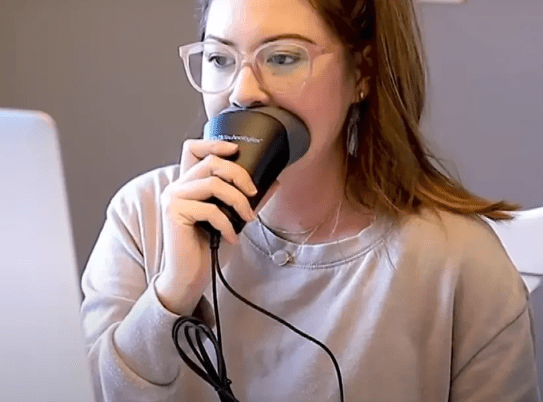
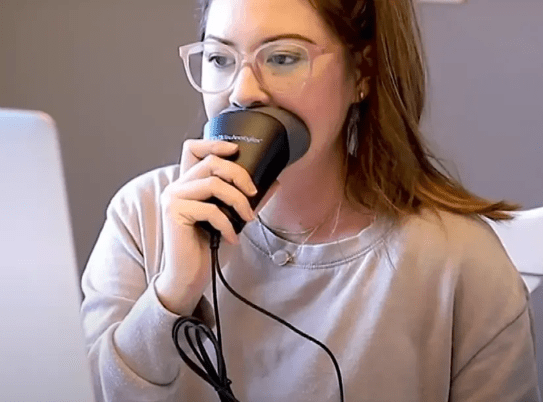
When automatic speech recognition (ASR) fails to translate a spoken utterance, the system may leave behind nothing more than a blank, a garbled placeholder, or a questionable guess. The only remaining source of truth is the audio recording inside the mask. What should be an instant act of professional recall becomes a process of rewinding, replaying, scrubbing, and hoping the audio is clear enough to resolve the issue in real time.
This is not a training failure. It is not a reporter failure. It is a software architecture problem—and it is solvable.
Why Voice Writing Has a Structural Readback Deficit
The difference between steno and voice writing at readback is not about skill. It is about what the CAT system preserves.
A steno CAT system always has something to show. The shorthand strokes exist independently of whether the English translation succeeds. Translation is a layer on top of notes that are already complete.
By contrast, many voice-based CAT systems are designed around a single fragile output: final English text. When the ASR engine cannot confidently map audio to a word in the dictionary or language model, the system often discards the intermediate information that led to that failure. The reporter is left with an absence—no inspectable artifact equivalent to steno notes.
In other words, when steno translation fails, the reporter still has notes. When voice translation fails, the reporter often has nothing but audio.
That design choice is what turns readback into rewind.
The Missing Layer – An Inspectable Substrate for Voice
The solution is not to “invent steno for voice,” nor to demand perfection from ASR. The solution is to preserve what ASR already knows, even when it is uncertain.
Modern speech recognition systems do not leap directly from sound to final words. They process audio into phonetic units, probabilities, time-aligned tokens, and competing hypotheses. These intermediate representations already exist inside the ASR pipeline. They are simply hidden from the reporter.
What voice writing lacks is an inspectable fallback layer—a persistent representation of “what was said” that exists independently of whether the system confidently knows what it means.
Steno has raw strokes. Voice needs its equivalent.
A Phonetic Fallback Layer – The Functional Analog to Steno Notes
The most practical and powerful solution is a parallel phonetic stream that runs alongside the English text stream at all times.
When the ASR engine decodes speech, it can persist a phonetic representation of the utterance—whether expressed as standardized phonemes, subword units, or a simplified “sounds-like” encoding. This representation would always exist, even when dictionary translation fails.
When confidence drops below a threshold, the CAT software could display that phonetic trace instead of a blank.
For example, instead of silence or a question mark, the reporter might see something like:
noh-tuh-blee
or
N OW1 T AH0 B L IY0
It would not be elegant. It would not be final English. But it would be immediate, visible, and inspectable—the voice equivalent of raw steno.
That alone fundamentally changes readback. The reporter is no longer guessing in the dark or scrambling for audio. They are reading what they themselves said, encoded in a consistent system.
Confidence-Aware Output – Showing More When the System Knows Less
Phonetic fallback should not exist in isolation. It works best when paired with transparency about uncertainty.
Instead of presenting a single brittle word guess, CAT software could display a short list of top candidates when confidence is low, each with a probability score. For example:
Klinefelter (0.41)
Kleinfelter (0.28)
Kline filter (0.17)
This mirrors how reporters already think. In medical and technical testimony, reporters routinely recognize correct terms even when spelling is uncertain. Giving them structured options allows instant resolution without playback.
Importantly, this does not require speculative AI. ASR systems already generate “n-best” hypotheses internally. The change is simply surfacing that information to the professional who can judge it.
Micro-Audio Replay – Precision Instead of Scrubbing
Even with phonetics and candidate lists, there will be moments when audio is necessary. But replay does not need to mean rewinding several seconds of testimony and losing courtroom momentum.
Each decoded word or phrase can be aligned to a precise timestamp. CAT software can attach a short, word-level audio clip—often less than a second—to each token.
During readback, the reporter clicks once and hears only the relevant sound. No scrubbing. No guessing where the word begins or ends. Listen, correct, move on.
This is not a luxury feature. It is workflow preservation in a live legal environment.
Automatic Dictionary Building – The Voice Equivalent of Brief Creation
One of the great strengths of steno is that dictionaries grow organically. When a reporter resolves an untranslate, they create a brief or entry that makes future translation faster and cleaner.
Voice systems can—and should—do the same.
When a reporter corrects a word, the CAT software already knows:
• the corrected spelling
• the phonetic sequence that produced it
• the surrounding context
With one click, the system can propose a dictionary entry that binds the spoken sound to the correct word. Over time, this becomes the reporter’s personalized pronunciation dictionary—just as steno dictionaries become personalized shorthand systems.
Vendors could also ship robust starter dictionaries, just as steno schools do, including legal and medical terminology, proper noun patterns, and formatting conventions. Voice writers should not be starting from a blank slate any more than steno students do.
What This Looks Like in Practice
In a mature voice CAT system, readback would look like this:
An untranslate is highlighted.
Hovering reveals phonetic output, top guesses, and confidence.
One click plays a micro-audio snippet.
One click saves a correction to the dictionary.
A dedicated “Readback Mode” could allow the reporter to tap any word in the transcript to hear its aligned audio instantly, while maintaining a clean text display for the court.
Nothing here is speculative. Every component exists today in some form. What is missing is integration and intent.
The Real Constraint – Access to the ASR Stack
The primary obstacle is not feasibility. It is architecture.
CAT vendors that rely on black-box cloud ASR APIs may only receive final text, with limited metadata. Those systems cannot easily expose phonemes, confidence scores, or alternative hypotheses.
Vendors who control their decoding stack—or choose ASR backends that expose richer outputs—can differentiate immediately by delivering readback reliability.
In a regulated profession where accuracy, accountability, and real-time performance matter, that differentiation will not be optional forever.
The Bottom Line
The readback problem in voice writing is not inherent to voice. It is a design choice rooted in treating ASR output as disposable once English text is produced.
Steno has always preserved its raw input. Voice must do the same.
By maintaining a parallel phonetic fallback layer, exposing uncertainty instead of hiding it, enabling precision audio replay, and automating dictionary growth, CAT vendors can give voice writers the functional equivalent of steno notes.
That does not make voice writing identical to steno. It makes it professionally complete.
And in a courtroom, completeness is not a feature. It is a requirement.
Disclaimer
This article is for informational and educational purposes only. It reflects industry analysis and professional opinion and does not constitute legal, regulatory, or technical advice. References to technologies or workflows are illustrative and do not assert deficiencies, misconduct, or noncompliance by any specific vendor or practitioner.
 STENOIMPERIUM
“ When automatic speech recognition (ASR) fails to translate a spoken utterance, the system may leave behind nothing more than a blank, a garbled placeholder, or a questionable guess. The only remaining source of truth is the audio recording inside the mask. What should be an instant act of professional recall becomes a process of rewinding, replaying, scrubbing, and hoping the audio is clear enough to resolve the issue in real time.”
This is not the process at all. Let me know if you’d Like to learn more.
SPEAKEASY REPORTING, LLC Certified Court Reporters and Legal Videographers Scheduling Team 1100 Peachtree Street, Suite 200 Atlanta, Georgia 30309
LikeLike
Thank you for weighing in. The article is not describing how any particular company trains or operates; it is analyzing a structural limitation in many current voice-to-text CAT architectures.
When ASR output fails at the word level, numerous systems do not preserve a visible, inspectable intermediate representation equivalent to raw steno notes. In those situations, readback often relies on audio review rather than an immediately readable substrate.
If you’re referring to a specific technical implementation that already provides a persistent phonetic or equivalent fallback layer, I would genuinely be interested in learning more about it.
LikeLike