In a world where the average American worker eyes retirement at 65, a unique and determined group of professionals defy the trend. They are the veteran court reporters—many in their late 60s, 70s, and even pushing 80—who continue to transcribe the wheels of justice with relentless dedication, sharp skill, and a passion that refuses to wane. Often overlooked, these seasoned stenographers are the very backbone of an industry that was once predicted to face a severe shortage by now. And yet, the crisis hasn’t fully materialized—not because the predictions were entirely off, but because these professionals never left.
The 2013/2014 Ducker Worldwide study once warned of a looming shortage in court reporters due to aging professionals and a lack of new entrants into the field. While the study was insightful in many respects, it missed one critical point: court reporters don’t retire at 65. In fact, many of them keep going well into their 70s—and some until their final days—simply because they love the work, they’re still good at it, and, frankly, the industry still needs them.
Let’s take a closer look at the real lives behind the aging hands that keep our legal records intact.
Still Writing, Still Thriving
“I’m not interested in, nor in a financial position to retire,” says one veteran reporter. “And there aren’t human replacement reporters available. We’re the last of a dying breed, and I’d like to just stick around and go down with the ship.”
This sentiment is echoed across the board. There’s no mourning here—just gritty endurance and pride. These individuals don’t view themselves as clinging to relevance. They see themselves as essential, seasoned, and skilled.
Another reporter puts it simply: “I am going to be working until I’m in my 80s. I’m hoping to get another good 20 years out of this. Though I’m not feeling like a fossil yet, it’s insane that I’m now consistently the oldest one in these proceedings. And that happened literally overnight.”
A third shares with laughter, “I’ll be scoping all day today from a comfy recliner. How many people can say they can do that and make money? I’ll probably be going down with the ship too!”
A Job That Evolves with the Times
Thanks to remote work, the landscape of court reporting has changed significantly, making it more sustainable for older reporters to remain active.
“I’ll be 74 in another month and I still work two days from home remotely,” one veteran shares. “I hope to do it for at least another couple of years, as long as my health and stamina hold up.”
Others note how tools like Zoom have extended their careers. “Remote changed everything,” a 62-year-old reporter explains. “Maybe not full time, but I’ll keep on plugging. I’m going ‘til these hands can’t move.”
Remote reporting has reduced the physical demands of commuting and made it possible for older reporters to scale back without stepping out. As one 70-year-old proudly puts it, “I can still handle three jobs a week—and I still love it. Honestly, I don’t really want to retire.”
Seasoned, Sharp, and Still Proud
The value of experience in court reporting cannot be overstated. Many of these professionals have worked for over five decades and, by their own admission, feel like they’re at the peak of their careers.
“I have been reporting 45 years,” one says, “and I feel like I am at the peak of my career. I no longer give a [hoot] because I know how good I am. I’m going to milk this job for as long as my body holds up!”
Another veteran, at 70, echoes a similar tone: “I told myself 70 was my cutoff. Well, I’ll be 71 in a few months and I’m still going. You know what? You’ll know when enough is enough. Until then, I’m grateful this business still needs me.”
One 77-year-old tops the list: “I WIN! I’ll be 78 in November and still take three jobs a week—sometimes back-to-back all-dayers. Yes, it tires me out, but I enjoy getting out, hearing people’s stories, and working with attorneys I really like. I guess I’ll keep doing it until I lose my concentration.”
Passion and Pride
For many, retirement is not the dream—continuing to do meaningful, fulfilling work is. And that’s what court reporting provides.
A 67-year-old reporter reflects with humor and dignity: “I like the people. The cases are interesting. I think when they see me, they act better—like I’m their mom or grandma. They probably figure with my gray hair and still working, I must be good at my job. I always like seeing older workers do repairs on my house. In fact, I’ve been known to say, ‘Send a plumber with some whiskers!’ I’ve got whiskers now too.”
This career, for many of them, isn’t just a job—it’s part of their identity, a source of pride and purpose.
Holding Up the Profession
These over-65 reporters are doing more than just extending their personal careers—they are holding up the profession itself. The anticipated shortage of court reporters hasn’t hit quite as hard, largely because these professionals never left.
They are the reason courtrooms, depositions, and hearings continue to run smoothly. They are the bridge between generations, the mentors, the institutional memory, and the iron will behind the stenograph.
One reporter sums it up with a smile: “This ship is getting more and more crowded by the day.” And that’s a good thing.
Final Thoughts
The next time you hear the rhythmic tapping of a stenograph machine, consider this: the person behind that machine might have been doing this work for 50 years or more. They’ve transcribed murder trials, family disputes, corporate scandals, and legislative sessions. They’ve seen it all, heard it all, and written it all down—word for word.
They are not fossils. They are cornerstones.
In a profession facing technological shifts and workforce changes, it’s these steadfast veterans—working in their recliners, logging into Zoom, commuting only five miles from home—who are keeping the courts running and the record intact.
The court reporting profession owes a standing ovation to its elder statespeople. They are the unsung heroes whose enduring devotion and incredible stamina have kept the wheels of justice spinning.
The legal services industry, like many others, is experiencing a seismic shift in response to the digital age. Traditional practices are being disrupted, and nowhere is this transformation more apparent than in the field of court reporting. Presently, court reporters, skilled individuals trained to capture the spoken word and transcribe legal proceedings, are indispensable fixtures in courtrooms and legal proceedings. However, today, a new contender has emerged on the scene: digital audio recording and transcription services.
This article delves into the phenomenon of corporate market cannibalization within the court reporting industry, a term that refers to established entities consuming their own traditional market by adopting and promoting innovative, often digital, solutions that render their own services redundant. As we journey through this attempted digital transformation, we will discuss the disadvantages of this shift, including the false-marketing of cost savings and enhanced accessibility, and the disastrous mismanagement of transcriptionists in maintaining quality and accuracy in the court reporting industry.
While this shift presents various challenges and potential pitfalls, it is essential to critically examine its implications for the industry. We’ll explore the evolution of court reporting, the use of digital technology, and the rapid and growing trend of replacing court reporters with digital audio recording, videographers, and transcriptionists.
The article will also discuss the disastrous outcome of this shift on the American Judicial system, as well as the possible extinction of human stenographers and the impact that would have on the protection of the record. This transition is fraught with legal and ethical challenges, raising questions about privacy, data security, and potential errors in transcripts. To guide our exploration, we’ll provide real-world case studies and a comprehensive FAQ section to address common queries about the future of court reporting in the digital age.
The winds of change are blowing through the court reporting industry, and it’s crucial to understand the dynamics of this revolution, the implications for stakeholders, and the path forward in this shifting landscape.
There is nothing new about corporate cannibalization. It’s been occurring for hundreds, if not thousands, of years, in many industries. Especially prevalent in the technology world is Product cannibalism, where a company launches a new product into the market when it already has an existing product, so the new product ends up competing with their existing product. We see this a lot with printers. Companies must continually introduce new products to keep from losing future business to competitors. It’s a necessary evil.
There are two types of transitions, otherwise known as cannibalism. A constructive transition, or constructive cannibalism, and destructive cannibalism. Constructive cannibalism results in greater overall top-line revenue and bottom-line profit, whereas, destructive transitions results in the older-generation sales declining faster than the new-generation growth.
Our court reporting agencies are concerned that if they’re slow to adopt and innovate, their competitors will do it instead, so we are seeing a mass adoption of digital recorders in our industry. Politics in our industry is taking sides with the legacy service providers putting up a fight and boycotting any agency who adopts digital recording. The courts are taking the side of the legacy reporters and are rejecting transcripts that are not certified by a legacy, professional shorthand reporter.
The Evolution of Court Reporting Court reporting has a rich history that dates back centuries. Traditionally, it involved the presence of a skilled human court reporter who meticulously recorded every spoken word and action during legal proceedings. These professionals were trained to be accurate, impartial, and efficient in their work.
In the early days, court reporters relied on shorthand, a method of writing quickly in a specialized script, to capture spoken words. This process required immense skill and concentration. The transcribed records were vital for legal proceedings, serving as the official documentation of cases and trials.
As time went on, technology began to play a more prominent role in court reporting. The introduction of stenography machines in the late 19th century revolutionized the field. Stenographers used these machines to record proceedings phonetically, allowing for faster transcription. This technological leap significantly increased the efficiency and accuracy of court reporting.
Fast forward to the late 20th century, and the court reporting profession saw another transformation with the advent of computer-aided transcription (CAT) software. This software allowed court reporters to type directly into a stenotype machine, which translated their keystrokes into readable text in real-time. This innovation improved the speed at which transcripts could be produced and made it easier to edit and format the text.
In early 2000, the CAT software companies added a feature allowing court reporters to audio record proceedings where they could scope (edit) their transcripts that were synced to the audio recording using hot keys or hyper keys to rapidly navigate through the transcript and listen to audio at any given point, enabling them to instantly fix errors and make transcripts 100% accurate. Then the hardware manufacturers added a new feature to the stenographic machines, allowing them to record and playback right from the stenographic machine. So court reporters could unplug their machines from their laptop and go into chambers, never losing a recording of the proceedings. The steno machines make its own recording of the proceedings, so now there’s two independent audio recordings: one on the laptop and one on the machine writer. So court reporters could have five backups of every proceeding, and six if you add the instantaneous backup of all files to the cloud. All of this improved the security and protection of the record, ensuring nothing would be lost in case of a catastrophic machine failure, and it improved the accuracy from the 96.5% passing test rate without audio aides, to be able to achieve 100% accuracy on every transcript.
In 2003, Stenograph released the first paperless machine, an Elan Mira, then in 2009, a Diamante, which featured a color flat-panel display, two SD cards, two USB ports, microphone and headset jacks for AudioSync, and optional Bluetooth or WiFi realtime translation. How is that for high tech. Unfortunately, Hollywood is still obsessed with our paper writers. And some digital recorder companies show pictures of typewriters in their ads, instead of steno machines, going back in time even further. The 2003 Elan Mira is still more advanced and reflective of the “digital era” than the electronic recording hoax being shoved down the throats of the legal industry in 2024. The perpetrators of this new “digital recording” takeover would take us back in time to the 1800’s, but they think it would make them rich, so who cares what laws they’re breaking.
While these advancements enhanced the efficiency of court reporting, they were kept quiet by the professionals who used these tools, because the audio was deemed a work product, not to be delivered into the hands of the public. The printed transcript with the reporters’ certificate was the end product and what was admissible in court, not the audio recording. If a reporter were to hand over a recording, it would be necessary to listen to the entire audio and remove any off-the-record conversations that may have occurred. Many reporters never listen to the entire audio file; they just used it to spot check areas for names or troublesome areas for punctuation, if they even listen to it at all. Most use the audio as a backup only and never need to use the backup file. Court reporters aren’t trained to use audio editing software that would be used to edit the audio to remove off-the-record discussions. This could add hours and hours to an already long day of sitting in court or at depos and then creating transcripts at night or on weekends. It would also require additional hours of training on audio editing software. And it would increase the cost, which the market does not wish to bear.
Court reporters also personally invest in high-end equipment as their cost of doing business. They have high-quality, high-gain, noise canceling, multi-directional recording microphones and high-end noise-canceling headphones equipment where they could hear a pin drop.
This concept that we’re entering some kind of new digital age with an emergence of digital audio recording technology is laughable. It’s been around and utilized in the court reporting profession for several decades by highly skilled and certified professionals. What is new is that courts have been installing electronic recording equipment in lower courts, such as traffic, for the last 20 years so that they could save the cost of having court reporters in those departments. The courts spend millions on the recording equipment that has to be renewed every several years, costing millions more. Courts would save millions by employing court reporters in all departments to do the recording and archiving of all court recordings that they do anyway.
Maybe the fact that court reporters kept this capability a highly-guarded trade secret was a disservice to the courts who made decisions to record proceedings themselves and investing in all the equipment, and then training personnel to do the recordings, and IT to build the software to archive it all, and buying servers to archive it. Then they send the audio out to third parties to have it transcribed by uncertified, inexperienced, low-wage individuals, often two or more individuals on the same transcript, who are located outside the U.S. It could have saved the court billions over the decades that they’ve been doing it themselves, collectively, nationwide, to just let the official reporters foot the bill as they have been doing all along, unnoticed and unappreciated by the court administrators.
Another new development is the push by big box agencies in our industry to position themselves as the responsible charge for the record, “training anyone off the street,” as Anir Dutta, CEO of Stenograph, described it, to record their legal proceedings, and hiring cheap transcriptionists to produce the transcript, and cutting out the largest cost of services, the court reporters themselves. They’re using Automated Speech Recognition (ASR) software to produce the transcript from audio recordings, and then hiring scopists to clean it up using Microsoft Word software to edit the transcript. This move by the big boxes has opened Pandora’s box to vultures, outliers, and outsiders to come into our industry like the Wild West and Gold Rush phenomenon where everyone is wanting to get rich quick by recording legal proceedings themselves and charging what court reporters charge.
Our long-time trusted CAT software and machine hardware vendors are getting in on it too, creating ASR software for these new untrained, uncertified, persons off the street so they can simply set up the microphone and hit record or start a file and the software does all the transcribing for them, with a less-than-80% accuracy rate. Believing they can replace court reporters with their imperfect speech recognition technology, and then just hire scopists and proofreaders, like reporters do, to polish it and complete it, they’ve gone all in with years of R&D in the hopes of striking gold and being on the forefront of what they believe to be revolutionary technology.
What these ignorant money-grabbers fail to understand is that they are taking us backwards by about 60 years in time. ASR software is not ready for the big leagues of the legal industry. ASR has about a less-than-80% accuracy rate, not including punctuation. When court reporters hand a file to their scopists, the file is already 99.5% accurate including punctuation. The scopist spends about an hour for every 20-30 pages even with a 99.5% translation rate. For a scopist to do 20 pages in a Word document, without the hyper keys, on a transcript with an 80% translation rate, it would take quadruple the amount of time it takes a scopist that works with a skilled professional. They’re not making it more efficient; it’s the opposite. They’re taking a highly efficient system of creating a transcript and turning into a nightmare. Nobody in their right mind would take that work.
The big box agencies have been peddling their snake oil for years now, long enough to be awakened to their pyramid-scheme-like collapse that is coming. Big boxes are sending emails to the court reporters they tried to replace behind their backs, begging them to help transcribe their growing mountain of recorded proceedings, asking them to refer their scopists, inviting them to enticing presentations only to pull a bait-and-switch on them asking for their help with accomplishing their mission to convert everyone to their new high-profit swindle.
In the following sections, we’ll explore the impact of this digital revolution on court reporting and the consequences it has for the profession and the legal industry as a whole.
The Digital Disruptors in Legal Transcription
The spiel from the outliers peddling their digital solution will tell you something like this:
It is not profound and it is not a revolution. Like I said, court reporters have been using digital audio recording for decades using the most efficient method, a steno machine and CAT software, to make transcripts. What is revolutionary is that the agencies are wanting to oust court reporters, take the 50-70% of the profit for themselves, replace them with unskilled workers they are recruiting “off the street,” and taking over our responsibility as the Responsible Charge who oversee the chain of custody from beginning to end. That is the revolution that is happening. It is profoundly greedy and bold! It is also against the law in 28 states that require certification. It is all about money and profits, and cares nothing about the integrity of the record.
Their marketing brochures and websites also describe it like this:
“Specialized audio recording equipment” is nothing better than the recording equipment that court reporters have been using and investing in for decades. Professional Court Reporters spend $800 on the Martel Electronics, high-gain microphones that are wireless and used for sidebar conferences, the $300 USB high-gain microphone that reduces ambient noise and you can hear a pin drop, and the $400 noise-canceling headphones. The one thing that reporters don’t do, and don’t do it for a reason, is mic up everybody in the room and create an 8-track recording where you can turn up one speaker’s recording and lower another’s so that a transcriber could get all the speakers who are talking at once. It may seem like a dream to an anal-retentive, obsessive compulsive transcriber, but that’s not how to make an accurate transcript. Proceedings should be heard by everyone in the room, and the reporter is there to make a record of what happened in the room and control the conversations so that everything is taking place one at a time where everyone can be heard. A judge can’t be expected to make a decision on something if they weren’t able to hear what is being said because an eruption of cross-talk, yet to a court of appeal reading it later, it would look like the judge were able to hear and understand all speakers clearly if the speakers were all mic’d up and had their own separate tracks that could be transcribed clearly. Court reporters, as the responsible charge, are the witnesses to what happened live in that room, and the record will be as close to what the judge heard at the time, which is why court reporter sits the closest to the judge and the witness. We should not be creating a record of two proceedings that are taking place, one that can be heard by everyone, and one that can be heard on playback with volume lowering and raising controls or whispers that no one in the room could hear.
A professional court reporter in the room is able to stop the cross-talk and ask for repeats and request that they speak one at a time to make a good record. In a courtroom, if there is cross-talk happening, the judge and jury aren’t hearing everything that all the speakers are hearing. Most likely, they are hearing the loudest speaker. Official reporters usually focus on and writes what the judge says when there are multiple speakers and are unsuccessful in attempts to interrupt. The Court Reporters Board has punished reporters who fill in transcripts from the audio recording that they did not take down stenographically on their machine.
If a judge and jury couldn’t hear it, then why would someone create a transcript that would appear to the appellate court as though it was a conversation that everyone could hear, instead of all mayhem breaking out. It’s the judge and attorney’s obligation to make the record, but they often neglect to say something that would make it clear in the record that a verbal fight just broke out and voices were raised and there were multiple speakers. On appeal, it would look like a conversation where everybody was heard with equal opportunity to be heard, and heard by all in the courtroom. The same goes for whispers, if the court reporter, judge, and jury didn’t hear an under-the breath snide remark, then it shouldn’t go in the record. Another reporter was punished by the CRB for adding in an “F” bomb from the videographers audio that the reporter didn’t hear at the time, but was told to put it in the transcript by one of the attorneys that would benefit from having it in the transcript.
These digital outliers entering the legal services market have no idea how to make a record in legal proceedings. Their ignorance shows abundantly in their assertion that their simply recording proceedings is superior. That’s just not how it’s done!
Calling Digital Recording the “Digital Age” is laughable. Again, professional court reporters were one of the first to use computers in the early 80’s. Court reporters have been doing remote proceedings for over two decades and taught the entire nation of attorneys how to do remote depos using Zoom and other remote platforms. And court reporters have been using digital audio recording equipment for decades. It is not a “significant enhancement.” It’s actually a step backwards by about 40 years.
The “advanced software” and “algorithms” they’re talking about is Speech-to-Text recognition software. And it does not transcribe audio recordings efficiently. Have you ever used Siri or Alexa? Then you’ll know how inefficient it is. How many times have I yelled at Alexa to turn the air conditioning on, only to end up having to walk over and do it manually. Yeah, it’s like that. It’s inaccurate. An 80% translation rate in court reporting is abysmal. It’s like sending a student at 160 words per minute into a deposition where everyone is talking at 300 words per minute. Their translation rate will be probably better than 80% that ASR can accomplish. It actually SLOWS down the transcription process.
When reporters are requested to produce a transcript that has been videotaped, they usually charge more. Why? Because now they have to listen to the entire audio when they are scoping and editing their transcript to be sure they have every “okay,” “and,” “all right,” “uh-huh,” perfectly. It takes LONGER when you have to compare what’s on their steno-created transcript to what they hear in their audio. And the ASR-generated transcript will take four to 8 times longer. It is less efficient. You will be able to produce half the amount of transcripts that a stenographer could do. If an agency is just sending digital recorders to record things, and everybody orders it and wants it expedited, guess what? You’re probably going to be waiting a long time to get your transcript with the backlog and the inefficiency.
This “cost-effective” spiel is another lie that digital outliers are propagating. One would think that replacing a highly-skilled reporter with one they can “pull off the street” making minimum wage would cut costs, but it doesn’t. Agencies are sending digital recorders and charging the attorneys the same fees that they would have charged had they sent a court reporter. And because it takes longer to produce a transcript using slower and inferior methods, it takes more people to create it, and even at minimum wage, it’s going to cost more. And because agencies are commoditizing it and offering lower and lower rates, they can’t even use Americans to do the work. They have to send the transcribing work out of the country to the Philippines or Africa to get rates cheap enough. But the truth is, the agencies are motivated to keep more of the profits for themselves by cutting out the largest cost in the chain, the stenographer. A stenographers’ cut consists of anywhere from 50% to 70% of the job. The large agencies are backed by private equity companies and investors who have advised them to cut the largest cost in order to reap more profits for the shareholders. Agencies are not passing the savings on to the attorneys; they’re keeping the invoices exactly the same and pocketing the profits.
Professional court reporters and their agencies are already digitally storing their transcripts and audio recordings that are easily uploaded, stored, shared, and retrieved electronically by courts and attorneys. Nothing new or revolutionary here. There’s no issue with accessibility in the existing model. For the past two decades, court reporters have been technologically savvy enough to do all of this. A huge advantage with court reporters doing this is that a decentralized model provides for the highest security and protection of the record. A reporter has up to 7 back-up methods for the transcript, and then they send it to the agency, which has their own repository, and uploads their steno notes directly with the court, where they have their archive for all the transcripts. When you go with one of these digital companies, you’ve got ONE server storing all the transcripts. And the revolving door of the digital recorders they hire would make it impossible to find them if the digital company lost the file.
Professional court reporters already do this and have been doing it for decades. Next.
To be clear, the demand for stenographers is stronger than ever, and according the the US Bureau of Labor Statistics will grow by 3% by 2032. There are a lot of agencies who are offering digital solutions, out of a pure profit motive, but most local court reporting agencies are sticking with a strictly stenographic service model. There are a ton of outlier companies that have popped up with no background, knowledge, or experience in this industry and who don’t even know the lingo. It’s like the wild wild West or the Gold Rush where everyone is seeing green, wants to get in, make their millions, and then exit as fast as they can.
Professional Court Reporters find themselves victims of the corporate greed of their largest industry allies – their large agencies and vendors – manufacturers of their machines and CAT software. They are also in jeopardy of the judges and attorneys who are being marketed to by these irresponsible outliers and propositioned to buy their snake oil and replace us by recording equipment. It’s one of the biggest scams. It’s the biggest fraud to ever hit the legal community. It’s a bigger fraud than Elizabeth Holmes who defrauded investors of $700 million by claiming to have revolutionized blood testing. When the truth finally comes out, it will be noted as one of the Biggest Disappointments of the 21st Century!
In the following section, we will dispel myths and delve into the disadvantages of using digital audio recording and transcription services, shedding light on the reasons behind the growing unpopularity of these as viable solutions in the legal world.
The traditional method of court reporting has just as much long-term viability as it always has. In the 1980’s, court reporters entering school were told that they would be replaced by machines. Those reporters are now in their 44th year of reporting. In 1993, Los Angeles Superior Court tried to record proceedings, against the law, and the California Court Reporters Association sued the court and won. It was appealed, then cross appealed, and the court reporters were victorious in the end.
Digital solutions do not present a cost savings to attorneys. The court reporting agencies who are sending digital reporters are invoicing the attorneys the exact same fees as they would had they sent a traditional stenographer. What they may save in sending an untrained person to record the proceedings, they’re having to pay more on the back end with transcription services, scoping, proofreading, and the ASR software they’re using to create an inferior product. Courts are having to spend millions of dollars on audio equipment. The stenographers’ maintenance of their specialized equipment is built into their fees and is a cost of their doing business.
Court reporter rates have not increased since the 1980’s. In fact, in a lot of cases, their fees have dipped below what they were charging in the 1980’s. Court reporters haven’t had a rate increase in over 50 years. In 1970, the statutory page rate in California was $3.00/pg. In 2021, that statutory page rate was still $3.00/pg. If you plug that $3.00/pg figure into an inflation wage calculator, that $3.00/pg from 1970 should be $18.00/pg in 2024.
Traditional court reporters have enjoyed enhanced accessibility of their transcripts for decades. Court Reporters have been uploading their transcripts to the court system for two decades and they’ve been uploading them to agency archives for over three decades. They’re easily stored, shared, and retrieved electronically. This is not a differentiator.
The real-time transcription that is captured by Automatic Speech Recognition software is only about 80% accurate and is not ready for the legal industry. It’s almost completely unusable.
There is absolutely no improvement in searchability between a digitally created transcript and a traditional court-reporter-created transcript. Court reporters’ transcripts have been searchable for at least three decades.
The term “corporate cannibalism” refers to the phenomenon where established entities within an industry adopt and promote innovative, often digital, solutions that ultimately render their own traditional services redundant. This trend is particularly evident in the court reporting industry as it transitions from human court reporters to digital audio recording and transcription services.
The introduction of digital audio recording and transcription services is, in essence, an example of corporate cannibalism. Companies within the legal tech sector have realized the potential cost savings and efficiency gains associated with digital solutions and have actively promoted these alternatives. While it is a rational response to changing technological landscapes, this shift has significant consequences.
1. Job Displacement: Perhaps the most immediate and visible impact of this corporate cannibalism is job displacement. Human court reporters, who have been central to the legal process for generations, are finding their roles challenged. As digital imposters gain prominence, the demand for stenographers and court reporters decreases, leading to potential job losses and industry disruption. Veritext has allegedly given a national corporate edict to all its offices to ensure that 50% of its business is sending digital recorders. Court reporters all over the country are complaining on Facebook that their job was canceled and the agency sent a digital recorder instead, and that there is less work now than ever in their careers.
2. Implications for the Industry: The transition from traditional court reporting to digital solutions raises questions about the long-term implications for the industry. Will it be possible to maintain the same standards of accuracy and reliability with digital transcription? What impact will this shift have on the legal record’s integrity and trustworthiness? I can assure you that a decline in the work that traditional court reporters are getting because they are being replaced by digital recorders could lead to an abrupt extinction of traditional court reporters. The vendors will stop servicing their CAT software and machines, stop producing new machines, stop developing new advanced features. Court reporters are complaining that Stenograph, the industry’s largest supplier of CAT software and steno machines, has already stopped rolling out new features and customer service response times are suffering.
3. Legal and Ethical Concerns: The shift to digital solutions also raises legal and ethical concerns. Privacy, data security, and the potential for errors in transcripts are pressing issues. The legal profession must navigate these challenges and establish regulatory guidelines for the digital transcription industry to ensure that standards are maintained. It’s my opinion that unless you have a licensed individual acting as the responsible charge of the record, it will be impossible to ensure an accurate record that is secure.
4. Market Disruption: The adoption of digital solutions has caused significant market disruption. Long-standing court reporting firms have had to adapt to this changing landscape. Some have successfully integrated digital transcription services into their offerings, while others have faced challenges in doing so.
Corporate cannibalism in the court reporting industry reflects the broader trend of digital disruption in many sectors. The legal industry is grappling with a fundamental transformation, and it’s crucial to strike a balance between leveraging the benefits of digital technology and preserving the quality, accuracy, and ethical standards of legal documents.
In the following sections, we will delve deeper into the legal and ethical challenges posed by the digital shift in court reporting and consider the potential future of this evolving industry.
Legal and Ethical Challenges
The digital transformation of the court reporting industry brings with it a host of legal and ethical challenges that require careful consideration.
1. Privacy Concerns: In a legal environment, privacy is paramount. The use of digital audio recording and transcription services raises concerns about the security and confidentiality of recorded legal proceedings. Access to sensitive information must be strictly controlled to prevent breaches and ensure that the privacy of those involved is maintained.
2. Data Security: Legal transcripts often contain sensitive information. Digital storage and transmission of this data make it vulnerable to cyber threats. Ensuring robust data security measures, including encryption and secure storage, is imperative to protect the integrity of the legal record and prevent unauthorized access.
3. Transcript Accuracy: While digital transcription services are efficient, they are not immune to errors. Ensuring the accuracy of transcripts is a legal and ethical imperative. Legal professionals must have confidence in the veracity of the records they rely on for case preparation and decision-making. Human oversight and quality control are crucial to achieving this.
4. Admissibility in Court: Legal professionals must grapple with the admissibility of digitally transcribed records in court. The acceptance of digital transcripts as official records varies across jurisdictions. Legal standards must adapt to recognize the authenticity and integrity of digital records.
5. Ethical Considerations: Legal ethics are a cornerstone of the profession. Transcriptionists must adhere to ethical standards, ensuring impartiality, accuracy, and the protection of attorney-client privilege. The use of automated transcription technology also raises questions about transparency in disclosure of the use of such tools.
6. Accountability: In the event of errors or disputes, accountability becomes a challenge. Determining responsibility for transcription errors or data breaches can be complex in a digital environment. Clear protocols for accountability and dispute resolution are essential.
Navigating these legal and ethical challenges is crucial to ensuring the continued integrity of the legal record. The legal profession must evolve its practices and standards to accommodate the digital age while upholding the principles of privacy, accuracy, and accountability.
In the subsequent sections, we will examine real-world case studies that shed light on the impact of the digital shift on the American Judicial system and the potential consequences of the widespread adoption of digital transcription services.
Pushed to the Brink of Destruction
“I love you this much” that I’m now willing to cannibalize you and go with something that’s more profitable.
An interesting case study of product cannibalism is in the beverage industry. Diet Coke’s sister brand, Coke Zero Sugar, is pushing Diet Coke to the brink of destruction. In August, 2023, Coca-Cola stopped selling Coke Zero in the US, replacing it with a beverage with a different recipe, design, and name: Coke Zero Sugar.
While people immediately freaked out when the change was announced, the adjustments are already paying off. After the new recipe rolled out in the US, unit case volume doubled compared to the prior quarter.
Meanwhile, Diet Coke’s sales slump continues as the weakest link in the company’s cola lineup. The brand’s sales by volume declined in the mid single digits last quarter. And, executives said that Coke Zero Sugar’s success is cannibalizing Diet Coke and Coca-Cola Classic sales in certain markets.
Increasingly, Diet Coke doesn’t fit health-conscious customers’ needs. While Coke Zero Sugar saw a sales bump by very clearly advertising that it doesn’t contain sugar, many customers remain suspicious of Diet Coke’s use of artificial ingredients.
However, Coca-Cola is paralyzed from significantly altering Diet Coke, in the way it tweaked Coke Zero, due to its dedicated – albeit shrinking – fan base.
“I don’t think we’re likely to change Diet Coke,” CEO James Quincey said in a call with reporters Wednesday. “It has a large following.”
Sound familiar, court reporters? The only thing saving Diet Coke is their large, dedicated following, but shrinking. So if it shrinks enough, they’ll be able to kill Diet Coke altogether in the near future. “Don’t think” and “likely” doesn’t give me confidence in Diet Coke’s future. Quincey could have said, “We’re never changing Diet Coke!” But his statement is non-committal.
It reminds me of some of the exact statements by the CEO’s in the court reporting industry, promising reporters that court reporters will always have a job. Then they talk about retraining, which means they plan to move the highly-skilled stenographers into relegated tasks of signing their certs on transcripts that were produced by someone in Africa.
The one thing that hasn’t killed off court reporters yet is our dedicated, loyal fan base of judges and lawyers. Court reporters should cater to this fan base right now. Court reporters are so busy recruiting new court reporters because of the fraudulent shortage propaganda that they’re not out there getting in front of the judges and attorneys trying to show and impart their value to them in meaningful ways, off the record.
Court reporting schools are overflowing, and soon there will be a glut of reporters like the industry saw in the 1980’s, which will lead to further stagnant rates, if not declining, for the highly-skilled tradesmen. Not only are agencies proliferating this over-inflated shortage narrative, but they’re inflating the prices they’re charging for court reporting services, even though they’re negotiating down the already 50-year-old rates to reporters. It’s a one-two punch to the industry. The agencies are pitting the attorneys and judges, our loyal fan base, against court reporters and the attorneys are mad as hell as they’ve pushed what the market will bear to the breaking point.
Market cannibalization is generally disadvantageous to a company. It does not provide any increased profits. Instead, it leads to a decrease in revenues, translating to a future decline in earnings. Market cannibalization creates competition within a company’s own products in the market. Due to this, the company suffers from a decreased market share.
However, in this case, in the court reporting industry, it’s highly advantageous to companies (court reporting agencies) to embrace digital recording, because it does provide increase profits, to the tune of 50% more profits. That’s huge. And it’s not resulting in decreased market share at all. They’re just shifting their existing customers to the new way of doing things and training them well.
In the case of Stenograph and other manufacturers of CAT and steno machine products, it’s about mitigating the diminishing numbers if they believe the fraudulent shortage narrative. It allows them to capture a market outside of their base of legacy court reporters. If they can “recruit anyone off the street,” as Anir Dutta, CEO of Stenograph has been shown in videos to say, then it allows them to capture new sales of their new product, MaxScribe, and open up a new market. Dutta, by the way, has also held a seat as the president of the STTI, Speech to Text Institute, which created the fraudulent marketing materials showing an overinflated shortage prediction that is not based on fact. Dutta, also, by the way, helped Kodak get rid of their physical film product and go all digital, during his time as a sales representative for Kodak.
No wonder Silicon Valley investors are all abuzz right now over their court reporting investments. This product cannibalization boon is probably like nothing any of these SV investors have ever seen before in any other industry – technology, food, beverages. Usually, you’re losing revenues and marketshare when you introduce a competing product. But not in court reporting.
With the one-two punch strategy of promoting a false shortage narrative and then inflating prices, these big box court reporting agencies are able to easily sell their new solution to overcome the “shortage crisis” and help curb the overinflated pricing court reporters are charging. They’re the savior of their own manufactured crisis! Brilliant!
How To Avoid Cannibalization in Court Reporting
The good news for court reporters is (1), that legacy court reporters have an undying fan base, and (2), that there is a way to combat cannibalization.
Enterprises usually invest significant financial and human resources when developing and launching a new product – and these costs should also be taken into account. They also incur expenditure when marketing and promoting it to the target audience. Factoring these costs into the calculations may show a negative impact on the bottom line. In the case of the court reporting industry, if the enterprises are gaining 50% profits, that’s a lot to help offset their efforts. It’s basically paying for itself. But for how long? Marketing to their existing customer base costs them very little extra with email blasts and using their existing outside sales reps and conducting trainings to attorneys. Marketing to attorneys outside of their customer base gets into the millions, so that becomes more expensive. However, their competitor big box agencies are also training their own existing customer base, which altogether could be about 50% market share.
The cost of recruiting and training digital court recorders is huge for the big boxes, especially when the turnover rate is exponential.
Then there’s the cost of legislation. This plan fails if they fail to get legislation passed in the 25 states that require certification of transcripts. They are trying, and failing, so far in CA with SB 662, and Illinois, and others. Yet, Veritext, US Legal, Planet Depos, and others, are hiring “Digital Court Reporters” in all states, even in CA, where that title enjoys title protection. They’re sent cease-and-desist letter by the CRB only to be caught violating that law again weeks later. The COO of Veritext pretty much shared that they are doing about $10 million in CA in digital recording business already, and that was years ago. Their plan, if they cannot get legislation passed, is to do it anyway, because, well, the “shortage crisis” and all. Then they can say, well, we’ve been doing it forever already and it’s working great. Kind of like how marijuana was so pervasive, even judges were smoking it, so why not just legalize it and decriminalize it.
Apple is a prime market cannibalization example. Every time a new iPhone is introduced, the price of older models falls on the market. For instance, when it announced the iPhone 11, 11 Pro and 11 Pro Max, it lowered the price of the iPhone 8 and XR by $150. It even had to discontinue the iPhone 7, iPhone 7 Plus, XS and XS max. Although the discontinued iPhones may still be available, people would have to buy them used or through unofficial channels, at much lower prices.
The effect of price cannibalization on older iPhones shows that companies need to be flexible and adaptable when it comes to new products. Not all companies can be like Apple and discontinue older models whenever they launch a new product. They need to be very careful about cannibalization on their product launches. Adaptability is key to the success of new product launches for businesses that already have an established presence in the market. This is the reason the big box court reporting agencies are keeping court reporter around, for now. They can’t just discontinue the older model vintage court reporter until their new digital imposter product has completely taken hold.
It is vital to confront cannibalization concerns head-on instead of getting needlessly defensive.
Take calculated risks, monitor the prices of competing products, factoring in price cannibalization, and be flexible to make changes on the go – that’s the secret to reaping long-term benefits.
Also, leverage existing customers and up-sell new products in a way that is in line with the business goals.
Take Calculated Risks. What are some risks court reporters could take? Hmmm, scratching head emoji. There’s one that comes to mind that reporters have been saying on Facebook for years. Stop working for the big box agencies who are cannibalizing their legacy court reporters. Stop buying CAT software and Writers from companies who are cannibalizing their legacy court reporters. What could a move like this do? It would cut into their existing market share immediately. These enterprises are counting on not having any affect on their market share in order to pay for the costs of launching their new product. If reporters were to cut off the funds that the BB agencies are using to launch their digital alternative product, then they won’t have money for legislation, marketing, training, etc. These enterprises are counting on having 50% of their business come from legacy reporters. What if their base of legacy reporters were to suddenly disappear unexpectedly? Then they would lose that 50% that they’re expecting to continue forward with their plan. It’s different than a physical product like Apple’s where Apple actually owns the product being discontinued and can control the pricing and availability of their own product. The big box agencies don’t own court reporters, who are independent contractors, yet they are calculating their risks as if court reporters working for them are a sure thing. So far, the big box agencies’ base of loyal independent contractors are keeping their plan in motion for them, unwittingly at the demise of the legacy IC’s. What if… this is a real possibility here. If their legacy court reporters were to stop working for them right now, like right this very second, and 50% of their traditional business were to suddenly go away unexpectedly (Right? because they were counting on that 50% being there so they could still be known as a “court reporting” company), then what would happen to their plan to cannibalize legacy court reporters? If that were to happen and court reporters were willing to take a big risk in order to stop this proliferation of digital court recording, I promise you, the Big Box agencies would become just “Transcription Companies” and would no longer be able to call themselves a court reporting agency. Court reporters could cast them out of the court reporting industry altogether and leave them to their newly created niche industry and easily differentiate their services. This could put court reporters at a huge advantage in being able to fight against it. I just laid out how cannibalization works. I just showed you how they need their legacy reporters to stay in business and fund their evil plan. Do reporters, after reading this article, still want to work for them?
Pricing. Court reporters could start keeping a database of the rates the agencies are billing attorneys and what they’re charging for digital services. Start asking attorneys for invoices, start researching public court documents for “motions to tax costs” sections of the court database, find out everything you can about costs in your market. What are other reporters charging – to agencies and to attorneys. Having pricing transparency is a tactic used in states like Texas. Legislating pricing transparency, forcing agencies to publish their pricing and share invoices with court reporters and court reporters’ fees also being transparent so attorneys and judges can see the real numbers would a very effective strategy. It would also destroy the myth that digital court recorders are cost effective. Legislating full disclosure about using digitals isn’t a bad idea while we’re on the legislating topic.
Leverage Fan Base. Court reporters must keep their fans loyal by continually reminding them of their value. Court reporters should be attending bar association meetings, publishing articles in law publications, visiting law schools and giving classes on making a record to law students, speaking at bar association meetings and judicial counsel meetings and anywhere judges attend. Court reporters must be seen and heard and accessible to their fans, the end users of their products, the ones who will keep legacy court reporters working in the profession forever.
Channel Dominance. Court reporters must look to the transportation revolution of the 1800’s for examples of gaining advantage. National parks, such as Mount Rushmore, that built roads to it, enjoyed the tourism revenues that helped sustain the local economy. Court reporters could build their own road. Dominate it. Get off the current distribution channel controlled by those with an agenda to cannibalize their legacy court reporters. A road such as this has been built for court reporters; it’s time court reporters take it for a drive and demand that everyone use that road alone to access their services. If court reporters can control and own their own road, they can control their own fate.
Cut your losses and walk away. Some reporters enjoy seniority from the years working for one big box agency, so walking away from their agency is understandably not a welcome option. Also, court reporters have paid over $5k for their CAT software and $7k for their steno writer and then hundreds of dollars a year for their maintenance & support contracts are also understandably not easy to part ways with. So in a lifetime of reporting, their investment and training and decades of working with one CAT software vendor and steno machine vendor, their all-in investment can be valued at over $20k. It’s understandable that walking away from that kind of investment and starting over learning a new software and having to buy a new machine just to save the court reporting profession is a risky thing to do, especially when you can’t count on all the other court reporters to do the same thing. I mean, why be the only idiot taking all the risk and now you’re left with no seniority and having to fork over tons of money for new equipment, when nobody else walked away with you. And, not to mention the fact that most reporters work 48 years in this profession and as of 2014, the average age of reporters was over 56 years old. Many reporters are just hanging on, status quo, until retirement, rather than taking a risk at this stage in their lives and career. But strategy number 5, cutting your losses and walking away from these companies is a very powerful strategy to combat cannibalism. You are faced with being out of a career in the short future, so what do you have to lose? If the reporters that are left in the industry, without these above examples of those that probably won’t take the risk, can be a sufficient size in number, even 10% of the population of court reporters, then it could make a significant impact on stopping these cannibalizers.
The Future of Court Reporting
The future of court reporting stands at a crossroads, marked by the collision of tradition and the emergence of radical corporate greed. As digital audio recording and transcription services gain prominence, the landscape of the court reporting industry is evolving rapidly. The path ahead presents a series of potential scenarios and questions.
1. The Coexistence of Human and Digital Transcription: One possible future is the coexistence of human court reporters and digital transcription services. While digital solutions offer speed and cost-effectiveness, human transcriptionists provide expertise, context, and quality assurance. In this scenario, the legal profession may strike a balance that leverages the strengths of both approaches.
In my humble opinion, the ONLY solution where coexistence is possible is with Advantage Software’s CAT Software Eclipse, using their new Boost feature. They are the only CAT software company that is actually making it possible for ASR and traditional stenographers to coexist.
2. Legal and Ethical Standards: Legal and ethical standards in the court reporting industry will likely adapt to accommodate digital technology. This includes establishing guidelines for the admissibility of digital transcripts, data security protocols, and ethical standards for transcriptionists using automated tools. There is proposed legislation in CA with SB 662 to pass legislation that allows digital recording in all civil courtrooms, but it’s been repeatedly defeated. But legalizing digital audio recording and digital technology cannot happen in its current state, where ASR software tools do not have good enough translation rates to be used without a traditional human stenographer. Again, the only possible solution is to have stenographers use Eclipse with the Boost feature. We must continue to uphold laws that prohibit digital transcripts that are created by uncertified, unprofessional, unskilled, and unaccountable workers.
3. Technological Advancements: The future may bring continued advancements in transcription technology, including improved accuracy and real-time capabilities. These advancements could further enhance the efficiency of legal proceedings and the accessibility of legal records.
The future is here now. Again, Advantage Software has been working for the past five years at advancements in their CAT software, Eclipse Boost, that improves real-time capabilities of all reporters. These enhancements do improve the efficiency of transcript production and real-time feed accuracy.
4. Job Displacement and Reskilling: The court reporting profession may undergo significant shifts, with some job displacement but also opportunities for reskilling. The Big Box Agencies and Stenograph may want stenographers and court reporters to make the transition to roles that involve overseeing or quality-checking automated transcription processes, but that will never happen. Traditional stenographers would rather walk away from the career than be relegated to button pushers.
5. The Role of Legal Professionals: Legal professionals, including attorneys and judges, will need to adapt to the digital age, familiarizing themselves with digital transcripts and the tools used in the transcription process. Training and education may become vital components of legal practice.
My advice to attorneys, judges, and paralegals, fight against digitalization with every ounce of courage you can muster. Insist that only human stenographers report your proceedings. Insist that your transcripts are produced by professional, certified shorthand reporters. Do not accept digital transcripts as evidence. Digitally recorded proceedings with outsourced transcription to unskilled, low-wage workers is creating a slave workforce.
6. Technological Integration: Court reporting firms that give in to the changing landscape and incorporate digital transcription services into their offerings are being met by resistance of their traditional human resources. This integration may require partnerships with technology providers and investments in software and infrastructure. The future of court reporting is likely to be shaped by a delicate interplay between technology and tradition. The legal industry must navigate the complexities of privacy, data security, and accountability while preserving the quality and integrity of legal records. The coming years will test the adaptability and resilience of the court reporting profession as it continues to serve the legal needs of society in the digital age. There will be a great divide coming in the court reporting profession between agencies who adopted to digital button pushers and those who remained faithful to their human assets. Longstanding court reporting agencies will become “Transcription” companies, unable to recruit human shorthand reporters.
Case Studies
Examining real-world case studies provides valuable insights into the impact of the digital shift on the American Judicial system and the court reporting industry. Here are a few illustrative examples:
1. The Digital Transition of California Courts: The California court system has undergone a significant transformation by embracing digital audio recording and transcription services. This transition allegedly has led to increased accessibility of legal records and a reduction in costs. However, it has also raised concerns about the quality and accuracy of transcripts, as well as data security and privacy. In civil proceedings, the courts don’t pay for the court reporters, saving tens of millions, but then they purchase millions of dollars worth of recording equipment and servers to hold all the audio files, and the IT staff to maintain it.
The courts in California are breaking the law by electronically recording felony and civil matters. SB 662 was proposed and backed by the Judicial Counsel and judges all over California, yet it never got off the assembly floor, yet judges in LA County are not deterred from electronically recording civil proceedings.
2. The Role of Human Transcriptionists in High-Profile Cases: In high-profile cases, human transcriptionists have played a pivotal role in ensuring the accuracy and reliability of transcripts. Their contextual understanding and linguistic expertise are particularly critical in cases with complex legal terminology and nuances.
In the Alex Murdaugh murder trial in 2023, Circuit Court Judge Clifton B. Newman and Defense Attorney Dick Harpootlian discuss “how bad” the rough draft provided of the record by a digital firm was, calling it a “deficit product.”
3. Challenges in Rural Jurisdictions: In rural jurisdictions with limited access to advanced technology and skilled transcriptionists, the adoption of digital solutions presents unique challenges. Ensuring equal access to legal records and maintaining the quality of transcripts in these areas is a matter of concern. In the aftermath of Covid, court reporters have been appearing remotely and covering court and depo proceedings with relative ease all over the country.
These case studies exemplify the complexities and nuances of the digital transition in court reporting. They highlight the advantages and challenges faced by different jurisdictions and the evolving role of human transcriptionists in high-stakes legal cases.
Conclusion
The court reporting industry is undergoing a profound transformation, driven by greed. The corporate cannibalism of traditional services by digital audio recording and transcription solutions is a threat to justice in the legal industry. This shift has brought with it a wave of change with challenges that demand careful consideration.
The lack of advantages of digital audio recording and transcription services are evident, including a non-existent cost savings, bogus claim of enhanced accessibility, and real-time capabilities that are a “deficit product.” The only benefit that has made digital solutions increasingly attractive to agencies is the immediate gain of 70% profit margins. The shift to digital transcription is fraught with legal and ethical concerns about privacy, data security, and transcript accuracy. Job displacement in the court reporting profession raises questions about the industry’s future.
Real-world case studies have illuminated the impact of the digital shift on the American Judicial system and the court reporting industry. These cases demonstrate the complexities of implementing digital solutions in diverse legal environments.
As the future unfolds, it presents a spectrum of possibilities, including the coexistence of human and digital transcription, adaptations to legal and ethical standards, and continued technological advancements. The role of legal professionals, industry practices, and the resilience of the court reporting profession will all shape the way forward.
In this dynamic landscape, the court reporting industry faces a dual challenge: fighting the advancement of digital technology while keeping the number of human stenographers growing. Finding the delicate balance between tradition and innovation is essential as the legal profession navigates the road ahead.
As we conclude our exploration of corporate cannibalism in the court reporting industry, we leave the future of court reporting to be shaped by the ongoing interplay of technology, tradition, and the unwavering commitment to the principles of accuracy, integrity, and privacy.
Courts are institutions of memory. They exist not only to decide disputes in the moment, but to create records that allow those decisions to be reviewed, enforced, challenged, and understood long after the courtroom has emptied. The legitimacy of the judiciary does not rest solely on outcomes. It rests on documentation. On the ability of higher courts, litigants, and the public to examine what occurred, how it occurred, and whether the process honored the law.
For judges and court administrators, the legal record is not an operational detail. It is the structural spine of the justice system.
Every appeal is built on it. Every writ depends on it. Every finding of error, abuse of discretion, or harmless mistake emerges from it. When courts discuss access to justice, modernization, or innovation, the conversation often focuses on speed, cost, and volume. Rarely does it begin where it should: with the evidentiary integrity of the record itself.
A court without a reliable record is not merely inefficient. It is unreviewable.
The court reporting profession evolved precisely because early legal systems recognized a fundamental truth: spoken proceedings vanish unless preserved by a trained, accountable, and methodologically transparent officer of the court. The stenographic reporter was not introduced as a convenience. The role was created as a safeguard. Over time, licensing regimes, certification standards, and ethical codes developed to formalize what courts already understood intuitively: whoever creates the official record holds extraordinary power over the legal system’s memory.
That power must be bounded by professional duty.
Certified stenographic reporters do not simply capture words. They manage the capture environment. They interrupt when testimony becomes unintelligible. They identify speakers. They mark exhibits. They annotate nonverbal events. They maintain redundant source records. They preserve custody. They authenticate the transcript. And they certify, under penalty of perjury, that the transcript is a true and correct record of proceedings.
That certification is not ceremonial. It is the mechanism by which the transcript becomes evidence.
When a reporter certifies a transcript, the court is not outsourcing transcription. It is commissioning an evidentiary artifact. The reporter becomes a potential witness to the record’s creation. If challenged, they can testify to equipment, procedures, interruptions, corrections, and anomalies. They can be examined. They can be sanctioned. They can be held professionally and legally accountable.
This is what distinguishes a legal record from a recording.
A recording is data. A record is evidence.
In recent years, courts across the country have begun experimenting with alternatives that blur or erase that distinction. Digital recording systems. Platform-managed capture. Remote vendor services. Automated transcription pipelines. These tools are often adopted under the banners of efficiency, budget relief, or access expansion. But embedded in these changes is a profound shift in how courts conceptualize the record itself.
The record is increasingly being treated as output rather than evidence.
That shift carries consequences that extend far beyond operations.
Systems that generate transcripts through opaque software processes cannot be cross-examined. Platforms that centralize capture and storage cannot be sworn. Algorithms cannot testify to why a word was substituted, a speaker misidentified, or an utterance lost. Vendors may provide customer support, but they do not provide evidentiary accountability.
When the court no longer has a human officer who can explain how the record was made, the court loses something essential: the ability to defend the provenance of its own memory.
This matters most when something goes wrong. Appeals rarely turn on perfect transcripts. They turn on disputed ones. On muffled audio. On overlapping speakers. On inaudible testimony. On missing sidebars. On objections that alter the standard of review. In those moments, the court depends on a professional who can explain the conditions under which the record was created and why it should—or should not—be relied upon.
Without that professional, the court is left defending a system.
Systems do not take oaths. They do not carry licenses. They do not hold ethical obligations to the judiciary. They are governed by service contracts, not codes of conduct. When courts transfer custody of the record from licensed officers to technical infrastructures, they exchange a judicial accountability model for a commercial one.
That exchange is not neutral.
Private platforms are not built to preserve constitutional processes. They are built to scale. Their incentives center on integration, data centralization, analytics, and recurring revenue. Once courts become dependent on proprietary ecosystems for record creation, storage, and retrieval, they quietly relinquish control over the architecture of judicial memory.
At that point, questions of format, access, pricing, retention, and interoperability are no longer judicial questions. They are product decisions.
The long-term implications are difficult to overstate. The legal record is not merely an internal court document. It is a public instrument. It underpins appellate review, post-conviction relief, administrative oversight, media scrutiny, and historical scholarship. It must remain methodologically transparent, independently verifiable, and structurally governed by the judiciary itself.
Court administrators understand better than anyone that legitimacy is cumulative. It is built through thousands of invisible acts of procedural reliability. The record is one of those acts. It is where public trust quietly lives or quietly erodes.
Protecting the court reporting profession is therefore not about resisting technology. Courts have always adopted tools. Stenography itself was once a technology. The question is not whether courts modernize. The question is whether modernization preserves or dissolves professional accountability at the point where evidence is created.
Technology should serve licensed officers of the court, not replace them.
Judicial leadership is uniquely positioned to draw that line. To insist that innovation occurs within a framework that preserves:
• professional certification • human authentication • evidentiary custody • methodological transparency • and direct accountability to the court
This framework is not an obstacle to progress. It is what allows progress to occur without destabilizing appellate rights, due process, and public confidence.
Every generation of judges inherits a legal system built by its predecessors. The decisions made now about the legal record will echo forward for decades. Courts will either remain the stewards of their own memory—or become dependent on infrastructures they do not fully control.
The record is the judiciary’s spine. If it weakens, the institution bends. And if it bends long enough, it does not straighten easily.
The most consequential modernization courts can pursue today is not faster capture. It is firmer guardianship.
✅ Disclaimer
Disclaimer: This open letter reflects professional opinion and policy analysis concerning the creation and stewardship of the legal record. It is not legal advice and does not represent the views of any court, judicial officer, or institution. It is intended to contribute to public discussion regarding evidentiary integrity, judicial administration, and the role of licensed court reporters in legal proceedings.
On a recent professional forum, a court reporter posed what she called a “dumb question,” though it was anything but. A deposition notice had arrived with unfamiliar language: the proceeding, it said, “may also be recorded by live notes.” The reporter, already bracing for an all-day deposition while juggling young children and a spouse with an unpredictable schedule, wanted to know what this meant. Was this simply realtime, as reporters had known it for decades? Or was it something new—something automated, algorithmic, unlicensed? In short, was artificial intelligence about to join the deposition room?
The responses came quickly. Some said it was harmless, just another way to describe realtime. Others worried it was code for AI. A few pointed to federal rules governing additional recording methods. Several advised stating firmly on the record that the stenographic transcript was the official record. What emerged from the thread was not a definitive answer, but something more revealing: a profession confronting the fact that familiar procedural language no longer carries a stable meaning.
This is increasingly the terrain of modern litigation. Words like “recording,” “capture,” “notes,” and “transcript” once had relatively settled definitions. A deposition was stenographically reported. If something else was used, it was a video camera or an audio recorder, disclosed in advance, visible in the room, and governed by long-standing rules. The court reporter’s role as the licensed guardian of the record was not in question, even when additional devices were present.
Artificial intelligence has unsettled that clarity. Today, “live notes” can refer not only to a realtime feed from a stenographic writer, but also to automated meeting bots, cloud-based speech-to-text systems, auto-summarization platforms, and litigation support tools that promise instant searchable transcripts and analytics. Some of these systems merely duplicate what the official record already provides. Others generate derivative products that look and feel like records, even though they are not subject to the same training requirements, ethical duties, or regulatory oversight.
The result is a growing ambiguity that neither court rules nor professional norms have yet fully resolved.
Under both federal and California procedure, parties are generally permitted to make additional recordings of a deposition if proper notice is given. The rules were written with audio and video in mind. They address when notice must be provided, how additional recordings must be disclosed, and the relationship between the stenographic transcript and any other medium. They do not mention artificial intelligence, machine learning, automated summarization, or cloud-based transcription services, because when these provisions were drafted, those tools were not part of legal practice.
This matters, because the rules regulate the act of recording, not the downstream uses of what is captured. A video camera records. An audio recorder records. An AI system records, but it also processes, stores, transforms, and redistributes. It can create unofficial transcripts in seconds. It can generate summaries that may circulate far beyond the litigation team. It can retain data indefinitely on servers outside the control of the parties. These functions raise questions not only about accuracy, but about confidentiality, privilege, data security, and the integrity of the evidentiary record.
For court reporters, the issue is not simply technological discomfort. It is structural. Reporters are licensed precisely because the legal system has determined that the creation of an official record is not a clerical task. It is a regulated professional function. Reporters are bound by statutes, court rules, and ethical codes. They are responsible for neutrality, completeness, and the proper handling of the record. They know what is on the record, what is off it, and when proceedings formally begin and end. They certify transcripts under penalty of professional discipline. They can be compelled to testify about their work. They can lose their licenses if they violate their obligations.
An automated system carries none of those duties. It cannot be cross-examined. It cannot be disciplined. It does not distinguish, in any legal sense, between an off-the-record discussion and sworn testimony. It captures sound, not procedure. When such a system is introduced under vague language like “live notes,” the risk is not only that it may be inaccurate. The deeper risk is that it may blur the boundaries of what a legal record is, who controls it, and who is accountable for it.
This is why the anxiety expressed in that online discussion resonated so strongly. The reporters were not merely asking whether AI was allowed. They were asking what protections still exist when unfamiliar technologies are introduced through boilerplate notice language that was never designed to encompass them.
Most experienced reporters know that they generally cannot prohibit a properly noticed additional recording method. If counsel has complied with procedural requirements, an audio or video device is typically permitted. The presence of an AI-based recorder may fall, technically, within that same category. But legal permissibility is not the same as professional endorsement. And participation is not the same as certification.
This distinction is critical. Even where additional recording is allowed, the court reporter remains responsible for only one thing: the stenographic record they create. They do not certify the accuracy of a video. They do not vouch for the fidelity of an audio file. And they certainly do not authenticate the output of an algorithm. The official record is the transcript prepared by the licensed reporter, and nothing in existing law converts an AI-generated document into a substitute for that record.
What reporters are now doing, increasingly, is drawing that boundary out loud. They are stating on the record that the stenographic transcript is the official record pursuant to applicable law. They are asking counsel to identify any additional recording methods being used. They are clarifying that they do not certify, verify, or authorize any non-stenographic capture or transcript. These statements are not obstructionist. They are preservative. They ensure that if disputes later arise over what was said, what was meant, or what may be relied upon, the legal system knows where accountability resides.
This practice reflects a broader shift underway in the courts. Judges, too, are beginning to confront the implications of AI-assisted lawyering, from fabricated citations to automated drafting tools that quietly insert errors into filings. The emerging consensus in judicial commentary is not that technology itself is the problem. It is that responsibility must remain traceable. When something goes wrong, there must be a human professional who can be held to account.
Depositions are no different. The legitimacy of the record depends on the existence of a clearly identified officer of the deposition who is responsible for its creation. That role has long been filled by court reporters. Introducing tools that generate parallel, unofficial “records” without regulatory grounding risks eroding that clarity.
The confusion around “live notes” illustrates how easily this erosion can occur. What was once shorthand for realtime stenographic feed now sits alongside products that promise automated transcription, sentiment analysis, and instant case summaries. Attorneys may not intend to displace the official record. Often, they are simply adopting new productivity tools. But intention does not control impact. When these systems enter the deposition space without precise disclosure and without a shared understanding of their limits, they introduce uncertainty into one of the most foundational processes of civil litigation.
There is also a human dimension to this moment that should not be overlooked. The reporter who raised the question did so from a place of professional care and personal strain. She was preparing for a demanding assignment, balancing family responsibilities, and confronting unfamiliar language that could have real implications for her role. That posture—conscientious, alert, and uneasy—is increasingly common. Court reporters are not resisting change for its own sake. They are trying to understand what, exactly, is changing, and whether the structures that protect the integrity of the record are keeping pace.
At present, the law lags the technology. Existing procedural rules can accommodate additional recording devices, but they do not address the downstream realities of AI systems that store, analyze, and repurpose captured speech. They do not specify how confidentiality obligations apply to third-party algorithms. They do not clarify whether automated summaries may be used in motion practice. They do not define the status of AI-generated transcripts when they inevitably conflict with the official one.
Until those questions are squarely confronted, the burden of boundary-setting will continue to fall on individual reporters and attorneys, one deposition at a time. That is not a sustainable regulatory posture. It places frontline professionals in the position of improvising safeguards for a system that depends on predictability.
What is needed is not panic, but precision. Notices should say what they mean. If an AI system will be used, it should be identified as such. Its function should be disclosed. Its role should be limited. Courts and rule-making bodies should examine whether existing recording provisions are adequate to govern tools that do far more than record. And the profession of court reporting should be formally recognized not merely as a legacy practice, but as a regulatory anchor in an environment of proliferating capture technologies.
The online discussion that began with a simple question ultimately points to a deeper truth: the future of the legal record is not being decided in abstract policy papers. It is being negotiated, line by line, in deposition notices and on-the-record statements, by professionals who understand what is at stake when the words spoken under oath become data.
The phrase “live notes” may seem innocuous. But in an era when speech can be instantly transformed into searchable, distributable, and mutable text, it is no longer enough to rely on inherited terminology. The justice system must decide, deliberately, what counts as a record, who is authorized to create it, and how accountability will be maintained when machines join the room.
Until it does, court reporters will continue to do what they have always done: preserve the record, clarify the process, and quietly hold the line between what is officially known and what is merely captured.
When “Live Notes,” AI, or Other Recording Tools Appear:
A Reporter’s Roadmap for Protecting the Record
We are entering a phase of litigation where court reporters are encountering unfamiliar notice language, silent software running in Zoom rooms, and vague references to “live notes,” “litigation support,” or “capture tools.” Some of these are harmless. Some are not. The problem is that they are increasingly indistinguishable.
Until statutes and court rules are updated, the profession’s protection does not come from technology bans. It comes from clarity, boundaries, and records.
Here is what reporters can — and should — be doing.
I. Before the deposition: Do not walk in blind
The first safeguard happens before anyone is sworn.
1. Read the notice like a lawyer would. Highlight any reference to:
• additional recording • live notes • litigation support • audio/video capture • remote platform recording • third-party services
Anything beyond “stenographically recorded” is a flag to clarify.
2. Ask the agency or noticing counsel one direct question. Not confrontational. Not editorial. Just precise:
“Can you tell me what ‘live notes’ or ‘additional recording’ refers to for this deposition?”
You are not seeking permission. You are creating a paper trail and avoiding surprise.
3. Document the response. If you are told it is realtime, note that. If you are told it is a vendor, note that. If no one knows, note that too.
Uncertainty is itself information.
II. At the beginning of the deposition: Establish the record
This is the most important moment. Once testimony begins, silence becomes acquiescence.
After swearing the witness and stating your CSR number, reporters should normalize a short, neutral record-protection statement.
A working template many California reporters are now using:
“This deposition is being stenographically reported. The certified stenographic transcript will be the official record of these proceedings pursuant to applicable law.
Before we proceed, counsel, are there any additional recording methods being used today, including audio, video, or third-party capture tools?”
Then stop. Make them answer.
This does three things:
• It anchors the official record. • It forces disclosure. • It timestamps whatever technology is present.
If counsel says yes, follow with:
“For the record, please identify the additional recording method.”
You are not approving it. You are documenting it.
III. If AI or automated tools are disclosed
Do not argue technology. Do not speculate about legality. Do not debate innovation.
Your job is to define responsibility.
A second statement, if an automated or non-stenographic system is identified:
“Let the record reflect that any additional recording or capture method is not under my control. I do not certify, verify, or authorize any non-stenographic recording or any transcript, summary, or derivative product generated from it. My certification applies solely to the stenographic transcript I prepare.”
This is not drama. This is jurisdiction.
You are drawing the line between:
• the legal record • and everything else.
IV. If the tool interferes with reporting
Reporters are not required to tolerate interference.
If audio lag, feedback, platform instability, or software bots disrupt your ability to report accurately, you are on solid ground to say:
“The additional recording method appears to be interfering with the creation of the official record. We need to address this before proceeding.”
This reframes the issue from preference to process integrity.
The court reporter’s duty is to the accuracy of the record. Anything that degrades that is not a convenience. It is a procedural problem.
V. What reporters should not do
Equally important is what to avoid.
• Do not integrate your feed into unvetted platforms. • Do not provide realtime to unidentified software. • Do not troubleshoot AI systems. • Do not accept responsibility for outputs you do not control. • Do not stay silent when additional capture is occurring.
Silence is the only thing that can later be characterized as consent.
VI. After the deposition: Preserve your boundaries
1. If the transcript is challenged using AI output Your response is simple and consistent:
You certify only the stenographic transcript.
You do not reconcile against unofficial products.
2. If agencies or firms begin normalizing AI capture Ask for written policies.
Ask how confidentiality is handled.
Ask whether clients are informed.
And document everything.
Systemic change does not happen through outrage. It happens through records.
VII. The professional call to action
This moment requires coordination, not just individual vigilance.
Reporters should be pushing for:
• standardized on-the-record language • updated deposition notice templates • association-level guidance • formal rulemaking petitions • and continuing education focused on technology boundaries
Because if reporters do not define their role, vendors will.
VIII. The deeper responsibility
Court reporters are not merely service providers. They are the only participants in a deposition whose entire professional existence is tied to the integrity of the record itself.
That function becomes more—not less—important when speech is easily captured, transformed, and redistributed outside the procedural safeguards of the court system.
The presence of AI in deposition rooms is not, at its core, a technology issue.
It is a custody-of-the-record issue. It is an accountability issue. It is a legitimacy issue.
And until the rules catch up, the front line of that legitimacy is the working reporter, setting the terms of the record, one deposition at a time.
Disclaimer
This article reflects the author’s professional experience and analysis as a working court reporter. It is intended for educational and informational purposes only and does not constitute legal advice. Court reporters and legal professionals should consult applicable statutes, court rules, and qualified legal counsel when addressing recording methods, technology use, and procedural requirements in any specific proceeding.
When a Texas personal injury attorney recently posted his deposition invoice on LinkedIn, the reaction was immediate and visceral. An $858 charge for a physical transcript he said he never requested. A separate fee for a condensed version. Nearly $180 to bind exhibits into a paper copy he did not want. Fifty dollars for a digital file. Another fifty for something called “processing and compliance.” His conclusion was blunt: greed has entered court reporting, private equity is to blame, and someone is squeezing lawyers dry.
The frustration is understandable. Few professionals like discovering unexpected charges on a bill, particularly when they believe they asked for something simple: a PDF. But what this invoice reveals is not a profession suddenly becoming predatory. It reveals an industry that has been structurally transformed, where the people creating the record are no longer the ones setting the prices, and where attorneys are increasingly paying corporate markups that never reach the court reporters whose names appear on the cover page.
The modern court reporting marketplace is no longer dominated by independent professionals and small local agencies. Over the last decade, large national firms backed by private equity have consolidated significant portions of the litigation support market. These companies control scheduling platforms, preferred-vendor lists, national contracts, and billing infrastructure. They market themselves as technology companies. They present as logistics providers. They are increasingly owned by investment groups whose fiduciary obligation is not to the justice system, but to growth curves and exit strategies.
That distinction matters, because the reporter who took down every word of the proceeding does not control whether a physical transcript is automatically produced, whether exhibits are bundled into a paper volume, whether “compliance” appears as a line item, or whether a digital file is sold as a premium product. Those decisions are made upstream, by billing departments far removed from the deposition room.
It also matters because, despite rising end-user prices, working court reporters are earning less, not more.
Across the country, reporters who once received a majority share of transcript revenue now routinely report that they receive as little as 30 to 50 percent of what agencies ultimately bill. The rest goes to overhead, sales operations, platform fees, administrative layers, investor returns, and acquisition debt. While invoices climb, per-page compensation has stagnated or declined. Many reporters today are paid rates that would have been considered unacceptable twenty years ago, even as production expectations, turnaround times, and technological burdens have increased.
This is the uncomfortable truth rarely reflected in online outrage: when attorneys are charged hundreds or thousands of dollars, it does not mean the reporter was paid hundreds or thousands of dollars. Often, it means the reporter was paid a fraction of that amount, long after the agency collected the full fee.
In California, where transcript pricing for official court proceedings is governed by statute, the contrast is particularly stark. State law sets per-word rates for originals and copies. It contemplates transparency, uniformity, and public accountability. It reflects an understanding that the legal record is not a luxury good. It is a foundational component of due process.
But the private deposition marketplace now operates largely outside that regulated framework. Rates are no longer tethered to the labor of producing a record. They are bundled into packages. They are layered with service fees. They are detached from the statutory logic that once anchored the profession.
This shift has produced confusion for attorneys and moral injury for reporters.
Lawyers see invoices that appear arbitrary. Reporters see clients angry at them for decisions they did not make. The result is a growing misdirection of blame. Frustration that should be aimed at corporate pricing models lands instead on individual professionals, many of whom are struggling to remain in a field that is losing experienced practitioners at an alarming rate.
The attorney who posted his bill emphasized that he had “nothing against court reporters.” Yet the public framing still implied that court reporting itself has become exploitative. That framing, repeated often enough, becomes dangerous. It erodes trust in the very people whose role is to preserve the integrity of proceedings. It obscures the fact that many reporters today feel trapped between clients who are angry about prices and agencies that dictate terms they cannot negotiate.
There is another dimension to this problem that deserves attention: automatic fulfillment.
In many large corporate systems, default transcript production is built into workflows. Paper copies are generated unless specifically blocked. Exhibit processing is standardized. Condensed versions, litigation packages, and archival services are preloaded into billing templates. These systems are efficient for scale. They are not designed for nuance.
Efficiency is not the same as consent.
When a lawyer says, “I’ll take a digital copy,” that statement passes through scheduling software, production queues, quality-control departments, and outsourced billing operations. At each stage, default settings can override intent. What emerges on the invoice may reflect corporate protocol more than client request.
That is not a reporting problem. It is a business-model problem.
Private equity does not invest in industries to preserve tradition. It invests to extract margin. That often means increasing volume, expanding services, cross-selling products, and monetizing every stage of a workflow. In court reporting, that workflow includes the legal record itself. The transcript becomes not just a document, but a revenue platform.
This transformation has consequences. It changes how services are packaged. It changes how reporters are compensated. It changes how clients experience what was once a straightforward professional exchange.
And it carries a risk that should concern every litigator: when the legal record is treated primarily as a monetizable asset, rather than a neutral civic function, incentives shift. Speed pressures increase. Labor is commoditized. Experienced reporters leave. Shortages grow. Courts experiment with alternatives. The very infrastructure of reliable record-making begins to weaken.
Against that backdrop, the solution is not to publicly shame a profession already under strain. It is to reconsider where legal work is being sourced.
Local and independent reporting firms still exist. Many are owned by working reporters. Many operate with transparent rate sheets, direct communication, and client-specific orders. In those environments, when an attorney asks for a PDF, that is what is produced. When a question arises about cost, the person answering it is often the same person who created the record.
Choosing those providers is not nostalgia. It is a market decision.
Every deposition scheduled through a national consolidation firm reinforces the very pricing structures attorneys say they oppose. Every exclusive contract awarded to a private-equity-backed provider accelerates the displacement of independent operators. Every complaint aimed at “court reporters” rather than corporate intermediaries misidentifies the source of the problem.
There is a deeper irony here. Lawyers, of all professionals, understand the difference between the individual and the institution. They argue every day that systems, incentives, and structures matter. Yet when it comes to court reporting, the narrative often collapses into a single figure in the room, when in reality the power has long since moved elsewhere.
If attorneys want fewer surprise charges, they should ask who controls the billing. If they want ethical alignment, they should ask who owns the company. If they want sustainability, they should ask whether the people creating the record can afford to remain in the profession.
And if they want to stop private equity from reshaping the legal services ecosystem, they should stop feeding it.
Court reporters are not getting rich off inflated invoices. Many are leaving because they cannot make a living wage from the work that once sustained them. The real question raised by that LinkedIn post is not, “How much should a PDF cost?” It is, “Who is building a business model on top of the legal record, and at whose expense?”
Until that question is answered honestly, outrage will continue to land in the wrong place, and the people most essential to the justice system will continue to pay for decisions they did not make.
Disclaimer
This article reflects the author’s professional observations, industry research, and firsthand experience as a working court reporter. It is commentary and analysis, not legal advice. Company practices and billing structures vary. Attorneys and firms should conduct their own due diligence when selecting litigation support providers and reviewing service agreements.
In modern courtrooms, conversations about “the record” increasingly revolve around devices—microphones, servers, cloud platforms, dashboards, and transcription pipelines. The focus is almost always on capture and conversion: how proceedings are recorded and how audio becomes text. What is missing from this discussion is custody. Who controls the system? Who safeguards it? Who is legally responsible for its integrity? And how structurally resilient is the court’s memory?
A certified stenographic court reporter is not merely a person who writes down what is said. A licensed reporter is the architect and custodian of an evidentiary system.
This distinction matters more now than at any point in the history of the courts.
Court reporters are responsible not only for producing transcripts, but for the equipment that captures proceedings, the redundancy of that capture, the security of the data, and the preservation of the record. They configure their systems. They monitor them in real time. They ensure that proceedings are actually being captured, that voices are intelligible, that failures are detected, and that gaps are corrected in the moment—when correction is still possible.
Modern stenographic practice is not a single recording. It is layered evidence creation.
Professional reporters typically operate multiple concurrent capture paths: primary steno notes, independent audio feeds, local backups, and cloud or off-site redundancies. Files are preserved in parallel. Copies exist in different locations, under the control of the sworn officer who created the record. If one layer fails, another persists. If one file is corrupted, others remain.
This is not personal preference. It is evidentiary design.
The legal system has always understood that evidence must be resilient. Fragile evidence is contested evidence. Contested evidence is expensive, delay-producing, and rights-threatening. The decentralized structure of stenographic reporting—where hundreds of licensed officers independently preserve the proceedings they attend—creates a court record that cannot be erased, altered, or compromised through a single technical event.
To destroy the legal memory of a county that relies on licensed court reporters, one would have to locate and neutralize hundreds of independent custodians. Each proceeding exists in the possession of the sworn professional who created it. The record is distributed across a network bound by statute, ethics, licensure, and personal accountability.
By contrast, centralized recording systems consolidate legal memory into a small number of facilities, servers, vendors, or administrative departments. They create single points of failure.
A courthouse server outage. A contractor breach. A corrupted archive. A vendor bankruptcy. A policy shift. A cyberattack. A political directive.
Any of these can impair, erase, or restrict access to years of proceedings when custody is centralized. What once required the corruption of hundreds of independent officers can be accomplished by compromising one system.
In evidence law, that is not modernization. That is vulnerability.
Chain of custody is not only about who touched the evidence. It is about how hard it is to destroy it. It is about structural resistance to loss, manipulation, and institutional pressure. Decentralized systems are, by design, harder to coerce, easier to audit, and more resilient under stress. Courts rely on this principle everywhere else—in jury pools, in multi-judge review, in adversarial testing. Yet in the treatment of their own records, many are quietly abandoning it.
When courts replace reporter-custodians with centralized capture systems, they are not merely changing how proceedings are recorded. They are transferring custody of the legal record from sworn, licensed officers of the court to administrative or commercial infrastructures whose obligations are contractual, not constitutional.
A court reporter does not merely operate equipment. The reporter is legally responsible for it. The reporter certifies the output. The reporter is personally accountable for accuracy, preservation, and integrity. If a question arises years later, there is a named individual who can testify. There is a license. There is a professional record. There is an ethical code. There is a governing body.
Servers do not testify. Vendors do not certify proceedings. Storage systems do not take oaths.
When something goes wrong in a centralized model, responsibility fractures. It migrates between IT departments, contractors, platform providers, and transcription services. Each controls a piece. No one owns the whole. The evidentiary spine dissolves into service tickets and internal logs. What was once preserved by a sworn officer becomes “managed” by a workflow.
This shift also changes power.
When reporters serve as independent custodians, the court record is not fully controlled by any single institution. It is preserved across a professional body whose members work in different buildings, different divisions, different jurisdictions, and often different employment arrangements. That diffusion protects the record from uniform erasure, suppression, or alteration. It protects it from bureaucratic failure and political expediency alike.
Centralization reverses that dynamic. It places the entire memory of the court into one system. Whoever controls that system controls access, retention, deletion, reproduction, and prioritization. Even when operated in good faith, such systems concentrate risk. In bad faith, they concentrate power.
The role of the licensed court reporter evolved precisely because courts learned—over centuries—that evidence must be created and preserved inside legal frameworks, not merely technical ones. Reporters are trained to detect failure in real time. They intervene when audio drops. They stop proceedings when speakers overlap. They mark nonverbal events. They clarify spellings. They preserve intelligibility. They ensure the proceeding can later be reconstructed as it occurred.
That real-time guardianship cannot be performed after the fact. Once a word is missed, once a microphone fails, once a speaker is unidentified, the evidentiary moment is gone. No amount of later processing can recover what was never captured. A decentralized system of sworn custodians ensures that someone in the room is responsible not only for recording, but for the success of the recording.
This is why the court reporter’s role is structurally analogous to that of a licensed evidence technician at a crime scene. But it goes further. Evidence technicians typically deliver physical evidence into centralized forensic systems. Court reporters are themselves the custodians. They do not merely collect the record. They preserve it, maintain it, and stand behind it.
The movement toward centralized court recording systems is often justified as efficiency. But efficiency is not a synonym for integrity. A single warehouse is efficient. A single server is efficient. A single vendor is efficient. None of these are evidentiary virtues.
Resilience is.
Accountability is.
Auditability is.
Distributed custody is.
When courts replace reporter-custodians with institutionally owned capture systems, they reduce the number of people who are personally responsible for the legal memory of the judiciary. They replace hundreds of sworn officers with a handful of administrators and a stack of service contracts. They make the record easier to manage—and easier to lose.
This is not an argument against technology. Court reporters already use advanced digital tools. It is an argument against collapsing legal custody into technical custody. Tools can assist evidence creation. They cannot replace evidentiary architecture.
The legal record is not simply something courts store. It is something courts owe—to litigants, to reviewing courts, to history itself. It is the archive of rights asserted, rights denied, freedoms restricted, and wrongs remedied. It deserves more than convenience.
A decentralized network of licensed court reporters does not merely produce transcripts. It distributes guardianship of the judicial record across a profession whose members are individually accountable, legally bound, and evidentially empowered.
That system is not old.
It is protective.
And once dismantled, it cannot be quietly rebuilt.
🔹 Disclaimer
This article is a public-interest commentary on court record creation, evidentiary custody, and structural safeguards within the justice system. It is not legal advice. The views expressed are offered to encourage discussion among legal professionals, policymakers, and the public regarding how official court records are created, preserved, secured, and relied upon.
Every court is, at its core, an institution of memory. Long after litigants leave, long after juries dissolve, long after rulings are issued, the record remains. It is the object future judges consult, higher courts scrutinize, agencies rely upon, and the public trusts when it seeks to understand what occurred inside your courtroom. The authority of the judiciary does not end with the gavel. It endures through the accuracy, reliability, and legitimacy of the record you leave behind.
For that reason, the creation of the legal record has never been a clerical function. It has always been an evidentiary one.
Certified stenographic court reporters were integrated into courtrooms because the law recognized something essential: spoken proceedings are fleeting, power is asymmetrical, and justice demands an independent, professionally accountable officer whose sole duty is to capture, preserve, and authenticate what is said under oath. Over generations, licensing regimes, certification standards, and ethical codes formalized that responsibility. The reporter became not a vendor, but a guardian of judicial memory.
Today, courts stand at a crossroads that is often described as technological. In truth, it is institutional.
Across jurisdictions, alternative capture systems are being introduced under the banners of efficiency, access, and modernization. Digital recording platforms, centralized vendor services, and automated transcription tools are increasingly framed as interchangeable substitutes for licensed court reporters. These changes are rarely debated in terms of evidentiary doctrine. They are discussed as operational improvements.
But the legal record is not an operational artifact. It is evidence.
Every appeal you review, every writ you issue, every reversal you consider, every harmless-error analysis you conduct is anchored in the assumption that the record before you is a faithful, intelligible, and authentically created account of what occurred below. When that assumption fails, judicial review does not merely become harder. It becomes unreliable.
A certified stenographic reporter does not simply transcribe speech. They control the capture environment. They monitor audio integrity. They interrupt proceedings when the record is unclear. They identify speakers. They mark exhibits. They annotate nonverbal events. They preserve source materials. They certify, under penalty of perjury, that the transcript is a true and correct record of proceedings.
That certification is not symbolic. It is the legal mechanism that transforms a transcript into evidence.
If a transcript is challenged, the reporter can testify. They can be examined. They can explain how the record was made, what equipment was used, what disruptions occurred, how ambiguities were resolved, and why the final product can be trusted. They are bound by ethical codes. They are subject to licensure. They are accountable to the court.
A system is not.
Platforms cannot take oaths. Algorithms cannot be cross-examined. Vendors cannot testify to the internal operations of proprietary software that substitutes one word for another, one speaker for another, or silence for sound. When the creation of the record is transferred from licensed officers of the court to opaque technical infrastructures, the court does not merely change tools. It relinquishes a category of accountability.
That loss is subtle until it is not.
It becomes visible when testimony is contested, when audio is incomplete, when transcripts are internally inconsistent, when speaker identification matters, when a pause changes the meaning of an answer, when a single word shifts the standard of review. In those moments, the court depends not on data, but on provenance. On the ability to ask: How was this record created? Under what conditions? By whom? Using what methods? Subject to what professional duties?
Without a responsible officer, the court is left defending a system rather than evaluating evidence.
This is not a speculative concern. Evidence law has long recognized that the reliability of an artifact depends on its chain of custody and the competence of the professional who handled it. We license forensic scientists. We certify evidence technicians. We regulate laboratory procedures. We do so because evidence without accountable stewardship is not evidence. It is output.
The legal record deserves no less protection.
When courts treat record creation as a service to be optimized rather than an evidentiary function to be safeguarded, they quietly reclassify the transcript. It ceases to be the court’s memory and becomes a product of a process. That reclassification shifts the judiciary’s relationship to its own documentation. It moves custody from officers of the court to infrastructures increasingly governed by commercial incentives rather than judicial ones.
This is not a question of resisting innovation. Courts have always adopted tools. Stenography itself was once new. The question is whether innovation preserves the professional accountability that gives the record its legal legitimacy.
Technology can and should assist court reporters. It should enhance capture, improve access, and strengthen preservation. But when technology displaces the licensed human being who can authenticate the record, the court does not gain modernization. It forfeits guardianship.
Judicial authority rests not only on decisional independence, but on documentary trust. The public accepts outcomes it disagrees with because it believes the process was real, reviewable, and faithfully recorded. The appellate system functions because it assumes the lower court’s memory is stable. When that stability erodes, the judiciary does not merely face logistical problems. It faces a crisis of epistemic confidence.
Judges are the ultimate custodians of the record. Not vendors. Not platforms. Not procurement departments. The choices made today about how the record is created will determine whether future courts inherit a body of law anchored in accountable human stewardship or dependent on technical systems they do not fully govern.
The court reporting profession is not asking to be preserved as tradition. It is asking the judiciary to reaffirm a principle: that the creation of the legal record is an evidentiary act requiring licensed, ethically bound, personally accountable officers of the court.
That principle has protected judicial legitimacy for over a century.
At a time when public trust is fragile and legal processes are under unprecedented scrutiny, the judiciary’s most important modernization may not be faster systems or cheaper capture. It may be the clearest possible statement that the court’s memory remains in human custody.
The record is the judiciary’s spine. Its integrity determines the strength of everything built upon it.
Respectfully,
A concerned officer of the legal system
✅ Disclaimer
Disclaimer: This open letter reflects professional opinion and policy analysis concerning the creation and stewardship of the legal record. It is not legal advice and does not represent the views of any court, judicial officer, or institution. It is intended to contribute to public discussion regarding evidentiary integrity, judicial administration, and the role of licensed court reporters in legal proceedings.
In every courtroom, deposition room, arbitration suite, and government hearing, there is one object that outlives the witnesses, outlasts the lawyers, and ultimately outlives the judge. It is not the gavel. It is not the exhibits. It is not even the verdict. It is the record. The transcript becomes the case. It is what appellate courts review, what agencies rely on, what history remembers, and what justice is ultimately measured against. If the record is compromised, everything built on top of it is compromised with it.
The court reporting profession does not exist to “provide a service.” It exists to safeguard the evidentiary substrate of the legal system. Certified stenographic reporters are not vendors in a marketplace of interchangeable tools. They are licensed officers of the court charged with capturing, preserving, authenticating, and reproducing the spoken word under oath. When the profession weakens, it is not an industry that weakens. It is the reliability of legal reality itself.
The most dangerous misconception shaping policy today is the belief that the record is merely a technical artifact, something that can be outsourced, automated, centralized, or cost-optimized without consequence. That assumption treats the transcript like a convenience, rather than what it truly is: evidence. A transcript is not a summary. It is not a rough draft. It is not a helpful reference. It is the official, verbatim memorialization of sworn testimony, judicial rulings, objections, and procedural history. It is the spine of the adversarial system.
Evidence handling is one of the most tightly regulated functions in law. We license forensic scientists, evidence technicians, lab analysts, and chain-of-custody custodians because the integrity of evidence determines the integrity of outcomes. Yet across civil courts, family courts, arbitrations, and even criminal proceedings, policymakers are quietly experimenting with the idea that the legal record can be captured by unlicensed operators, vendor platforms, or opaque algorithms. No profession charged with handling evidence would tolerate that standard. Court reporting is now being asked to.
This shift is often framed as modernization. It is described in the language of innovation, access, and efficiency. But modernization that severs professional accountability from evidentiary responsibility is not modernization. It is deregulation of the record. It is the legal equivalent of allowing crime scene processing to be handled by the lowest bidder with a phone app. It is cheaper in the moment and catastrophic in consequence.
A certified stenographic reporter does not simply “type fast.” They manage the entire lifecycle of the record. They control the capture environment. They monitor audio redundancy. They identify speakers. They mark exhibits. They interrupt when the record becomes unclear. They annotate nonverbal events. They maintain custody of source material. They certify under penalty of perjury that the transcript is a true and correct record of proceedings. That certification is not symbolic. It is a legal instrument. It is what makes the transcript admissible, citable, enforceable, and appealable.
When the record is generated by systems that are not transparent, not licensed, and not personally accountable, something critical disappears: a human being who can testify to how the record was made. If a stenographic reporter is challenged, they can explain methodology, equipment, storage, interruptions, corrections, and ambiguities. They can authenticate. They can be cross-examined. They can be sanctioned. An automated system cannot take the stand. A platform cannot be sworn. A vendor cannot be cross-examined about the internal mechanics of a proprietary algorithm.
The loss of that accountability transforms the record from evidence into output. And output is not evidence. Evidence requires provenance. Evidence requires custody. Evidence requires a responsible professional who can say, “This is what happened, this is how it was captured, and this is why it can be trusted.” Once that professional is removed, the legal system does not gain efficiency. It loses epistemic grounding.
This is why the fight over court reporting cannot be won on nostalgia, workforce shortages, or even technology limitations. Those arguments are temporary. Algorithms improve. Vendors consolidate. Budgets fluctuate. But the legitimacy of the record is structural. It is constitutional. It goes to due process, appellate rights, public trust, and the enforceability of judgments. When the record becomes unstable, the entire system becomes unstable.
History is unforgiving about institutions that undermine their own documentation. Societies lose land, liberty, and life over records that were inaccurate, manipulated, incomplete, or fabricated. The legal system evolved the profession of court reporting precisely because memory fails, power distorts, and language matters. The stenographic method was not adopted because it was quaint. It was adopted because it was the most reliable way to capture spoken proceedings verbatim, in real time, with a transparent, testable methodology.
The push to displace stenographic reporters is not, at its core, about innovation. It is about control of the record. Centralized digital platforms do not merely capture proceedings. They own storage. They own formats. They own access. They own analytics. They own downstream integrations. When the record migrates from licensed officers of the court to private technology vendors, the legal system quietly transfers custody of its memory to corporations whose primary duty is not justice, but growth.
Once that shift occurs, the court no longer merely adjudicates disputes. It becomes dependent on infrastructures it does not govern. Discovery timelines, playback capabilities, transcript formats, pricing, and even data retention policies move outside judicial control. The record ceases to be a public instrument stewarded by officers of the court and becomes a product managed by platforms. That is not a technical change. It is a constitutional one.
Saving the court reporting profession, then, is not about saving jobs. It is about preserving an architecture of trust. It is about insisting that the creation of the legal record remains a licensed, accountable, methodologically transparent function of the justice system itself. It is about keeping the evidentiary backbone of law anchored to professionals whose loyalty is to the record, not to revenue models.
This is why the single most important thing advocates can do today is reframe the conversation. The public does not mobilize to protect professions. It mobilizes to protect systems it depends on. The question is not whether stenography is faster than software or cheaper than digital recording. The question is whether the legal system is willing to sever the creation of its official memory from licensed human responsibility.
Every other argument flows from that one. Workforce pipelines matter because the system requires trained custodians of the record. Education standards matter because evidence handling demands competence. Court funding matters because the integrity of justice is not a place for austerity experiments. Technology matters, but only as a tool in the hands of accountable professionals, not as a replacement for them.
If the court reporting profession disappears, something far more serious disappears with it: the last line of human guardianship over the legal record. And once the record is no longer guarded, justice becomes negotiable. Not because outcomes change overnight, but because the foundation they rest on quietly does.
The record is the case. The record is the appeal. The record is the history. And the record, once destabilized, cannot be retroactively repaired.
Saving court reporting is not about resisting the future. It is about protecting the one thing no legal system can afford to lose: a trustworthy account of what actually happened.
✅ Disclaimer
Disclaimer: This article reflects the author’s professional opinions and analysis based on experience within the court reporting and legal services field. It is not legal advice. The views expressed are intended to contribute to public discussion about the integrity of the legal record, the administration of justice, and the evolving role of technology in court proceedings.
In courtrooms across the country, a small procedural moment is quietly reshaping the justice system. The judge asks whether the parties wish to proceed without a court reporter. The lawyers glance at each other, nod, and stipulate. The case moves forward. No stenographic reporter is sworn. No official verbatim record is created. Everyone in the room behaves as if nothing of consequence has happened, as if the absence of a reporter merely affects convenience, cost, or speed. But something fundamental has just been altered: the evidentiary foundation of the proceeding itself.
A court transcript is not a clerical product. It is not administrative support. It is not a consumer service that can be waived like valet parking or extended hours. A certified court transcript is evidence. It is the official, contemporaneous capture of sworn testimony, judicial rulings, objections, admissions, and procedural events. It is the only durable proof of what actually occurred in the courtroom. When a transcript is not created, the court is not merely proceeding without a vendor. It is proceeding without a lawful evidentiary record.
That distinction is now being dangerously blurred. Across civil and criminal calendars alike, courts have normalized “no-reporter” proceedings, often relying on the idea that the parties can later prepare a stipulated statement of what occurred. This practice is commonly framed as efficiency. It is treated as harmless flexibility. It is even marketed, in some quarters, as innovation. But legally, it represents something far more serious: the replacement of evidence created inside the courtroom with narrative constructed after the fact.
The misunderstanding begins with the word “stipulation.” In ordinary practice, lawyers stipulate to facts, to authenticity, to scheduling matters, to procedural issues, and to evidentiary foundations. But there are limits to what private parties may stipulate. They cannot stipulate around licensing statutes. They cannot stipulate around public-policy safeguards. They cannot stipulate to suspend rules of evidence enacted by legislatures or adopted by supreme courts. And they cannot stipulate to manufacture an evidentiary substitute for something the law requires to be created in a specific way.
When attorneys stipulate to proceed without a court reporter, they are not stipulating to an “alternative record.” They are not authorizing a digital reporter, an artificial-intelligence system, or a private recording method unless the governing law explicitly permits it. What they are doing is waiving the presence of the stenographic officer of the court. That waiver does not transform whatever follows into a lawful transcript. It simply means that no lawful transcript will exist.
What fills the void is typically a “stipulated statement of proceedings,” sometimes called a settled statement or narrative statement. This document is prepared later, usually when an appeal is contemplated or a dispute arises. It is drafted from memory, notes, fragments of audio, or competing recollections. It is negotiated between adversaries. If disagreement persists, a judge resolves the differences. The final product is not a verbatim record. It is not contemporaneous. It is not neutral. And it is not evidence captured in court.
The legal system has long recognized the categorical difference between evidence and reconstruction. We do not allow parties to privately recreate DNA test results. We do not allow lawyers to stipulate to what a surveillance video “would have shown.” We do not allow police reports to replace forensic testing. We do not permit experts to write reports based on what they remember might have happened in the lab. We insist that evidence be created through defined processes, subject to contemporaneous safeguards, authentication requirements, and professional accountability.
Yet in courtrooms, the most important piece of evidentiary infrastructure—the official record of what was said under oath, what objections were made, what rulings were issued, and what admissions were given—is increasingly being pushed outside that framework. Instead of being captured in real time by a licensed officer of the court, bound by statutory duties and subject to discipline, the record is being retroactively assembled. What results is not evidence. It is a negotiated narrative.
The difference is not semantic. A stenographic transcript is contemporaneous. It is verbatim. It is created in the moment testimony is given and rulings are made. It is produced by a neutral professional who does not represent either side. It is certified under penalty of perjury. It is governed by retention rules, disclosure statutes, and ethical codes. It is subject to audit, challenge, and sanction. It exists whether the parties later agree or not.
A stipulated statement, by contrast, is inherently adversarial. It is constructed after memory has faded. It is shaped by incentives. It omits tone, interruptions, overlaps, and nuance. It depends on what the parties are willing to concede and what they are willing to fight over. It is resolved not by a recording instrument, but by judicial recollection. It is not a mirror of the proceeding. It is a compromise about what the proceeding might have been.
This distinction matters because transcripts are not peripheral to justice. They are the backbone of appellate review. They are the basis for impeachment. They are used to establish judicial error, procedural defects, evidentiary rulings, and constitutional violations. They are relied upon in post-conviction proceedings, habeas petitions, professional discipline, and judicial oversight. They are often the only objective artifact separating a lawful proceeding from an unreviewable one.
When the transcript disappears, accountability disappears with it. A lawyer cannot demonstrate judicial misconduct without a record. A defendant cannot establish ineffective assistance of counsel without a record. An appellate court cannot meaningfully review error without a record. Even the trial judge is deprived of the most reliable tool for resolving disputes about what occurred. The courtroom becomes a place where power speaks, but proof dissolves.
This erosion is occurring at precisely the moment the judiciary is becoming more alert to the dangers of unreliable evidence. Federal committees are now debating how to regulate artificial-intelligence-generated material. Courts are questioning the admissibility of machine-produced outputs. Scholars are warning about authentication, bias, and manipulation. Reliability standards are tightening. Yet at the same time, the official court record—the evidentiary foundation upon which all other evidence rests—is being informally downgraded.
The contradiction is striking. Courts are increasingly skeptical of AI-generated exhibits, requiring expert testimony, foundational showings, and rigorous reliability analyses. But they are simultaneously tolerating a world in which the transcript itself is no longer produced through an evidentiary process at all. Instead of insisting on contemporaneous, neutral capture, the system is drifting toward post-hoc agreement.
This shift reflects a deeper conceptual error. Court reporters are often framed as service providers, logistical supports, or operational conveniences. In reality, they perform an evidentiary function. They are real-time capture officers. They are authentication mechanisms. They are human chains of custody. They are decentralization points that prevent the court record from being monopolized, altered, or erased. Their work product is not ancillary to justice. It is one of its core evidentiary outputs.
Once that is understood, the “no-reporter stipulation” looks very different. It is no longer a benign waiver of comfort. It is an agreement to proceed without creating a piece of evidence the legal system is structured around. It is the decision to replace contemporaneous capture with later recollection. It is the substitution of proof with process.
The consequences are not theoretical. They surface in appeals dismissed for lack of record. They appear in cases where defendants cannot show what objections were raised. They arise when judicial comments are disputed and cannot be verified. They emerge when lawyers are accused of misconduct and no transcript exists to confirm or deny the charge. In each instance, the system turns not on what happened, but on what can be reconstructed.
This reconstruction model also invites technological shortcuts. If no lawful transcript is required, then any recording can be treated as “good enough.” Any audio file can become a substitute. Any automated transcript can masquerade as a record. The evidentiary discipline that governs how courtroom truth is captured dissolves, replaced by expedience.
That is not modernization. It is deregulation of evidence.
A justice system that permits its own proceedings to go officially unrecorded is a system that has misunderstood its most basic obligation. Courts do not merely resolve disputes. They generate the authoritative account of how those disputes were resolved. That account must be created through processes that are independent, contemporaneous, and legally bounded. When it is not, the court ceases to be a fact-producing institution and becomes a memory-negotiating one.
The law has always treated the courtroom as a place where words acquire force. Testimony binds. Admissions concede. Rulings command. But words only carry that force when they are preserved. Without a lawful transcript, a courtroom becomes a stage without an archive. Authority remains, but accountability fades.
None of this means parties cannot ever proceed without a stenographic reporter when the law explicitly provides for alternative methods. Some jurisdictions have authorized specific digital systems, with defined standards, safeguards, and oversight. Those are legislative and judicial determinations. They are not private bargains. They reflect public policy choices about how evidence may be created.
What is happening now is different. It is not the adoption of a lawful alternative. It is the quiet normalization of absence. It is the idea that if no one objects loudly enough, the evidentiary function of the transcript can simply be deferred, diluted, or displaced.
But evidence cannot be created by acquiescence. It cannot be retrofitted by agreement. And it cannot be conjured by stipulation.
A stipulated statement of proceedings is not a transcript. It is not evidence captured in court. It is evidence constructed after court. That distinction should trouble anyone who cares about due process, appellate review, or the institutional integrity of the judiciary.
The danger of the “no-reporter stipulation” is not that it eliminates a profession. It is that it reframes the courtroom itself. It turns a forum designed to produce verifiable records into a space where history is assembled later, when incentives have hardened and memories have faded. It moves the creation of evidence out of the moment of truth and into the realm of negotiation.
You cannot stipulate your way around the law. And you cannot stipulate your way into evidence that was never made.
If the justice system wishes to modernize how records are created, it must do so openly, through statutes, rules, and enforceable standards. It must confront reliability, custody, authentication, and independence head-on. What it cannot do is quietly allow its most important evidentiary product to slip into fiction.
Because once the record becomes a story, justice becomes a matter of who tells it better.
🔹 Disclaimer
This article is for informational and public-interest commentary purposes only and does not constitute legal advice. Nothing herein creates a reporter-client, attorney-client, or professional advisory relationship. Readers should consult qualified legal counsel regarding the application of evidentiary rules, court-reporting statutes, and local court procedures to any specific matter.
The federal judiciary is contemplating something it has never done before: writing a nationwide rule to regulate the introduction of artificial intelligence–generated evidence at trial. Earlier this month, the U.S. Judicial Conference’s Advisory Committee on Evidence Rules held a public hearing on a proposal that would subject certain forms of machine-generated evidence to the same reliability standards that govern expert witnesses under Rule 702 of the Federal Rules of Evidence. Under the draft, if a party seeks to introduce AI-generated or other machine-produced evidence without a sponsoring expert, the court would be required to scrutinize the reliability of the system itself. The proposal would exempt “basic scientific instruments,” but its clear target is the expanding use of opaque, algorithmic tools in litigation. Though framed as a response to emerging technologies, the rule carries a deeper implication: the federal courts are formally acknowledging that machine output is not neutral, not self-authenticating, and not inherently trustworthy.
At first glance, the proposal appears to be about courtroom exhibits of the future: algorithmic reconstructions, automated pattern analysis, AI-generated images, and machine-produced reports. But beneath the surface, it touches a far older question—what it means for a court record to be reliable. For more than a century, the American legal system has relied on a simple premise: when the official record of a proceeding is created by a sworn, licensed officer of the court, its reliability is built into the process itself. The transcript is not treated as a technological artifact but as a human-governed legal document. Its authority flows from the person who created it, not from the device used to capture it. By proposing a new rule that treats certain machine outputs as functional equivalents of expert testimony, the judiciary is drawing a line between records created under human accountability and outputs generated by autonomous systems.
That distinction matters profoundly for court reporting. A certified stenographic transcript has never been forced through the evidentiary gauntlet reserved for expert opinions. It is not admitted because a judge conducts a Daubert analysis of a machine, but because a licensed reporter was present, sworn, and responsible for producing a verbatim record. The safeguards are structural and front-loaded: licensing, ethics codes, statutory duties, professional discipline, and the real-time human act of hearing, interpreting, and recording speech. The reporter is not offering an opinion; the reporter is creating the record. The equipment is merely an instrument, subordinate to a human who can be examined, questioned, sanctioned, and held accountable. This is why, historically, courts have not asked whether a transcript is reliable in the abstract; they have asked whether it was produced by a duly authorized court reporter.
The proposed AI evidence rule implicitly affirms this architecture by contrast. Its premise is that when evidence is produced by a machine operating without a human expert, the court must step in as a gatekeeper. The system itself becomes the witness. Judges would be asked to evaluate methodology, error rates, validation processes, and technical assumptions that no juror can independently observe. The machine’s output would not be treated as a neutral fact but as a claim requiring proof. This is a quiet but consequential shift, because it recognizes that algorithmic systems introduce a new kind of evidentiary risk: they perform cognitive functions—recognition, classification, synthesis—that were once the exclusive domain of human actors. When those functions are outsourced to software, the traditional mechanisms of cross-examination and observation break down.
Court reporting exists precisely to prevent that breakdown at the foundation of the justice system. A stenographic reporter does not merely capture sound. The reporter performs continuous human judgment: distinguishing speakers, resolving ambiguities, flagging inaudibles, managing interruptions, and ensuring that what is preserved reflects what occurred in the room. That process is observable, interruptible, and governed by professional standards. If a dispute arises, the reporter can be questioned about the circumstances of the record’s creation. The source of the record is not a vendor’s proprietary model but a person who took an oath. The transcript is therefore not “machine-generated evidence” in the sense contemplated by the proposed rule; it is a human-generated legal record produced with the assistance of tools.
By contrast, automated speech recognition systems and AI-driven courtroom recording platforms collapse this distinction. They produce outputs that appear textual and authoritative but are, in fact, algorithmic interpretations of audio. Their errors are not merely typographical; they are epistemic. They substitute statistical inference for human perception, often without leaving a transparent, inspectable trail of how a particular word, speaker attribution, or phrase was determined. When they fail, the fallback is frequently a return to raw audio, not to a contemporaneous human record. In evidentiary terms, this means the “transcript” becomes a derivative product of a proprietary system. Under the logic now being articulated by the federal judiciary, such an output begins to resemble expert evidence: dependent on methodology, subject to validation, and contestable at the level of process rather than mere accuracy.
The proposed rule thus exposes an uncomfortable tension in the current push toward digital and AI-assisted courtrooms. If a machine-produced output requires Rule 702-level scrutiny to be admitted as evidence, how can an AI-generated “record” function as the unquestioned backbone of appellate review? Trial transcripts are not peripheral exhibits; they are the substrate of due process. They determine what arguments can be raised, what errors can be claimed, and what facts are preserved for history. Introducing a record that, by the judiciary’s own emerging logic, belongs in the category of machine-generated evidence would invite a level of foundational litigation incompatible with the role the record must play. Every proceeding would carry the latent risk of becoming a technical hearing on the reliability of the recording system itself.
This is not a hypothetical concern. The very reasons the Advisory Committee is considering a new rule—opacity, rapid evolution, vendor control, and methodological uncertainty—are present in many automated transcription systems already being deployed in legal settings. These systems are trained on massive datasets, updated without courtroom oversight, and governed by corporate decisions invisible to litigants. Their outputs cannot be meaningfully cross-examined without expert testimony, discovery into proprietary processes, and an understanding of machine learning that few courts possess. If such outputs are to be treated honestly, they fall squarely within the domain the proposed rule seeks to regulate. They are not neutral instruments; they are algorithmic actors.
Seen in this light, the judiciary’s move is less an embrace of AI than an institutional caution. By insisting that machine-generated evidence be subjected to the same reliability standards as expert witnesses, the courts are reaffirming a foundational principle: evidence must be anchored in accountable human processes. That principle has long been embodied in the court reporting profession. The stenographic reporter is a living chain of custody, a real-time auditor of the proceeding, and a point of legal responsibility. The reliability of the transcript is not an after-the-fact question but a condition of its creation. The proposed rule does not diminish that model; it underscores why it has endured.
The broader implication is that the debate over AI in the courtroom is not merely about efficiency or modernization. It is about whether the justice system will continue to insist on human governance at the point where reality is converted into record. The Advisory Committee’s proposal suggests that, at least for now, the federal judiciary recognizes the danger of allowing machines to occupy that role unexamined. In doing so, it inadvertently casts the court reporter not as a legacy feature, but as a structural safeguard—one that keeps the official record out of the evidentiary category now being carved out for AI. As courts navigate the future, the question will not only be what technology can do, but what functions must remain, in the deepest sense, human.
Disclaimer
This article is for general informational and educational purposes only and does not constitute legal advice. It reflects analysis and commentary on public developments concerning evidence rules and courtroom technology. Readers should consult qualified legal counsel regarding the application of any laws, rules, or proposals discussed herein to specific circumstances.
A homicide scene is taped off. A body lies on the ground. Shell casings are scattered nearby. A bloody knife is found a few feet away.
But instead of trained, certified evidence technicians, the court contracts with a “capture vendor.”
A person with no forensic license, no evidentiary oath, and no statutory authority walks onto the scene with a camera and a plastic bin. They take photos. They scoop up objects. They drop them into generic bags. No standardized chain-of-custody logs. No sworn evidence officer. No certification of methods. No testimony-ready professional whose career, license, and liberty are on the line for the integrity of what they collect.
The evidence is then driven to a warehouse.
Weeks later, another person — not a forensic analyst, not licensed, not court-appointed — opens the bags and begins “processing.” They decide which shell casing belongs to which marker. They label samples. They discard “irrelevant” material. They generate reports.
Finally, a document is produced: “Evidence summary of the crime scene.”
The court is told: “Don’t worry. It’s accurate. The system worked.”
What Happens the First Time That Evidence Is Challenged
Defense counsel stands up and asks very basic questions:
• Who collected this evidence? • What training did they have? • Were they licensed? • Under what legal authority did they touch it? • Where was it stored? • Who accessed it? • What logs exist? • Who decided what was relevant? • Who can testify to its integrity? • Who is certifying this as a true and accurate representation of the scene?
No sworn evidence officer stands.
No certifying professional raises their hand.
No one can testify from personal knowledge of the scene and the evidence simultaneously.
The prosecution now has a box of objects and a stack of papers — but no evidentiary spine.
Every item becomes vulnerable: Chain of custody breaks. Authentication fails. Contamination is alleged. Tampering is plausible. Selective capture is unprovable. Context is lost.
The “evidence” is no longer evidence. It is material.
What the Court Would Have to Do
The court would be forced to reconstruct legitimacy after the fact.
They would need: • multiple witnesses to establish foundation • vendor employees to testify to system design • warehouse workers to testify to storage • processors to testify to labeling decisions • IT staff to testify to data integrity • experts to opine on reliability
Every criminal trial would begin with a mini-trial about whether the evidence is evidence.
Costs would explode. Delays would multiply. Appeals would skyrocket. Wrongful convictions would become easier. Legitimate convictions would become harder.
Public trust would erode.
And eventually, after enough collapsed cases, overturned verdicts, and civil suits, legislatures would intervene and say:
“Only licensed, accountable professionals may create criminal evidence.”
Because evidence is not data.
Evidence is a legal construct.
Now Translate That Back to the Legal Record
This is exactly what is happening when courts treat the legal record as something that can be “captured” by a device and later “processed” by unlicensed transcribers.
The transcript is not a clerical product.
It is the evidentiary artifact of the proceeding.
A certified stenographic reporter plays the same structural role in civil and criminal proceedings that a licensed evidence technician plays at a crime scene:
• present at the moment evidence is created • trained to capture it correctly • empowered to intervene when integrity is threatened • bound by statute and ethics • able to testify • required to certify • personally accountable
Remove that role, and you do not modernize the system.
You dismantle the evidentiary chain.
You replace sworn creation with casual capture.
You replace legal provenance with technical convenience.
You replace admissibility with hope.
The Deeper Consequence
In your imagined world, no one would tolerate unlicensed people processing bullets, blood, and fingerprints.
Because everyone understands that evidence must be born inside a legal framework — not laundered into one later.
The legal record is no different.
Testimony, objections, rulings, admissions, and procedural moments are not “content.”
They are events that create rights, burdens, waivers, and consequences.
Once they occur, they cannot be recreated.
They must be captured correctly the first time.
By someone authorized to do so.
🔹 Disclaimer
This article is a public-interest commentary on court record creation, evidentiary standards, and professional frameworks. It is not legal advice. The views expressed are the author’s own and are offered to encourage discussion among legal professionals, policymakers, and the public about how official court records are created, certified, preserved, and relied upon within the justice system.
In courtrooms across the country, the legal record is increasingly treated like a technical convenience rather than what it actually is: evidence. Audio files are captured, cloud platforms are deployed, automated systems are introduced, and transcription is framed as a downstream clerical task. In this framing, the “record” becomes a product to be processed later, not an evidentiary artifact created in real time. That shift may sound modern, efficient, and harmless. It is none of those things.
A legal record is not a decorative byproduct of litigation. It is evidence. And evidence is governed by rules.
Under the rules of evidence, a court record is not simply a collection of sounds later turned into words. It is a contemporaneous, authenticated, and certified account of what occurred in a legal proceeding. Its value lies not only in what it says, but in how it is created, by whom, under what legal authority, and under what professional obligations. Without those elements, a transcript is not merely weaker. It is something else entirely.
Evidence requires provenance. Provenance is not a buzzword borrowed from the art world. It is a foundational legal concept. It answers the questions courts care about most: Where did this come from? Who created it? By what method? Under what controls? With what opportunity for alteration, contamination, or loss? In litigation, provenance is the chain of custody of truth itself.
A certified court transcript is one of the few forms of evidence whose provenance is built into its creation. A licensed stenographic court reporter is not a passive observer. The reporter is a sworn officer of the court, operating under statute, regulation, and professional code. The reporter identifies the proceeding, administers oaths when authorized, captures the record verbatim in real time, safeguards the notes and audio, and certifies under penalty of perjury that the transcript is a true and correct record. That certification is not ceremonial. It is an evidentiary anchor.
Remove that framework, and the legal status of the product changes. An audio recording made by a device is not evidence in the same way a certified transcript is evidence. A document later produced by an unlicensed transcriber is not evidence in the same way a certified transcript is evidence. At best, such materials may become demonstrative aids, discovery materials, or informal references. At worst, they are unauthenticated hearsay artifacts whose admissibility depends on layers of later testimony to establish even basic reliability.
This distinction is not academic. It is the difference between a record that is presumptively admissible and one that must fight for legitimacy. Courts have long recognized that certified court transcripts are self-authenticating. They are trusted not because courts are sentimental about stenography, but because the process embeds accountability at the moment the record is created. The reporter is present. The reporter is identifiable. The reporter is trained. The reporter is licensed. The reporter is bound. The reporter certifies.
When proceedings are merely recorded and later “transcribed,” that evidentiary architecture collapses. Who controlled the recording? Who monitored its integrity? Who ensured all speakers were captured? Who intervened when multiple people spoke at once, when equipment failed, when a witness whispered, when an accent obscured meaning, when a juror cried, when a judge went off the record? Who made the contemporaneous judgment calls that the legal system depends on but rarely notices?
A recording device does none of that. An unlicensed transcriber, working days or weeks later, does none of that. They are not witnesses to the proceeding. They cannot certify what occurred. They can only represent what a piece of media seems to contain.
And media is not memory. Media is not context. Media is not custody. Media is not evidence.
Courts operate on a simple but profound principle: what happens in the room matters. Tone matters. Interruptions matter. The timing of objections matters. Whether a witness hesitated matters. Whether the judge ruled before or after an answer matters. These are not embellishments. They are the procedural skeleton on which appellate rights, due process, and judicial review are built.
Stenographic court reporters are trained precisely because of this reality. They are trained to capture not just words, but proceedings. To mark speakers, to resolve overlaps, to clarify spellings, to identify nonverbal events, to interrupt when the record becomes unclear, to request repetition, to preserve the intelligibility of the legal moment. Their function is not typing. It is record creation.
That is why licensing exists. Not to protect a job title, but to protect the evidentiary status of the record itself.
Licensing regimes impose minimum competencies, ethical obligations, continuing education, and disciplinary oversight. They create traceability. If a transcript is wrong, there is a responsible professional. If misconduct occurs, there is a governing body. If a dispute arises, there is a certifier who can testify. The transcript does not float free of human responsibility. It is tethered.
Unlicensed transcription severs that tether. The product may look similar. It may even be accurate much of the time. But legally, it is different in kind. It is the difference between a notarized affidavit and a typed statement. Between a sworn deposition and a meeting summary. Between evidence and information.
This distinction is becoming blurred, often deliberately, in the current rush toward technological substitution. Vendors speak of “capturing the record” through digital systems, then outsourcing transcription to remote workers, offshore services, or automated pipelines. The implication is that the record exists the moment sound is stored, and everything else is a cosmetic conversion. That implication is wrong.
The legal record is not born when audio is saved. It is born when a legally authorized professional creates it under legally recognized conditions.
Without that, courts are not replacing stenographers. They are downgrading evidence.
The long-term implications of this shift are not limited to accuracy debates. They strike at admissibility itself. When a transcript’s creation is decoupled from licensure and certification, its status must be rebuilt later through motions, declarations, and testimony. Each step introduces cost. Each step introduces vulnerability. Each step creates new grounds for challenge.
Who operated the recording system? Was it functioning properly? Was it complete? Was it altered? Who accessed it? Where was it stored? What software processed it? What logs exist? Who created the transcript? What training did they have? Were they impartial? Can they testify? Can they authenticate? Can they certify?
In certified stenographic practice, most of these questions never arise, because the system answers them in advance.
There is also a deeper risk, one that extends beyond individual cases. When courts normalize records that are not evidence at the moment of creation, they quietly shift the burden of integrity away from the justice system and onto future litigants. The courtroom stops being the place where the record is made, and becomes merely the place where raw material is generated. The legal meaning of what happened is deferred to vendors, platforms, and post-hoc processes.
That is not modernization. That is abdication.
The law has always treated its records differently from ordinary documents because liberty, property, reputation, and life turn on them. A legal transcript is not a convenience for lawyers. It is the historical memory of the state’s exercise of power over individuals. That memory must be trustworthy not only in fact, but in form.
Certification is not a rubber stamp. It is the legal act that transforms observation into evidence.
Provenance is not a technical detail. It is the reason courts can rely on words spoken months or years earlier.
Licensure is not protectionism. It is the mechanism by which the justice system embeds competence, accountability, and ethics into the creation of its own proof.
None of this precludes technology. Stenographic reporters already use advanced software, realtime systems, digital backups, and secure distribution platforms. The question is not whether tools evolve. The question is whether the evidentiary framework evolves with them, or is quietly discarded.
A system that records first and asks legal questions later is not an evidentiary system. It is a media system.
And media, however useful, is not evidence.
If courts wish to experiment with new methods of capture, they must do so within structures that preserve certification, provenance, and professional accountability. That may mean new licensing categories, new hybrid roles, new statutory definitions. But it cannot mean pretending that a recording plus an unlicensed transcription equals a legal record.
Because the legal record is not a decorative byproduct of litigation.
It is evidence.
And evidence is not created by accident.
🔹 Disclaimer
This article is a public-interest commentary on court record creation, evidentiary standards, and professional frameworks. It is not legal advice. The views expressed are the author’s own and are offered to encourage discussion among legal professionals, policymakers, and the public about how official court records are created, certified, preserved, and relied upon within the justice system.
In the wake of the explosive rise of artificial intelligence across industries, one of the most consequential arenas where its advocates now see promise is the U.S. judiciary. A recent article in Judicature, a law journal associated with Duke University’s Bolch Judicial Institute, argues that generative AI tools might help judges manage heavy workloads, sift through reams of evidence, and summarize complex case materials. The piece acknowledges potential pitfalls — particularly confidentiality concerns — but ultimately suggests that, properly managed, AI could be a useful assistive technology for judges.
Yet this tempered optimism belies a deeper truth: the technology is simply too immature, too opaque, and too risky for routine judicial use. Below the surface of the Judicature article’s case studies and hypothetical efficiencies lies a host of legal, ethical, and practical dangers that — if ignored or underestimated — threaten core principles of justice, fairness, and due process.
1. AI Is Not Reliable Enough for Legally Consequential Judgments
One of the central claims in favor of judicial AI is that it could help judges locate documents or summarize testimony in long, document-intensive cases. The Judicature author reports experimenting with a third-party e-discovery tool (Merlin) to extract relevant testimony and assist in drafting orders — and found that AI could produce summaries quickly.
But speed isn’t accuracy.
Generative AI systems — including the large language models (LLMs) that underpin tools like ChatGPT — are notorious for producing hallucinations: plausible-sounding but entirely fabricated information. A recent study found that leading AI legal research tools hallucinated between 17 % and 33 % of the time, even when built for the legal market. Another benchmark found that general AI models hallucinate on legal queries in a startling percentage of cases (up to 58 % or more).
These are not trivial errors. In court — where lives, liberties, and billions of dollars can hinge on precise legal analysis — false or misleading summaries, incorrect citations, misclassified evidence, or invented legal principles are unacceptable. Unlike clerical or administrative tasks, judicial decision-making demands an unwavering commitment to accuracy. Relying on a system that systematically produces nonsense — even occasionally — is a risk no judge should take.
2. Judges Are Already Struggling With Less Complex Technologies
Before we even talk about generative AI, many courts have adopted automatic speech recognition (ASR) systems to transcribe hearings and trials. These tools are supposed to produce verbatim records of proceedings, yet studies and court experiences show they don’t. Misheard words, incorrect names, and garbled technical terms are the norm rather than the exception with current ASR systems.
If judges are already encountering problems with ASR — which only attempts to turn spoken words into text — it strains credulity to assume that far more complex generative AI tools are ready to assist in interpretation, summarization, or research without producing significant errors.
The Judicature article’s vision assumes a level of baseline technological competence and accuracy in courts that does not yet exist. Before using AI for summaries or analysis, judicial systems must first ensure that the technologies they already rely on are delivering truly reliable, verbatim results — and right now, they aren’t.
3. AI’s Black-Box Nature Threatens Transparency and Accountability
One of the most profound problems with current AI technology is its opacity. Unlike a human law clerk whose reasoning can be examined and critiqued, AI models — particularly commercial, proprietary ones — are black boxes. Their training data is controlled by a handful of corporations, and the decision processes behind their outputs cannot be audited or explained.
In essence, we would be asking judges to incorporate into the judicial process a tool whose inner workings are largely unknowable. What if an AI’s output reflects biases learned from its training data? What if it relies on outdated, wrong, or discriminatory information? Simply telling judges to “double-check” the output doesn’t solve the core problem — if the judge doesn’t understand how the AI arrived at a conclusion, how can they reliably validate it?
This opacity also extends to data retention and privacy. When confidential legal information is fed into an AI system, that information is not “used and forgotten.” Instead, it becomes part of a cloud-based dataset that may be stored indefinitely and used in future AI training or outputs. Legal data — including privileged client communications, sealed evidence, or sensitive personal information — could inadvertently become part of the broader AI ecosystem. Once this happens, there is often no effective way to retract it.
These risks are profound not just for individual litigants, but for the legitimacy of the entire judicial system. Judges must enforce procedural fairness and protect confidentiality; they should not be opening the courthouse doors to a technology that permanently captures and repurposes privileged and sensitive information.
4. The Legal Profession Is Already Struggling With AI Hallucinations
Even outside the courtroom, the legal community is facing a rising tide of problems caused by generative AI’s errors. Lawyers and even litigants have submitted briefs with fictitious case law and false legal citations generated by AI, forcing courts to sanction them — including fines and reprimands.
These aren’t isolated anecdotes. Analysts have documented more than 120 such incidents involving hallucinated legal authorities, and judges around the world have publicly warned against relying on AI for research without careful verification. The underlying issue is clear: these tools are not databases of vetted legal authority but probabilistic generators that can whip up convincing, but entirely false, references.
If trained attorneys cannot safely use AI for legal research without creating risk, the notion that judges should begin to integrate generative AI into their work — even in a limited support role — seems premature at best and reckless at worst.
5. Only a Few Corporations Control the Tech and the Data
Another issue largely overlooked in optimistic commentary about judicial AI is who controls the underlying models and data. A handful of tech companies dominate the development and deployment of large language models and the datasets they rely on. These corporations decide what information is included, how it is curated, and how the AI “learns.”
This concentration of control poses both ethical and democratic concerns when such systems enter the judiciary. Judges, as neutral arbiters, should not be dependent on opaque systems built by private companies with unknown priorities and profit motives. The law demands transparency and accountability, not reliance on commercial entities whose interests may not align with the principles of justice.
6. Ethical and Procedural Questions Remain Unanswered
Even proponents of AI in courts acknowledge the need for caution. Many legal ethics bodies have issued guidance requiring lawyers to verify AI outputs and ensure client confidentiality — but these guidelines are inconsistent across jurisdictions and far from settled. The fact that the profession itself does not yet have uniform standards for lawyers using AI should give pause before we extend any AI use to judges, whose decisions have far greater impact.
Moreover, ethical rules governing ex parte communications, confidentiality, and impartiality may be implicated if judges consult an AI system whose outputs are influenced by undisclosed training data or communications that exclude the opposing side.
7. Judges Are Not Replacing Machines — But They Are Already Too Close
Some argue that generative AI will never truly replace a judge’s human value judgment — that it will only supplement or accelerate clerical tasks. That may be true in principle, but in practice, the line between clerical assistance and influence on judicial reasoning is slippery.
Cognitive psychology has shown that even minimal exposure to suggestions — even when known to be flawed — can influence human decision-making. If a judge receives a summary, a draft finding, or a suggested line of reasoning from an AI tool, it almost inevitably anchors them — skewing their thinking even if they consciously try to correct it.
In contexts where fairness and accuracy are non-negotiable, that risk alone should be enough to argue for restraint.
8. The Judiciary Should Wait — Not Leap
There is no question that generative AI holds promise in certain domains — from legal research and administrative tasks to possibly improving access to justice for unrepresented litigants in the distant future. But courts are not laboratories for beta-testing emerging technology.
Efficiency is an admirable goal, but justice is not measured in seconds saved or paragraphs drafted. It is measured in correct outcomes, procedural fairness, and public confidence in the rule of law.
Given the technology’s persistent hallucination problems, lack of transparency, data privacy risks, ethical uncertainties, and the fact that even trained legal professionals struggle with AI’s flaws, the judiciary should adopt a moratorium on integrating generative AI into substantive judicial functions until the technology matures and robust safeguards are in place.
This is not an argument against innovation — but an appeal for prudence. The stakes are too high, the technology too immature, and the potential harms too grave to rush into a future where computers quietly shape justice.
Judges should lead with caution, not curiosity, when it comes to artificial intelligence.
Disclaimer
Disclaimer: This article reflects the author’s analysis and opinions on emerging courtroom technologies. It is not intended as legal advice. All references to artificial intelligence systems are general in nature and do not allege misconduct by any specific company, court, or individual. Readers should independently evaluate evolving technologies and applicable laws before drawing conclusions or implementing any practices.
By any objective measure, court reporting is no longer in a period of gentle evolution. It is in a period of structural threat. The way the legal record is created, controlled, stored, and monetized is being actively reshaped by private-equity-backed agencies, cloud transcription vendors, and automated speech recognition companies. Courts are experimenting with digital capture systems that displace stenographic officers. Legislatures are being lobbied to loosen long-standing safeguards. Ethical frameworks written for human reporters are being retrofitted—often poorly—onto machine-mediated processes that were never designed to serve as official court records.
This is not a morale issue. It is an institutional one.
And yet, as California’s court reporters brace for what may be the most consequential decade in the profession’s history, the California Court Reporters Association is promoting Court Reporting & Captioning Week with Pilates sessions, charcuterie boards, paint-and-sip nights, and mandala dotting.
It would be difficult to design a more jarringly misaligned response to the moment.
Court Reporting & Captioning Week was conceived as an advocacy platform. Its purpose was to raise public awareness of the profession’s role in the justice system; to educate attorneys, judges, and lawmakers about the function of the stenographic record; to spotlight the constitutional, evidentiary, and ethical stakes of how proceedings are preserved. It was meant to be the one week each year when associations coordinated outward-facing efforts—media outreach, legislative briefings, judicial programming, school engagement, and bar education—to reinforce why court reporting exists and why it matters.
Instead, the week is being marketed as a lifestyle event.
The problem is not that court reporters are being offered recreational activities. Court reporters are human beings. They deserve rest. They deserve connection. They deserve community. No serious person disputes that.
The problem is that a trade association’s flagship public campaign—during a period of existential professional upheaval—is centered on hobbies rather than the profession.
The materials circulating for 2026 do not emphasize the record. They do not emphasize the court. They do not emphasize stenography, captioning accuracy, transcript integrity, chain of custody, or the public consequences of replacing trained reporters with automated systems. They do not frame court reporters as neutral officers of the court or guardians of due process. They do not address the profound technological, legal, and market forces now bearing down on the field.
They frame court reporting as an activity community.
That framing is not benign.
Trade associations do not merely organize events. They set narratives. They signal priorities. They teach both their members and the outside world how a profession understands itself. When a court reporting association uses its premier awareness week to highlight craft nights, it sends an implicit message: this profession’s identity is cultural, not institutional. Social, not legal. Recreational, not structural.
At precisely the moment when the profession must be asserting its indispensability to the justice system, its own representative body is recasting it as a lifestyle interest group.
That is not just a missed opportunity. It is a reputational risk.
Court reporting today is under pressure from multiple directions. Automated speech recognition vendors continue to claim parity with stenographic capture despite persistent evidence of contextual failure, speaker attribution errors, inaudibility gaps, and post-hoc reconstruction. Digital recording firms are embedding themselves into court infrastructures, shifting control of the record away from neutral officers and into opaque technological pipelines. Agencies are consolidating. Courts are piloting systems that separate record creation from professional accountability. Confidentiality, redaction, authentication, and preservation protocols are being quietly re-engineered.
These developments raise fundamental questions. Who owns the record? Who certifies it? Who is legally responsible when it fails? Who controls access? Who bears liability? Who ensures accuracy when there is no trained professional creating the initial capture?
Those are the questions that should be animating Court Reporting & Captioning Week.
Instead, the profession’s premier outreach window is being filled with charcuterie boards.
The mismatch would be almost comic if the stakes were not so serious.
Professional weeks matter because they create focus. They concentrate attention. They provide an organizing principle for outreach. They are moments when associations can coordinate op-eds, judicial letters, attorney CLEs, student recruitment, and legislative briefings. They are opportunities to say, collectively: this is what our profession does for society.
A responsible Court Reporting & Captioning Week in 2026 would be built around public education on the legal record. It would host attorney-facing programs on evidentiary integrity in the age of AI transcription. It would convene judges to discuss best practices and emerging risks. It would publish white papers. It would highlight real cases where inaccurate records altered outcomes. It would equip reporters with advocacy kits. It would mobilize meetings with lawmakers. It would put the profession’s expertise in front of the public.
It would be visible, substantive, and outward-looking.
The current framing is none of those things. It is inward. It is soft. It is safe. It is comfortable.
Comfort is not leadership.
The deeper concern is what this reveals about institutional posture. When organizations respond to structural threat with social programming, it often reflects an unwillingness to confront conflict. Serious advocacy requires taking positions. It requires naming risks. It requires challenging courts, vendors, and sometimes even members. It requires stepping into policy space. It requires fluency not just in community building, but in law, technology, economics, and governance.
Paint nights do not threaten anyone.
Advocacy does.
Court reporters today are not primarily asking for entertainment. They are asking for defense of standards. They are asking for engagement with policymakers. They are asking for clarity about where their association stands on digital capture, AI transcription, data custody, transcript monetization, and the future of courtroom reporting. They are watching courts make decisions that affect their livelihoods and the integrity of the record. They are watching vendors reshape the industry. They are watching statutes be strained in practice.
To meet that reality with mandala dotting is to misread the room.
It also risks internalizing the wrong lesson for the next generation. Students and early-career reporters look to associations to understand what this profession is about. When the loudest messaging centers not on law, ethics, and responsibility, but on activities, it subtly teaches that court reporting is primarily a lifestyle identity rather than a public function.
That narrative weakens the profession at precisely the moment it must be strengthened.
No one expects trade associations to abandon community. But community is not a substitute for mission. Wellness programming is not a substitute for public defense. Social events are not a substitute for institutional advocacy.
Court Reporting & Captioning Week should not resemble a retreat brochure. It should resemble a professional campaign.
History shows that professions survive disruption not by retreating into themselves, but by articulating their public value. They endure by making their function legible to courts, lawmakers, and citizens. They endure by confronting technological change with clarity rather than cheerfulness. They endure by insisting that some roles are not interchangeable with tools.
The California court reporting community stands in such a moment.
The record is not a craft.
It is a cornerstone of justice.
And when that cornerstone is being chipped away, the organizations charged with protecting it should not be arranging the snacks. They should be sounding the alarm.
🔹 Disclaimer
Disclaimer: This article reflects the author’s independent analysis and opinion. It is intended for educational and professional discussion purposes only and does not purport to represent the views of any organization. All references to industry practices, associations, or technologies are based on publicly available information and professional observation. This article is not legal advice.
For most of modern judicial history, the debate over cameras in the courtroom revolved around distraction, decorum, and the psychological effect of public exposure. Would jurors feel pressured? Would witnesses perform instead of testify? Would attorneys grandstand? Courts weighed transparency against the integrity of proceedings, and over time, carefully circumscribed media access became normalized in many jurisdictions.
But something fundamental has changed. Courtroom recording in 2026 is no longer simply about whether a camera is present. It is about what happens after the recording leaves the courtroom.
Today, courtroom audio and video are rarely just broadcast. They are ingested. They are processed. They are transcribed by automated systems. They are stored on remote servers. They are indexed, searchable, and increasingly reused. In this environment, authorizing recording is not merely authorizing observation. It is authorizing the creation of a permanent, machine-readable dataset of judicial proceedings—outside the Court’s supervision, beyond its technical control, and untethered from the statutory framework that governs the official record.
This transformation raises judicial, evidentiary, and privacy questions that existing media-access rules were never designed to confront.
The Collapse of the Boundary Between Coverage and Data Capture
Historically, courtroom coverage was ephemeral. Cameras recorded footage. Networks selected excerpts. What aired was limited by time, editorial choice, and technical constraints. Raw tapes existed, but they were expensive to store, difficult to search, and rarely repurposed beyond archival or documentary use.
That world no longer exists.
Modern media workflows are built around automation. Audio and video are routinely run through automated speech-recognition systems. These systems generate unofficial transcripts in minutes. They time-stamp, tag speakers, and produce text files that can be instantly indexed, shared, scraped, and republished. The original recordings, along with derivative transcripts, are typically stored on third-party cloud infrastructure. Retention periods are long, sometimes indefinite. Downstream uses are rarely transparent and almost never subject to judicial oversight.
Once a proceeding enters this pipeline, it ceases to be a discrete news event. It becomes a persistent data object.
This is not a minor technological upgrade. It is a structural shift. The courtroom is no longer just observed. It is converted into machine-processable information, capable of being searched, aggregated, analyzed, monetized, and repurposed far beyond the context in which it was created.
Courts are being asked to approve not simply the presence of cameras, but the irreversible export of courtroom proceedings into a global data ecosystem.
The Judicial Record and the Rise of Unofficial Transcripts
At the center of this issue is the judicial record itself.
For centuries, courts have recognized that the official record is not merely a convenience. It is a legal instrument. Certified transcripts are governed by statute, regulation, professional licensing, ethical obligations, correction procedures, and retention rules. They are created under oath-bound supervision. They are subject to challenge, amendment, sealing, and judicial control.
Automated transcripts exist entirely outside that framework.
They are not certified. They are not reviewed. They are not produced under court supervision. Yet they are often presented, quoted, and circulated as if they were functionally equivalent to official records. Errors—misheard words, incorrect speaker attributions, missing context—are not merely technical flaws. In judicial proceedings, they are distortions of fact.
Once such transcripts circulate, the Court loses any meaningful ability to correct them. Even if an official transcript exists, the unofficial version may already be embedded across websites, social media, databases, and AI training sets. The public rarely distinguishes between certified and non-certified records. The authority of the Court’s official record becomes diluted by competing textual artifacts that appear just as authoritative, and often more accessible.
This is not simply a reputational issue. It strikes at the Court’s exclusive role as the arbiter of what was said, by whom, and in what context.
When multiple uncontrolled “records” of a proceeding proliferate, the concept of an official record begins to erode.
The Loss of Judicial Control Over Courtroom Data
Courts are accustomed to regulating what occurs inside the courtroom. They set the terms of access. They define the scope of recording. They impose conditions. They retain enforcement authority.
What courts cannot meaningfully regulate is what happens once recordings are exported into private technological systems.
When media organizations or their vendors process courtroom recordings through automated platforms, those platforms operate under private contracts, proprietary architectures, and data policies that are not designed around judicial governance. Storage locations may be geographically distributed. Copies may be redundantly backed up. Data may be integrated into internal databases or third-party services. Retention policies may permit long-term or indefinite storage. Deletion, once feasible, becomes practically complex or functionally impossible.
Even if a court later determines that a recording should be restricted, sealed, or limited, the technological reality may frustrate that order. There may be no single repository to address. There may be no ability to confirm deletion. There may be no transparency into how many derivative copies exist or where they reside.
Judicial authority ends at the courtroom door. Cloud architecture does not.
This asymmetry matters. Courts are being asked to authorize processes whose consequences they cannot realistically supervise or remediate.
Privacy in the Age of Permanent Capture
The privacy implications of this shift are profound.
Court proceedings inevitably involve sensitive human material. Witnesses testify about medical conditions, financial distress, family conflict, trauma, and fear. Jurors are visible participants in an adversarial process. Litigants are compelled to speak under oath. Court staff perform essential functions in public view.
Even when recording is formally limited, microphones and cameras capture more than intended. Tone. Emotion. Hesitation. Side remarks. Reactions. The incidental texture of human presence.
Once that material enters automated systems, it becomes searchable. It becomes indexable. It becomes detachable from the solemn context of judicial process and reintegrated into technological ecosystems that have entirely different incentives.
Data that once dissipated with the news cycle now persists. It can resurface years later. It can be clipped, remixed, algorithmically analyzed, and recontextualized. It can be used in ways no participant anticipated when they were compelled to speak.
There is also a qualitative difference between a broadcast clip and a stored dataset. Broadcast footage fades. Datasets accumulate. They invite reuse.
For witnesses and jurors, this permanence changes the nature of participation. The courtroom ceases to be a place where testimony is given. It becomes a place where personal experience is permanently recorded into machine systems beyond institutional control.
Courts have long recognized their obligation to protect participants from unnecessary exposure. That obligation now extends beyond cameras to architectures.
Procedural Effects and the Chilling of Testimony
The effects of this environment are not abstract. They reach into courtroom dynamics themselves.
When participants understand that their testimony may not merely be observed, but permanently stored, algorithmically processed, and potentially repurposed, behavior changes. Witnesses may become more guarded. Jurors may feel scrutinized. Attorneys may posture differently. The courtroom may subtly shift from a forum of adjudication to a venue of performative documentation.
Courts are charged not only with openness, but with ensuring that proceedings are fair, focused, and conducive to truthful testimony. Technologies that introduce a sense of perpetual external observation—beyond the immediate public gallery—risk altering the psychological conditions under which justice is administered.
These effects are difficult to measure. But courts have never required certainty of harm before exercising control over their own processes. The judiciary has historically acted to prevent influences that threaten decorum, candor, and procedural integrity even when those threats are intangible.
The datafication of proceedings introduces precisely such an influence.
Why Traditional Media Rules Are No Longer Sufficient
Most courtroom media rules were drafted for an era of cameras, not clouds.
They address physical placement. Pooling arrangements. Lighting. Noise. Disruption. They contemplate journalists, not data pipelines. They assume that what leaves the courtroom is footage, not a permanent, machine-readable corpus.
They rarely address automated transcription. They rarely contemplate third-party processing. They rarely impose conditions on downstream storage, reuse, or derivative record creation. They rarely distinguish between human reporting and algorithmic ingestion.
This gap matters because courts may believe they are authorizing one thing—limited observational access—while functionally authorizing something else entirely: unrestricted technological capture.
The law has not yet caught up to this distinction. That does not relieve courts of the responsibility to confront it.
The Case for Narrow, Surgical Authorization
None of this requires abandoning transparency. It requires precision.
There is a meaningful difference between permitting recording of discrete, traditionally public-facing portions of proceedings—such as opening statements and closing arguments—and permitting continuous recording of evidentiary hearings, witness testimony, or procedural exchanges.
Openings and closings are already rhetorical. They are already directed outward. They are less likely to involve spontaneous disclosure, vulnerable witnesses, or sensitive evidentiary material. They are also less likely to be mistaken for the official record.
By contrast, preliminary hearings, evidentiary proceedings, and testimony are precisely where record integrity and participant protection are most critical. They are where unofficial transcripts are most dangerous. They are where privacy risks are most acute. They are where uncontrolled data capture most directly interferes with the Court’s supervisory role.
Narrow authorization is not censorship. It is calibration.
Courts have always calibrated access in light of evolving conditions. The technological conditions have now changed.
A Judicial Question, Not a Media One
At bottom, this is not a dispute about press rights. It is a question of judicial governance.
Who controls the creation of the judicial record? Who safeguards the privacy of compelled participants? Who determines how courtroom proceedings may be converted into permanent technological assets?
If courts do not answer these questions, technology vendors will.
The courtroom is not merely a stage. It is an institution. Its authority rests not only on openness, but on the integrity of its processes and the protection of those drawn into them.
When recording meant cameras, courts could regulate cameras. When recording means data extraction, courts must regulate data consequences.
The future of courtroom access will not be decided by whether a lens is distracting. It will be decided by whether the judiciary is willing to confront what recording now actually is.
Not observation.
But transformation.
Disclaimer
This article is for informational and analytical purposes only and does not constitute legal advice. It does not reference or describe any specific court, judge, media organization, or technology provider. It addresses systemic issues related to courtroom recording practices, automated transcription technologies, and data retention risks as matters of public policy, judicial administration, and professional concern.
For decades, the business model of court reporting was shaped by geography. Reporters built their schedules, their rates, and their professional identities around physical presence in courthouses, conference rooms, and law offices. Entire workflows revolved around traffic patterns, parking logistics, equipment transport, and the unpredictable inefficiencies of in-person proceedings. Those realities quietly embedded themselves into how the profession priced its work and justified its fees. When remote proceedings became widespread, they did not merely introduce new technology; they dismantled assumptions the profession had rarely examined.
The sudden shift to remote work changed daily life for thousands of court reporters. Commutes that once consumed hours disappeared overnight. Physical strain, chronic injuries, and burnout eased for many professionals who had built careers around relentless travel. Parents, caregivers, and reporters with health limitations found a way to remain in the profession rather than exit it. Productivity increased, scheduling became more flexible, and work began fitting into life instead of overpowering it.
Remote reporting did not make the job easier in any technical sense. The responsibility for the record remained absolute, and in many ways the cognitive load increased. Reporters became moderators, audio engineers, exhibit managers, and technical troubleshooters in addition to record keepers. They had to manage multiple speakers, unstable connections, digital evidence, and platform compliance while maintaining verbatim accuracy. The environment changed, but the professional obligation did not.
Despite these realities, a growing debate has emerged around whether reporters should charge additional fees simply because a proceeding is remote. Not for specialized services, accelerated delivery, or complex litigation support, but for the format itself. In some regions, particularly high-cost markets, rate sheets increasingly treat Zoom as a premium category rather than a logistical shift. This framing implies that remote work is an added burden rather than a removed one. That implication deserves careful scrutiny.
Remote proceedings eliminated many of the most taxing components of the profession. They removed long drives, parking fees, security lines, equipment hauling, and the unpaid time between assignments. They reduced overhead, not increased it. They compressed workdays and extended careers. For many reporters, remote work did not simply improve quality of life; it made continued participation in the profession possible.
These benefits matter when discussing professional value. Court reporters are not hired to commute. They are not retained to navigate courthouses, feed meters, or sit in traffic. They are hired to create and safeguard the legal record with precision, neutrality, and accountability. That responsibility exists whether the proceeding occurs in a boardroom or on a screen.
The danger of anchoring price increases to convenience rather than competence is not merely philosophical. It affects how the profession is perceived by courts, attorneys, and policymakers. When fees appear untethered from service expansion, the narrative shifts from professional responsibility to perceived opportunism. In a climate where digital recording, artificial intelligence, and private-equity vendors are actively positioning themselves as alternatives, that narrative becomes especially risky.
Remote reporting has already disrupted long-standing structures. Courts are experimenting with hybrid systems. Legislatures are evaluating new models. Technology companies are aggressively marketing automated solutions. In this environment, how court reporters articulate their value is not cosmetic; it is strategic. The profession’s relevance will not be preserved by defending inconvenience, but by emphasizing custodianship of the legal record.
There are, unquestionably, legitimate reasons to charge more in modern proceedings. Real-time feeds, complex multi-party coordination, digital exhibit management, same-day delivery, litigation support services, and platform administration all require advanced expertise. These are professional services that add measurable value. They justify compensation because they expand what the reporter delivers.
The format itself, however, is not a service. It is a medium. Zoom does not create the record; the court reporter does. Elevating the platform above the professional risks confusing the tool with the trade.
Many reporters already understand this distinction intuitively. They price their work around skill, output, turnaround time, and specialization rather than geography. They treat software subscriptions, secure platforms, and processing tools as part of the cost of doing business, much as previous generations absorbed equipment, dictionaries, and insurance. Their rates reflect responsibility, not location.
This approach does not undercut the profession. It professionalizes it. It places the court reporter where the law places them: as the accountable guardian of the record. It aligns pricing with what courts actually rely on. It protects the profession’s legitimacy at a time when legitimacy is increasingly contested.
Remote reporting has given court reporters something rare: the chance to separate inherited friction from essential function. It has created space to modernize without surrendering authority. It has forced an honest examination of what truly defines the profession. That definition will determine how well court reporting weathers the next decade of technological and legal change.
The future of court reporting will not be decided by whether proceedings occur in physical rooms or virtual ones. It will be decided by whether the profession consistently communicates that its value lies in responsibility, not presence. Not in inconvenience, but in integrity. Remote work did not diminish court reporting. It clarified it.
Artificial intelligence tools have become commonplace in everyday business. Calendar schedulers, meeting summaries, automated minutes, and transcription bots now appear routinely in corporate video calls, internal strategy sessions, and informal negotiations. Their growing presence has conditioned many legal professionals to view them as benign conveniences rather than as systems that fundamentally alter how information is captured, stored, and distributed.
That assumption becomes dangerous when those same tools are introduced—sometimes casually, sometimes insistently—into formal legal proceedings.
Court proceedings, depositions, hearings, and sworn testimony are not business meetings. They are regulated events governed by rules of evidence, confidentiality obligations, and chain-of-custody requirements. When an AI “note-taker” attempts to join a virtual legal proceeding, the issue is not one of preference or technological comfort. It is one of record integrity, data security, and legal risk.
The challenge is compounded by the fact that these tools often appear without explanation. A bot joins the virtual room bearing a neutral name. A paralegal may have added it automatically. Counsel may insist it is “just for notes.” In many cases, no one present can clearly articulate where the data will go, who will control it, or how it will be used after the proceeding ends.
That uncertainty is precisely the problem.
Why AI Note-Takers Are Different in Legal Proceedings
Unlike certified court reporters or authorized videographers, AI note-taking tools are not officers of the record. They are software services, typically operated by third-party vendors, that capture audio and video and transmit that data to remote servers for processing. In many cases, those servers are outside the control of the court, the parties, or even the country in which the proceeding takes place.
Once testimony leaves the secure environment of the proceeding, control is lost. The data may be stored indefinitely. It may be reviewed by human contractors. It may be used to train future models. It may be subject to breaches, subpoenas, or foreign jurisdictional access. Even when vendors promise confidentiality, the legal enforceability of those assurances is often unclear.
This creates immediate concerns for privilege, confidentiality, and admissibility. It also raises downstream risks that may not surface until months or years later, when a party challenges the integrity of the record or disputes the accuracy of what was captured.
In short, AI note-takers introduce an unregulated parallel record—one that exists outside the procedural safeguards designed to protect all participants.
The Role of the Officer of the Record
Certified court reporters occupy a unique role in legal proceedings. They are neutral officers of the record, bound by ethical standards, licensure requirements, and professional accountability. Their work product is subject to established rules regarding custody, certification, correction, and authentication.
When an AI tool appears in a proceeding, it is the court reporter—not the software vendor, not the attorney, and not the platform—who is best positioned to recognize the risk and respond appropriately.
That response does not need to be confrontational.
In many cases, the introduction of an AI note-taker is the result of misunderstanding rather than bad faith. Legal professionals who routinely use such tools in internal meetings may not appreciate how differently they are treated in formal proceedings. A calm, professional explanation can often resolve the issue without escalation.
Educate First, Not Argue
When a participant asks to admit an AI note-taking tool into a legal proceeding, the most effective initial response is educational. Framing the issue as one of security and protection—not obstruction—sets the proper tone.
A clear explanation might include the following points:
AI note-taking tools typically transmit audio and video to third-party servers for processing.
Once transmitted, the data may be stored, analyzed, or reused in ways outside the control of the parties.
This transmission can compromise confidentiality, privilege, and chain of custody.
The presence of an unauthorized recording system can raise questions about admissibility and record integrity later.
For these reasons, many legal proceedings restrict or prohibit such tools.
This approach reinforces the court reporter’s role as a neutral professional safeguarding the record, rather than as an obstacle to efficiency. In most instances, that explanation is sufficient. The tool is removed, and the proceeding continues without incident.
When Education Is Not Enough
Occasionally, an attorney may insist on admitting the AI tool despite the risks. At that point, the issue is no longer educational—it is procedural.
In such situations, it is critical that responsibility and liability be clearly addressed on the record. If an AI note-taker is permitted to remain, all parties should acknowledge that:
The tool is not part of the official record.
The court reporter and reporting service bear no responsibility for the data captured by the tool.
The testimony may be transmitted to and stored on third-party platforms outside the control of the proceeding.
Any output generated by the tool is unofficial and cannot substitute for the certified record.
Placing these acknowledgments on the record serves two purposes. First, it ensures informed consent by all parties. Second, it protects the court reporter from being associated with, or held responsible for, data practices beyond their control.
Such stipulations should be used sparingly and only as a last resort. The goal is not normalization of parallel recording systems, but clarity and protection when their use cannot be avoided.
Why This Matters Beyond the Moment
The introduction of AI note-taking tools into legal proceedings is not a hypothetical future concern. It is happening now, often quietly and without full consideration of the consequences.
If left unchecked, these tools risk creating fragmented records, inconsistent transcripts, and disputes over “what was really said.” They blur the line between official and unofficial documentation. They invite challenges to authenticity and completeness. And they expose sensitive testimony to systems that were never designed to meet legal evidentiary standards.
Courts and practitioners have spent decades refining procedures to protect the integrity of the record. Those safeguards should not be undermined by convenience technologies developed for an entirely different context.
Standing Firm Is Not Being Difficult
Court reporters who enforce boundaries around AI tools are not being obstructive. They are fulfilling their professional obligations.
The pressure to accommodate new technology is real, particularly in an environment that values speed and efficiency. But efficiency cannot come at the expense of accuracy, confidentiality, and trust. The official record is not merely a transcript; it is a legal artifact that carries weight, consequence, and permanence.
As technology continues to evolve, education will be essential—both for legal professionals and for the courts themselves. Clear policies, consistent practices, and informed dialogue can prevent misunderstandings before they escalate into disputes.
Until then, the presence of an AI note-taker in a legal proceeding should always prompt a pause. Not because technology is inherently suspect, but because the integrity of the record demands vigilance.
There is no substitute for a trained, impartial human being who understands not just how words are captured, but why the manner of their capture matters.
Here is a neutral, professional, reporter-safe script a court reporter can use verbatim in a remote deposition. It is designed to educate first, assert authority without confrontation, and protect the reporter and the record. The tone assumes good faith and keeps the reporter squarely within the role of impartial officer of the record.
Initial Script (Education First)
“Before we begin, I see that an AI note-taking or recording tool has attempted to join the proceeding. I just want to flag this briefly for everyone’s awareness.
In legal proceedings, the official record is created and maintained by an authorized court reporter. AI note-taking tools typically transmit audio and video to third-party servers for processing and storage, which can raise confidentiality, privilege, and chain-of-custody concerns. For that reason, these tools are generally not permitted as part of the proceeding.
If the bot was added automatically, I recommend removing it now so we can proceed without any issues.”
If an Attorney Asks Why It Can’t Be Used
“I understand these tools are common in business meetings. The difference here is that sworn testimony is subject to evidentiary and confidentiality rules. Once testimony is transmitted to an external platform, there’s no way to control how it’s stored, accessed, or reused, and that can create admissibility and security concerns later. My role is to protect the integrity of the official record for everyone involved.”
If Counsel Insists on Keeping the Bot
“I’m not in a position to admit an AI recording or note-taking tool without clear agreement from all parties. If you would like to proceed with it present, I’ll need to place a brief stipulation on the record confirming the following:
• The AI tool is not part of the official record • The court reporter is not responsible for any data captured, stored, or distributed by the tool • All parties understand the testimony may be transmitted to a third-party platform outside the control of this proceeding
If all parties agree to that on the record, we can proceed.”
If There Is No Agreement
“Without a stipulation from all parties, I’m unable to proceed while the AI tool remains in the room. Once it’s removed, I’m happy to continue immediately.”
Closing Reassurance (Optional)
“My goal here isn’t to restrict anyone’s workflow—it’s simply to ensure the record remains secure, accurate, and admissible for all parties. Thank you for your cooperation.”
Disclaimer
This article is for informational and educational purposes only. It does not constitute legal advice and does not create a court reporter–client, attorney–client, or advisory relationship. Practices and requirements may vary by jurisdiction, court, or governing authority. Readers should consult applicable rules, statutes, and qualified legal counsel regarding the use of technology in legal proceedings.
The question appeared on LinkedIn with a familiar undertone of frustration.
“How did you address the elephant in our space—AI? I know human captioners are 100 percent better, but selling that idea to some groups is difficult.”
It is a fair question, and one that professionals across court reporting, captioning, and legal transcription are now being asked with increasing frequency. It is also a question framed in a way that almost guarantees the wrong answer.
For several years, skilled human professionals have been placed in a defensive position, asked to justify their continued relevance in the face of rapid advances in artificial intelligence. The implicit challenge is often the same: prove that humans are better than machines, or accept that automation is inevitable.
But that framing misunderstands how decisions are actually made in regulated environments. And it misidentifies what is truly at issue.
This moment is not about whether artificial intelligence is impressive. It is about risk, accountability, and responsibility for the record.
The Problem With “Selling” Human Superiority
Assertions that “humans are better” may feel intuitively true to those who work daily with language, nuance, and accuracy. But in professional settings—particularly legal and governmental ones—absolutist claims are rarely persuasive.
They invite rebuttal. They trigger debates over metrics and edge cases. They shift attention away from the practical concerns that matter most to decision-makers.
More importantly, they frame the discussion as a competition between humans and technology, when that is not how institutions actually evaluate tools.
Judges, attorneys, and administrators do not ask whether a technology is impressive. They ask what happens when it fails.
A Different Way to Frame the Conversation
The most effective response to the LinkedIn question did not attempt to prove human superiority. Instead, it reframed the issue entirely.
“I don’t try to sell the idea that humans are better in the abstract,” the response explained. “I frame it around use-case and risk.”
That distinction is subtle, but critical.
Artificial intelligence can be useful in many contexts. It can provide rough reference text, assist with post-event review, or support accessibility overlays. In informal or low-risk settings, it may offer meaningful efficiencies.
But when the record carries legal, financial, or reputational consequences, the calculus changes.
At that point, the relevant question is not whether the technology is innovative. It is who is responsible for the output.
Accountability, Not Accuracy, Is the Real Issue
Accuracy matters, but accuracy alone is not what gives a record its authority.
Certified court reporters and professional captioners operate within a framework of accountability. They are trained to recognize ambiguity, resolve conflicts in speech, and preserve context. They certify their work. They correct errors. They are subject to professional discipline. They can be questioned, audited, and, if necessary, sanctioned.
Automated systems do none of these things.
Artificial intelligence does not hold a license. It does not swear an oath. It does not carry professional insurance. It does not appear in court to explain why a particular word choice was made or why a speaker was attributed incorrectly.
When AI systems fail—as all systems eventually do—responsibility becomes diffuse. Vendors disclaim liability. Errors are described as “limitations.” The burden shifts quietly to the end user, who is left to absorb the consequences.
That is not a technological flaw. It is a structural one.
Why This Matters More Than Innovation
In regulated environments, structure matters more than novelty.
Courts, agencies, and law firms operate within systems designed to allocate responsibility clearly. The integrity of the record depends not just on how it is produced, but on who stands behind it.
This is why the debate shifts so quickly once accountability enters the conversation. When decision-makers realize that adopting automation may also mean assuming new and undefined risks, enthusiasm often gives way to caution.
The issue stops being humans versus AI and becomes something far more practical: appropriate tool versus inappropriate substitution.
The Parallel Attorneys Instinctively Understand
For lawyers, this distinction is already familiar.
Attorneys rely heavily on technology. They use research platforms, document automation, analytics, and increasingly, AI-assisted drafting tools. But they do not outsource responsibility to software.
When a brief contains an error, the attorney signs it anyway. When a filing is defective, the attorney answers for it. Technology assists the work, but the professional remains accountable.
The same principle applies to the creation of the record.
An AI system may generate text, but it cannot certify it. It cannot contextualize it. It cannot be cross-examined. And it cannot bear the consequences when that text is relied upon in litigation.
Once that parallel is drawn, the conversation becomes far less abstract—and far more persuasive.
Accessibility Should Not Mean “Good Enough”
One of the more troubling aspects of the AI debate is the way accessibility is sometimes invoked as justification for automation without adequate scrutiny.
Artificial intelligence is often promoted as “good enough” for accessibility needs, even though error rates disproportionately affect speakers with accents, technical vocabulary, overlapping speech, or non-standard cadence.
Human professionals do not eliminate these challenges. But they can recognize them, correct them, and explain them. More importantly, they can be held accountable for doing so.
Accessibility should not mean the lowest-cost approximation of access. It should mean reliable access to information that people can trust.
That requires standards. Standards require accountability. And accountability requires humans.
The Market Is Already Adjusting
Despite the intensity of the public debate, there are signs that institutions are beginning to recalibrate.
Courts are issuing guidance. Agencies are revisiting policies. Attorneys are asking more pointed questions about admissibility, consent, data retention, and error correction. Even technology vendors are quietly adding disclaimers that acknowledge what earlier marketing materials did not.
This is how automation waves historically mature—not through wholesale rejection, but through constraint and clarification.
The professions that endure are those that stop resisting the existence of technology and start articulating where it does not belong.
A Better Answer to the AI Question
So how should professionals respond when asked how to “sell” the value of humans in an AI-driven world?
They should not sell superiority. They should explain responsibility.
They should acknowledge that AI is a powerful tool with legitimate uses. And then they should draw a clear line: when accuracy, context, and accountability matter, decision-makers still need a professional who can stand behind the record.
That is not fear of innovation. It is an understanding of risk.
And in law, risk—not hype—is what ultimately governs decisions.
The real elephant in the room is not artificial intelligence. It is the assumption that automation can replace responsibility.
Once that assumption is challenged, the conversation becomes far clearer—for everyone involved.
Disclosure
This article reflects the author’s professional analysis and opinion based on industry experience. It is not legal advice, does not reference confidential matters, and does not allege wrongdoing by any specific company or technology provider. References to AI and automation are general and intended to discuss risk, accountability, and appropriate use in regulated settings.
For more than two decades, the federal judiciary’s handling of court transcripts has quietly reshaped the economics of one of the legal profession’s oldest trades: court reporting. In “The Quiet Exploitation Behind the Federal Court Record,” I examined how certified transcripts — the official, certified word of a proceeding — have become simultaneously indispensable, taxpayer-financed, and profit-producing assets for courts and vendors, while the reporters who produce them have seen their economic power eroded.
But a recent comment from a Florida court reporter sheds new light on how transcript economics differ dramatically across jurisdictions — and reveals that the crisis facing freelance court reporters is not limited to federal practice. It also illustrates the ways in which attorneys and courts alike benefit from structures that extract value from transcript production while reporters themselves often receive little or nothing in return.
Federal Courts – Restrict, Then Release
Under current federal judiciary policy, transcripts filed with a clerk’s office are initially restricted from general electronic access for 90 days. During that period, the transcript is only visible on a public terminal in the courthouse or to those who have purchased it from the reporter or transcriber. After 90 days, the file becomes accessible through PACER, the judiciary’s nationwide electronic case file system.
This restriction accomplishes two essential things:
It gives the reporter or transcriber a temporary monopoly on distributing the transcript.
It delays the moment at which the transcript is broadly downloadable without direct payment to its creator.
In practice, that means attorneys keen to access a transcript sooner, rather than later, have to pay the reporter’s fee, while the wider public only gains free access — often with a PACER charge — after months of delay.
What is less well-known outside the profession, and was not covered in my original article, is how this “locked period” functions in everyday practice. A veteran Florida court reporter shared this insight privately: she explained that in federal practice, attorneys are well aware of the 90-day rule and often order transcripts early precisely to avoid the public access date — knowing that transcript costs can be several hundred dollars or more. The reporter observed that this dynamic, while imperfect, at least temporarily protects the reporter’s compensation for work already performed.
In other words, federal courts preserve an economic boundary around the record that is both administrative and financial.
Florida’s Administrative Order – Salaries, Deposits, and Fees
In contrast, a review of Administrative Order 2025-09.2 from Florida’s Twelfth Judicial Circuit (Sarasota, Manatee, and DeSoto Counties) highlights a very different model at the state trial level — one in which reporter compensation, access, and the economics of transcript production work on an entirely different axis than in federal court.
Under the order, the circuit uses an employee-based model for capturing the verbatim record of proceedings required to be reported at public expense. The order explicitly defines roles such as employee court reporters (official court reporters) and contract court reporters or transcriptionists, all of whom must comply with stringent reporting standards.
One passage in the order underscores the circuit’s stance on transcripts and payment:
“The courts have not been allocated funds to provide free transcripts to anyone, and payment must be made to the State of Florida, Twelfth Judicial Circuit, for all transcripts provided to requesting parties… With the exception of appellate transcripts… all transcript requests must be made online… and payment received before the completed transcript will be provided.”
The order also requires a 50 percent deposit before transcript work will begin, and full payment before a transcript is filed with the clerk.
This framework illustrates two fundamental truths about the state model:
Reporters and transcriptionists are paid for their output, but through an allocated court system, not a marketplace of individual purchasers.
The party ordering transcripts bears the cost upfront, and access to the final transcript is controlled by the court’s payment policy rather than public demand or attorney strategy.
At first glance, this may seem more equitable than the federal model, where transcripts sit in limbo before becoming free. However, this state model obscures, rather than eliminates, economic tension between the creation of the record and access to it.
Freelance Reporters – A Vulnerable Middle Ground
This is where the Florida reporter’s comment gets especially compelling.
Unlike official court reporters — who are salaried and whose transcript income is managed by the court’s administrative framework — freelance reporters work independently. They rely on transcript fees as their entire source of income for a given job, without the safety net of salary, benefits, or court-administered fee systems.
Her experience exposes a common pattern in Florida practice:
An attorney takes a deposition and pays the freelance reporter to record it.
Opposing counsel then refuses to order or pay for a copy.
Once the transcript is filed, opposing counsel obtains a free or reduced-cost copy from the court file, or requests a digital copy from another attorney rather than paying the reporter directly.
In her words:
“One attorney takes the deposition; opposing counsel states he doesn’t want a copy. Then waits for it to be filed in the court file where anyone can download it for free. Or, even worse, opposing counsel calls the taking attorney and asks for a free copy.”
This dynamic effectively converts the reporter’s labor into a free commodity for anyone who can wait or who can free-ride on another attorney’s purchase.
It’s a stark contrast to federal practice: in the federal system’s 90-day restriction period, a transcript cannot be broadly downloaded without going through the reporter or an authorized party first. In Florida’s system — and in many other state practices — the barrier between paid work and free access is often much thinner.
The Economics of Access – Who Wins, Who Loses?
This divergence highlights a broader truth: access is not just a matter of public record policy, but a driver of economic incentives.
In federal court, the judiciary benefits from PACER fees and from centralized control of electronic records, and reporters still collect fees during the locked period. In state court, the judiciary collects transcript fees directly, often through online systems, and official reporters’ compensation is absorbed into broader administrative structures. Freelancers, who operate outside these institutional frameworks, are often left to negotiate for their fees while the record they painstakingly produce becomes accessible to all — sometimes at no cost to anyone.
This leads to troubling outcomes:
Freelance reporters face income loss and exploitation because the transcript becomes a public good too quickly or without compensation.
Attorneys and firms with better administrative resources can strategize around reporters’ revenue models.
Courts position transcript access as neutral public service, even though the economics of transcription matter deeply to the sustainability of the profession.
As one freelance reporter put it, her experience was not rare; it is “the real crime because freelancers don’t get a salary or benefits.”
Reframing the Debate
This new information reframes the core issue from last article: the problem is not simply that transcripts become public, but that the systems governing transcript access, payment, and distribution are structurally designed in ways that extract value from reporters’ work without equitably compensating those who create it.
The federal court’s 90-day restriction is not a perfect solution — it merely postpones when access becomes free. Nonetheless, it acknowledges that reporters deserve a protected economic space, even if temporary. Florida’s Administrative Order and similar state policies, by contrast, expect transcript costs to be borne upfront by the ordering party, but provide no protection at all for the independent contractor who must find paying customers in a marketplace where free access ultimately weakens their leverage.
Toward Fair Compensation and Sustainable Practice
What does this mean for the profession and for policymakers?
Transcript governance should prioritize equitable compensation — whether transcripts are digital, public, or subject to delayed release.
Courts should revisit how access policies intersect with reporter livelihoods, ensuring that public access does not inadvertently undermine the sustainability of the profession.
Attorneys and litigants should recognize the economic life of a transcript as more than a free afterthought in litigation strategy.
Without these conversations, the gap between the value of the record and the payments made to produce it will continue to widen — and the resulting exploitation will remain as quiet as the administrative orders that allow it.
Disclaimer
This article is an independent journalistic and analytical commentary written for informational purposes only. It reflects the author’s research, professional experience, and interpretation of publicly available court policies and administrative orders. It does not constitute legal advice, and no statements herein should be relied upon as such. All referenced policies are subject to change and local variation.
In every courtroom, readback is the moment when the abstract promise of “the record” becomes real. An attorney asks for testimony to be read back. A judge pauses the proceeding. Everyone waits while the reporter locates the words that were spoken, verifies their accuracy, and delivers them with confidence.
For stenographic reporters, this moment has always had a safety net. Even when translation fails, the CAT software still contains the raw steno notes—the shorthand strokes that correspond precisely to what was written at the time. The reporter can read those notes, resolve ambiguity, and move forward without delay.
For voice writers, that safety net often does not exist.
When automatic speech recognition (ASR) fails to translate a spoken utterance, the system may leave behind nothing more than a blank, a garbled placeholder, or a questionable guess. The only remaining source of truth is the audio recording inside the mask. What should be an instant act of professional recall becomes a process of rewinding, replaying, scrubbing, and hoping the audio is clear enough to resolve the issue in real time.
This is not a training failure. It is not a reporter failure. It is a software architecture problem—and it is solvable.
Why Voice Writing Has a Structural Readback Deficit
The difference between steno and voice writing at readback is not about skill. It is about what the CAT system preserves.
A steno CAT system always has something to show. The shorthand strokes exist independently of whether the English translation succeeds. Translation is a layer on top of notes that are already complete.
By contrast, many voice-based CAT systems are designed around a single fragile output: final English text. When the ASR engine cannot confidently map audio to a word in the dictionary or language model, the system often discards the intermediate information that led to that failure. The reporter is left with an absence—no inspectable artifact equivalent to steno notes.
In other words, when steno translation fails, the reporter still has notes. When voice translation fails, the reporter often has nothing but audio.
That design choice is what turns readback into rewind.
The Missing Layer – An Inspectable Substrate for Voice
The solution is not to “invent steno for voice,” nor to demand perfection from ASR. The solution is to preserve what ASR already knows, even when it is uncertain.
Modern speech recognition systems do not leap directly from sound to final words. They process audio into phonetic units, probabilities, time-aligned tokens, and competing hypotheses. These intermediate representations already exist inside the ASR pipeline. They are simply hidden from the reporter.
What voice writing lacks is an inspectable fallback layer—a persistent representation of “what was said” that exists independently of whether the system confidently knows what it means.
Steno has raw strokes. Voice needs its equivalent.
A Phonetic Fallback Layer – The Functional Analog to Steno Notes
The most practical and powerful solution is a parallel phonetic stream that runs alongside the English text stream at all times.
When the ASR engine decodes speech, it can persist a phonetic representation of the utterance—whether expressed as standardized phonemes, subword units, or a simplified “sounds-like” encoding. This representation would always exist, even when dictionary translation fails.
When confidence drops below a threshold, the CAT software could display that phonetic trace instead of a blank.
For example, instead of silence or a question mark, the reporter might see something like:
noh-tuh-blee or N OW1 T AH0 B L IY0
It would not be elegant. It would not be final English. But it would be immediate, visible, and inspectable—the voice equivalent of raw steno.
That alone fundamentally changes readback. The reporter is no longer guessing in the dark or scrambling for audio. They are reading what they themselves said, encoded in a consistent system.
Confidence-Aware Output – Showing More When the System Knows Less
Phonetic fallback should not exist in isolation. It works best when paired with transparency about uncertainty.
Instead of presenting a single brittle word guess, CAT software could display a short list of top candidates when confidence is low, each with a probability score. For example:
This mirrors how reporters already think. In medical and technical testimony, reporters routinely recognize correct terms even when spelling is uncertain. Giving them structured options allows instant resolution without playback.
Importantly, this does not require speculative AI. ASR systems already generate “n-best” hypotheses internally. The change is simply surfacing that information to the professional who can judge it.
Micro-Audio Replay – Precision Instead of Scrubbing
Even with phonetics and candidate lists, there will be moments when audio is necessary. But replay does not need to mean rewinding several seconds of testimony and losing courtroom momentum.
Each decoded word or phrase can be aligned to a precise timestamp. CAT software can attach a short, word-level audio clip—often less than a second—to each token.
During readback, the reporter clicks once and hears only the relevant sound. No scrubbing. No guessing where the word begins or ends. Listen, correct, move on.
This is not a luxury feature. It is workflow preservation in a live legal environment.
Automatic Dictionary Building – The Voice Equivalent of Brief Creation
One of the great strengths of steno is that dictionaries grow organically. When a reporter resolves an untranslate, they create a brief or entry that makes future translation faster and cleaner.
Voice systems can—and should—do the same.
When a reporter corrects a word, the CAT software already knows:
• the corrected spelling • the phonetic sequence that produced it • the surrounding context
With one click, the system can propose a dictionary entry that binds the spoken sound to the correct word. Over time, this becomes the reporter’s personalized pronunciation dictionary—just as steno dictionaries become personalized shorthand systems.
Vendors could also ship robust starter dictionaries, just as steno schools do, including legal and medical terminology, proper noun patterns, and formatting conventions. Voice writers should not be starting from a blank slate any more than steno students do.
What This Looks Like in Practice
In a mature voice CAT system, readback would look like this:
An untranslate is highlighted. Hovering reveals phonetic output, top guesses, and confidence. One click plays a micro-audio snippet. One click saves a correction to the dictionary.
A dedicated “Readback Mode” could allow the reporter to tap any word in the transcript to hear its aligned audio instantly, while maintaining a clean text display for the court.
Nothing here is speculative. Every component exists today in some form. What is missing is integration and intent.
The Real Constraint – Access to the ASR Stack
The primary obstacle is not feasibility. It is architecture.
CAT vendors that rely on black-box cloud ASR APIs may only receive final text, with limited metadata. Those systems cannot easily expose phonemes, confidence scores, or alternative hypotheses.
Vendors who control their decoding stack—or choose ASR backends that expose richer outputs—can differentiate immediately by delivering readback reliability.
In a regulated profession where accuracy, accountability, and real-time performance matter, that differentiation will not be optional forever.
The Bottom Line
The readback problem in voice writing is not inherent to voice. It is a design choice rooted in treating ASR output as disposable once English text is produced.
Steno has always preserved its raw input. Voice must do the same.
By maintaining a parallel phonetic fallback layer, exposing uncertainty instead of hiding it, enabling precision audio replay, and automating dictionary growth, CAT vendors can give voice writers the functional equivalent of steno notes.
That does not make voice writing identical to steno. It makes it professionally complete.
And in a courtroom, completeness is not a feature. It is a requirement.
Disclaimer
This article is for informational and educational purposes only. It reflects industry analysis and professional opinion and does not constitute legal, regulatory, or technical advice. References to technologies or workflows are illustrative and do not assert deficiencies, misconduct, or noncompliance by any specific vendor or practitioner.
The issue many court reporters are circling around, but rarely state outright, is this: voice writing is entering the profession through a back door, marketed as the fastest and easiest way to become a court reporter, even though it is still not formally recognized or sanctioned as stenography by the profession’s own national association.
That contradiction matters.
Voice writing is increasingly promoted online as a rapid pathway into court reporting—often framed as a way to bypass the years of training traditionally associated with machine stenography. Certification timelines are advertised in months. Income potential is highlighted early. The work is presented as accessible, flexible, and immediately viable in courtrooms and depositions.
What is frequently left unsaid is that the profession itself has not reached consensus on voice writing’s role. The National Court Reporters Association still does not recognize the voice method as stenography, nor does it certify voice writers under its stenographic credentials. Yet in practice, voice writers are being licensed at the state level, hired by courts and agencies, and placed into proceedings that demand the same level of precision and instant accountability as any other form of stenographic capture.
This disconnect—between how voice writing is institutionally regarded and how it is commercially sold—is the source of growing unease.
The concern is not rooted in hostility toward voice writers. In fact, many experienced machine stenographers are actively learning voice writing themselves. They do so not because they believe it is superior, but because it offers longevity. Voice writing provides a way to remain in the profession when repetitive stress injuries, hand pain, or back issues make machine writing physically unsustainable. For veteran reporters, voice is often a contingency plan, a bridge into later career stages, or a means of preserving their livelihood without leaving the profession entirely.
At the same time, many entry-level voice writers are doing the opposite of what the marketing suggests. They are learning machine stenography alongside voice writing, with the explicit goal of transitioning to machine once they are already working. The unspoken acknowledgment embedded in that choice is telling: machine writing is still widely understood—within the profession itself—to be the more powerful, flexible, and reliable method, particularly in high-pressure courtroom settings.
That reality complicates the narrative being sold to newcomers.
What working reporters are increasingly worried about is not voice writing as a method, but voice writing as a shortcut. When it is positioned as a quick credential, rather than a demanding skill set, the profession risks saturating itself with newly licensed reporters who have not yet developed the depth of experience needed to manage realtime demands, instant readbacks, technological failures, or the unpredictable dynamics of live testimony.
This is not a turf war. It is a standards question.
Court reporting exists because the legal system requires a precise, neutral, and immediately usable record. Any method that enters the profession—machine or voice—must be evaluated not by how quickly it can be taught, but by how reliably it performs under pressure. When speed of entry becomes the dominant selling point, readiness becomes secondary. That is the imbalance many reporters are now struggling to name.
Naming it plainly is the first step toward addressing it responsibly.
What Stenography Actually Means
At the heart of this discussion is a term that is often misunderstood, even within the profession itself: stenography.
Stenography is not a machine. It is not a mask. It is the act of capturing spoken language verbatim, in real time, with sufficient accuracy and reliability to serve as an official legal record. Both machine writers and voice writers practice stenography. They simply use different methods to accomplish the same task.
Machine stenographers use a stenotype machine to write phonetic shorthand, which is then translated through software into English text. Voice writers use a stenomask to repeat spoken words into a microphone, converting their dictated speech into text through speech recognition software.
Both methods require intense concentration, linguistic precision, and command of legal procedure. Both demand ongoing dictionary development, continuing education, and courtroom experience. Neither method is inherently superior. But they are not identical in how they handle errors, ambiguity, and real-time demands.
Understanding that distinction matters when discussing training timelines, readiness, and risk.
Where the Methods Diverge – Untranslates and Readback
One of the most consequential differences between machine writing and voice writing emerges when something goes wrong—specifically, when an untranslate occurs.
For a machine writer, an untranslate means the software cannot immediately convert a particular stroke or series of strokes into readable English. Crucially, the underlying steno notes still exist. The reporter can visually read those notes, interpret the phonetics, and often resolve the issue instantly—sometimes even during live proceedings. This capability allows for immediate readback or clarification without relying on audio playback.
For a voice writer, the situation is different. When a word or phrase does not translate correctly, there is no visual shorthand to reference. The fallback is the audio recording captured inside the stenomask—the reporter’s own voice, not the ambient courtroom sound. Resolving the untranslate requires listening back to that internal recording and reprocessing the language.
In many contexts, this distinction may be inconsequential. But in others—particularly during live readbacks, realtime requests, or moments when a judge or attorney needs immediate clarification—it can be the difference between instant access to testimony and an unavoidable delay.
This is not a fatal flaw. Experienced voice writers mitigate it by building robust dictionaries, refining enunciation, and steadily reducing untranslates through practice. At high levels of proficiency, the issue largely disappears. But reaching that level takes time, repetition, and exposure to real-world proceedings.
Why Experience Still Matters
The concern voiced quietly across the profession is not that voice writing exists or that it is growing. It is that accelerated certification timelines may place newly credentialed reporters into high-stakes environments before they have developed the error-recovery instincts that proceedings demand.
Certification exams measure baseline competence. They cannot replicate the pressures of overlapping speakers, rapid objections, emotional testimony, or the expectation of instantaneous readback. They do not measure how a reporter reacts when technology fails, when audio degrades, or when a judge turns and asks for a precise quote—now.
Those instincts are learned. They are honed through repetition and mentorship. They are the product of experience, not marketing.
When the profession emphasizes how quickly someone can become licensed without equal emphasis on what proficiency actually entails, it creates unrealistic expectations for newcomers and structural risk for courts and agencies alike.
Oversaturation Is Not Just About Numbers
Workforce growth becomes a problem not when there are “too many” reporters, but when a disproportionate number are inexperienced and competing for complex assignments. Agencies under pressure to fill calendars may prioritize availability. Courts may not discover quality issues until transcripts are challenged or appeals are filed.
This is how confidence erodes—not through malice or incompetence, but through misalignment between preparation and responsibility.
The profession has seen this pattern before. Rapid expansion driven by perceived shortages often produces short-term relief and long-term consequences. High turnover, burnout, and uneven quality follow. The narrative then shifts from opportunity to instability.
Court reporting is particularly vulnerable to this cycle because the product—the record—cannot be revised after the fact. Errors do not merely inconvenience; they persist.
Marketing Versus Stewardship
There is also a cultural cost to framing court reporting as easy or fast. It diminishes the expertise of seasoned professionals and understates the seriousness of the role. It encourages entry without retention and fuels churn that ultimately weakens advocacy efforts around pay, deadlines, and professional respect.
None of this requires rejecting new pathways or new methods. It requires honesty.
Honesty about the time it takes to build a reliable dictionary. Honesty about the difference between passing a test and handling a live courtroom. Honesty about the fact that stenography—by any method—is a skilled profession, not a shortcut.
Growth With Guardrails
The question, then, is not whether voice writers belong in the profession. They do. The question is whether the current pace and framing of entry places sufficient emphasis on readiness, mentorship, and gradual assumption of responsibility.
Growth without guardrails risks undermining the very trust that makes court reporting indispensable. Growth grounded in rigorous training, transparent expectations, and respect for experience strengthens the profession as a whole.
Raising these concerns is not paranoia. It is stewardship. In a system that depends on a precise, impartial record, speed should never be the primary selling point. Accuracy—and the experience that supports it—must remain the standard.
The Transcript Is the Job — And Some Programs Are Not Teaching It
There is a more serious problem underlying the rapid expansion of voice writing pathways, and it has nothing to do with preference or professional rivalry. Some voice writer training programs are not teaching how to produce a certified transcript at all.
That omission is not incidental. It strikes at the core of what a court reporter is legally required to do.
A court reporter’s job is not merely to capture spoken words. It is to produce, certify, and stand behind an accurate written transcript that complies with statutory, procedural, and ethical requirements. That responsibility cannot be outsourced. Scopists may assist, but they cannot replace the reporter’s obligation to understand, edit, and certify the final record.
Traditional California court reporting programs require extensive coursework before a student is even eligible to sit for the Certified Shorthand Reporter (CSR) examination. Legal terminology. Medical terminology. Civil and criminal procedure. Grammar and punctuation. Transcript production. Ethics. These are not electives. They are mandatory components of a curriculum that typically takes two or more years to complete.
By contrast, some accelerated voice writing programs bypass these requirements entirely. They focus narrowly on passing a skills test or achieving an out-of-state credential, without requiring transcript production classes, legal coursework, or the comprehensive education California schools are held to by statute and regulation.
The pathway that enables this disparity is accreditation. If a candidate obtains National Verbatim Reporters Association (NVRA) accreditation, they may become eligible to sit for the California CSR exam—even if their training did not include the coursework California-approved schools are required to provide. In other words, the gatekeeping function shifts from educational standards to test eligibility, without ensuring parity in preparation.
This creates an uneven playing field. Machine writers trained in California programs must complete years of mandated coursework before qualifying for licensure. Voice writers, depending on their training path, may not be held to the same educational prerequisites, even though the license they seek carries identical legal authority and responsibility.
That disparity is not sustainable.
If voice writers are to be licensed as California CSRs—and many already are—then their training pathways must be held to the same substantive standards as machine writers. That means required instruction in transcript production, legal and medical terminology, grammar and punctuation, and the law governing the official record. There should be no exemption based on method.
This is not an argument against voice writing. It is an argument for uniform standards.
Licensure should certify not just the ability to pass an exam, but the ability to perform the full scope of the job. Until training requirements are aligned, the profession risks diluting the meaning of certification itself—and compromising the very record it exists to protect.
Disclaimer
This article reflects the author’s professional observations and analysis based on experience in the court reporting field. It is not intended to disparage any individual practitioner, method, or educational program. The discussion addresses systemic trends, training pathways, and professional standards, and should not be construed as legal advice, regulatory guidance, or a statement of policy by any association or licensing authority.
Beginning January 1, 2026, Georgia courts will enter a familiar but uneasy chapter in judicial administration. Under House Bill 179, judges are granted discretion to replace traditional stenographic court reporters with digital audio or audiovisual recording systems in criminal and civil proceedings. The law preserves a role for certified court reporters—at least on paper—by requiring that a reporter transcribe the digital recording if a written transcript is requested. The promise is flexibility. The risk is something far more fundamental: the erosion of the official record itself.
On its face, the statute appears modest. It does not abolish court reporters. It does not mandate artificial intelligence. It does not prohibit stenography. Instead, it offers judges an “alternative method” of creating a verbatim record. But in court systems across the country that have already traveled this path—from Arkansas to Michigan to parts of Virginia—the consequences are well known. The problem is not the technology. It is the assumption that a recording is the same thing as a record.
They are not.
A recording is inert. A record is active. One captures sound; the other captures meaning, attribution, and procedural integrity. The distinction is not semantic. It is the difference between a trial that can be reviewed and one that must be retried.
In theory, digital recording systems are simple. A judge authorizes their use. The system records the proceeding. If a transcript is needed, someone—often a certified court reporter—listens back and types what they hear. In practice, the process breaks down almost immediately. Microphones fail. Speakers overlap. Jurors turn away from the mic. Witnesses whisper. Lawyers interrupt. Judges speak from the bench while papers shuffle. Entire segments are lost when the “record” button is never pressed.
This is not conjecture. It is routine.
In Arkansas, where only circuit courts employ official stenographic reporters, district courts often rely on digital recording. Circuit court reporters are then asked—sometimes compelled—to transcribe hearings they did not attend. In at least one such instance, half of a proceeding simply did not exist. The system had failed to record it. There was no remedy. No reconstruction. No verbatim backup. The record was gone.
Digital recording systems are only as reliable as the least trained person in the room. Often, that person is tasked with monitoring the equipment while also juggling courtroom logistics. Unlike stenographic reporters—whose sole job is to preserve the record in real time—recording clerks are not trained to recognize when the record is breaking down. They cannot interrupt overlapping testimony. They cannot ask speakers to slow down. They cannot flag inaudible responses. The failure is discovered only later, when it is too late.
That reality exposes a second contradiction embedded in laws like Georgia’s: the insistence on labeling the downstream work as “court reporting.” A certified court reporter is a licensed professional trained to create a contemporaneous verbatim record, identify speakers, mark exhibits, and certify accuracy. Listening to an incomplete recording after the fact is not court reporting. It is transcription.
This distinction matters—not for professional pride, but for legal clarity. When statutes invoke “certified court reporters” to lend legitimacy to digital systems, they blur the line between two fundamentally different functions. A transcriptionist, no matter how skilled, cannot certify what they cannot hear. They cannot swear to speaker identity when voices are indistinguishable. They cannot attest to the completeness of a proceeding they did not witness.
Some courts appear to recognize this, quietly shifting toward hybrid solutions: AI-generated drafts paired with human correction. The logic is efficiency. Let software produce a rough transcript, then have a human clean it up. But this approach introduces new risks. Artificial intelligence does not know when it is wrong. It hallucinates. It assigns words to the wrong speaker. It fills gaps with plausible, but false language. Correcting such errors requires listening to the entire proceeding anyway—often multiple times—at speeds far slower than live stenography.
For many experienced reporters, the math simply does not work. Transcribing a clean, well-miked recording is time-consuming. Transcribing a chaotic courtroom proceeding—without visual cues, speaker identification, or the ability to ask for clarification—is a punishing task. Compensation rarely reflects that reality. In some jurisdictions, courts have attempted to cap transcript rates at figures that might be appropriate for stenographic work, but are wholly inadequate for audio transcription. The result is predictable: refusals, backlogs, or transcripts produced under duress.
What is often overlooked in policy debates is the quiet economic coercion at play. Courts eliminate in-person reporting to save money on the front end, only to shift the burden downstream to reporters asked to “fix” recordings at reduced rates. The work is harder. The liability is higher. The pay is lower. It is not a sustainable model.
There is also a deeper institutional concern: ownership of the record itself. When courts control the recording equipment, the storage systems, and the dissemination of audio files, they become both the creator and custodian of the evidentiary record. That consolidation raises uncomfortable questions. What is recorded—and what is not? What happens when sidebars are inadvertently captured? When privileged conversations are left on the record? When critical testimony is missing?
Historically, the presence of an independent court reporter has served as a structural safeguard. The reporter is an officer of the court, but not an arm of the judiciary. Their record is neutral, portable, and certifiable. Digital systems collapse that separation. The court owns the record. The court controls access. The court decides whether the failure of its own system is material.
Judges who have lived with the consequences of digital recording are often the most resistant to it. In parts of Virginia, some judges have openly stated they will not approve recording systems for trials—particularly jury trials—because they have seen the transcripts that result. Others have quietly signaled that retirement is preferable to presiding over proceedings where the integrity of the record cannot be assured.
None of this suggests that stenographic reporters are immune from error, or that technology has no role in modern courts. But efficiency cannot come at the expense of accuracy. Flexibility cannot replace accountability. And a recording—no matter how high-definition—cannot substitute for a trained professional actively managing the record in real time.
The national movement toward digital recording is often framed as inevitable, driven by budget pressures and staffing shortages. But shortages do not occur in a vacuum. They are exacerbated when courts reduce pay, eliminate in-person work, and treat record preservation as an afterthought. Supply and demand apply here as they do everywhere else. When working conditions deteriorate, professionals leave. When professionals leave, systems degrade.
Georgia’s HB 179 is not an outlier. It is a symptom. Similar laws are advancing across the country, propelled by the promise of cost savings and technological ease. But the hidden costs—retrials, appeals, missing records, and diminished public trust—rarely appear on balance sheets.
The official court record is not a clerical convenience. It is the backbone of due process. Once it is compromised, everything built on it becomes unstable. The question is not whether courts can record proceedings digitally. Of course they can. The question is whether they can afford the consequences when the record fails—and whether anyone will be left willing to reconstruct what should never have been lost in the first place.
Disclaimer
This article is an opinion and analysis piece written for informational and educational purposes only. It reflects the author’s professional experience and publicly available information and does not constitute legal advice, regulatory guidance, or an allegation of misconduct by any court, judge, agency, or individual. Readers should consult applicable statutes, court rules, and qualified legal counsel for specific guidance.
Across the country, judges have begun sending a message that is both blunt and unmistakable. Lawyers may use artificial intelligence, but they may not hide behind it. When an AI system hallucinates facts, fabricates citations, or mangles the record, “the software did it” is not a defense. The obligation to verify, authenticate, and understand what is being filed remains firmly human.
That principle is no longer theoretical. Courts have sanctioned attorneys for submitting AI-generated briefs riddled with fictitious case law. Judges have required sworn certifications that filings were personally reviewed. Bar associations have reiterated that professional responsibility does not evaporate merely because a task was assisted—or even largely performed—by software. In the eyes of the law, tools do not dilute duty.
Yet while the legal profession has begun to absorb this lesson, a parallel transformation is unfolding in court reporting and litigation support, one that has not yet been tested as rigorously but almost certainly will be. Automated speech recognition, AI-generated summaries, and digitally captured records are increasingly being positioned as substitutes for certified human stenographers. The efficiency gains are real. The risks are often downplayed. And the liability framework remains unsettled.
The question is no longer whether ASR systems make mistakes. They do. The question is who will bear responsibility when those mistakes materially affect a case.
The Error That Changed the Outcome
Consider a scenario that is becoming increasingly common in civil litigation.
In a personal injury case involving significant medical harm, a treating physician testified during deposition about the plaintiff’s prognosis. Among the details discussed was a crucial point: the patient might require future surgical intervention. It was not dramatic testimony, nor was it emphasized with flourish. It was a clinical statement, offered in measured terms, and it mattered.
The deposition was captured using an ASR-based system. An AI-generated summary was produced and circulated internally. That summary failed to include the doctor’s testimony regarding potential future surgery.
Relying on the summary rather than the full transcript, the insurance adjuster assigned a markedly lower value to the case. Settlement negotiations stalled. The matter proceeded to trial. At trial, the full scope of the medical testimony came into focus, including the likelihood of future surgical care. The jury’s verdict reflected that reality. The insurer lost. The attorneys lost. The consequences were financial, professional, and reputational.
What did not happen is just as instructive.
No claim was brought against the ASR provider. No vendor was sued for producing an incomplete or misleading summary. No indemnity was sought for reliance on a flawed technological tool. The responsibility—and the fallout—rested entirely with the attorneys who had trusted the output.
This is the pattern courts are already enforcing. If you rely on AI, you own the result.
A Standard the Law Already Knows
From a legal perspective, this outcome is not surprising. The law has long rejected the notion that professionals can outsource responsibility along with labor.
Lawyers cannot blame junior associates for missed deadlines. Physicians cannot shift liability to diagnostic devices. Architects cannot blame drafting software for structural failures. In regulated professions, accountability follows licensure, not delegation.
Artificial intelligence has not altered that principle. It has merely tested how firmly courts are willing to apply it.
In litigation, the duty of competence and candor is nondelegable. Attorneys are expected to understand the materials they submit, the evidence they rely upon, and the representations they make. Tools may assist in that process, but they do not replace professional judgment. When something goes wrong, the presence of AI does not soften the standard of care.
What remains unresolved is how that logic will be applied when the error originates not in a brief or filing, but in the record itself.
The Fragile Chain of the Record
For generations, responsibility for the legal record was straightforward. A licensed court reporter created the record, certified its accuracy, and stood behind it. That responsibility was ethical, professional, and legal. When a transcript was challenged, there was a clearly identifiable individual who could answer for every word.
That clarity begins to dissolve when stenographers are replaced with digital recording systems.
In those environments, responsibility fractures across a diffuse and often opaque chain. When a word is missed or a sentence disappears, it becomes difficult to identify who is accountable. Was the failure caused by the agency that sold the service? The contractor tasked with monitoring the recording? The transcriptionist working from compromised audio? The individual who failed to activate the recording equipment at the right moment? Or the automated system that attempted to process speech it never fully captured?
The industry frequently responds to these questions with silence or deflection. Accountability is buried in layered contracts and boilerplate disclaimers. Responsibility is shifted downstream, even as the outputs are marketed as reliable enough to support litigation strategy and settlement valuation.
Courts, however, do not resolve disputes by parsing disclaimers alone. They examine duty, control, and reliance. They ask who invited trust and who benefited from it. Those principles will determine liability when the record fails, regardless of how modern or efficient the technology may be.
And reliance on these systems is growing.
Attorneys are increasingly encouraged—sometimes aggressively—to accept AI-assisted transcripts, automated summaries, and near-real-time outputs as substitutes for certified human records. The argument is always the same. The process is faster. The cost is lower. The result is good enough.
That logic holds only until it does not.
When “Good Enough” Fails
Errors in ASR systems are not hypothetical. Accents confuse models. Medical terminology collides with homophones. Overlapping speech disappears. Context is flattened. Summaries prioritize what an algorithm predicts to be important, not what the law later determines was decisive.
Most of the time, those errors are invisible. They surface only when a dispute escalates, when testimony is revisited, or when a jury hears something that never appeared in the machine-generated materials.
When that happens, the consequences are rarely evenly distributed. Attorneys face malpractice exposure. Clients question strategy. Insurers reassess risk. Careers suffer.
What has not yet happened at scale is a reckoning upstream.
Vendors, Tools, and the Limits of Disclaimers
ASR and AI vendors typically position their products as tools, not replacements. They emphasize that outputs must be reviewed. They disclaim responsibility for final use. Contractually, those distinctions matter.
Legally, they may not always be decisive.
When technology is marketed into a consequential, regulated environment like litigation, courts will eventually examine whether it was reasonably fit for the purpose it was sold to perform. That inquiry will not turn on innovation or intent. It will turn on harm, reliance, and foreseeability.
As failures accumulate and losses become harder to absorb, attorneys and firms will begin asking whether the risk allocation currently borne entirely by licensed professionals is sustainable.
The Question No One Has Answered Yet
Consider ASR-enhanced tools that integrate with modified CAT workflows, including products such as DepoDash. These systems often involve multiple layers of automation and human intervention. Speech is captured by software, processed algorithmically, and then reviewed or edited by scopists or transcriptionists.
If a material error survives that pipeline and causes demonstrable harm, where does responsibility lie?
At present, the answer defaults to the licensed professional closest to the courtroom or filing. But history suggests that allocation will not remain static. As precedent develops, courts will be asked to determine whether vendors who design, market, and profit from these systems bear any responsibility when predictable failures occur.
A Reckoning on the Horizon
What seems most likely is not a single landmark lawsuit, but a gradual shift. Documented failures will accumulate. Internal audits will become more common. Disputes between firms and vendors will quietly increase. Eventually, a case will present facts too stark to ignore—a missed recording, a lost appeal, a verdict turned on an absent sentence.
When that case arrives, courts will be asked to draw lines the industry has thus far avoided drawing itself.
And when those lines are drawn, the standard will look familiar.
You may use artificial intelligence. You may automate portions of your workflow. But if you rely on it, and it gets the record wrong, you will be expected to answer for the consequences.
For now, that burden rests squarely on attorneys and licensed professionals. Whether it remains there is not a question of technology. It is a question of accountability.
And accountability, in the end, always catches up.
There is a useful way to understand where this trajectory may lead, and it comes not from the courtroom, but from nature.
In the wild, a tiger ambush is a study in precision. The predator waits, calculates distance and timing, and commits only when the odds are overwhelming. A single misstep—a snapped twig, a mistimed lunge, a shift in the wind—and the balance reverses. The buffalo does not need to outrun the tiger. It only needs to survive the first mistake. When that happens, the tiger pays the price.
In the emerging legal-technology ecosystem, automated speech recognition and AI vendors increasingly resemble the tiger. Their products are fast, powerful, and marketed as decisive advantages. Attorneys, by contrast, are the buffalo: large, valuable, and deeply invested in moving forward efficiently, trusting that the tools they rely on will perform as promised.
For now, the tiger has the advantage. Attorneys absorb the risk. When AI summaries omit facts, when ASR misses testimony, when errors surface too late to correct, courts place responsibility squarely on the lawyer. The buffalo stumbles, and the tiger escapes unnoticed.
But that balance depends on one condition: that the errors remain survivable.
The moment a single mistake causes demonstrable, outsized harm—a lost case, a blown settlement, a malpractice judgment—the calculus changes. At that point, the attorney who relied on the tool will not be asking whether they should have double-checked the output. They will be asking whether the product was fit for the purpose it was sold to perform, whether its limitations were adequately disclosed, and whether the risk allocation was reasonable.
That is the moment the buffalo turns.
History suggests that when professionals consistently bear losses caused by third-party tools, liability does not remain static. It migrates. Attorneys who are sanctioned today quietly accept the consequences. Attorneys who lose clients tomorrow will begin seeking contribution. Attorneys who face malpractice exposure will look upstream. Not out of malice, but out of necessity.
In that future, the question will no longer be whether AI can assist legal work. Courts have already answered that. The question will be whether vendors who profit from automation can indefinitely avoid responsibility when predictable failures cause foreseeable harm. That is not a technological question. It is a legal one.
And like a tiger ambush, it may take only one mistake for the balance to shift.
Collective Power and the Rewriting of Responsibility
There is one additional dynamic in the natural world that sharpens the analogy further. A buffalo facing danger does not always flee alone. When threatened, it can call for backup. The herd gathers. Strength multiplies. What an individual animal cannot withstand, a unified group can repel.
In the legal ecosystem, attorneys function much the same way. They are not isolated actors. They are members of a powerful, organized profession capable of acting collectively when their interests are challenged. When that collective force is mobilized, it can reshape entire systems.
The Stop the SoCal Stip movement illustrates this dynamic with unusual clarity.
That effort did not originate with attorneys. It was initiated by court reporters, who moved to halt a four-decade-old practice in which attorneys routinely stipulated to relieve the court reporter of the duty of holding the original until trial, basically giving themselves the opportunity to share a single transcript among themselves, and effectively depriving reporters of compensation for additional copies. For more than forty years, the practice had been normalized, even though it shifted costs onto the individual creating and certifying the record.
When reporters collectively refused to continue honoring those stipulations, they were not seeking leverage. They were enforcing the boundaries of their professional labor. They put their foot down and stopped giving away work product without compensation.
The response from segments of the plaintiffs’ bar was swift and structural.
Rather than renegotiate practices or accept the new boundary, attorneys turned to the legislature. The law was changed to expand the use of alternative methods of transcript production, including digital recording and non-stenographic capture, effectively bypassing court reporters altogether. What had begun as a labor and compensation dispute ended as a regulatory shift.
The message was unmistakable. When one professional group acts in concert to protect its economic interests, another group with greater institutional power can respond by changing the rules of the game.
That history matters now because it reveals how quickly collective attorney action can alter the landscape when a shared interest is threatened.
In the context of ASR and AI-driven tools, the same dynamics are quietly taking shape. Attorneys are currently absorbing the risk when automation fails. Courts place responsibility on the lawyer. Losses are individualized. Errors are tolerated as long as they remain manageable.
But that equilibrium depends on scale.
If AI-assisted transcript production begins to generate consistent, material errors that affect outcomes, valuations, or malpractice exposure, attorneys will not respond as isolated practitioners indefinitely. They will compare experiences. They will involve insurers. They will consult trade groups. They will ask whether the tools they were encouraged to rely upon were reasonably fit for their intended use.
That is when the herd moves.
The same profession that once used collective power to change the law in response to a labor dispute will not hesitate to use collective power again if technological reliance becomes a systemic liability. At that point, the focus will not be on whether attorneys should have double-checked the output. It will be on who else should share responsibility for predictable failures at scale.
In nature, a predator can survive one miscalculation against a solitary animal. It does not fare as well when the herd is alert, organized, and moving together.
The lesson is not moral. It is structural. Power consolidates when risk becomes shared. And when that happens, accountability has a way of migrating to where it has not previously been assigned.
Attorney Sidebar
What Courts Already Expect of You
Courts have made one principle unmistakably clear: the use of artificial intelligence does not diminish professional responsibility. Attorneys remain fully accountable for the accuracy, completeness, and reliability of any materials they submit, rely upon, or distribute—regardless of whether those materials were generated, summarized, or assisted by software.
Judges evaluating AI-related errors focus on familiar factors, not novelty. They ask whether the attorney exercised reasonable diligence, independently reviewed the output, and understood its limitations. Courts do not accept disclaimers, vendor marketing claims, or claims of automation as substitutes for professional judgment.
In practice, this means attorneys must treat AI-assisted transcripts, summaries, and litigation tools as unverified drafts, unless and until they are personally reviewed against the underlying record. Reliance without verification is increasingly being viewed not as efficiency, but as risk.
Publication Disclaimer
This article is for informational and educational purposes only and does not constitute legal advice. It reflects general trends and publicly documented developments in law and legal technology. References to products, technologies, or industry practices are descriptive, not accusatory, and are based on publicly available information and hypothetical scenarios. Readers should consult qualified legal counsel regarding specific legal or professional obligations.
For decades, the integrity of the federal court record has rested on the labor of a largely invisible professional class: official court reporters. They sit in courtrooms day after day, capturing every word spoken, resolving ambiguities in real time, editing and proofreading transcripts, and certifying that the final product is a true and accurate reflection of what transpired. Their work underpins appellate review, due process, and the public’s trust in the judiciary.
Yet today, many of those same court reporters find themselves excluded from compensation when their certified work product is sold to the public through federal databases. The system that was meant to modernize access to justice has instead become a case study in quiet exploitation.
The issue traces back to the e-Government Act of 2002, which encouraged federal courts to expand electronic public access to records. To fund this effort, the judiciary relied on the PACER and CM/ECF systems, charging users modest fees for downloading documents. At the time, the judiciary described the fee structure as an experiment—one that would be reviewed to ensure fairness and compliance with statutory limits.
That review never meaningfully occurred.
Over time, PACER fees ballooned far beyond the cost of maintaining the system, generating hundreds of millions of dollars. Lawsuits followed, culminating in a proposed $125 million settlement announced in 2023 to refund users for fees that exceeded lawful cost recovery. The settlement implicitly acknowledged what critics had long argued: PACER had drifted from access facilitation into revenue generation.
But while PACER users may receive refunds, court reporters remain left out of the conversation.
Official court reporters occupy a unique dual role within the federal judiciary. They are employees for purposes of courtroom coverage, but independent contractors when producing transcripts. This distinction matters. Transcript compensation has historically been based on a residual model, not a flat salary. Reporters receive an initial fee for the first delivery of a certified transcript, followed by reduced fees when additional certified copies are ordered by other parties.
This system reflects the reality of the work. Creating a certified transcript is labor-intensive and professionally risky. Reporters assume responsibility for accuracy, formatting, proofreading, and certification. They also carry liability if the record is challenged. Residual compensation recognizes that the reporter’s expertise and work product continue to hold value when reused.
PACER disrupted that model without negotiation.
By inserting itself into the transcript distribution pipeline, the federal judiciary began collecting fees for access to reporters’ certified transcripts—fees that historically would have flowed, at least in part, to the reporter who created the record. The reporter continued to do the work. The judiciary collected the money. The compensation gap became normalized.
This was not the result of a bargained agreement. Court reporters were not offered an alternative compensation structure, nor were they given the ability to opt out of electronic distribution. They were simply told that this was how the system would work going forward.
Compounding the problem is the absence of transparency. Despite repeated calls from the profession, no comprehensive public audit has been released showing how much PACER revenue derives specifically from the sale of certified transcripts produced by court reporters. Without that data, reporters cannot even quantify the income they have effectively lost.
The judiciary, meanwhile, occupies a conflicted position. It administers PACER, benefits financially from its operation, and adjudicates the legal challenges brought against it. That structural tension raises legitimate concerns about accountability, even if no individual actor acts with ill intent.
The human consequences are easier to see.
Federal court reporting has become increasingly difficult to staff. Recruitment pipelines are shrinking. Experienced reporters are leaving the system earlier than expected. Younger reporters, burdened by student debt and rising costs of living, are less willing to accept positions where a significant portion of traditional income has been redirected elsewhere.
This erosion does not just affect reporters. It affects the courts themselves. Delays in transcript production slow appeals. Shortages strain remaining reporters. The quality of the record—something judges and attorneys rely on implicitly—becomes harder to guarantee.
Fixing this problem does not require dismantling PACER or abandoning electronic access. It requires acknowledging a basic principle: the creator of a certified work product should not be excluded from compensation when that product is sold.
Several reforms are both practical and achievable.
First, the judiciary should conduct and publish a detailed audit of PACER revenues attributable to certified transcripts, broken down by court and year. Transparency is a prerequisite to trust.
Second, Congress or the Judicial Conference should establish a statutory or regulatory mechanism to ensure that a portion of transcript-related PACER fees is remitted to the court reporters who created and certified the transcripts. This could mirror the historical residual model in digital form.
Third, court reporters should have representation at the table when electronic access policies are drafted or revised. Decisions about transcript distribution should not be made without the professionals who produce the record.
Finally, any future modernization efforts should be guided by a clear boundary: access to justice must not be financed by uncompensated professional labor.
The PACER settlement addresses one category of harm—the overcharging of users. It does nothing to resolve the parallel harm inflicted on court reporters whose work has been monetized without remuneration. Until that imbalance is corrected, the system remains incomplete.
Justice may no longer be blind, but it should at least be fair. Paying court reporters for the certified records they create would be a meaningful step toward restoring that balance.
Side-by-Side Explainer for Attorneys
Why PACER Refunds Do Not Resolve Court Reporter Compensation
PACER Refund Issue
Court Reporter Compensation Issue
Focuses on PACER users being overcharged for electronic access
Focuses on reporters not being paid for resale of their certified work
Settlement refunds fees to attorneys, nonprofits, and public users
No mechanism compensates the reporter who created the transcript
Addresses statutory limits on PACER cost recovery
Addresses labor and property interests in certified transcripts
Looks backward at excessive fees
Ongoing, prospective loss of residual income
Does not change how transcripts are monetized going forward
Requires structural reform to restore reporter compensation
Benefits court record consumers
Benefits court record creators
Bottom line for attorneys: Even if PACER fees are reduced or refunded, the underlying compensation model for court reporters remains broken. Refunds correct overbilling to users; they do not cure the diversion of transcript-related income away from the professionals responsible for producing the official record.
Publication disclaimer
This commentary reflects the author’s analysis and opinion on federal court record practices and does not allege criminal conduct by any individual. References to PACER and related systems are based on publicly reported information, including court filings and reporting by Bloomberg Law.
If the last decade in court reporting was defined by disruption, 2026 may be remembered as the year the profession began to stabilize—on its own terms.
The turbulence is not over. Private equity continues to pour money into legal services platforms. Agencies are larger, louder, and more vertically integrated than ever. Artificial intelligence and automated speech recognition (ASR) are no longer speculative technologies; they are actively being marketed as substitutes for human judgment in the creation of legal records.
But something has shifted. And that shift is not being driven by technology alone.
It is being driven by law.
At the center of the coming year is a concept that has quietly anchored the integrity of the legal record for generations: the responsible charge. Courts depend on a single, identifiable human being who is accountable for the creation, custody, accuracy, and certification of the record. That role cannot be outsourced, automated, or diffused without consequences. In 2026, lawmakers and judges are beginning to confront that reality head-on.
The Limits of the Agency Model
One of the clearest lessons emerging from recent legislative debates and courtroom disputes is that agencies are structurally incapable of fulfilling the responsible charge role.
Agencies do not attend proceedings. They do not hear testimony. They do not make realtime judgment calls when speakers overlap, when audio degrades, when legal terminology shifts mid-sentence, or when a witness becomes unintelligible. Agencies manage logistics, billing, marketing, and staffing. Those functions matter—but they are not record creation.
The effort to reposition agencies as “recordkeepers” or guarantors of accuracy has exposed a fundamental mismatch between branding and reality. Courts are increasingly aware that when something goes wrong with a transcript, the responsibility does not rest with a corporate entity. It falls on the individual whose name appears on the certification—or, more troublingly, on no one at all.
In 2026, this distinction will matter more than ever.
Why Technology Still Needs a Human Anchor
Technology is not the enemy of court reporting. In fact, some of the most promising developments on the horizon are being built specifically for court reporters, not in spite of them.
Reporter-centric tools are emerging that enhance realtime accuracy, improve audio redundancy, streamline exhibit management, and preserve verifiable chains of custody. These systems are designed to support professional judgment, not replace it. They recognize that accuracy is not a function of raw transcription speed alone, but of context, experience, and accountability.
By contrast, ASR systems—no matter how well funded—remain fundamentally unaccountable. They cannot be cross-examined. They cannot certify. They cannot explain why a decision was made in the moment. They cannot ethically resolve ambiguities when language, emotion, or legal nuance collide.
Private equity may fund scale, but it cannot manufacture responsibility.
That distinction is becoming harder to ignore as courts confront disputes involving disputed transcripts, missing audio, uncertified records, and conflicting versions of proceedings. These cases are not theoretical. They are working their way through trial courts and appellate pipelines now.
And some of them are likely to land in 2026.
The Coming Judicial Reckoning
Court cases that address who controls the record—and who bears responsibility for it—are poised to shape the next decade of the profession.
Judges are being asked questions they cannot sidestep indefinitely: Who is accountable when a transcript is challenged? Who ensures compliance with statutes governing certification and custody? Who answers when technology fails or data is compromised?
As these cases reach decisions, they will do more than resolve individual disputes. They will establish precedent. And precedent has a way of cutting through marketing narratives with surgical precision.
A ruling that reaffirms the necessity of a human officer of the court in control of the record does not just protect court reporters. It protects litigants, attorneys, and the judiciary itself. It reinforces the idea that the record is not a commodity—it is a legal instrument.
Legislative Wins Are Not Optional
For the profession to emerge stronger in 2026, legislative clarity is essential. Ambiguity has been the oxygen that allowed method-agnostic frameworks to flourish. Lawmakers, often unfamiliar with the mechanics of record creation, were told that technology could neutralize risk and that certification could be abstracted from the act of reporting itself.
That assumption is unraveling.
This year must deliver a few meaningful legislative wins—not symbolic gestures, but concrete affirmations that responsible charge resides with the individual who creates the record. Statutes that draw bright lines around accountability do more than protect jobs; they protect due process.
When lawmakers understand that agencies, vendors, and software providers cannot legally or ethically assume responsibility for the record, the conversation changes. Oversight becomes clearer. Risk allocation becomes rational. And the integrity of the justice system is no longer treated as an experimental variable.
A Profession Reclaiming Its Center
Court reporting in 2026 will not look like court reporting in 1996. It should not. The profession is evolving, adopting new tools, new workflows, and new ways of engaging with courts and counsel.
But evolution is not the same as erasure.
The future belongs to reporters who are technologically fluent, legally grounded, and unapologetic about the value of human judgment. It belongs to systems designed to amplify professional skill rather than bypass it. And it belongs to courts and legislatures willing to say—clearly and on the record—that responsibility cannot be automated.
The year ahead will not be quiet. There will be challenges, resistance, and continued pressure from well-funded interests. But there will also be momentum.
The road to 2026 is marked by uncertainty—but it is pointing forward. And for the first time in a long while, it appears to be pointing back toward the principle that built the profession in the first place: that the legal record deserves a human being in responsible charge.
Disclaimer
This article reflects analysis and opinion on industry trends, legislation, and legal developments. It is provided for informational purposes only and does not constitute legal advice or commentary on any specific pending case or bill.
As realtime access to testimony has become an expectation rather than a luxury, a growing number of technology vendors have begun advancing a provocative claim: that licensed court reporters are no longer essential to record creation. Their proposed alternative follows a familiar formula—digitally capture audio, run it through automated speech recognition, and have someone downstream “clean it up.”
On paper, the output may resemble a transcript. In practice, it removes nearly every safeguard that gives a legal record its reliability, neutrality, and legitimacy.
This shift is not merely technical. It is structural. It changes who controls the record, who is accountable for it, and how sensitive information is captured, stored, and potentially exposed.
Tools Are Not Licenses
Court reporters have never been opposed to technology. The profession has consistently adopted tools that enhance accuracy and efficiency—computer-aided transcription software, realtime feeds, remote proceedings, and audio backups are now standard. Some of the most widely used tools in stenography were built by technologists deeply familiar with the field.
One example comes from the ProCAT ecosystem itself. ProCAT’s Flash writer machine and Winner CAT software are widely used by stenographic court reporters nationwide. Both products were created and are owned by Bob Bakva, a software engineer with roughly four decades of experience working in and around the court reporting industry. His familiarity with reporting workflows, CAT software, and transcript production tools is well established.
DepoDash, an automated speech recognition platform, was also created by Bakva.
What is equally clear—and undisputed—is that Bakva is not, and never has been, a licensed court reporter. That distinction matters. Industry proximity and technical expertise do not confer professional standing, licensure, or accountability. Tools can support licensed court reporters; they cannot replace licensure itself.
Yet some ASR-driven models, including DepoDash, have been positioned as functional substitutes for human court reporters, premised on the idea that automated output can later be rendered sufficient through post-processing by scopists or editors. That premise misunderstands both the role of the court reporter and the legal function of a certified transcript. Licensure is not a formatting step that can be added later. It is the foundation on which the legal record rests.
This is where the model breaks down.
The Myth of “Just Cleaning It Up”
Scopists play an important role in stenographic reporting, but their role is often misunderstood by those advocating ASR-first workflows. A scopist works under the supervision of a licensed court reporter. They do not create the record. They do not certify it. They do not assume legal responsibility for its accuracy.
They also do not perform many of the core functions that courts depend on: creating the index, preparing the cover page, executing the certificate page, managing exhibits, or making real-time judgment calls about speakers, interruptions, and record clarity. Scopists are not licensed, are not regulated, and are not accountable to a state authority.
Even highly skilled scopists are not expected to match the reporter’s command of a proceeding. Their work refines a record that already rests on a verified stenographic foundation. Remove that foundation, and the scopist is left editing guesses generated by software—without an independent, contemporaneous record to verify against.
That is not court reporting. It is post hoc interpretation.
Realtime Editing and the Illusion of Control
The risks deepen when ASR systems are paired with live monitoring and realtime “correction.” In some digital reporting setups, a human operator edits the realtime feed as testimony unfolds, altering words, punctuation, or speaker attribution on the fly.
Unlike stenographic realtime—which is derived from shorthand notes that remain intact and reviewable—these edits may overwrite what was originally captured. There is often no version history, no disclosure to counsel, and no way to reconstruct what first appeared on the screen.
Once words appear in realtime, they influence questioning, objections, and judicial rulings. Silent alteration turns the record from a neutral capture into a curated product. That shift alone should give courts pause.
The Cloud Problem No One Wants to Discuss
Beyond questions of licensure and realtime editing lies an even more consequential issue: where ASR systems live, and what they permanently collect.
Today, large-scale ASR used in legal settings is produced by a small number of vendors—roughly four dominant players—each operating cloud-based language models. These systems do not simply transcribe sound. They record audio, transmit it off-site, and process it through predictive language engines designed to recognize and learn speech patterns.
The cloud is indiscriminate.
ASR systems do not understand courtroom norms. They cannot distinguish between “on the record” and “off the record.” They do not know when a sidebar begins, when a bench conference ends, or when counsel believes the record has paused. If speech is captured, it is processed. If it is processed, it exists beyond the physical courtroom.
That distinction becomes critical during jury trials—particularly during voir dire.
Voir Dire Is Not Just Testimony
Jury voir dire is among the most sensitive phases of any trial. Prospective jurors are routinely asked to disclose deeply personal information: names, occupations, family details, prior experiences with crime, medical histories, personal beliefs, and potential biases. These disclosures are compelled by law, offered in good faith, and historically treated with restraint.
When voir dire is captured by an always-listening ASR system, those disclosures are digitized, transmitted, and stored within systems designed to ingest language at scale. Even when vendors promise safeguards or deletion, the architecture of cloud-based language processing raises unresolved questions about permanence, replication, and downstream exposure.
Unlike a stenographic record—created locally by a licensed professional and governed by established rules regarding sealing, access, and redaction—cloud-based ASR introduces uncertainty. Who has access to the raw data? How long does it exist? Can it truly be erased? And what happens when that data becomes part of a broader language ecosystem?
These are not abstract concerns. The perception alone is enough to change behavior.
The Chilling Effect on Jury Participation
The jury system depends on trust. Prospective jurors must believe that fulfilling their civic duty will not result in permanent digital exposure. If individuals begin to fear that their names and personal disclosures could be captured, stored indefinitely, and potentially resurfaced through unknown technological pathways, candor will erode.
Some may withhold information. Others may seek to avoid service altogether. In extreme cases, distrust could contribute to jury disengagement or jury nullification—not as protest, but as a byproduct of fear.
Courts have long recognized the need to protect juror privacy to preserve the integrity of the process. Introducing indiscriminate cloud capture into voir dire risks undermining that protection before the legal system has fully weighed the consequences.
Accountability Is Not Optional
When a licensed court reporter prepares a transcript, responsibility is clear. Their name and license number appear on the certificate page. They are subject to discipline. They can be called to account for their work.
ASR-plus-scopist models diffuse that responsibility. Is the software vendor accountable? The editor? The agency? The answer is often unclear. That ambiguity alone should disqualify such models from being treated as equivalent to licensed reporting.
Legal transcripts are not commodities. They are evidentiary documents that may be relied upon decades later. The chain of custody matters. The integrity of the record matters.
A Line Worth Holding
None of this requires bad intent. The risks arise from architecture, not motive. But courts cannot ignore architecture simply because technology is new or convenient.
Automation can assist court reporters. It cannot replace licensure, judgment, neutrality, and accountability. And cloud-based systems should not be allowed to capture sensitive legal proceedings—particularly jury voir dire—without a serious examination of privacy, permanence, and public trust.
The legal record must remain passive, not predictive. Local, not indiscriminate. And above all, controlled by professionals who are licensed to bear the responsibility that comes with it.
That line has protected the integrity of the justice system for generations. It is not obsolete. It is essential.
DISCLAIMER
This article reflects the author’s professional analysis and opinion based on experience in court reporting and publicly available information about legal technology practices. It is intended for educational and policy discussion purposes only and does not allege misconduct by any individual or company. The views expressed do not constitute legal advice and are offered to encourage informed dialogue about record integrity, privacy, and accountability in legal proceedings.
Regulatory Clarification: References to specific software products and their creators are included solely to illustrate structural and regulatory distinctions between licensed court reporters and technology vendors. No allegation of misconduct, illegality, or ethical violation is asserted. The analysis addresses professional roles, licensure requirements, and systemic risk considerations relevant to record integrity, evidentiary reliability, and public trust.
Note: This discussion concerns licensure, accountability, and record-creation frameworks. It does not assess product quality, intent, or compliance with any existing contractual or statutory obligations.
How Agency “Company Certificates” Undermine the Legal Record
For more than a century, the creation of the legal record has been governed by a simple and deliberate structure. A court reporter—licensed, neutral, and present for the proceeding—administers the oath, captures the testimony, and certifies that the resulting transcript is a true and accurate record. That responsibility is personal, professional, and statutory.
Court reporting agencies have never occupied that role.
Agencies schedule proceedings, process invoices, and provide customer service. They do not attend depositions. They do not administer oaths. They do not capture testimony. They do not hold shorthand notes. And they bear no legal responsibility for the accuracy or admissibility of the record. Their function is administrative, not judicial.
Yet a growing practice among large national agencies threatens to blur that line. In an increasing number of deposition transcripts, agencies are attaching corporate “company certificates”—documents in which the company itself purports to certify the transcript’s accuracy, completeness, and regulatory compliance.
This is not a modernization of court reporting. It is a misrepresentation of authority.
The Legal Role Is Not Ambiguous
In California, the law is explicit. Code of Civil Procedure sections 2025.010 through 2025.620, along with the Business and Professions Code governing Certified Shorthand Reporters (CSRs), establish who may lawfully create and certify deposition transcripts intended for court use.
That authority rests with the licensed court reporter.
A corporation cannot administer an oath. A corporation cannot take shorthand notes. A corporation cannot certify a transcript.
No statute confers record-creating authority on an agency. No regulation allows an agency to substitute its own certification for that of a licensed reporter. And no amount of branding changes that reality.
Digital Recording Has Created an Opening—and Agencies Are Exploiting It
The rise of digital recording has introduced a procedural vulnerability that some agencies are now exploiting.
In many depositions, the proceeding is recorded digitally by a “digital reporter” or recording technician—often a notary public—who presses record and administers the oath. The audio is later transcribed by a separate transcriptionist. No stenographic court reporter is present. No shorthand notes are taken. No CSR certifies the transcript.
Under California law, such transcripts are not equivalent to CSR-produced transcripts for court use.
Yet in some of the transcripts circulating among court reporters, the absence of a CSR is masked by a stack of paperwork:
A notary certificate from the digital reporter stating the testimony was sworn and recorded;
A transcriber’s certificate from a non-CSR transcriptionist stating the transcript was prepared from audio;
And finally, a company certificate from the agency asserting that the transcript is accurate, complete, and compliant with “all federal and state regulations governing court reporting services.”
This layering does not cure the defect. It conceals it.
Certification Is Not a Cosmetic Exercise
Certification is not a marketing statement. It is a legal attestation tied to licensure and accountability.
When a licensed court reporter certifies a transcript, that certification carries enforceable obligations. The reporter is subject to discipline, license suspension, or revocation for inaccuracies, misconduct, or violations of law. That accountability is the foundation of trust in the record.
An agency certificate carries none of that weight.
A corporation cannot be disciplined by the Court Reporters Board for errors in a transcript it did not create. It cannot lose a license it does not hold. And it cannot substitute internal policies for statutory compliance.
To suggest otherwise is misleading to attorneys, courts, and litigants.
The Problem Is Not Silence or Stipulation
Some agencies attempt to justify these practices by pointing to deposition notices that state, “absent an objection,” the proceeding may be recorded digitally if a stenographer is unavailable. Others assert that attorneys may stipulate to waive statutory requirements.
That argument misunderstands the law.
Attorneys may stipulate to procedural matters within their authority. They cannot stipulate away statutory protections designed to safeguard the integrity of the judicial process without court approval. Admissibility is not determined by vendor language in a notice. It is determined by judges applying the law.
Silence is not consent to illegality.
Real Consequences in the Courtroom
These issues are not theoretical. According to multiple reporters, California courts have already refused to admit deposition transcripts that were recorded digitally and transcribed by non-CSRs, even when accompanied by agency documentation.
The reasoning is straightforward: the transcripts did not comply with California law.
For litigants, the consequences can be severe. A deposition transcript relied upon in discovery may later be excluded at summary judgment or trial. Months of strategy, briefing, and expense can unravel because the record itself is defective.
For attorneys, the risk is professional. Reliance on an inadmissible transcript invites malpractice exposure. For courts, it threatens the integrity of the evidentiary process.
The Ethical Dimension – Independence and Control
The agency certificate also raises ethical concerns about independence.
In some cases, the agency employs the digital reporter, employs the transcriptionist, controls the technology, sets the pricing, and then certifies the transcript under its own name. In some agencies, attorneys sit on corporate boards while simultaneously using the agency’s services.
Court reporters are prohibited from having a financial interest in the outcome of litigation. Corporations are not bound by the same ethical constraints. When agencies insert themselves into certification, they blur the distinction between neutral record creation and commercial litigation support.
That is precisely the distinction the law was designed to preserve.
Agencies Are Vendors—Nothing More
None of this is an indictment of scheduling, billing, or customer service. Agencies play a legitimate role in facilitating litigation logistics. But that role ends at administration.
The legal record is created by a court reporter or it is not created lawfully at all.
Attaching a company certificate does not transform transcription into court reporting. It does not confer authority retroactively. And it does not insulate a defective transcript from judicial scrutiny.
A Regulatory Question That Cannot Be Avoided
For regulators, the issue is stark.
If agencies are permitted to certify transcripts they did not create, then licensure becomes meaningless. The statutory scheme collapses. And the protections embedded in California’s reporting laws are rendered optional.
That outcome is incompatible with due process.
The Fifth and Fourteenth Amendments exist to prevent exactly this kind of informal erosion of legal safeguards—where economic convenience displaces statutory compliance, and private entities redefine public obligations without legislative or judicial approval.
The Record Still Belongs to the Reporter—or It Fails
The deposition transcript is not a product. It is a legal instrument.
Only a licensed court reporter can create it. Only a licensed court reporter can certify it. And only a transcript produced in compliance with law is guaranteed to be accepted in court.
Agencies may schedule the proceeding. They may bill for it. They may transmit the finished transcript.
But they are not the record.
And they never will be.
Sidebar for Attorneys
Why an Agency Certificate Does Not Cure an Invalid Transcript
Short answer: Because certification authority is statutory, not contractual.
Here is what attorneys should know:
1. Certification follows licensure Only individuals licensed under state law (e.g., California CSRs) have authority to certify deposition transcripts for court use. Corporations do not hold licenses and cannot certify on behalf of others.
2. Multiple certificates do not equal compliance A notary certificate + a transcriber certificate + an agency certificate does not substitute for a CSR certification where the law requires one.
3. “Absent an objection” does not legalize a defective record Failure to object at the deposition does not waive statutory requirements for admissibility. Judges decide what comes into evidence—not vendors.
4. Agency assurances are not binding on courts An agency’s statement that it “complies with all federal and state regulations” is not determinative. Courts look to how the record was actually created.
5. Risk shifts to counsel If a transcript is excluded because it was not lawfully produced, the risk does not fall on the agency. It falls on the party who relied on it.
Best practice: If the transcript matters, confirm who took the record, who certified it, and whether that certification satisfies the governing statute.
Disclaimer
This article is provided for informational and educational purposes only and does not constitute legal advice. The views expressed reflect analysis of publicly available materials, statutory provisions, and reported practices. No factual determinations are made regarding any specific proceeding or entity, and readers are encouraged to consult applicable statutes, court rules, and qualified legal counsel regarding admissibility and compliance issues.
We, the undersigned members of the National Court Reporters Association (NCRA), submit this petition to formally object to the approval of continuing education units (CEUs) for vendor-produced programming that advances the premise that capture method is immaterial to the integrity, admissibility, and evidentiary status of the record. This petition is prompted by a pending 2026 CEU webinar series produced by Veritext and similar programming that promotes method equivalence among stenographic reporting, digital recording, and automated speech recognition (ASR).
While continuing education is essential to professional development, CEU approval by NCRA carries institutional legitimacy. That legitimacy should not be extended to programming that conflicts with NCRA’s mission, core values, and ethical foundations—or that conditions members to accept the erosion of stenography as the evidentiary gold standard.
The Core Concern
The unifying thesis of the referenced CEU programming asserts that the strength of the court reporting profession derives primarily from individual professionalism rather than the method of capture. This framing is incompatible with long-established legal principles recognizing that contemporaneous stenographic capture by a sworn, licensed court reporter is what distinguishes an original verbatim record from derivative, reconstructed hearsay.
Stenography is not merely one of several interchangeable tools. It is the method that enables immediate verification, readback, judicial reliance, appellate review, and enforceable chain of custody. No degree of post hoc training, monitoring, or technological augmentation can convert an audio recording or ASR output into the functional equivalent of a stenographic record.
Conflict with NCRA Governing Authority
Approval of CEUs built on method-neutral or method-equivalence premises conflicts with multiple governing principles of NCRA, including:
1. NCRA Mission Statement
NCRA’s mission commits the Association to advancing the profession of stenographic court reporting and captioning and protecting the integrity of the record. CEU approval for programming that minimizes or obscures the legal significance of stenographic capture undermines this mandate rather than advancing it.
2. NCRA Core Values
Such approval is inconsistent with NCRA’s stated core values, including:
Professional Excellence, which presupposes mastery of a method designed for evidentiary reliability;
Public Trust, which depends on clear, enforceable standards for record creation; and
Advocacy, which requires the Association to defend—not dilute—the profession’s unique legal role.
3. NCRA Code of Professional Ethics
The Code of Professional Ethics imposes duties of accuracy, impartiality, independence, and safeguarding the record. These duties assume reporter-controlled, contemporaneous capture. CEU programming that treats capture method as incidental erodes the ethical framework NCRA requires its members to uphold.
The Risk to the Profession
When NCRA approves CEUs for vendor-curated education that reframes displacement as evolution, it signals to courts, attorneys, regulators, and the public that method parity is acceptable. Over time, this narrative weakens statutory protections, evidentiary standards, and the professional standing of stenographic reporters.
CEU approval should not be used to normalize business models that depend on replacing licensed court reporters while simultaneously relying on reporters’ credentials to legitimize that transition.
Our Requests
We respectfully request that NCRA:
Deny CEU approval for any programming that asserts or implies equivalence between stenographic reporting and digital or ASR-based capture methods;
Require CEU content to expressly acknowledge that stenographic capture by a licensed court reporter is the evidentiary gold standard;
Adopt clear CEU review criteria that prohibit approval of education designed to condition members toward acceptance of professional displacement;
Reaffirm publicly NCRA’s commitment to stenography as the method that protects the integrity of the record and access to justice.
Conclusion
This petition is not an objection to education, technology, or ethical discussion. It is an objection to the misuse of NCRA’s CEU authority to legitimize narratives that undermine the profession the Association exists to protect. We submit this petition in good faith, in defense of the record, and in reliance on NCRA’s stated mission and ethical obligations.
Respectfully submitted,
Signatories
(To be appended as a running signature page)
Name
Credentials
State
Name: NCRA Member Number (if applicable): Credentials (CSR, RPR, RMR, CRR, etc.): State / Jurisdiction: Date:
How to Participate: This is a single, unified petition. To add your name, leave a comment below with your full name, credentials (RPR, CSR, RDR, etc.), and state. Comments will be compiled into an official signature page and appended to the petition. Once collected, the petition and signature list will be formally submitted to the NCRA Board of Directors and CEU Review Committee while CEU approval is still pending.
Clarification: This petition is not about machine stenography versus voice writing. Both are forms of stenographic court reporting, performed by licensed professionals who contemporaneously capture, monitor, and certify the record. This petition draws a clear line between stenographic capture (machine or voice) and method-agnostic recording systems, including digital recording and ASR-first workflows, which rely on post hoc reconstruction rather than real-time professional control of the record.
By the time most attorneys complain about transcript prices, the damage has already been done.
The shortage is real. The invoices are higher. Delivery times are longer. And the frustration—on both sides of the record—is palpable. What is often missing from the conversation, however, is a basic truth that every first-year economics student learns: prices rise when supply is constrained, and prices fall when supply expands.
Court reporting is not immune from the laws of supply and demand. In fact, it may be one of the clearest examples of them in action.
For more than a decade, the legal profession has steadily reduced the pipeline of stenographic court reporters while simultaneously increasing demand for transcripts, realtime feeds, expedited delivery, and appellate-quality records. The result is predictable: fewer qualified reporters doing more work under greater pressure, at higher cost.
If attorneys truly want to see transcript prices stabilize—or even decrease—the solution is not to chase cheaper capture methods or outsource the record to digital audio vendors. The solution is to help rebuild and retain the human court reporter workforce.
The Economics Are Not Complicated
The current shortage of court reporters is not a mystery. It is the outcome of deliberate market behavior.
Court reporting schools have closed. Enrollment has dropped. Training takes years, not months. Meanwhile, experienced reporters are leaving the profession due to burnout, physical strain, and increasingly hostile working conditions.
When supply shrinks and demand grows, prices rise. No amount of frustration changes that equation.
The legal industry’s response has often been to seek alternatives—digital recording, remote monitoring, or agency-controlled models that promise lower upfront costs. But these alternatives do not increase the supply of qualified reporters. In many cases, they actively suppress it by discouraging new entrants and driving seasoned professionals out.
Lower prices do not come from replacing skilled labor with inferior substitutes. They come from expanding the pool of skilled labor itself.
Stop Undermining the Pipeline
If attorneys want more court reporters, one of the most effective steps they can take is also one of the simplest: stop using digital reporters in proceedings where a stenographic record is feasible.
Digital recording does not create new court reporters. It does not train students. It does not mentor apprentices. It does not retain talent. Instead, it siphons work away from the very professionals who would otherwise sustain the pipeline.
When courts and firms rely on digital recording, they signal to students that stenography is a shrinking career with diminishing opportunity. Rational people do not invest two to four years of intensive training into a profession that appears to be under constant threat of replacement.
If the legal community wants more reporters, it must stop treating stenography as optional.
Reduce Dependence on Agency Middlemen
Another quiet but powerful force constraining supply is the agency model itself.
Many agencies control rates, schedules, deadlines, and policies that accelerate burnout. Reporters absorb the physical and cognitive labor, while agencies capture margins and impose production pressures that make long-term sustainability difficult.
Attorneys who work directly with reporters—or who support models that allow reporters greater autonomy—help keep experienced professionals in the field longer. Retention matters just as much as recruitment.
A reporter who leaves after 10 years is not easily replaced. The profession loses not only a skilled practitioner, but a potential mentor, instructor, and example for the next generation.
Retention Is an Attorney Issue, Too
Recruitment alone will not solve the shortage. Retention is equally critical—and attorneys play a direct role in whether reporters stay or leave.
Court reporting is physically demanding, mentally exhausting, and unforgiving of chaos. Yet many proceedings continue at a pace and volume that borders on hostile to the record.
Crosstalk. Interruptions. Rapid-fire questioning. Attorneys talking over witnesses. Judges allowing multiple speakers at once. Long days without meaningful breaks.
None of this is necessary.
Slowing down does not weaken advocacy. Clear, deliberate questioning strengthens it. Allowing witnesses to finish their answers improves the record. One person speaking at a time is not a courtesy; it is a prerequisite for accuracy.
When reporters are treated as invisible machinery rather than skilled officers of the court, they leave. When proceedings become miserable to report, they opt out of trials, realtime, or the profession altogether.
If attorneys want lower costs tomorrow, they must help make the job survivable today.
A Missed Opportunity in the Jury Box
One of the most overlooked opportunities to rebuild the court reporting workforce occurs at the end of every jury trial.
Jurors are attentive. They are engaged. They have just spent days or weeks watching a court reporter perform an intellectually demanding, highly specialized role in real time.
And then they are dismissed—without ever being told that they just witnessed a viable, lucrative, and meaningful career.
Courts could change this with a single paragraph.
Judges routinely give closing remarks when releasing jurors. Adding a brief statement about court reporting would cost nothing and could yield enormous returns.
A sample blurb might read:
“Before you leave, I want to briefly acknowledge the court reporter you’ve seen throughout this trial. Court reporting is a highly skilled profession that plays a critical role in our justice system. If any of you—or someone you know—are looking for a challenging career that values accuracy, technology, and public service, court reporting offers strong earning potential and long-term opportunity. Information about training programs is available through state and national associations.”
That is all it would take.
No lobbying. No funding. No curriculum changes. Just awareness.
Many court reporters entered the profession by chance—after hearing about it from a teacher, a counselor, or someone in the courtroom. Jurors represent an untapped recruitment pool that already understands the importance of the role.
Attorneys Are Market Participants, Whether They Like It or Not
Some attorneys bristle at the idea that they bear responsibility for workforce dynamics. But the legal profession is not a passive consumer of court reporting services. It is an active market participant.
Every choice—whether to use a digital reporter, whether to push for impossible speeds, whether to tolerate crosstalk, whether to insist on last-minute rushes as a default—shapes the market.
Complaining about prices while contributing to scarcity is not a strategy. It is a contradiction.
If attorneys want lower transcript costs, they must help expand supply. That means supporting stenographic reporting, retaining experienced professionals, and making the courtroom a place where skilled reporters want to stay.
The Long View
Court reporting is not a commodity. It is a profession that requires years of training, ongoing skill development, and extraordinary concentration. You cannot turn the pipeline on and off at will.
The choices the legal community makes today will determine whether there are enough reporters five years from now—or whether prices continue to rise due to chronic scarcity.
The solution is not technological substitution masquerading as efficiency. The solution is investment in people.
Supply and demand are not ideological concepts. They are economic realities.
If you want more court reporters, help make the profession viable, visible, and humane.
If you want lower prices, help increase the supply.
It really is that simple.
Disclaimer
This article reflects the author’s professional observations and opinions regarding court reporting workforce dynamics and litigation practice. It is intended for informational and educational purposes only and does not constitute legal advice. Views expressed do not represent any court, agency, bar association, or regulatory body. Readers should evaluate practices and policies in accordance with applicable laws, rules, and professional obligations.
The court reporting profession runs on precision, accountability, and trust. But when it comes to technology—our software, our machines, and the companies that build them—many reporters are operating with expectations that simply do not match reality.
This tension is surfacing more frequently, particularly among newer reporters, in public forums and private conversations alike. The complaints are often familiar: slow call-backs from technical support, unresolved tickets, delays in escalations, unanswered emails, and the sense that help should be immediate, comprehensive, and always available—nights, weekends, and holidays included.
These frustrations feel real. But they are also fundamentally misdirected.
The court reporting world is very, very small. Its technology vendors are even smaller. And pretending otherwise does not improve service, protect livelihoods, or strengthen the profession. It weakens it.
A Cottage Industry, Not Big Tech
Court reporting technology companies are not Google, Amazon, Microsoft, or Apple. They do not have global infrastructure, 24/7 follow-the-sun support teams, or unlimited venture capital funding. They do not sell to millions of consumers. They sell to a finite, shrinking professional market.
That matters.
The limited number of sales of CAT software, stenographic machines, and related tools directly limits the volume of staff, redundancy, and escalation layers these companies can build. There is no hidden army of engineers waiting in the wings. There is no magical overflow department that materializes on weekends. There is no call center in another time zone quietly monitoring tickets while we sleep.
This is not a failure. It is an economic reality.
Most court reporting vendors operate with lean teams. Many support departments are staffed by people who also train, test, document, beta-review, and field dozens of simultaneous issues. When someone is out sick, on vacation, or pulled into a release emergency, response times slow. Not because the company does not care—but because there is no excess capacity to absorb disruption.
That reality is not going to change, no matter how much money an individual reporter paid for their software.
Price Does Not Buy a Personal Technician
One of the most common refrains in complaints is some variation of: “I paid too much money for this kind of service.”
This belief misunderstands what reporters are actually purchasing.
You are not buying concierge IT support. You are not buying guaranteed immediate access to senior engineers. You are buying a professional tool, built and maintained by a small company, intended to be used by trained professionals who are expected to know how to operate it.
When reporters equate the price of software with an entitlement to instant, personalized troubleshooting on demand, they import a consumer-tech mindset into a professional trade. That mismatch breeds resentment on both sides.
Professional tools come with professional responsibility. That responsibility includes learning the software deeply, maintaining your system properly, and developing enough technical self-sufficiency to function even when support is unavailable.
The Cost of Dependency
The most concerning line in many of these complaints is not about missed call-backs or unanswered emails. It is this: “Their lack of response is starting to impinge on my livelihood.”
That statement should give every reporter pause.
If your livelihood hinges on immediate vendor intervention, the problem is not customer service. The problem is dependency.
Court reporters must be able to function independently. We work in courtrooms, deposition rooms, and remote proceedings where there is no safety net. When a machine hiccups mid-trial, there is no tech department stepping in. When realtime drops during a critical exchange, no one pauses the proceeding while you wait for an email response.
Competence in this profession has always included technical mastery. Historically, reporters knew their machines inside and out. They understood dictionary management, backups, audio routing, file recovery, and troubleshooting because they had to. There was no one else.
Somewhere along the way—particularly with newer generations raised on seamless consumer apps—that expectation eroded.
Unrealistic Expectations and Professional Maturity
There is a generational component to this shift that cannot be ignored. Many newer reporters entered the profession in an era where technology is marketed as intuitive, frictionless, and endlessly supported. When something breaks, the assumption is that someone else will fix it—quickly.
But court reporting is not a plug-and-play profession. It never has been.
Expecting a small manufacturer to behave like a multinational tech giant is not just unrealistic—it is professionally immature. It externalizes responsibility and shifts blame in ways that ultimately harm the reporter more than the vendor.
Grace, patience, and tolerance are not acts of charity. They are survival skills in a small ecosystem.
Learning Your Tools Is Not Optional
Every reporter should treat their software and hardware the way a pilot treats an aircraft: with respect, study, and redundancy planning.
That means:
Learning core functions thoroughly—not just the basics needed to get through a job.
Understanding how updates work and when not to update.
Knowing how to diagnose common problems before calling support.
Keeping detailed notes so issues can be communicated clearly and efficiently.
Maintaining backups, mirrors, and contingency workflows.
Support should be a supplement, not a crutch.
When reporters invest time in mastering their tools, they reduce stress, increase confidence, and protect their livelihoods far more effectively than any service ticket ever could.
Vendors Are Not the Enemy
It is worth stating plainly: most court reporting techs are trying to help. They are often overworked, under-recognized, and navigating a backlog they did not create. Publicly venting frustration without context may feel cathartic, but it rarely leads to resolution—and it contributes to a culture of hostility that benefits no one.
Constructive engagement looks different. It acknowledges limitations. It documents issues clearly. It follows up professionally. And it accepts that not every problem can be resolved immediately.
The court reporting industry is small enough that relationships matter. Burning bridges over expectations that were never realistic to begin with is a poor long-term strategy.
A Necessary Reset
This profession is under pressure—from automation, from legislative change, from shrinking pipelines, and from external forces that would gladly replace human reporters altogether. The last thing we need is internal fracture driven by entitlement and misdirected anger.
Resetting expectations is not about excusing poor communication or dismissing legitimate issues. It is about aligning our mindset with the reality of the industry we actually work in—not the one we wish existed.
Lower your expectations. Increase your grace. Be patient. Be self-sufficient. Learn your tools deeply. Accept that small companies cannot behave like tech giants. And recognize that professionalism includes resilience, adaptability, and accountability.
Court reporting has always required independence. Technology has not changed that. If anything, it has made it more essential than ever.
Disclaimer
This article reflects the author’s professional opinion and experience as a working court reporter. It is not intended to disparage any specific company or individual, nor does it constitute technical, legal, or business advice. References to industry practices are general in nature and meant to foster constructive discussion within the profession.
The dispute in Badran v. Badran is not an outlier. It is a warning flare. As courts confront audio-based reporting, remote depositions, and vendor-controlled workflows, foundational questions about admissibility, professional oversight, and due process are being decided—often without input from the profession charged with creating the official record. When that vacuum exists, efficiency arguments and marketing language rush in to fill it.
Below is a clear, practical roadmap for what NCRA could do now, what it should do in cases like Badran, and how it can systematically ensure it knows about—and intervenes in—cases where the record itself is at risk. This includes immediate public clarification of what “professional oversight” means in law, a court-facing white paper on remote deposition risks, strategic use of amicus curiae briefs, and a standing mechanism to identify and respond to cases that threaten the integrity of the record before flawed reasoning hardens into precedent.
I. What NCRA Could Do Now (Immediately, Without Structural Changes)
1. Publicly Clarify What “Professional Oversight” Means
NCRA should issue a formal position statement—not a blog post, not a member newsletter—stating:
“Professional oversight” in deposition and evidentiary law means a licensed court reporter in responsible charge, not:
an agency,
a recording technician,
a platform,
or a vendor-controlled workflow.
This matters because courts are currently importing industry marketing language into legal analysis. If NCRA does not define the term, vendors will.
This statement should be written for judges, not reporters.
2. Issue a Legal White Paper on Remote Depositions
NCRA should publish a short, citation-heavy white paper addressing:
Hearsay and authentication risks in audio-only workflows
Why stipulation cannot waive statutory and constitutional safeguards
This would give courts something neutral and authoritative to rely on instead of vendor briefs.
3. Correct the Record Publicly—Without Naming Parties
NCRA could release an educational bulletin responding to cases like Badran without attacking a specific judge or litigant, explaining:
What the ruling does not stand for
What risks arise if courts treat it as precedent
Why efficiency-based reasoning is not an evidentiary standard
This protects the profession and the judiciary from relying on a flawed framework.
II. What NCRA Should Do in Cases Like Badran
4. File Amicus Curiae Briefs—Selectively and Strategically
Badran is exactly the kind of case where an amicus brief is appropriate because:
The dispute implicates systemic issues beyond the parties
A non-party vendor intervened to defend a business model
The court relied on industry framing, not evidentiary analysis
The ruling risks being cited nationally
An NCRA amicus would not argue who wins the case. It would educate the court on:
The legal meaning of “officer of the record”
The difference between recording and record creation
Why professional presence matters more in remote proceedings
Why transcript alteration is a red line
Courts are far more receptive to educational amici than advocacy amici.
5. Intervene Early—Not After Damage Is Done
In Badran, the record had already been altered before the issue was litigated.
NCRA should intervene at the motion stage in future cases, when:
a vendor seeks to validate audio-only transcripts,
a court is asked to bless a recording workflow,
or a transcript is being expanded post hoc.
Early intervention changes the framing before “efficiency” becomes the default justification.
III. How NCRA Can Know About These Cases in Time
This is the real structural failure—and it is fixable.
6. Create a Standing “Litigation Monitoring & Amicus Committee”
NCRA needs a dedicated body whose sole job is to monitor and evaluate cases affecting:
transcript admissibility,
reporter licensure,
audio/digital recording practices,
agency-controlled workflows,
remote deposition standards.
This committee should include:
licensed reporters,
appellate counsel,
evidence-law experts,
and regulatory specialists.
This cannot be done ad hoc by staff.
7. Establish a Confidential Case-Alert Intake System
NCRA should create a secure reporting channel where:
court reporters,
attorneys,
judges,
or state associations
can alert NCRA to cases involving:
motions to exclude or admit transcripts,
disputes over recording vs. reporting,
agency intervention,
transcript alterations,
or novel technology arguments.
This could be as simple as:
“Report a case affecting the integrity of the record.”
Right now, NCRA learns about these cases after vendors have already framed the issue.
8. Coordinate With State Associations and Ethics Counsel
State associations often hear about these cases first.
NCRA should:
formalize an early-warning network with state groups,
offer to co-author or support amicus briefs,
share research and drafting resources.
This distributes the burden and avoids the perception of NCRA acting unilaterally.
IV. What NCRA Must Stop Doing
9. Stop Treating This as a Workforce Shortage Problem
Badran is not about a shortage of reporters. It is about who controls the record.
When NCRA frames everything as “access” or “shortage,” it:
concedes the legal high ground,
allows vendors to redefine professionalism,
and leaves courts without a principled framework.
This is an evidence-law problem, not a staffing problem.
10. Stop Deferring to “Innovation” Language
Courts do not need reassurance that technology is good. They need clarity about what the law requires.
NCRA’s role is not to bless innovation. It is to explain why the law has always required:
human judgment,
contemporaneous perception,
and accountable certification.
V. The Bottom Line
If NCRA does nothing, cases like Badran will quietly become “accepted wisdom,” cited not because they are correct, but because no one educated the court in time.
What NCRA can do—right now—is reclaim its role as:
the neutral explainer,
the guardian of the record,
and the institutional memory of why these rules exist.
Courts are not hostile to court reporters. They are operating in an information vacuum.
If NCRA fills that vacuum with clear, legally grounded amicus advocacy, cases like Badran become teachable moments—not precedent.
I. Model NCRA Amicus Curiae Brief Outline
(For cases like Badran v. Badran involving remote depositions, audio reporting, and transcript integrity)
A. Interest of Amicus Curiae (NCRA)
NCRA is the national professional association representing licensed and certified court reporters, including stenographic and voice reporters, who serve as neutral officers of the court.
NCRA has a substantial interest in cases involving:
admissibility of deposition transcripts,
definition of the “official record,”
and the legal requirements for professional oversight in remote proceedings.
The outcome affects not only the parties, but the integrity of the judicial record nationwide.
B. Summary of Argument
Admissibility does not turn on the existence of a recording, but on who was in responsible charge of the record.
Remote audio capture without a licensed reporter exercising contemporaneous judgment creates hearsay, authentication, and due process defects.
Post-hoc expansion of transcripts based on audio review improperly enlarges the record beyond what was perceived as testimony during the proceeding.
Parties cannot stipulate away evidentiary foundations or constitutional safeguards.
C. Argument
1. The Legal Record Is Defined by Contemporaneous Human Oversight
Courts have long required a neutral officer of the record to:
administer the oath,
observe the proceeding,
determine what constitutes testimony,
and certify the record based on firsthand perception.
Technology may assist this function; it cannot replace it.
2. Remote Proceedings Increase—Not Decrease—the Need for Professional Judgment
In remote depositions:
participants lack shared sensory context,
microphones capture speech not perceived as testimony,
and incidental or private utterances are more easily misclassified.
Without a licensed reporter in responsible charge, no one defines the boundary of the record in real time.
3. Post-Hoc Transcript Alteration Creates Hearsay and Authentication Failures
Statements added after the fact, based solely on audio review:
are out-of-court statements,
lack a competent authenticating witness,
and cannot be reliably classified as testimony.
A recording is not a witness and cannot supply evidentiary foundation.
4. “Professional Oversight” Does Not Mean a Vendor or Agency
Commercial reporting vendors are not sworn officers of the court.
They do not exercise independent judgment over the scope of the record.
Vendor intervention to defend transcripts highlights a conflict between business interests and evidentiary neutrality.
5. Stipulation Cannot Waive the Law
Parties may stipulate to procedures, not to:
statutory licensure requirements,
evidentiary foundations,
or due process protections.
Efficiency is not an evidentiary standard.
D. Conclusion
The court should not rely on vendor-controlled, recording-based workflows to define testimony.
Admissibility requires licensed human oversight, contemporaneous perception, and accountable certification.
To hold otherwise undermines the integrity of the judicial record.
II. Proposed NCRA Board Resolution
(Member-driven, formal, and regulator-ready)
Resolution: Protection of the Integrity of the Legal Record in Remote Proceedings
WHEREAS, licensed court reporters serve as neutral officers of the court responsible for preserving the integrity, accuracy, and reliability of the legal record;
WHEREAS, courts increasingly rely on remote proceedings and audio-based technologies that, if improperly implemented, risk undermining evidentiary safeguards;
WHEREAS, disputes have arisen in multiple jurisdictions concerning the admissibility of transcripts created without a licensed reporter in responsible charge, including disputes involving post-hoc alteration of transcripts based on audio recordings;
WHEREAS, commercial vendors and agencies are not officers of the court and do not satisfy the legal requirement of professional oversight;
THEREFORE, BE IT RESOLVED that the National Court Reporters Association:
Affirms that “professional oversight” in deposition and evidentiary law requires a licensed stenographic or voice court reporter in responsible charge, present and accountable during the proceeding;
Opposes the admission of transcripts that are substantively altered after issuance based solely on audio review without contemporaneous human judgment;
Authorizes the creation of a Standing Litigation Monitoring and Amicus Committee to evaluate and participate in cases affecting transcript admissibility and record integrity;
Directs NCRA to file amicus curiae briefs, where appropriate, to educate courts on evidentiary, authentication, and due process concerns;
Commits to educating courts, attorneys, and regulators on the distinction between recording audio and creating an official legal record.
Adopted this ___ day of ______, 2026.
III. Member-Driven Reform Proposal
(How reporters can rally support and force institutional action)
Title: Reclaiming the Record — A Member Initiative for Amicus Advocacy
The Problem
Courts are deciding foundational questions about the legal record without hearing from the profession that creates it. Vendors are filling that vacuum with marketing language disguised as legal analysis.
The Solution
NCRA members call for a structural commitment to:
early case monitoring,
targeted amicus intervention,
and clear, court-facing education.
What Members Are Asking For
A permanent Litigation Monitoring & Amicus Committee.
A confidential case-alert intake system for reporters and attorneys.
Budget allocation for selective, high-impact amicus briefs.
Public-facing white papers written for judges, not marketing audiences.
How Members Can Act
Submit this proposal to the NCRA Board and House of Delegates.
Request a vote at the next business meeting.
Encourage state associations to pass parallel resolutions.
This is not about resisting technology. It is about preserving lawful evidence, due process, and the integrity of the record.
If NCRA does not speak, others will define the record for us.
Final Thought (Strategic Reality)
Courts are not hostile to court reporters. They are operating without guidance.
An amicus brief from NCRA—grounded in evidence law, not nostalgia—would carry extraordinary weight in cases like Badran. The silence is not neutral. It is being filled.
Case Summary: Badran Adel v. Badran Amro
Caption
Badran Adel v. Badran Amro
Court
Superior Court of New Jersey Middlesex County, Civil Division
Presiding Judge
Hon. Lisa M. Vignuolo
Docket Information
Docket Identifier: MIDL005690-25
Civil Docket No.: MID-C-117-23
Parties
Plaintiff
Adel Badran
Defendant
Amro Badran
The underlying dispute is between two brothers, Adel and Amro Badran.
Representation (Counsel of Record)
Counsel for Defendant Amro Badran (and Fred S. Dubowsky)
Paul Carbon, Esq.
Margolis Edelstein
Berkeley Heights, New Jersey
Fred S. Dubowsky, originally counsel for Amro Badran, was also named as a defendant in the matter, creating an atypical procedural posture in which defense counsel became substantively involved in the dispute.
Non-Party Intervenor
Precision Reporters, LLC, d/b/a Remote Legal
Role: Precision Reporters, operating as Remote Legal, took the deposition transcripts at issue using audio-based capture methods and intervened as a non-party to defend the admissibility of those transcripts.
Counsel for Precision / Remote Legal
Cory J. Rothbort, Esq.
Mazie, Slater, Katz & Freeman LLC
Roseland, New Jersey
Additional Briefing for Intervenor
Michelle Stratton, Esq.
Murphy Ball Stratton
Houston, Texas
Authored a brief submitted on behalf of Remote Legal in support of transcript admissibility.
Nature of the Dispute
While the underlying litigation concerns a civil dispute between two brothers, the case gained broader legal significance due to a collateral evidentiary dispute over deposition transcripts.
Nine deposition transcripts were challenged.
The depositions were conducted remotely.
The transcripts were not taken by a licensed stenographic or voice court reporter.
Instead, they were produced by Precision Reporters / Remote Legal using audio recording.
A motion was filed seeking to exclude the transcripts on the grounds that they were not lawfully or reliably created and lacked proper professional oversight.
Critical Transcript Integrity Issue
A central issue—largely unaddressed in the trial court’s ruling—concerned post-hoc alteration of the transcript:
The remote deposition was conducted with the deponent individually mic’d.
Certain vulgar or offensive remarks were allegedly captured by the microphone.
Those remarks were not perceived by other participants in real time as part of the deposition testimony.
As a result, the remarks did not appear in the initial transcript.
After a complaint and review of the audio recording, the transcript was altered to include the remarks, based solely on the recording.
This raised serious issues regarding:
what constitutes the official deposition record,
whether non-testimonial or incidental speech can later be transformed into testimony,
hearsay and authentication,
and the propriety of expanding the record after the proceeding has concluded.
Trial Court Ruling
Judge Vignuolo denied the motion to exclude the transcripts, reasoning that:
the parties had stipulated to the method of recording, and
excluding the transcripts would result in unnecessary cost, delay, and judicial inefficiency.
The court emphasized consent and efficiency and did not meaningfully analyze:
whether a commercial vendor qualifies as “professional oversight,”
whether the altered transcript was properly authenticated,
or whether later-added statements constituted inadmissible hearsay.
Transcript Integrity and Evidentiary Concerns
The case highlights a fundamental distinction between recording and creating a legal record:
A microphone captures sound indiscriminately; it does not determine relevance, intent, or whether speech is testimonial.
In remote proceedings, the risk of record inflation—adding material later that was not understood as testimony in real time—is heightened.
Without a licensed court reporter in responsible charge, no neutral professional exercises contemporaneous judgment over the scope of the record.
The intervention by Precision / Remote Legal underscores this concern: a commercial vendor, rather than a sworn officer of the court, defended the integrity and content of the transcript.
Possible Appeal and Broader Significance
Because the ruling rests on stipulation and efficiency rather than evidentiary foundations, it is widely viewed as vulnerable on appeal.
Potential appellate issues include:
whether testimony may be expanded after the fact based on audio review,
whether such additions constitute hearsay lacking authentication,
whether parties may stipulate away statutory and constitutional safeguards,
and whether vendor-controlled recording workflows satisfy due process.
The case is increasingly cited in discussions about audio reporting and the decline of stenographic reporters, but it stands as a cautionary example, not a definitive endorsement of non-reporter-controlled deposition practices.
Disclaimer
This article is for informational and educational purposes only and does not constitute legal advice. It reflects analysis and opinion based on publicly reported information and legal principles. Readers should consult qualified legal counsel regarding specific cases, jurisdictions, or procedural questions.
In Badran v. Badran, a New Jersey trial court confronted a question that courts across the country will increasingly face: Are nonstenographic deposition transcripts legally admissible? The court answered yes, emphasizing stipulation, efficiency, and the supposed presence of “professional oversight.”
That answer is comforting. It is also wrong.
The problem with Badran is not that technology was used. It is that the legal boundaries of the record were abandoned, and in their place, the court substituted convenience, volume, and after-the-fact acceptance. In doing so, the ruling misunderstood what makes testimony admissible, who qualifies as a professional, and why the law has always required a human officer of the record to be present and in responsible charge.
The Case, Reexamined
The defense in Badran moved to exclude nine deposition transcripts that had been captured electronically rather than stenographically. The court denied the motion, reasoning that the parties had stipulated to the method of recording and that excluding the transcripts would cause unnecessary cost, delay, and judicial inefficiency.
But buried within the procedural framing is a far more troubling set of facts—facts that go directly to hearsay, authentication, and due process.
A licensed stenographic reporter was not hired to report and was not present during at least one of the depositions. During the proceeding, certain vulgar comments were allegedly made by a party under his breath, not directed to counsel, not addressed to the room, and not heard by the stenographer or others present.
As a result, those comments did not appear in the original transcript.
Later, after a complaint was raised, the transcript was changed. The vulgarities were added—not because the reporter recalled them, but because a microphone recording captured them. The deponent had been mic’d. The room had not heard the comments. There was no officer of the record present to perceive them. But the recording did.
This is not a minor correction. It is the heart of the problem.
What Is—and Is Not—the Record
The official record of a deposition is not everything a device happens to capture. It is what is spoken on the record, in the proceeding, as perceived and recorded by the sworn officer administering the oath.
This distinction is foundational. Courts have always recognized that:
side comments,
private mutterings,
off-the-record remarks,
and speech not intended for the proceeding
are not testimony, even if they are audible to someone, somewhere.
A stenographer does not merely transcribe sound. The stenographer defines the boundary of the record. What is heard, identified, and recorded contemporaneously becomes testimony. What is not does not later transform into testimony simply because technology discovered it.
When the transcript in Badran was altered to include comments that were not perceived by the reporter, the record ceased to be a contemporaneous memorial of the proceeding. It became something else entirely: a post hoc reconstruction assembled from surveillance.
The Hearsay Problem the Court Ignored
Once those comments were added after the fact, based solely on a recording, they became out-of-court statements offered for their truth. No amount of stipulation cures that.
Who can authenticate those statements?
Not the stenographer, who was not hired.
Not the agency, which was not present.
Not the recording, which cannot testify.
There is no competent witness who can swear that the words were spoken as transcribed, that they were spoken loudly enough to be part of the proceeding, or that they were intended as testimony rather than private speech. That is classic hearsay, layered with interpretation, introduced through an altered transcript.
The court did not analyze this. It should have.
Why Recordings Create This Exact Danger
This case illustrates the inherent danger of elevating recordings over human perception.
Microphones do not understand relevance, intent, or audience. They do not distinguish between testimony and private speech. They do not know when something is “on the record.” They capture everything indiscriminately.
Stenographers do not.
When recordings are later mined for additional content, the record becomes elastic. Its scope expands beyond what occurred in the room. Testimony is no longer limited to what was actually given and perceived in the proceeding. Instead, it is augmented after the fact by sounds no one understood to be part of the record at the time.
That is not modernization. It is distortion.
“Professional Oversight” Does Not Mean an Agency
The court relied heavily on the notion that admissibility rests on “professional oversight.” That phrase does not mean what the court appeared to think it meant.
An agency is not a professional officer of the record. Agencies do not attend depositions. They do not administer oaths. They do not observe witnesses. They do not resolve ambiguities in real time. They do not certify transcripts based on firsthand knowledge.
A person assigned to press “record” is not a professional within the meaning of court reporting statutes or evidentiary law. They are not licensed. They are not sworn. They are not accountable for the record.
The professionals contemplated by law are licensed court reporters—stenographic or voice—who are present, impartial, and in responsible charge. That professional oversight was missing here.
Why the Intervention Matters
The intervention by Precision Reporters, LLC, d/b/a Remote Legal is legally significant for reasons that go beyond technology.
First, it confirms that the deposition transcripts were not created under the responsible charge of a licensed court reporter — stenographic or voice — who was present, sworn, and accountable for defining the scope of the record during a remote proceeding.
Second, it underscores that a commercial reporting vendor, rather than a neutral officer of the record, assumed control over:
how the audio was captured,
how the transcript was later assembled,
and what content was ultimately included as “testimony.”
In a remote environment, where microphones can capture speech not perceived by other participants, the absence of a qualified reporter in responsible charge is especially consequential. There was no human professional exercising judgment in real time to determine whether certain utterances were part of the deposition record or incidental, private, or non-testimonial speech.
Finally, the intervention highlights a structural conflict at the heart of the case: vendors seeking judicial validation of their transcript products versus courts’ obligation to preserve the integrity and limits of the legal record.
When a vendor intervenes to defend transcripts it produced — including post hoc alterations based on recordings — the court is no longer evaluating neutral evidence. It is adjudicating the legitimacy of a business model.
That is not what “professional oversight” means in evidentiary law.
Stipulation Is Not a Waiver of the Law
The court treated the stipulation as dispositive. It was not.
Parties may stipulate to procedures. They may not stipulate away statutory safeguards, evidentiary foundation, or constitutional due process. Courts have repeatedly held that agreements cannot override requirements designed to protect the integrity of the judicial process itself.
Here, the stipulation was also likely unconscionable. Attorneys were not agreeing to waive a stenographic method in favor of another licensed reporter. They were agreeing—without full understanding—to a process in which no reporter would be in responsible charge, and in which the record could later be expanded based on recordings no one in the room perceived.
That is not informed consent. It is a bait-and-switch.
Efficiency Is Not an Evidentiary Rule
The court justified its ruling by citing cost, delay, and judicial inefficiency. Those considerations are not legal standards for admissibility.
Evidence is excluded every day despite inconvenience because the law demands it. If widespread noncompliance has occurred, the remedy is not to bless it retroactively. It is to stop it.
Allowing altered, unauthenticated transcripts because too many of them exist sends a dangerous message: violate the rules at scale, and the courts will hesitate to enforce them.
Why This Decision Is Vulnerable on Appeal
This ruling is ripe for appellate review precisely because it avoided the hard questions:
What defines the record?
Who qualifies as a professional?
Can testimony be expanded after the fact?
Can hearsay be introduced through altered transcripts?
Can due process be waived by convenience?
An appellate court could reverse without rejecting technology at all—simply by holding that statements not contemporaneously perceived by the officer of the record cannot later be inserted into a transcript and treated as testimony.
The Real Lesson of Badran
The lesson of Badran v. Badran is not that nonstenographic transcripts are inherently valid. Properly conducted voice reporting by licensed professionals has long been recognized.
The lesson is that the record has boundaries, and those boundaries are defined by human presence, professional responsibility, and contemporaneous perception.
When the record is allowed to expand after the fact—when microphones replace judgment and agencies replace professionals—the integrity of testimony collapses.
That is not progress. It is a constitutional problem.
1. Why this fact pattern is legally explosive
Key facts:
Deposition transcripts were not created under the responsible charge of a licensed court reporter — stenographic or voice — who was present, sworn, and accountable for defining the scope of the record during a remote proceeding.
Certain vulgar comments were not heard initially, in the room.
Those comments were allegedly spoken under the breath, not addressed to the room, not part of the examination.
A microphone captured them anyway because the deponent was mic’d.
The initial transcript did not include them.
After a complaint, the transcript was changed later to include those comments.
The change was made based on a recording, not the stenographer’s contemporaneous perception.
That is not a technical correction. That is a substantive alteration of the record after the fact.
2. The controlling legal principle: what is “the record”?
The legal record of a deposition is:
What is spoken on the record, in the proceeding, as perceived and recorded by the officer administering the oath.
It is not:
everything a microphone happens to capture,
every muttered aside,
every private utterance not intended for the proceeding,
or every sound later “discovered” on playback.
Courts have consistently held that side comments, off-the-record remarks, and private utterances are not part of the official record unless they are:
Audible to the proceeding, and
Made in the context of testimony or examination.
A stenographer’s presence is not ornamental. It defines the boundary of the record.
3. Why the later-added vulgarities are hearsay
Once those comments were:
not heard by the reporter,
not transcribed contemporaneously,
not perceived as part of the proceeding,
they ceased to be “record testimony.”
When they were later added, they became:
Out-of-court statements
Interpreted and transcribed after the fact
Offered for their truth (to show misconduct, animus, or impropriety)
That is classic hearsay.
Worse, it is hearsay without a competent witness to authenticate it.
Who can testify that:
the words were spoken as transcribed?
they were spoken loudly enough to be “on the record”?
they were not misheard, misinterpreted, or contextually distorted?
they were not private remarks outside the scope of testimony?
Not the stenographer — she didn’t hear them. Not the agency — they weren’t present. Not the recording — recordings don’t testify.
4. Authentication and foundation failure
For evidence to be admissible, it must be authenticated.
Here, authentication fails on multiple levels:
No contemporaneous officer of the record perceived the statements
No sworn witness can attest that they were made “on the record”
The transcript was altered after issuance
The change was triggered by post hoc review, not live correction
That violates foundational evidentiary rules.
Courts are extremely skeptical of altered transcripts, especially when:
changes are substantive, not clerical
changes introduce inflammatory language
changes are based on recordings no one in the room perceived
This is exactly why stenographers exist: to prevent the record from being expanded later by unseen, unbounded sources.
5. Why recordings create this exact danger
Recordings pick up comments not meant for the room.
That is the core issue.
A microphone does not understand:
relevance
intent
audience
context
whether speech was testimonial or private
A stenographer does.
When recordings are later mined for “extra” content:
the record becomes elastic,
scope expands beyond the proceeding,
and testimony is no longer limited to what was actually given.
That violates:
due process,
confrontation principles,
and basic fairness.
No witness should have their “testimony” expanded after the fact to include private mutterings not offered as testimony.
6. Why the judge got this wrong
The trial court focused on:
stipulation,
efficiency,
volume of transcripts,
cost and delay.
It did not analyze:
hearsay,
authentication,
alteration of the record,
or whether these comments were ever properly “on the record” at all.
That is a legal error.
Efficiency does not convert non-testimonial speech into testimony. Stipulation does not transform hearsay into admissible evidence. Volume of prior misconduct does not justify continuing it.
7. Why this strengthens—not weakens—the appeal posture
Ironically, this fact pattern makes the case more vulnerable on appeal, not less.
Appellate courts are far more concerned with:
integrity of the record,
post hoc alteration,
evidentiary foundation,
and constitutional fairness
than with docket management.
An appellate court could easily say:
“Even assuming electronic recording was permissible, the later inclusion of statements not contemporaneously perceived by the officer of the record was improper, unauthenticated, and inadmissible.”
That would allow reversal without even reaching the broader technology question.
8. The bottom line
What happened here was not modernization.
It was record inflation.
The transcript was no longer a memorial of what occurred in the proceeding. It became a curated product assembled later from a surveillance device.
That is not a legal record. That is not testimony. That is not admissible.
And this is exactly why professional stenographers — present, licensed, sworn, and accountable — are indispensable.
Appellate-Grade Issue Statement
Whether a trial court errs as a matter of law by admitting deposition transcripts generated through remote audio recording, where no licensed court reporter was in responsible charge of the proceeding, and where the transcript was substantively altered after issuance to include statements captured by a microphone but not perceived by participants in real time as testimony—thereby violating evidentiary rules governing hearsay and authentication, undermining the definition of the official record, and depriving the opposing party of due process.
Case Summary: Badran Adel v. Badran Amro
Caption
Badran Adel v. Badran Amro
Court
Superior Court of New Jersey Middlesex County, Civil Division
Presiding Judge
Hon. Lisa M. Vignuolo
Docket Information
Docket Identifier: MIDL005690-25
Civil Docket No.: MID-C-117-23
Parties
Plaintiff
Adel Badran
Defendant
Amro Badran
The underlying dispute is between two brothers, Adel and Amro Badran.
Representation (Counsel of Record)
Counsel for Defendant Amro Badran (and Fred S. Dubowsky)
Paul Carbon, Esq.
Margolis Edelstein
Berkeley Heights, New Jersey
Fred S. Dubowsky, originally counsel for Amro Badran, was also named as a defendant in the matter, creating an atypical procedural posture in which defense counsel became substantively involved in the dispute.
Non-Party Intervenor
Precision Reporters, LLC, d/b/a Remote Legal
Role: Precision Reporters, operating as Remote Legal, took the deposition transcripts at issue using audio-based capture methods and intervened as a non-party to defend the admissibility of those transcripts.
Counsel for Precision / Remote Legal
Cory J. Rothbort, Esq.
Mazie, Slater, Katz & Freeman LLC
Roseland, New Jersey
Additional Briefing for Intervenor
Michelle Stratton, Esq.
Murphy Ball Stratton
Houston, Texas
Authored a brief submitted on behalf of Remote Legal in support of transcript admissibility.
Nature of the Dispute
While the underlying litigation concerns a civil dispute between two brothers, the case gained broader legal significance due to a collateral evidentiary dispute over deposition transcripts.
Nine deposition transcripts were challenged.
The depositions were conducted remotely.
The transcripts were not taken by a licensed stenographic or voice court reporter.
Instead, they were produced by Precision Reporters / Remote Legal using audio recording.
A motion was filed seeking to exclude the transcripts on the grounds that they were not lawfully or reliably created and lacked proper professional oversight.
Critical Transcript Integrity Issue
A central issue—largely unaddressed in the trial court’s ruling—concerned post-hoc alteration of the transcript:
The remote deposition was conducted with the deponent individually mic’d.
Certain vulgar or offensive remarks were allegedly captured by the microphone.
Those remarks were not perceived by other participants in real time as part of the deposition testimony.
As a result, the remarks did not appear in the initial transcript.
After a complaint and review of the audio recording, the transcript was altered to include the remarks, based solely on the recording.
This raised serious issues regarding:
what constitutes the official deposition record,
whether non-testimonial or incidental speech can later be transformed into testimony,
hearsay and authentication,
and the propriety of expanding the record after the proceeding has concluded.
Trial Court Ruling
Judge Vignuolo denied the motion to exclude the transcripts, reasoning that:
the parties had stipulated to the method of recording, and
excluding the transcripts would result in unnecessary cost, delay, and judicial inefficiency.
The court emphasized consent and efficiency and did not meaningfully analyze:
whether a commercial vendor qualifies as “professional oversight,”
whether the altered transcript was properly authenticated,
or whether later-added statements constituted inadmissible hearsay.
Transcript Integrity and Evidentiary Concerns
The case highlights a fundamental distinction between recording and creating a legal record:
A microphone captures sound indiscriminately; it does not determine relevance, intent, or whether speech is testimonial.
In remote proceedings, the risk of record inflation—adding material later that was not understood as testimony in real time—is heightened.
Without a licensed court reporter in responsible charge, no neutral professional exercises contemporaneous judgment over the scope of the record.
The intervention by Precision / Remote Legal underscores this concern: a commercial vendor, rather than a sworn officer of the court, defended the integrity and content of the transcript.
Possible Appeal and Broader Significance
Because the ruling rests on stipulation and efficiency rather than evidentiary foundations, it is widely viewed as vulnerable on appeal.
Potential appellate issues include:
whether testimony may be expanded after the fact based on audio review,
whether such additions constitute hearsay lacking authentication,
whether parties may stipulate away statutory and constitutional safeguards,
and whether vendor-controlled recording workflows satisfy due process.
The case is increasingly cited in discussions about audio reporting and the decline of stenographic reporters, but it stands as a cautionary example, not a definitive endorsement of non-reporter-controlled deposition practices.
Disclaimer
This article is for informational and educational purposes only and does not constitute legal advice. It reflects analysis and opinion based on reported facts and legal principles. Readers should consult qualified legal counsel regarding the application of law to specific matters or jurisdictions.
Courts are often asked to balance efficiency against principle. In Badran v. Badran, a New Jersey trial court chose efficiency—and in doing so, may have crossed a line that appellate courts exist to correct.
At issue were nine deposition transcripts created through electronic recording, rather than stenographic reporting. The defense sought to exclude them, arguing that the absence of a stenographic reporter rendered the transcripts invalid. The court denied the motion, reasoning that the parties had stipulated to the method of recording and that exclusion would cause unnecessary cost, delay, and judicial inefficiency.
On its face, the ruling appears pragmatic. On closer examination, it is deeply flawed.
The decision rests on a dangerous premise: that consent alone can substitute for statutory compliance, and that “professional oversight” can be satisfied by an agency-controlled recording process devoid of a licensed court reporter. Neither proposition is supported by law, evidence doctrine, or constitutional due process.
Admissibility Is Not a Popularity Contest
The court framed admissibility as a matter of agreement. But admissibility has never turned solely on whether parties went along with a process. It turns on whether the process itself satisfies legal standards.
Rules governing depositions and transcripts are not aspirational. They exist to ensure that testimony—often dispositive testimony—is preserved by a neutral, qualified officer of the record. That officer is not an agency. It is not a vendor. It is a licensed court reporter.
Stipulations are procedural tools, not blank checks. Parties may agree to scheduling changes, remote appearances, or sequencing. They may not stipulate away licensure requirements, certification rules, or foundational safeguards that protect the integrity of evidence.
Courts have long held that litigants cannot, by agreement, waive requirements that serve the public interest or the integrity of the judicial process itself. The official record is one such interest. It does not belong to the parties. It belongs to the court.
“Professional Oversight” Was the Missing Element
The court emphasized that admissibility depends on “procedure and professional oversight, not the technology used.” That sentence contains the seed of its own undoing.
Professional oversight was precisely what was missing.
A person assigned to press “record” is not a professional within the meaning of court reporting statutes or evidentiary law. They are not licensed. They are not sworn. They are not trained to resolve speaker identification, manage objections, address inaudibles, ensure completeness, or certify accuracy based on firsthand presence.
Agencies are likewise not professionals for these purposes. They do not attend the deposition. They do not administer the oath. They do not observe demeanor. They do not create the transcript. They do not certify it based on personal knowledge. Their role is administrative and commercial, not evidentiary.
The law has always drawn a sharp distinction between recording and creating a record. The latter requires a human being in responsible charge. Without that person, the transcript is not a legal record; it is a derivative product.
The Unconscionable Stipulation Problem
The court treated the stipulation as informed and voluntary. That assumption deserves scrutiny.
Stipulations obtained through misrepresentation or omission are not enforceable. If attorneys were led to believe that a “reporter” would be present—when in fact no licensed reporter attended, and testimony was merely captured electronically—that is not mutual agreement. It is a bait-and-switch.
Most attorneys are not experts in court reporting law. They rely on representations made in deposition notices and scheduling communications. When those communications obscure or sanitize the absence of a licensed reporter, consent is not informed.
An unconscionable stipulation is one entered into without a meaningful understanding of what is being surrendered. Here, what was surrendered was not trivial: the right to a transcript created and certified by a neutral officer of the court.
That is not a minor procedural preference. It is a core safeguard.
Cost and Delay Are Not Legal Standards
Perhaps the most troubling aspect of the decision is the court’s reliance on cost, delay, and judicial efficiency as justification for admitting the transcripts.
Efficiency is not an evidentiary rule.
Courts exclude evidence every day despite cost and inconvenience because legality, not expedience, governs admissibility. If widespread noncompliance has occurred, the remedy is not to ratify it retroactively. It is to stop it.
The logic employed here—that exclusion would be disruptive because the practice has become common—rewards systemic misconduct. It effectively tells vendors that if they scale a legally questionable process widely enough, courts will hesitate to unwind it.
That is not how rule of law works. That is how shortcuts metastasize.
Hearsay and Foundation Were Never Resolved
A transcript created from an electronic recording by someone who was not present raises immediate evidentiary problems. Who can testify that the transcript is accurate? Who resolved ambiguities? Who ensured completeness? Who can be cross-examined about errors?
Without a reporter who attended the deposition, the transcript itself becomes an out-of-court statement offered for its truth. That is hearsay unless a proper foundation is laid.
The Badran court sidestepped this analysis entirely. Consent does not cure hearsay. Agreement does not establish foundation. Professional presence does.
Due Process Cannot Be Stipulated Away
At bottom, this is a due process problem.
Due process requires that evidence used against a party be reliable, traceable, and subject to meaningful challenge. A system that removes the human witness to the record—while substituting a vendor-managed workflow—undermines that right.
You cannot cross-examine a workflow. You cannot subpoena a cloud. You cannot ask an agency to testify to events it did not observe.
The Constitution does not bend to convenience.
Why This Decision Is Ripe for Appeal
Trial courts are afforded discretion, but that discretion is not unbounded. Appellate courts exist to correct errors of law, especially where lower courts conflate agreement with legality.
An appeal would force a higher court to confront questions the trial court avoided: Who qualifies as a “professional” for purposes of creating a legal record? Can parties waive statutory reporter requirements by stipulation? Does efficiency justify admitting evidence created through an unlawful process?
Those are not niche issues. They strike at the heart of modern litigation.
The Real Lesson of Badran
The lesson of Badran v. Badran is not that nonstenographic transcripts are inherently inadmissible. Properly conducted voice reporting—performed by licensed, present, responsible reporters—has long been recognized as valid.
The lesson is that professional oversight means a professional, not a vendor, not an agency, and not a person pressing a button.
Courts are right to say that technology does not determine admissibility. But when technology is used to displace the very professional the law requires, admissibility fails—not because of nostalgia, but because of law.
If this decision stands, it will not modernize justice. It will hollow it out.
Disclaimer
This article is for informational and educational purposes only and does not constitute legal advice. It reflects analysis and opinion based on publicly available information and established legal principles. Readers should consult qualified legal counsel regarding the application of law to specific cases or jurisdictions.
🧾 Court-Reporting / Deposition Rules
Federal Rules of Civil Procedure Rule 30(b)(5) — transcripts must be provided, unless parties agree otherwise.
Federal Rule of Evidence 801–807 (Hearsay rules) — foundation and authentication requirements for any testimonial record.
These rules reflect the longstanding principle that vehicle isn’t dispositive — process, foundation, and responsible witness testimony are. Even when technology is used, admissibility still hinges on these requirements. (You can pull them from official sources like Cornell’s Legal Information Institute or the U.S. Courts site.)
⚖️ Foundation & Authentication Standards
FRE 901 Authentication — requires sufficient evidence to support that what the proponent claims the record to be is what it is.
FRE 803(6) Business Records Exception — may apply to deposition transcripts with a proper record-keeping witness.
Those rules emphasize that it is who certifies and how the transcript was produced that matters — not who hit record.
Ethics and Licensure Law
Most states require court reporters to be licensed or certified to create an official court record.
Courts routinely treat non-certified transcripts differently for evidentiary purposes.
In Defense of the Official Court Record and the Role of Licensed Stenographic Court Reporters
Petitioners:
Members of the National Court Reporters Association, licensed court reporters, captioners, legal professionals, educators, and stakeholders in the integrity of the judicial record.
Statement of Purpose
We, the undersigned members and supporters of the National Court Reporters Association (NCRA), submit this petition to formally request that NCRA adopt a stronger, clearer, and more assertive advocacy position regarding the use of artificial intelligence (AI), automated speech recognition (ASR), and digital recording technologies in court proceedings.
The integrity of the official court record is foundational to due process, appellate review, and public trust in the justice system. Any policy position that weakens accountability, admissibility, or record reliability places litigants, courts, and the profession itself at risk.
While the submission correctly identifies known technical and ethical shortcomings of AI-generated transcripts and affirms stenographic court reporting as the “gold standard,” many members believe the filing does not go far enough to protect:
The constitutional rights of litigants
The integrity and admissibility of the official court record
The role of licensed, accountable court reporters
The long-term viability of the profession
In particular, the submission frames AI integration as an inevitability requiring further study, rather than as a threshold legal and constitutional issue requiring firm opposition and clear boundaries.
Core Concerns
We respectfully assert the following concerns:
An optional “gold standard is not a standard. Without a clear mandate requiring licensed stenographic court reporters to create the official record, the designation of stenography as the “gold standard” lacks enforceability and practical effect.
AI-generated transcripts lack certification and accountability. AI systems cannot certify transcripts, cannot attest to completeness or accuracy, and cannot be called to testify regarding the authenticity of the record—fundamental requirements under existing legal frameworks.
Incremental deployment creates irreversible harm. “Pilot programs,” task forces, and provisional use of AI systems often become permanent before their legal consequences are fully understood, making later correction unlikely.
The issue is constitutional, not merely technological. Errors in the official record affect due process, confrontation rights, appellate review, and judicial outcomes. These risks demand stronger advocacy than procedural caution.
Petition Requests
Accordingly, we petition the National Court Reporters Association to adopt and publicly advance the following positions:
1. Oppose AI-Generated Transcripts as the Official Record
NCRA should formally and unequivocally oppose the use of AI-generated or ASR-generated transcripts as the official court record in any judicial or quasi-judicial proceeding.
2. Advocate for Mandatory Use of Licensed Stenographic Court Reporters
NCRA should advocate that federal and state courts require licensed stenographic court reporters to create the official record, with any digital or AI tools limited strictly to non-authoritative, supplemental purposes.
3. Reject “Capture-Method Neutrality” Where It Undermines Due Process
NCRA should reject policies suggesting that all capture methods are equivalent when such equivalence compromises admissibility, accountability, certification, or constitutional protections.
4. Demand Clear Legal Standards Before Any AI Deployment
NCRA should insist that no AI or automated transcription system be authorized for courtroom use without explicit legislative or judicial findings that such systems meet existing evidentiary, certification, and due process standards.
5. Communicate These Positions Clearly and Publicly
NCRA should communicate these positions transparently to:
Members
Judges and court administrators
Lawmakers and regulators
The legal community and the public
Closing Statement
This petition is submitted in good faith and with deep respect for NCRA’s leadership and history. We recognize the complexity of emerging technologies. However, the official court record is not an area where experimentation, gradual erosion, or managed transition is acceptable.
The justice system depends on a record that is accurate, accountable, and defensible. Licensed stenographic court reporters uniquely provide that safeguard.
We respectfully urge NCRA to take a firmer, clearer, and more protective stance—one commensurate with the constitutional importance of the record and the seriousness of the moment.
By any historical measure, moments like this do not announce themselves loudly. They arrive wrapped in professional letterhead, careful language, and procedural restraint. They look reasonable. They sound responsible. And by the time their consequences become clear, the damage is already embedded in the system.
That is why the National Court Reporters Association’s recent submission to the Office of Science and Technology Policy—titled Regulatory Reforms for AI Innovation in Federal Court Proceedings—has left many court reporters unsettled, disappointed, and deeply uneasy.
On its face, the document does not endorse artificial intelligence as a replacement for stenographic court reporters. It affirms stenography as the “gold standard.” It acknowledges AI’s accuracy failures, bias risks, and lack of accountability. It urges caution. It calls for study.
And yet, for all its professionalism, the submission reveals a troubling truth: in a moment requiring firm opposition, it chooses procedural accommodation.
This is the good, the bad, and the ugly of that choice—and why it matters more than many may yet realize.
The Good: What the Submission Gets Right
The filing is not careless. It does not blindly cheerlead automation. It accurately identifies real technical and ethical problems with AI-generated transcripts, including homophones, overlapping speech, numerical inaccuracies, and bias across demographic groups. These are not theoretical concerns; they are documented failures already appearing in courtrooms.
The submission also rightly emphasizes accountability. Human court reporters attach certification pages. They can be subpoenaed. They can testify to the integrity of the record. Artificial intelligence cannot do any of those things. That distinction is not cosmetic. It is foundational to how courts authenticate evidence.
Most importantly, the document states—on the federal record—that stenographic court reporting remains the gold standard. That phrase matters. It can be cited. It establishes institutional position. It prevents misrepresentation by vendors claiming professional endorsement.
These are not trivial contributions. They are necessary truths.
But necessity is not sufficiency.
The Bad: What the Submission Fails to Do
The document’s central weakness is not factual. It is strategic.
From the opening paragraph forward, the submission assumes that AI integration into court proceedings is inevitable. The only question posed is how quickly and under what guardrails it should occur. This framing quietly surrenders the most important argument court reporters have: that some functions of the justice system should not be automated at all.
Instead of drawing a bright line, the submission asks for a task force. An 18–24 month study. A measured approach. Consultation before implementation.
That may sound prudent. In practice, it functions as a stall while deployment continues.
Courts are not waiting. Vendors are not waiting. Digital recording systems are already normalized in many jurisdictions. “Pilot programs” quietly become permanent fixtures. And once an inferior system is embedded, courts rarely reverse course.
The filing also stops short of demanding what would actually protect the profession—and the public: mandatory use of licensed stenographic court reporters for the creation of the official record. Without that demand, the “gold standard” becomes merely aspirational.
A standard that is optional is not a standard. It is a suggestion.
The Ugly: What This Signals About the Future
The most troubling aspect of the submission is what it signals implicitly.
By positioning court reporters as stakeholders in AI deployment rather than as guardians of the official record, the profession is subtly recast as legacy infrastructure—valuable, but negotiable. Advisory, not essential.
This is the language of managed decline.
History is full of professions that made this mistake. Newspaper journalists were told automation would “free them” to do higher-level work. Travel agents were told online booking tools would expand their reach. Each was invited to help manage the transition. None retained control once the transition was complete.
The justice system is not a market. The court record is not a convenience. And yet this submission treats AI integration as an innovation challenge rather than a constitutional one.
There is no discussion of appellate risk. No reference to due process. No confrontation with the reality that an uncertified, unauditable record undermines the fairness of proceedings long after the hearing ends.
The ugliness lies not in what is said, but in what is normalized by omission.
A Line-by-Line Rewrite: How This Could Have Been Stronger
Below are representative examples of how key sections could have been rewritten—not rhetorically, but substantively.
Original: “We respectfully urge the Administration to establish a Department of Justice Task Force on AI in the Justice System before implementing any regulatory changes…”
Stronger: “We respectfully urge the Administration to impose an immediate moratorium on the use of AI-generated transcripts as the official court record until Congress and the judiciary have determined whether such records satisfy constitutional due process, evidentiary reliability, and appellate review requirements.”
Original: “Federal policy must prioritize stenographic court reporting as the gold standard…”
Stronger: “Federal policy must mandate licensed stenographic court reporters as the exclusive creators of the official court record in federal proceedings, with any digital or AI tools limited strictly to non-authoritative, supplemental functions.”
Original: “AI struggles with homophones, number figures, overlapping speech…”
Stronger: “These failures are not mere technical defects; they constitute material alterations of testimony that expose litigants to reversible error, sanctions, and loss of appellate rights.”
Original: “AI transcripts do not have certification pages…”
Stronger: “An uncertified transcript cannot satisfy evidentiary standards for authenticity, chain of custody, or judicial notice. Any system that produces such records is incompatible with the justice system’s obligations.”
A Member Resolution Calling for a Harder Line
Resolution of the Membership of the National Court Reporters Association
WHEREAS, the official court record is a foundational safeguard of due process and appellate review; and
WHEREAS, licensed stenographic court reporters are uniquely trained, certified, and legally accountable for the accuracy and integrity of that record; and
WHEREAS, artificial intelligence and automated speech recognition systems lack certification, accountability, and the ability to testify to authenticity; and
WHEREAS, incremental or “pilot” deployment of AI systems risks permanent erosion of record integrity;
BE IT RESOLVED, that the National Court Reporters Association shall oppose the use of AI-generated transcripts as the official record in any judicial proceeding;
BE IT FURTHER RESOLVED, that NCRA shall advocate for mandatory use of licensed stenographic court reporters in federal and state courts;
BE IT FURTHER RESOLVED, that NCRA shall reject “capture-method neutrality” where such neutrality compromises admissibility, accountability, or constitutional rights;
BE IT FURTHER RESOLVED, that NCRA shall communicate these positions clearly and publicly to courts, lawmakers, and the legal community.
What a Stronger Alternative Submission Should Have Said
A stronger submission would not ask for permission to study harm already documented. It would state plainly:
AI-generated transcripts are inadmissible as official records
Uncertified records undermine due process
Courts adopting such systems assume legal risk
Licensed reporters are not optional infrastructure
It would frame stenography not as tradition, but as constitutional compliance.
The Bottom Line
This filing is not malicious. It is cautious. But in moments of structural change, caution can become complicity.
Court reporters do not merely document justice. They make justice reviewable. And a profession that forgets that role—however politely—risks being written out of the future it helped build.
If the record is to remain trustworthy, advocacy must be firmer than this. The moment demands clarity, not accommodation.
Disclaimer: This article reflects the author’s analysis and opinion regarding policy positions and public statements related to court reporting, artificial intelligence, and the integrity of the judicial record. It is based on publicly available information and professional experience within the legal system. Nothing herein is intended as legal advice, nor as an assertion of fact regarding the motives, intent, or conduct of any individual or organization. Readers are encouraged to consult primary sources and applicable law when evaluating these issues.
For years, court reporters have been fighting to protect the integrity of the legal record—with limited time, limited resources, and a constant uphill battle against misinformation. Between agency marketing spin, legislative misunderstandings, and the relentless push from digital-recording and AI-transcription companies, reporters are often left feeling drowned out long before their voice ever reaches a decision-maker.
But something is shifting.
Across industries, professionals are discovering something unexpected: AI, when used strategically, isn’t a threat to their voice—it’s a microphone for it. It helps people show up more prepared, more confident, and more clearly articulated than they ever could alone.
And in a profession where clarity, precision, and advocacy matter more than ever, AI is becoming one of the most powerful tools court reporters can use to make sure we are heard.
This article is about how.
A Familiar Problem – How Do We Make Sure Our Voices Are Truly Heard?
Every reporter has felt it.
You read a legislative summary that misstates what we do. You hear a colleague say, “I want to speak at the CRB/NCRA/DRA meeting, but I don’t know how to say what I mean.” You see digital proponents spin a narrative so confidently that even seasoned attorneys start to question what’s accurate.
And often, despite having years of courtroom experience, hundreds of trials under your belt, or a lifetime of service—you still hesitate.
Not because you don’t know the truth. But because putting your truth into words, in a way that feels polished, professional, and persuasive, takes time most reporters simply don’t have.
This is where AI becomes transformative.
AI as Your Advocacy Partner—Not Your Replacement
When most reporters hear “AI,” they think of ASR. They think of machine-generated transcripts, errors, homophones, and the long-term threat automation poses to our livelihoods.
But that’s not the AI we’re talking about.
We’re talking about AI as a thinking partner—a tool for writing, refining, planning, and preparing your arguments, letters, speeches, and public comments so that your expertise comes through powerfully and unmistakably.
Using AI for advocacy is not about replacing your voice. It’s about clarifying it, structuring it, and amplifying it.
Think of it like this:
You provide the lived experience.
AI helps shape that experience into a message that lands.
That combination—human expertise + enhanced articulation—is what moves legislators, persuades judges, and educates the public.
Reporters already have the truth on our side. AI simply helps us present that truth in a way people cannot ignore.
A Simple Framework for Making AI Your Personal Advocacy Engine
To help reporters get started, here is an adaptation of the CRIT method—designed specifically for court-reporter advocacy:
C – Context
Feed AI the background it needs. For example:
Your state’s current shortage situation
What digital proponents are claiming
The realities you observe in the courtroom
Your personal experience as a working reporter
Relevant statutes, rules, or cases
Why this issue matters to due process
The richer the context, the stronger the output.
R – Role
Tell AI who to “be.” You might assign it the role of:
A seasoned legislative policy advisor
A legal-ethics scholar familiar with ABA 498/512
A journalist writing a neutral explainer
A professional speechwriter
A communications strategist for a statewide association
Role-assignment is where the magic happens. It changes the quality, depth, and tone of everything you receive.
I – Interview
Instead of dumping information at AI, let AI interview you.
Ask it: “Please interview me with smart, targeted questions to uncover what I want to say.”
It will ask:
What outcome do you want?
What concerns do you hear from attorneys?
What misunderstandings need correcting?
What personal stories demonstrate your point?
What data points or statutes do you want referenced?
As you answer question by question, your message becomes clearer—even to yourself.
T – Task
Only after the interview do you ask AI to create something.
For example:
A letter to a legislator
A public-comment statement
Talking points for a meeting
A speech for a CRB hearing
An op-ed for a newspaper
A professional email to an attorney
A concise LinkedIn post that will be shared 300+ times
This is where your raw passion becomes a polished, powerful advocacy product.
What Happens When Reporters Use AI This Way
Something incredible happens.
Reporters who were nervous suddenly feel prepared. Reporters who felt small suddenly feel strategic. Reporters who didn’t think they had a voice suddenly discover they have dozens of ways to use it.
AI levels the advocacy playing field.
It gives every reporter—not just the loudest, not just the writers, not just the policy-savvy—an equal chance to speak with clarity and confidence.
It democratizes influence.
And in a world where well-funded tech companies are moving fast, we cannot afford to sit quietly because we “don’t know how to say it.”
With AI, every reporter can say it—strongly.
Examples of What AI Can Help You Create in Minutes
Here are real, practical advocacy outputs reporters can generate using just a few structured prompts:
✔ Persuasive letters to legislators and committees
Explaining the difference between stenography and digital recording in terms they understand.
✔ Clean, powerful public-comment statements
For CRB meetings, judicial councils, or legislative hearings.
✔ One-page fact sheets
That attorneys can hand to partners or firm leadership.
✔ Social-media posts that cut through noise
Correcting misinformation quickly and professionally.
✔ Data-driven comparison charts
Judicial error rates, cost breakdowns, shortage myths, or workflow timelines.
✔ Personal stories framed for maximum impact
Turning your experience into narrative advocacy.
✔ “Explainer” scripts for videos or podcasts
Helping you reach lawyers, students, or the general public.
✔ Polished responses to digital-recording misinformation
So you never again feel outgunned by corporate PR.
This is not theoretical. Reporters are already doing this—and winning hearts and minds with it.
The Moment the Room Shifts
When court reporters walk into legislative offices, board meetings, or judicial chambers with clear, structured, well-reasoned talking points created collaboratively with AI—people notice.
They hear you differently.
They understand your expertise more quickly. They grasp the stakes more clearly. They respond with more respect and more curiosity.
The room shifts.
And you realize: Your voice was powerful all along. You just finally had the right tools to project it.
A Call to Action – Where Can AI Help You Speak Up More Boldly?
Every reporter reading this has somewhere in their professional life where your voice matters—but may not be heard:
Your state association
Your court reporters board
Your presiding judge
Your local legislators
Your attorney clients
Your law school contacts
Your social-media audience
Your fellow reporters who need encouragement
Ask yourself:
Where could AI help me show up more prepared, more confident, and more fully myself?
We don’t need to wait for someone else to advocate for stenography. We are the advocates.
And now, for the first time, we have tools that let every reporter—new, veteran, shy, outspoken, rural, urban—speak with the power of a unified, articulate, unstoppable chorus.
I’m not a CPA or financial planner — I’m sharing what I’ve learned as a working reporter navigating these same decisions. Everyone’s financial situation is different, so please talk with your accountant or tax professional before making changes based on this guide.
This article includes analysis and commentary based on observed events, public records, and legal statutes.
The content of this post is intended for informational and discussion purposes only. All opinions expressed herein are those of the author and are based on publicly available information, industry standards, and good-faith concerns about nonprofit governance and professional ethics. No part of this article is intended to defame, accuse, or misrepresent any individual or organization. Readers are encouraged to verify facts independently and to engage constructively in dialogue about leadership, transparency, and accountability in the court reporting profession.
The content on this blog represents the personal opinions, observations, and commentary of the author. It is intended for editorial and journalistic purposes and is protected under the First Amendment of the United States Constitution.
Nothing here constitutes legal advice. Readers are encouraged to review the facts and form independent conclusions.
***To unsubscribe, just smash that UNSUBSCRIBE button below — yes, the one that’s universally glued to the bottom of every newsletter ever created. It’s basically the “Exit” sign of the email world. You can’t miss it. It looks like this (brace yourself for the excitement):
In 2025, court reporting students are learning stenography in a world defined by speed. Audio plays faster. Certification timelines feel tighter. Social media amplifies every success story and every failure. Students know more than ever what is at stake: certification, employment, income, and professional survival in a rapidly changing legal landscape.
And yet, amid all the apps, drills, realtime theory, and high-pressure testing environments, many students are discovering the same unsettling truth their predecessors faced decades ago. Trying harder does not always make them faster. Sometimes, it makes them worse.
This contradiction lies at the heart of modern stenographic training. The skill demands intense discipline, but it punishes tension. It requires repetition, but resists force. It rewards commitment, but sabotages obsession. Nowhere is this more apparent than in the speedbuilding phase, when students hover just below passing speeds, watching their progress stall despite countless hours of practice.
Instructors have long observed this phenomenon, but recent attention to performance psychology has sharpened the picture. High-level stenography, it turns out, depends less on raw effort than on internal state. How a student approaches the machine—mentally and physically—often matters as much as how many hours they have logged.
At the core of this realization is a deceptively simple idea: progress accelerates when students stop treating every take as a referendum on their future.
Court reporting programs in 2025 are more technically advanced than ever. Students use digital dictionaries, analytics dashboards, real-time feedback tools, and adaptive drills. Yet none of these tools can overcome one fundamental obstacle: a nervous system locked in fight-or-flight. When a student sits down believing that every dropped word confirms they are “not cut out for this,” the brain responds by tightening muscles, narrowing attention, and disrupting the precise motor coordination stenography requires.
The result is familiar. Fingers stiffen. Breathing becomes shallow. Writing grows choppy. Accuracy declines just when clarity is needed most.
By contrast, students who approach practice with emotional neutrality—who treat drills as data rather than judgment—often progress more quickly, even with fewer total hours. They are not indifferent. They are engaged without being consumed. Their focus is on rhythm, not rescue. On listening, not chasing.
This distinction matters more than ever in 2025, when many students are balancing training with full-time jobs, family responsibilities, and financial stress. The temptation is to equate anxiety with seriousness. But in stenography, anxiety is not evidence of commitment; it is often evidence of interference.
Learning stenography is fundamentally different from learning a traditional typing skill. It is predictive, not reactive. The brain must stay ahead of the speaker, not behind them. This requires cognitive bandwidth—space to anticipate phrasing, grammar, and structure. Pressure collapses that space. Calm expands it.
Modern learning science supports what experienced reporters have always known intuitively. Motor learning improves when practice occurs just beyond comfort, not at the edge of panic. Retention increases when mistakes are treated neutrally. Performance stabilizes when the learner feels safe enough to experiment rather than defend.
For court reporting students, this means rethinking how speedbuilding is approached. The goal is not to “survive” faster takes, but to normalize them. A 200-word-per-minute dictation should not feel like an emergency. It should feel like unfamiliar territory that will soon become home.
One practical shift involves how students frame their goals. Instead of thinking, I need to pass this test or else, students benefit from reframing certification as a natural milestone in an ongoing process. This does not lower standards. It reduces psychological load. When the brain no longer treats the exam as a threat, performance improves.
Another shift involves physical awareness. Many students write with unnecessary tension—locked wrists, raised shoulders, clenched jaws—without realizing it. Training programs in 2025 increasingly emphasize body mechanics alongside theory and speed. Small adjustments in posture and breath can unlock significant gains in fluidity.
Equally important is identity. Students who see themselves as “future reporters” often perform differently than those who see themselves as perpetual trainees. Identity shapes behavior. When students begin to act like professionals—arriving prepared, practicing deliberately, and trusting their notes—they gradually align with the performance level required to pass.
This alignment does not happen overnight. But it compounds. A relaxed practice session today leads to a cleaner take tomorrow. A calmer test attempt builds confidence for the next. Over time, speed stops feeling foreign and starts feeling inevitable.
Veteran reporters often describe their own breakthroughs not as moments of heroic effort, but as moments of release. They stopped gripping the machine. They stopped monitoring every stroke. They trusted their training. And suddenly, the speed they had been chasing appeared.
In 2025, as court reporting education continues to evolve, this lesson deserves renewed attention. Technology can support learning, but it cannot replace the internal conditions required for mastery. The fastest path forward is not always through more pressure. Often, it is through better presence.
For students currently stalled at 160, 180, or just shy of passing, the message is not to quit pushing—but to push differently. To practice with intention rather than desperation. To treat each take as information, not indictment. To remember that speed is not something to conquer, but something to inhabit.
Stenography rewards those who can remain steady under sound. It always has. And in an era defined by acceleration, the students who learn to stay calm may be the ones who move forward fastest.
Because in the end, mastery in court reporting is not about how tightly you hold the goal. It is about how clearly you allow yourself to meet it.
Disclaimer
This article reflects general observations about learning, performance psychology, and stenographic training. It is not intended as legal, educational, or medical advice, nor does it replace individualized instruction, program requirements, or certification standards set by state or national credentialing bodies.
When a profession is under existential pressure, language matters. Comfort can be costly. Precision is survival.
A recent LinkedIn post by a respected industry voice attempts to reassure court reporters—and the legal community—that stenography is thriving in the age of artificial intelligence. The tone is optimistic, collaborative, and future-oriented. Unfortunately, the substance blurs critical legal distinctions that attorneys, judges, and policymakers cannot afford to misunderstand.
Below is a line-by-line examination of that message, not to attack the author, but to correct the record.
“Ever wonder how court reporters are keeping our edge in an age of AI?”
Rebuttal: This framing assumes that “AI” is simply another competitive pressure—like faster software or better microphones. It is not. Artificial intelligence is not merely changing how work is done; it is being deployed to change who creates the legal record. That distinction is foundational.
Court reporters are not competing with AI for efficiency. They are defending the legal integrity of the record itself.
“It’s the most frequently asked question or comment I get.”
Rebuttal: That alone should signal urgency, not reassurance. When an entire profession is being asked whether it will survive a technology shift, the correct response is not branding language—it is legal clarity.
Attorneys are not asking this question out of curiosity. They are asking because vendors, courts, and agencies are actively pitching AI-generated transcripts as substitutes for certified human reporters.
“No, we are not resisting technology.”
Rebuttal: This sentence implicitly accepts a false premise: that opposition to AI-only capture is “resistance to technology.”
Court reporters are not resisting technology. They are resisting the replacement of a legally recognized capture method with an unlicensed, non-certifiable process.
Realtime, CAT software, remote platforms, digital indexing, and secure transcript delivery are all advanced technologies. What reporters oppose is not innovation—but substitution.
“No, we’re not against technology.”
Rebuttal: Repetition does not strengthen the argument; it dilutes it.
By over-correcting against the accusation of being “anti-tech,” the post avoids stating the truth plainly: some technologies are incompatible with due process. Not all tools belong in the creation of an official record.
The legal system has always limited technology when it threatens reliability, chain of custody, or admissibility. This is no different.
“We’re mastering it.”
Rebuttal: Who is “we”?
Court reporters do not “master” ASR engines trained on opaque datasets, owned by third-party vendors, processed in the cloud, and governed by proprietary algorithms. Reporters neither control these systems nor certify their outputs.
Mastery requires authority. Authority requires licensure. AI transcription has neither.
“While AI may be changing some dynamics…”
Rebuttal: This understates the reality. AI is not changing “some dynamics.” It is being marketed as a wholesale replacement for the human creation of the record—often without disclosure to parties, without informed consent, and without clear rules governing retention, access, or secondary use of the data.
That is not a “dynamic.” It is a structural shift with constitutional implications.
“…time has proven that human judgment and intelligence is still essential when every word and context matters.”
Rebuttal: This statement unintentionally concedes too much.
ASR vendors already claim “human review.” They already claim “editor oversight.” They already claim “quality control.”
What they cannot provide—and what this sentence fails to defend—is contemporaneous human capture by a licensed officer of the record, with the authority to certify accuracy at the moment the words are spoken.
Judgment after the fact is not the same as responsibility at the moment of creation.
“We court reporters are embracing AI as a tool, not a threat…”
Rebuttal: This is the most legally dangerous sentence in the post.
AI can be a tool when it assists a certified reporter. AI is a threat when it replaces the reporter entirely.
Without explicitly stating that distinction, this line functions as an endorsement of AI-only capture systems—whether intended or not. Attorneys, judges, and legislators will read it exactly that way.
“…leveraging new tech to boost productivity so we can spend that extra time doubling down on our expertise.”
Rebuttal: Productivity is irrelevant if the resulting record is inadmissible, challengeable, or ethically compromised.
Expertise in court reporting is not time management. It is accuracy under oath, neutrality under pressure, and legal accountability for the verbatim record. No amount of “extra time” compensates for the loss of those guarantees.
“Our role isn’t disappearing. It’s evolving.”
Rebuttal: This is aspirational, not factual.
Roles are disappearing—in depositions, arbitrations, administrative hearings, and cost-constrained courts. They are not evolving into higher forms; they are being eliminated and replaced with vendor pipelines staffed by non-reporters.
Evolution implies continuity. What is happening instead is displacement.
“We’re adapting, up-leveling, and protecting our high standards…”
Rebuttal: Standards are not protected by optimism. They are protected by enforcement.
High standards require:
Licensed capture
Clear statutory authority
Defined chain of custody
The ability to certify, correct, and authenticate the record
AI-only systems meet none of these criteria.
“…proving that real expertise doesn’t go out of style!”
Rebuttal: Expertise does go out of use if it is not explicitly required.
The legal system does not preserve professions out of respect. It preserves them through rules, statutes, and enforceable standards. Without naming what makes court reporting legally distinct, this closing line reduces expertise to branding rather than authority.
Why This Messaging Matters
Comfortable language reassures insiders—but it educates outsiders incorrectly.
When attorneys hear that reporters are “embracing AI,” they assume substitution is acceptable. When judges hear there is no resistance, they see no procedural risk. When legislators hear optimism, they see no need for guardrails.
The profession does not need better vibes. It needs clearer lines.
Technology is not the enemy. But method matters.
And the failure to say that—clearly, publicly, and repeatedly—is how professions lose the record without ever losing the argument.
Disclaimer
This article reflects the author’s professional analysis and opinion based on experience in court reporting, legal procedure, and industry practices. It is not intended as legal advice, does not assert undisclosed facts about any individual, and does not allege misconduct. References to public statements are for commentary and critique in the public interest.
There are careers that children announce proudly at school assemblies—doctor, lawyer, architect, astronaut. And then there are professions so foundational to the functioning of society that they fade into the background, unnoticed until the moment they fail. Court reporting is one of them.
Court reporters do not wear lab coats or robes. They do not deliver verdicts or argue cases. Yet without them, the legal system collapses into hearsay, memory, and dispute. They create the official record—the single authoritative account of what was actually said, by whom, and when. In a courtroom, that record is not a luxury. It is the backbone of justice.
Despite this, court reporting remains one of the most under-marketed skilled professions in the United States. Few high school counselors mention it. Fewer college advisors understand it. And almost no one outside the legal system fully grasps what court reporters do—until an appeal is filed, a witness recants, or a constitutional right hinges on a single sentence.
Long before microphones, recording devices, or cloud storage existed, civilization faced a fundamental problem: how to preserve the spoken word. Laws were debated aloud. Power was exercised verbally. Promises, decrees, confessions, and testimony all lived first in sound. Without a way to capture speech accurately, history itself would fracture.
Disney’s EPCOT captures this truth in a subtle but telling way. In the ride Spaceship Earth, which traces humanity’s communication milestones from prehistory to the digital age, one of the earliest scenes depicts an ancient Phoenician recording events in shorthand. The message is easy to miss, but profound. Before printing presses or computers, before even paper was commonplace, shorthand existed because society demanded a faithful record of what was said.
Court reporting is not a modern invention. It is one of the oldest professional skills humanity has ever relied upon. What has changed is not its importance, but how rarely we acknowledge it.
Why the Record Matters
Every functioning society depends on an accurate record. Without it, laws cannot be enforced consistently, rights cannot be protected, and disputes cannot be resolved fairly. In the legal system, the verbatim record is not background noise—it is the foundation upon which justice rests.
Court reporters are responsible for creating that record. They capture testimony during trials, hearings, depositions, arbitrations, legislative sessions, and public proceedings. Their transcripts become the official account relied upon by judges, attorneys, appellate courts, historians, journalists, and the public itself.
When a verdict is appealed, the appellate court does not revisit the trial. It reviews the transcript. When a witness contradicts prior testimony, the transcript resolves the dispute. When constitutional rights are challenged, the words spoken in the courtroom—precisely as spoken—matter.
The court reporter is the only neutral professional in the room whose sole obligation is to accuracy.
The Skill Behind the Steno Machine
Court reporting is often misunderstood as simple typing. It is nothing of the sort. Stenographic reporting requires the ability to hear, process, and write spoken language at extraordinary speed using a phonetic system on a specialized machine with a limited number of keys.
To become certified, a court reporter must demonstrate the ability to write at a minimum of 225 words per minute with at least 95 percent accuracy. That benchmark alone exceeds the comprehension and production capacity of most people. Advanced certifications require speeds of 260 words per minute, sustained under exam conditions where every error counts.
Elite reporters offer realtime services, streaming their transcription instantaneously to screens in the courtroom. Judges rely on it to issue rulings from the bench. Attorneys use it to track testimony, flag objections, and impeach witnesses in real time. Deaf and hard-of-hearing participants depend on it for immediate access to proceedings.
This is not automation. It is cognitive performance at speed, requiring linguistic mastery, intense concentration, and years of disciplined training.
Certification and Professional Standards
Court reporting is a credentialed profession governed by measurable standards. The most widely recognized certifications are issued by the National Court Reporters Association (NCRA).
The Registered Professional Reporter (RPR) credential represents entry-level professional competence, requiring the 225 wpm, 95 percent accuracy standard. The Registered Merit Reporter (RMR) raises that threshold to 260 wpm. The Registered Diplomate Reporter (RDR), the highest designation, recognizes veteran reporters who have demonstrated exceptional skill, experience, and service to the profession.
These certifications are not honorary. They are earned through rigorous testing and continuing education. In many states, licensure is mandatory, reflecting the legal weight carried by the record itself.
Few professions impose such transparent performance requirements. Court reporting does not reward credentials for their own sake. It rewards results.
More Than the Courtroom
While courtrooms are the most visible setting, court reporters work across a wide range of environments. Freelance reporters handle depositions and discovery proceedings in civil and criminal cases. Captioners provide live captions for television broadcasts, sporting events, concerts, corporate meetings, and political conventions. Communication access providers ensure equal participation in education and public life for deaf and hard-of-hearing individuals.
Some reporters are official court employees with stable schedules and benefits. Others operate as independent contractors, controlling their workload, clients, and income. Many do both over the course of their careers.
What unites these paths is the same core skill: the ability to create a reliable, verbatim record under pressure.
The Economics of a Quietly Lucrative Career
Court reporting offers a financial profile that surprises those unfamiliar with the profession. As of April 2019, the average annual salary for a court reporter was approximately $56,865, with a typical range between $41,000 and $74,000. Those figures reflect a mix of entry-level and experienced professionals across varied markets.
Reporters who invest in advanced certifications, realtime capability, and specialized litigation work frequently earn six-figure incomes. In high-demand markets, a small percentage of elite reporters—particularly those handling daily transcripts in complex, expedited cases—can earn substantially more.
Unlike many professions with unclear advancement paths, court reporting rewards skill directly. Accuracy, speed, and reliability translate into opportunity.
The Shortage No One Is Talking About
Despite strong demand, the profession faces a critical shortage. Training programs have closed. Enrollment has declined. A large portion of the existing workforce is nearing retirement. Courts and agencies across the country struggle to staff proceedings adequately.
This shortage has consequences. Delays increase. Costs rise. Alternative recording methods are introduced not because they are superior, but because qualified reporters are unavailable. Yet those alternatives often fail to deliver the accuracy, accountability, and immediacy that stenographic reporting provides.
The paradox is striking: at a time when the legal system needs skilled reporters more than ever, fewer people are being introduced to the profession.
A Career Hidden in Plain Sight
Court reporting is not glamorous. It does not market itself aggressively. Its practitioners tend to be focused, private professionals more interested in precision than publicity. Yet its impact is immense.
From ancient Phoenician scribes to modern realtime stenographers, society has always depended on those who can capture the spoken word faithfully. Laws, rights, and history itself rely on that skill.
Court reporters may not seek recognition. But their work ensures that when words matter—when liberty, property, and justice are on the line—those words are preserved exactly as spoken.
In a world obsessed with novelty, court reporting endures because it performs a function that no civilization has ever outgrown.
Last week, a LinkedIn post quietly signaled a profound shift in how parts of the legal industry are beginning to think about the court record.
“We built and launched FTR Now in two days,” wrote Scott Kveton, CEO of CaseMark. The product, he explained, allows users to upload courtroom audio recorded on FTR systems and receive a “searchable transcript with speaker labels and AI summaries” for as little as seven dollars per hour of audio—delivered in minutes rather than days.
To many attorneys, particularly those under relentless pressure to reduce costs and accelerate litigation timelines, the pitch may sound like progress. Courtroom audio that has historically been cumbersome and opaque suddenly becomes searchable, summarized, and inexpensive. What’s not to like?
Quite a bit, as it turns out—particularly if one cares about the integrity of the record itself.
This article is not an argument against technology. Nor is it a nostalgic defense of tradition for tradition’s sake. It is an examination of what is gained, what is lost, and what is quietly assumed when automated transcription is positioned as a substitute—or even a proxy—for the official court record.
What FTR Now Actually Is
Stripped of marketing language, FTR Now is a post-processing tool layered on top of existing courtroom audio. It does not create the record. It does not monitor proceedings in real time. It does not intervene when speakers overlap, whisper, move away from microphones, or speak through emotion, accent, or obstruction.
Instead, it takes what already exists—audio captured by digital recording systems—and runs it through automated speech recognition (ASR), speaker diarization, and summarization models. The result is text. Quickly produced, inexpensive, and searchable.
That distinction matters.
Court reporters create records contemporaneously. They interrupt when a witness is inaudible, request clarification when speech is unclear, and mark the record when something cannot be accurately captured. Their role is not merely mechanical; it is judgment-based. ASR systems, no matter how advanced, do not exercise judgment. They calculate probabilities.
The “Two-Day Build” Should Raise Questions, Not Applause
Perhaps the most revealing claim in the post is not the price point or the turnaround time, but the speed of development.
“We built the entire product in two days,” Kveton wrote.
In software circles, this is framed as a triumph of modular infrastructure. CaseMark reused existing APIs—storage, transcription, format conversion, summarization—to spin up a new product almost instantly.
But in the legal context, this speed should prompt a different reaction. If a tool that purports to generate something called a “transcript” can be deployed in 48 hours, what vetting occurred? What legal standards were consulted? What court rules were examined? What ethics opinions were considered?
The answer appears to be: none that are mentioned, and none that are central to the pitch.
The Word Doing the Most Work: “Transcript”
Language matters in law, and the term “transcript” is not neutral.
A transcript is not simply text derived from speech. It is a formal representation of the official record, governed by statutes, court rules, and long-standing evidentiary principles. Certified transcripts carry legal weight precisely because they are created by authorized officers of the court who are accountable for their accuracy.
An ASR-generated text file—even a highly accurate one—is not the same thing.
Yet products like FTR Now blur that distinction intentionally or otherwise. To an untrained eye, a “searchable transcript” looks like a transcript. Attorneys may quote from it. Clients may rely on it. Judges may be presented with excerpts. Appeals may be influenced by it.
The legal system has seen this movie before: informal tools gradually assume formal authority without a corresponding change in rules or safeguards.
What Is Missing from the Pitch
The LinkedIn post highlights speed, cost, and convenience. It omits discussion of:
Accuracy benchmarks under courtroom conditions
Error correction workflows
Human review thresholds
Redaction and sealing protocols
Privilege handling
Chain of custody
Certification
Audit trails for edits
Speaker misattribution risks
Compliance with jurisdiction-specific rules
These are not minor details. They are the very features that distinguish an official record from a convenience product.
At seven dollars per hour of audio, there is no plausible economic model for meaningful human oversight. That is not a criticism; it is a mathematical reality.
The Real Problem Isn’t FTR Audio—It’s the Assumption That Audio Is Enough
The post correctly identifies a frustration shared by many attorneys: FTR audio files are difficult to work with. They are proprietary, often unwieldy, and poorly suited for fast review.
But that frustration should not be confused with proof that audio is an adequate substitute for a stenographic record.
Courtroom audio is subject to innumerable variables: microphone placement, room acoustics, sidebars, bench conferences, overlapping speech, and human behavior that does not conform to clean input-output models. Court reporters manage these variables in real time. Digital recording systems do not.
ASR systems inherit every flaw in the underlying audio—and add their own.
Cost Savings vs. Legal Risk
The promise of $7-per-hour transcription will inevitably attract attention from budget-conscious firms, particularly in discovery-heavy litigation. But cost savings achieved at the expense of reliability can become extraordinarily expensive downstream.
Misattributed testimony, missed objections, inaccurate quotations, or misunderstood rulings do not merely inconvenience attorneys; they can alter case outcomes. Unlike a certified reporter, an ASR system does not raise its hand to say, “That cannot be accurately captured.”
It simply outputs text.
A Familiar Pattern
Legal professionals have watched this progression before. Emergency measures become normalized. Convenience tools become default practices. “Temporary” solutions quietly replace established safeguards.
The pandemic accelerated many changes that were necessary and beneficial. It also lowered the industry’s resistance to unvetted technological shortcuts.
FTR Now fits neatly into that pattern. Its rapid development and deployment are not signs of inevitability; they are signs of how quickly standards can erode if speed is mistaken for progress.
Why Court Reporters Are Sounding the Alarm
Court reporters are often framed as stakeholders with something to lose. That framing is incomplete. They are also stakeholders with something to protect: the integrity of the judicial record.
Reporters understand, often better than anyone else in the room, how fragile that record can be—and how easily errors propagate once they enter the system.
When reporters raise concerns about ASR-based “transcripts,” they are not resisting innovation. They are pointing out that not all text is created equal, and not all records are interchangeable.
The Question Attorneys Should Be Asking
The relevant question is not whether products like FTR Now will exist. They will. The question is how they will be used, and whether attorneys understand the difference between a convenience tool and a record that can withstand scrutiny.
Searchable text is useful. AI summaries can be helpful. But neither replaces a certified transcript created by a human officer of the court with a legal duty to accuracy.
Speed is valuable. So is cost efficiency. But neither is a substitute for due process.
Progress Without Guardrails Isn’t Progress
FTR Now is not a scandal. It is not a villain. It is a case study.
It shows how easily automated transcription can be layered onto existing courtroom infrastructure, how quickly such tools can be deployed, and how tempting it is to conflate usability with reliability.
For attorneys, the takeaway should not be fear—but discernment.
The court record is not just data. It is the foundation upon which motions, appeals, and judgments rest. Treating it as a commodity rather than a legal instrument carries consequences that rarely appear in marketing copy.
Court reporters, uniquely positioned at the intersection of technology and the law, are raising these issues not to protect a profession, but to protect a system.
Attorneys would be wise to listen—before speed becomes the standard and accuracy becomes optional.
Disclaimer
This article is an editorial analysis intended for educational and professional discussion. It does not allege misconduct by any individual or company and does not constitute legal advice. References to products or technologies are based on publicly available statements and are discussed in the context of broader legal, ethical, and procedural considerations affecting the creation and use of court records.
Yesterday, Dec 23, 2025, Veritext circulated a polished email inviting reporters, videographers, transcriptionists, and “industry partners” to participate in a year-long series of complimentary CEU webinars. On its face, the messaging is reassuring—language about professionalism, ethics, adaptability, and “the human in the room” is designed to sound unifying and forward-looking. But when a corporation whose core business strategy depends on replacing licensed court reporters positions itself as the educator, convener, and ethical authority for the profession, that messaging deserves close scrutiny. Education is never neutral when it is funded, framed, and curated by a party with a direct financial stake in the outcome.
The most troubling signal is not any single seminar title, but the unifying thesis running through the entire series: that “the strength of the court reporting profession lies not in the capture method, but in the professionalism of the individual.” This assertion directly contradicts the legal reality that stenographic capture by a sworn, licensed court reporter is what makes a transcript original evidence rather than reconstructed hearsay. By deliberately flattening the distinction between stenography, digital recording, and ASR-assisted transcription, Veritext’s programming advances a long-term narrative shift—one that reframes displacement as “evolution,” substitutes corporate assurances for evidentiary standards, and gradually conditions professionals to accept a future in which their own skills are rendered optional. That is why this email should not be received passively. It should be read critically, with a clear understanding of who is speaking, why they are speaking, and what they stand to gain if the profession accepts their framing unchallenged.
The Core Falsehood: “It’s Not the Capture Method”
Veritext’s framing rests on a foundational error: the claim that “the strength in our profession comes not from capture method, but from the skill, judgment, and professionalism of the individual.” This is not merely misleading—it is legally wrong.
The capture method is the profession. Stenographic capture by a licensed court reporter is not interchangeable with audio recording, digital monitoring, or post-hoc transcription. The method determines whether the resulting record is original evidence or derivative hearsay. A stenographic transcript is created contemporaneously by a sworn officer of the court, subject to statutory duties, ethical rules, chain-of-custody requirements, and judicial oversight. Audio recordings and ASR outputs are not. They are secondary artifacts that require interpretation, reconstruction, and substitution.
No amount of “professionalism” can convert hearsay into original evidence.
This is not ideology. It is black-letter law, embedded in rules of evidence, appellate standards, and decades of jurisprudence recognizing the court reporter as the guardian of the record precisely because of the method of capture.
To suggest otherwise is not neutral education. It is narrative conditioning.
January: The State of the Profession
CON: Reframing erosion as evolution
This session promises an “honest look” at change while carefully avoiding the central question: What changes are legally permissible, and which ones degrade the evidentiary record? By lumping stenography, digital recording, and transcription into a single “profession,” the webinar blurs distinctions that courts and statutes intentionally preserve.
This is not a state-of-the-profession discussion. It is a normalization exercise—preparing professionals to accept diminished standards as inevitable, rather than challenge them as improper.
February: Setting the Record Straight
CON: False equivalence masquerading as balance
The claim that “every capture method must evolve through consistent training and certification” implies parity where none exists. Stenographic reporting is not simply one “method” among many—it is the only method that produces a verbatim record without an intermediary layer of interpretation.
Digital recording does not “evolve” into stenography through training. It remains dependent on later transcription, editorial discretion, and machine inference. Treating these as equivalent paths to accuracy is a category error, not a policy position.
March: Advocating in the Real World
CON: Teaching reporters to sell their own obsolescence
This session trains professionals to defend “the profession” without allowing them to defend stenography as the gold standard. It asks reporters to become ambassadors for a diluted message: that all roles on the “record-creation team” are interchangeable.
Advocacy that forbids naming the problem is not advocacy. It is compliance training.
April: A Day in the Life
CON: Shifting allegiance from the record to the firm
By centering the experience of internal scheduling and engagement teams, this session subtly reorients reporters away from their primary duty—to the record—and toward operational loyalty to the firm. Court reporters are not cogs in a logistics machine. They are independent officers whose ethical obligations do not yield to workflow convenience.
Understanding support staff is fine. Redefining the reporter’s role as a service appendage is not.
May: All About ASR
CON: The most dangerous session of all
ASR does not “enhance accuracy across all methods of capture.” That statement is demonstrably false. ASR introduces probabilistic guesswork, undocumented error rates, and opaque correction layers that cannot be audited in real time.
Worse, this session reassures reporters that ASR “supports rather than replaces” them—while Veritext’s business model, acquisitions, and staffing decisions point in the opposite direction. This is classic displacement rhetoric: soothe the workforce while building the infrastructure that eliminates it.
June: Guardians of the Record in a Digital Age
CON: Ethics without enforcement
Ethics divorced from capture method are performative. Confidentiality, neutrality, and chain of custody cannot be meaningfully protected when the record itself is fragmented across platforms, vendors, and algorithms.
Technology does not “strengthen integrity” by default. It does so only when subordinated to a method designed for evidentiary reliability—which ASR and digital recording are not.
July: Certification: The Power of Credentials
CON: Credential laundering
By promoting credentials “across all methods of capture,” this session dilutes what certification means. A stenographic certification reflects mastery of a skill that directly produces the record. Certifications attached to monitoring, recording, or transcription do not.
Equating them erodes public trust rather than strengthening it.
August: Independent Contractor Essentials
CON: Independence in name only
True independent contractors control their work, pricing, and professional judgment. Encouraging “collaboration” while centralizing control within a corporate intermediary is not independence—it is dependency with paperwork.
September: Virtually Unstoppable
CON: Normalizing fragility
Remote proceedings are inherently more fragile, not more reliable. Training professionals to manage technical failures does not cure the underlying problem: a system that fails silently, without a sworn human capturing the record in real time.
October: AI, Ethics, and Data Security
CON: Trust us, we’ve got it handled
This session asks professionals to accept assurances about AI use without transparency, auditability, or meaningful consent. Ethics cannot be outsourced to corporate policy decks.
November: The Habit of Excellence
CON: Individual virtue as a substitute for structural integrity
No amount of punctuality or good attitude compensates for a structurally inferior record. Excellence begins with method, not manners.
December: Year in Review
CON: Celebrating adaptation instead of preservation
The year closes not by reaffirming stenography as the evidentiary standard, but by celebrating “growth” within a model that steadily marginalizes it.
A Direct Rebuke to Participating Reporters
Reporters who lend their credibility to this programming—who sit on panels, collect CEUs, and repeat the talking points—are not neutral participants. They are helping legitimize a framework designed to make them unnecessary.
This is not collaboration. It is assisted displacement.
If you believe stenography matters, you cannot simultaneously endorse the idea that capture method does not. You cannot defend the record while helping a corporation redefine it downward. And you cannot claim surprise when the replacement you were told was “supportive” becomes permanent.
Why this series should concern NCRA members specifically
These webinars are not neutral skills training. They advance a core thesis that directly conflicts with NCRA’s stated mission to protect the stenographic record:
That capture method does not matter.
If NCRA approves CEUs built around that premise, it:
Undercuts stenography as the evidentiary gold standard
Lends institutional legitimacy to a corporate displacement narrative
Signals to courts, attorneys, and regulators that method parity is acceptable
That is not a small policy choice. It is existential.
Bottom Line
Veritext’s CEU series is not about strengthening the profession. It is about managing resistance during a transition away from stenographic reporting. The language is careful, the tone is inclusive, and the result is corrosive.
Do not participate. Do not lend your license, your credentials, or your reputation to a narrative that undermines the very thing that gives this profession legal meaning.
The record is not a brand. The method is not optional. And the profession does not survive by pretending otherwise.
A Call to Defend NCRA’s Mission—and the Record It Exists to Protect
For these reasons, NCRA members should not remain silent. The Association’s own mission statement commits NCRA to advancing the profession of stenographic court reporting and captioning and protecting the integrity of the record. Approving CEUs that promote capture-method equivalence conflicts with that mandate. It also cuts against NCRA’s Core Values—particularly professional excellence, public trust, and advocacy—by lending institutional legitimacy to programming that minimizes the very method that makes a transcript original evidence. Further, the NCRA Code of Professional Ethics, including the duties of impartiality, accuracy, and safeguarding the record, presupposes a contemporaneous, reporter-controlled method of capture; those duties cannot be meaningfully satisfied when the record is reconstructed through recording or ASR. Members should write to NCRA leadership and the CEU Review Committee now—while these programs are still pending—to formally object to CEU approval, to request that NCRA require clear acknowledgment of stenography as the evidentiary gold standard, and to urge the Association to refuse continuing education credit for content that undermines its bylaws, mission, and ethical foundations. Silence will be read as consent. A written objection is how members protect the record—and the profession—before the window closes.
Disclaimer: This article reflects the author’s professional opinion and analysis based on publicly available materials and longstanding industry standards. It is not intended to assert undisclosed facts, impugn the character or motives of any individual, organization, or association, or provide legal advice. References to companies, associations, or educational programming are made solely for the purpose of discussing policy, governance, and professional practice issues affecting the court reporting profession. Readers are encouraged to review original source materials and applicable NCRA governing documents and to form their own independent conclusions.
In every profession there are unspoken rules about survival. In court reporting, those rules are rarely written down, but they are learned early, absorbed quietly, and enforced socially. Do not rock the boat. Do not ask too many questions. Do not challenge the association line. Do not contradict the agency. Do not criticize the judge. Smile. Be agreeable. Be grateful to be there.
And above all, do not think too loudly.
For a profession that prides itself on accuracy, independence, and fidelity to the record, court reporting has developed a culture that often discourages independent thought. The irony is difficult to ignore. The very people entrusted with capturing the truth verbatim are frequently pressured—subtly and sometimes overtly—to suppress their own.
Sociologist Erving Goffman once described everyday life as a performance, divided between the “front stage” self we present to others and the “backstage” self we keep private. Over time, he warned, the performance can harden into identity. The mask calcifies. The actor forgets where the role ends and the person begins.
In court reporting, that process begins early. Students are told—sometimes lovingly, sometimes ominously—that there is a “right way” to be a reporter. The good reporter is easygoing. The good reporter does not complain about rates. The good reporter does not ask whether a new technology is ethical, legal, or even accurate. The good reporter does not challenge leadership, policy, or long-standing institutional decisions. The good reporter keeps their head down and their mouth shut.
What starts as professional caution becomes professional conformity.
This is not unique to court reporting, but the profession’s small size amplifies the effect. When your entire career depends on reputation, referrals, and being perceived as “easy to work with,” dissent feels dangerous. Questioning prevailing narratives—about digital recording, artificial intelligence, agency consolidation, or regulatory changes—can feel like professional suicide. So many reporters perform agreement instead.
Economist Timur Kuran coined the term “preference falsification” to describe this phenomenon: the act of misrepresenting one’s true beliefs in public due to social pressure. It is not lying in the dramatic sense. It is quieter than that. It is nodding along when something feels wrong. It is staying silent when a line is crossed. It is convincing yourself that discomfort is just the price of professionalism.
Over time, the silence compounds.
Court reporters privately express concerns about being replaced by technology they do not control. They worry about the erosion of licensure standards, the outsourcing of transcription, and the increasing power of venture-backed intermediaries. They question whether associations truly represent working reporters or primarily serve institutional partners. They notice contradictions. They see the gaps between rhetoric and reality.
But publicly, many say nothing.
The reasons are understandable. Reporters fear being labeled “difficult.” They fear losing work. They fear being frozen out of professional circles. They fear retaliation—real or perceived. In a profession built on neutrality, there is a persistent belief that having an opinion is itself a violation.
Yet neutrality is not the same as silence.
There is a difference between faithfully recording proceedings and surrendering one’s agency as a professional. The record requires accuracy. The profession requires judgment. Confusing the two has consequences.
When reporters suppress their own analysis, the profession becomes vulnerable to narratives written by others—by agencies, vendors, consultants, and investors whose incentives may not align with long-term professional integrity. Decisions get framed as inevitable. Disruption gets marketed as progress. Concerns get dismissed as fear or resistance to change.
And reporters, having practiced silence long enough, begin to doubt their own instincts.
This is how a profession forgets how to think.
The most insidious effect of prolonged performance is not external control but internal erosion. When reporters repeatedly override their own judgment in favor of social approval, they lose confidence in their ability to evaluate risk, ethics, and consequence. The mask stops feeling like a choice and starts feeling like reality.
At that point, conformity no longer feels imposed. It feels natural.
You see it when reporters defend systems that marginalize them. When they repeat talking points that undermine their own leverage. When they police one another more aggressively than they challenge external threats. When dissenters are treated as embarrassments rather than early warning signals.
The profession does not lack intelligence. It lacks permission.
Permission to ask uncomfortable questions. Permission to say, “This doesn’t make sense.” Permission to acknowledge that being agreeable has not protected the profession from economic pressure or technological displacement. Permission to admit that loyalty, when unreciprocated, becomes self-betrayal.
There is a deep sadness beneath the surface of this dynamic. Many reporters entered the profession because they valued truth, precision, and accountability. They believed in the importance of the record. Yet they find themselves participating in a culture where truth is selectively spoken and accountability is unevenly enforced.
This dissonance takes a toll.
Burnout in court reporting is often framed as physical—repetitive stress injuries, long hours, intense concentration. But there is also moral fatigue. The exhaustion that comes from repeatedly performing compliance while privately feeling misaligned. The fatigue of watching decisions being made “for the good of the profession” without meaningful input from those doing the work.
At some point, the question becomes unavoidable: Who is this performance for?
When reporters start asking that question, something shifts. The mask becomes visible again. And once seen, it becomes harder to wear.
Thinking independently does not mean being reckless or adversarial. It means engaging honestly with reality. It means distinguishing between professionalism and passivity. It means recognizing that silence is not neutral when it consistently benefits one side of a power imbalance.
The future of court reporting will not be decided solely by technology. It will be decided by whether reporters are willing to think, speak, and act as autonomous professionals rather than compliant performers.
That does not require unanimity. It requires honesty.
A profession that cannot tolerate internal disagreement is not stable; it is brittle. A profession that punishes critical thought in the name of harmony eventually finds itself unprepared for disruption. Consensus achieved through fear is not strength. It is fragility.
Court reporters do not need to be louder. They need to be truer—to themselves and to one another.
The irony is that the very skill that defines the profession—the ability to listen carefully and capture what is actually said—may be the key to its renewal. But that skill must be turned inward as well as outward. Reporters must listen to the quiet unease they have learned to ignore.
The mask has served its purpose. It helped people survive in a constrained environment. But survival is not the same as integrity, and it is certainly not the same as leadership.
At some point, every profession faces a reckoning between performance and authenticity. Court reporting is there now. The question is not whether reporters are capable of thinking for themselves. It is whether they are willing to stop pretending they cannot.
Because the longer a profession mistakes silence for unity, the harder it becomes to recognize its own voice when it finally speaks.
This article reflects my perspective and analysis as a court reporter and eyewitness. It is not legal advice, nor is it intended to substitute for the advice of an attorney.
This article includes analysis and commentary based on observed events, public records, and legal statutes.
The content of this post is intended for informational and discussion purposes only. All opinions expressed herein are those of the author and are based on publicly available information, industry standards, and good-faith concerns about nonprofit governance and professional ethics. No part of this article is intended to defame, accuse, or misrepresent any individual or organization. Readers are encouraged to verify facts independently and to engage constructively in dialogue about leadership, transparency, and accountability in the court reporting profession.
The content on this blog represents the personal opinions, observations, and commentary of the author. It is intended for editorial and journalistic purposes and is protected under the First Amendment of the United States Constitution.
Nothing here constitutes legal advice. Readers are encouraged to review the facts and form independent conclusions.
***To unsubscribe, just smash that UNSUBSCRIBE button below — yes, the one that’s universally glued to the bottom of every newsletter ever created. It’s basically the “Exit” sign of the email world. You can’t miss it. It looks like this (brace yourself for the excitement):
Public scandal has a way of flattening people. It reduces decades of competence, grit, and earned credibility into a single frozen image that circulates without context, mercy, or proportion. In your case, a fleeting moment at a Coldplay concert became a viral morality play, one that stripped you of professional standing and, by your own account, left you branded “unemployable.” That word carries a particular cruelty. It suggests not merely consequence, but exile.
There is, however, a profession that understands exile. A profession built almost entirely of second acts, reinvention, and people who arrive not because their lives were tidy, but because they needed something sturdier than reputation: a skill, a craft, a record that speaks for itself. That profession is court reporting.
Court reporters are not public figures. They are not brand ambassadors or cultural symbols. They are guardians of accuracy in rooms where emotions run hot, stakes are high, and human behavior is often at its worst. They sit quietly while people lie, cry, posture, implode, and occasionally redeem themselves. They do not judge. They preserve.
If that sounds appealing, it is because your career has already been adjacent to this world. Human resources, at its best, is about process, fairness, documentation, and accountability. Court reporting is those values, stripped of corporate varnish and enforced by law. The transcript does not care who is popular, who is powerful, or who is disgraced. It cares only about what was said, when it was said, and by whom.
At 53, you are not too old for this profession. In fact, you are precisely the age many of the best reporters entered it. Court reporting attracts people who have lived long enough to understand complexity. Former teachers, journalists, paralegals, musicians, military veterans, single parents rebuilding after divorce—these are common origin stories. People who have already learned discipline the hard way tend to thrive.
The training is rigorous but finite. Unlike corporate leadership roles, which often demand endless credential inflation and opaque gatekeeping, court reporting is brutally transparent. You either write fast enough and accurately enough, or you do not. There is no rumor mill, no whisper network, no performance theater—at least none that determines your livelihood. Yes, freelancers gossip, and yes, there will always be those inexplicably threatened by competent, beautiful, successful women. But unlike corporate environments, that noise does not control your income or your future. The machine records what your hands produce. Merit is measurable.
And unlike HR leadership, where authority is constantly negotiated and often undermined, court reporters operate with statutory backing. In many states, they are officers of the court. Their neutrality is protected because the justice system collapses without a reliable record. Judges may be impatient. Attorneys may be abrasive. But when a dispute arises over what was said, the room turns to the reporter. Quietly. Reliably.
There is also an economic reality worth noting. Court reporting is one of the few professions left where independence is not only possible but common. Many reporters are freelancers. They choose their assignments. They set boundaries. They build client relationships based on trust and competence, not optics. For someone who has experienced how quickly corporate loyalty evaporates under public pressure, that autonomy matters.
You have spoken about the irony of being asked to return to your role after the internal investigation concluded—about the impossibility of standing before employees as the embodiment of values when the internet had already rendered its verdict. Court reporting removes that burden. You are not the moral exemplar. You are the witness to everyone else’s conduct. There is dignity in that distance.
It is also a profession deeply attuned to gendered double standards. Court reporters—overwhelmingly women—have spent decades navigating rooms dominated by male authority, enduring casual disrespect, and maintaining composure under scrutiny. Many know exactly what you meant when you said you spent years pulling men’s hands off you just to do your job. This is not a naïve field. It does not require purity narratives. It requires professionalism.
Most importantly, court reporting offers something rare in modern work: closure. Every day ends with a finished record. A tangible product. A clear contribution. In a culture that thrives on endless outrage cycles and reputational purgatory, there is relief in producing something that cannot be distorted by algorithm or innuendo.
This is not a suggestion to disappear or to accept punishment you do not believe you deserve. It is an invitation to redirect your formidable work ethic toward a profession that does not pretend to be kinder than it is—but is, in practice, far fairer. A profession where your past does not trend, your personal life is irrelevant, and your value is established keystroke by keystroke.
You said, “This can’t be the final word.” It does not have to be. Some people rebuild by reclaiming the spotlight. Others rebuild by choosing a room where the work matters more than the noise outside it. Court reporting is such a room.
If you ever decide to step into it, you would not be alone. You would be among people who understand that life does not unfold cleanly, that reputations can fracture overnight, and that the most honest thing a person can do is learn a skill so solid that no one can take it away.
The record, after all, is forever. And someone has to make sure it is right.
For decades, the court reporting industry has stood at the intersection of tradition and transformation. Skilled stenographers, realtime captioners, legal videographers, and digital deposition specialists play indispensable roles in the justice system, media production, and accessibility services. Yet, the professional associations representing these practitioners face a fundamental challenge: they are still struggling to align their offerings with what members truly value most. This disconnect — between what associations provide and what court reporters prioritize in their careers — risks undermining the cohesion and relevance of the profession at a pivotal moment of technological disruption and workforce evolution.
That challenge is not unique to court reporting, but it is particularly acute within this profession. Recent industry research from the 2025 “Derivative Associations Report” shows that across professions, career opportunities, advancement, and training are ranked far higher by members than they are by association leadership — and this disconnect is costing organizations membership, engagement, and trust.
What Court Reporters Say They Value — and What They Get
Court reporters enter the profession with a clear purpose: mastery of specialized skills (like realtime translation), professional credibility, and access to stable, rewarding work. They invest years — and often tens of thousands of dollars — in training, certification, and continuing education. Yet many feel that their professional associations don’t prioritize the very services that make those investments worthwhile. This aligns with the broader trend identified by the Momentive report, which found that members consistently place higher importance on job opportunities, career advancement pathways, training, and networking than associations recognize or deliver.
In the court reporting context, these priorities translate into specific needs:
Job matching and placement support that connects certified professionals with agencies, firms, freelance opportunities, and captioning gigs.
Clear professional pathways through mentoring, certification mapping, and specialization tracks (e.g., broadcast captioning, CART services, depositions).
Rich continuing education that’s recognized industry-wide, including realtime certifications, technology training, and ethics credits.
Networking that truly fosters business development, referrals, and community — not just conference attendance.
Yet many court reporters report that their associations tend to focus energy on less tangible offerings: largely social events, basic continuing education with limited applicability, or advocacy efforts that feel abstract or out of touch with daily professional struggles. This imbalance, documented in the associations study, creates a perception that the association’s priorities are out of sync with what members actually value, driving membership lapses and disengagement.
Why This Disconnect Matters Now
The court reporting profession stands at a crossroads. New technologies — from AI-assisted transcription to automated live captioning — promise to change how work gets done. Meanwhile, rising educational costs and shifting labor markets mean practitioners need stronger career support than ever. In this environment, a professional association that fails to demonstrate tangible value risks becoming irrelevant.
But the stakes go beyond organizational membership numbers. When associations fail to center career advancement and real-world professional development, the entire pipeline of skilled professionals is jeopardized. Young court reporters seeking stable careers may look elsewhere; mid-career reporters may seek alternative income streams outside their associations; and seasoned reporters may disengage entirely.
This echoes the Momentive report’s finding that career priorities vary by stage of professional journey — and associations that ignore these variegated needs lose members at critical moments. Early careerists want job opportunities, mid-career practitioners want advancement pathways, and late-career members value networking and referrals. Tailoring services to these distinct stages can transform how court reporters perceive the value of membership.
The disconnect between rhetoric and action becomes especially clear when career-forward solutions are placed directly in front of association leadership. In one recent instance, a legal-tech platform built specifically for court reporters offered professional associations a free, white-labeled online tool—fully branded for each organization and designed to help members find work, manage opportunities, and strengthen their professional visibility. The offer required no financial investment and imposed no risk. It was declined. That decision was not about cost or capacity; it was about priorities. When associations turn away tools that materially benefit members’ careers, they reveal an institutional resistance to shifting value away from centralized control and toward individual professionals—precisely the shift today’s workforce is demanding.
Building Career-Centric Associations in Court Reporting
How can court reporting associations — such as state and national chapters of the National Court Reporters Association (NCRA), regional groups, and specialty networks — respond to this challenge? The answers lie in reimagining the association’s role from gatekeeper of tradition to career catalyst for members at every stage.
1. Establish Robust Career Centers and Job Platforms
Many professions now offer dedicated career centers that go far beyond simple job boards. These platforms include AI-powered job matching, curated opportunities based on skill sets, and tools that help members market themselves effectively. Court reporting associations can transform their static listings into dynamic engines that connect members with employers in law firms, court systems, captioning services, broadcast studios, and accessibility agencies.
Associations can also partner with legal staffing agencies and technology firms to diversify the career opportunities available to members. By facilitating direct employer access, associations become indispensable career partners rather than optional membership clubs.
2. Create Structured Advancement Pathways
Career advancement in court reporting is not linear. Traditional stenographic skills intersect with emerging domains like CART (Communication Access Realtime Translation), livestream captioning, and forensic video transcription. Associations should create clear certification trees and specialization pathways that help members plan long-term careers.
This means offering not only continuing education credits but stackable certifications that correspond to market demand — such as realtime speed building, AI-assisted workflow proficiency, or legal technology integration. Membership benefits should include detailed guides on how these certifications translate into higher earning potential and professional distinction.
3. Transform Continuing Education into Competitive Advantage
Continuing education is a core benefit of professional membership — but too often it is delivered as compliance-driven credits rather than career-building skills. Court reporting associations can reverse this trend by curating high-impact, industry-validated courses that:
Teach advanced realtime and captioning techniques.
Demonstrate best-in-class technology workflows.
Provide business development and entrepreneurship training.
Offer practical sessions on emerging legal tech and AI integration.
By aligning coursework with employers’ expectations and practitioners’ aspirations, associations can ensure education translates to actual career impact — not just classroom hours.
4. Modernize Networking to Drive Referrals and Business Growth
Traditional networking events — like annual conferences or local dinners — are valuable but insufficient. Today’s professionals want ongoing, structured networking that leads to business relationships, mentors, and referral pipelines.
Associations can build mentorship networks, online mastermind groups, and regional coworking meetups that help members exchange referrals and business insights. Pairing early careerists with seasoned veterans in formal mentoring programs can make the association indispensable at every career stage.
5. Use Technology to Personalize the Member Experience
The Momentive report highlights the potential of using technology — including AI — to personalize career resources and member interactions. Court reporting associations can adopt similar strategies by using data to tailor:
Job recommendations and alerts.
Learning pathways based on individual goals.
Networking suggestions that align with specialization and location.
Career coaching and support resources customized to career stage.
When members feel that the association “gets” their unique aspirations and helps them achieve real results, loyalty and retention follow.
Beyond Career Services — Advocacy That Matters
While career services must take center stage, advocacy remains an important association function. Court reporting associations already champion fair pay, professional recognition, and legal protections for certified reporters. But these efforts resonate most when paired with tangible personal benefits.
For example, when associations advocate for minimum reporter rates, state-level job protections, or recognition of captioners in accessibility law, framing those wins in terms of career impact — job security, income stability, and professional respect — strengthens the connection between advocacy and member value.
Measuring Success — What a Career-Aligned Association Looks Like
Shifting to a career-centric model requires associations to measure success differently. Instead of tracking attendance at events or revenue from dues alone, associations should evaluate:
Job placement outcomes for members.
Career trajectory improvements tied to association resources.
Engagement with learning and certification programs.
Referral and mentorship network growth.
Member retention tied to career services utilization.
These metrics make the association’s value proposition explicit: membership isn’t just about belonging, it’s about building a career that lasts.
Conclusion
The court reporting profession stands at a crossroads shaped by technology, market pressures, and generational shifts in career expectations. Professional associations that fail to adapt risk becoming relics. But those that embrace a career-first strategy — one that prioritizes job opportunities, advancement pathways, modern education, and meaningful networking — can cement their role as indispensable partners in a court reporter’s professional journey.
The 2025 associations research underscores a universal truth: members don’t join associations for nostalgia; they join for value. When that value aligns with a member’s career aspirations, engagement deepens, membership stabilizes, and the profession as a whole thrives. For court reporting — a profession grounded in precision, service, and adaptability — the time to close the career services gap is now
This article reflects my perspective and analysis as a court reporter and eyewitness. It is not legal advice, nor is it intended to substitute for the advice of an attorney.
This article includes analysis and commentary based on observed events, public records, and legal statutes.
The content of this post is intended for informational and discussion purposes only. All opinions expressed herein are those of the author and are based on publicly available information, industry standards, and good-faith concerns about nonprofit governance and professional ethics. No part of this article is intended to defame, accuse, or misrepresent any individual or organization. Readers are encouraged to verify facts independently and to engage constructively in dialogue about leadership, transparency, and accountability in the court reporting profession.
The content on this blog represents the personal opinions, observations, and commentary of the author. It is intended for editorial and journalistic purposes and is protected under the First Amendment of the United States Constitution.
Nothing here constitutes legal advice. Readers are encouraged to review the facts and form independent conclusions.
***To unsubscribe, just smash that UNSUBSCRIBE button below — yes, the one that’s universally glued to the bottom of every newsletter ever created. It’s basically the “Exit” sign of the email world. You can’t miss it. It looks like this (brace yourself for the excitement):
In freelance court reporting, time is not merely a backdrop to the work — it is the work. Reporters sell availability in discrete blocks, often committing entire days around assignments that may or may not ultimately proceed. Yet compensation for that reserved time is frequently governed less by uniform industry standards than by the internal policies of the agencies that broker the work. This tension has become increasingly visible as scheduling practices grow more fragmented and remote.
That friction came into focus when a reporter was scheduled for multiple proceedings on the same day, each treated as a separate assignment. One portion of the day moved forward and was completed as expected. Another, scheduled later, did not. Despite having reserved time and remained available, the reporter was left waiting while the proceeding failed to materialize.
A dispute followed over whether the later assignment qualified for a same-day cancellation fee. The firm took the position that because part of the day had proceeded, no additional compensation was owed. The reporter, by contrast, viewed the unused assignment as a distinct booking — one that consumed time, foreclosed other work, and ultimately produced no record.
This interpretation, while self-serving, runs counter to nearly every established norm in professional services — and to the basic economic structure of freelance work.
Two Job Numbers Mean Two Jobs — Not One Long Day
Separate job numbers reflect separate bookings, distinct commitments, and separate economic reliance. Reporters reserve their day around those windows, often declining or accepting other assignments accordingly. When the afternoon slot evaporates, the reporter is left with an unfillable gap. When a firm says, in effect, “We’re only paying for the morning — the afternoon doesn’t count because the morning happened,” they collapse two assignments into one, but only for the purpose of not paying the reporter.
This reasoning would not survive scrutiny in virtually any other service industry.
How Other Professions Handle Same-Day Cancellations
Court reporting is hardly the only field where time is the core billable asset. But it is one of the few where firms occasionally insist on redefining obvious economic losses as “non-compensable.” Consider how similar industries operate:
Interpreters
Interpreters — including legal and medical interpreters — have firm cancellation structures:
Full fee for same-day cancellations
Each witness or session is billed separately
One proceeding has no bearing on another
If an interpreter is booked for a morning session and an afternoon session, and the afternoon witness no-shows, the full cancellation fee applies. No agency would argue that the morning appearance cancels the afternoon compensation.
Electricians, Plumbers, HVAC Technicians
Service technicians operate under strict trip fees and cancellation policies. If two appointments are booked and the second is canceled last minute, the client is charged for that appointment — not forgiven because the technician happened to be nearby earlier.
Their reasoning is simple:
The technician’s time block was reserved. That time cannot be resold.
Therapists, Coaches, Tutors
Miss a scheduled afternoon session after attending a morning session? The afternoon is charged in full. The earlier appointment does not absolve the later obligation.
Medical Providers
If you have a 9:00 a.m. appointment and a 2:00 p.m. appointment with the same doctor, and you fail to appear at 2:00, you are billed for the missed session. The fact that you attended your morning appointment is irrelevant.
Attorneys
Even attorneys — the ultimate end-clients in depositions — treat each scheduled meeting or task as its own billable event. If a client books two preparation sessions and cancels one, the canceled session is billed. Lawyers do not merge the two into a single billing event.
In short: Across nearly all service-based professions, two bookings are two obligations. Only in court reporting do some firms attempt to merge them retroactively when it benefits their bottom line.
Why This Matters: Time Is the Product
For freelance reporters, time is not merely the medium through which work is performed — it is the work. Once a slot is reserved, the income potential from that block of time is locked. If the assignment dissolves the same day, the reporter cannot fill that time with another job. The same-day cancellation fee is not a convenience. It is compensation for a real loss.
In this case, the reporter not only reserved the time but actively waited online for more than an hour at the firm’s instruction. That waiting period underscores that the second deposition was live, scheduled, and expected to begin at any moment. When the witness ultimately failed to appear, the event became a no-show — the very scenario cancellation fees exist to address.
Why the Firm’s Argument Fails
The firm’s position relies on a premise that contradicts basic logic:
Morning deposition = compensated
Afternoon deposition = canceled
But because the morning deposition occurred, the afternoon cancellation “does not count”
This reasoning is arbitrary, economically incoherent, and inconsistent with industry norms in every parallel profession.
If the afternoon deposition had been scheduled for a different day, the cancellation fee would be unquestioned. The only difference here is that it occurred later on the same day — a distinction that has no relevance to the reporter’s lost time.
How Reporters Can Protect Themselves: Policies, Contracts, and Clarity
Given the increasing pressure on reporters to absorb uncompensated losses, it is crucial to proactively define billing terms in writing. Reporters can safeguard themselves through three mechanisms:
1. Include Clear Language on Your Rate Sheet
A rate sheet is a binding business document, especially when attached to job confirmations.
Suggested language:
Each scheduled deposition, witness, or proceeding constitutes a separate booking and is billed independently. Same-day cancellations, postponements, and no-shows are billed in full, regardless of whether other depositions in the same matter proceed.
Reporters wait 30 minutes past the scheduled start time unless instructed otherwise. Waiting beyond 30 minutes is billed at the hourly rate.
This eliminates ambiguity and blocks agencies from claiming ignorance.
2. Use a Strong Cancellation Clause in Your Service Agreement
This clause creates a contractual entitlement.
Suggested clause:
The Agency agrees that each confirmed deposition, witness, or proceeding is a separate assignment. Any assignment that cancels, postpones, or results in a no-show on the same calendar day shall incur a same-day cancellation fee, independent of whether any other assignment that day proceeds.
3. Add a Dedicated Section to Your Reporter–Agency Agreement
Codify the structure:
Separate assignments
Cancellation fees
Waiting policies
Economic reliance principles
This transforms an informal expectation into a contractual right.
Rebalancing a Lopsided Industry
The stakes in this debate are not limited to a single afternoon deposition. They reflect a broader issue within the court-reporting profession: a chronic power imbalance between large national firms and the freelancers who enable their business model.
When firms attempt to avoid paying established cancellation fees by redefining what constitutes a “job,” they shift economic risk onto reporters — the very professionals who shoulder the responsibility of capturing the legal record with skill and accuracy.
For the profession to remain viable, reporters must standardize and enforce protections that other industries already take for granted.
Two job numbers. Two depositions. One canceled. In every other profession, this would be an easy answer. In court reporting, it is an overdue opportunity to reset expectations — and reclaim fairness.
I’m not a CPA or financial planner — I’m sharing what I’ve learned as a working reporter navigating these same decisions. Everyone’s financial situation is different, so please talk with your accountant or tax professional before making changes based on this guide.
This article includes analysis and commentary based on observed events, public records, and legal statutes.
The content of this post is intended for informational and discussion purposes only. All opinions expressed herein are those of the author and are based on publicly available information, industry standards, and good-faith concerns about nonprofit governance and professional ethics. No part of this article is intended to defame, accuse, or misrepresent any individual or organization. Readers are encouraged to verify facts independently and to engage constructively in dialogue about leadership, transparency, and accountability in the court reporting profession.
The content on this blog represents the personal opinions, observations, and commentary of the author. It is intended for editorial and journalistic purposes and is protected under the First Amendment of the United States Constitution.
Nothing here constitutes legal advice. Readers are encouraged to review the facts and form independent conclusions.
***To unsubscribe, just smash that UNSUBSCRIBE button below — yes, the one that’s universally glued to the bottom of every newsletter ever created. It’s basically the “Exit” sign of the email world. You can’t miss it. It looks like this (brace yourself for the excitement):





















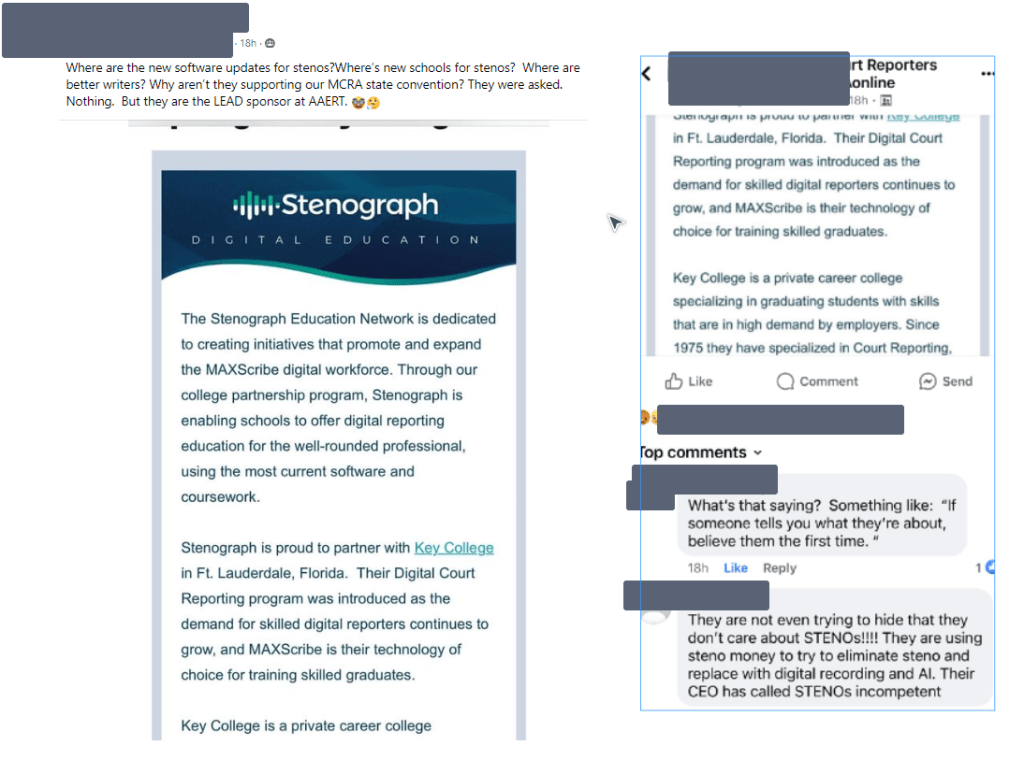




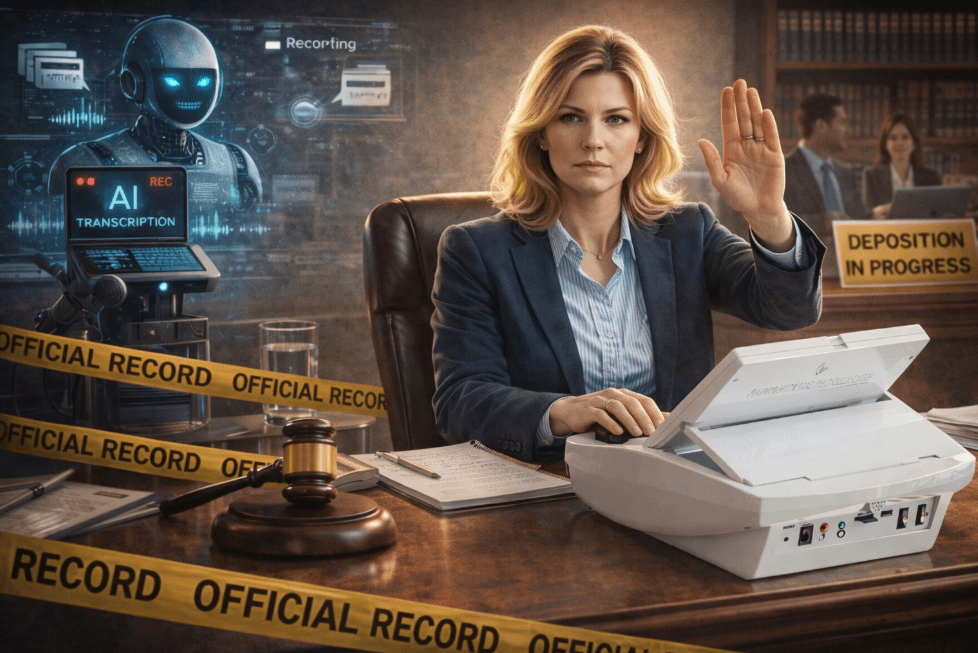












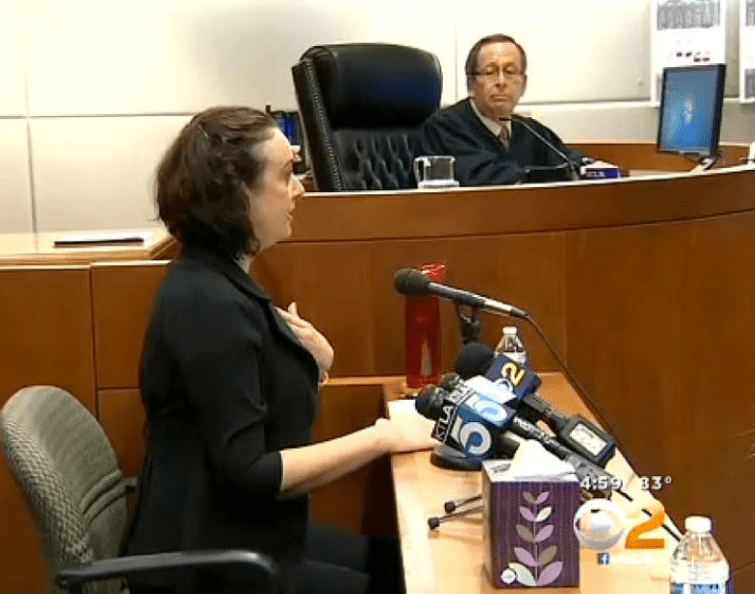








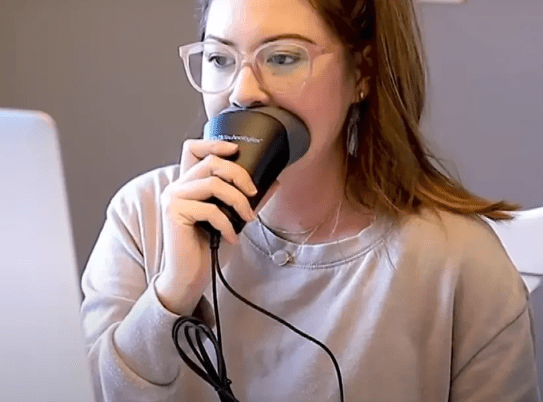
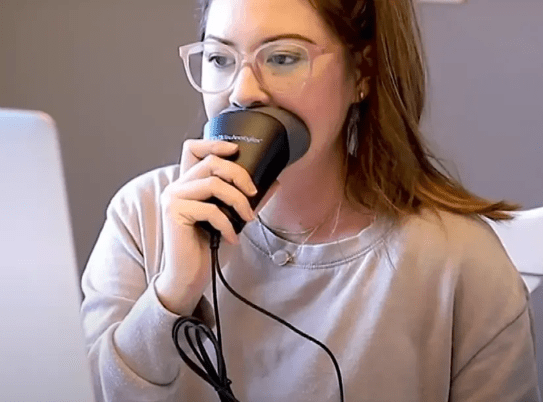







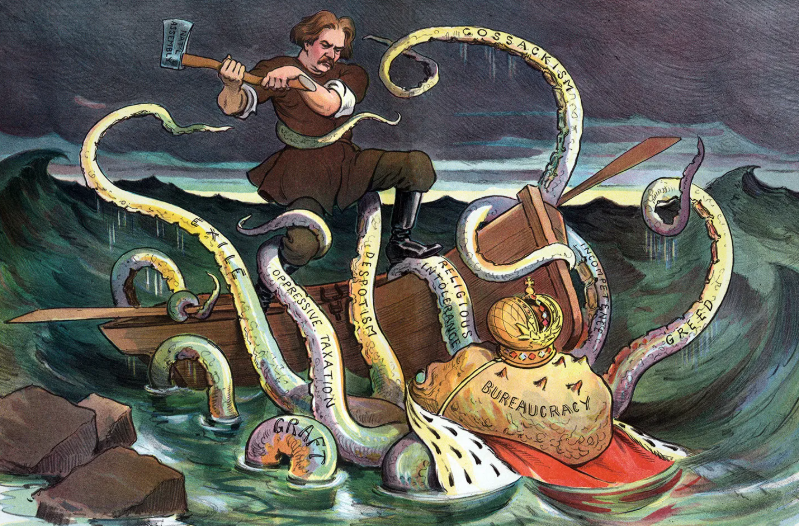

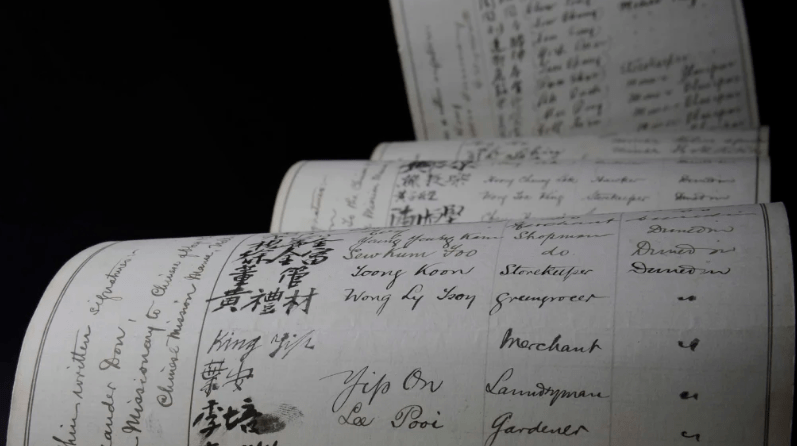






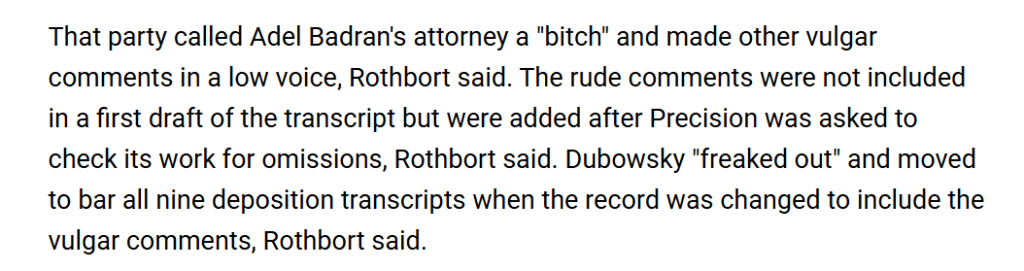





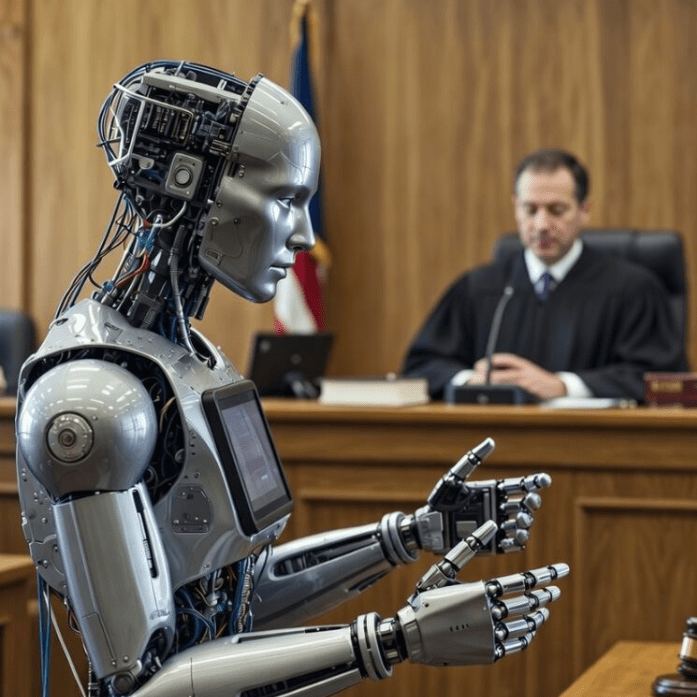



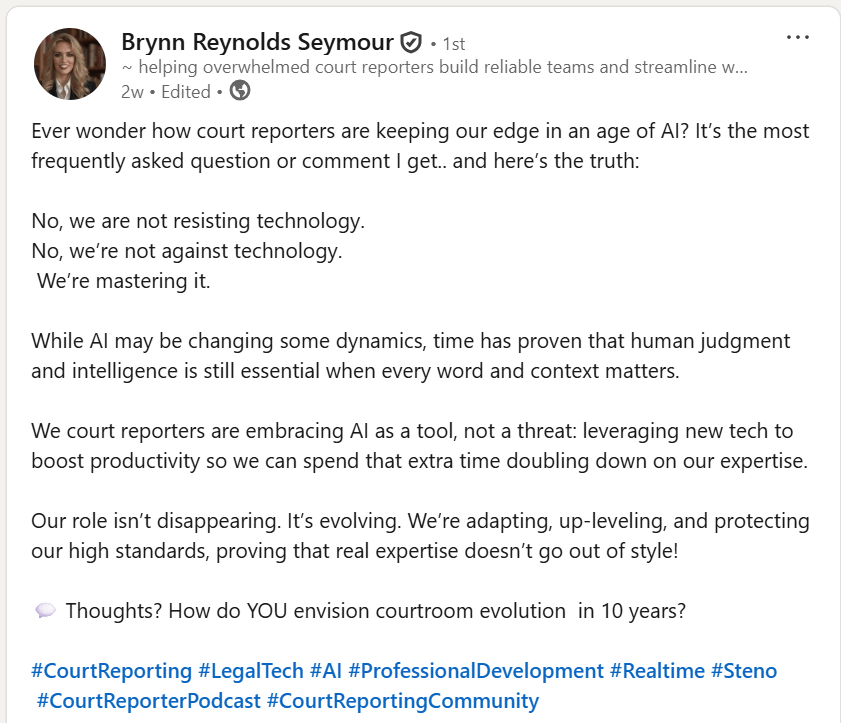



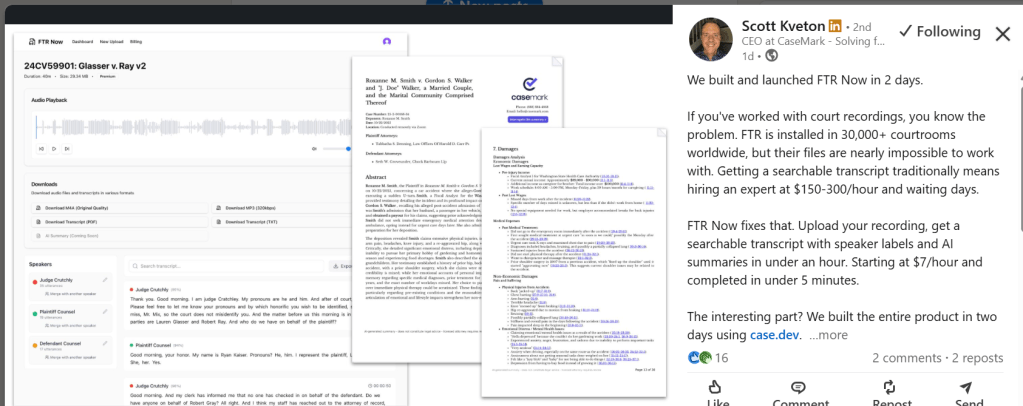












 STENOIMPERIUM
You must be logged in to post a comment.