In the age of artificial intelligence, where voice assistants answer questions, virtual meetings transcribe in real-time, and speech-to-text tools claim increasing accuracy, many in the legal field are asking: Can AI really replace the human court reporter?
The answer, grounded in both science and lived experience, is not yet—and maybe never.
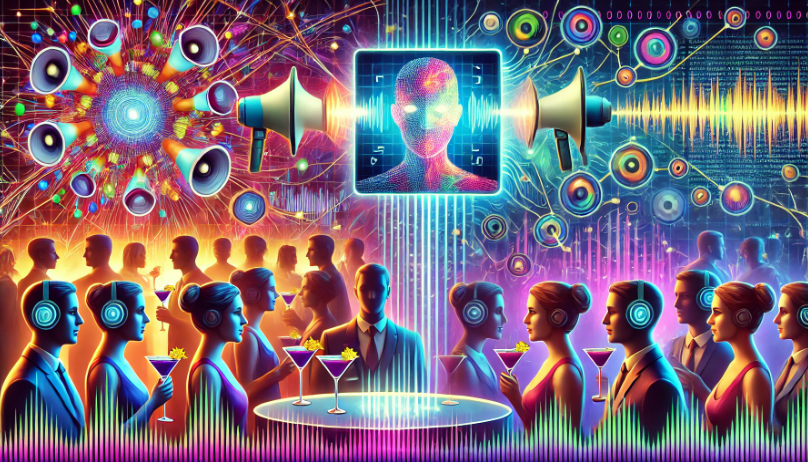
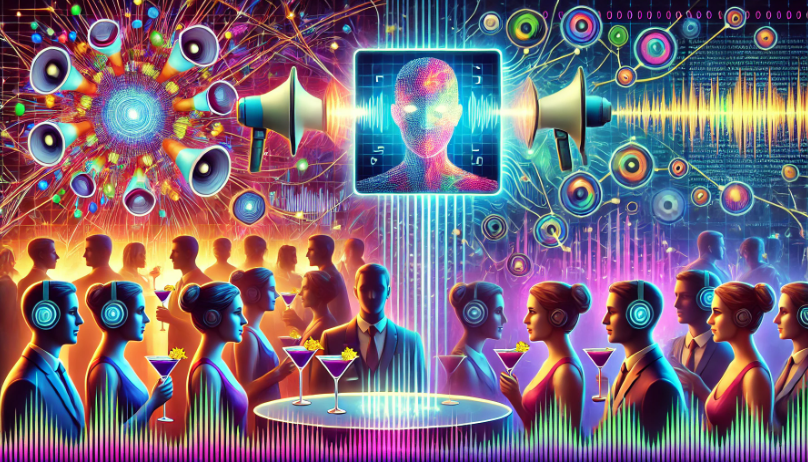
While AI has made substantial progress in voice recognition and transcription, especially in ideal conditions with single speakers, the “cocktail party problem”—isolating and accurately transcribing multiple voices in a noisy, overlapping environment—remains a massive technical hurdle. This issue is central in real-world legal proceedings like depositions, where parties often speak simultaneously, argue emotionally, and interrupt each other. Let’s explore why AI, despite its promise, still can’t match a skilled human stenographer—and likely won’t for years to come.
Understanding the “Cocktail Party Problem”
The “cocktail party problem” refers to the human brain’s remarkable ability to focus on a single conversation in a noisy, multi-speaker environment. AI engineers have been trying to replicate this for decades. Classical computing techniques—paired with modern machine learning tools like Deep Clustering, Permutation Invariant Training (PIT), and Transformer-based models—have made progress, but perfection remains elusive.
Even in 2025, separating ten simultaneous voices in a noisy, echo-filled room with real-time accuracy is not just challenging—it’s nearly impossible.
While AI performs well with two speakers in a controlled setting, its accuracy nosedives in the kinds of real-world, high-stakes environments court reporters are trained to handle: multiple overlapping speakers, varied accents, emotional outbursts, and background noise.
How AI Performs in Legal Settings (Spoiler: Not Great)
In structured scenarios, like Zoom calls with clear audio and polite turn-taking, AI can achieve up to 90-95% accuracy with two speakers—sometimes three. But depositions are not polite Zoom calls.
Let’s break down where AI struggles most:
- Overlapping speech: Once a third speaker joins—or two people interrupt each other—AI transcription models collapse. Speaker attribution becomes faulty. Words are dropped. Run-on sentences emerge. The transcript becomes unreliable.
- Accents: Non-native or regional accents can throw off AI by as much as 20% in error rate. These models are only as good as their training data, and many are not trained on the linguistic diversity found in real-world litigation.
- Emotional speech: When a witness becomes combative or agitated, the cadence and tone change. AI isn’t built to parse rapid-fire questioning, sarcasm, or shouting.
- Reverberation and background noise: Even light background noise—papers rustling, doors opening, HVAC hum—can trip up speech recognition software, especially in courtrooms or law offices not set up for pristine audio capture.
Why Human Stenographers Still Win
1. 98-99% Accuracy — Even in Chaos
Licensed court reporters are trained professionals who consistently hit the gold standard of 98-99%+ verbatim accuracy, regardless of speaker overlap, argument, or disruption. In contrast, even the best AI models today aspire to hit that level under ideal conditions—and often fall short.
2. Mastery of Context and Nuance
Humans understand context, tone, and legal jargon in a way machines simply do not. A stenographer knows that “objection” has procedural weight. They can distinguish homophones by meaning (“their” vs. “there”). They can flag when a speaker is being sarcastic, hostile, or unclear—and ask for clarification. AI can’t.
3. Speaker Attribution and Overlap Resolution
Court reporters are trained to track multiple voices at once, even in overlap. They can distinguish who is speaking by tone, pattern, or even gesture. If necessary, they intervene: “One at a time, please.” Machines can’t do that.
4. Legal Certification and Verification
Human court reporters also serve as impartial officers of the court. They administer oaths, certify transcripts, and ensure that the record is legally admissible. AI can’t notarize anything. Any AI-generated record still needs human oversight and editing to be court-usable—and in many jurisdictions, AI-only records aren’t admissible at all.
5. Flexibility in the Face of Imperfection
If someone mumbles or a word is muffled, a stenographer uses logic, context, and professional judgment to fill in the blank or request clarification. AI, meanwhile, guesses wrong or inserts “[inaudible]” without discretion. In a deposition, that’s a risk you can’t afford.
The Illusion of Progress: What the Future Holds
To be fair, the future is promising. Emerging technologies like spatial audio processing, AI-assisted diarization (speaker separation), and even audio-visual transcription that uses lip-reading are closing the gap. Within 2–3 years, we may see 95% accuracy for overlapping 2–3 speakers in well-mic’d, controlled environments.
But that still doesn’t account for 10 people at a table, talking over each other with emotion and nuance, in an echoing boardroom, without perfect mic placement. That’s the true “cocktail party” test—and it’s one that court reporters pass every day.
Hybrid Models: Augment, Not Replace
Where AI shows the most promise is not as a replacement—but as an assistant. It can:
- Create rough drafts for review
- Help identify speakers
- Flag inaudible segments
- Speed up turnaround time
But in all these roles, a human must still be present to certify, correct, and finalize the record. Just like autopilot doesn’t replace pilots, AI doesn’t replace stenographers—it just helps them fly more efficiently.
Conclusion: The Human Edge Remains Unmatched
AI has made incredible strides. But in a courtroom or deposition, the stakes are too high for 85% accuracy and guesswork. A misattributed sentence could cost a client millions. An inaudible phrase could upend an appeal.
Legal proceedings demand a level of precision, judgment, and adaptability that only a trained human can provide. Until AI learns to interpret sarcasm, break up fights, and swear in witnesses, the court reporter remains not just relevant—but essential.
So while the tech world races to solve the cocktail party problem, court reporters are already solving it every single day—with a steno machine, a sharp ear, and a mind that understands far more than just the words.
StenoImperium
Court Reporting. Unfiltered. Unafraid.
Disclaimer
The content of this post is intended for informational and discussion purposes only. All opinions expressed herein are those of the author and are based on publicly available information, industry standards, and good-faith concerns about nonprofit governance and professional ethics. No part of this article is intended to defame, accuse, or misrepresent any individual or organization. Readers are encouraged to verify facts independently and to engage constructively in dialogue about leadership, transparency, and accountability in the court reporting profession.
- The content on this blog represents the personal opinions, observations, and commentary of the author. It is intended for editorial and journalistic purposes and is protected under the First Amendment of the United States Constitution.
- Nothing here constitutes legal advice. Readers are encouraged to review the facts and form independent conclusions.
***To unsubscribe, just smash that UNSUBSCRIBE button below — yes, the one that’s universally glued to the bottom of every newsletter ever created. It’s basically the “Exit” sign of the email world. You can’t miss it. It looks like this (brace yourself for the excitement):

 STENOIMPERIUM
ASR is futuristic and investable.Soon we’ll all be happily discussing mics, mixers, and…peripherals!What are you renaming your blog? Wait, wait — don’t tell me. “There’s A New Kid In Town.”Yeah! There is —Sent from my Verizon, Samsung Galaxy smartphone
LikeLike
Thanks for the enthusiasm! ASR is futuristic—and it’s exciting to see progress in tech. But in legal proceedings, accuracy isn’t optional. Court reporters aren’t worried about microphones and mixers. We are the mixer—real-time, human-level cognition that AI still can’t match in overlapping speech, speaker attribution, and nuanced language. ASR may be the “new kid,” but in court, precision and accountability still rule the playground.
LikeLike
This is a gre
LikeLike