
Court reporting faces a critical pricing question: should new reporters charge less for the same official record? The answer determines whether the profession maintains a stable foundation or trains the market to seek the lowest bidder. Experience should raise earnings through advanced services like realtime and expedited delivery — not reduce the baseline value of the record itself.
Tag Archives: writing
When the Record Speaks — and Software Interprets – The Unsettled Ethics of AI Deposition Summaries
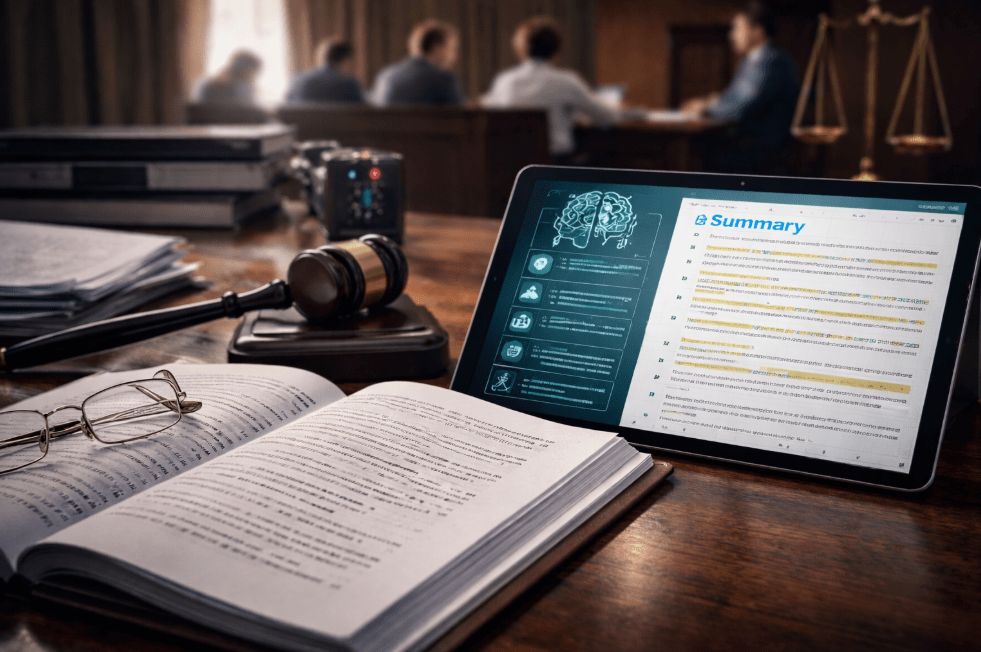
AI deposition summaries are being sold beside sworn transcripts, raising a question older than the technology itself: when interpretation travels with the record, does neutrality follow it? Advisory Opinion 32 was written to protect public confidence in the reporter’s role, not to regulate keyboards. Replacing a human summarizer with software may change the tool, but it does not automatically eliminate the appearance concerns the rule was meant to prevent.
Continuing Education or Professional Replacement?
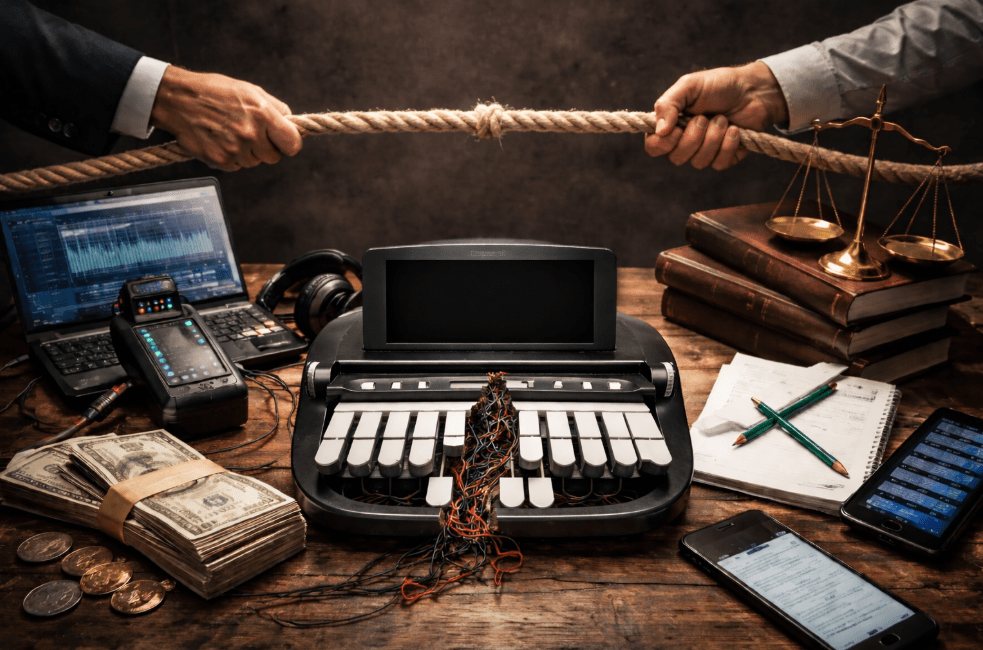
An Investigation Into NCRA’s CEU Approvals, Vendor Influence, and Financial Pressures When Continuing Education Becomes Industry Re-Engineering – Questions Surround NCRA-Approved CEUs and Method-Agnostic Training StenoImperium Investigative Series Draft A Profession Being Rewritten — With Its Own Credentials For decades, stenographic court reporters relied on the National Court Reporters Association (NCRA) as both their professionalContinue reading “Continuing Education or Professional Replacement?”
Whitney Kumar Returns to the Spotlight as Judy Justice Begins Another Season – 2026

Whitney Kumar is back for another season of Judy Justice, returning to the courtroom where precision meets prime time. As the show’s official court reporter, Whitney brings authenticity, professionalism, and deep legal expertise to one of streaming’s most-watched courtroom series. Her continued presence highlights not only her own success, but the vital role court reporters play in preserving the integrity of the record.
The Polite Language of Professional Displacement

Veritext’s latest CEU webinar series is being framed as professional development, but its core message deserves scrutiny. By asserting that capture method does not matter, the programming advances a narrative that conflicts with evidentiary law, professional ethics, and NCRA’s stated mission. With CEU approval still pending, members have a narrow window to speak up—before silence is mistaken for consent.
An Open Letter to Kristin Cabot: A Profession That Understands Second Acts

Branded “unemployable” after a viral moment, Kristin Cabot’s story raises a larger question: what happens to capable professionals when public shame outpaces truth? Court reporting offers a rare second act—one grounded in skill, neutrality, and measurable merit. In a profession that values accuracy over optics, redemption isn’t performative. It’s earned, keystroke by keystroke.
Making a Record – Why Attorneys Keep Losing Their Exhibits on Appeal

Attorneys often assume that showing or publishing an exhibit makes it part of the record—it doesn’t. Only the judge can direct that an exhibit be “marked” or “received.” The clerk keeps the official list; the reporter records what’s said. If you skip the formal steps, your exhibits vanish on appeal. Make your record right, or risk losing it forever.
AI Transcripts Gone Wild – The Day a Transcription Company Asked a Court Reporter to “Certify” Their Robot

A transcription company actually asked a certified court reporter to “sign off” on an AI-generated deposition—no oath, no saved audio, no chain of custody. When the attorney demanded a lawful certification, they tried to hire a reporter to legitimize their robot record. This isn’t innovation; it’s impersonation—and it threatens the integrity of every legal transcript in America.
The Great Theory Divide – Why “Short Writing” Alone Won’t Save Court Reporting

Court reporting’s future hinges on how we train new reporters. While “short writing” promises speed, decades of data show it fails to scale. Traditional phonetic theories taught in NCRA-accredited programs remain the backbone of reporter education—emphasizing accuracy, clarity, and proven outcomes. Recruitment reform, not shortcuts, will strengthen the pipeline and ensure a generation ready to protect the record.
Why AI Will Never Replace Human Court Reporters – The Hearsay at the Heart of the Machine

AI is nothing more than a statistical parrot—rearranging old data, guessing the next word. In court, that’s not testimony. That’s hearsay. Only a certified, sworn reporter can deliver a verbatim, admissible record. Machines can imitate, but only humans safeguard justice. Stenography isn’t nostalgia—it’s necessity.
Saving Court Reporting – It’s About More Than Fighting AI

The legal world has spent years debating artificial intelligence and digital recording in courtrooms. And with good reason. Accuracy, privacy, and accountability are not luxuries; they are the bedrock of justice. Human court reporters remain the gold standard for preserving the record. But while we fight Silicon Valley’s latest experiment, another crisis is starving ourContinue reading “Saving Court Reporting – It’s About More Than Fighting AI”
The Irreplaceable Human Court Reporter – Why AI Will Never Capture the Record

A courtroom is not a lab. It is not a tech demo or a theoretical exercise in “innovation.” It is a crucible where freedom, reputation, livelihood, and even personal safety are decided every day. The people who work there know this truth in their bones: the record matters. And when it comes to creating thatContinue reading “The Irreplaceable Human Court Reporter – Why AI Will Never Capture the Record”
When Robots Win Trophies – What It Means for the Future of Stenography

A robot holding a trophy may symbolize progress, but in the courtroom, it represents a dangerous shortcut. While AI may offer speed, only a human stenographer ensures accuracy, accountability, and justice. When automation wins the spotlight, due process can lose. Let’s not trade trust for tech.
Why Human Stenographers Still Outperform AI in the “Cocktail Party” Problem—and Always Will in Legal Proceedings

AI still can’t match human stenographers—especially in legal settings. From overlapping speech and accents to emotional testimony, the “cocktail party problem” is far from solved. Only a certified court reporter can deliver 99% accuracy, real-time clarification, and a legally admissible record. Don’t fall for the hype. Humans are still the gold standard.
When Advocacy Turns Hostile – A Call for Integrity in Court Reporting
When advocacy turns hostile, professionalism suffers. In the court reporting world, performative leadership and public bullying are replacing ethics and collaboration. This anonymous essay calls for a return to integrity — where disagreement isn’t met with defamation, and leadership doesn’t rely on intimidation. The future of steno depends not just on who speaks, but how we choose to lead.
The Backfire of the Stop the SoCal Stip Movement – How a Campaign to Protect Court Reporting Accelerated Its Threat

The Stop the SoCal Stip movement was meant to protect court reporters—but instead, it triggered resentment among attorneys that’s now fueling our replacement. What began as a legal ethics stand has been twisted into a narrative of greed. The result? Retaliation via digital recording and ASR. If we don’t reclaim the narrative, the gold standard of stenography could disappear.
Why AAERT-Certified Digital Reporters Are Not the Answer to the Court Reporter Crisis
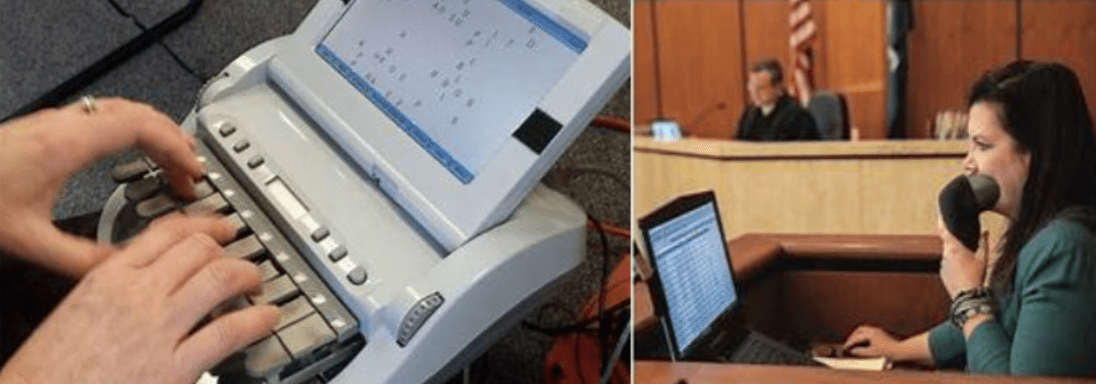
Digital reporters certified by AAERT are not equivalent to licensed court reporters. They don’t write realtime, certify records on the spot, or meet the legal standards required in high-stakes proceedings. While digital recording may seem like a quick fix for shortages, it risks long-term damage to the integrity of the record. The solution isn’t substitution—it’s investment in the gold-standard profession that’s already working.
“Five-Oh-Two” & The Invisible Danger in ASR Court Transcripts

ASR may produce clean-looking transcripts, but it lacks the human judgment needed to capture meaning, nuance, and legal context. In court, where every word matters, even subtle misinterpretations can distort the record and impact outcomes. Accuracy isn’t just about words—it’s about understanding. That’s why certified court reporters remain essential in preserving the integrity of the legal process.
The Future of Court Reporting & Why the Fight Is Now—And Why You Should Step Into Your Place & Join

A student recently asked me: “What are the chances of AI putting court reporters out of work in the next five to ten years?” The honest answer? It’s a tricky question. Because we’re not looking at a slow fade—we’re standing at a tipping point. The next one to three years will determine everything. There’s seriousContinue reading “The Future of Court Reporting & Why the Fight Is Now—And Why You Should Step Into Your Place & Join”
Save Steno Now, or Lose It Forever – Why Court Reporters Can’t Be Replaced by AI

Court reporting isn’t dying—it’s evolving. With overflowing steno schools, waitlists, and voicewriters accelerating training, we’re meeting demand. The real threat isn’t a shortage—it’s premature replacement by AI. If we let this profession collapse, we lose the infrastructure that guarantees accuracy in our justice system. If you want us tomorrow, you must choose to support us today—before it’s too late.
The SITC Events – Uncovering the Financials, the Fallout, and the Mob Response

At first glance, The Fearless Stenographers Conference seemed like a triumph for the court reporting community. But behind the scenes, it exposed a troubling pattern of financial opacity, legal noncompliance, and retaliatory behavior. When legitimate concerns were raised, Shaunise Day didn’t offer transparency—she launched a campaign of intimidation. This is not just a story about mismanagement. It’s a warning about what happens when ego overrides accountability.
Should Reporters Be Rallying Behind Shaunise Day?

Shaunise Day has positioned herself as a voice within the court reporting profession—despite never completing certification or working as a licensed reporter. While she promotes events and media under the banner of advocacy, many professionals question her credibility and qualifications. In a field defined by precision and licensure, critics argue that leadership should come from those who’ve earned their place within the industry through experience and certification.
When Critique Gets Censored – My Experience With a Trademark Complaint

After receiving a trademark complaint from the founder of Steno In The City, I’m speaking out. This isn’t about infringement — it’s about silencing criticism. I’ve used the name fairly, for commentary and accountability. When brand protection takes priority over ethical responsibility, we have to ask: who’s being protected, and who’s being exploited? This is my experience, and why I won’t stay silent.
The Hidden Cost of AI and Digital Reporters is A Looming Crisis in the Court Reporting Industry

As agencies and tech vendors chase profits, they’re offloading transcript cleanup onto scopists and proofreaders, driving up subcontractor rates and forcing court reporters to raise theirs just to survive. Attorneys balk at rising costs, unaware reporters are earning the same as decades ago. This shift isn’t just inefficient—it feels intentional, pushing experienced professionals out to make way for cheaper, lower-quality digital alternatives masked as innovation.
Gatekeeping, Fear, and the Silencing of Dissent is a Hot Crisis in the Court Reporting Community

In today’s court reporting profession, too many voices are silenced not by debate, but by dismissal. When someone asks, “Who are you?” before deciding whether to block you, it’s not curiosity—it’s control. Gatekeeping has replaced dialogue, and fear has replaced professionalism. We must stop judging messages by the messenger and start confronting the culture that protects power over truth. Silencing isn’t safety—it’s complicity.
The Manufactured Court Reporter ‘Crisis’ and the Dangerous Push for Unlicensed Transcription

The myth of a court reporter shortage is being exploited to push unlicensed transcription services into the legal system. But only certified court reporters—not agencies or transcriptionists—can serve as the Responsible Charge. They alone have the authority to certify transcripts, administer oaths, and safeguard the record. Replacing them with unqualified labor threatens due process and undermines the very foundation of courtroom integrity.
The Unsung Heroes of Court Reporting – Still Standing Strong Past 65

Many predicted a crisis in court reporting by 2018, citing mass retirements and declining enrollments. But they underestimated one thing: court reporters don’t retire at 65. These devoted professionals, many in their 70s, continue working with unmatched skill and passion. Their enduring presence has kept the legal system afloat—unsung heroes preserving the record, one word at a time, while others quietly left the field.
California’s AB 882 – A Temporary Solution or a Trojan Horse?

California’s AB 882 aims to address the court reporter shortage by temporarily allowing electronic recordings, but its vague language on “good-faith” hiring efforts leaves room for abuse. Without clear standards, the bill risks becoming a Trojan horse for permanent electronic recording. Real solutions require accountability, innovation, and long-term investment—not a short-term fix that could undermine human court reporting forever.
Inside the Diddy Trial – The Rock Star is the Real-Time Court Reporter Behind the Scenes – While Media Leans on AI

While media outlets like Court TV rely on AI-generated summaries of the Diddy trial, a skilled real-time stenographic reporter from Southern District Reporters, P.C. is officially documenting every word in federal court. Despite public confusion, the court’s official transcript comes from this human professional—not artificial intelligence. Journalists like Meghann Cuniff have praised the court reporter’s accuracy and speed in such a high-profile, fast-paced case.
The Realities of Court Reporting School, Certification, and Career Paths in California

Court reporting offers a high-demand, well-compensated career, but entering the field requires a major investment of time and money. With rigorous certification standards, state licensing requirements, and tuition costs exceeding $60,000, it’s not a casual commitment. However, the long-term rewards—job security, strong benefits, and six-figure potential—make it a viable path for those prepared to meet the challenge and navigate California’s competitive legal landscape.
The Myth of 60,000 Court Reporters – How Inflated Figures Are Misleading the Legal Industry

The court reporter “shortage” has been exaggerated by misleading data—like inflated claims of 60,000 past reporters and failed projections from the 2013 Ducker Study. In reality, California has over 5,500 active reporters, with new licensees—especially voice writers—on the rise. With realistic recruitment, the shortage could be resolved in under six years. The crisis isn’t supply—it’s misinformation and mismanagement.
Why AAERT Certification Falls Short in the Court Reporting Profession

AAERT certification may exist, but it does not meet the rigorous standards of licensed stenographic court reporters. Unlike stenographers, who provide realtime, verifiable transcripts and are held to strict legal and ethical codes, AAERT-certified digital reporters often work with less oversight and accountability. In high-stakes legal proceedings, accuracy and reliability are paramount — and that’s why stenography remains the trusted standard in the court reporting profession.
The Real Threat to Stenography Isn’t Technology — It’s a Manufactured Crisis

The stenographic profession isn’t outdated — it’s under attack. A manufactured “shortage” narrative, pushed by corporate interests, aims to replace certified reporters with unregulated digital alternatives. But court reporting is thriving, technologically advanced, and essential to justice. It’s time to expose the fraud, reclaim our narrative, and fight for the integrity of the record — because the truth deserves a skilled human witness.
Fail to Adapt to Disruption and Pay the Price – Court Reporters Heed the Warning
Court reporting isn’t antiquated—it’s one of the most technologically advanced professions in the legal world. As we pass the tipping point of digital disruption, our challenge isn’t resisting change but leading it. Certified reporters, using sophisticated tools like ASR-integrated CAT software, must set the standard. The future depends on preserving integrity, enforcing certification, and maintaining responsible charge in every courtroom transcript.
A Court Reporter’s Perspective – Clearing Up the “Uh-huh” vs. “Huh-uh” Confusion in Transcripts

Attorneys often tell witnesses, “Please answer with ‘yes’ or ‘no’ because the court reporter can’t type ‘uh-huh.’” But the truth is, we can—and do—capture every utterance phonetically. The real issue arises when interpreting these sounds on paper. A simple solution? State upfront: “‘Uh-huh’ means yes; ‘huh-uh’ means no.” This small clarification eliminates later confusion and ensures a clear, undisputed record for all.
The Hidden Dangers of Hiring Uncertified Court Reporting Professionals – Why Due Diligence Matters Now More Than Ever

In today’s digital landscape, uncertified court reporters, scopists, and proofreaders are flooding the market, raising serious concerns for professionals. The rise of “fly-by-night” providers threatens the accuracy, confidentiality, and integrity of legal transcripts. Every hiring decision matters—because your name, reputation, and certification are on the line. Trust, but verify. Vet every collaborator carefully to protect your professional legacy and uphold the standards of the court reporting industry.
Florida’s Embrace of Digital Court Reporting – A Controversial Shift in Legal Transcription

Florida is redefining court reporting by certifying digital reporters through its FPR™ program, allowing them to capture proceedings without directly transcribing them. Unlike stenographers and voice writers—who are in responsible charge of the record—digital reporters often outsource transcription, raising concerns about accuracy, accountability, and legal integrity. This shift may influence other states, but the long-term risks demand careful scrutiny and stronger regulatory oversight.
Court Reporter Payment Delays – What California Law Says and How to Respond When Agencies Stall

In the world of freelance court reporting, payment disputes are an all-too-common headache. One of the most frustrating scenarios is when a court reporting agency delays payment to the reporter because they themselves haven’t been paid by the attorney or law firm requesting the transcript. For years, this practice left reporters in financial limbo, despiteContinue reading “Court Reporter Payment Delays – What California Law Says and How to Respond When Agencies Stall”
“Why I Love Court Reporting” FB Group Celebrates a Decade of Dedication in the Court Reporters’ Community & Camaraderie

For ten years, the Why I Love Court Reporting Facebook group has fostered camaraderie, inspiration, and unwavering support for court reporters worldwide. With over 5,000 members, this thriving community celebrates the profession’s passion, perseverance, and purpose. As we mark this milestone, we honor the dedication of those who uphold justice with every keystroke. Here’s to a decade of dedication—and many more to come!
The Importance of Ergonomics and Professionalism for Court Reporters

For those who spend long hours reporting from home, investing in a high-quality chair is essential. I’ve had my Herman Miller Embody chair for about a decade, and I couldn’t report without it. Designed for long-term comfort and optimal posture, it provides the perfect balance of support and flexibility, reducing strain during marathon transcription sessions. If you’re looking for a game-changer in home office ergonomics, this chair is worth every penny.
The Battle Between Humans and AI in Court Reporting

The battle between humans and AI in court reporting is intensifying as Automatic Speech Recognition (ASR) technology advances. While ASR promises faster, cost-effective transcriptions, its current 76% accuracy rate still falls short in legal proceedings, where precision is critical. Human court reporters maintain an edge with their contextual understanding, adaptability, and ability to transcribe multiple speakers, ensuring accuracy that AI currently cannot match.
Unlock Your Full Potential with Strategic Rest: A Guide for Steno Students

Mastering stenography is a marathon, not a sprint. The best stenographers don’t just work hard; they rest smart. Strategic rest isn’t a weakness—it’s a competitive advantage. By integrating mental, physical, emotional, social, sensory, creative, and spiritual rest into your routine, you can boost focus, stamina, and success. Which type of rest do you need today? Small changes can make a big impact.
Supporters Threaten Violence Against Whistleblower Over Exposé

A group of supporters attempted to identify and harass a whistleblower after their blog exposed unethical business practices. They engaged in doxxing, defamation, and intimidation, escalating threats to both career and personal safety. Despite these efforts, the blogger documented the harassment for potential legal action. Ultimately, the campaign of intimidation has only reinforced the blogger’s commitment to transparency and integrity within the profession.
 STENOIMPERIUM