
Court reporting faces a critical pricing question: should new reporters charge less for the same official record? The answer determines whether the profession maintains a stable foundation or trains the market to seek the lowest bidder. Experience should raise earnings through advanced services like realtime and expedited delivery — not reduce the baseline value of the record itself.
Tag Archives: VerbatimRecord
When the Record Speaks — and Software Interprets – The Unsettled Ethics of AI Deposition Summaries
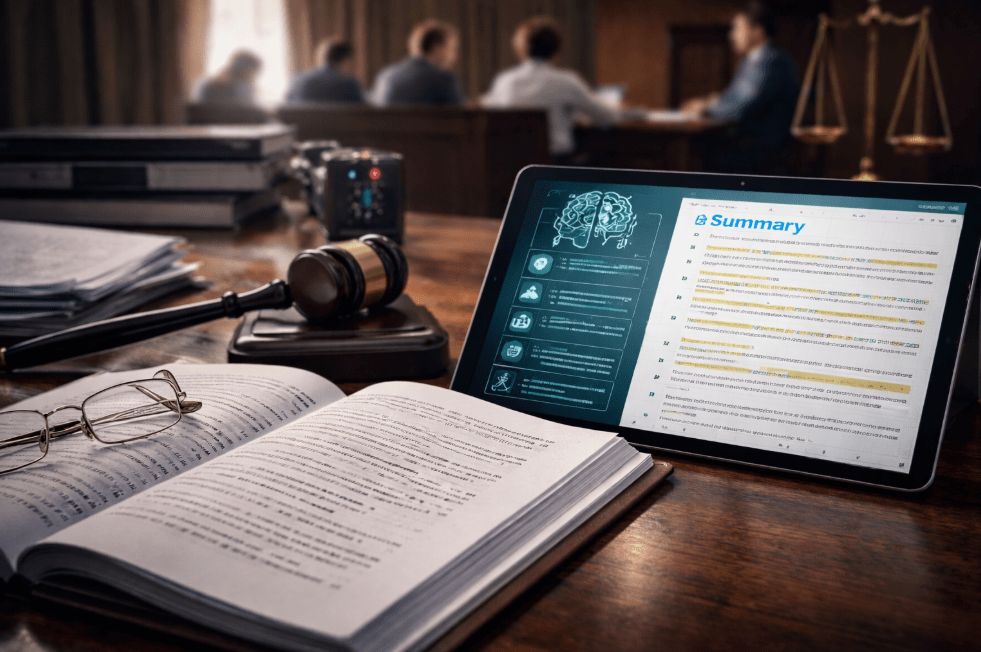
AI deposition summaries are being sold beside sworn transcripts, raising a question older than the technology itself: when interpretation travels with the record, does neutrality follow it? Advisory Opinion 32 was written to protect public confidence in the reporter’s role, not to regulate keyboards. Replacing a human summarizer with software may change the tool, but it does not automatically eliminate the appearance concerns the rule was meant to prevent.
Between the Words – What Court Reporters Can Learn From the People Who Interrupt

In courtrooms, interruption is often treated as a matter of manners. But emerging research suggests it is more often a matter of nervous systems. High processing speed, anxiety, and attention-regulation differences can drive people to speak before they mean to. For court reporters, understanding this distinction is not indulgence. It is a practical tool for protecting the record and restoring order with precision rather than irritation.
Opinion | Digital Reporting Is Not “Clearly Lawful.” It Is Clearly Inferior — and Legally Dangerous

Digital reporting is not merely a different tool — it is a different evidentiary product. A transcript created after the fact from audio is reconstruction, not a contemporaneous verbatim record. Without licensed stenographic capture, individual accountability, and real-time certification, courts are left with hearsay dressed up as efficiency. The integrity of the record is not optional.
“No Such Thing as a Job Nobody Wants” – Debunking a Convenient Myth in the Court Reporting Industry

Agencies claim they use digital recorders only for the “jobs no one wants.” But reporters know better. Short PI and workers’ comp depos aren’t unwanted—they’re flexible, essential, and often preferred. Labeling them “undesirable” masks profit motives, undercuts opportunities for new talent, and devalues critical legal proceedings. There’s no such thing as a job nobody wants—only work that deserves respect and fair pay.
The Incontrovertible Record – Why a Stenographer’s Notes Still Reign Supreme

In every courtroom, voices overlap, tempers flare, and the stakes couldn’t be higher. Amid the chaos, one thing never wavers: the stenographer’s notes. They are the unshakable record—neutral, permanent, and immune to distortion. Machines may glitch, audio may falter, but the stenographer’s notes never lie. They remain the ultimate safeguard of truth in our justice system.
How to Be a Court Reporter’s Dream – A Guide for Attorneys and Witnesses

A strong transcript doesn’t happen by accident. Attorneys and witnesses can make a court reporter’s day—and protect their own record—by pacing questions, spelling difficult names, avoiding overlap, and simply showing respect. The reporter is your silent partner in justice. A handshake, a thank you, or a moment of clarity today can safeguard your record tomorrow.
 STENOIMPERIUM