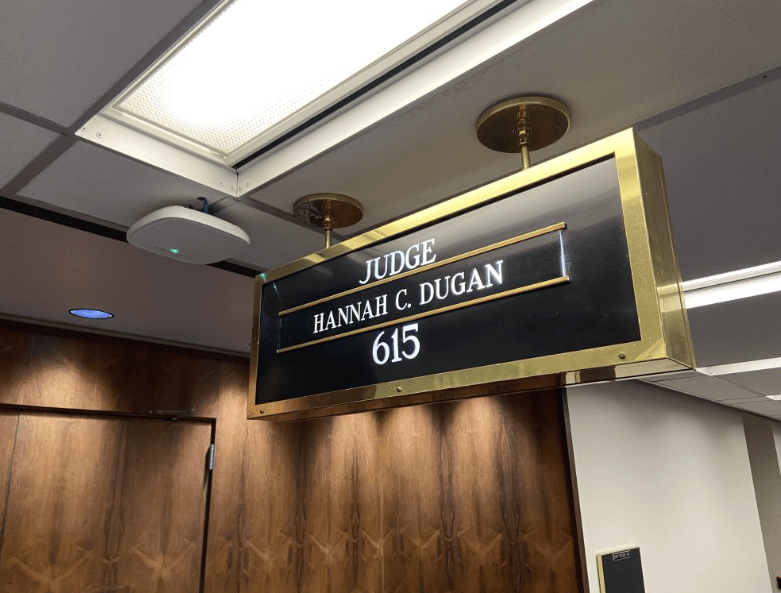
When jury selection begins next week in the federal obstruction case against Milwaukee County Circuit Court Judge Hannah Dugan, the proceedings will unfold under the shadow of a piece of evidence rarely seen in an American courtroom: an off-the-record audio recording captured inside her courtroom during a criminal calendar session. The recording—sealed from public releaseContinue reading “An Off-the-Record Recording Takes Center Stage in Judge Hannah Dugan’s Federal Trial”
Tag Archives: trump
AI Transcripts Gone Wild – The Day a Transcription Company Asked a Court Reporter to “Certify” Their Robot

A transcription company actually asked a certified court reporter to “sign off” on an AI-generated deposition—no oath, no saved audio, no chain of custody. When the attorney demanded a lawful certification, they tried to hire a reporter to legitimize their robot record. This isn’t innovation; it’s impersonation—and it threatens the integrity of every legal transcript in America.
Saving the Profession Isn’t a Runway Walk, It’s a Battlefield

Saving stenography isn’t a runway walk—it’s a battlefield. Agencies have leveraged legislation to gain ground, and courts now put their names on forms once reserved for reporters. Power circles inside our own profession deflect responsibility, as seen in the Notary Loophole fallout. The truth is simple: reporters must reclaim leadership, defend independence, and fight for the integrity of the record.
Trial Without a Reporter – What I Witnessed in L.A. Court Should Alarm Every Litigator
When a judge told attorneys, “you don’t need a court reporter” — despite one being present and assigned — it exposed a growing judicial trend: bypassing licensed reporters in favor of unregulated recordings. Critics say it’s not about shortages. It’s about power, profit, and erasing the record itself.
Ethical Red Flags – Are Attorneys Violating Rules of Professional Conduct by Retaliating Against Court Reporters?

Some plaintiff attorneys are retaliating against court reporters by replacing them with uncertified digital alternatives—not out of necessity, but spite. In doing so, they may be violating ethical rules around competence, candor, and fairness. Using uncertified transcripts can mislead the court, harm clients, and erode due process. It’s not just bad judgment—it may be professional misconduct.
Protecting the Integrity of the Legal Record Nationwide – A Formal Request for NCRA to Lead on ASR Policy Reform
A National Model Law to Regulate the Use of ASR and Preserve Human Oversight in Legal Proceedings As part of this effort, I respectfully ask that NCRA spearhead a coordinated legislative campaign across all 50 states, using this proposal as a model law. NCRA can play a vital role by providing state associations with aContinue reading “Protecting the Integrity of the Legal Record Nationwide – A Formal Request for NCRA to Lead on ASR Policy Reform”
An Urgent Call for Federal Action – Protecting the Legal Record in the Age of ASR
To the NCRA Board of Directors and Executive Leadership: As our profession stands at a technological crossroads, we are faced with a choice: lead the conversation on responsible innovation—or watch from the sidelines as automation reshapes our industry without us. This letter is a call to action, urging the National Court Reporters Association to takeContinue reading “An Urgent Call for Federal Action – Protecting the Legal Record in the Age of ASR”
Who Owns the Record? What the Biden Leak Means for Court Reporters

President Biden’s leaked audio wasn’t just a political moment—it was a wake-up call for court reporters. When legal recordings fall into untrained hands, confidentiality and trust go with them. This blog explores why court reporters, as the Responsible Charge, are essential to protecting the integrity of the record—and what’s at stake if we’re pushed out of the process.
THE RECORD IS NOT OPTIONAL – Despite AB 2664, Attorneys Still Challenge Freelance Reporters in Courtrooms

In April 2025, a freelance court reporter shared a troubling story: an attorney attempted to oppose the appointment of a reporter pro tempore during a hearing. Despite clear legal precedent, the attorney challenged the reporter’s right to be present simply because the reporter was a freelancer. This should no longer be happening. California law settledContinue reading “THE RECORD IS NOT OPTIONAL – Despite AB 2664, Attorneys Still Challenge Freelance Reporters in Courtrooms”
A Crisis in the Courts – L.A. County’s Reporter Shortage, Jessner’s Controversial Order, and the Looming Threat of Jury Nullification

Los Angeles County is facing a legal crisis as Presiding Judge Jessner issues an order allowing electronic recordings in civil, family, and probate courts—directly violating California law. After the legislature rejected AB 662, which sought similar changes, Jessner acted unilaterally. Critics warn this judicial overreach undermines public trust and could spark jury nullification, with citizens questioning why they should follow laws judges themselves ignore.
 STENOIMPERIUM