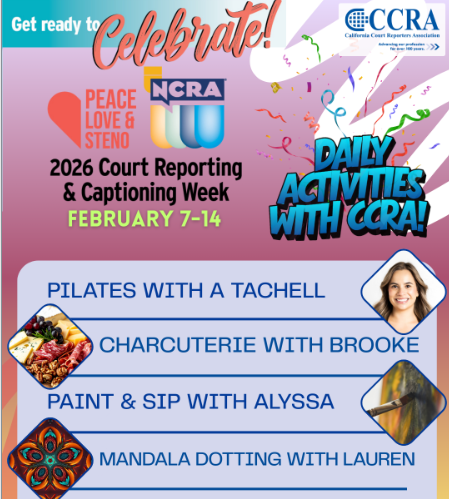
As courts experiment with digital capture and AI transcription, the integrity of the legal record is under unprecedented pressure. Yet California’s flagship Court Reporting & Captioning Week is being promoted with craft nights and lifestyle events. At a moment that demands advocacy, public education, and professional defense, the association’s messaging risks trivializing a profession that exists to safeguard due process itself.
Tag Archives: StenoMatters
Breaking News!!! L.A. Judge Refuses Jury Readback Instruction in Civil Trial — Citing “Time” as Reason

In Department 16 of Los Angeles Superior Court, Judge Steve Cochran told jurors, “We don’t do that,” referring to readback of testimony—directly contradicting CCP § 614, which guarantees every civil jury the right to request testimony readback during deliberations. His refusal highlights a growing erosion of due process as judges quietly sidestep mandatory procedures meant to preserve the integrity of the record.
Ethical Red Flags – Are Attorneys Violating Rules of Professional Conduct by Retaliating Against Court Reporters?

Some plaintiff attorneys are retaliating against court reporters by replacing them with uncertified digital alternatives—not out of necessity, but spite. In doing so, they may be violating ethical rules around competence, candor, and fairness. Using uncertified transcripts can mislead the court, harm clients, and erode due process. It’s not just bad judgment—it may be professional misconduct.
The Subtle Power of a Word – Why ASR Can’t Replace Human Court Reporters

One wrong word — like “sale” instead of “cell” — can alter the facts. ASR doesn’t understand the difference, and neither did my scopist, because they weren’t a trained court reporter. In legal proceedings, every word matters. Court reporters aren’t just typists — we are the responsible charge, the last line of defense for truth and accuracy in the record.
ASR in Court Reporting – Tool, Threat, or Transformation?

As court reporting faces increasing pressure from digital disruption, the debate over ASR (Automatic Speech Recognition) intensifies. Can it be used responsibly — or does its adoption spell the end of human-led recordkeeping? This article explores the nuanced question: If ASR is wielded by a trained, licensed stenographer, does it become a tool — or remain a threat? The future of our profession may hinge on the answer.
 STENOIMPERIUM