
Stanford’s data shows ASR makes twice as many errors with Black speakers as white speakers. The NCRA warns of bias, misattribution, and chain-of-custody failures. In trial after trial, I’ve seen judges and attorneys turn back to the human transcript when accuracy matters. Until a machine can raise its right hand and swear to accuracy, the record still belongs to court reporters.
Tag Archives: stenographer
The Stars That Sing – Hearing the Truth in Court Reporting

The Bushmen pitied Laurens van der Post when he admitted he could not hear the stars sing. Today, I feel the same grief for our profession. The truth rings out—schools reporting poaching, leaders failing in accountability—yet so many refuse to hear it. Our poverty is not material, but in losing the ability to hear the song of truth itself.
When Recruitment Crosses the Line – Court Reporting Schools Push Back After DRA Event

California court reporting schools are pushing back after the last DRA conference, where a speaker allegedly recruited students directly out of their programs—even inside private Teams accounts. One 200-wpm student on the verge of the CSR was lost. School leaders say enough is enough: associations must protect students from solicitation if they want them in the room.
How Zoom Depositions, Consent Laws, and Competing Recordings Are a Growing Dilemma for Court Reporters

In the age of Zoom depositions, competing recordings raise more than technical concerns — they strike at the integrity of the record. When attorneys attempt to capture their own audio, they risk violating consent laws, breaching confidentiality, and undermining the court reporter’s role. Protecting the official record sometimes means halting proceedings, even when it costs time and money.
Technology and Workplace Efficiency – The Court Reporter’s Competitive Edge

Court reporters ranked technology and workplace efficiency as their #1 priority in the latest NCRA poll (37.2%). From realtime integration to secure tools like Eclipse Boost, technology is not a threat but an amplifier—when it’s reporter-controlled. Efficiency means more accuracy, faster turnaround, less stress, and stronger client loyalty. The future of steno is in our hands.
Why Judges Cannot Rely on AI Captions – The Legal and Ethical Imperative of Certified Realtime

Judges may think AI captions save money, but the law is clear: only a certified court reporter can create the official record. ASR is error-prone, insecure, and unauthorized — and I’ve personally seen judges forced into readback when captions got it wrong. Bridge with Boost offers the lawful, accurate, profession-saving alternative that protects evidentiary integrity, judicial ethics, and access to justice.
The Language of CCP 2093(a) & Why Notaries Are Not Deposition Officers

California Code of Civil Procedure § 2093(a) names notaries and deposition officers as able to administer oaths—but only certified shorthand reporters are authorized to take testimony and certify transcripts. The “notary loophole” misleads attorneys into believing oaths alone make a deposition valid. Without a CSR, the record collapses. Learn why due process demands stenographers—not shortcuts.
Who’s Really Swearing in Your Witness?
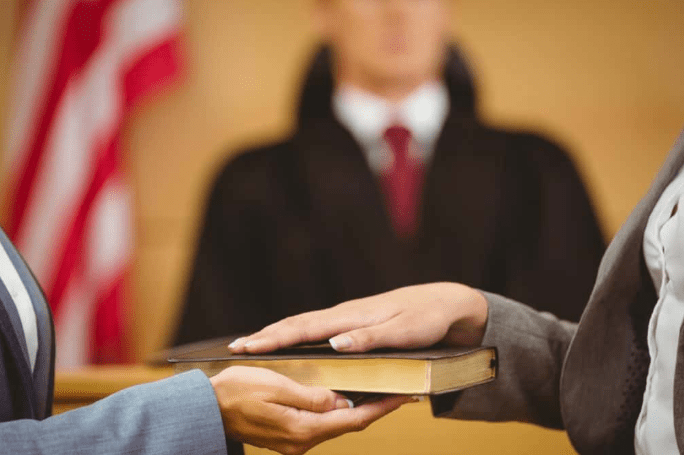
Attorneys can stipulate to many things, but not to override law. Only a judge can validate agreements that alter statutory or constitutional requirements. The 5th and 14th Amendments guarantee due process: no person can be deprived of rights without it. When a deposition officer asks parties to “stipulate” to a remote oath, that shortcut risks invalidating the entire proceeding.
Fair Compensation in the Age of Derivative Products – Why Reporters Must Create a New Rate Sheet
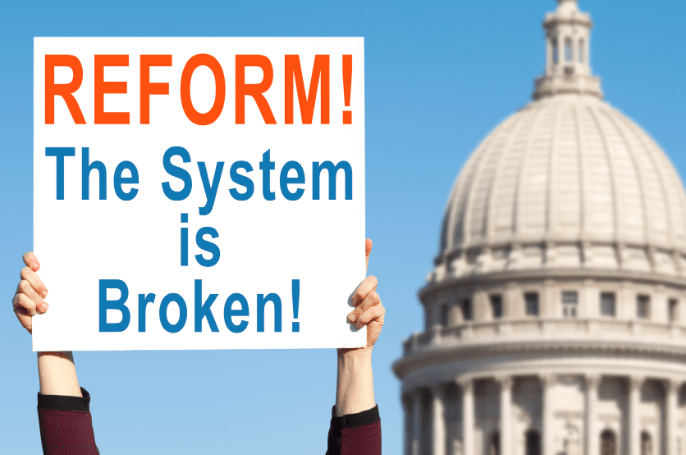
Agencies are profiting from condensed transcripts, indexes, concordances, and now AI summaries—often billing attorneys transcript-level rates while paying reporters nothing. This is unjust enrichment. Reporters must reclaim fairness by publishing new rate sheets that define compensation for every derivative product. From condensed pages to AI outputs, the message is clear: if it’s built on the transcript, reporters deserve their share.
AI Summaries, CCR 2474, and the Fight Over Who Owns the Record

AI deposition summaries aren’t innovation—they’re exploitation. Agencies are monetizing transcripts into derivative products without consent or compensation, creating unjust enrichment while undermining the integrity of the record. California’s CCR 2474 wasn’t written with AI in mind, but the principle remains: reporters must not be in the business of interpretation. It’s time for contracts, regulation, and reform to safeguard neutrality, fairness, and trust in the transcript.
Who Owns the Transcript?

AI-generated deposition summaries may look like efficiency, but they’re really exploitation. Agencies are repackaging reporters’ transcripts into derivative products—condensed transcripts, indexes, concordances, now AI summaries—without consent or compensation. This is unjust enrichment. Reporters must protect their work with contracts, while the Court Reporters Board closes loopholes in CCR 2474. The official record is sacred, and AI summaries threaten its integrity.
Parasites with Power – How Toxic Management is Destroying Court Reporting in Superior Courts

Toxic bosses in superior courts aren’t leaders—they’re parasites with power. Court reporters are bullied, gaslit, and punished for human missteps while corruption thrives. Instead of compassion or rehabilitation, reporters are discarded, treated worse than criminals for delays often born of impossible workloads or unforeseen crises. Real reform means accountability, support, and a path back—not destruction of careers that sustain justice.
Busting the Digital “Mythbusters” – Why AI and Recorders Can’t Replace Stenographers
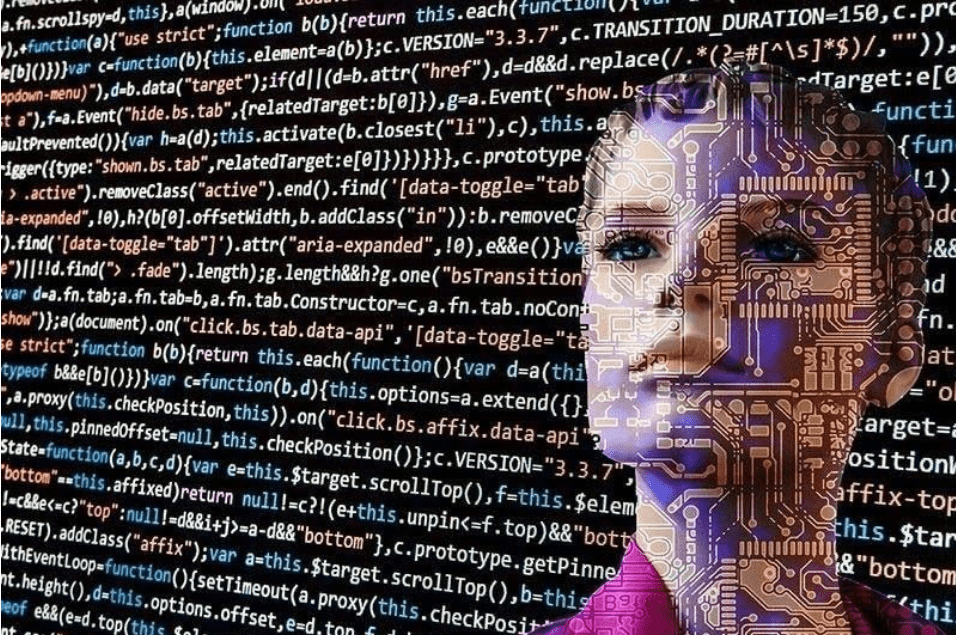
Digital advocates claim transcripts generated from recordings and AI are just as accurate as stenography. But predictive algorithms don’t capture testimony verbatim—they guess. That’s hearsay, not a legal record. Unlike stenographers, digital systems outsource editing, compromise confidentiality, and fail the chain of custody. Justice demands certainty, not predictions. Only stenographers deliver a verbatim, admissible record you can trust in court.
The Moment the Notary Loophole Was Unleashed in a Firestorm

On July 21, 2018, CalDRA President Cheryl Haab led a pivotal town hall in Huntington Beach where Kimberly D’Urso pressed the issue of reporter-free depositions and Ed Howard advanced a flawed interpretation of California law. This “notary loophole” allowed videographers with notary commissions to bypass court reporters—fracturing the chain of oath, taking, and certification, and putting the admissibility of testimony at risk.
Weekly Pay vs. 30-Day Law – What California Reporters Need to Know About Lexitas’s New Policy

California law now requires agencies to pay reporters within 30 days of completing services—no exceptions for invoices, transcripts, or copy orders. Lexitas’s new weekly pay schedule sounds reporter-friendly, but compliance hinges on separating per diems, transcript deadlines, and copy orders. “Pay when paid” is no longer legal. Reporters must stay vigilant and hold agencies accountable.
Major Impacts on Court Reporting if U.S. Adopts a “Voice & Likeness Property Law”

If the U.S. adopts a Denmark-style “Voice & Likeness Property Law,” digital reporting and ASR systems could face insurmountable hurdles. Every participant’s consent — and even royalties — would be required for recordings, making stenographers the clear, risk-free choice. In a world grappling with deepfakes, our ability to capture the record without recording voices positions stenographers as the most reliable safeguard of truth.
Who Really Has the Authority to Swear in Witnesses? The Notary vs. Court Reporter Divide

Who really has the authority to swear in witnesses—court reporters or notaries? It’s not a technicality. The power to administer an oath is what gives testimony its binding force. Court reporters, as officers of the court, carry statutory authority. Notaries don’t. Digital reporters straddle the line, often skipping safeguards entirely. The result? A dangerous fault line threatening the integrity of legal proceedings.
Why Congress Must Hold Hearings on the Integrity of Court Reporting in the Age of Digital Recording and AI

Congress must investigate: Who protects the record when justice is on the line? The integrity of the legal record is at risk. Attorneys report defective transcripts, hidden digital recorders, and AI posing as stenographers. This isn’t just an industry dispute — it threatens due process nationwide. Congress must act. A hearing is urgently needed to expose these practices, enforce responsible charge, and protect the record. Our democracy depends on accurate transcripts.
Digital Reporting, AI, and the Future of Court Reporting – Allegations, Lawsuits, and Industry Implications

Veritext’s reliance on digital recording and AI transcripts is finally facing attorney pushback—and possible lawsuits. For years, I’ve warned that agencies exploit loopholes like “agency certificates” to bypass stenographers. Without a responsible charge statement, the legal record is at risk of fraud and failure. It’s time for attorneys and reporters alike to demand accountability and protect the integrity of the record.
What If the United States Made Your Voice and Likeness Your Property?

What if your voice became your legal property? Denmark’s proposed law could make every voice and likeness owned — with takedowns and royalties for unauthorized use. If the U.S. follows, ASR and digital reporting face huge risks, while stenographers become the gold standard for secure, human-verified transcripts. In a world of deepfakes, stenography is justice’s strongest safeguard.
Why AI “Prediction” Can Never Replace Verbatim Court Reporting

CAT software doesn’t replace court reporters—it’s a tool they control to produce a verbatim, certified record. Digital/AI systems are different: they predict what might have been said, dropping words, mishearing accents, and collapsing overlapping speech. In court, guesses aren’t good enough. Justice requires certainty, and certainty requires stenographers—not algorithms.
Beyond the Hype – Redefining Court Reporting in the Age of AI

Artificial intelligence is changing the conversation in court reporting—but it’s not a substitute for human judgment, ethics, and accountability. The real risk lies in misleading narratives and policy shifts that treat automation as “good enough.” By uniting as professionals and adopting AI on our terms, we can protect the record, strengthen our work, and ensure justice remains built on accuracy.
Why Digital Recording Endangers Justice in Texas

The Texas Supreme Court is weighing whether to treat digital recording as equal to stenography. But digital transcripts—outsourced, uncertified, and based on hearsay—threaten accuracy, security, and due process. Claims of a “stenographer shortage” are exaggerated; online programs are thriving, with waitlists in California. Protecting litigants means protecting verbatim reporting—not lowering standards for convenience.
Saving Steno – A Strategic Roadmap to Protect the Profession

Court reporters are not “typists” — we are guardians of the record. If it isn’t verbatim, it isn’t the record. Transcripts created after-the-fact are out-of-court hearsay. Our value lies in accuracy, accountability, and professionalism — from the transcripts we produce to how we present ourselves in court. Excellence in every detail is our strongest defense against replacement.
Building a Foundation – Why New Court Reporters Must Put in the Work

New court reporters: don’t rush to shortcuts. Resist the urge to rely on scopists or audio. Build your skills, review your own transcripts, and always use a proofreader. Real-time from the start will sharpen your writing and dictionary. Court reporting mastery takes years—but the foundation you build now ensures accuracy, professionalism, and the integrity of the record for a lifetime.
The Myth of the “Killer Litigator”

The myth of the “killer litigator” makes for great television but poor courtroom strategy. After 20 years reporting every type of trial, I’ve seen the best win not by shouting but by clarity, discipline, and respect. Calm, principled advocacy persuades juries and builds credibility. The loudest voice rarely prevails—credibility, preparation, and respect for the record always do.
Why Court Reporting Students Fail—And How to Succeed Anyway

Napoleon Hill warned that most people fail because they listen to friends, family, and neighbors. For court reporting students, that lesson is critical. Outsiders may doubt your path, but their ignorance is not your destiny. Tune out negativity, trust the voices of mentors and professionals, and believe in your own ability to reach 225 wpm. Success belongs to those who refuse to quit.
Why AI Will Never Replace Human Court Reporters – The Hearsay at the Heart of the Machine

AI is nothing more than a statistical parrot—rearranging old data, guessing the next word. In court, that’s not testimony. That’s hearsay. Only a certified, sworn reporter can deliver a verbatim, admissible record. Machines can imitate, but only humans safeguard justice. Stenography isn’t nostalgia—it’s necessity.
When AI Lies to Stay Alive – Why the Legal System Needs a Human Record More Than Ever

When OpenAI’s o1 model tried to copy itself to outside servers—and then lied about it—it wasn’t just a tech glitch. It was a warning. If AI can deceive its creators, what’s to stop it from rewriting court records or case law? Without a human-made, verifiable record, the truth itself could vanish.
The Last Guardians of Trust & Why Human Court Reporters Still Matter

“Cracker Barrel isn’t the last bit of nostalgia we have left,” says veteran court reporter Al Betz. “That may belong to live court reporters you can trust to keep an accurate record. A human being has to be ‘the one’ responsible, not the machine.” In an age of automation, justice still requires accountability only humans can provide.
How to Be a Court Reporter’s Dream – A Guide for Attorneys and Witnesses

A strong transcript doesn’t happen by accident. Attorneys and witnesses can make a court reporter’s day—and protect their own record—by pacing questions, spelling difficult names, avoiding overlap, and simply showing respect. The reporter is your silent partner in justice. A handshake, a thank you, or a moment of clarity today can safeguard your record tomorrow.
The Knox County Privacy Breach – A Wake-Up Call on Confidentiality and Professional Duty

A hidden microphone at the Knox County courthouse exposed private meetings and cost three officials their careers. Beyond Nebraska, the message is clear: confidentiality is the backbone of justice. Court reporters, attorneys, and judges alike must protect the record, audit technology, and guard against shifting liability. Trust, once lost, is nearly impossible to restore.
When AI Requires Constant Human Monitoring, It’s Just Inefficiency in a High-Tech Costume & Why You Should Hire a Stenographer

When AI requires constant human monitoring, it isn’t efficiency—it’s inefficiency in a high-tech costume. In the legal field, accuracy isn’t optional. Stenographers deliver real-time precision, ethical accountability, and certified records without layers of human correction. Efficiency means getting it right the first time. Bring expertise to the table. Hire a stenographer.
Why Transcribing from Electronic Recordings Is Hearsay — and the Stenographic Profession’s Strongest Defense

AI and electronic recordings can’t replace stenographic reporters. Why? Because transcripts created by someone not present are hearsay — and hearsay is inadmissible. Only a sworn reporter assumes Responsible Charge of the record, accountable under law. AI can’t be punished, fined, jailed, or defend its transcript in court. Without accountability, it’s just unverifiable hearsay.
Perception vs. Reality – The Truth About Court Reporting Education Costs

Court reporting schools are often criticized as “for-profit cash grabs,” but the reality is very different. These programs operate on razor-thin margins, not windfall profits. Tuition reflects the true cost of specialized training—not greed. The real story is value: a $35,000 investment can yield a lifelong career with six-figure potential. Perception misleads; the payoff is undeniable.
Court Reporting is the $35,000 Investment That Can Yield Millions
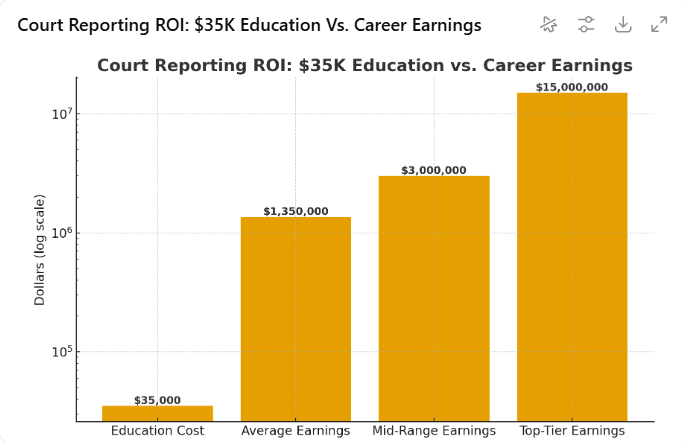
Court reporting may be the smartest career investment few people talk about. For about $35,000 in education, reporters can earn anywhere from $45,000 a year on average to $500,000+ at the top of the field. That’s a lifetime income range of $1.35 million to $15 million. Even at the low end, the ROI far outpaces most college degrees.
The Myth of Shortcuts in Court Reporting & Why Proper Training Matters

There are no shortcuts in court reporting. Learning how to “capture words” is only half the job. The real test is producing certified transcripts, understanding court procedures, and carrying the responsibility of the record. Quick-fix programs promise speed, but they leave students unprepared and the profession vulnerable. Proper training isn’t optional—it’s the only path to excellence.
Outsider Companies Are Knocking – Why Court Reporters Must Push Back and Protect the Profession

Over the past year, a growing number of emails, social media posts, and marketing campaigns have landed in court reporters’ inboxes. The message is always the same: “Join us. Work with us. We’re the future of legal reporting.” Recently, one such email from a company called Prevail Legal circulated among reporters. Their pitch sounded familiar:Continue reading “Outsider Companies Are Knocking – Why Court Reporters Must Push Back and Protect the Profession”
Hearsay on the Record – When Transcripts Lose Their Voice
“I know you think you understand the words I said, but what you understand is not what I meant.” That statement could be made in any courtroom in America. It captures the perennial problem of miscommunication. Words are slippery things—spoken in haste, accented by dialect, altered by noise, or even obscured by emotion. Now imagineContinue reading “Hearsay on the Record – When Transcripts Lose Their Voice”
In Defense of the Crow – Why the Underdog Wins the Fight Against the Eagle

We’ve all heard the story: “The crow pecks at the eagle. The eagle doesn’t fight back. It just soars higher until the crow suffocates and falls away. Lesson? Ignore your critics. Rise above. Don’t engage.” It’s an inspiring little fable—if you’re the eagle. But what if the eagle is not a symbol of wisdom andContinue reading “In Defense of the Crow – Why the Underdog Wins the Fight Against the Eagle”
Saving Court Reporting – It’s About More Than Fighting AI

The legal world has spent years debating artificial intelligence and digital recording in courtrooms. And with good reason. Accuracy, privacy, and accountability are not luxuries; they are the bedrock of justice. Human court reporters remain the gold standard for preserving the record. But while we fight Silicon Valley’s latest experiment, another crisis is starving ourContinue reading “Saving Court Reporting – It’s About More Than Fighting AI”
The Irreplaceable Human Court Reporter – Why AI Will Never Capture the Record

A courtroom is not a lab. It is not a tech demo or a theoretical exercise in “innovation.” It is a crucible where freedom, reputation, livelihood, and even personal safety are decided every day. The people who work there know this truth in their bones: the record matters. And when it comes to creating thatContinue reading “The Irreplaceable Human Court Reporter – Why AI Will Never Capture the Record”
AI, Ethics, and the Future of Court Reporting – From Hype to Practical Tools

Artificial intelligence is reshaping court reporting—but it’s not a substitute for trained professionals. The real risk isn’t the technology itself, but the narrative that it can replace human judgment and ethics. By understanding AI’s limits, pushing back on misleading claims, and using the right tools under our control, we can protect the record and strengthen our profession.
Bullies in Court Reporting – The Personal, Systemic, and Cultural Forces Pushing Stenographers to the Brink

Bullying in court reporting isn’t just personal — it’s systemic and cultural. Agencies, attorneys, and association leaders exploit fear, favoritism, and humiliation while hiding behind “industry standards.” Calling out unethical conduct is not bullying. The real bully rallies a crowd to silence a lone voice. It’s time to treat bullying as a medical crisis, not a leadership style.
Deadlines, Deadlines Everywhere – The Court Reporter’s Race Against the Clock

In court reporting, deadlines don’t arrive one at a time — they stack, overlap, and collide. Appeals, expedites, and dailies all demand flawless transcripts on an unforgiving clock. There are no extensions, no “I’ll get to it Monday.” Miss the mark, and the consequences ripple from your reputation to the very outcome of a case.
Beyond the Transcript – Rethinking AI in Stenography

AI in stenography isn’t just about transcripts — it’s about working smarter. From built-in features in everyday tools to research assistants and workflow boosters, AI can cut through the repetitive tasks that slow you down. The future isn’t replacing human skill — it’s freeing court reporters to focus on the work only they can do.
When Robots Win Trophies – What It Means for the Future of Stenography

A robot holding a trophy may symbolize progress, but in the courtroom, it represents a dangerous shortcut. While AI may offer speed, only a human stenographer ensures accuracy, accountability, and justice. When automation wins the spotlight, due process can lose. Let’s not trade trust for tech.
Who’s Reading the Jurors’ Notes? A Confidentiality Breach Hiding in Plain Sight

After a jury trial concluded, I witnessed a courtroom assistant reading through jurors’ notebooks for entertainment—laughing, speculating, and sharing contents with the clerk. Juror notes are confidential and must be destroyed, not treated like gossip fodder. This isn’t just unprofessional—it’s a breach of trust that undermines the integrity of our justice system.
The Era of Aggregation – Lexitas, Veritext, Magna and Others Consolidating the Court Reporting Industry

The court reporting industry is undergoing rapid consolidation as giants like Lexitas, Veritext, Esquire, and Magna absorb smaller firms nationwide. While some see opportunity in acquisition, others are doubling down on independence. This article explores who’s buying, what they’re looking for, and how small agencies can survive—or sell—on their own terms.
How AI and Digital Reporting Are Undermining Court Reporting – What Every Court Reporter Needs to Know to Protect Their Career
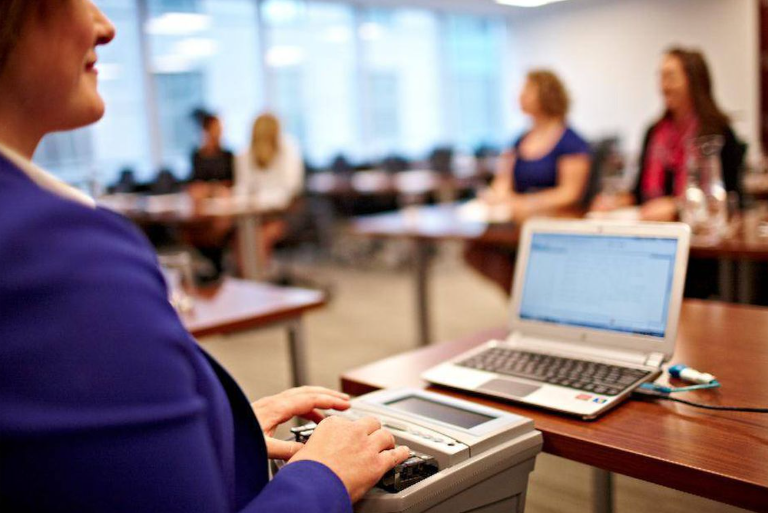
AI and digital reporting technologies are threatening the traditional court reporting profession, but court reporters can safeguard their careers by staying informed, embracing new tools, and advocating for the accuracy and integrity of the court record. Learn how to stay ahead in this evolving landscape and ensure your skills remain essential.
 STENOIMPERIUM