
From ancient Phoenician scribes depicted in Disney’s EPCOT to modern realtime stenographers writing 225 words per minute at 95 percent accuracy, court reporters have always safeguarded civilization’s most critical words. They are the neutral architects of the legal record, preserving testimony that determines rights, liberty, and history itself. In an era of automation myths, their human precision remains indispensable.
Tag Archives: steno
When Speed Replaces the Record – What “FTR Now” Reveals About the Future of Court Transcription

A new legal tech product promises “searchable transcripts” from courtroom audio in minutes, built in just two days and priced at seven dollars an hour. But speed and convenience come at a cost. When automated transcription is mistaken for the official record, accuracy, accountability, and due process are quietly put at risk—often before attorneys realize the distinction matters.
A Court Reporter Christmas
The Polite Language of Professional Displacement

Veritext’s latest CEU webinar series is being framed as professional development, but its core message deserves scrutiny. By asserting that capture method does not matter, the programming advances a narrative that conflicts with evidentiary law, professional ethics, and NCRA’s stated mission. With CEU approval still pending, members have a narrow window to speak up—before silence is mistaken for consent.
Who Trained the Machine?

AutoScript AI is marketed as a “legal-grade” AI transcription solution trained on “millions of hours of verified proceedings,” yet the company provides no public definition of what verification means in a legal context or where that data originated. Founded and led by technology executive Rene Arvin, the platform reflects a broader trend of general ASR tools being rebranded for legal use without the transparency traditionally required in court reporting.
The Masks Court Reporters Wear—and the Cost of Wearing Them Too Long

Court reporters are trained to capture the truth verbatim, yet many have learned to suppress their own. In a profession built on accuracy and independence, silence has become a survival strategy. Over time, professionalism has been mistaken for passivity, and conformity for neutrality. The result is a culture where dissent feels dangerous—and where thinking independently is quietly discouraged.
An Open Letter to Kristin Cabot: A Profession That Understands Second Acts

Branded “unemployable” after a viral moment, Kristin Cabot’s story raises a larger question: what happens to capable professionals when public shame outpaces truth? Court reporting offers a rare second act—one grounded in skill, neutrality, and measurable merit. In a profession that values accuracy over optics, redemption isn’t performative. It’s earned, keystroke by keystroke.
Bridging the Career Services Gap in the Court Reporting Profession

Court reporting associations are facing a reckoning. Reporters are not disengaging because they dislike the profession; they are disengaging because their associations no longer align with their most urgent priorities: jobs, advancement, training, and real career security. In an era of technological disruption and shrinking pipelines, associations that fail to become career catalysts risk losing not just members, but the future of the profession itself.
When Two Depositions Are Scheduled but Only One Goes Forward – The Growing Fight Over Same-Day Cancellation Fees

Court reporters routinely reserve separate time blocks for each scheduled deposition. When one witness appears and another cancels, the afternoon no-show is a distinct economic loss—no different from how interpreters, electricians, therapists, or attorneys handle missed appointments. Two job numbers mean two billable events. Same-day cancellations must be compensated as a matter of fairness and professional standard.
Opinion | Digital Reporting Is Not “Clearly Lawful.” It Is Clearly Inferior — and Legally Dangerous

Digital reporting is not merely a different tool — it is a different evidentiary product. A transcript created after the fact from audio is reconstruction, not a contemporaneous verbatim record. Without licensed stenographic capture, individual accountability, and real-time certification, courts are left with hearsay dressed up as efficiency. The integrity of the record is not optional.
When Speaking Up Becomes a Liability – How Court Reporting Learned to Punish Action

A recent Facebook post suggests no one acted to stop the court reporting crisis. That is not true. Many tried—and learned quickly that speaking up put a target on their backs. In a profession dominated by women, reformers are often torn down by their own peers rather than supported. Silence became safer than leadership, and the cost of that culture is now impossible to ignore.
Why Attorneys Should Think Twice Before Accepting Digital Reporting – Stenographers Will Not Fix Your Bad Audio After the Fact
Digital reporting may look modern and inexpensive, but it carries a dangerous illusion. When trials are recorded digitally, stenographers will not—and cannot—repair the record afterward. Audio fails. Speakers are misidentified. Critical testimony disappears. When the verdict is in and the appeal begins, attorneys often discover too late that no reliable transcript exists. Accuracy cannot be retrofitted.
A Kentucky Hearing Shows Why Digital Recording Is Not — and Never Will Be — an Acceptable Official Record
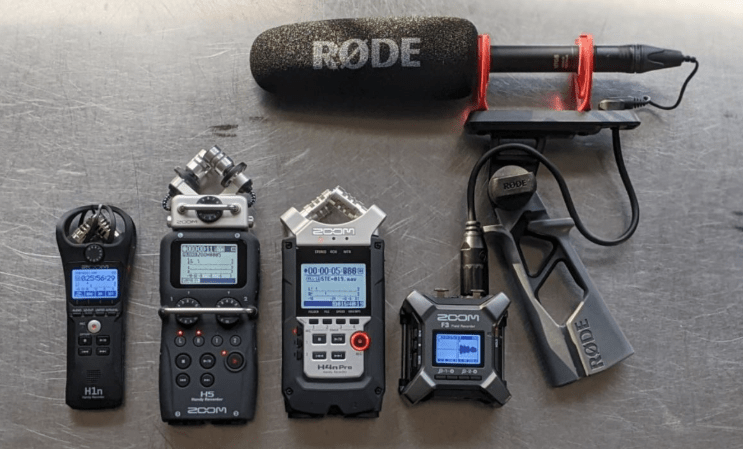
A Kentucky administrative hearing again exposed the fatal flaw of digital recording: when the agency’s “official” audio failed, a certified court reporter was the only reason the record survived. Due process cannot depend on glitchy technology or missing audio files. This case proves, yet again, that the stenographic reporter—not a digital recorder—is the only acceptable guardian of the legal record.
Why Most Court Reporters Don’t Quit — And Why That Matters

An AI summary claims court reporters quit because the job is unbearable. The reality is the opposite. Most reporters stay for decades—often an entire working lifetime—because the profession rewards mastery, autonomy, and adaptability. Court reporting is demanding, yes, but for those built for it, it becomes a superpower, not a burnout sentence.
Trial Etiquette – The Unwritten Code Every Court Reporter Is Expected to Follow

Trial etiquette carries unwritten rules, and one of the strongest is this: if you accept a trial, you finish it. Leaving mid-trial hurts colleagues, judges, and even jurors—especially when readback requests arise and transcripts were never prepared. Substitute reporters are often handed unusable roughs or incomplete PDFs, creating risk of reversible error. Judges notice. Agencies remember. Professionalism demands continuity from start to finish.
Sliding Into the High-Speed You – What a Russian Physicist’s Theory Teaches Court Reporters About Passing the CSR, RPR, and Every Other “Impossible” Test

High-speed stenography isn’t about gripping harder — it’s about shifting into the version of yourself who already writes with ease. When you stop treating certification like a monster and adopt a “no-big-deal” mindset, your hands relax, your rhythm returns, and speed finally emerges. You don’t force 225. You become it.
Opinion: Texas Isn’t Confused About Digital Reporting — Only the Vendors Are

Texas is not confused about digital reporting — only the vendors are. Esquire, U.S. Legal, and Veritext recast a business model as a legal right, insisting courts ignore reliability gaps, nonexistent licensure, and the safeguards built directly into Rule 203.6. The trial court didn’t err; it exercised discretion. Corporate convenience is not access to justice, and marketing cannot replace a certified, accountable record.
The Great Wage Mirage – When Digital Court Reporting Claims Outpace Reality
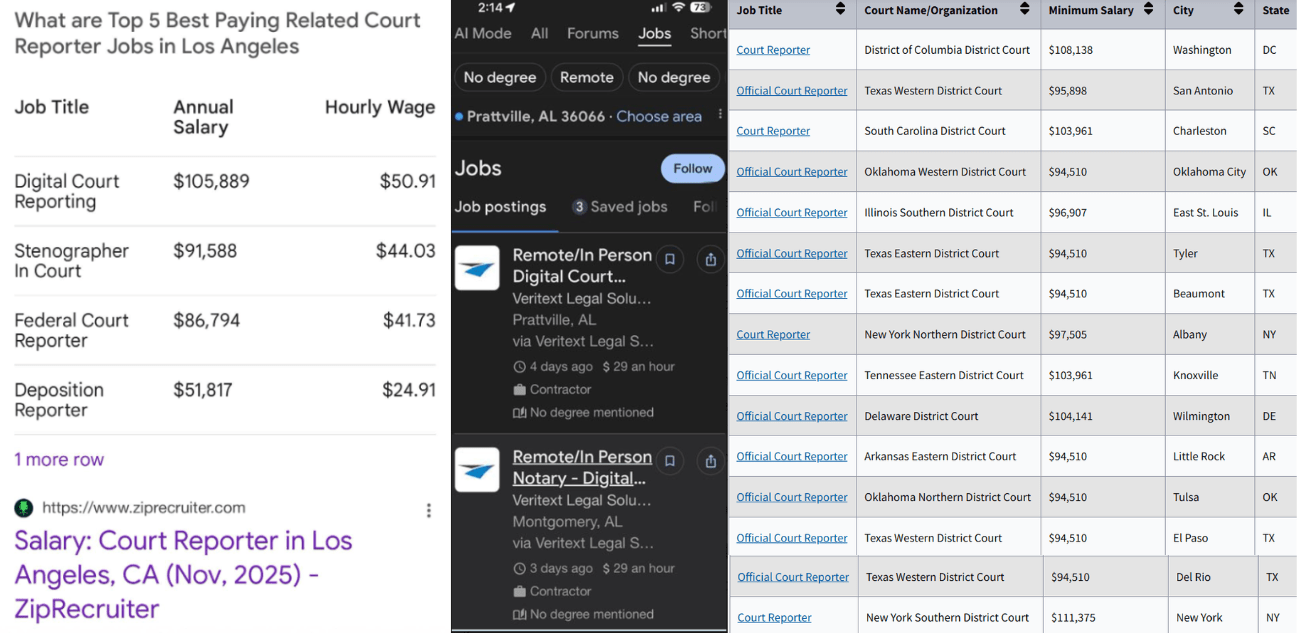
A viral wage graphic now claims digital court reporters in Los Angeles earn more than licensed stenographers and federal officials. The figures collapse under scrutiny, revealing a dangerous distortion of how court reporting is valued and understood. When passive recording is framed as more lucrative than producing the certified legal record, the profession’s integrity is compromised and the public misled about justice, skill, and accountability.
The Familiar Face Fallacy & Why Court Reporters Must Question the Platform Narrative

Familiarity is not alignment. When a recognizable face stands before the profession offering reassurance, it is easy to mistake comfort for safety. But critical thinking demands a harder question: who benefits if our work becomes optional? Reporters must look beyond polished narratives and ask what external platforms gain from reshaping our role. Strategy deserves scrutiny, not applause, and vigilance is the price of sovereignty always.
Sliding Into the High-Speed You – How a Forgotten Quantum Theory Helps Court Reporters Break Plateaus and Pass the CSR, RPR, and Every Other “Impossible” Test

High-speed stenography isn’t about gripping harder — it’s about shifting into the version of yourself who already writes with ease. When you stop treating certification like a monster and adopt a “no-big-deal” mindset, your hands relax, your rhythm returns, and speed finally emerges. You don’t force 225. You become it.
Save Us, Elon – The Justice System Is Sleepwalking Into Collapse

America’s justice system is quietly collapsing as courts replace human stenographers with error-prone ASR. When the record fails, due process dies — and with it, the safeguards that protect us from wrongful convictions, corruption, and authoritarian drift. This is a plea to Elon Musk: recognize the danger before it becomes irreversible. Without a reliable human record, there is no justice — and no freedom.
When the Record Fails – Texas Courts Face a Growing Crisis Over Non-Certified Deposition Transcripts

Texas courts are increasingly confronting a crisis: non-certified deposition transcripts produced by notaries and typists are being admitted despite violating state rules. Attorneys fail to object, judges avoid delays, and agencies bypass certified reporters entirely. If courts do not enforce the law—excluding defective records and holding firms accountable—the integrity of Texas litigation, and the profession itself, is at risk.
AI Should Fold the Laundry — Not Replace the Court Reporter

AI may be able to automate tasks, but it cannot replace the trained human mind responsible for capturing the legal record. Court reporters do far more than transcribe—they perceive, clarify, and protect accuracy in ways no algorithm can. The future isn’t humans versus machines. It’s using technology to remove friction, not expertise, and preserving the integrity justice depends on.
Recording Roulette – When Courtroom Captures Become Costly Compromises

In courtrooms across the country, attorneys are increasingly encountering a problem they did not anticipate: they do not know whether their proceeding will be staffed by a certified stenographic reporter or by a digital recording operator until the matter is already underway. That uncertainty—once unthinkable in a profession built on procedural predictability—has become common inContinue reading “Recording Roulette – When Courtroom Captures Become Costly Compromises”
The First Impression Bias & How Female Court Reporters Are Judged on Appearance Before Skill
Women in court reporting are often judged on appearance long before anyone recognizes our skill. I’ve walked into rooms dressed like an attorney and still been mistaken for anything but the professional safeguarding the record. These subtle moments add up—and they reveal a deeper bias in the legal system. Our work deserves recognition based on expertise, not aesthetics.
“What Even Is 6-7?” When a Meme Walks Into a Courtroom (And Everyone Over 30 Panics)

In court this week, an entire room of adults—attorneys, clerk, judge, and yes, even me—realized we had absolutely no idea what “6-7” meant. Turns out it means… nothing. Everything. Whatever kids want it to mean. This chaotic, context-free meme is the perfect reminder that language is shifting faster than ever—and why human court reporters remain essential guardians of clarity in an increasingly nonsensical world.
A Harbinger of Collapse – What One Facebook Post Reveals About the Future of Court Reporting in the United States

A single Facebook post from a Canadian reporter—reduced to just 3–6 jobs a month—should terrify every U.S. attorney and stenographer. It is a glimpse of what happens when ASR replaces certified professionals: the market collapses, accuracy disappears, and justice erodes. Canada didn’t fail because reporters weren’t skilled. It failed because decision-makers chased “cost savings.” The U.S. is next—unless we stop it now.
Surviving the Holidays as a Court Reporter – A Realistic Guide to Family Drama, Deadlines, and the December Blues

The holidays can be brutal for court reporters — transcript overload, family drama, grief, financial stress, and the pressure to be “festive” when you’re barely holding it together. This guide offers real strategies for surviving December without drowning: boundaries, triage systems, emotional self-care, and expectations that won’t break you. You don’t need a perfect holiday. You need a kind one — and you deserve that peace.
The Illusion of Unity – When “Movement” Becomes Message Control

The rise of “STENO United” and the Fearless Stenographers Conference reflects a growing trend in our field: advocacy transformed into spectacle. Inspiration becomes insulation when branding replaces transparency, and unity becomes a tool for silencing dissent. Our profession doesn’t need one movement claiming moral authority—it needs distributed, ethical leadership grounded in accountability, not curated mythology.
Going Direct – The Court Reporter’s Complete Guide to Producing Transcripts Without an Agency

As more reporters work directly with attorneys, they must now replicate the full agency production workflow themselves. This guide explains how to create searchable PDFs, ASCII files, condensed transcripts, concordances, and PTX files; scan and label exhibits; manage read-and-sign obligations; invoice professionally; and archive transcripts securely. With clear processes, independent reporters can deliver courtroom-ready transcript packages while maintaining complete control of their work.
When the Bill Comes Due – How California’s SB 988 Exposes a Nationwide Gap in Reporter Payment Protections

California’s SB 988 requires court reporting firms to pay reporters within 30 days — but attorneys have no matching deadline to pay the firms. This imbalance creates cash-flow strain, especially for small agencies, and highlights a national gap in reporter protections. With one-third of U.S. reporters in California, what happens here shapes the entire industry. Other states could — and should — follow with smarter, reciprocal legislation.
The Hidden Cost of Convenience – Are Cloud-Stored Transcripts Training AI Without Your Consent?

Cloud convenience comes with a hidden cost: many platforms quietly reserve the right to use or sell your synchronized transcripts and audio to train their AI. Whether or not AI is “inevitable” isn’t the point—consent is. Legal transcripts contain privileged, high-value data, and no reporter should unknowingly contribute to systems designed to replace them. Protecting the record means protecting our work.
Hiring to Train AI – When Data Collection Crosses the Line

TransPerfect’s $30 “Remote Data Contributor” job isn’t just harmless side work — it’s part of a massive AI training pipeline. By paying people to record their voices, companies quietly harvest human speech to teach machines how to sound like us. It’s data extraction disguised as inclusion — and it’s accelerating the automation of human jobs, one voice at a time.
The Recipe of Community – Inside the Unseen Strength of the Court Reporting Profession

Court reporting has always been more than a technical skill; it is a community built on mentorship, discipline, and shared purpose. This Thanksgiving, the profession reflects on the people who make it possible — the teachers who guide students, the colleagues who step in during long days, and the families who support the demanding work behind the record. Gratitude is, and always has been, part of the craft.
Could California Court Reporters Bring a Holmgren-Style Case Against CRB?
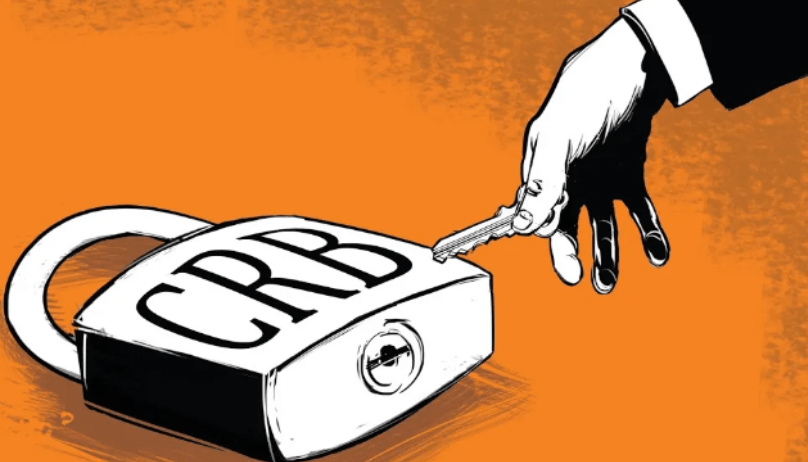
A quiet but consequential legal question is emerging in California: Can court reporters compel their own regulator to enforce laws already on the books against the expansion of digital-only reporting? Inspired by Texas’s Holmgren case, this analysis explores the hypothetical viability of a mandamus action against the Court Reporters Board for non-enforcement, examining standing, risk, and the strategic steps that would be required before such a case could responsibly proceed.
The Trojan Horse Problem – Why Software Companies Should Not Masquerade as Court Reporting Agencies

Software companies moving into the court reporting agency space do not represent innovation; they represent structural risk. When the same platform controls the technology, the data, and the labor pipeline, independence erodes and normalization begins. The danger is not sudden replacement but gradual acceptance, until reporters become optional upgrades instead of guardians of the record. The profession must recognize this encroachment and defend its sovereignty.
We Can Do Better – When Professionalism Loses to Pettiness in Court Reporting

Sometimes the hardest part of court reporting isn’t the record—it’s each other.
Petty rivalries, gossip, and passive-aggressive behavior are eroding the very professionalism our field stands for. I just lived through it, and it reminded me: we can do better.
“Ack Ack” on the Record – When the Martians Took Over the Courtroom
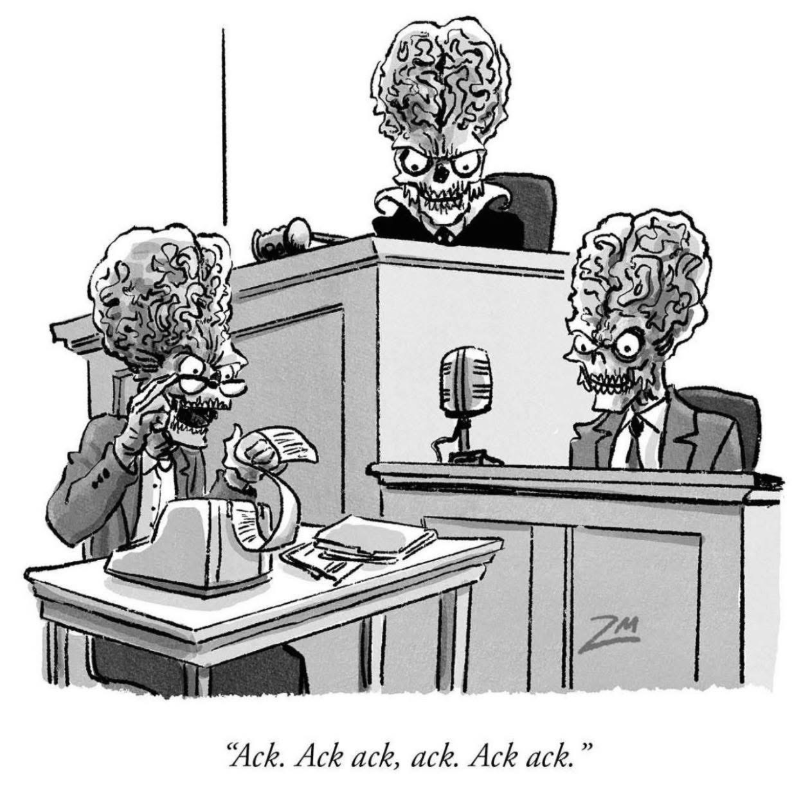
When justice sounds like “Ack ack, ack,” it’s not just funny—it’s frightening. Replacing human court reporters with machines turns the language of truth into gibberish. Algorithms can’t hear nuance, context, or emotion. The record of justice deserves more than “good enough.” It deserves understanding.
Where Your CEU Dollars Go – Choosing State Associations and Nonprofits That Reinvest in the Profession

Every continuing education dollar is a decision about the future of court reporting. When those funds are directed to legitimate state associations and nonprofit organizations, they strengthen advocacy, education, and ethical standards that preserve the integrity of the record. When they flow instead to personality-driven ventures, the profession risks becoming a revenue stream for individual ambition rather than a sustained legacy built on collective stewardship.
Not All Heroes Wear Capes — Some Wear “Stenographer” Lanyards

After a 32-hour brain surgery, two surgeons collapsed from exhaustion — heroes in scrubs. For court reporters, that same level of endurance isn’t a one-time feat; it’s our daily life. We don’t wear capes. We wear stenographer lanyards — quiet symbols of duty, precision, and perseverance. We may not save lives, but we preserve truth, and that saves justice.
The Weight of Watching- A Court Reporter’s Reflection When Justice Falters
Court reporters are trained to remain neutral observers, preserving the record without influence or intervention. Yet we also witness the moments when the justice system’s safeguards fail—when potential juror bias goes unexamined or judicial oversight falls short. We cannot raise concerns or redirect the process; our role is silence. The emotional toll comes from knowing what fairness requires, and watching when it is not upheld.
The Stenographer Who Named a Legend – How Lillian Bounds Disney Gave Mickey Mouse His Name

Long before Mickey Mouse became the world’s most beloved animated icon, a young Idaho stenographer named Lillian Bounds quietly shaped his destiny. Working at Disney Brothers Studio in 1923, Lillian used her sharp ear and creative instinct to suggest a new name for Walt’s early sketch—replacing “Mortimer” with “Mickey.” That single moment of intuition helped launch a character, a company, and a cultural era.
A Membership Wall Around Opportunity – NCRA’s New Jobs Board Restriction Raises Questions in a Shrinking Profession

The National Court Reporters Association has quietly restricted its Jobs Board to dues-paying members only, blocking more than 13,000 qualified non-member reporters from viewing official court reporter openings. The move comes amid nationwide staffing shortages in court systems and raises concerns that a membership paywall could shrink the hiring pool and undermine efforts to preserve stenographic officialships. Critics warn the policy conflicts with the profession’s survival needs.
Your Journey. Your Way. Flawlessly.

Court reporting is no longer confined to a single path or setting. Today’s reporter chooses where, how, and when they work—courtroom, deposition, captioning, remote, or across borders. The skill remains constant: the ability to capture testimony with precision and integrity. The journey, however, now belongs to the reporter. Your profession. Your autonomy. Your record. Your Journey. Your Way. Flawlessly.
The Next Evolution in Court Reporting: How Technology Is Closing the Payment Gap

Payment collection has always kept reporters tied to agencies. But fintech automation—escrow, instant pay, and attorney verification—now solves that last dependency. With SaaS-integrated invoicing, reporters can deliver, verify, and get paid automatically. No chasing checks. No middlemen. The last agency advantage is gone—and independence is finally in reach.
The Bubble Beneath the Record – A Financial Crisis in Court Reporting Is Coming

A financial bubble is forming beneath the court reporting industry. Private equity markups have pushed attorneys toward cheaper “alternative” record methods, but those substitutes fail evidentiary standards and are beginning to collapse under legal scrutiny. As reporters reject unsustainable rates and attorneys realize uncertified transcripts don’t hold up in court, the industry is nearing a correction. The record cannot be commodified—and the bubble will burst.
When Faith Becomes a Mask & How Performative Virtue Undermines Integrity in the Steno Community

When faith becomes performance instead of practice, entire communities suffer. In court reporting, where truth is our calling, we cannot ignore the damage caused by virtue-based branding, intimidation, or spiritual manipulation. Real leadership demands humility, accountability, and integrity — not curated vulnerability or public theatrics. Our profession deserves truth-keepers, not performers hiding behind faith-washed imagery.
The New “Mentorship” Funnel – Why Court Reporters Should Be Cautious About Handing Over Their Professional Data

A “free mentorship event” sounds harmless—until you realize it may be a data-collection funnel for a trademarked for-profit brand. If speakers aren’t compensated, if attendees unknowingly become marketing leads, and if the program mimics a nonprofit without governance or transparency, the community must ask hard questions. Court reporters deserve mentorship rooted in ethics—not a commercial pipeline in disguise.
Avoid the April Surprise – Smart Tax Planning for Court Reporters

Court reporters can reduce taxes and keep more of what they earn with smart retirement planning. Both Solo 401(k) and Corporate 401(k) plans allow high annual contributions, but incorporating as an S-Corp lets you take part of your earnings as distributions—not subject to self-employment tax. By setting a strategic W-2 salary and using employer profit-sharing contributions, reporters can lower tax burden and build long-term financial security.
Beneath the Surface – The Hidden Burnout Crisis in Court Reporting

Burnout in court reporting isn’t about long hours—it’s about how those hours feel. When reporters lose psychological safety, recognition, or autonomy, exhaustion turns into disengagement. The real burnout triggers aren’t visible on the surface—they’re cultural, ethical, and emotional. Until agencies and courts address those invisible causes, the profession will keep losing its best reporters beneath the surface.
 STENOIMPERIUM