
During Court Reporting & Captioning Week, every public event should reinforce the profession’s credibility, technical expertise, and essential role in preserving the official record. Programming that does not clearly connect to stenographic skill, transcript integrity, or public education risks confusing the audience and weakening advocacy efforts at a time when the profession must present a unified, disciplined message.
Tag Archives: savesteno
A Kentucky Hearing Shows Why Digital Recording Is Not — and Never Will Be — an Acceptable Official Record
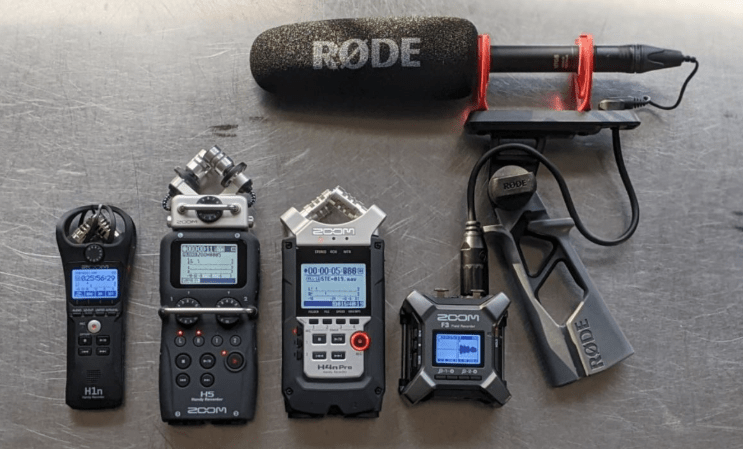
A Kentucky administrative hearing again exposed the fatal flaw of digital recording: when the agency’s “official” audio failed, a certified court reporter was the only reason the record survived. Due process cannot depend on glitchy technology or missing audio files. This case proves, yet again, that the stenographic reporter—not a digital recorder—is the only acceptable guardian of the legal record.
Why Most Court Reporters Don’t Quit — And Why That Matters

An AI summary claims court reporters quit because the job is unbearable. The reality is the opposite. Most reporters stay for decades—often an entire working lifetime—because the profession rewards mastery, autonomy, and adaptability. Court reporting is demanding, yes, but for those built for it, it becomes a superpower, not a burnout sentence.
The Great Wage Mirage – When Digital Court Reporting Claims Outpace Reality
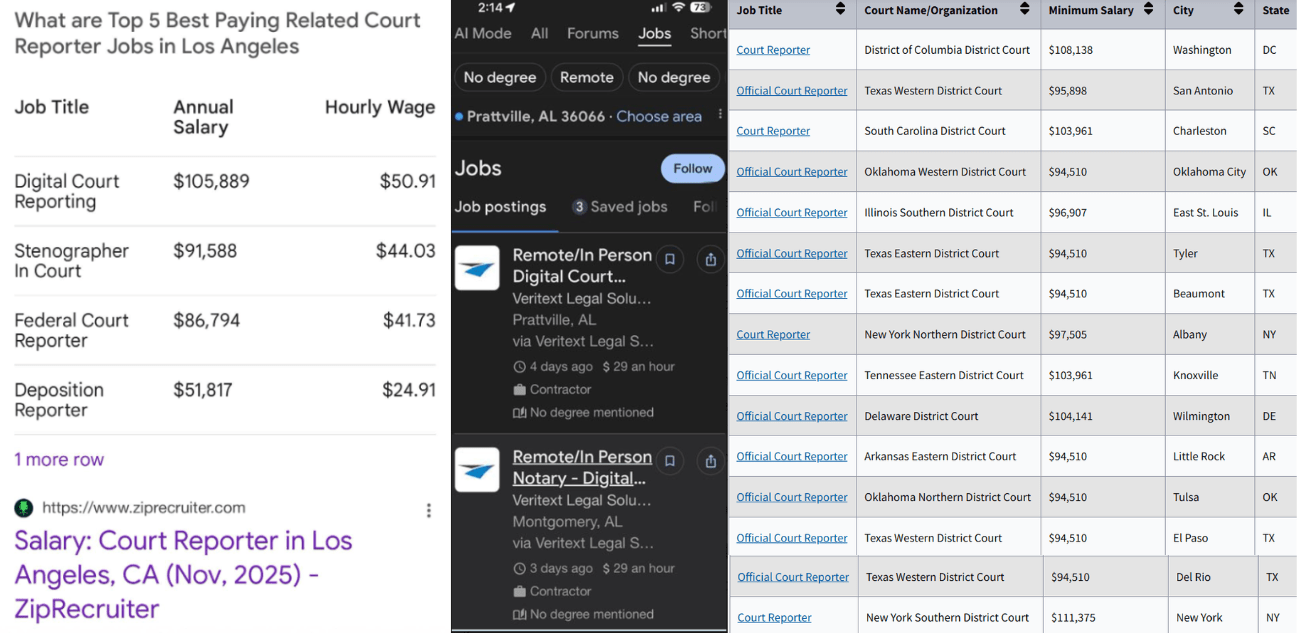
A viral wage graphic now claims digital court reporters in Los Angeles earn more than licensed stenographers and federal officials. The figures collapse under scrutiny, revealing a dangerous distortion of how court reporting is valued and understood. When passive recording is framed as more lucrative than producing the certified legal record, the profession’s integrity is compromised and the public misled about justice, skill, and accountability.
The Trojan Horse Problem – Why Software Companies Should Not Masquerade as Court Reporting Agencies

Software companies moving into the court reporting agency space do not represent innovation; they represent structural risk. When the same platform controls the technology, the data, and the labor pipeline, independence erodes and normalization begins. The danger is not sudden replacement but gradual acceptance, until reporters become optional upgrades instead of guardians of the record. The profession must recognize this encroachment and defend its sovereignty.
When the Forest Votes for the Axe – A Warning to the Court Reporting Profession

The profession is the forest—and we are the trees. Yet many have been persuaded to welcome the very axe designed to replace us. Digital and AI models present themselves as allies, promising convenience and efficiency, while quietly eroding our roots: accuracy, ethics, and due process. The future of the record depends on whether we recognize the axe for what it is—and defend the forest together.
The Neuroscience of Speed – Why Positivity Makes Better Court Reporters

Neuroscience proves what every court reporter already knows: mindset matters. Chronic negativity literally shrinks your focus center, while gratitude and optimism strengthen it. Students who stay positive pass speeds faster. Working reporters who train their brains for abundance write cleaner realtime. You don’t just train your fingers—you train your brain.
“They Don’t Know We Need Them” – The Growing Silence Around the Disappearing Court Reporter

As digital recording and AI transcription quietly replace certified court reporters, the justice system risks losing its most vital safeguard — the human record. Attorneys, judges, and legislators don’t realize they’re standing on a collapsing foundation. Without stenographers, there is no certified transcript, no reliable appeal, and no accountability. Saving steno isn’t nostalgia — it’s protecting the rule of law itself.
When the DRA Ignores Its Own Backyard – Why California’s Court Reporting Schools Deserve Defense, Not Displacement

California’s only NCRA-approved court reporting school has faced relentless audits while producing more CSRs than any other in the state. Yet the DRA features out-of-state speakers poaching students into unproven “write shorter” programs instead of honoring educators using proven speed-building methods like RWG theory. If the DRA truly supports the profession, advocacy must start at home — with California’s own schools.
The Huseby-Esquire “Wash-Their-Hands” Buyout – A Case Study in Corporate Dodging and Reporter Exploitation

The Huseby-Esquire acquisition exposed a pattern of unpaid invoices and retaliation masked as “accounting confusion.” Reporters owed thousands are discovering their work vanished in a merger loophole — until laws like California’s SB 988 strike back. With WHD filings, certified letters, and public exposure, freelancers can turn the “wash-their-hands” tactic into corporate accountability.
Breaking News!!! L.A. Judge Refuses Jury Readback Instruction in Civil Trial — Citing “Time” as Reason

In Department 16 of Los Angeles Superior Court, Judge Steve Cochran told jurors, “We don’t do that,” referring to readback of testimony—directly contradicting CCP § 614, which guarantees every civil jury the right to request testimony readback during deliberations. His refusal highlights a growing erosion of due process as judges quietly sidestep mandatory procedures meant to preserve the integrity of the record.
Protected: Thousands of California Court Reporters Just Got an Email — and It’s Damage Control Disguised as “Dialogue”
There is no excerpt because this is a protected post.
Hope Is Our Weapon – How Court Reporters Can Win This War

“Without hope, we’re doomed.” Jane Goodall’s message is our call to action. Court reporters aren’t losing — we’re fighting strategically. Exposing the notary loophole, revealing hearsay flaws, and modeling decentralized custody of records are how we win. Hope isn’t wishful thinking — it’s our strongest weapon. The record is the battlefield. And we are its guardians.
He Who Controls the Record, Controls Reality – Why Court Reporters Are the Last Line of Defense

Whoever controls the record controls reality. Across history, power has always sought to erase, rewrite, or distort inconvenient truths. In today’s courtrooms, the neutral stenographic reporter is the last line of defense against narrative manipulation by judges, agencies, corporations, or algorithms. Undermining their role isn’t modernization — it’s historical amnesia. Guard the record, or lose the truth.
Credentials vs. Competence – Rethinking Professional Standards in Court Reporting

Court reporting’s future depends on more than letters after our names. Credentials have value, but without strong state licensure, standardized titles, and real enforcement, they offer no structural protection. As attorneys push back on “high rates” and cheaper labor undercuts skilled reporters, the profession must unify around measurable skill, fair rates, and regulatory strength—not voluntary designations.
The Great Theory Divide – Why “Short Writing” Alone Won’t Save Court Reporting

Court reporting’s future hinges on how we train new reporters. While “short writing” promises speed, decades of data show it fails to scale. Traditional phonetic theories taught in NCRA-accredited programs remain the backbone of reporter education—emphasizing accuracy, clarity, and proven outcomes. Recruitment reform, not shortcuts, will strengthen the pipeline and ensure a generation ready to protect the record.
“No Such Thing as a Job Nobody Wants” – Debunking a Convenient Myth in the Court Reporting Industry
Agencies claim they use digital recorders only for the “jobs no one wants.” But reporters know better. Short PI and workers’ comp depos aren’t unwanted—they’re flexible, essential, and often preferred. Labeling them “undesirable” masks profit motives, undercuts opportunities for new talent, and devalues critical legal proceedings. There’s no such thing as a job nobody wants—only work that deserves respect and fair pay.
Why Court Reporters Shouldn’t Negotiate Down — But Must Negotiate for Their Value

In California, court reporters are legally bound to publish consistent rates and apply them equally to all clients. My rates aren’t negotiable, because fairness, ethics, and transparency matter more than undercutting for a job. Consistency protects our licenses, our profession, and the record itself. My rates are my rates—for everyone, every time.
When the Horse Is Dead – Lessons for the Court Reporting Profession

The “Dead Horse Theory” warns against clinging to what no longer works. In court reporting, denial looks like endless committees, reshuffled leadership, or shiny tech distractions. We can’t revive failed strategies. The courage to dismount—naming what’s broken and moving toward real solutions—is the only path forward. Our future depends on choosing life over illusion.
Unleash the Power Within the Court Reporting Profession

Court reporters and small agencies: this is not the end — it’s the beginning of transformation. When you step into the fire of immersion, fear fades, energy multiplies, and breakthroughs happen. You are the guardian of truth, and together we are unstoppable. Don’t wait. Reclaim your value, stand tall, and help save the profession today.
The Era of Aggregation – Lexitas, Veritext, Magna and Others Consolidating the Court Reporting Industry

The court reporting industry is undergoing rapid consolidation as giants like Lexitas, Veritext, Esquire, and Magna absorb smaller firms nationwide. While some see opportunity in acquisition, others are doubling down on independence. This article explores who’s buying, what they’re looking for, and how small agencies can survive—or sell—on their own terms.
A Dangerous Shift in California – Why Changes to CSR Exam Requirements Could Gut the Stenographic Pipeline

A qualified student, ready to take California’s rigorous CSR exam after five years of training, was blocked by her school for not passing an internal 225 test—not a state requirement. Other schools refused to sponsor her out of fear of retaliation. Meanwhile, voice writers face fewer barriers. This isn’t about standards—it’s gatekeeping. Politics and policy shifts are sabotaging the steno pipeline from within.
Why Save Steno?

Stenographers aren’t relics—they’re the guardians of the record. In courtrooms where every word matters, only a trained human can ensure accuracy, context, and integrity. When we replace steno with machines, we invite errors, mistrials, and lost justice. This isn’t about resisting technology. It’s about protecting due process. Save steno—because once it’s gone, you won’t realize what you’ve lost until it’s too late.
Why Digital Recorders Are Not Court Reporters—And Why That Matters in California

Digital “reporters” are not licensed court reporters—and in California, their use is illegal in most court proceedings. Attorneys cannot stipulate around the law or sidestep due process. When the record is flawed, justice is compromised. A certified shorthand reporter (CSR) is not optional—it’s essential. Don’t be misled: replacing a stenographer with a recorder isn’t innovation. It’s a legal and ethical liability.
The High Cost of Convenience – How Digital Court Reporting Risks Destroying the Profession It Claims to Modernize
As court reporting agencies rush to adopt AI and digital tools, they risk undermining the very profession they rely on. Accuracy, ethics, and human expertise are being sacrificed for speed and cost. Agencies must choose: innovate with reporters, or replace them entirely—and suffer the consequences. The legal system deserves better than a transcript powered by hope and algorithms.
When Depositions Had Coffee Breaks – A Court Reporter’s Call to Action

There was a time when depositions had structure, civility, and coffee breaks. Now, reporters face 300-page days with no breaks, no boundaries, and inhuman turnaround times. We didn’t lose this all at once—it slipped away because no one said “no.” It’s time to draw the line. For our health, our quality, and the future of court reporting. We either reclaim our power—or watch it disappear for good.
When Advocacy Turns Hostile – A Call for Integrity in Court Reporting
When advocacy turns hostile, professionalism suffers. In the court reporting world, performative leadership and public bullying are replacing ethics and collaboration. This anonymous essay calls for a return to integrity — where disagreement isn’t met with defamation, and leadership doesn’t rely on intimidation. The future of steno depends not just on who speaks, but how we choose to lead.
AI Might Be Cheaper—But It’s Gutting the Court Reporting Pipeline

Courtrooms aren’t podcasts—and AI isn’t ready to replace human court reporters. What’s at stake isn’t just jobs, but an entire pipeline: schools, certification boards, machine makers, and trained professionals. Once that system collapses, it’s gone. If we cut too deep, there will be no one left when AI fails. Choose accuracy. Choose humans. Choose us—while you still can.
Court Reporting at a Crossroads – How to Win the Battle for the Future of Justice
Court reporting isn’t dying—it’s being hijacked. Big-box firms are replacing certified professionals with offshore labor and uncertified notaries, bypassing due process and threatening our existence. But we hold the leverage: laws, credentials, and the truth. If we don’t act now, we face extinction. If we rise, we reclaim our rightful place at the top. The clock is ticking—our profession depends on it.
Why AAERT-Certified Digital Reporters Are Not the Answer to the Court Reporter Crisis
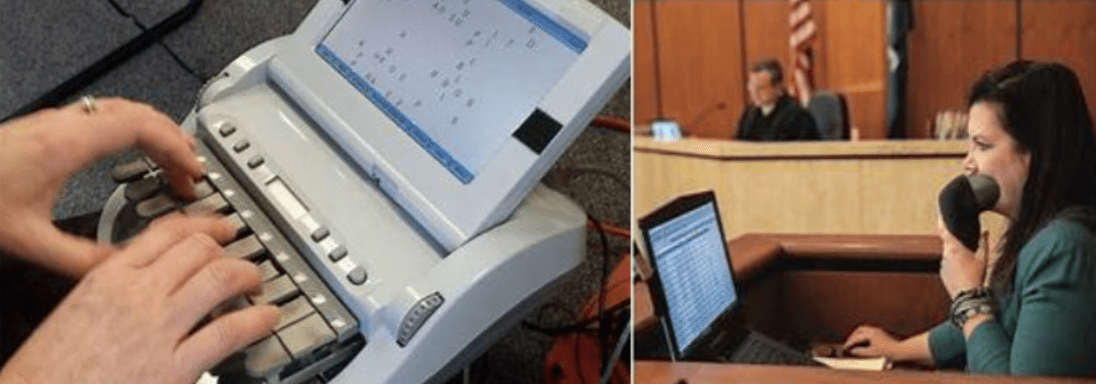
Digital reporters certified by AAERT are not equivalent to licensed court reporters. They don’t write realtime, certify records on the spot, or meet the legal standards required in high-stakes proceedings. While digital recording may seem like a quick fix for shortages, it risks long-term damage to the integrity of the record. The solution isn’t substitution—it’s investment in the gold-standard profession that’s already working.
The Scopist Crisis – A Silent Threat to the Integrity of Court Reporting
The scopist shortage is becoming a hidden crisis in court reporting. Too many unqualified applicants—often unfamiliar with software like StenoCat32—are delivering error-filled transcripts that compromise accuracy and trust. As court reporters face mounting pressure, it’s time to demand better training, certification, and collaboration from those supporting our record.
When “No Options” Isn’t an Option – The Quiet Collapse of Court Reporting in West Texas

In West Texas, court reporters are disappearing — and judges are turning to digital recording as a last resort. One court has had zero applicants and is now speaking with Verbatim. This isn’t about convenience; it’s a collapse. Melissa’s story reveals the human toll of inaction and the urgent need to protect the integrity of our record. “No options” is not an excuse. It’s a wake-up call.
ASR in Court Reporting – Tool, Threat, or Transformation?

As court reporting faces increasing pressure from digital disruption, the debate over ASR (Automatic Speech Recognition) intensifies. Can it be used responsibly — or does its adoption spell the end of human-led recordkeeping? This article explores the nuanced question: If ASR is wielded by a trained, licensed stenographer, does it become a tool — or remain a threat? The future of our profession may hinge on the answer.
When a State Association Leaves the State – Why ILCRA’s Move to Florida Is a Red Flag for Court Reporters Everywhere
Illinois—home to one of the top four court reporting populations in the U.S.—just saw its association headquarters moved to Florida, a state that has eliminated licensing and gone digital. This alarming relocation by ILCRA raises serious concerns about transparency, oversight, and the future of stenography. Why outsource leadership to a state that no longer values licensed court reporters? Members must demand accountability now.
Crushing it with Carol!

Carol Reed Naughton’s victory in the NCRA VP race is more than a win—it’s a rejection of toxic leadership. In a profession where integrity is often tested, the community chose accountability over ambition, process over performance. This result proves that even in environments where manipulation can thrive, truth still resonates. For every steno who values ethics over ego—this moment is yours.
The Truth Hurts, Especially on Event Day

When truth disrupts the room, it’s doing its job. The timing of my article was intentional—not out of malice, but out of duty to transparency. If the reaction at that event was outrage, maybe it’s not the message but the mirror it held up. Criticism isn’t cruelty. Leadership requires scrutiny. If that stings, ask why—and who benefits from your silence.
Save Steno Now, or Lose It Forever – Why Court Reporters Can’t Be Replaced by AI

Court reporting isn’t dying—it’s evolving. With overflowing steno schools, waitlists, and voicewriters accelerating training, we’re meeting demand. The real threat isn’t a shortage—it’s premature replacement by AI. If we let this profession collapse, we lose the infrastructure that guarantees accuracy in our justice system. If you want us tomorrow, you must choose to support us today—before it’s too late.
 STENOIMPERIUM