
Courts across the country are quietly launching in-house voice-writing programs, training clerks and court staff to become certified reporters. Framed as a solution to shortages, these initiatives shift education inside the institution itself. But when courts become the classroom, deeper questions emerge about independence, professional standards, and who ultimately controls the creation of the legal record.
Tag Archives: ProfessionalStandards
The Floor and the Ceiling – Why Experience Should Raise Earnings — Not Lower the Profession’s Base Rate

Court reporting faces a critical pricing question: should new reporters charge less for the same official record? The answer determines whether the profession maintains a stable foundation or trains the market to seek the lowest bidder. Experience should raise earnings through advanced services like realtime and expedited delivery — not reduce the baseline value of the record itself.
When Professional Advocacy Drifts Off Message

During Court Reporting & Captioning Week, every public event should reinforce the profession’s credibility, technical expertise, and essential role in preserving the official record. Programming that does not clearly connect to stenographic skill, transcript integrity, or public education risks confusing the audience and weakening advocacy efforts at a time when the profession must present a unified, disciplined message.
Who Is NCRA Working For?
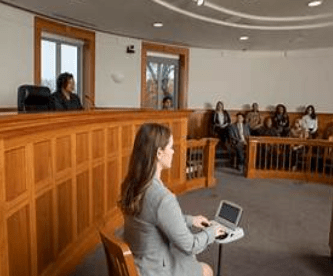
The National Court Reporters Association was created to guard a profession built on precision, licensure, and trust. But its expanding relationships with digital training companies, corporate consolidators, and branding organizations raise an urgent question: is NCRA still defending stenography, or has it begun financing its own displacement? When a trade association profits from the markets replacing its members, neutrality becomes a business model.
When a Profession Is Under Siege, Its Trade Association Should Not Be Hosting Craft Night

As courts experiment with digital capture and AI transcription, the integrity of the legal record is under unprecedented pressure. Yet California’s flagship Court Reporting & Captioning Week is being promoted with craft nights and lifestyle events. At a moment that demands advocacy, public education, and professional defense, the association’s messaging risks trivializing a profession that exists to safeguard due process itself.
Remote Reporting Didn’t Devalue the Profession. It Forced It to Clarify Its Value.

Remote proceedings did not cheapen court reporting. They stripped away logistics and forced the profession to confront what it actually sells: custody of the legal record. As rate debates intensify, the future of stenography may depend less on where reporters sit and more on whether the profession anchors its value in accountability, professional responsibility, and the integrity of the record itself.
The AI Question Everyone Is Asking—And Almost Everyone Is Answering Wrong

The AI debate in court reporting and captioning is being framed incorrectly. This is not about whether humans are “better” than machines. It is about risk, accountability, and appropriate use. AI may assist in low-stakes contexts, but when the record carries legal or reputational consequences, decision-makers still need a licensed professional who can certify, correct, and stand behind the work.
The Voice Writing Question – Is the Fastest Entry Path Quietly Reshaping—and Risking—the Court Reporting Profession?
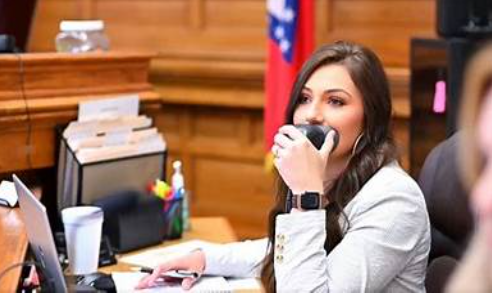
Voice writing is rapidly being marketed as the fastest path into court reporting, even as it remains unrecognized as stenography by the profession’s own national association. This article examines the growing disconnect between how voice writing is sold and how the legal record actually functions, why many machine reporters are learning voice for longevity—not superiority—and what happens when speed of entry outpaces experience in a profession built on precision.
When Caution Becomes Capitulation – NCRA’s AI Filing and the Quiet Risk to the Court Record
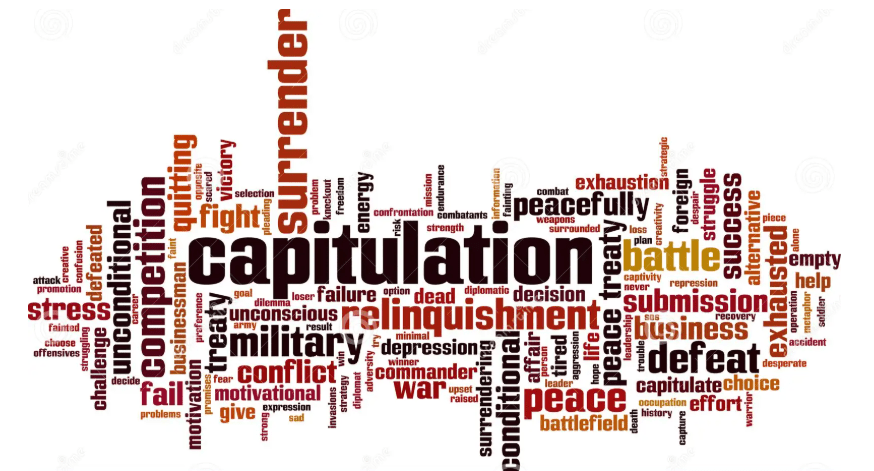
As courts rush to embrace artificial intelligence, a quiet but consequential shift is underway. A recent federal submission by the National Court Reporters Association acknowledges AI’s flaws—yet stops short of drawing the line where it matters most. When caution replaces clarity, the integrity of the official court record, and the constitutional rights it protects, are placed at risk.
Who Trained the Machine?

AutoScript AI is marketed as a “legal-grade” AI transcription solution trained on “millions of hours of verified proceedings,” yet the company provides no public definition of what verification means in a legal context or where that data originated. Founded and led by technology executive Rene Arvin, the platform reflects a broader trend of general ASR tools being rebranded for legal use without the transparency traditionally required in court reporting.
Trial Etiquette – The Unwritten Code Every Court Reporter Is Expected to Follow
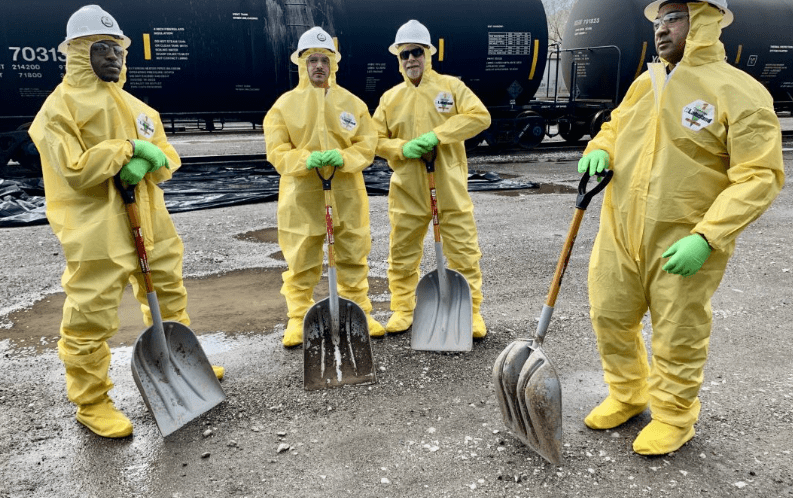
Trial etiquette carries unwritten rules, and one of the strongest is this: if you accept a trial, you finish it. Leaving mid-trial hurts colleagues, judges, and even jurors—especially when readback requests arise and transcripts were never prepared. Substitute reporters are often handed unusable roughs or incomplete PDFs, creating risk of reversible error. Judges notice. Agencies remember. Professionalism demands continuity from start to finish.
The Great Wage Mirage – When Digital Court Reporting Claims Outpace Reality
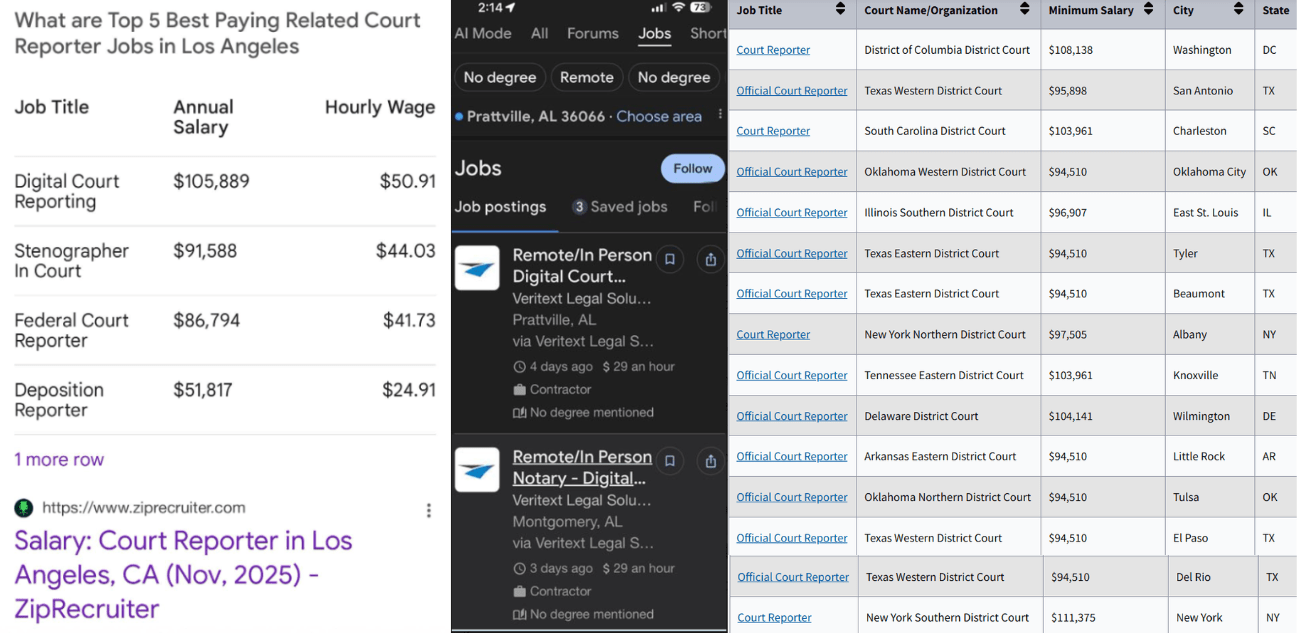
A viral wage graphic now claims digital court reporters in Los Angeles earn more than licensed stenographers and federal officials. The figures collapse under scrutiny, revealing a dangerous distortion of how court reporting is valued and understood. When passive recording is framed as more lucrative than producing the certified legal record, the profession’s integrity is compromised and the public misled about justice, skill, and accountability.
The Court Reporting Industry Faces Structural Stress

The court reporting sector is showing signs of structural stress after years of private-equity consolidation and rising interest rates. Higher transcript costs and declining reporter compensation have prompted some firms to explore lower-cost recording methods, though many of these alternatives face evidentiary and certification limits. As labor supply tightens and compliance standards remain unchanged, the market appears to be shifting back toward models emphasizing reliability and credentialed recordkeeping.
Credentials vs. Competence – Rethinking Professional Standards in Court Reporting

Court reporting’s future depends on more than letters after our names. Credentials have value, but without strong state licensure, standardized titles, and real enforcement, they offer no structural protection. As attorneys push back on “high rates” and cheaper labor undercuts skilled reporters, the profession must unify around measurable skill, fair rates, and regulatory strength—not voluntary designations.
“Spin to Win” for Transcripts? Why This Giveaway Likely Violates California Lottery & Professional Standards Laws

Magna’s “Spin to Win” wheel isn’t harmless fun—it’s an illegal lottery in disguise. By tying raffle entries to transcript submissions and page counts, the company recreates the same scheme Shaunise Day’s Steno in the City™ ran in Long Beach without DOJ registration. In California and most states, Prize + Chance + Consideration = lottery. No free entry means no compliance.
Why AAERT-Certified Digital Reporters Are Not the Answer to the Court Reporter Crisis
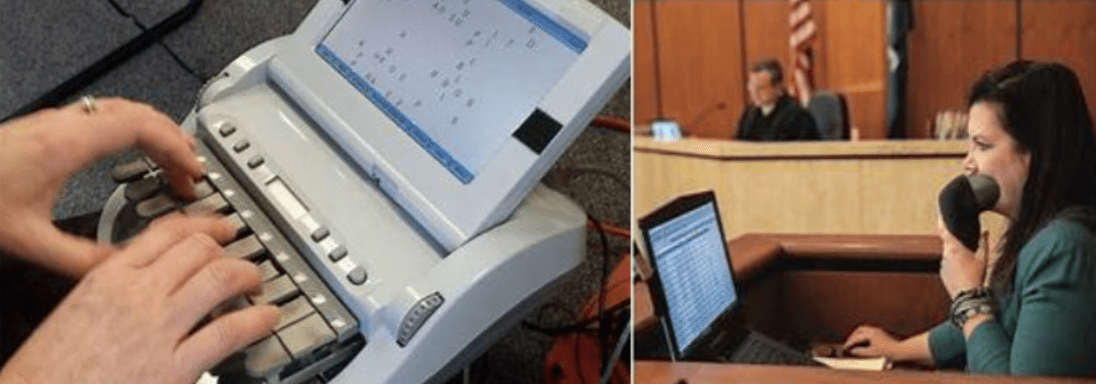
Digital reporters certified by AAERT are not equivalent to licensed court reporters. They don’t write realtime, certify records on the spot, or meet the legal standards required in high-stakes proceedings. While digital recording may seem like a quick fix for shortages, it risks long-term damage to the integrity of the record. The solution isn’t substitution—it’s investment in the gold-standard profession that’s already working.
 STENOIMPERIUM