
AI deposition summaries are being sold beside sworn transcripts, raising a question older than the technology itself: when interpretation travels with the record, does neutrality follow it? Advisory Opinion 32 was written to protect public confidence in the reporter’s role, not to regulate keyboards. Replacing a human summarizer with software may change the tool, but it does not automatically eliminate the appearance concerns the rule was meant to prevent.
Tag Archives: politics
Private Equity, Public Records – How Business Is Reengineering Custody of the Legal Transcript
The legal transcript has quietly become a commercial asset. As private equity and corporate platforms centralize custody of the record, financial logic is beginning to replace evidentiary logic. Custody determines power. And when custody moves from courts into markets, the justice system inherits risks it did not design and cannot easily unwind.
Continuing Education or Professional Replacement?
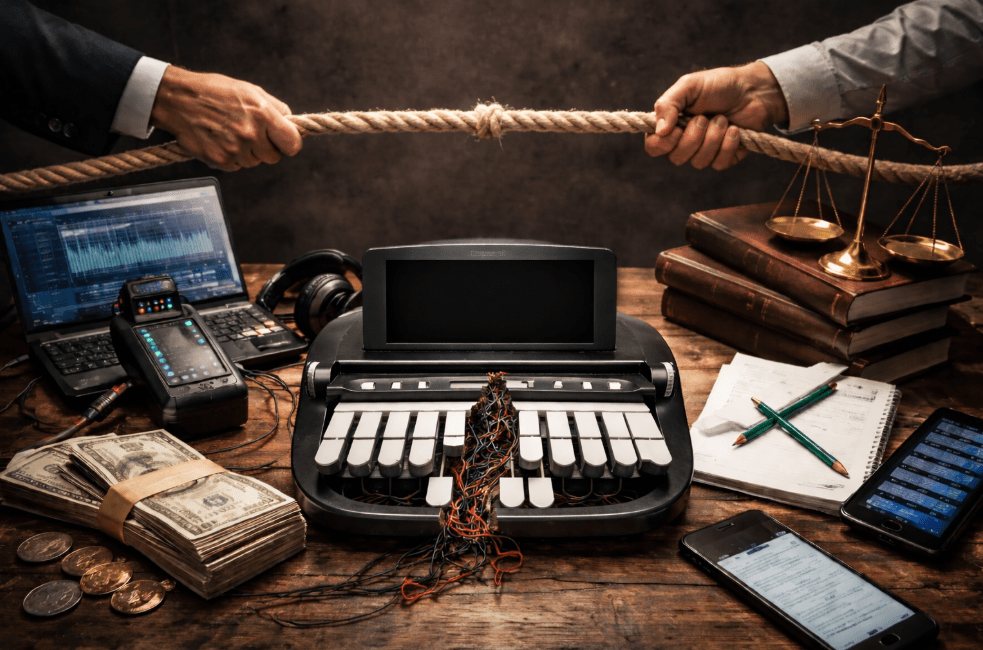
An Investigation Into NCRA’s CEU Approvals, Vendor Influence, and Financial Pressures When Continuing Education Becomes Industry Re-Engineering – Questions Surround NCRA-Approved CEUs and Method-Agnostic Training StenoImperium Investigative Series Draft A Profession Being Rewritten — With Its Own Credentials For decades, stenographic court reporters relied on the National Court Reporters Association (NCRA) as both their professionalContinue reading “Continuing Education or Professional Replacement?”
Whitney Kumar Returns to the Spotlight as Judy Justice Begins Another Season – 2026

Whitney Kumar is back for another season of Judy Justice, returning to the courtroom where precision meets prime time. As the show’s official court reporter, Whitney brings authenticity, professionalism, and deep legal expertise to one of streaming’s most-watched courtroom series. Her continued presence highlights not only her own success, but the vital role court reporters play in preserving the integrity of the record.
Court Transcript Rules Shift in Los Angeles County – What Litigants Need to Know
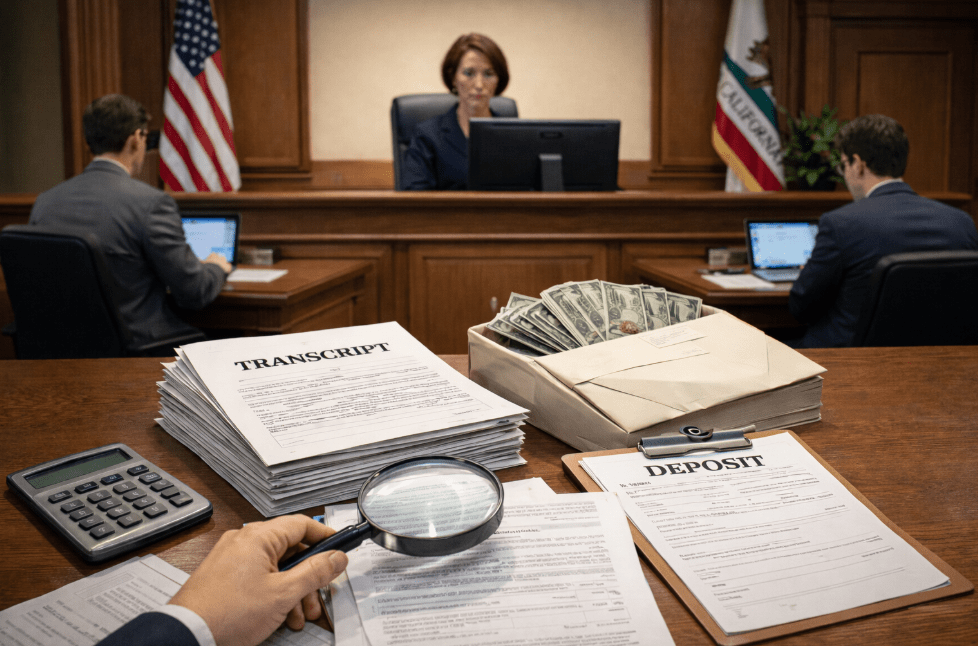
On January 21, 2026, the Los Angeles County Superior Court quietly clarified how parties may purchase reporter’s transcripts on appeal—reshaping the financial and procedural mechanics behind who pays, who receives copies, and how the official record moves forward. While technical on its face, the change touches the core of appellate practice: access to the words that ultimately decide cases.
When “Live Notes” Enters the Notice – What the Confusion Over AI in Depositions Is Really About

As artificial intelligence quietly enters deposition rooms under vague terms like “live notes,” court reporters are being forced into a new role: boundary-setters for the legal record itself. The issue is no longer whether proceedings can be recorded, but who controls what is captured, who is accountable for what is created, and what truly constitutes the official record in modern litigation.
The Lessons of Badran – A Roadmap for How NCRA Must Defend the Legal Record

The Badran ruling exposed a growing risk: courts are redefining admissibility without guidance from the profession that creates the record. As audio-based reporting and vendor workflows spread, efficiency arguments are replacing evidentiary law. This article offers a clear roadmap for how NCRA can act—now, in active cases, and long-term—to defend due process, professional oversight, and the integrity of the record.
When Efficiency Overrides the Law – Why Badran v. Badran Got Admissibility Wrong

The Badran v. Badran ruling did not affirm professionalism in modern depositions; it excused its absence. Admissibility does not turn on convenience, volume, or after-the-fact agreement. It turns on lawful process and qualified human oversight. Agencies are not officers of the record, and parties cannot stipulate away licensure, evidentiary foundation, or due process in the name of efficiency.
The Masks Court Reporters Wear—and the Cost of Wearing Them Too Long

Court reporters are trained to capture the truth verbatim, yet many have learned to suppress their own. In a profession built on accuracy and independence, silence has become a survival strategy. Over time, professionalism has been mistaken for passivity, and conformity for neutrality. The result is a culture where dissent feels dangerous—and where thinking independently is quietly discouraged.
An Open Letter to Kristin Cabot: A Profession That Understands Second Acts

Branded “unemployable” after a viral moment, Kristin Cabot’s story raises a larger question: what happens to capable professionals when public shame outpaces truth? Court reporting offers a rare second act—one grounded in skill, neutrality, and measurable merit. In a profession that values accuracy over optics, redemption isn’t performative. It’s earned, keystroke by keystroke.
A Kentucky Hearing Shows Why Digital Recording Is Not — and Never Will Be — an Acceptable Official Record
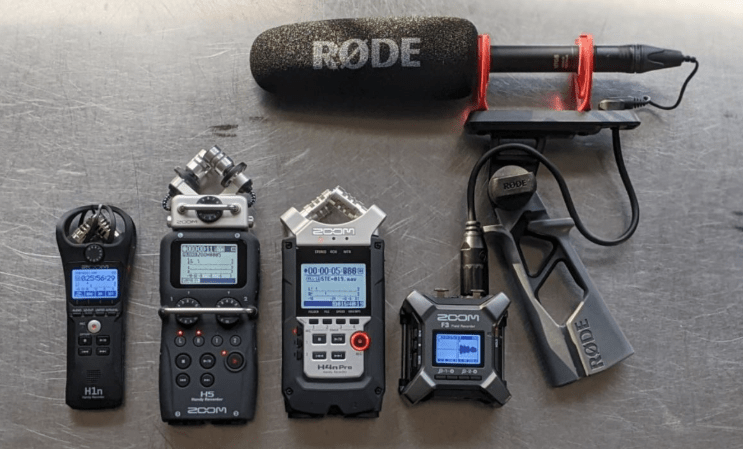
A Kentucky administrative hearing again exposed the fatal flaw of digital recording: when the agency’s “official” audio failed, a certified court reporter was the only reason the record survived. Due process cannot depend on glitchy technology or missing audio files. This case proves, yet again, that the stenographic reporter—not a digital recorder—is the only acceptable guardian of the legal record.
Why Most Court Reporters Don’t Quit — And Why That Matters

An AI summary claims court reporters quit because the job is unbearable. The reality is the opposite. Most reporters stay for decades—often an entire working lifetime—because the profession rewards mastery, autonomy, and adaptability. Court reporting is demanding, yes, but for those built for it, it becomes a superpower, not a burnout sentence.
An Off-the-Record Recording Takes Center Stage in Judge Hannah Dugan’s Federal Trial
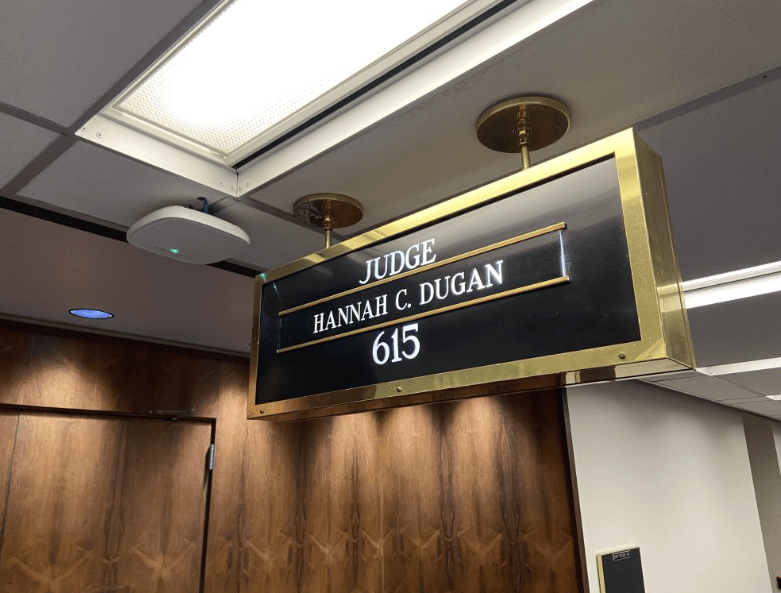
When jury selection begins next week in the federal obstruction case against Milwaukee County Circuit Court Judge Hannah Dugan, the proceedings will unfold under the shadow of a piece of evidence rarely seen in an American courtroom: an off-the-record audio recording captured inside her courtroom during a criminal calendar session. The recording—sealed from public releaseContinue reading “An Off-the-Record Recording Takes Center Stage in Judge Hannah Dugan’s Federal Trial”
The Illusion of Unity – When “Movement” Becomes Message Control

The rise of “STENO United” and the Fearless Stenographers Conference reflects a growing trend in our field: advocacy transformed into spectacle. Inspiration becomes insulation when branding replaces transparency, and unity becomes a tool for silencing dissent. Our profession doesn’t need one movement claiming moral authority—it needs distributed, ethical leadership grounded in accountability, not curated mythology.
Dividing Zero – The Illusion of Division in the Court Reporting Profession

There is no “division” in the court reporting profession — only distinction. Reporters are more united than ever: mentoring students, fighting the shortage myth, and defending the record against digital and AI intrusion. Outsiders may market unity to mask exploitation, but unity built on falsehoods isn’t healing. It’s control. You can’t divide zero.
Making a Record – Why Attorneys Keep Losing Their Exhibits on Appeal

Attorneys often assume that showing or publishing an exhibit makes it part of the record—it doesn’t. Only the judge can direct that an exhibit be “marked” or “received.” The clerk keeps the official list; the reporter records what’s said. If you skip the formal steps, your exhibits vanish on appeal. Make your record right, or risk losing it forever.
Breaking News!!! L.A. Judge Refuses Jury Readback Instruction in Civil Trial — Citing “Time” as Reason

In Department 16 of Los Angeles Superior Court, Judge Steve Cochran told jurors, “We don’t do that,” referring to readback of testimony—directly contradicting CCP § 614, which guarantees every civil jury the right to request testimony readback during deliberations. His refusal highlights a growing erosion of due process as judges quietly sidestep mandatory procedures meant to preserve the integrity of the record.
From Wax Tablets to Quill to Realtime – A 2,000-Year Journey of Shorthand

Long before steno machines, Ancient Greek scribes developed shorthand to capture debates and court proceedings. The Romans expanded it, Taylor and Pitman refined it, and Ward Stone Ireland’s 1911 machine revolutionized it. Today’s realtime theories trace their lineage back over 2,000 years—a legacy of precision, linguistic mastery, and adaptation that defines the court reporting profession.
Small Agencies in Crisis – Competing Fairly in an Unfair Market

Small, reporter-owned agencies are being squeezed by Big Box firms offering lavish gifts, delayed payment schemes, digital reporters, and AI summaries. Competing on those terms is impossible — and unethical. But survival is still possible. By flipping their business model upside down — paying reporters faster, networking instead of consolidating, and selling ethics instead of perks — small agencies can thrive again.
The Incontrovertible Record – Why a Stenographer’s Notes Still Reign Supreme

In every courtroom, voices overlap, tempers flare, and the stakes couldn’t be higher. Amid the chaos, one thing never wavers: the stenographer’s notes. They are the unshakable record—neutral, permanent, and immune to distortion. Machines may glitch, audio may falter, but the stenographer’s notes never lie. They remain the ultimate safeguard of truth in our justice system.
Saving the Profession Isn’t a Runway Walk, It’s a Battlefield

Saving stenography isn’t a runway walk—it’s a battlefield. Agencies have leveraged legislation to gain ground, and courts now put their names on forms once reserved for reporters. Power circles inside our own profession deflect responsibility, as seen in the Notary Loophole fallout. The truth is simple: reporters must reclaim leadership, defend independence, and fight for the integrity of the record.
The Stars That Sing – Hearing the Truth in Court Reporting

The Bushmen pitied Laurens van der Post when he admitted he could not hear the stars sing. Today, I feel the same grief for our profession. The truth rings out—schools reporting poaching, leaders failing in accountability—yet so many refuse to hear it. Our poverty is not material, but in losing the ability to hear the song of truth itself.
Who Really Has the Authority to Swear in Witnesses? The Notary vs. Court Reporter Divide

Who really has the authority to swear in witnesses—court reporters or notaries? It’s not a technicality. The power to administer an oath is what gives testimony its binding force. Court reporters, as officers of the court, carry statutory authority. Notaries don’t. Digital reporters straddle the line, often skipping safeguards entirely. The result? A dangerous fault line threatening the integrity of legal proceedings.
Saving Court Reporting – It’s About More Than Fighting AI

The legal world has spent years debating artificial intelligence and digital recording in courtrooms. And with good reason. Accuracy, privacy, and accountability are not luxuries; they are the bedrock of justice. Human court reporters remain the gold standard for preserving the record. But while we fight Silicon Valley’s latest experiment, another crisis is starving ourContinue reading “Saving Court Reporting – It’s About More Than Fighting AI”
No, You Never Served Me – The Truth Behind False Cease-and-Desist Claims

Shaunise Day falsely claimed a cease and desist “didn’t work” against me — but the truth is, it was never valid to begin with. The letter came from someone with a JD but no law license. The California State Bar ruled it was unauthorized practice of law, issued a cease and desist to her, and referred the case to the DOJ. Facts matter. Lies don’t intimidate me.
Trial Without a Reporter – What I Witnessed in L.A. Court Should Alarm Every Litigator
When a judge told attorneys, “you don’t need a court reporter” — despite one being present and assigned — it exposed a growing judicial trend: bypassing licensed reporters in favor of unregulated recordings. Critics say it’s not about shortages. It’s about power, profit, and erasing the record itself.
A Victory for Nevada Court Reporters: Senate Bill 191 Signed, Rate Increases Effective January 2026
Nevada court reporters just won big—Governor Lombardo signed a rate increase into law, effective January 1, 2026. This echoes California’s 2021 rate hike from $3.00 to $3.99/page and signals rising recognition of our profession. Freelancers: This is your win, too. Celebrate with NVCRA this Saturday at Café du Central and get ready for what’s next.
Why Whisper Can’t Replace Court Reporters in the U.S. Legal System

Canada’s Legislative Assembly proved AI like Whisper can assist—but not replace—human editors. Meanwhile, U.S. courts risk due process by adopting ASR without oversight. Speaker errors, misattribution, and data risks abound. Justice demands more than a “good enough” transcript. We must follow Canada’s lead: human-led, AI-assisted. The record—and constitutional rights—depend on it.
Not Optional – Why Stenographers Are Essential to the Constitution and Your Freedom

Court reporters aren’t just transcribers—they’re constitutional safeguards. Without a certified human creating the record, due process collapses. No accurate transcript means no appeal, no accountability, no justice. Stenographers ensure the truth is preserved, rights are protected, and freedom is upheld. Replacing them with machines doesn’t save money—it erodes democracy. Court reporters are the quiet guardians of liberty. Lose them, and you lose the record that protects us all.
Human Oversight is Now Law – Virginia Leads the Nation with Groundbreaking AI Legislation Protecting the Judicial Record
Virginia just became the first state to legally require human oversight of AI in courtrooms. With HB 1642, justice stays human-centered—protecting certified transcripts, ethical decision-making, and the future of court reporting. This is a national model for balancing innovation with integrity.
When Advocacy Turns Hostile – A Call for Integrity in Court Reporting
When advocacy turns hostile, professionalism suffers. In the court reporting world, performative leadership and public bullying are replacing ethics and collaboration. This anonymous essay calls for a return to integrity — where disagreement isn’t met with defamation, and leadership doesn’t rely on intimidation. The future of steno depends not just on who speaks, but how we choose to lead.
Ethical Red Flags – Are Attorneys Violating Rules of Professional Conduct by Retaliating Against Court Reporters?

Some plaintiff attorneys are retaliating against court reporters by replacing them with uncertified digital alternatives—not out of necessity, but spite. In doing so, they may be violating ethical rules around competence, candor, and fairness. Using uncertified transcripts can mislead the court, harm clients, and erode due process. It’s not just bad judgment—it may be professional misconduct.
The Backfire of the Stop the SoCal Stip Movement – How a Campaign to Protect Court Reporting Accelerated Its Threat

The Stop the SoCal Stip movement was meant to protect court reporters—but instead, it triggered resentment among attorneys that’s now fueling our replacement. What began as a legal ethics stand has been twisted into a narrative of greed. The result? Retaliation via digital recording and ASR. If we don’t reclaim the narrative, the gold standard of stenography could disappear.
Empires Built on Convenience – The Parallel Collapse of Big Pharma and Court Reporting

The collapse of Big Pharma’s credibility mirrors the slow unraveling of the court reporting profession. Both industries ignored warnings from within, replaced professionals with profit-driven shortcuts, and now face a reckoning. As automated systems fail to protect the integrity of legal records, certified court reporters must reclaim their role as the Responsible Charge—before our justice system loses something it can’t afford: the truth.
The Case for Court Reporter Cost Transparency and Industry Reform

Attorneys are furious over rising court reporting costs—but the truth is, reporters aren’t the ones profiting. Agencies are marking up per diems by 100–200%, keeping fees for add-ons like exhibits and digital access, while reporters see less than half. It’s time for legislative reform, transparency, and a fair compensation model that protects the profession—and restores integrity to the legal record.
Protecting the Integrity of the Legal Record Nationwide – A Formal Request for NCRA to Lead on ASR Policy Reform
A National Model Law to Regulate the Use of ASR and Preserve Human Oversight in Legal Proceedings As part of this effort, I respectfully ask that NCRA spearhead a coordinated legislative campaign across all 50 states, using this proposal as a model law. NCRA can play a vital role by providing state associations with aContinue reading “Protecting the Integrity of the Legal Record Nationwide – A Formal Request for NCRA to Lead on ASR Policy Reform”
An Urgent Call for Federal Action – Protecting the Legal Record in the Age of ASR

To the NCRA Board of Directors and Executive Leadership: As our profession stands at a technological crossroads, we are faced with a choice: lead the conversation on responsible innovation—or watch from the sidelines as automation reshapes our industry without us. This letter is a call to action, urging the National Court Reporters Association to takeContinue reading “An Urgent Call for Federal Action – Protecting the Legal Record in the Age of ASR”
When “No Options” Isn’t an Option – The Quiet Collapse of Court Reporting in West Texas

In West Texas, court reporters are disappearing — and judges are turning to digital recording as a last resort. One court has had zero applicants and is now speaking with Verbatim. This isn’t about convenience; it’s a collapse. Melissa’s story reveals the human toll of inaction and the urgent need to protect the integrity of our record. “No options” is not an excuse. It’s a wake-up call.
When a State Association Leaves the State – Why ILCRA’s Move to Florida Is a Red Flag for Court Reporters Everywhere
Illinois—home to one of the top four court reporting populations in the U.S.—just saw its association headquarters moved to Florida, a state that has eliminated licensing and gone digital. This alarming relocation by ILCRA raises serious concerns about transparency, oversight, and the future of stenography. Why outsource leadership to a state that no longer values licensed court reporters? Members must demand accountability now.
When Campaign Emails Cross the Line – A Closer Look at the NCRA Vice President Race
Margary Rogers’ campaign email for NCRA Vice President sparked concern for its tone, tactics, and alignment. While promoting experience and leadership, the message included subtle jabs at opponents and leaned heavily on personal branding. With the profession at a crossroads, members should expect professionalism over promotion, and clarity over charisma. This election is about trust, not just titles—and our standards should reflect that.
The SITC Events – Uncovering the Financials, the Fallout, and the Mob Response

At first glance, The Fearless Stenographers Conference seemed like a triumph for the court reporting community. But behind the scenes, it exposed a troubling pattern of financial opacity, legal noncompliance, and retaliatory behavior. When legitimate concerns were raised, Shaunise Day didn’t offer transparency—she launched a campaign of intimidation. This is not just a story about mismanagement. It’s a warning about what happens when ego overrides accountability.
SITC and the Court Sponsorship Scandal – Legal Violations, Misused Funds, and Calls for Accountability

Steno in the City, a for-profit LLC, is facing legal scrutiny for soliciting sponsorships without proper registration in Louisiana and California. Marketed as a nonprofit-style event, “Fearless Stenographers 2025” misled sponsors, misused volunteer labor, and potentially diverted public court funds. With multiple state and federal laws potentially violated, legal experts and industry professionals are calling for accountability, transparency, and the return of misappropriated contributions.
California Court Reporters Board Strips School Names from CSR Results — A Troubling Move for the Industry
The California Court Reporters Board has removed school names from CSR exam results, sparking concern among the state’s few remaining court-reporting programs. This change, made without notice, strips schools of public recognition crucial for accreditation, recruitment, and credibility. At a time when the profession faces a severe shortage, the move threatens to further weaken the already fragile pipeline of trained court reporters in California.
One Man, Many Hats – Is It Time to Talk About Dave Wenhold’s Role Across Court Reporting Associations?

Dave Wenhold, Executive Director of both NCRA and ILCRA, wields uncommon influence across court reporting associations—raising serious questions about transparency and fairness. With overlapping leadership roles in multiple organizations, critics warn of blurred priorities, potential conflicts of interest, and limited oversight. As membership declines and industry threats grow, many are asking: is this governance structure truly serving the profession—or concentrating too much power in one place?
Gatekeeping, Fear, and the Silencing of Dissent is a Hot Crisis in the Court Reporting Community

In today’s court reporting profession, too many voices are silenced not by debate, but by dismissal. When someone asks, “Who are you?” before deciding whether to block you, it’s not curiosity—it’s control. Gatekeeping has replaced dialogue, and fear has replaced professionalism. We must stop judging messages by the messenger and start confronting the culture that protects power over truth. Silencing isn’t safety—it’s complicity.
When the Boardroom Becomes a Crime Scene – Abuse, Silence, and Accountability in the Court Reporting Profession

Workplace intimidation in court reporting isn’t just toxic—it’s a weapon. When fear silences dissent and leadership enables abuse, the cost can be fatal. Whistleblowers are met not with concern, but with hostility: “Who is this?” That question isn’t curiosity—it’s a tactic. Silence protects power. Accountability must start with association boards and court leadership. Because when harm is ignored, complicity becomes policy.
Who Benefits? The Unanswered Questions About the Money Behind ILCRA’s Partnership with SITC
ILCRA’s decision to redirect event registration and payments to the for-profit Steno in the City raises serious ethical and legal concerns. By allowing a private LLC to collect member data, funds, and volunteer labor, ILCRA risks violating nonprofit standards and labor laws. This unprecedented move compromises member trust, blurs organizational accountability, and demands immediate transparency about where the money goes—and who truly benefits.
A Storm Behind the Skyline: Why Is ILCRA Partnering with Steno in the City?
As the Illinois Court Reporters Association (ILCRA) prepares for its much-anticipated Summer Kickoff Cocktail Party on June 20, 2025, many in the court reporting community are raising serious questions—not about the event itself, but about its co-host: Shaunise Day and her brand, Steno in the City. At first glance, the collaboration may seem like aContinue reading “A Storm Behind the Skyline: Why Is ILCRA Partnering with Steno in the City?”
The Manufactured Court Reporter ‘Crisis’ and the Dangerous Push for Unlicensed Transcription

The myth of a court reporter shortage is being exploited to push unlicensed transcription services into the legal system. But only certified court reporters—not agencies or transcriptionists—can serve as the Responsible Charge. They alone have the authority to certify transcripts, administer oaths, and safeguard the record. Replacing them with unqualified labor threatens due process and undermines the very foundation of courtroom integrity.
The California Court Reporting Crisis and How the System Undermines Its Own Professionals

California court reporters are being edged out as agencies prioritize out-of-state labor for remote jobs—often at the expense of legal compliance. Despite clear transcript standards, violations go unchecked due to the CRB’s lack of enforcement authority. Without reforms to licensing, job assignment transparency, and regulatory power, California’s reporting professionals face burnout, underemployment, and a system that no longer supports the high standards it claims to uphold.
 STENOIMPERIUM