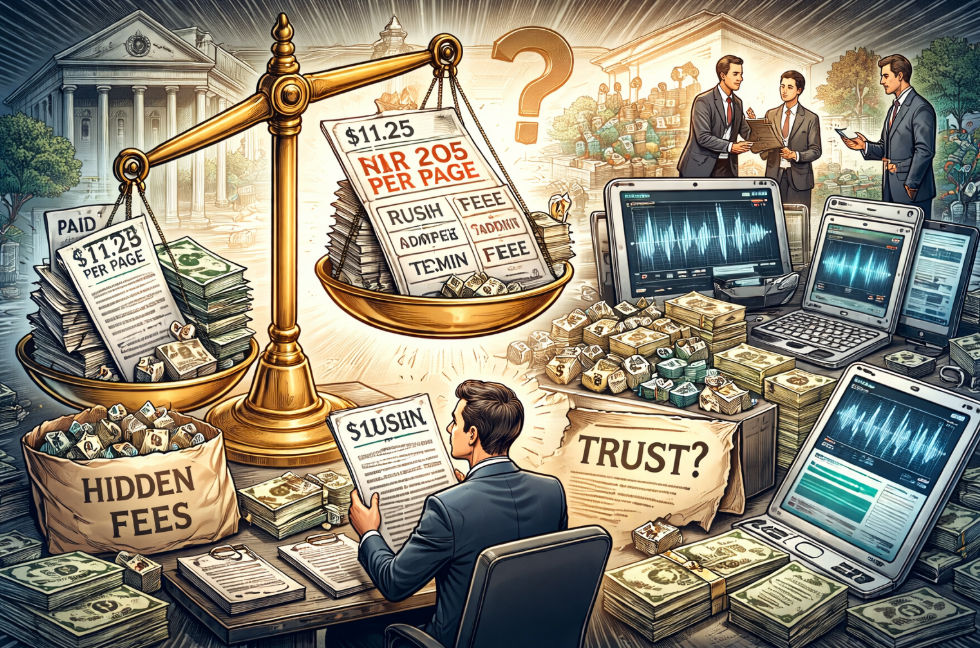
For years, reporters were told agencies shared transcript revenue fairly — once roughly 70/30, later framed as 50/50. But when a reporter earns $2.80 per page while the client pays over $11, the numbers reveal something else entirely. Hidden fees and opaque billing distort the market, push attorneys toward cheaper alternatives, and damage trust in stenography itself. Transparency isn’t regulation — it’s survival.
Tag Archives: LegalTransparency
When the Courtroom Becomes a Dataset – Why Media Recording in 2026 Is No Longer Just “Coverage”

Courtroom recording is no longer simply about cameras and coverage. In 2026, it is about what happens after the audio leaves the room: automated transcription, cloud storage, permanent datasets, and uncontrolled reuse. When proceedings become machine-readable assets, courts risk losing authority over the official record, participant privacy, and the conditions necessary for fair, orderly justice.
When the Record Is Public, Who Pays for It?

Court transcripts are treated as public goods, but the labor that creates them is not. While federal courts quietly preserve a temporary restriction period before transcripts become freely accessible, state court systems operate under very different economic models. Together, these frameworks reveal how control of the legal record has shifted away from court reporters, steadily separating access from fair compensation.
Trial Without a Reporter – What I Witnessed in L.A. Court Should Alarm Every Litigator

When a judge told attorneys, “you don’t need a court reporter” — despite one being present and assigned — it exposed a growing judicial trend: bypassing licensed reporters in favor of unregulated recordings. Critics say it’s not about shortages. It’s about power, profit, and erasing the record itself.
 STENOIMPERIUM