
During Court Reporting & Captioning Week, every public event should reinforce the profession’s credibility, technical expertise, and essential role in preserving the official record. Programming that does not clearly connect to stenographic skill, transcript integrity, or public education risks confusing the audience and weakening advocacy efforts at a time when the profession must present a unified, disciplined message.
Tag Archives: LegalIntegrity
When “Live Notes” Enters the Notice – What the Confusion Over AI in Depositions Is Really About

As artificial intelligence quietly enters deposition rooms under vague terms like “live notes,” court reporters are being forced into a new role: boundary-setters for the legal record itself. The issue is no longer whether proceedings can be recorded, but who controls what is captured, who is accountable for what is created, and what truly constitutes the official record in modern litigation.
The Great Wage Mirage – When Digital Court Reporting Claims Outpace Reality
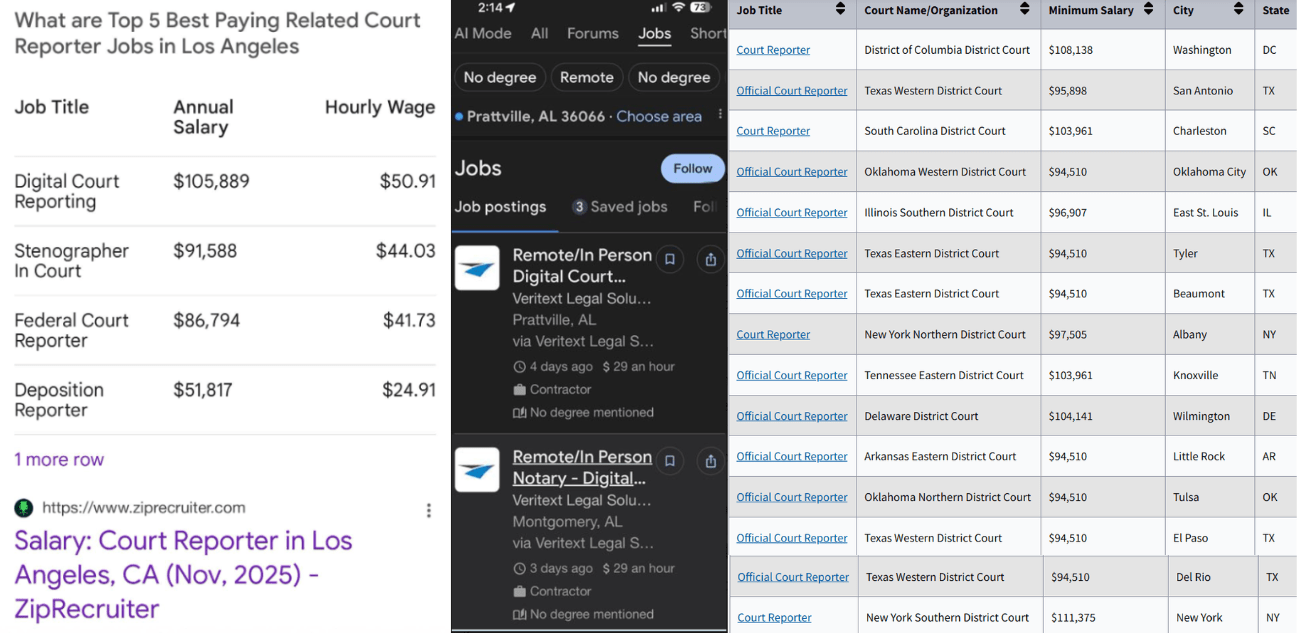
A viral wage graphic now claims digital court reporters in Los Angeles earn more than licensed stenographers and federal officials. The figures collapse under scrutiny, revealing a dangerous distortion of how court reporting is valued and understood. When passive recording is framed as more lucrative than producing the certified legal record, the profession’s integrity is compromised and the public misled about justice, skill, and accountability.
The Penny Auction Rebellion – How Stenographers Can Take Back the Record

In 1936, farmers fought foreclosure by staging “penny auctions,” bidding pennies on their neighbors’ land and giving it back to them.
Today, stenographers can do the same — through unity, co-ops, and reporter-owned platforms to reclaim our profession from AI, digital recording, and private equity control.
AI Transcripts Gone Wild – The Day a Transcription Company Asked a Court Reporter to “Certify” Their Robot

A transcription company actually asked a certified court reporter to “sign off” on an AI-generated deposition—no oath, no saved audio, no chain of custody. When the attorney demanded a lawful certification, they tried to hire a reporter to legitimize their robot record. This isn’t innovation; it’s impersonation—and it threatens the integrity of every legal transcript in America.
Top Court Reporting Trends to Watch in 2025 – Real Innovation, Legal Integrity, and the Return to Verbatim

The future of court reporting isn’t automated—it’s live, verbatim, and unstoppable. In 2025, certified stenographers and voice writers are shattering the shortage myth, expanding remote coverage, and using cutting-edge tools to uphold the integrity of the record. “Record now, transcribe later” isn’t innovation—it’s regression. The real revolution is happening in real time, with reporters leading the charge.
Hope Is Our Weapon – How Court Reporters Can Win This War

“Without hope, we’re doomed.” Jane Goodall’s message is our call to action. Court reporters aren’t losing — we’re fighting strategically. Exposing the notary loophole, revealing hearsay flaws, and modeling decentralized custody of records are how we win. Hope isn’t wishful thinking — it’s our strongest weapon. The record is the battlefield. And we are its guardians.
The Incontrovertible Record – Why a Stenographer’s Notes Still Reign Supreme

In every courtroom, voices overlap, tempers flare, and the stakes couldn’t be higher. Amid the chaos, one thing never wavers: the stenographer’s notes. They are the unshakable record—neutral, permanent, and immune to distortion. Machines may glitch, audio may falter, but the stenographer’s notes never lie. They remain the ultimate safeguard of truth in our justice system.
Saving the Profession Isn’t a Runway Walk, It’s a Battlefield

Saving stenography isn’t a runway walk—it’s a battlefield. Agencies have leveraged legislation to gain ground, and courts now put their names on forms once reserved for reporters. Power circles inside our own profession deflect responsibility, as seen in the Notary Loophole fallout. The truth is simple: reporters must reclaim leadership, defend independence, and fight for the integrity of the record.
Who Really Has the Authority to Swear in Witnesses? The Notary vs. Court Reporter Divide

Who really has the authority to swear in witnesses—court reporters or notaries? It’s not a technicality. The power to administer an oath is what gives testimony its binding force. Court reporters, as officers of the court, carry statutory authority. Notaries don’t. Digital reporters straddle the line, often skipping safeguards entirely. The result? A dangerous fault line threatening the integrity of legal proceedings.
Why Congress Must Hold Hearings on the Integrity of Court Reporting in the Age of Digital Recording and AI

Congress must investigate: Who protects the record when justice is on the line? The integrity of the legal record is at risk. Attorneys report defective transcripts, hidden digital recorders, and AI posing as stenographers. This isn’t just an industry dispute — it threatens due process nationwide. Congress must act. A hearing is urgently needed to expose these practices, enforce responsible charge, and protect the record. Our democracy depends on accurate transcripts.
How AI and Digital Reporting Are Undermining Court Reporting – What Every Court Reporter Needs to Know to Protect Their Career
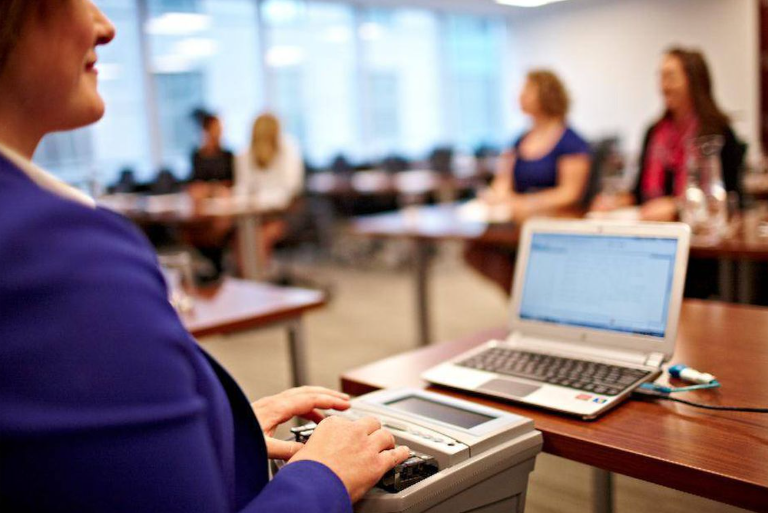
AI and digital reporting technologies are threatening the traditional court reporting profession, but court reporters can safeguard their careers by staying informed, embracing new tools, and advocating for the accuracy and integrity of the court record. Learn how to stay ahead in this evolving landscape and ensure your skills remain essential.
The High Cost of Replacing a Court Reporter

Replacing a court reporter isn’t just a staffing issue—it’s a silent crisis. With veteran reporters retiring, mentoring gaps widening, and agencies scrambling to cover jobs, the true cost of turnover is mounting: lost trust, delayed justice, and record integrity at risk. Court reporters aren’t interchangeable. They’re essential. Until we start treating them that way, the system will keep bleeding talent—and accuracy.
The Subtle Power of a Word – Why ASR Can’t Replace Human Court Reporters

One wrong word — like “sale” instead of “cell” — can alter the facts. ASR doesn’t understand the difference, and neither did my scopist, because they weren’t a trained court reporter. In legal proceedings, every word matters. Court reporters aren’t just typists — we are the responsible charge, the last line of defense for truth and accuracy in the record.
 STENOIMPERIUM