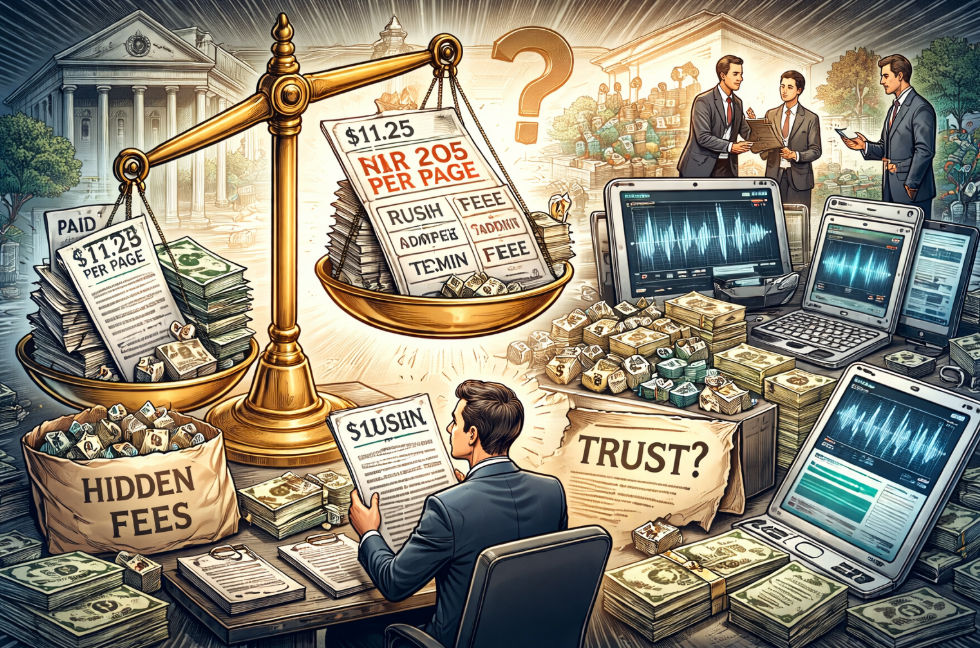
For years, reporters were told agencies shared transcript revenue fairly — once roughly 70/30, later framed as 50/50. But when a reporter earns $2.80 per page while the client pays over $11, the numbers reveal something else entirely. Hidden fees and opaque billing distort the market, push attorneys toward cheaper alternatives, and damage trust in stenography itself. Transparency isn’t regulation — it’s survival.
Tag Archives: LegalIndustry
When a Celebration Becomes a Lottery – The Legal Risks Behind “Enter to Win” Promotions in the Court Reporting Industry

A well-intended recruitment promotion can cross a legal line. When participants must provide referrals or testimonials for a chance to win a prize, the offer may become a raffle — and commercial raffles are prohibited in California. For court reporters, whose work supports the judicial record, the issue extends beyond marketing compliance to professional integrity and public trust.
When “Sustainability” Collides With the Law: How One Complaint Forced a Course Correction at Esquire

When Esquire announced that electronic transcripts would replace sealed paper originals in California, it framed the move as sustainability. Regulators later confirmed it was illegal. A CRB investigation found the policy violated long-standing California law and was reversed only after a formal complaint. The episode exposes how easily corporate workflow changes can endanger reporters’ licenses—and why knowing the code matters before real damage is done.
Who Is Really Overcharging Attorneys? Inside the Business of Court Reporting in the Private-Equity Era

When attorneys receive shocking court reporting invoices, frustration is understandable. But those inflated charges are not enriching court reporters. They are the product of private-equity consolidation, corporate billing structures, and middlemen who control pricing while paying reporters a shrinking share. If the profession is being hollowed out, it is not by stenographers. It is by the business models built on top of them.
When Two Depositions Are Scheduled but Only One Goes Forward – The Growing Fight Over Same-Day Cancellation Fees

Court reporters routinely reserve separate time blocks for each scheduled deposition. When one witness appears and another cancels, the afternoon no-show is a distinct economic loss—no different from how interpreters, electricians, therapists, or attorneys handle missed appointments. Two job numbers mean two billable events. Same-day cancellations must be compensated as a matter of fairness and professional standard.
The Familiar Face Fallacy & Why Court Reporters Must Question the Platform Narrative

Familiarity is not alignment. When a recognizable face stands before the profession offering reassurance, it is easy to mistake comfort for safety. But critical thinking demands a harder question: who benefits if our work becomes optional? Reporters must look beyond polished narratives and ask what external platforms gain from reshaping our role. Strategy deserves scrutiny, not applause, and vigilance is the price of sovereignty always.
When the Bill Comes Due – How California’s SB 988 Exposes a Nationwide Gap in Reporter Payment Protections

California’s SB 988 requires court reporting firms to pay reporters within 30 days — but attorneys have no matching deadline to pay the firms. This imbalance creates cash-flow strain, especially for small agencies, and highlights a national gap in reporter protections. With one-third of U.S. reporters in California, what happens here shapes the entire industry. Other states could — and should — follow with smarter, reciprocal legislation.
The Court Reporting Industry Faces Structural Stress

The court reporting sector is showing signs of structural stress after years of private-equity consolidation and rising interest rates. Higher transcript costs and declining reporter compensation have prompted some firms to explore lower-cost recording methods, though many of these alternatives face evidentiary and certification limits. As labor supply tightens and compliance standards remain unchanged, the market appears to be shifting back toward models emphasizing reliability and credentialed recordkeeping.
Dress Like You Belong in the Record

The court reporter should be the best-dressed person in the room. We’re not schoolteachers — we’re officers of the court, guardians of the record, and in many cases, we earn more than the judge, the attorneys, and the experts combined. Dress like your presence matters, because it does. Professionalism isn’t optional; it’s part of the record you create.
The Real Markup – Why Attorneys Think Reporters Are Overcharging (and Who’s Actually Pocketing the Profit)

Attorneys often assume court reporters are the ones driving up transcript costs. In reality, it’s the agencies in the middle—marking up reporter rates and layering on fees for condensed transcripts, concordances, exhibits, and repositories that reporters don’t see a penny of. As transparency grows, attorneys are discovering the truth: working directly with certified reporters saves money and strengthens the record.
 STENOIMPERIUM