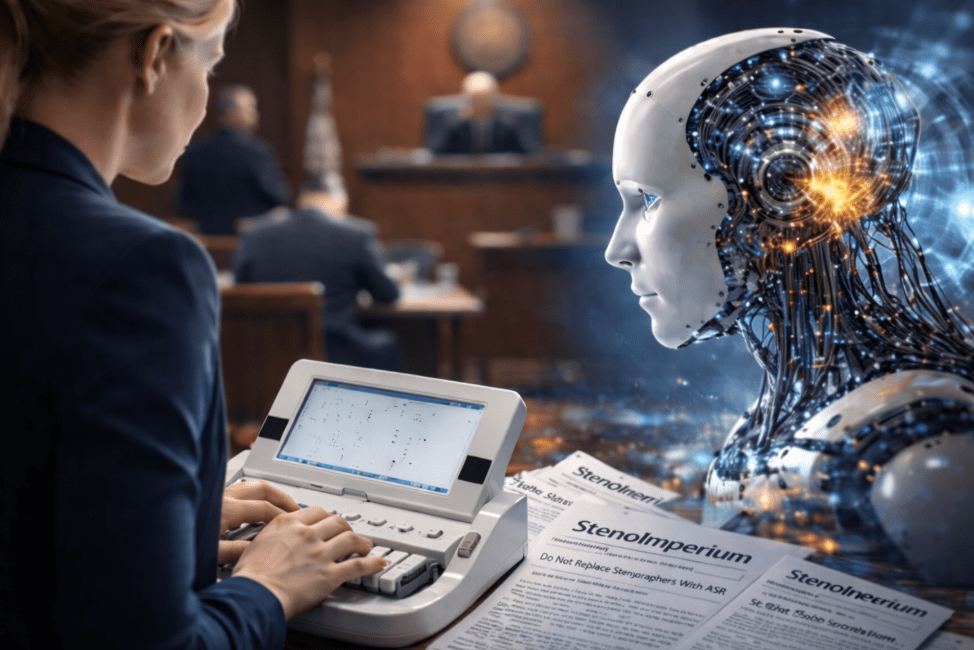
A former AI CEO and his Stanford-trained son just proved what court reporters have been warning for years: AI systems have a hard computational ceiling. When real-world tasks exceed it—as legal proceedings routinely do—AI doesn’t “struggle.” It hallucinates. That limitation isn’t temporary or ethical. It’s mathematical. And it explains why human stenographers remain irreplaceable in the creation of a legal record.
Tag Archives: LegalAccuracy
Opinion: Texas Isn’t Confused About Digital Reporting — Only the Vendors Are

Texas is not confused about digital reporting — only the vendors are. Esquire, U.S. Legal, and Veritext recast a business model as a legal right, insisting courts ignore reliability gaps, nonexistent licensure, and the safeguards built directly into Rule 203.6. The trial court didn’t err; it exercised discretion. Corporate convenience is not access to justice, and marketing cannot replace a certified, accountable record.
Why AAERT-Certified Digital Reporters Are Not the Answer to the Court Reporter Crisis

Digital reporters certified by AAERT are not equivalent to licensed court reporters. They don’t write realtime, certify records on the spot, or meet the legal standards required in high-stakes proceedings. While digital recording may seem like a quick fix for shortages, it risks long-term damage to the integrity of the record. The solution isn’t substitution—it’s investment in the gold-standard profession that’s already working.
 STENOIMPERIUM