
Stanford’s data shows ASR makes twice as many errors with Black speakers as white speakers. The NCRA warns of bias, misattribution, and chain-of-custody failures. In trial after trial, I’ve seen judges and attorneys turn back to the human transcript when accuracy matters. Until a machine can raise its right hand and swear to accuracy, the record still belongs to court reporters.
Tag Archives: legal ethics
AI Summaries, CCR 2474, and the Fight Over Who Owns the Record

AI deposition summaries aren’t innovation—they’re exploitation. Agencies are monetizing transcripts into derivative products without consent or compensation, creating unjust enrichment while undermining the integrity of the record. California’s CCR 2474 wasn’t written with AI in mind, but the principle remains: reporters must not be in the business of interpretation. It’s time for contracts, regulation, and reform to safeguard neutrality, fairness, and trust in the transcript.
Why AAERT-Certified Digital Reporters Are Not the Answer to the Court Reporter Crisis

Digital reporters certified by AAERT are not equivalent to licensed court reporters. They don’t write realtime, certify records on the spot, or meet the legal standards required in high-stakes proceedings. While digital recording may seem like a quick fix for shortages, it risks long-term damage to the integrity of the record. The solution isn’t substitution—it’s investment in the gold-standard profession that’s already working.
The Ethical Dilemma of “No Payment Until Settlement” in Court Reporting
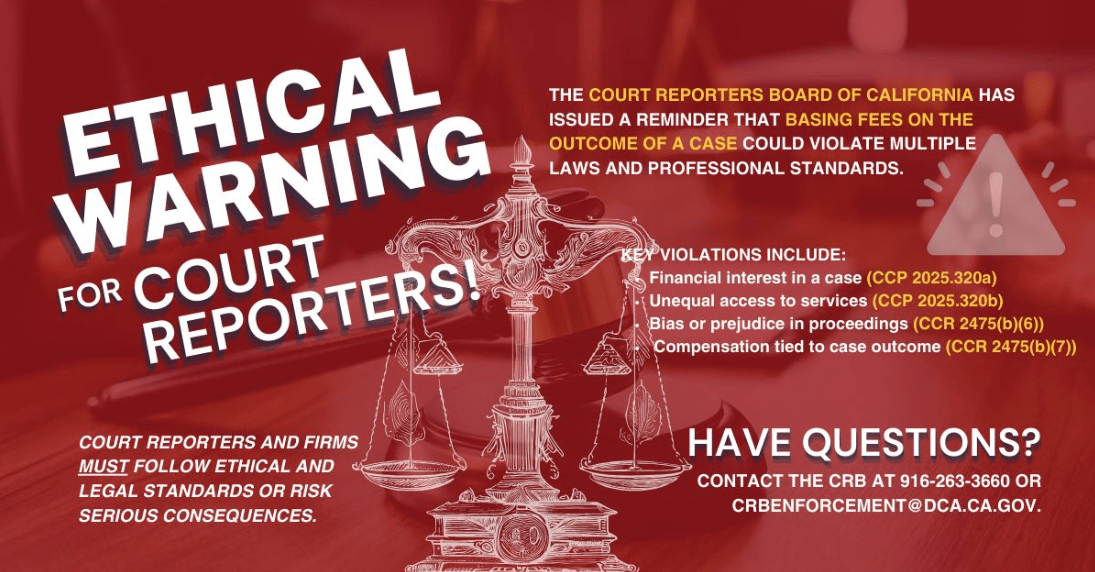
Court reporting firms must uphold neutrality, yet some offer “no payment until settlement” to clients while demanding immediate payment from opponents. This raises ethical concerns and may violate California law. The Court Reporters Board of California warns that such practices compromise impartiality and could result in regulatory action. Maintaining fair payment policies is essential to preserving trust and integrity in legal proceedings.
 STENOIMPERIUM