
Court reporting demands silence, precision, and emotional control. But when bullying enters the workplace, the damage does not stay professional. It becomes biological. Chronic targeting alters sleep, memory, immunity, and emotional regulation. Too often, institutions remove the injured reporter instead of the harmful behavior. The result is a quiet health crisis inside a profession built on endurance.
Tag Archives: JusticeSystem
The “Warm Body” Problem – How Court Reporters Became the Last Line of Accountability

Court reporters are increasingly being treated as logistical placeholders rather than as the professional safeguard of the legal record. Assignments arrive stripped of party information, context, and verification, yet reporters are still asked to place their names and license numbers on transcripts that carry legal weight. The frustration spreading through the profession is not about workload. It is about accountability.
The Floor and the Ceiling – Why Experience Should Raise Earnings — Not Lower the Profession’s Base Rate

Court reporting faces a critical pricing question: should new reporters charge less for the same official record? The answer determines whether the profession maintains a stable foundation or trains the market to seek the lowest bidder. Experience should raise earnings through advanced services like realtime and expedited delivery — not reduce the baseline value of the record itself.
After the Week – What “The Record Under Pressure” Set Out to Do—and Why It Cannot End Here

“The Record Under Pressure” was not written to celebrate a profession, but to examine a system. Over eight days, this series traced how technology, business consolidation, and courtroom drift are reshaping the legal record. Its purpose was simple: to make the justice system’s memory visible again, and to ask whether its transformation is being governed by law—or by convenience.
If the Record Fails – The Future of Justice in a Court System That Can No Longer Prove Itself
A justice system survives only as long as it can prove what happens inside its own courtrooms. As the legal record weakens, appeals turn speculative, accountability erodes, and legitimacy fractures. Courts may continue to rule, but they will increasingly struggle to justify. A system that cannot reliably preserve its proceedings eventually forfeits authority over its own truth.
What Courts Must Do Now – The Legal Record at a Crossroads
The American justice system is approaching a crossroads. Technology, business consolidation, and courtroom drift are quietly redesigning how truth enters law. Courts must now decide whether the legal record will remain a governed evidentiary system or become a technical byproduct of convenience. This is not an operational question. It is a constitutional one.
The Last Neutral in the Room – Why the Court Reporter Is a Structural Safeguard, Not a Service
Court reporters are not service providers. They are structural safeguards. As neutral officers of the court, they preserve the conditions under which justice can later be reviewed, challenged, and corrected. When that role is reframed as clerical or commercial, the system does not merely modernize. It dismantles one of the protections that make legitimacy possible.
Between Bench and Record – What Is Already Happening Inside America’s Courtrooms
The transformation of the legal record is no longer theoretical. It is already happening in everyday courtrooms, through routine decisions that quietly reshape how proceedings are preserved. Reporters are discouraged, recordings are substituted, and speed overtakes precision. These changes rarely make headlines, yet they are redefining the evidentiary foundation of justice.
Private Equity, Public Records – How Business Is Reengineering Custody of the Legal Transcript
The legal transcript has quietly become a commercial asset. As private equity and corporate platforms centralize custody of the record, financial logic is beginning to replace evidentiary logic. Custody determines power. And when custody moves from courts into markets, the justice system inherits risks it did not design and cannot easily unwind.
The Legal Record, Explained – Why a Transcript Is Not a Recording—and Why That Distinction Now Matters
A recording is raw data. A transcript is sworn evidence. A legal record is an evidentiary system. Today, those distinctions are being blurred, and the justice system is inheriting risks it does not yet see. When accountability chains thin and custody diffuses, courts lose more than accuracy. They lose defensibility.
The Record Under Pressure – Why the Legal Record Has Entered Its Most Dangerous Era
The legal record is being reshaped faster than the justice system’s safeguards can adapt. Technology, business consolidation, and courtroom practices are quietly altering how truth is captured, preserved, and controlled. This series begins with a warning: when the record changes, the justice system changes with it. And right now, the record is under pressure.
Court Reporting & Captioning Week | StenoImperium Launch Post
During Court Reporting & Captioning Week, celebration alone is not enough. The legal record is under pressure, reshaped by technology, business models, and quiet courtroom shifts. This series asks court reporters to step into their professional responsibility: to circulate clear analysis to attorneys and judges, and to help the legal community understand what is happening to the evidentiary spine of justice right now today nationwide.
Between the Words – What Court Reporters Can Learn From the People Who Interrupt

In courtrooms, interruption is often treated as a matter of manners. But emerging research suggests it is more often a matter of nervous systems. High processing speed, anxiety, and attention-regulation differences can drive people to speak before they mean to. For court reporters, understanding this distinction is not indulgence. It is a practical tool for protecting the record and restoring order with precision rather than irritation.
Staying in the Chair – What Court Reporting Teaches Us About Pain, Presence, and Power
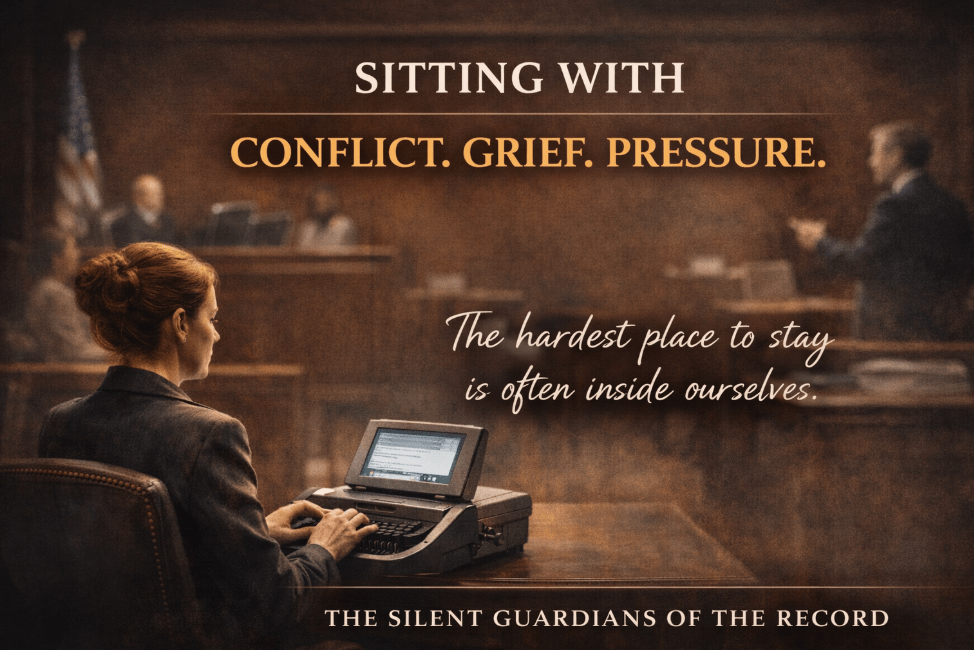
Court reporters spend their careers staying in rooms most people instinctively want to leave. They sit inside conflict, grief, tension, and pressure so the legal record can exist. But the profession rarely teaches reporters what to do with what accumulates inside them. This article explores why presence, not avoidance, is often the beginning of resilience—and real professional power.
Court Transcript Rules Shift in Los Angeles County – What Litigants Need to Know
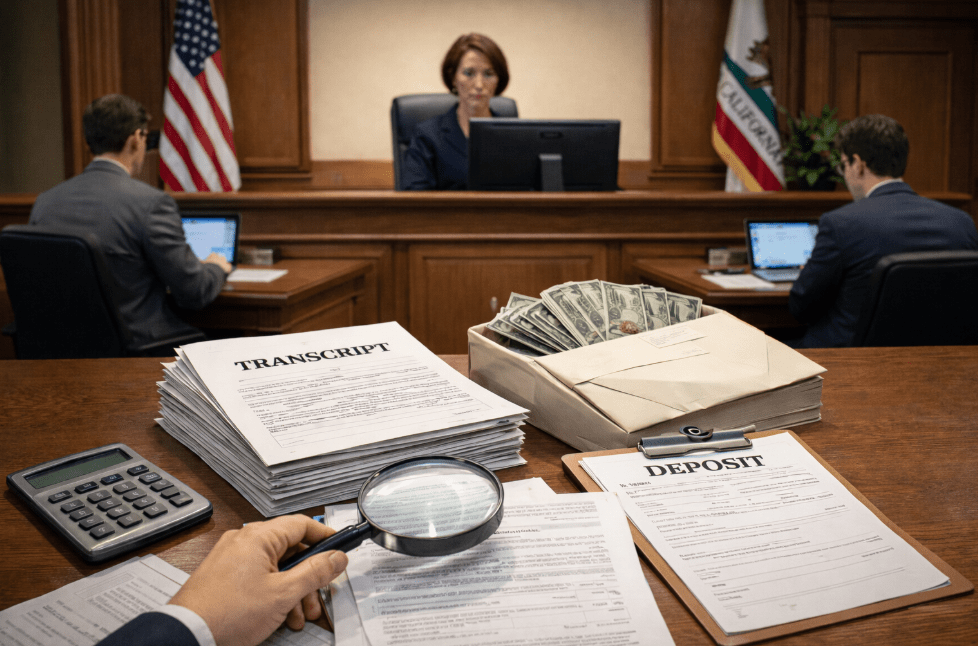
On January 21, 2026, the Los Angeles County Superior Court quietly clarified how parties may purchase reporter’s transcripts on appeal—reshaping the financial and procedural mechanics behind who pays, who receives copies, and how the official record moves forward. While technical on its face, the change touches the core of appellate practice: access to the words that ultimately decide cases.
Court Reporters’ Open Letter – The Rule of Law Begins With the Legal Record

The legal record is not a convenience or a product. It is constitutional infrastructure. As courts quietly replace licensed stenographic court reporters with unregulated recording systems, they are not modernizing procedure. They are removing accountability from the point where law becomes fact. Without a trustworthy, professionally certified record, due process weakens, appellate rights erode, and judicial legitimacy itself is placed at risk.
The Quiet Fear Inside the Record
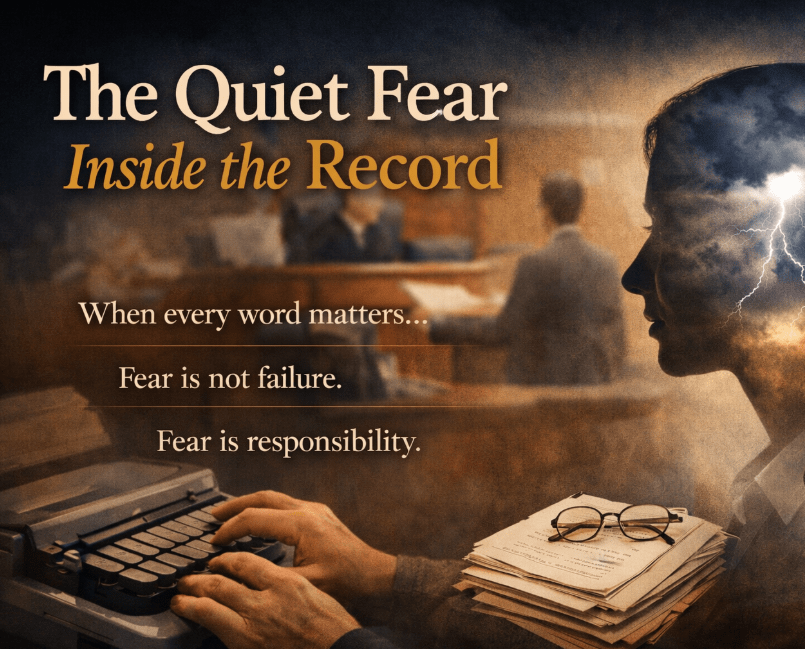
Court reporters rarely speak about fear, yet it quietly accompanies some of the most important moments of their careers. It surfaces in high-stakes trials, unfamiliar courtrooms, and proceedings where every word carries lasting consequence. This fear is not evidence of failure. It is evidence of responsibility. And learning to work with it, rather than retreat from it, may be one of the profession’s most essential skills.
The Fragile Spine of Justice – Why Courts Must Defend the Integrity of the Legal Record

The legal record is the spine of the justice system. Every appeal, ruling, and public trust in the courts rests on its integrity. When record-making is treated as a technical task rather than an evidentiary duty, courts risk weakening the very structure that allows justice to stand. Defending the record is not administrative—it is constitutional.
Who Is Really Overcharging Attorneys? Inside the Business of Court Reporting in the Private-Equity Era

When attorneys receive shocking court reporting invoices, frustration is understandable. But those inflated charges are not enriching court reporters. They are the product of private-equity consolidation, corporate billing structures, and middlemen who control pricing while paying reporters a shrinking share. If the profession is being hollowed out, it is not by stenographers. It is by the business models built on top of them.
An Open Letter to Judges – On the Custody of the Record
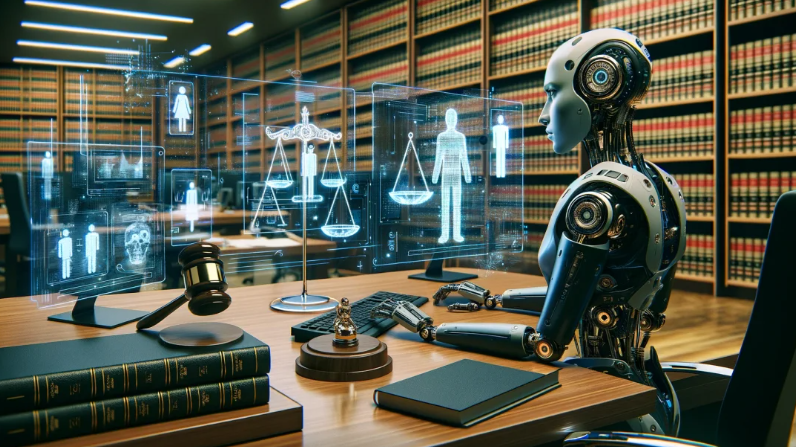
The judiciary’s authority endures not through rulings alone, but through the integrity of the record. When courts weaken professional accountability over how proceedings are captured, they do not merely modernize operations—they destabilize the evidentiary foundation of justice itself. The legal record is not output. It is evidence. And evidence requires human, licensed custody.
The Record Is the Case – Why Saving Court Reporting Means Saving Legal Reality

The record is not a convenience. It is evidence.
Every ruling, appeal, settlement, and precedent rests on the integrity of the transcript. When courts weaken the standards governing how the record is created, they are not modernizing—they are destabilizing the very foundation of justice. Saving court reporting is not about preserving a profession. It is about protecting legal reality itself.
You Can’t Stipulate Your Way Around the Law – The Dangerous Fiction of the “No-Reporter Stipulation”

A court transcript is not a convenience. It is evidence. When attorneys stipulate to proceed without a court reporter, they are not authorizing an “alternative record.” They are agreeing that no lawful evidentiary record will be created. What follows—a stipulated statement of proceedings—is not a transcript, but a negotiated reconstruction. And evidence cannot be manufactured after the fact.
When Machines Become Witnesses – Why the Federal Judiciary’s AI Evidence Proposal Quietly Reinforces the Role of Court Reporters

The federal judiciary’s proposed rule on AI-generated evidence quietly draws a critical line: machine output is not inherently trustworthy and must be tested like expert testimony. That distinction reinforces the structural role of court reporters. A certified transcript is a human-governed legal record, not algorithmic evidence. Once the human layer disappears, the court record itself becomes something the law now admits is dangerous.
When the Courtroom Becomes a Dataset – Why Media Recording in 2026 Is No Longer Just “Coverage”
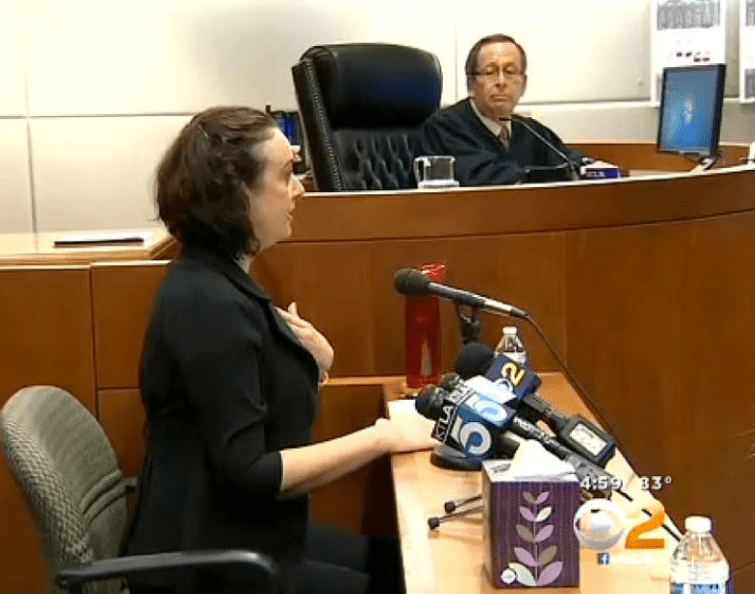
Courtroom recording is no longer simply about cameras and coverage. In 2026, it is about what happens after the audio leaves the room: automated transcription, cloud storage, permanent datasets, and uncontrolled reuse. When proceedings become machine-readable assets, courts risk losing authority over the official record, participant privacy, and the conditions necessary for fair, orderly justice.
2026: The Year the Record Reasserts Itself

2026 is shaping up to be a pivotal year for court reporting. As courts and lawmakers confront the limits of agencies, AI, and automated recording, the profession is seeing renewed focus on responsible charge, accountability, and human judgment. Legislative clarity, reporter-centric technology, and coming court decisions may finally reassert who—and what—the legal record truly depends on.
Using AI to Strengthen Your Voice – How Court Reporters Can Advocate Powerfully for Our Profession

AI isn’t here to replace court reporters—it’s here to amplify us. When used intentionally, AI becomes a strategic partner that helps reporters write stronger letters, clearer public comments, and more persuasive advocacy for our profession. It levels the playing field, giving every reporter the ability to speak with clarity, confidence, and impact. Your voice matters. AI simply helps the world hear it.
An Open Letter to Kristin Cabot: A Profession That Understands Second Acts

Branded “unemployable” after a viral moment, Kristin Cabot’s story raises a larger question: what happens to capable professionals when public shame outpaces truth? Court reporting offers a rare second act—one grounded in skill, neutrality, and measurable merit. In a profession that values accuracy over optics, redemption isn’t performative. It’s earned, keystroke by keystroke.
A Kentucky Hearing Shows Why Digital Recording Is Not — and Never Will Be — an Acceptable Official Record

A Kentucky administrative hearing again exposed the fatal flaw of digital recording: when the agency’s “official” audio failed, a certified court reporter was the only reason the record survived. Due process cannot depend on glitchy technology or missing audio files. This case proves, yet again, that the stenographic reporter—not a digital recorder—is the only acceptable guardian of the legal record.
The Great Wage Mirage – When Digital Court Reporting Claims Outpace Reality
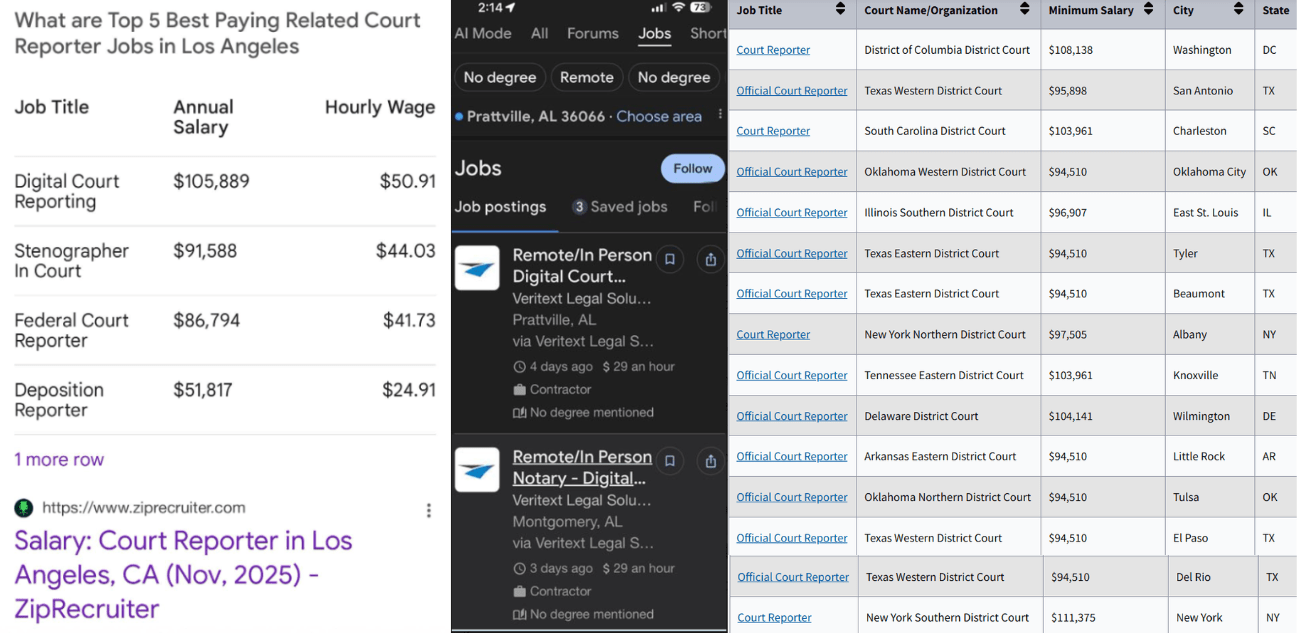
A viral wage graphic now claims digital court reporters in Los Angeles earn more than licensed stenographers and federal officials. The figures collapse under scrutiny, revealing a dangerous distortion of how court reporting is valued and understood. When passive recording is framed as more lucrative than producing the certified legal record, the profession’s integrity is compromised and the public misled about justice, skill, and accountability.
AI Should Fold the Laundry — Not Replace the Court Reporter

AI may be able to automate tasks, but it cannot replace the trained human mind responsible for capturing the legal record. Court reporters do far more than transcribe—they perceive, clarify, and protect accuracy in ways no algorithm can. The future isn’t humans versus machines. It’s using technology to remove friction, not expertise, and preserving the integrity justice depends on.
When the Bill Comes Due – How California’s SB 988 Exposes a Nationwide Gap in Reporter Payment Protections

California’s SB 988 requires court reporting firms to pay reporters within 30 days — but attorneys have no matching deadline to pay the firms. This imbalance creates cash-flow strain, especially for small agencies, and highlights a national gap in reporter protections. With one-third of U.S. reporters in California, what happens here shapes the entire industry. Other states could — and should — follow with smarter, reciprocal legislation.
The Recipe of Community – Inside the Unseen Strength of the Court Reporting Profession

Court reporting has always been more than a technical skill; it is a community built on mentorship, discipline, and shared purpose. This Thanksgiving, the profession reflects on the people who make it possible — the teachers who guide students, the colleagues who step in during long days, and the families who support the demanding work behind the record. Gratitude is, and always has been, part of the craft.
The Weight of Watching- A Court Reporter’s Reflection When Justice Falters
Court reporters are trained to remain neutral observers, preserving the record without influence or intervention. Yet we also witness the moments when the justice system’s safeguards fail—when potential juror bias goes unexamined or judicial oversight falls short. We cannot raise concerns or redirect the process; our role is silence. The emotional toll comes from knowing what fairness requires, and watching when it is not upheld.
A Membership Wall Around Opportunity – NCRA’s New Jobs Board Restriction Raises Questions in a Shrinking Profession

The National Court Reporters Association has quietly restricted its Jobs Board to dues-paying members only, blocking more than 13,000 qualified non-member reporters from viewing official court reporter openings. The move comes amid nationwide staffing shortages in court systems and raises concerns that a membership paywall could shrink the hiring pool and undermine efforts to preserve stenographic officialships. Critics warn the policy conflicts with the profession’s survival needs.
When the Forest Votes for the Axe – A Warning to the Court Reporting Profession

The profession is the forest—and we are the trees. Yet many have been persuaded to welcome the very axe designed to replace us. Digital and AI models present themselves as allies, promising convenience and efficiency, while quietly eroding our roots: accuracy, ethics, and due process. The future of the record depends on whether we recognize the axe for what it is—and defend the forest together.
The Court Reporting Industry Faces Structural Stress

The court reporting sector is showing signs of structural stress after years of private-equity consolidation and rising interest rates. Higher transcript costs and declining reporter compensation have prompted some firms to explore lower-cost recording methods, though many of these alternatives face evidentiary and certification limits. As labor supply tightens and compliance standards remain unchanged, the market appears to be shifting back toward models emphasizing reliability and credentialed recordkeeping.
StenoImperium Marks 400 Articles – A Chronicle of Truth, Transparency, and Tenacity
StenoImperium celebrates its 400th article — a milestone built on truth, transparency, and independence. While often mistaken for Stenonymous, we are not the same. We’re two separate blogs, on opposite coasts, with distinct voices and philosophies, united only by our shared passion for stenography and protecting the integrity of the record in an era of automation and misinformation.
The Secret Trick That Builds a Cult – How Charisma Can Capture an Entire Industry

When loyalty to a personality replaces loyalty to principle, the cult has already begun.
The court-reporting industry, like many others facing disruption, must guard against emotional capture disguised as empowerment.
Movements built on belonging can uplift — or quietly control.
Charisma isn’t leadership; unity without dissent isn’t strength.
The future of this profession depends on discernment.
The “Picky Reporter” Problem — and the Silence That Created It

The so-called “picky reporter” problem isn’t about ego — it’s economics. After decades of rate suppression and burnout, court reporters are finally valuing their time, skill, and certification. But the collapse of communication between agencies and reporters has turned a healthy market correction into a culture war. The cure isn’t compliance — it’s conversation, accountability, and restoring human connection to the profession.
Where the Record Is Really Being Written – A Quiet Transformation Hidden in Plain Sight

Courtrooms across America are quietly shifting from certified verbatim reporting to AI transcripts, digital recordings, and agency-controlled “roughs.” The result? Hearsay masquerading as the official record — with no clear custodian, no accountability, and enormous power flowing to private platforms. This isn’t just a professional issue; it’s a constitutional one. If we lose control of the record, we lose control of justice itself.
Free Roughs, Hidden Costs – How AI Transcription Is Quietly Rewriting the Legal Record

Kerala is openly mandating AI transcription in every courtroom. In the U.S., the same shift is happening quietly. Esquire and Veritext now hand out free AI rough drafts, reshaping transcript control through corporate platforms — while some LA Superior Court judges secretly use machine drafts during remote hearings. Policy, business, and judicial habit are converging — outside public view.
Parasites with Power – How Toxic Management is Destroying Court Reporting in Superior Courts

Toxic bosses in superior courts aren’t leaders—they’re parasites with power. Court reporters are bullied, gaslit, and punished for human missteps while corruption thrives. Instead of compassion or rehabilitation, reporters are discarded, treated worse than criminals for delays often born of impossible workloads or unforeseen crises. Real reform means accountability, support, and a path back—not destruction of careers that sustain justice.
The Knox County Privacy Breach – A Wake-Up Call on Confidentiality and Professional Duty

A hidden microphone at the Knox County courthouse exposed private meetings and cost three officials their careers. Beyond Nebraska, the message is clear: confidentiality is the backbone of justice. Court reporters, attorneys, and judges alike must protect the record, audit technology, and guard against shifting liability. Trust, once lost, is nearly impossible to restore.
Why Transcribing from Electronic Recordings Is Hearsay — and the Stenographic Profession’s Strongest Defense

AI and electronic recordings can’t replace stenographic reporters. Why? Because transcripts created by someone not present are hearsay — and hearsay is inadmissible. Only a sworn reporter assumes Responsible Charge of the record, accountable under law. AI can’t be punished, fined, jailed, or defend its transcript in court. Without accountability, it’s just unverifiable hearsay.
The Case for Court Reporter Cost Transparency and Industry Reform

Attorneys are furious over rising court reporting costs—but the truth is, reporters aren’t the ones profiting. Agencies are marking up per diems by 100–200%, keeping fees for add-ons like exhibits and digital access, while reporters see less than half. It’s time for legislative reform, transparency, and a fair compensation model that protects the profession—and restores integrity to the legal record.
Why AAERT-Certified Digital Reporters Are Not the Answer to the Court Reporter Crisis

Digital reporters certified by AAERT are not equivalent to licensed court reporters. They don’t write realtime, certify records on the spot, or meet the legal standards required in high-stakes proceedings. While digital recording may seem like a quick fix for shortages, it risks long-term damage to the integrity of the record. The solution isn’t substitution—it’s investment in the gold-standard profession that’s already working.
 STENOIMPERIUM