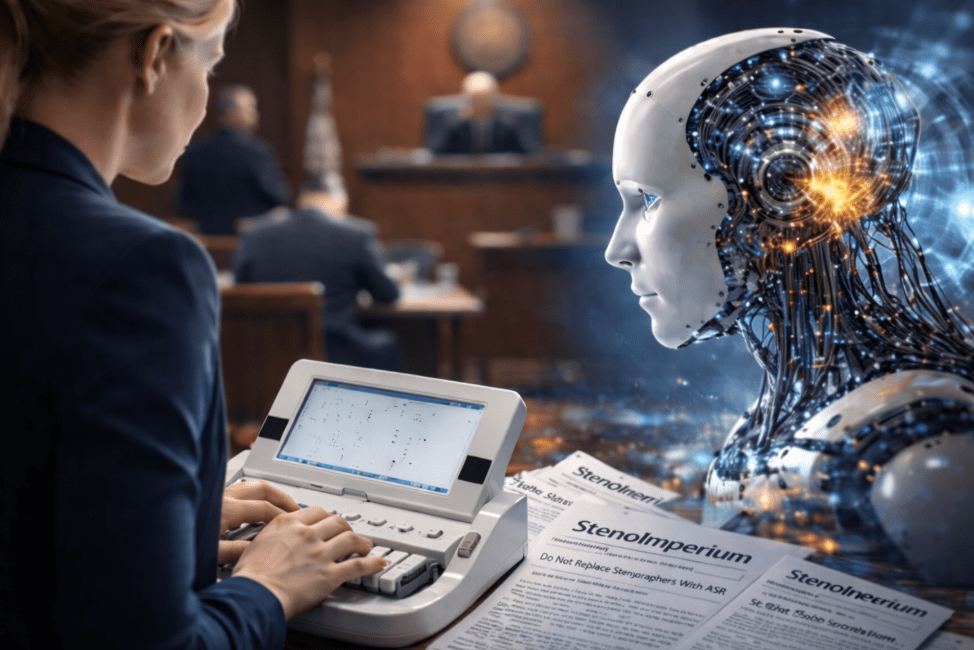
A former AI CEO and his Stanford-trained son just proved what court reporters have been warning for years: AI systems have a hard computational ceiling. When real-world tasks exceed it—as legal proceedings routinely do—AI doesn’t “struggle.” It hallucinates. That limitation isn’t temporary or ethical. It’s mathematical. And it explains why human stenographers remain irreplaceable in the creation of a legal record.
Tag Archives: HumanInTheLoop
The Quiet Fear Inside the Record
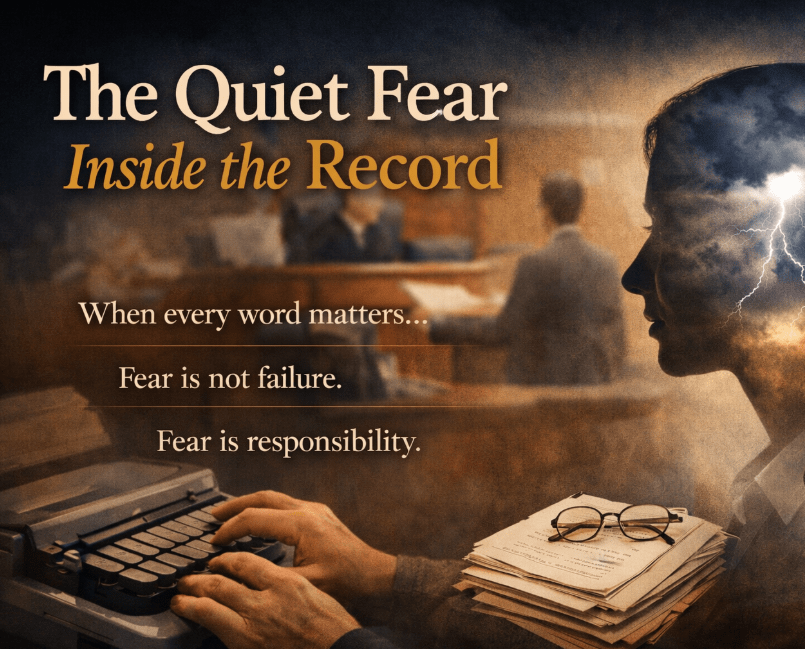
Court reporters rarely speak about fear, yet it quietly accompanies some of the most important moments of their careers. It surfaces in high-stakes trials, unfamiliar courtrooms, and proceedings where every word carries lasting consequence. This fear is not evidence of failure. It is evidence of responsibility. And learning to work with it, rather than retreat from it, may be one of the profession’s most essential skills.
The AI Question Everyone Is Asking—And Almost Everyone Is Answering Wrong

The AI debate in court reporting and captioning is being framed incorrectly. This is not about whether humans are “better” than machines. It is about risk, accountability, and appropriate use. AI may assist in low-stakes contexts, but when the record carries legal or reputational consequences, decision-makers still need a licensed professional who can certify, correct, and stand behind the work.
2026: The Year the Record Reasserts Itself

2026 is shaping up to be a pivotal year for court reporting. As courts and lawmakers confront the limits of agencies, AI, and automated recording, the profession is seeing renewed focus on responsible charge, accountability, and human judgment. Legislative clarity, reporter-centric technology, and coming court decisions may finally reassert who—and what—the legal record truly depends on.
Using AI to Strengthen Your Voice – How Court Reporters Can Advocate Powerfully for Our Profession

AI isn’t here to replace court reporters—it’s here to amplify us. When used intentionally, AI becomes a strategic partner that helps reporters write stronger letters, clearer public comments, and more persuasive advocacy for our profession. It levels the playing field, giving every reporter the ability to speak with clarity, confidence, and impact. Your voice matters. AI simply helps the world hear it.
AI Should Fold the Laundry — Not Replace the Court Reporter

AI may be able to automate tasks, but it cannot replace the trained human mind responsible for capturing the legal record. Court reporters do far more than transcribe—they perceive, clarify, and protect accuracy in ways no algorithm can. The future isn’t humans versus machines. It’s using technology to remove friction, not expertise, and preserving the integrity justice depends on.
When the Bill Comes Due – How California’s SB 988 Exposes a Nationwide Gap in Reporter Payment Protections

California’s SB 988 requires court reporting firms to pay reporters within 30 days — but attorneys have no matching deadline to pay the firms. This imbalance creates cash-flow strain, especially for small agencies, and highlights a national gap in reporter protections. With one-third of U.S. reporters in California, what happens here shapes the entire industry. Other states could — and should — follow with smarter, reciprocal legislation.
“Ack Ack” on the Record – When the Martians Took Over the Courtroom
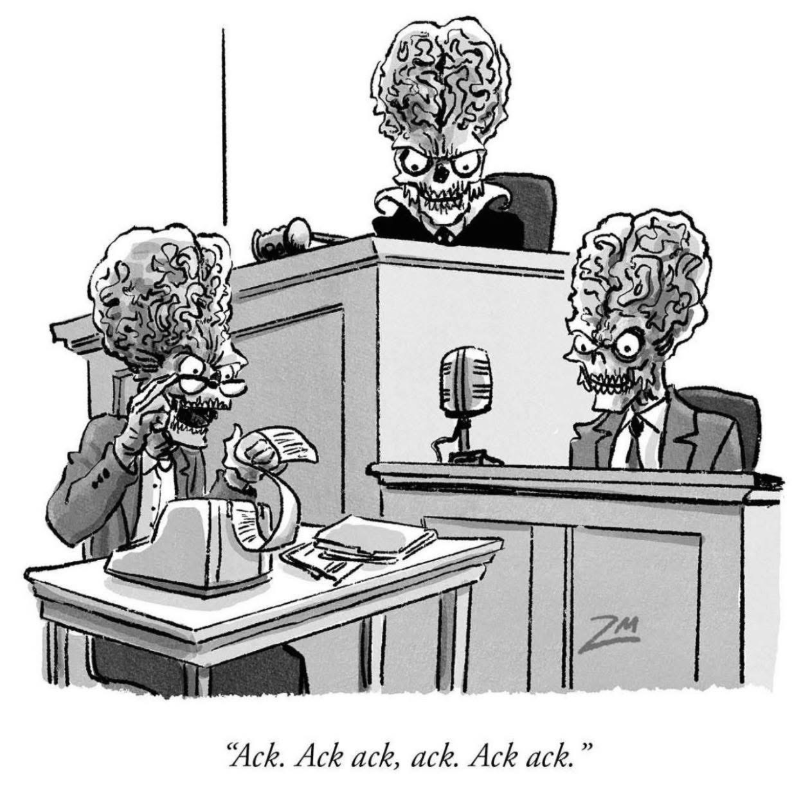
When justice sounds like “Ack ack, ack,” it’s not just funny—it’s frightening. Replacing human court reporters with machines turns the language of truth into gibberish. Algorithms can’t hear nuance, context, or emotion. The record of justice deserves more than “good enough.” It deserves understanding.
The Death of Expertise and the Erosion of the Record & Why Court Reporters Are the Last Line of Truth

In The Death of Expertise, Tom Nichols warns that society is replacing knowledge with convenience. Court reporting stands at that fault line. AI may transcribe words, but it cannot witness truth. Only a certified reporter — physically present, ethically bound — can certify a record. To sign off on machine output isn’t innovation; it’s fraud. And it marks the death of expertise itself.
🎃 The Ghost of the Record – A Halloween Costume for the Court Reporting Industry

This Halloween, the scariest thing in court reporting isn’t a ghost or vampire — it’s the empty reflection of automation, profit, and lost authorship floating where truth once lived. Don’t be haunted by hollow promises. Protect the record. Defend your craft. Keep the soul in stenography. Happy Halloween!
Breaking News!!! L.A. Judge Refuses Jury Readback Instruction in Civil Trial — Citing “Time” as Reason

In Department 16 of Los Angeles Superior Court, Judge Steve Cochran told jurors, “We don’t do that,” referring to readback of testimony—directly contradicting CCP § 614, which guarantees every civil jury the right to request testimony readback during deliberations. His refusal highlights a growing erosion of due process as judges quietly sidestep mandatory procedures meant to preserve the integrity of the record.
Why Whisper Can’t Replace Court Reporters in the U.S. Legal System

Canada’s Legislative Assembly proved AI like Whisper can assist—but not replace—human editors. Meanwhile, U.S. courts risk due process by adopting ASR without oversight. Speaker errors, misattribution, and data risks abound. Justice demands more than a “good enough” transcript. We must follow Canada’s lead: human-led, AI-assisted. The record—and constitutional rights—depend on it.
Human Oversight is Now Law – Virginia Leads the Nation with Groundbreaking AI Legislation Protecting the Judicial Record
Virginia just became the first state to legally require human oversight of AI in courtrooms. With HB 1642, justice stays human-centered—protecting certified transcripts, ethical decision-making, and the future of court reporting. This is a national model for balancing innovation with integrity.
AI Might Be Cheaper—But It’s Gutting the Court Reporting Pipeline

Courtrooms aren’t podcasts—and AI isn’t ready to replace human court reporters. What’s at stake isn’t just jobs, but an entire pipeline: schools, certification boards, machine makers, and trained professionals. Once that system collapses, it’s gone. If we cut too deep, there will be no one left when AI fails. Choose accuracy. Choose humans. Choose us—while you still can.
Why AAERT-Certified Digital Reporters Are Not the Answer to the Court Reporter Crisis
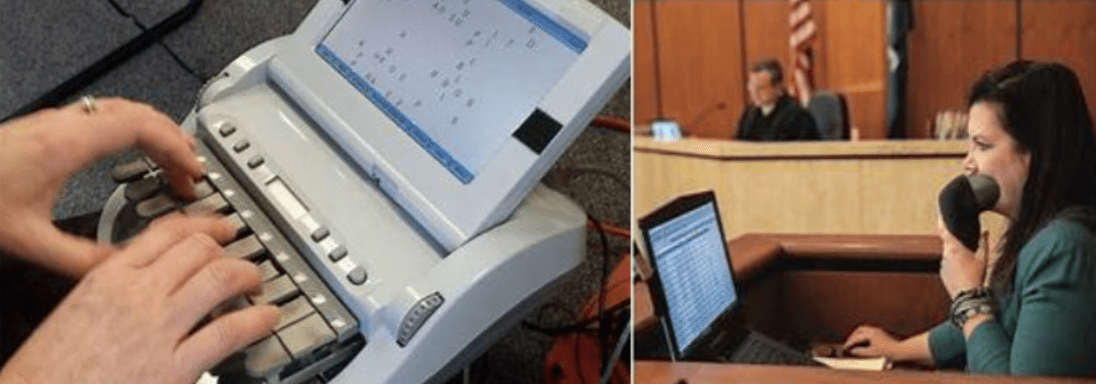
Digital reporters certified by AAERT are not equivalent to licensed court reporters. They don’t write realtime, certify records on the spot, or meet the legal standards required in high-stakes proceedings. While digital recording may seem like a quick fix for shortages, it risks long-term damage to the integrity of the record. The solution isn’t substitution—it’s investment in the gold-standard profession that’s already working.
ASR in Court Reporting – Tool, Threat, or Transformation?

As court reporting faces increasing pressure from digital disruption, the debate over ASR (Automatic Speech Recognition) intensifies. Can it be used responsibly — or does its adoption spell the end of human-led recordkeeping? This article explores the nuanced question: If ASR is wielded by a trained, licensed stenographer, does it become a tool — or remain a threat? The future of our profession may hinge on the answer.
Save Steno Now, or Lose It Forever – Why Court Reporters Can’t Be Replaced by AI

Court reporting isn’t dying—it’s evolving. With overflowing steno schools, waitlists, and voicewriters accelerating training, we’re meeting demand. The real threat isn’t a shortage—it’s premature replacement by AI. If we let this profession collapse, we lose the infrastructure that guarantees accuracy in our justice system. If you want us tomorrow, you must choose to support us today—before it’s too late.
 STENOIMPERIUM