
Courts across the country are quietly launching in-house voice-writing programs, training clerks and court staff to become certified reporters. Framed as a solution to shortages, these initiatives shift education inside the institution itself. But when courts become the classroom, deeper questions emerge about independence, professional standards, and who ultimately controls the creation of the legal record.
Tag Archives: GuardianOfTheRecord
When the Record Listens Back -How the Heppner Era of AI Liability Collides With Court Reporting
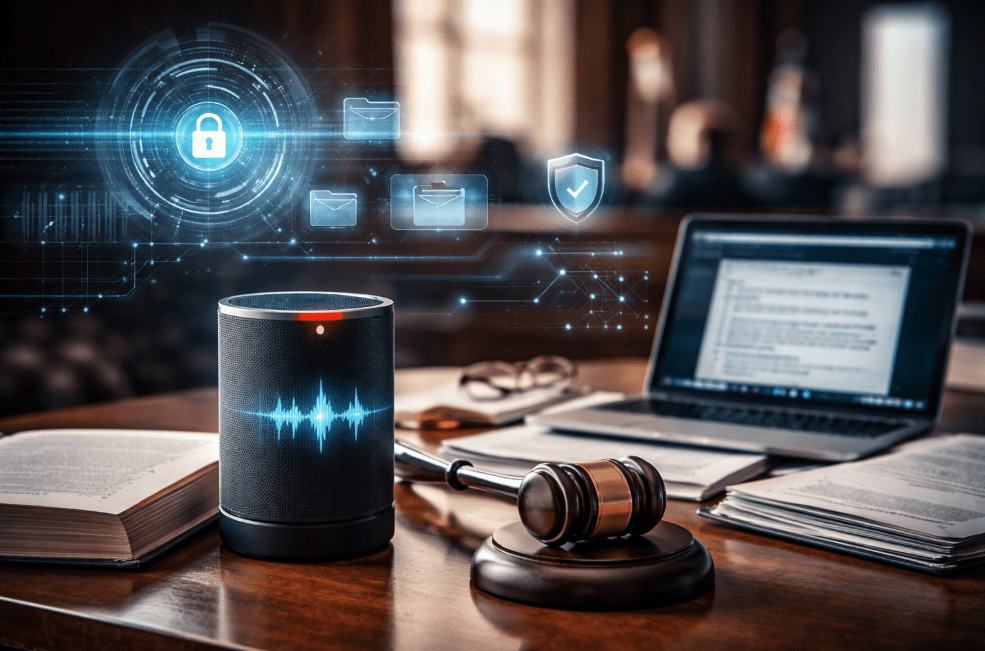
The Heppner decision reframes the court-reporting debate. The issue is no longer speed or convenience but legal accountability. Courts protect communications only when a human professional bears fiduciary responsibility. Autonomous recording systems cannot testify, explain decisions, or hold privilege. When the record lacks a sworn custodian, attorneys inherit the risk. The question is simple: if the transcript is challenged, who can take the stand?
The “Warm Body” Problem – How Court Reporters Became the Last Line of Accountability

Court reporters are increasingly being treated as logistical placeholders rather than as the professional safeguard of the legal record. Assignments arrive stripped of party information, context, and verification, yet reporters are still asked to place their names and license numbers on transcripts that carry legal weight. The frustration spreading through the profession is not about workload. It is about accountability.
When Professional Advocacy Drifts Off Message

During Court Reporting & Captioning Week, every public event should reinforce the profession’s credibility, technical expertise, and essential role in preserving the official record. Programming that does not clearly connect to stenographic skill, transcript integrity, or public education risks confusing the audience and weakening advocacy efforts at a time when the profession must present a unified, disciplined message.
Courts Do Not Have an AI Problem. They Have a Record-Keeping and Accountability Problem.
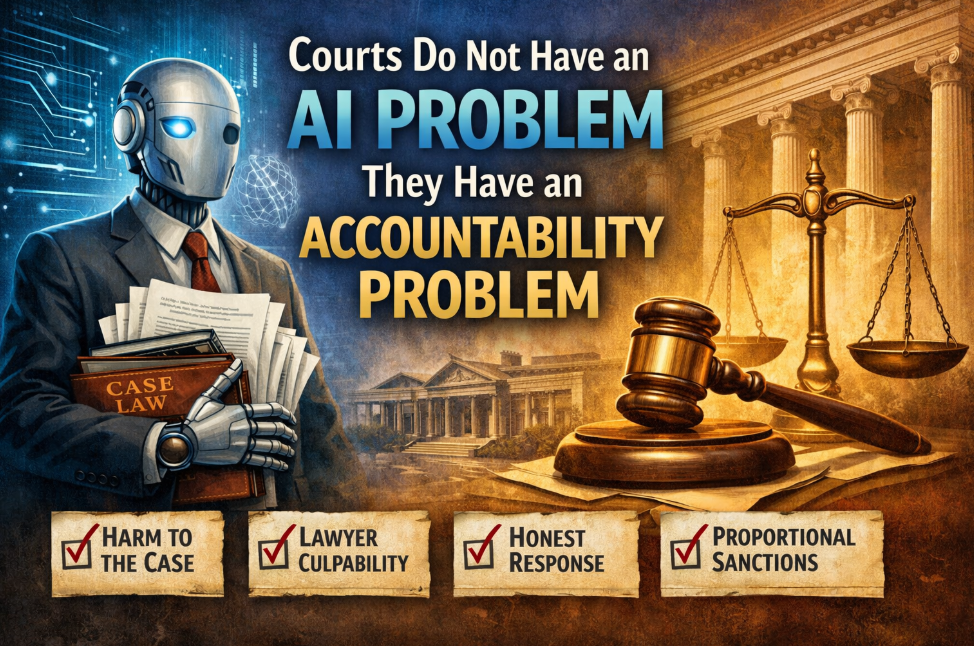
Courts do not face an artificial intelligence crisis so much as a crisis of accountability. AI-related errors expose gaps in supervision, verification, and professional responsibility, not rogue technology. Judicial legitimacy is not threatened by tools, but by inconsistent governance. The question before the courts is not whether AI will be used, but whether responsibility will remain clearly human.
Staying in the Chair – What Court Reporting Teaches Us About Pain, Presence, and Power
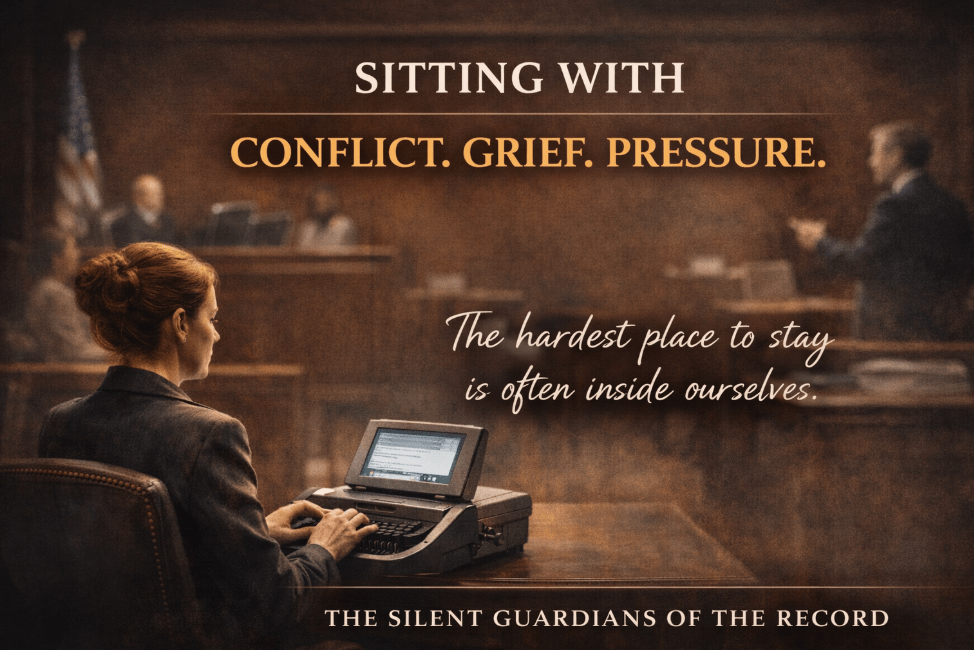
Court reporters spend their careers staying in rooms most people instinctively want to leave. They sit inside conflict, grief, tension, and pressure so the legal record can exist. But the profession rarely teaches reporters what to do with what accumulates inside them. This article explores why presence, not avoidance, is often the beginning of resilience—and real professional power.
Court Reporters’ Open Letter – The Rule of Law Begins With the Legal Record

The legal record is not a convenience or a product. It is constitutional infrastructure. As courts quietly replace licensed stenographic court reporters with unregulated recording systems, they are not modernizing procedure. They are removing accountability from the point where law becomes fact. Without a trustworthy, professionally certified record, due process weakens, appellate rights erode, and judicial legitimacy itself is placed at risk.
Breaking News!!! L.A. Judge Refuses Jury Readback Instruction in Civil Trial — Citing “Time” as Reason

In Department 16 of Los Angeles Superior Court, Judge Steve Cochran told jurors, “We don’t do that,” referring to readback of testimony—directly contradicting CCP § 614, which guarantees every civil jury the right to request testimony readback during deliberations. His refusal highlights a growing erosion of due process as judges quietly sidestep mandatory procedures meant to preserve the integrity of the record.
Building a Foundation – Why New Court Reporters Must Put in the Work

New court reporters: don’t rush to shortcuts. Resist the urge to rely on scopists or audio. Build your skills, review your own transcripts, and always use a proofreader. Real-time from the start will sharpen your writing and dictionary. Court reporting mastery takes years—but the foundation you build now ensures accuracy, professionalism, and the integrity of the record for a lifetime.
 STENOIMPERIUM