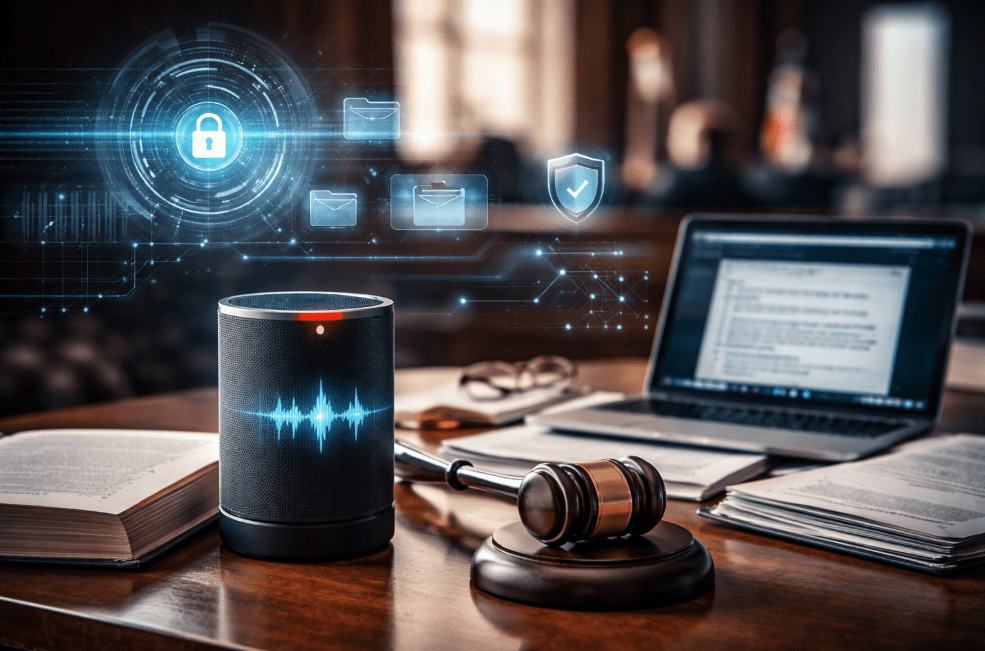
The Heppner decision reframes the court-reporting debate. The issue is no longer speed or convenience but legal accountability. Courts protect communications only when a human professional bears fiduciary responsibility. Autonomous recording systems cannot testify, explain decisions, or hold privilege. When the record lacks a sworn custodian, attorneys inherit the risk. The question is simple: if the transcript is challenged, who can take the stand?
Tag Archives: FutureOfLaw
Why the AI Privilege Fight Could Decide the Future of Court Reporting
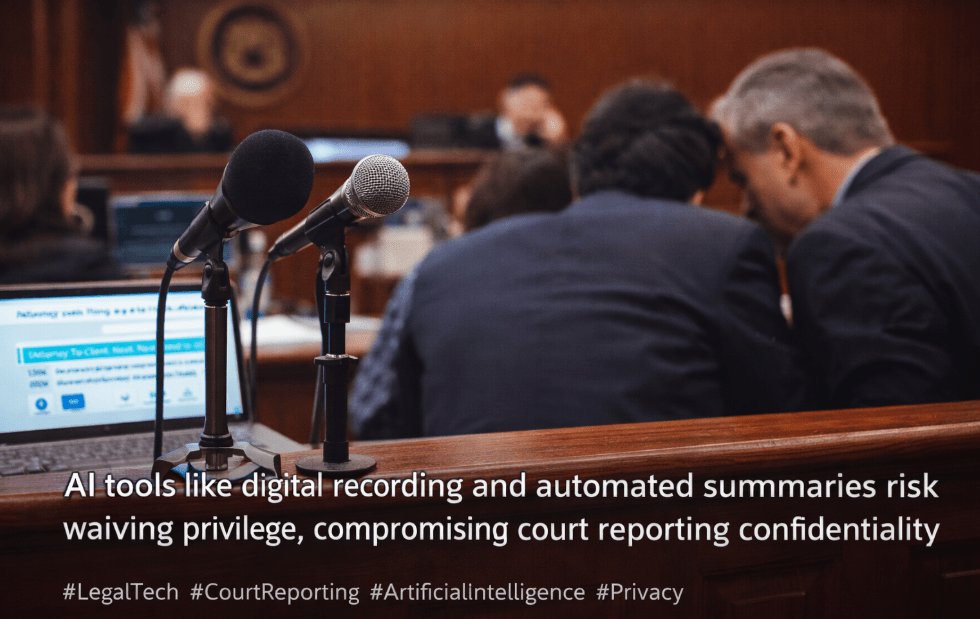
A federal court has drawn a stark line: conversations with AI systems are not privileged. That conclusion reaches far beyond chatbots. Digital recordings, automated deposition summaries, and cloud transcript analytics may transform confidential litigation strategy into discoverable material. The issue is no longer convenience versus tradition — it is custody versus disclosure. When legal data leaves human control, the record itself may become evidence.
When Capital Moves Faster Than the Courts – AI, Evidence, and the Next Legal Reckoning

As venture capital floods legal technology, artificial intelligence is being woven into the heart of litigation—often faster than courts, ethics rules, or evidentiary standards can respond. Tools that summarize testimony or generate chronologies promise efficiency, but raise unresolved questions about reliability, consent, and admissibility. History shows that when automation outpaces scrutiny, courts eventually intervene—sometimes after irreversible damage has already been done.
Top Court Reporting Trends to Watch in 2025 – Real Innovation, Legal Integrity, and the Return to Verbatim

The future of court reporting isn’t automated—it’s live, verbatim, and unstoppable. In 2025, certified stenographers and voice writers are shattering the shortage myth, expanding remote coverage, and using cutting-edge tools to uphold the integrity of the record. “Record now, transcribe later” isn’t innovation—it’s regression. The real revolution is happening in real time, with reporters leading the charge.
What If the United States Made Your Voice and Likeness Your Property?

What if your voice became your legal property? Denmark’s proposed law could make every voice and likeness owned — with takedowns and royalties for unauthorized use. If the U.S. follows, ASR and digital reporting face huge risks, while stenographers become the gold standard for secure, human-verified transcripts. In a world of deepfakes, stenography is justice’s strongest safeguard.
Are Paralegals Being Automated Out of the Legal Workforce? A Critical Look at Lexitas’ New AI Tool

Lexitas’ new AI tool, Deposition Insights+, claims to streamline litigation prep—but at what cost? By automating key tasks traditionally handled by paralegals and junior attorneys, this technology risks replacing human insight with algorithmic shortcuts. Legal professionals must ask: Are we empowering teams, or eroding jobs and skills? Efficiency shouldn’t come at the expense of accuracy—or accountability. The legal industry must tread carefully.
 STENOIMPERIUM