
Institutions are shaped as much by what they remember as by what they decide. In law, memory is not metaphorical. It is procedural. A justice system survives only if it can reconstruct its own actions. When the mechanisms that preserve and demonstrate what happened quietly weaken, power still operates—but accountability loses its anchor.
Tag Archives: FutureOfJustice
After the Week – What “The Record Under Pressure” Set Out to Do—and Why It Cannot End Here
“The Record Under Pressure” was not written to celebrate a profession, but to examine a system. Over eight days, this series traced how technology, business consolidation, and courtroom drift are reshaping the legal record. Its purpose was simple: to make the justice system’s memory visible again, and to ask whether its transformation is being governed by law—or by convenience.
If the Record Fails – The Future of Justice in a Court System That Can No Longer Prove Itself
A justice system survives only as long as it can prove what happens inside its own courtrooms. As the legal record weakens, appeals turn speculative, accountability erodes, and legitimacy fractures. Courts may continue to rule, but they will increasingly struggle to justify. A system that cannot reliably preserve its proceedings eventually forfeits authority over its own truth.
When Software Becomes a Silent Witness – Ethics, Technology, and the Coming Evidentiary Reckoning
For the first time, courts are being asked not merely to use technology, but to trust it. As software moves into the evidentiary core of proceedings, responsibility is diffusing, accountability is thinning, and ethical frameworks are lagging behind technical adoption. This is not a workflow shift. It is an evidentiary one.
Coming Soon! The Record Under Pressure
Coming soon! In courtrooms across the country, the legal record is being reshaped by technology, business consolidation, and quiet procedural drift. These changes are rarely debated, yet they are redefining how truth enters law. During Court Reporting & Captioning Week, StenoImperium will launch an investigative series examining what is happening to the record—and what the justice system risks becoming if it is not governed deliberately.
Who Is NCRA Working For?
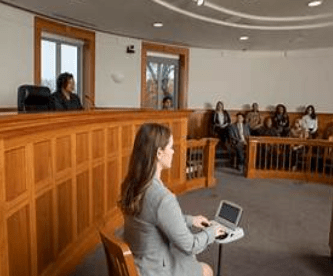
The National Court Reporters Association was created to guard a profession built on precision, licensure, and trust. But its expanding relationships with digital training companies, corporate consolidators, and branding organizations raise an urgent question: is NCRA still defending stenography, or has it begun financing its own displacement? When a trade association profits from the markets replacing its members, neutrality becomes a business model.
The Quiet Fear Inside the Record
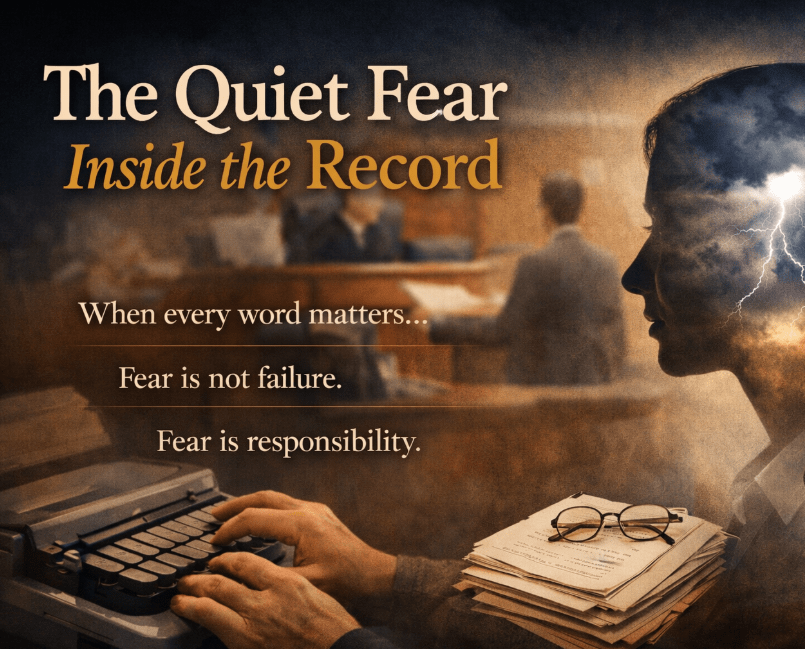
Court reporters rarely speak about fear, yet it quietly accompanies some of the most important moments of their careers. It surfaces in high-stakes trials, unfamiliar courtrooms, and proceedings where every word carries lasting consequence. This fear is not evidence of failure. It is evidence of responsibility. And learning to work with it, rather than retreat from it, may be one of the profession’s most essential skills.
When “Live Notes” Enters the Notice – What the Confusion Over AI in Depositions Is Really About
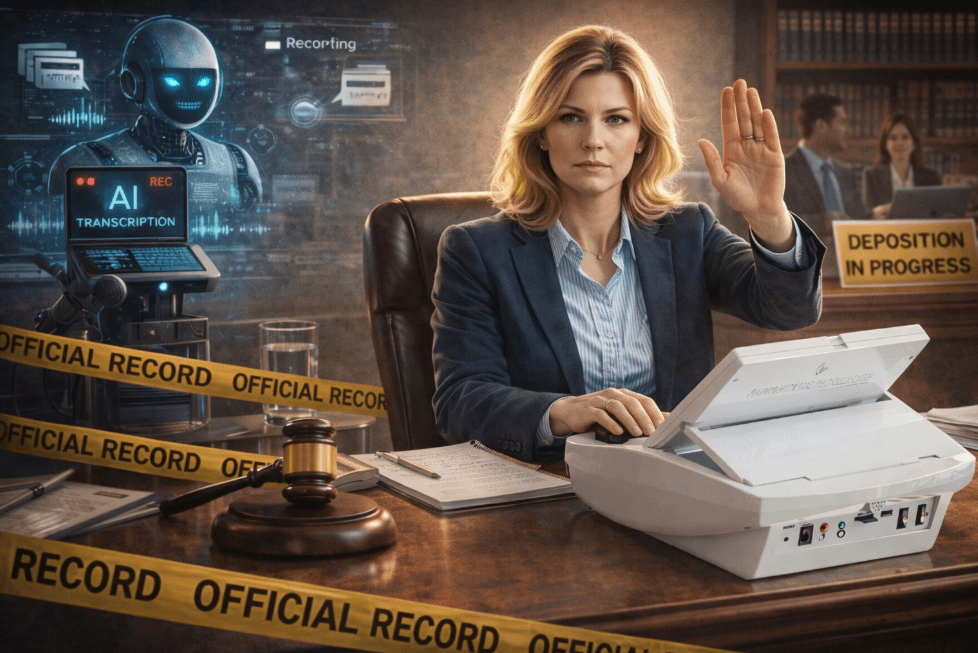
As artificial intelligence quietly enters deposition rooms under vague terms like “live notes,” court reporters are being forced into a new role: boundary-setters for the legal record itself. The issue is no longer whether proceedings can be recorded, but who controls what is captured, who is accountable for what is created, and what truly constitutes the official record in modern litigation.
 STENOIMPERIUM