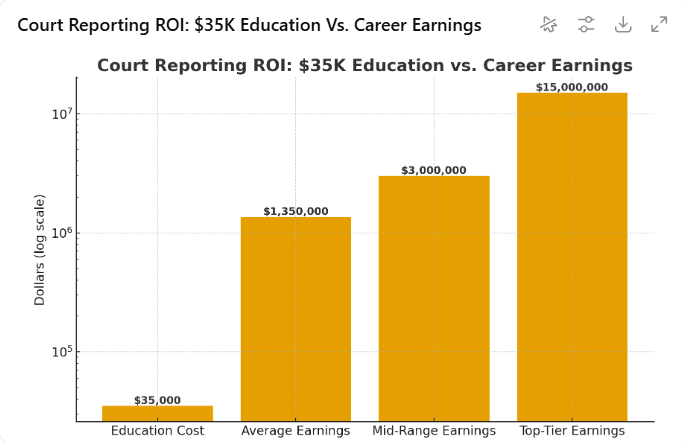
Court reporting may be the smartest career investment few people talk about. For about $35,000 in education, reporters can earn anywhere from $45,000 a year on average to $500,000+ at the top of the field. That’s a lifetime income range of $1.35 million to $15 million. Even at the low end, the ROI far outpaces most college degrees.
Tag Archives: finance
The Case for Court Reporter Cost Transparency and Industry Reform

Attorneys are furious over rising court reporting costs—but the truth is, reporters aren’t the ones profiting. Agencies are marking up per diems by 100–200%, keeping fees for add-ons like exhibits and digital access, while reporters see less than half. It’s time for legislative reform, transparency, and a fair compensation model that protects the profession—and restores integrity to the legal record.
Court Reporting vs. Other Professions – A Wake-Up Call on ROI for Students

Court reporting is one of the best-kept secrets in high-income careers. With just 1–3 years of training and a $20K–$65K investment, skilled reporters in California can earn $180K–$360K+, with top earners hitting $500K–$1M+. Compared to the time and cost of becoming a doctor or lawyer, court reporting offers an unmatched ROI—fast, lucrative, and future-proof for students seeking real financial freedom.
When “Bad Faith” Smells Like Strategy – The Quiet Shift in California’s Homeowners Insurance Market

In recent months, a disturbing trend has begun to surface in California’s already fragile homeowners insurance landscape. While much of the media coverage has focused on major insurers exiting the state or pausing new policies altogether, there’s a more subtle — and arguably more troubling — phenomenon at play: insurance companies that continue to operateContinue reading “When “Bad Faith” Smells Like Strategy – The Quiet Shift in California’s Homeowners Insurance Market”
Court Reporter Payment Delays – What California Law Says and How to Respond When Agencies Stall

In the world of freelance court reporting, payment disputes are an all-too-common headache. One of the most frustrating scenarios is when a court reporting agency delays payment to the reporter because they themselves haven’t been paid by the attorney or law firm requesting the transcript. For years, this practice left reporters in financial limbo, despiteContinue reading “Court Reporter Payment Delays – What California Law Says and How to Respond When Agencies Stall”
SITC/Day Violates Louisiana Solicitation and Volunteer Laws, Again

Steno in the City is once again facing legal scrutiny for violating Louisiana’s solicitation and volunteer laws. Marketed as a professional development event, this for-profit venture misleads sponsors, vendors, and volunteers while improperly soliciting funds. By exploiting unpaid labor and misrepresenting financial contributions, Steno in the City risks legal consequences. Transparency, compliance, and ethical responsibility are essential to ensuring accountability in the court reporting industry.
Success of a Court Reporter: Defining and Measuring Achievement

Success in court reporting comes in many forms—financial stability, professional influence, and personal fulfillment. Whether measured by certifications, income, client demand, leadership roles, or even luxury lifestyles like exotic cars and designer bags, success remains subjective. True excellence, however, lies in the quality of work produced. The real measure is not just perception but the accuracy, reliability, and impact a court reporter leaves behind.
Has Digital Reporting Crossed the Rubicon in Court Reporting?

Digital reporting is reshaping the court reporting industry, moving from early adoption into the mainstream. AI-driven transcription tools, cost efficiency, and a stenographer shortage drive its growth. However, legal challenges and potential legislative bans pose barriers. As firms adopt hybrid models, traditional stenographers must adapt. The shift is inevitable—where will the industry stand as digital reporting continues its rise?
The Hidden Truth About Unpaid Transcript Copy Orders in the Legal Industry

Unpaid transcript copy orders are a hidden issue in the court reporting industry, often resulting in lost income for reporters. Some agencies may fail to disburse payments, either through oversight or lack of transparency. By tracking orders, following up on payments, and advocating for industry accountability, court reporters can protect themselves. Awareness and vigilance are crucial to ensuring fair compensation for their hard work.
Stenograph’s Price Hike Raises Antitrust Concerns
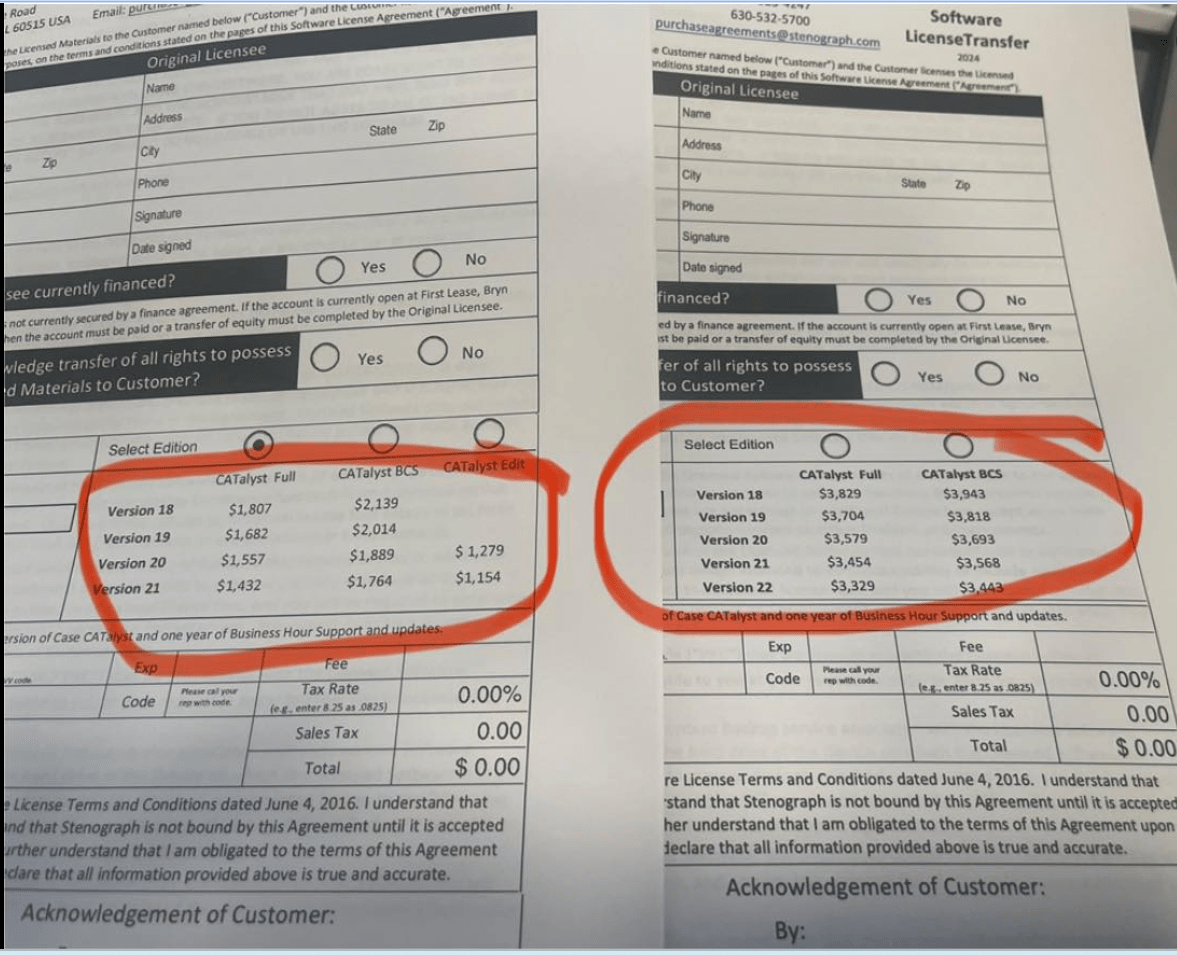
A recent consumer post highlights a significant increase in Stenograph’s software license transfer fees, jumping from $1,400 to $3,400. This price hike raises concerns about anti-competitive practices, potentially restricting competition and harming retiring professionals who rely on selling their software. The situation mirrors historical antitrust cases, prompting questions about whether Stenograph’s actions could violate antitrust laws, potentially leading to legal challenges and investigations into monopolistic behavior.
 STENOIMPERIUM