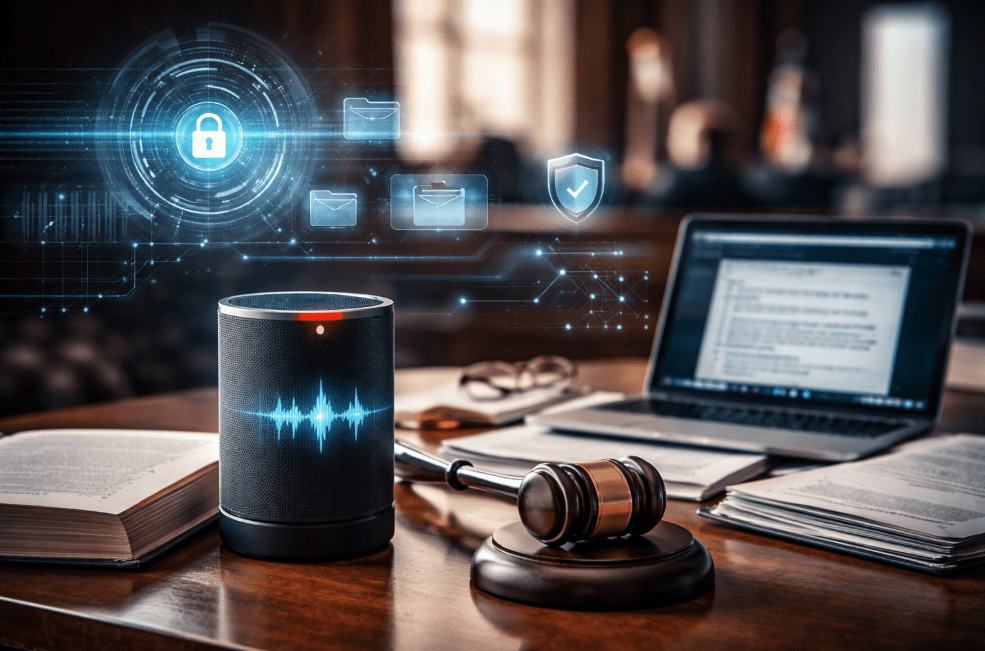
The Heppner decision reframes the court-reporting debate. The issue is no longer speed or convenience but legal accountability. Courts protect communications only when a human professional bears fiduciary responsibility. Autonomous recording systems cannot testify, explain decisions, or hold privilege. When the record lacks a sworn custodian, attorneys inherit the risk. The question is simple: if the transcript is challenged, who can take the stand?
Tag Archives: EvidenceLaw
Why the AI Privilege Fight Could Decide the Future of Court Reporting
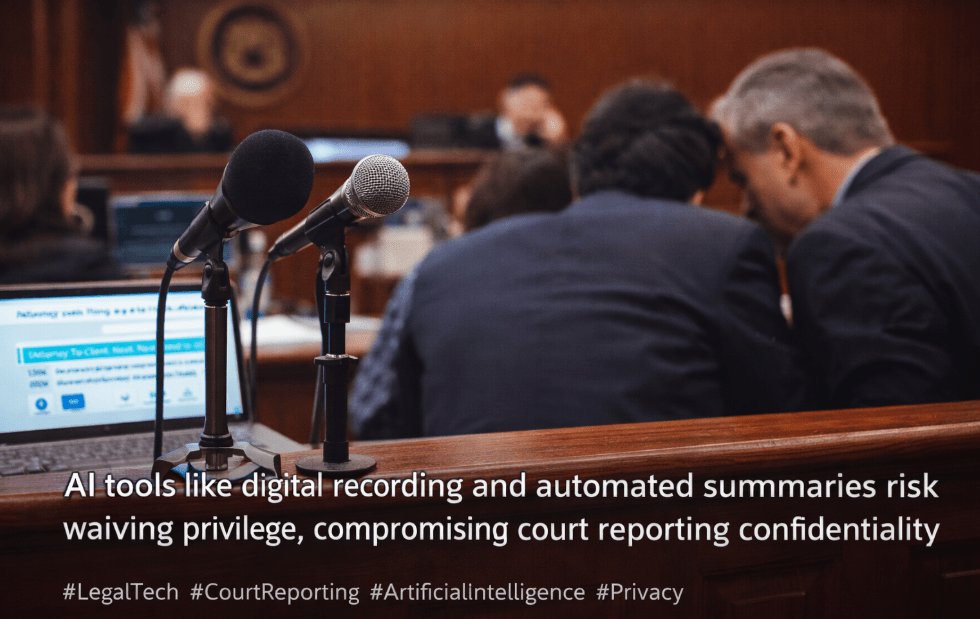
A federal court has drawn a stark line: conversations with AI systems are not privileged. That conclusion reaches far beyond chatbots. Digital recordings, automated deposition summaries, and cloud transcript analytics may transform confidential litigation strategy into discoverable material. The issue is no longer convenience versus tradition — it is custody versus disclosure. When legal data leaves human control, the record itself may become evidence.
The Court Reporter Is the Custodian of the Record – Why Decentralized Evidence Systems Protect Justice

Court reporters are not just transcribers. They are custodians of a decentralized evidentiary system. Through layered capture, redundant backups, and personal legal responsibility, licensed reporters preserve the court’s memory across hundreds of sworn officers. Centralized recording systems collapse that structure into a single point of failure—making the legal record easier to manage, and easier to lose.
You Can’t Stipulate Your Way Around the Law – The Dangerous Fiction of the “No-Reporter Stipulation”

A court transcript is not a convenience. It is evidence. When attorneys stipulate to proceed without a court reporter, they are not authorizing an “alternative record.” They are agreeing that no lawful evidentiary record will be created. What follows—a stipulated statement of proceedings—is not a transcript, but a negotiated reconstruction. And evidence cannot be manufactured after the fact.
The Lessons of Badran – A Roadmap for How NCRA Must Defend the Legal Record

The Badran ruling exposed a growing risk: courts are redefining admissibility without guidance from the profession that creates the record. As audio-based reporting and vendor workflows spread, efficiency arguments are replacing evidentiary law. This article offers a clear roadmap for how NCRA can act—now, in active cases, and long-term—to defend due process, professional oversight, and the integrity of the record.
When the Record Becomes Elastic – Why Badran v. Badran Misunderstood Admissibility

Badran v. Badran exposes the danger of redefining testimony after the fact. In a remote deposition, a vendor-produced transcript was altered based on audio review, adding remarks not perceived in real time as testimony. Efficiency and stipulation cannot convert recordings into evidence. Without a licensed reporter in responsible charge, the record becomes elastic—and due process collapses.
When Efficiency Overrides the Law – Why Badran v. Badran Got Admissibility Wrong

The Badran v. Badran ruling did not affirm professionalism in modern depositions; it excused its absence. Admissibility does not turn on convenience, volume, or after-the-fact agreement. It turns on lawful process and qualified human oversight. Agencies are not officers of the record, and parties cannot stipulate away licensure, evidentiary foundation, or due process in the name of efficiency.
When Capital Moves Faster Than the Courts – AI, Evidence, and the Next Legal Reckoning

As venture capital floods legal technology, artificial intelligence is being woven into the heart of litigation—often faster than courts, ethics rules, or evidentiary standards can respond. Tools that summarize testimony or generate chronologies promise efficiency, but raise unresolved questions about reliability, consent, and admissibility. History shows that when automation outpaces scrutiny, courts eventually intervene—sometimes after irreversible damage has already been done.
Opinion | Digital Reporting Is Not “Clearly Lawful.” It Is Clearly Inferior — and Legally Dangerous

Digital reporting is not merely a different tool — it is a different evidentiary product. A transcript created after the fact from audio is reconstruction, not a contemporaneous verbatim record. Without licensed stenographic capture, individual accountability, and real-time certification, courts are left with hearsay dressed up as efficiency. The integrity of the record is not optional.
Making a Record – Why Attorneys Keep Losing Their Exhibits on Appeal

Attorneys often assume that showing or publishing an exhibit makes it part of the record—it doesn’t. Only the judge can direct that an exhibit be “marked” or “received.” The clerk keeps the official list; the reporter records what’s said. If you skip the formal steps, your exhibits vanish on appeal. Make your record right, or risk losing it forever.
 STENOIMPERIUM