
Court reporting faces a critical pricing question: should new reporters charge less for the same official record? The answer determines whether the profession maintains a stable foundation or trains the market to seek the lowest bidder. Experience should raise earnings through advanced services like realtime and expedited delivery — not reduce the baseline value of the record itself.
Tag Archives: dra
When the Machine Gets It Wrong, Who Pays the Price?

Courts have been clear: artificial intelligence may assist lawyers, but it does not absolve them. When ASR systems miss testimony or AI summaries omit critical facts, responsibility does not vanish into the software. It lands squarely on the professionals who relied on it. As automation reshapes the legal record, a new reckoning over accountability is quietly approaching.
Bridging the Career Services Gap in the Court Reporting Profession

Court reporting associations are facing a reckoning. Reporters are not disengaging because they dislike the profession; they are disengaging because their associations no longer align with their most urgent priorities: jobs, advancement, training, and real career security. In an era of technological disruption and shrinking pipelines, associations that fail to become career catalysts risk losing not just members, but the future of the profession itself.
A Kentucky Hearing Shows Why Digital Recording Is Not — and Never Will Be — an Acceptable Official Record
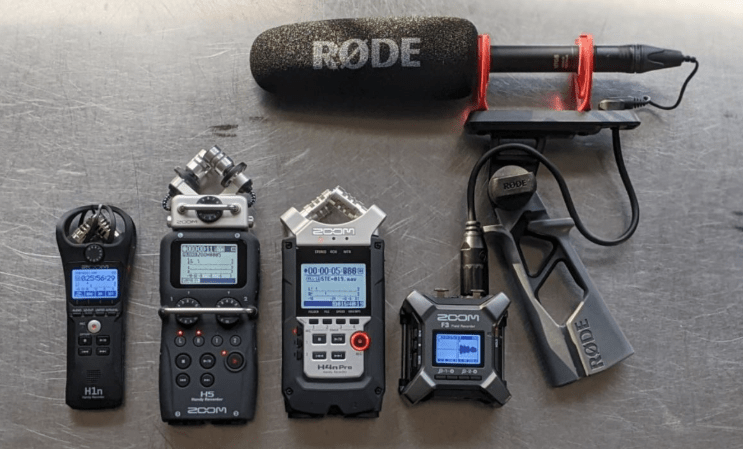
A Kentucky administrative hearing again exposed the fatal flaw of digital recording: when the agency’s “official” audio failed, a certified court reporter was the only reason the record survived. Due process cannot depend on glitchy technology or missing audio files. This case proves, yet again, that the stenographic reporter—not a digital recorder—is the only acceptable guardian of the legal record.
A Harbinger of Collapse – What One Facebook Post Reveals About the Future of Court Reporting in the United States

A single Facebook post from a Canadian reporter—reduced to just 3–6 jobs a month—should terrify every U.S. attorney and stenographer. It is a glimpse of what happens when ASR replaces certified professionals: the market collapses, accuracy disappears, and justice erodes. Canada didn’t fail because reporters weren’t skilled. It failed because decision-makers chased “cost savings.” The U.S. is next—unless we stop it now.
The Trojan Horse Problem – Why Software Companies Should Not Masquerade as Court Reporting Agencies

Software companies moving into the court reporting agency space do not represent innovation; they represent structural risk. When the same platform controls the technology, the data, and the labor pipeline, independence erodes and normalization begins. The danger is not sudden replacement but gradual acceptance, until reporters become optional upgrades instead of guardians of the record. The profession must recognize this encroachment and defend its sovereignty.
Where Your CEU Dollars Go – Choosing State Associations and Nonprofits That Reinvest in the Profession

Every continuing education dollar is a decision about the future of court reporting. When those funds are directed to legitimate state associations and nonprofit organizations, they strengthen advocacy, education, and ethical standards that preserve the integrity of the record. When they flow instead to personality-driven ventures, the profession risks becoming a revenue stream for individual ambition rather than a sustained legacy built on collective stewardship.
When the DRA Ignores Its Own Backyard – Why California’s Court Reporting Schools Deserve Defense, Not Displacement

California’s only NCRA-approved court reporting school has faced relentless audits while producing more CSRs than any other in the state. Yet the DRA features out-of-state speakers poaching students into unproven “write shorter” programs instead of honoring educators using proven speed-building methods like RWG theory. If the DRA truly supports the profession, advocacy must start at home — with California’s own schools.
Credentials vs. Competence – Rethinking Professional Standards in Court Reporting

Court reporting’s future depends on more than letters after our names. Credentials have value, but without strong state licensure, standardized titles, and real enforcement, they offer no structural protection. As attorneys push back on “high rates” and cheaper labor undercuts skilled reporters, the profession must unify around measurable skill, fair rates, and regulatory strength—not voluntary designations.
The Stars That Sing – Hearing the Truth in Court Reporting

The Bushmen pitied Laurens van der Post when he admitted he could not hear the stars sing. Today, I feel the same grief for our profession. The truth rings out—schools reporting poaching, leaders failing in accountability—yet so many refuse to hear it. Our poverty is not material, but in losing the ability to hear the song of truth itself.
When Recruitment Crosses the Line – Court Reporting Schools Push Back After DRA Event

California court reporting schools are pushing back after the last DRA conference, where a speaker allegedly recruited students directly out of their programs—even inside private Teams accounts. One 200-wpm student on the verge of the CSR was lost. School leaders say enough is enough: associations must protect students from solicitation if they want them in the room.
Saving Court Reporting – It’s About More Than Fighting AI

The legal world has spent years debating artificial intelligence and digital recording in courtrooms. And with good reason. Accuracy, privacy, and accountability are not luxuries; they are the bedrock of justice. Human court reporters remain the gold standard for preserving the record. But while we fight Silicon Valley’s latest experiment, another crisis is starving ourContinue reading “Saving Court Reporting – It’s About More Than Fighting AI”
AB 711 Passed—But Is It Really a Win? Why This New Law Signals the Next Phase in the Elimination of Certified Court Reporters

When a judge tells attorneys they “don’t need a court reporter”—despite one being present and assigned—the threat to justice becomes undeniable. AB 711 enables this erosion, shifting the burden of preserving the record onto attorneys while courts quietly sideline certified reporters. The result? Trials with no transcript, no appeal, and no accountability. This isn’t modernization. It’s judicial overreach.
The California Court Reporting Crisis and How the System Undermines Its Own Professionals

California court reporters are being edged out as agencies prioritize out-of-state labor for remote jobs—often at the expense of legal compliance. Despite clear transcript standards, violations go unchecked due to the CRB’s lack of enforcement authority. Without reforms to licensing, job assignment transparency, and regulatory power, California’s reporting professionals face burnout, underemployment, and a system that no longer supports the high standards it claims to uphold.
Is the Court Reporting Shortage Real or Manufactured

Court reporters continue to debate whether the industry is facing a real shortage or a retention crisis. Experts argue that the so-called shortage is a manufactured issue, fueled by outdated studies and profit-driven motives favoring digital alternatives. Low wages, lack of mentorship, and rising production costs contribute to retention struggles. Without proactive solutions like better pay and training programs, the profession risks decline, impacting the legal system’s accuracy and efficiency.
 STENOIMPERIUM