
Certified court reporters are seeing a rise in large-scale transcript correction requests, but the issue is not declining reporter skill. It stems from the increased use of digital audio and ASR-generated transcripts being treated as equivalent to stenographic reporting. Once attorneys began comparing transcripts with software tools, the inconsistencies became clear. Accuracy starts at the point of capture, and the method matters.
Tag Archives: digital-marketing
Agencies Exploit Reporters Twice – Once for Their Labor, Once for Their Marketing

Court reporting agencies profit twice: first from our labor, then by conscripting us as unpaid sales reps. Some agencies do better, but one is too many. Reporters are not brand ambassadors, cookie pushers, or mock jurors. We are officers of the court, and when neutrality is compromised, justice itself is at risk. Agencies must change — or be called out.
Fixing Court Reporting Compensation – Why the FairSplit Proposal Deserves a Second Look

The FairSplit proposal aims to restore fairness and transparency to court reporting by introducing a revenue-sharing model between agencies and reporters. Instead of fixed rates, it advocates for equitable percentage splits of all billables, including per diems. This empowers independent reporters, promotes ethical agency practices, and offers a sustainable alternative to the venture-capital-driven status quo prioritizing profit over professionalism. It’s time to reclaim control of our profession.
Fixing the Broken Court Reporting Compensation Model: A FairSplit™ Proposal

Court reporters are vital to the legal system but are often underpaid and overworked. The FairSplit™ model aims to fix that with a fairer compensation structure—70/30 revenue splits, transcript ownership rights, and 100% per diem pay. It’s a blueprint for restoring dignity, transparency, and sustainability in the profession. FairSplit™ is more than a model—it’s a movement for justice in justice.
Membership Boundaries Are Not Exclusion – A Counterpoint to Christopher Day

Professional associations like NCRA and CalDRA exist to serve their members — and that includes offering member-only social media spaces. Restricting access isn’t exclusion; it’s about delivering value to those who support the organization. While open forums like Stenonymous have their place, national associations have a different mission. The real challenge isn’t access — it’s ensuring membership remains meaningful, relevant, and worth the investment.
Taming the Tech Tyrant: Conquering the Chaos of Courtroom Correspondence

Is your inbox overflowing, distracting you, and slowing down your productivity? Court reporters deal with constant email communication, but without a system, it can become overwhelming. By adopting structured strategies—such as scheduled inbox management, the “Four Ds” decision-making method, and email automation tools—you can regain control. Improve efficiency, reduce stress, and turn your email from a burden into a productivity-boosting tool today!
Digital Pay Parity A Pipe Dream of Unbalanced Benefit

Digital pay parity may seem like a solution, but it’s a false promise that upholds corporate greed while undermining human skill. Christopher Day of Stenonymous advocates for unionization to keep digital at bay, yet his vision still overlooks the irreplaceable expertise of real stenographers. True progress lies in recognizing the value of craftsmanship, not in embracing shortcuts that favor profits over people. The future is human, not digital.
The Unsettling Reality of Online Data Tracking and How It Affects Court Reporters

In the digital age, our devices seem to know more about us than we realize. While many believe smartphones secretly listen to conversations, the reality is more complex. Advanced algorithms use location data, browsing history, and social connections to predict interests with eerie accuracy. Protecting privacy requires limiting app permissions, disabling location tracking, and managing social media settings to reduce unwanted data collection. Awareness is key to safeguarding personal information.
The Hidden Truth About Unpaid Transcript Copy Orders in the Legal Industry

Unpaid transcript copy orders are a hidden issue in the court reporting industry, often resulting in lost income for reporters. Some agencies may fail to disburse payments, either through oversight or lack of transparency. By tracking orders, following up on payments, and advocating for industry accountability, court reporters can protect themselves. Awareness and vigilance are crucial to ensuring fair compensation for their hard work.
Stenograph’s Price Hike Raises Antitrust Concerns
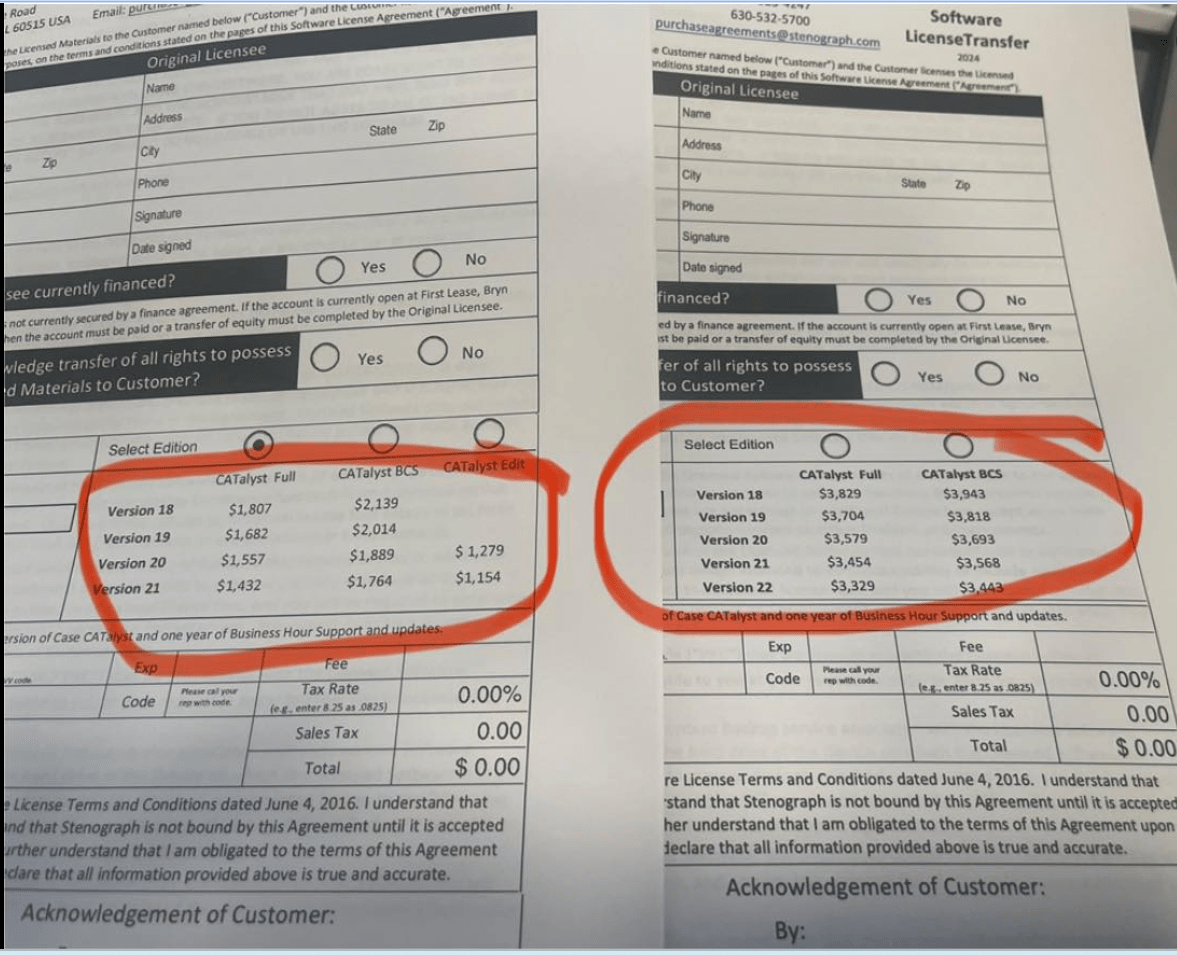
A recent consumer post highlights a significant increase in Stenograph’s software license transfer fees, jumping from $1,400 to $3,400. This price hike raises concerns about anti-competitive practices, potentially restricting competition and harming retiring professionals who rely on selling their software. The situation mirrors historical antitrust cases, prompting questions about whether Stenograph’s actions could violate antitrust laws, potentially leading to legal challenges and investigations into monopolistic behavior.
The Hidden Costs of Replacing Human Court Reporters with Digital Alternatives

Agencies charge attorneys the same fees for both digital court reporters and traditional stenographers, so there are no upfront savings when choosing digital alternatives. Despite the initial cost being the same, certified shorthand reporters ultimately save law firms money by ensuring accurate, reliable transcripts. They help avoid costly mistakes, delays, and legal challenges, offering more value and protecting a firm’s reputation compared to digital reporting methods.
 STENOIMPERIUM