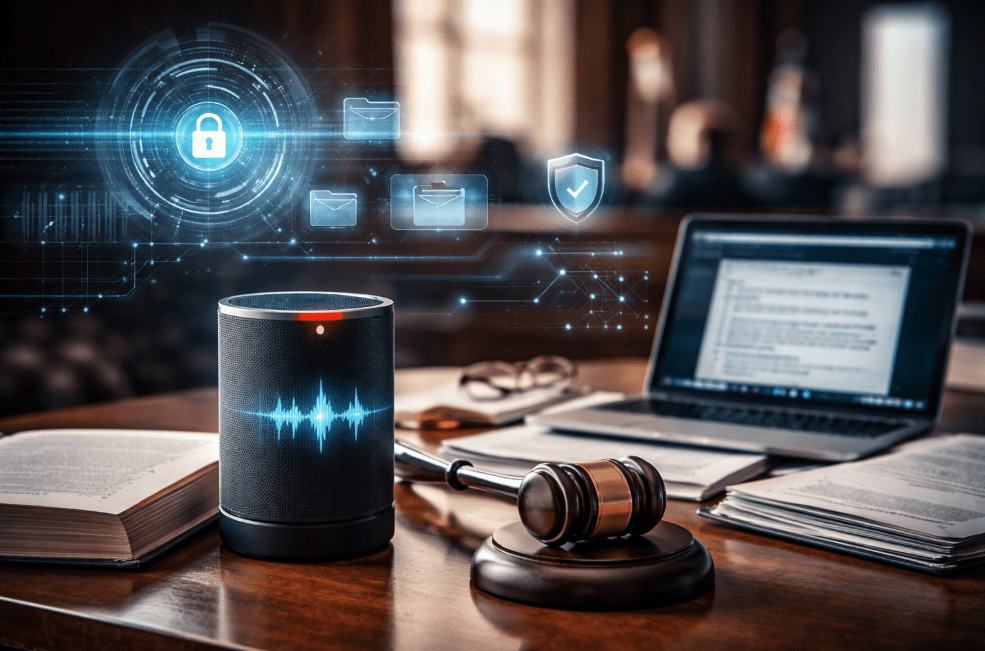
The Heppner decision reframes the court-reporting debate. The issue is no longer speed or convenience but legal accountability. Courts protect communications only when a human professional bears fiduciary responsibility. Autonomous recording systems cannot testify, explain decisions, or hold privilege. When the record lacks a sworn custodian, attorneys inherit the risk. The question is simple: if the transcript is challenged, who can take the stand?
Tag Archives: ChainOfCustody
Why the AI Privilege Fight Could Decide the Future of Court Reporting
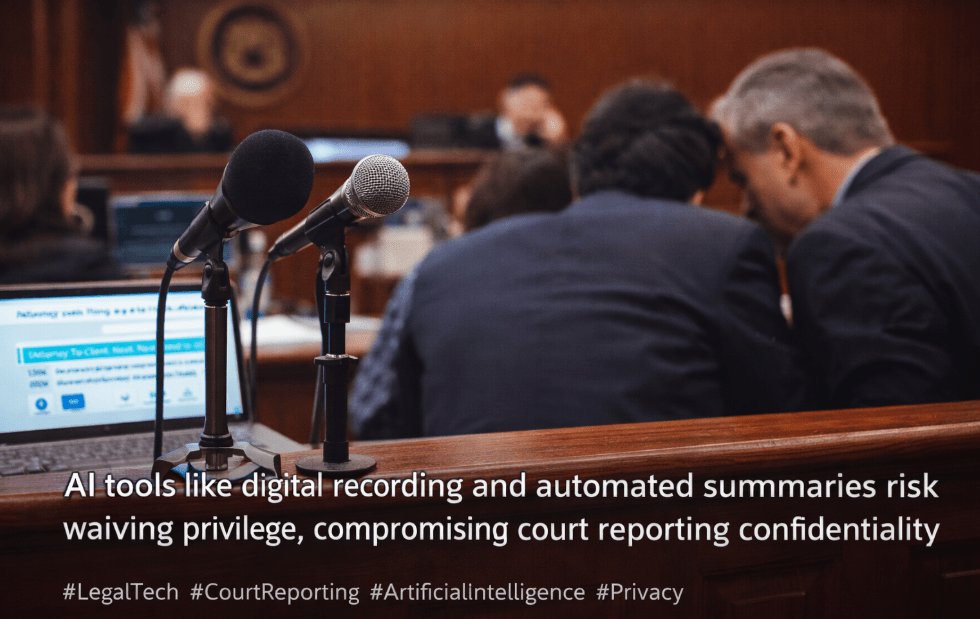
A federal court has drawn a stark line: conversations with AI systems are not privileged. That conclusion reaches far beyond chatbots. Digital recordings, automated deposition summaries, and cloud transcript analytics may transform confidential litigation strategy into discoverable material. The issue is no longer convenience versus tradition — it is custody versus disclosure. When legal data leaves human control, the record itself may become evidence.
The Court Reporter Is the Custodian of the Record – Why Decentralized Evidence Systems Protect Justice

Court reporters are not just transcribers. They are custodians of a decentralized evidentiary system. Through layered capture, redundant backups, and personal legal responsibility, licensed reporters preserve the court’s memory across hundreds of sworn officers. Centralized recording systems collapse that structure into a single point of failure—making the legal record easier to manage, and easier to lose.
The Legal Record Is Not a Decorative Byproduct of Litigation. It Is Evidence.

A legal transcript is not a convenience product. It is evidence. Evidence requires provenance, certification, and lawful creation. When proceedings are merely recorded and later transcribed by unlicensed individuals, the result is not a court record—it is media. Courts are quietly replacing evidentiary safeguards with technical workflows, downgrading the legal record from authenticated proof to a reconstructive artifact.
When an AI “Note-Taker” Shows Up to a Legal Proceeding

AI note-taking tools may be convenient in business meetings, but their presence in legal proceedings raises serious concerns about confidentiality, chain of custody, and record integrity. When unauthorized bots capture testimony, the official record can be compromised in ways that surface long after the proceeding ends. Protecting the record means understanding when technology crosses a legal line.
Who Trained the Machine?

AutoScript AI is marketed as a “legal-grade” AI transcription solution trained on “millions of hours of verified proceedings,” yet the company provides no public definition of what verification means in a legal context or where that data originated. Founded and led by technology executive Rene Arvin, the platform reflects a broader trend of general ASR tools being rebranded for legal use without the transparency traditionally required in court reporting.
 STENOIMPERIUM