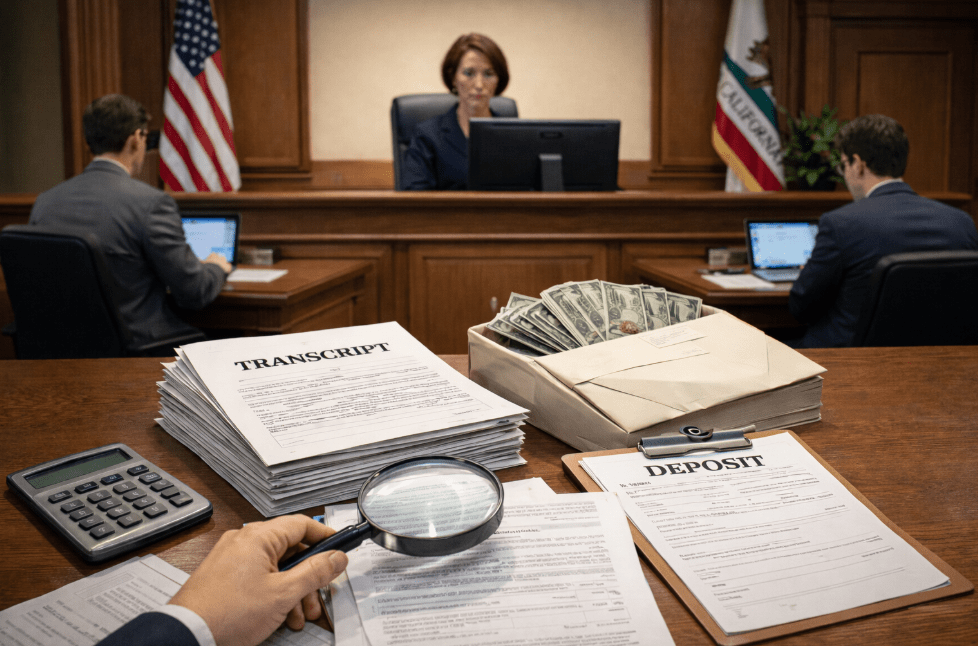
On January 21, 2026, the Los Angeles County Superior Court quietly clarified how parties may purchase reporter’s transcripts on appeal—reshaping the financial and procedural mechanics behind who pays, who receives copies, and how the official record moves forward. While technical on its face, the change touches the core of appellate practice: access to the words that ultimately decide cases.
Tag Archives: CaliforniaCourts
When Defense Counsel Brought AI to Voir Dire And How One Court Reporter Turned an Ethical Breach Into an Opportunity

When defense counsel was caught red-handed using AI to transcribe voir dire, the courtroom froze. The judge’s question—“Are you giving them realtime?”—made the truth unmistakable. Rather than confront, the reporter stayed calm, answered honestly, and later turned it into an upsell. The same attorney who relied on illegal AI ended up buying realtime from the pro she tried to replace. But AI note-taking tools may be capturing juror identities and responses, permanently exposing private citizens.
AB 711 Passed—But Is It Really a Win? Why This New Law Signals the Next Phase in the Elimination of Certified Court Reporters

When a judge tells attorneys they “don’t need a court reporter”—despite one being present and assigned—the threat to justice becomes undeniable. AB 711 enables this erosion, shifting the burden of preserving the record onto attorneys while courts quietly sideline certified reporters. The result? Trials with no transcript, no appeal, and no accountability. This isn’t modernization. It’s judicial overreach.
Trial Without a Reporter – What I Witnessed in L.A. Court Should Alarm Every Litigator

When a judge told attorneys, “you don’t need a court reporter” — despite one being present and assigned — it exposed a growing judicial trend: bypassing licensed reporters in favor of unregulated recordings. Critics say it’s not about shortages. It’s about power, profit, and erasing the record itself.
 STENOIMPERIUM