
Veritext’s latest CEU webinar series is being framed as professional development, but its core message deserves scrutiny. By asserting that capture method does not matter, the programming advances a narrative that conflicts with evidentiary law, professional ethics, and NCRA’s stated mission. With CEU approval still pending, members have a narrow window to speak up—before silence is mistaken for consent.
Tag Archives: books
The Great Theory Divide – Why “Short Writing” Alone Won’t Save Court Reporting

Court reporting’s future hinges on how we train new reporters. While “short writing” promises speed, decades of data show it fails to scale. Traditional phonetic theories taught in NCRA-accredited programs remain the backbone of reporter education—emphasizing accuracy, clarity, and proven outcomes. Recruitment reform, not shortcuts, will strengthen the pipeline and ensure a generation ready to protect the record.
From Wax Tablets to Quill to Realtime – A 2,000-Year Journey of Shorthand

Long before steno machines, Ancient Greek scribes developed shorthand to capture debates and court proceedings. The Romans expanded it, Taylor and Pitman refined it, and Ward Stone Ireland’s 1911 machine revolutionized it. Today’s realtime theories trace their lineage back over 2,000 years—a legacy of precision, linguistic mastery, and adaptation that defines the court reporting profession.
Small Agencies in Crisis – Competing Fairly in an Unfair Market

Small, reporter-owned agencies are being squeezed by Big Box firms offering lavish gifts, delayed payment schemes, digital reporters, and AI summaries. Competing on those terms is impossible — and unethical. But survival is still possible. By flipping their business model upside down — paying reporters faster, networking instead of consolidating, and selling ethics instead of perks — small agencies can thrive again.
The Stars That Sing – Hearing the Truth in Court Reporting

The Bushmen pitied Laurens van der Post when he admitted he could not hear the stars sing. Today, I feel the same grief for our profession. The truth rings out—schools reporting poaching, leaders failing in accountability—yet so many refuse to hear it. Our poverty is not material, but in losing the ability to hear the song of truth itself.
AI Summaries, CCR 2474, and the Fight Over Who Owns the Record

AI deposition summaries aren’t innovation—they’re exploitation. Agencies are monetizing transcripts into derivative products without consent or compensation, creating unjust enrichment while undermining the integrity of the record. California’s CCR 2474 wasn’t written with AI in mind, but the principle remains: reporters must not be in the business of interpretation. It’s time for contracts, regulation, and reform to safeguard neutrality, fairness, and trust in the transcript.
A Dangerous Shift in California – Why Changes to CSR Exam Requirements Could Gut the Stenographic Pipeline

A qualified student, ready to take California’s rigorous CSR exam after five years of training, was blocked by her school for not passing an internal 225 test—not a state requirement. Other schools refused to sponsor her out of fear of retaliation. Meanwhile, voice writers face fewer barriers. This isn’t about standards—it’s gatekeeping. Politics and policy shifts are sabotaging the steno pipeline from within.
When Advocacy Turns Hostile – A Call for Integrity in Court Reporting
When advocacy turns hostile, professionalism suffers. In the court reporting world, performative leadership and public bullying are replacing ethics and collaboration. This anonymous essay calls for a return to integrity — where disagreement isn’t met with defamation, and leadership doesn’t rely on intimidation. The future of steno depends not just on who speaks, but how we choose to lead.
The Subtle Power of a Word – Why ASR Can’t Replace Human Court Reporters

One wrong word — like “sale” instead of “cell” — can alter the facts. ASR doesn’t understand the difference, and neither did my scopist, because they weren’t a trained court reporter. In legal proceedings, every word matters. Court reporters aren’t just typists — we are the responsible charge, the last line of defense for truth and accuracy in the record.
When Critique Gets Censored – My Experience With a Trademark Complaint

After receiving a trademark complaint from the founder of Steno In The City, I’m speaking out. This isn’t about infringement — it’s about silencing criticism. I’ve used the name fairly, for commentary and accountability. When brand protection takes priority over ethical responsibility, we have to ask: who’s being protected, and who’s being exploited? This is my experience, and why I won’t stay silent.
The Real Threat to Stenography Isn’t Technology — It’s a Manufactured Crisis

The stenographic profession isn’t outdated — it’s under attack. A manufactured “shortage” narrative, pushed by corporate interests, aims to replace certified reporters with unregulated digital alternatives. But court reporting is thriving, technologically advanced, and essential to justice. It’s time to expose the fraud, reclaim our narrative, and fight for the integrity of the record — because the truth deserves a skilled human witness.
Quirky Quaverly Causes Commotion
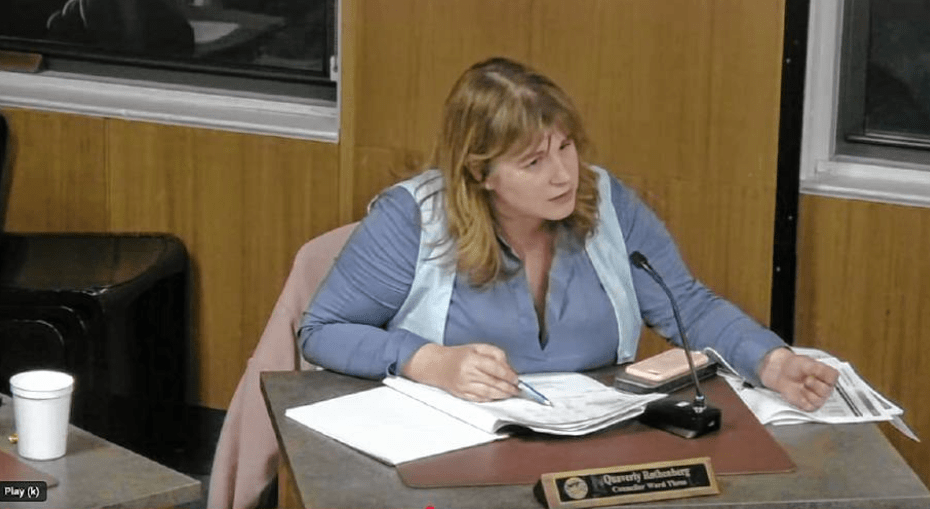
Quaverly Rothenberg, a City Councilor from Northampton, Massachusetts, has long positioned herself as a progressive voice in local government—but outside of City Hall, she’s made a name for herself in an entirely different and controversial domain: the court reporting world. Recently, Rothenberg didn’t make headlines—but she did raise suspicions—not for her political activity, but forContinue reading “Quirky Quaverly Causes Commotion”
Behind the Bench – The Economic Discrimination Against Pro Tempore Court Reporters

Pro tempore court reporters face economic discrimination rooted in misunderstanding and bias. Judges and attorneys see high invoices and assume excessive pay, unaware that agencies take 50%, and reporters shoulder business expenses, including subcontractors and costly equipment. Many reporters are women, and gender bias fuels resentment over perceived earnings. Despite outdated statutory rates and lack of benefits, court reporters remain essential yet undervalued pillars of the justice system.
Denise A. Tugade’s Appointment to the Court Reporters Board is a Possible Threat to the Future of Court Reporting in California

Denise A. Tugade’s appointment to the California Court Reporters Board on February 11, 2025, raises serious concerns for court reporters. With deep ties to SEIU—known for allowing court reporter layoffs—and former Assemblymember Lorena Gonzalez, a proponent of replacing court reporters with automation, Tugade’s influence could further undermine the profession. Her appointment signals potential threats to job security and the integrity of legal transcripts in California courts.
Supporters Threaten Violence Against Whistleblower Over Exposé

A group of supporters attempted to identify and harass a whistleblower after their blog exposed unethical business practices. They engaged in doxxing, defamation, and intimidation, escalating threats to both career and personal safety. Despite these efforts, the blogger documented the harassment for potential legal action. Ultimately, the campaign of intimidation has only reinforced the blogger’s commitment to transparency and integrity within the profession.
 STENOIMPERIUM