
Courts have been clear: artificial intelligence may assist lawyers, but it does not absolve them. When ASR systems miss testimony or AI summaries omit critical facts, responsibility does not vanish into the software. It lands squarely on the professionals who relied on it. As automation reshapes the legal record, a new reckoning over accountability is quietly approaching.
Tag Archives: asr
Who Trained the Machine?

AutoScript AI is marketed as a “legal-grade” AI transcription solution trained on “millions of hours of verified proceedings,” yet the company provides no public definition of what verification means in a legal context or where that data originated. Founded and led by technology executive Rene Arvin, the platform reflects a broader trend of general ASR tools being rebranded for legal use without the transparency traditionally required in court reporting.
Court Reporters v. Digital Recording and Voice Recognition – A Comprehensive Breakdown

Digital recording and ASR may promise convenience, but they fail the test of law and logic. Machine transcripts aren’t sworn, certified, or admissible—they’re hearsay without a human declarant. Court reporters remain the only officers of the record who can guarantee accuracy, authenticity, and accountability in real time. Justice still depends on human precision.
Zoom, the Record, and the Reporter – Where Ethics Are Clear and the Law Is Catching Up
As remote depositions become routine, reporters face growing pressure to act as both stenographer and Zoom host. NCRA ethics are clear: reporters cannot record or serve as videographers—but may host solely to prevent unauthorized recording or AI bots. When firms or attorneys refuse to disable ASR, the reporter’s duty is to withdraw, protecting the integrity of the record above all.
The End of the Record?

Verbit’s new mobile app lets anyone “record everything” — but at what cost? Without regulation, uncertified recordings could replace official transcripts, eroding reporter income and the integrity of the record itself. If the profession doesn’t fight back now, “copy sales” may be the least of what’s lost. This isn’t innovation; it’s deregulation disguised as convenience.
Major Impacts on Court Reporting if U.S. Adopts a “Voice & Likeness Property Law”

If the U.S. adopts a Denmark-style “Voice & Likeness Property Law,” digital reporting and ASR systems could face insurmountable hurdles. Every participant’s consent — and even royalties — would be required for recordings, making stenographers the clear, risk-free choice. In a world grappling with deepfakes, our ability to capture the record without recording voices positions stenographers as the most reliable safeguard of truth.
Why Transcribing from Electronic Recordings Is Hearsay — and the Stenographic Profession’s Strongest Defense

AI and electronic recordings can’t replace stenographic reporters. Why? Because transcripts created by someone not present are hearsay — and hearsay is inadmissible. Only a sworn reporter assumes Responsible Charge of the record, accountable under law. AI can’t be punished, fined, jailed, or defend its transcript in court. Without accountability, it’s just unverifiable hearsay.
Why Human Stenographers Still Outperform AI in the “Cocktail Party” Problem—and Always Will in Legal Proceedings

AI still can’t match human stenographers—especially in legal settings. From overlapping speech and accents to emotional testimony, the “cocktail party problem” is far from solved. Only a certified court reporter can deliver 99% accuracy, real-time clarification, and a legally admissible record. Don’t fall for the hype. Humans are still the gold standard.
How Court Reporting Can Survive and Thrive in the Age of AI and ASR
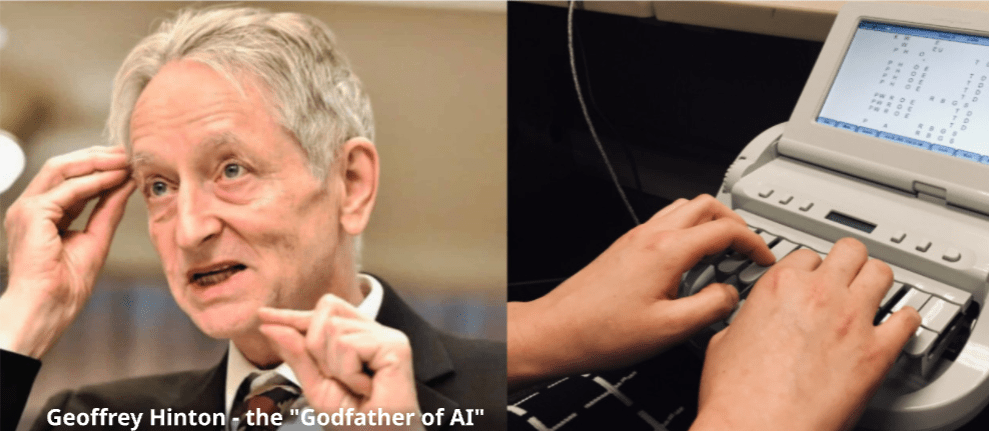
Court reporting isn’t just transcription — it’s the human backbone of justice. Whether using a steno machine or voice mask, stenographers capture the spoken word in real time to create certified, accurate records that AI simply can’t replicate. In the face of automation, our unity, skill, and accountability will define our survival. We aren’t obsolete — we’re indispensable. And now is the time to prove it.
When “No Options” Isn’t an Option – The Quiet Collapse of Court Reporting in West Texas

In West Texas, court reporters are disappearing — and judges are turning to digital recording as a last resort. One court has had zero applicants and is now speaking with Verbatim. This isn’t about convenience; it’s a collapse. Melissa’s story reveals the human toll of inaction and the urgent need to protect the integrity of our record. “No options” is not an excuse. It’s a wake-up call.
ASR in Court Reporting – Tool, Threat, or Transformation?

As court reporting faces increasing pressure from digital disruption, the debate over ASR (Automatic Speech Recognition) intensifies. Can it be used responsibly — or does its adoption spell the end of human-led recordkeeping? This article explores the nuanced question: If ASR is wielded by a trained, licensed stenographer, does it become a tool — or remain a threat? The future of our profession may hinge on the answer.
Steno Still Stands Strong
Verbatim court reporting relies on three methods: steno machine, steno mask, and AI/ASR. Only steno machine and mask writers are certified and legally accepted in over half the states. The steno machine remains the gold standard, offering unmatched accuracy and instant readback. AI/ASR, while emerging, lacks certification, reliability, and accountability—posing serious risks in legal settings where precision is non-negotiable. Certification must be required for all reporting methods.
Fighting Like Hell to Save the Stenography Profession Through Innovation, Grit, and Perseverance

The stenography profession is at a crossroads, facing threats from AI and digital transcription. But history shows that industries on the brink can fight back. By embracing innovation, public awareness campaigns, high school outreach, and social media engagement, stenographers can reclaim their place as the gold standard in legal documentation. It’s time to fight like hell—because the future of stenography depends on it.
The Battle Between Humans and AI in Court Reporting

The battle between humans and AI in court reporting is intensifying as Automatic Speech Recognition (ASR) technology advances. While ASR promises faster, cost-effective transcriptions, its current 76% accuracy rate still falls short in legal proceedings, where precision is critical. Human court reporters maintain an edge with their contextual understanding, adaptability, and ability to transcribe multiple speakers, ensuring accuracy that AI currently cannot match.
Regulating Technology in Court Reporting
The rise of artificial intelligence (AI) and automatic speech recognition (ASR) threatens the accuracy and integrity of court reporting. These technologies are unreliable in legal settings, where precision is critical. To protect due process, strict regulations must prohibit AI and ASR from replacing certified human court reporters. Upholding the principle of “Responsible Charge” ensures accountability, ethical standards, and the continued trustworthiness of legal transcripts.
Stenos Thriving in the Digital Age:

As digital technology reshapes industries, stenographers face increasing pressure from automated transcription tools. However, like Kodak’s failure to adapt, stenographers can thrive by embracing change. By leveraging their unique skills—accuracy, context, and accountability—and integrating technology into their workflows, they can offer tech-enhanced services, expand their expertise, and advocate for their profession. Embracing innovation ensures stenographers remain indispensable in the evolving legal landscape.
 STENOIMPERIUM