In a profession built on precision, authentication, and the evidentiary integrity of the record, a quiet but consequential shift is unfolding inside American courtrooms. Attorneys—especially those practicing in high-stakes civil litigation—are increasingly discovering that the “cheaper, modern alternative” of digital reporting comes with a hidden cost: there may be no qualified stenographer willing to salvage the record when things go wrong.
And things are going wrong.
Recently, a veteran Florida court reporter recounted an episode that should give every litigator pause. “I had an interesting thing happen recently,” she explained. “I was assigned a trial with a long-time client who does strictly insurance defense. Then a couple days later it was canceled. I texted my client, who is also a good friend. She says the plaintiff wants their own reporter—okay, that’s Florida’s rules. No problem.”
But what followed was something else entirely.
“Next thing I hear, there was a multimillion-dollar verdict against her. Then a couple days later she called me back and asked if I would transcribe from the digital. Whoa.”
Her answer was unequivocal. Years earlier, as a favor, she had attempted a similar task—transcribing a proceeding captured on rudimentary audio equipment.
“It was a disaster. NEVER AGAIN.”
She declined. Her longtime client understood. The agency later found someone willing to attempt the transcription—“God bless them,” she added—but then came the real revelation:
No one had been told that a digital recorder, not a certified stenographer, was covering the trial. The plaintiff’s side had executed a classic bait-and-switch, and the defense attorney walked into a multimillion-dollar verdict without a trustworthy record of what transpired.
Attorneys who have ever reviewed a digital transcript know the outcome. As the reporter put it:
“If anyone has seen a digital transcript, you know. They are the worst transcripts imaginable. Stuff left out. Wrong speakers. Wrong words. Stuff that makes no sense. Think the appellate courts are happy?”
The New Request: “Can You Just Transcribe the Audio?”
Other stenographers are reporting an uptick in troubling inquiries.
One recently shared:
“I received an email asking if I was interested in doing digital, but I’m a stenographer—that’s kind of disturbing. I’m nervous we’re going to get knocked out.”
Another added:
“Some lawyers think digital is the way to go. Maybe it is if everything settles. But the god-awful transcripts…”
And here is the hard truth attorneys must hear:
Professional stenographers will not—and ethically cannot—clean up or certify a transcript from digital audio.
Doing so would compromise:
Accuracy (audio is frequently incomplete or unintelligible)
Authenticity (stenographers cannot certify a record they did not personally take)
Ethical obligations under state reporting statutes
Appellate integrity, where missing or wrong language is grounds for challenge
Stenographers are guardians of the record, not technicians for broken audio.
Technology Is Changing—but Not Always for the Better
Digital advocates often frame this shift as inevitable. And even within the stenographic community, the technological conversation is evolving.
One respected voice wrote:
“You all realize that the speech-to-text world IS changing, right? It’s not like it’s going to change. It already has… I am 💯 #steno, but I haven’t kept my fingers in my ears. Technology can do our job. It can and does. Please live in the reality of what is happening.”
Another veteran reporter, reflecting on 50+ years in the profession, cautioned:
“As the technology advances, I would encourage my colleagues to embrace it. Who better to harness and manage a viable new reporting technology than reporters? AI is here to stay.”
These statements are not endorsements of replacing stenographers. They are acknowledgments that technology will play an increasing role—but in partnership with, not instead of, trained professionals.
Even those embracing AI also concede a foundational truth:
Digital audio—without a human stenographer managing the record—is not a viable courtroom reporting method.
Not for trials. Not for appeals. Not for verdicts measured in millions.
The Attorney’s Dilemma: When “Cheap” Becomes Very Expensive
Attorneys who opt for digital reporting often do so for three reasons:
It looks modern
It looks easy
It looks inexpensive
But like most things in litigation, the apparent shortcut leads to a longer, more expensive route.
The hidden risks include:
inaudible testimony
overlapping speakers
untranslated accents
failure to distinguish witnesses
missing voir dire
omitted sidebars
misattributed objections
entire segments lost to equipment failure
And when the transcript is needed for post-trial motions or appeal?
You will be told to “find a stenographer who can fix it”—and you will quickly learn that stenographers will not touch it.
You cannot retroactively hire accuracy. You cannot reconstruct a destroyed record. You cannot appeal without a clean transcript.
What looks cheap on the front end becomes catastrophic on the back end.
The Warning to Attorneys: Digital Has No Safety Net
Stenographers are not refusing out of pride. They are refusing because:
They cannot ethically certify audio created by someone else.
They cannot guarantee accuracy for a record they did not control.
They cannot protect you on appeal if the audio is flawed.
Once you choose digital, you lose the protections that trained stenographers bring:
live error correction
real-time identification of speakers
instant clarification of mumbling or low voices
management of crosstalk
capturing nonverbal gestures or exhibits
ensuring a full, fair, and accurate record
No amount of post-processing, AI, or cleanup can replicate that.
A Final Thought for the Legal Community
The reporting profession is evolving, and technology will remain part of that evolution. But attorneys must recognize the difference between augmenting stenographic reporting and replacing it with something fundamentally less reliable.
As one reporter said plainly:
“Maybe digital looks good. Maybe it’s cheap. But the problem is getting a decent transcript.”
The legal system cannot function on questionable transcripts, missing testimony, or unverifiable records. Attorneys who accept digital reporting are accepting the risk that the only accurate account of what happened in the courtroom simply may not exist.
And when the stakes are measured in million-dollar verdicts, client trust, and appellate review, that is not a risk worth taking.
You cannot fix the record after the fact. You can only protect it from the start. Hire a stenographer.
“This article includes analysis and commentary based on observed events, public records, and legal statutes.”
The content of this post is intended for informational and discussion purposes only. All opinions expressed herein are those of the author and are based on publicly available information, industry standards, and good-faith concerns about nonprofit governance and professional ethics. No part of this article is intended to defame, accuse, or misrepresent any individual or organization. Readers are encouraged to verify facts independently and to engage constructively in dialogue about leadership, transparency, and accountability in the court reporting profession.
The content on this blog represents the personal opinions, observations, and commentary of the author. It is intended for editorial and journalistic purposes and is protected under the First Amendment of the United States Constitution.
Nothing here constitutes legal advice. Readers are encouraged to review the facts and form independent conclusions.
***To unsubscribe, just smash that UNSUBSCRIBE button below — yes, the one that’s universally glued to the bottom of every newsletter ever created. It’s basically the “Exit” sign of the email world. You can’t miss it. It looks like this (brace yourself for the excitement):
Every so often, an algorithm decides it understands a profession better than the people who have lived inside it for decades. The screenshot circulating online—an AI-generated explanation for why people “quit being court reporters”—is one of those moments. It reads confidently, ticks all the right modern boxes, and yet fundamentally misunderstands the profession it purports to summarize.
The premise itself is flawed. Court reporting is not a career people typically “try and abandon.” It is a profession people commit to for life. Three decades. Four decades. Often five. It is not uncommon to see multiple generations of court reporters in the same family, or to work alongside colleagues who began their careers before digital recording even existed. This is not the profile of a profession hemorrhaging workers due to unbearable conditions. It is the profile of a craft that rewards mastery, autonomy, and endurance.
That does not mean the job is easy. It never has been. Court reporting is demanding by design. It requires intense concentration, technical skill, emotional discipline, and an unusual tolerance for responsibility. The record must be accurate. The deadlines are real. The stakes are often high. But difficulty alone does not drive people away. In fact, for many reporters, it is precisely the rigor that keeps them engaged for decades.
The AI narrative leans heavily on “trauma” as a central reason reporters quit. That claim ignores a critical distinction within the profession. Many freelance reporters do not work criminal cases at all. They handle civil litigation, depositions, arbitrations, hearings, and proceedings where the emotional content, while sometimes stressful, is not inherently traumatic. For those reporters, the idea that emotional exposure is a defining occupational hazard simply does not apply.
More importantly, court reporting offers something many modern professions no longer do: control. Freelance reporters can turn down work. They can take time off when they need to stay sane. They can pace their careers in ways that protect both mental health and longevity. Burnout is far more likely in environments where workers are trapped, interchangeable, and powerless. Court reporters, by contrast, build careers around independence and choice.
Yes, some days are bad. Some days are truly awful. But that is not unique to court reporting—it is true of any profession that involves real responsibility. The difference is that reporters who stay learn how to manage time and stress as core professional skills, not afterthoughts. They learn quickly that physical activity is not optional. Movement keeps the body functioning and the brain sharp. This is not a lifestyle job for people who expect the work to accommodate them. It is a profession that demands adaptation—and rewards it.
The AI summary also treats “technological demands” as a reason people quit, as though learning and evolving were new burdens imposed on an otherwise static field. Court reporters have always adapted to technology. From manual machines to computerized steno, from paper notes to realtime feeds, from in-person proceedings to remote platforms, this profession has survived precisely because its practitioners are resilient, curious, and technically adept. Those who struggle with that reality self-select out early. Those who thrive stay for life.
And that is the point the algorithm misses entirely: not everyone is cut out to be a court reporter. That has always been true. It is a jealous mistress of a profession—demanding, exacting, and unforgiving of shortcuts. But for those who are wired for it, it becomes more than a job. It becomes an identity. A superpower. Something people proudly say they have loved for 40 or even 48 years, without irony or regret.
Finally, there is flexibility—real flexibility, not the buzzword version. Court reporters are not locked into one narrow path. They can change agencies. They can move geographically. They can pivot into captioning, CART, realtime, mentoring, or teaching. They can reinvent their careers without abandoning the profession itself. Very few careers offer that kind of lateral freedom without starting over.
So when an AI confidently declares why “people quit court reporting,” it is worth asking: which people? Because the overwhelming evidence, written in decades-long careers and generational legacies, tells a very different story.
Court reporting is not a profession people flee from. It is a profession people grow old in—by choice.
“This article includes analysis and commentary based on observed events, public records, and legal statutes.”
The content of this post is intended for informational and discussion purposes only. All opinions expressed herein are those of the author and are based on publicly available information, industry standards, and good-faith concerns about nonprofit governance and professional ethics. No part of this article is intended to defame, accuse, or misrepresent any individual or organization. Readers are encouraged to verify facts independently and to engage constructively in dialogue about leadership, transparency, and accountability in the court reporting profession.
The content on this blog represents the personal opinions, observations, and commentary of the author. It is intended for editorial and journalistic purposes and is protected under the First Amendment of the United States Constitution.
Nothing here constitutes legal advice. Readers are encouraged to review the facts and form independent conclusions.
***To unsubscribe, just smash that UNSUBSCRIBE button below — yes, the one that’s universally glued to the bottom of every newsletter ever created. It’s basically the “Exit” sign of the email world. You can’t miss it. It looks like this (brace yourself for the excitement):
In every court reporting program across the country, there comes a moment—sometimes quiet, sometimes devastatingly loud—when a student thinks, I can’t do this. Maybe it’s a plateau at 180. Maybe it’s a string of RPR failures. Maybe it’s a CSR mock where the errors outnumber the correct words. And behind it all is the same pressure: Try harder. Push more. Grip tighter. Don’t let go.
But what if the very act of gripping is what slows us down?
An unlikely insight comes from a little-known moment in scientific history—one that has nothing to do with stenography, and everything to do with how humans experience reality and achievement.
“In 1993, a Russian physicist walked away from his lab forever. Few knew he had discovered a shocking secret about reality itself. Vladimir Krupin, a quantum physicist, realised that reality might already exist like a movie with infinite versions. Instead of trying harder to make things happen, he taught that changing your inner state could “slide” you into the version you wanted. His radical idea was simple yet revolutionary: treat your goals as no big deal. According to Krupin, when you stop clinging to outcomes and adopt a relaxed mindset, opportunities and success manifest faster than desire ever could. This method challenged traditional thinking in physics and psychology alike and caused a stir in Russian intellectual circles. Today, Krupin’s insight resonates with people exploring mindfulness, manifestation, and self-transformation. His three-step “no-big-deal” approach encourages modern readers to pause, release stress, and shift perspectives to align with their desired reality. Beyond physics, it’s a lesson in patience, inner balance, and the hidden power of perception. His work reminds us that sometimes the most extraordinary discoveries come not from tools and labs, but from quiet reflection and courage to think differently. History shows that changing your mindset can ripple across culture and personal life alike.”
For court reporters—especially students chasing higher speeds—this strange, almost mystical concept is not as far-fetched as it sounds. In fact, it mirrors what elite reporters, seasoned realtime writers, and certification experts have quietly understood for decades: speed comes not from effort alone, but from the inner state behind the effort.
The Paradox of Speedbuilding
Every stenographic student reaches the paradox eventually:
The harder you press, the more your fingers lock.
The more you obsess over accuracy, the more errors appear.
The more you fear the test, the faster the dictator seems to speak.
This is not imagination. Neuroscience confirms that performance under pressure deteriorates when the brain moves into “fight or flight.” Cortisol rises. Muscles tense. The prefrontal cortex—responsible for precision, sequencing, and fine motor control—begins to shut down.
Court reporting requires the opposite: fluidity, timing, micro-relaxation, and rhythm. It requires the upper brain to remain open, alert, and receptive.
High speed, paradoxically, comes from ease.
Krupin’s insight—that treating your goal as “no big deal” allows you to slip into the version of yourself that already succeeded—aligns almost perfectly with the lived experience of reporters who have passed the hardest exams.
Sliding Into the 225 You
When Krupin suggested that reality contains “versions” of outcomes, he wasn’t offering magic or pseudoscience. He was describing a psychological truth:
You cannot perform at the level you fear. You perform at the level you embody.
The students who pass the CSR and RPR are not necessarily the ones with the most hours, the biggest dictionaries, or the newest machines. They are often the students who:
Stop acting like the test is a life-or-death moment
Detach from perfection
Trust their muscle memory
And practice from a mindset of inevitability rather than desperation
This mirrors Krupin’s three-step “no-big-deal” approach:
1. Pause
Before writing a take, elite reporters often visualize themselves at the strokewriter, hands loose, breath steady, posture relaxed. They reset their nervous system.
They know mastery begins before the audio starts.
2. Release Stress
You will never write clean if your shoulders are by your ears.
Students who plateau often don’t realize they are writing inside a state of tension. They grip the machine, press too hard, chase words, panic when they fall behind, and then blame their skill—not their state.
Relaxation is a skill. So is non-attachment.
3. Shift Perspective
The most powerful thing a court reporting student can do before a test is change one belief:
Instead of “I have to pass,” shift to “I already write at this speed; today I simply record the evidence of that.”
In other words, slide into the version of you who already passed.
This is not delusion. It is alignment.
Your hands follow the story you tell yourself.
Why Treating Your Goal as ‘No Big Deal’ Works
Court reporting students often believe intensity equals progress. But the students who break through to 180, 200, and 225 often describe the moment in strangely similar terms:
“It just clicked.” “It suddenly felt easy.” “I stopped caring for a second—and that’s when everything came together.”
This is not coincidence.
When you treat your certification like a monster, the nervous system responds accordingly. But when you treat it like a routine checkpoint, your skills surface naturally.
A reporter who writes 225 in class and 180 on test day is not lacking ability. They are lacking ease.
Krupin’s theory reframes it: the version of you that passes already exists. Your task is not to claw your way into it, but to drop the resistance that blocks it.
How to Apply the “No-Big-Deal Method” in Daily Practice
The path from 140 to 200 is not only technical—it is psychological, emotional, and often spiritual. The method can be integrated into any practice routine:
1. Begin every practice with breath
Five deep breaths. Shoulders down. Loose wrists. Relaxed jaw. Remind your body that it is safe to perform.
2. Visualize yourself at speed
Not struggling. Not chasing. Just writing in rhythm with flow and confidence.
Your brain maps the version of you it believes is possible.
3. Practice from the middle—not the edge
Elite pianists do not hammer their hands to exhaustion. They practice just beyond comfort, not at panic-speed. Court reporters should too.
4. After errors, don’t react
Just reset. Emotion is wasted energy. Treating mistakes as neutral trains your nervous system to remain open.
5. Before every test, deliberately act casual
Eat a snack. Look out the window. Tell yourself: “This is just another take.” Because it is.
Your brain performs what it believes is normal.
The Reporter Who Already Exists
The most successful students learn to relate to the “future reporter” not as a fantasy, but as a version of themselves already in progress. They stop thinking, One day I’ll be fast enough, and begin behaving as if that version is already here.
They carry themselves like professionals. They practice like professionals. They treat steno like the craft it is — and certification like the natural next step.
And slowly, almost imperceptibly, their speed curves shift. Plateaus melt. Tension releases. Tests feel less like cliffs and more like milestones.
This is the essence of Krupin’s insight: to “slide” into a different version of reality by shifting the internal state that interprets it.
Court reporting is one of the rare professions where mindset directly influences physical output. It is not like lifting weights or typing on a QWERTY keyboard. It requires precision at the threshold of human motor capability, a synchronization of rhythm, breath, and micro-movements.
No one brute-forces 225. They become 225.
Why Students Fail Tests They Are Technically Capable of Passing
Ask any CSR or RPR veteran, and they’ll tell you the same thing: students often fail not because of skill, but because of the psychological weight they attach to the exam.
Students walk into test day holding:
fear of failure
pressure from teachers
guilt about the time they’ve spent
frustration from past attempts
catastrophizing (“If I fail again, my life is over”)
tension from financial stress
embarrassment (“Everyone else is passing but me”)
This is not just emotional noise — it’s a neurological block.
The body constricts. The fingers stiffen. The mind begins monitoring instead of performing. And the smooth automaticity required for high-speed writing breaks apart.
The test becomes a mirror of the internal storm, not the skill they’ve already built.
Krupin would describe this as “clinging” — holding the goal so tightly that you distort your path toward it. His no-big-deal method teaches the opposite: the less pressure you apply, the more fluidly you move into the version of reality where your goal is already achieved.
For court reporters, this is not philosophy — it is the lived experience of every working realtime writer.
Krupin’s “no-big-deal” approach translates exceptionally well into a concrete practice routine for court reporters and students.
Here is the steno-adapted version:
STEP 1: PAUSE — Reset Your Nervous System
Before each practice session or test:
Place both hands lightly on the machine
Close your eyes
Take five slow breaths
Release tension in your jaw, shoulders, wrists, and forearms
Imagine your hands floating rather than pressing
This signals safety to the brain — an essential precursor to speed.
STEP 2: RELEASE — Let Go of the Emotional Charge
Say quietly to yourself:
“It’s no big deal.”
Repeat it if necessary. Let it land.
The point is not apathy — it is detachment from fear. A student who treats a 200 Q&A like a life-or-death situation will never write it cleanly.
But a student who treats it like Tuesday afternoon practice? They unlock their true rhythm.
STEP 3: SHIFT — Step Into the Version of You Who Has Already Passed
Before every take, visualize:
A calm face
Loose fingers
Light strokes
Words landing in your hands with ease
Punctuation falling into place without effort
Rhythm instead of panic
Picture the version of yourself on test day:
collecting your passing certificate
smiling
calling your instructor
texting your family
updating your résumé
walking into a courtroom or deposition as an official reporter
This primes the brain to accept this version as normal.
When you normalize success, you perform at the level required to achieve it.
Why This Works: The Neuroscience Behind the Magic
Krupin’s insight may sound mystical, but the mechanism is grounded in well-established cognitive science.
Visualization activates the same neural circuits as real action, strengthening performance.
Relaxation increases fine motor fluency, allowing fingers to move at high speeds.
Detachment reduces cortisol, preventing the cognitive shutdown associated with pressure.
Confidence increases prediction accuracy, essential for anticipating phrasing and punctuation.
A “no big deal” attitude preserves cognitive bandwidth, letting the subconscious handle automatic writing patterns.
When combined, these elements create an internal environment where speed is not forced — it emerges.
What Experienced Court Reporters Know Instinctively
Talk to any reporter who writes realtime in federal court. They’ll tell you the same thing:
Your hands are only as good as your state of mind.
Realtime writers cannot afford panic. They cannot afford tension. They cannot afford to “chase” what they’re hearing.
They have mastered relaxed precision — the art of writing fast while staying internally slow.
Students often miss this truth. They equate intensity with improvement. But the deeper secret of high-speed stenography is that the body must be calm to perform at its peak.
This is why the best instructors say things like:
“Drop your shoulders.” “Stop gripping the machine.” “You’re trying too hard.” “Let the words come to you.” “Relax into the speed.”
These are not clichés. They are the operating principles of high-level stenographic performance.
Sliding Into Your Certification Reality
What would happen if every student treated their CSR, RPR, or state exam not as a monster to conquer, but as a natural next step in their evolution?
What would happen if they walked into test day with the same relaxed confidence they have when writing at home?
What if they believed — truly believed — that the version of themselves who writes 225 Q&A already exists?
Students would pass sooner. They would plateau less. They would enjoy the process more. They would stop burning out at 160 or 180. They would trust their skill rather than judge it. They would experience breakthroughs that feel sudden but were building quietly within them for months.
This is what it means to “slide” into a new reality: not through force, but through alignment.
The Quiet Power of Thinking Differently
Krupin left his laboratory after discovering a truth that shook his worldview. Court reporting students don’t need to walk away from anything — they simply need to walk toward a new inner state.
The journey to certification is not merely about words per minute. It’s about the psychology of performance, the physiology of relaxation, and the courage to believe that the reporter you want to become already exists inside you.
The path forward is not force. It is not fear. It is not obsession.
It is ease. It is flow. It is the quiet conviction: It’s no big deal. I can already do this.
And once that belief settles into your bones, the rest — the speed, the accuracy, the certification — comes naturally.
Because you have finally stepped into the version of yourself that was waiting there all along.
“This article includes analysis and commentary based on observed events, public records, and legal statutes.”
The content of this post is intended for informational and discussion purposes only. All opinions expressed herein are those of the author and are based on publicly available information, industry standards, and good-faith concerns about nonprofit governance and professional ethics. No part of this article is intended to defame, accuse, or misrepresent any individual or organization. Readers are encouraged to verify facts independently and to engage constructively in dialogue about leadership, transparency, and accountability in the court reporting profession.
The content on this blog represents the personal opinions, observations, and commentary of the author. It is intended for editorial and journalistic purposes and is protected under the First Amendment of the United States Constitution.
Nothing here constitutes legal advice. Readers are encouraged to review the facts and form independent conclusions.
***To unsubscribe, just smash that UNSUBSCRIBE button below — yes, the one that’s universally glued to the bottom of every newsletter ever created. It’s basically the “Exit” sign of the email world. You can’t miss it. It looks like this (brace yourself for the excitement):
It takes a special kind of audacity to claim that a trial court enforcing basic evidentiary reliability standards is somehow a “self-inflicted wound” to the justice system. Yet that is precisely the argument advanced by Esquire Deposition Solutions, U.S. Legal Support, and Veritext — three national deposition corporations with a formidable commercial interest in expanding digital reporting — in their recent amicus brief to the Texas Supreme Court. Their message is simple: Trust us. We promise this time digital reporting is totally fine. Their brief reads less like a legal analysis and more like a carefully lacquered public-relations campaign designed to reframe a commercial business model as a matter of judicial necessity.
The problem is that Texas courts are not obligated to suspend their skepticism just because three billion-dollar companies insist they should.
Rebranding a Technology Gap as a Legal Right
The amici’s argument rests on a convenient oversimplification: that the “only significant difference” between stenographic and digital reporting is the recording device. In reality, this distinction is not merely technical — it is the core issue. A stenographic record is created by a licensed court reporter bound by statutory duties, ethical canons, and a mandatory certification process that exists for one reason: to protect the integrity of the legal record.
By contrast, digital recording is a method, not a profession. It is not regulated by any Texas licensure regime. AAERT certification — invoked repeatedly by amici as though it were a statutory credential — has no legal authority in Texas. The Texas Judicial Branch Certification Commission does not recognize AAERT certificates, does not regulate digital reporters, and does not discipline them when something goes wrong. That means the “professional accountability” amici trumpet is not accountability at all — it is branding.
It is telling that amici elevate the existence of an in-room human as though presence alone constitutes expertise. Texas requires expertise. The rules require reliability. Courts require a chain of trust that withstands challenge. This is precisely why the trial court excluded the transcript in the first place.
The False Binary – Stenographers or Nothing
In a move we have seen for years, amici invoke the rhetorical emergency brake: the “stenographer shortage.” They present digital reporting as the inevitable solution to a problem whose contours they themselves often exaggerate. While certain regions face recruiting challenges, Texas has not declared a reporting crisis, nor has the legislature replaced licensure requirements, nor has any Texas ethics body suggested that accuracy standards should be relaxed in the name of convenience.
The amici’s narrative implies that Texas courts must choose between unreliable transcripts and no transcripts at all — a framing contradicted by the reality that Texas continues to license, regulate, and train certified shorthand reporters statewide. If the corporate amici truly believed in market solutions, they might invest in training, scholarships, apprenticeships, or rural-coverage programs, instead of lobbying for deregulation disguised as modernization.
The Rules They Cite Undermine Their Own Argument
Amici lean heavily on Texas Rules of Civil Procedure 199.1(c) and 203.6(a), repeating them as though repetition might bestow new meaning. The rules are unambiguous: non-stenographic recordings may be made, and they may be used — unless the court finds good cause to require a certified transcript.
That is precisely what occurred.
Rule 203.6 exists because the drafters of the Texas rules understood that while recording methods may vary, the reliable written record ultimately belongs in the hands of a certified reporter. The rule’s built-in safeguard is not a “mere exception.” It is the mechanism by which courts protect the evidentiary integrity of the transcript. When amici characterize the trial court’s application of this provision as somehow aberrational, they are not interpreting the rule — they are objecting to it.
The Industry’s Favorite Straw Man – “Opponents Say AI Is Evil.”
Another tactic in the amici brief is to portray critics as hysterical technophobes shrieking about artificial intelligence. This is sleight of hand. The objections raised by attorneys, judges, and reporters nationwide have never been about technology itself. They are about the absence of regulation, the lack of verifiable speaker identification, the chain-of-custody vulnerabilities inherent in multichannel recordings, and the inability to cross-examine a digital recorder when the transcript is wrong.
Amici then stress, almost defensively, that they do not use generative AI to create transcripts. Yet nearly all national deposition corporations rely on ASR or post-processing tools at some stage of production, and even “decades-old” audio-to-text tools remain susceptible to the same problems that have plagued digital recording for 40 years: crosstalk, garbled audio, improper mic placement, and the simple reality that people do not speak in clean, machine-friendly sentences during litigation.
If digital reporting were as flawless as amici suggest, the market would not be awash in transcript errata, attorney complaints, certification challenges, missing pages, inaudible segments, and deposition do-overs.
Turning a Business Model Into a Legal Mandate
What ultimately animates the amici position is not doctrine, but economics. Digital reporting drastically lowers labor costs, increases throughput, and redirects profit from regulated professionals to corporate shareholders. By characterizing judicial scrutiny as an obstacle, amici are asking the Texas Supreme Court to bless their business model — one that expands corporate control over the record while diminishing the state’s regulatory authority.
Courts are not required to underwrite that shift.
Texas has the prerogative — and the responsibility — to demand that its evidentiary standards remain anchored in reliability, not marketing claims. If amici wish to transform digital recording into a regulated, licensable, auditable profession, they are free to petition the legislature. What they cannot do is shoehorn deregulation into Rule 199.1 by rebranding commercial convenience as “access to justice.”
The Real Self-Inflicted Wound
The amici brief warns that restricting digital reporting would harm access to justice. But the true danger lies in the opposite direction: allowing unregulated deposition capture methods to proliferate under the veneer of legitimacy manufactured by corporate repetition. Nothing erodes confidence in the justice system faster than an unreliable record — and no amount of marketing gloss can rehabilitate a transcript that cannot withstand evidentiary scrutiny.
Texas courts should not be pressured into diluting standards simply because three national corporations insist that their private workflows are “clearly lawful.” Lawfulness is determined by statute, rule, and judicial discretion — not by amicus op-eds masquerading as inevitability.
If the amici’s processes are as sound as they claim, they should welcome judicial examination. Their attempt to secure a blanket blessing from the Texas Supreme Court suggests they are far less confident than their public relations copy would lead the public to believe.
This article reflects my perspective and analysis as a court reporter and eyewitness. It is not legal advice, nor is it intended to substitute for the advice of an attorney.
This article includes analysis and commentary based on observed events, public records, and legal statutes.
The content of this post is intended for informational and discussion purposes only. All opinions expressed herein are those of the author and are based on publicly available information, industry standards, and good-faith concerns about nonprofit governance and professional ethics. No part of this article is intended to defame, accuse, or misrepresent any individual or organization. Readers are encouraged to verify facts independently and to engage constructively in dialogue about leadership, transparency, and accountability in the court reporting profession.
The content on this blog represents the personal opinions, observations, and commentary of the author. It is intended for editorial and journalistic purposes and is protected under the First Amendment of the United States Constitution.
Nothing here constitutes legal advice. Readers are encouraged to review the facts and form independent conclusions.
***To unsubscribe, just smash that UNSUBSCRIBE button below — yes, the one that’s universally glued to the bottom of every newsletter ever created. It’s basically the “Exit” sign of the email world. You can’t miss it. It looks like this (brace yourself for the excitement):
A recent viral post circulating on social media showcased a set of wage figures purporting to reveal the “Top 5 Best Paying Related Court Reporter Jobs in Los Angeles.” According to the graphic, “Digital Court Reporting” allegedly commands an annual salary exceeding $105,000 and an hourly rate north of $50, eclipsing traditional stenographic roles and even federal court reporting positions. For anyone who has spent time inside a courtroom, deposition suite, or the increasingly hybrid world of remote proceedings, the numbers are not merely surprising. They are deeply discordant with the lived economic reality of the profession.
This is not just a moment of sticker shock. It is a case study in how mischaracterized data, algorithmically generated content, and surface-level job aggregation distort an already fragile ecosystem. The court reporting profession, long grounded in skill, certification, and legal accountability, now finds itself competing with seductive but misleading narratives suggesting that minimally trained digital recorders are not only equivalent, but more financially rewarded.
At the heart of the issue is a fundamental misunderstanding of what constitutes a court reporter. A Certified Shorthand Reporter, or CSR, maintains rigorous licensing requirements, adheres to state and federal statutes, and produces an immediately usable, authenticated transcript of legal proceedings. By contrast, so-called “digital reporters” often perform a passive recording function. Their product is not a transcript but an audio file, which is then outsourced to an anonymous transcriber, frequently paid a fraction of the rate, sometimes overseas, and rarely subject to the same legal standards or accountability.
The claim that such a role commands a higher wage than the professional tasked with creating the certified record defies logic. It also underestimates the complex economics of stenographic work. Court reporters seldom earn a static hourly rate. Their income is derived from a combination of appearance fees, per-page transcript production, rush charges, real-time services, scopist and proofing coordination, and often extended hours that exceed the traditional 40-hour workweek. To view compensation through the simplified lens of hourly equivalence is to erase the multifaceted reality of the profession.
Consider the figure cited for deposition reporters, allegedly earning just over $51,000 per year. In high-volume jurisdictions like Los Angeles, experienced deposition reporters regularly exceed that amount in a fraction of the year. Many operate as independent professionals, not hourly employees, and shoulder the costs of equipment, software, continuing education, and insurance. Their compensation reflects both their technical expertise and their role as the guarantor of an accurate record in proceedings that can have far-reaching legal consequences.
Meanwhile, the suggestion that federal court reporters in Los Angeles earn under $90,000 annually strains credibility. Federal reporters typically receive a salaried base that is augmented by transcript fees. In most metropolitan federal districts, total compensation routinely surpasses six figures. Even entry-level federal positions, especially in high-cost urban markets, exceed the figures presented in the viral post. The disparity between these claims and observable reality raises a critical question: who benefits from this narrative?
The answer may lie in the aggressive recruitment strategies of large national reporting agencies and legal services conglomerates. Companies that have invested heavily in digital-only infrastructures have a vested interest in promoting the perception that digital reporting is not only acceptable but preferable. By inflating wage claims, they create an illusion of upward mobility and financial security, enticing workers into roles that in practice often come with limited oversight, inconsistent workflow, and reduced professional recognition.
This dynamic is further complicated by the lack of transparency in how these wage figures are generated. Job aggregation sites scrape data from broad keyword pools, sometimes conflating job titles, regions, and responsibilities. An advertised hourly rate of $29 in a rural market can be algorithmically transformed into a Los Angeles average, despite no direct evidence to support such equivalence. A static 40-hour calculation is then applied to extrapolate an annual salary, ignoring overtime, per-page billing, and the structural differences between employee and independent contractor status.
The result is a wage mirage, one that undermines both public understanding and professional morale. It tells young entrants that the path of least resistance is not only viable but financially superior, while erasing the value of certification, training, and craftsmanship. It also sends a confusing message to attorneys and litigants, who may assume that choosing a digital reporter is a fiscally sound alternative, unaware of the hidden costs: delayed transcripts, higher error rates, lack of admissibility in certain jurisdictions, and potential ethical breaches.
Court reporting is not a commodity. It is a public trust function. The record produced today may determine the outcome of an appeal, the enforcement of a judgment, or the credibility of a witness. To reduce that responsibility to a race for the cheapest or supposedly highest-paid shortcut is to gamble with the integrity of the justice system.
There is also the matter of oversight. Stenographers operate under the scrutiny of licensing boards, professional associations, and court rules. Digital recording programs, especially those expanded during the pandemic, often operate in regulatory gray areas. While some jurisdictions permit digital recording under limited circumstances, the expansion of such practices into arenas where certified reporters are readily available raises significant ethical and legal concerns.
The irony is stark. At a time when artificial intelligence and automation are encroaching on nearly every profession, court reporting remains one of the few disciplines where human expertise, judgment, and accountability cannot be replicated by software alone. The claim that the least involved role in the process commands the highest wage is not a sign of progress. It is a symptom of systemic confusion.
What the viral graphic ultimately reveals is not a new economic hierarchy but a narrative failure. It exposes the growing gap between algorithmic storytelling and lived professional reality. It invites scrutiny of who writes these narratives, what data they use, and how such content shapes the decisions of workers, firms, and policymakers.
The court reporting profession deserves clarity, transparency, and respect. It deserves wage data that reflects not just averages but the complexity of its compensation structure. It deserves public understanding that the person who produces the official record is not ancillary but essential. And it deserves a future built on truth rather than trending misinformation.
Until such clarity prevails, every misleading graphic and inflated claim must be met with careful analysis and professional advocacy. The integrity of the record, and the livelihoods of those who safeguard it, depend on nothing less.
“This article includes analysis and commentary based on observed events, public records, and legal statutes.”
The content of this post is intended for informational and discussion purposes only. All opinions expressed herein are those of the author and are based on publicly available information, industry standards, and good-faith concerns about nonprofit governance and professional ethics. No part of this article is intended to defame, accuse, or misrepresent any individual or organization. Readers are encouraged to verify facts independently and to engage constructively in dialogue about leadership, transparency, and accountability in the court reporting profession.
The content on this blog represents the personal opinions, observations, and commentary of the author. It is intended for editorial and journalistic purposes and is protected under the First Amendment of the United States Constitution.
Nothing here constitutes legal advice. Readers are encouraged to review the facts and form independent conclusions.
***To unsubscribe, just smash that UNSUBSCRIBE button below — yes, the one that’s universally glued to the bottom of every newsletter ever created. It’s basically the “Exit” sign of the email world. You can’t miss it. It looks like this (brace yourself for the excitement):
In steno schools across the country, thousands of students sit behind machines every day trying to do the hardest thing a human being can attempt with their hands: writing cleanly at speeds most people cannot even speak. And yet, for all the drills, the hours, the plateaus, and the self-doubt, court reporters understand something the rest of the world does not—speedbuilding is as much a psychological act as it is a technical one.
It turns out that an unlikely figure, a Russian quantum physicist from the early 1990s, may have stumbled onto an insight that applies directly to the struggle of passing the CSR, RPR, and every other high-stakes exam in this profession.
“In 1993, a Russian physicist walked away from his lab forever. Few knew he had discovered a shocking secret about reality itself. Vladimir Krupin, a quantum physicist, realised that reality might already exist like a movie with infinite versions. Instead of trying harder to make things happen, he taught that changing your inner state could “slide” you into the version you wanted. His radical idea was simple yet revolutionary: treat your goals as no big deal. According to Krupin, when you stop clinging to outcomes and adopt a relaxed mindset, opportunities and success manifest faster than desire ever could. This method challenged traditional thinking in physics and psychology alike and caused a stir in Russian intellectual circles. Today, Krupin’s insight resonates with people exploring mindfulness, manifestation, and self-transformation. His three-step “no-big-deal” approach encourages modern readers to pause, release stress, and shift perspectives to align with their desired reality. Beyond physics, it’s a lesson in patience, inner balance, and the hidden power of perception. His work reminds us that sometimes the most extraordinary discoveries come not from tools and labs, but from quiet reflection and courage to think differently. History shows that changing your mindset can ripple across culture and personal life alike.”
Krupin may have abandoned physics, but his insight perfectly describes what every seasoned realtime reporter knows: you cannot write at high speeds while clinging to fear. You cannot pass an exam by obsessing over passing it. And you cannot force your hands into mastery by sheer willpower. In stenography, ease is often the gateway to speed.
The Paradox of Speedbuilding
Court reporting students quickly discover a cruel paradox: the harder they try, the worse they write. The more they grip, the more their fingers stumble. The more they chase words, the faster the dictator seems to accelerate. The more they fear failing the test, the more inevitable that failure begins to feel.
This is not a character flaw. It is neuroscience. When the body senses threat—whether a tiger or a five-minute Q&A at 200 words per minute—it responds the same way: muscles tighten, breaths shallow, and cognitive processing narrows. This is disastrous for stenographers, who require fluidity, relaxation, rhythmic breathing, and high-level cognitive flexibility. The brain cannot operate at peak performance while in fight-or-flight mode.
Krupin’s theory—that reality contains “versions” of outcomes and that shifting your inner state allows you to “slide” into the desired version—mirrors what instructors see daily. When students stop treating certification as a life-or-death event, their speed curves suddenly rise. When they detach from perfection and focus on rhythm, the errors fade. When they adopt the mindset of a working reporter instead of a panicked student, mastery begins to surface.
Sliding Into the 225 Version of Yourself
Whether or not infinite realities exist, a psychological truth remains: you perform at the level you believe is normal for you. Students who constantly tell themselves they are stuck, slow, or not ready reinforce the version of themselves that stays stuck, slow, or unready. Those who begin to embody the version of themselves who already writes 225—even if only mentally—often see dramatic breakthroughs.
This is not magical thinking. It is self-alignment.
If you walk into an exam believing it determines your value, your future, and the legitimacy of your dreams, your nervous system interprets it as a threat. But if you walk in treating it as just another take—one small checkpoint on the way to becoming the professional you already see yourself as—the body unlocks its real capability.
Students often describe that breakthrough moment with phrases like:
“It just clicked.” “Everything suddenly felt easier.” “I stopped caring for a moment, and that’s when I passed.”
That is the essence of sliding.
Why Students Fail Tests They’re Already Capable of Passing
Ask instructors who have trained thousands of CSR and RPR candidates, and you’ll hear the same explanation: students fail not because of ability but because of pressure. They have the skill. They have the hours. They have the machine strokes. What they lack is the emotional neutrality required to access their skill under stress.
Fear constricts. Self-judgment interrupts. Perfectionism slows the stroke. And obsession with the outcome blocks the flow of the moment.
The result? Their hands no longer write what they know. They write what they fear.
Krupin would describe this as “clinging”—the emotional equivalent of gripping the writer too tightly.
Adapting the Three-Step “No-Big-Deal Method” for Steno
Krupin’s theory offers a surprisingly practical framework for stenographic performance. Applied to daily practice, it looks like this:
1. Pause — reset the nervous system.
Before writing, place both hands lightly on the machine, loosen the jaw, and take slow breaths. This simple pause tells the brain: This is safe.
2. Release — drop the emotional charge.
Say to yourself, “It’s no big deal.” Repeat it if necessary. The goal is not apathy but neutrality. The test is not your enemy. The speed is not a monster. It is simply sound in the air waiting to be captured.
3. Shift — step into the version of you who already passed.
Imagine the reporter who emerges the day you receive your certificate. Picture their confidence, posture, breathing, stroke precision, and professional calm. Then write as that person now. This primes the brain to perform from identity, not desperation.
These steps may look soft, but they are rooted in neuroscience. Relaxed visualization strengthens neural pathways. Ease increases fine motor control. Confidence expands cognitive bandwidth. Detachment reduces cortisol and allows rhythm to return. Combined, these skills create the ideal conditions for high-speed writing.
What Working Reporters Have Known All Along
Veteran realtime reporters, especially those who write daily at speeds far beyond test levels, rarely talk about brute force. They talk about:
They understand something every student must eventually learn: you do not conquer speed. You join it.
And once you stop resisting speed, speed arrives.
Stepping Into Your Certification Reality
What if the path to passing the CSR or RPR isn’t a battle at all? What if it’s a shift—a gentle slide into a version of yourself that has been waiting to emerge?
If students adopted this mindset, they would plateau less, progress more consistently, and suffer far fewer cycles of burnout. They would approach test day not as a decisive judgment of their worth, but as a natural demonstration of their readiness. They would trust their preparation rather than drown in self-doubt. And they would perform with the internal ease required for external speed.
Krupin’s revelation was not about stenography, but its wisdom applies perfectly here: success often appears when we stop treating success like a crisis. The greatest breakthroughs happen not during strain but during surrender. And the doorway to the reporter you want to be opens not through force, but through alignment.
The final truth is simple: You don’t force 225. You don’t chase 225. You don’t fear 225.
You become 225.
And once you step into that version of yourself, the certification follows—because it was already yours.
I’m not a CPA or financial planner — I’m sharing what I’ve learned as a working reporter navigating these same decisions. Everyone’s financial situation is different, so please talk with your accountant or tax professional before making changes based on this guide.
This article includes analysis and commentary based on observed events, public records, and legal statutes.
The content of this post is intended for informational and discussion purposes only. All opinions expressed herein are those of the author and are based on publicly available information, industry standards, and good-faith concerns about nonprofit governance and professional ethics. No part of this article is intended to defame, accuse, or misrepresent any individual or organization. Readers are encouraged to verify facts independently and to engage constructively in dialogue about leadership, transparency, and accountability in the court reporting profession.
The content on this blog represents the personal opinions, observations, and commentary of the author. It is intended for editorial and journalistic purposes and is protected under the First Amendment of the United States Constitution.
Nothing here constitutes legal advice. Readers are encouraged to review the facts and form independent conclusions.
***To unsubscribe, just smash that UNSUBSCRIBE button below — yes, the one that’s universally glued to the bottom of every newsletter ever created. It’s basically the “Exit” sign of the email world. You can’t miss it. It looks like this (brace yourself for the excitement):
In the long mythology of American innovation, crises are often met by visionaries before the rest of the world even understands what is at stake. Today, a crisis is unfolding quietly inside our courtrooms — not in the headlines, not in Silicon Valley boardrooms, but in the fragile machinery of justice where the constitutional rights of millions hinge on an accurate record. It is a crisis that threatens the very idea of due process, and yet it remains largely invisible to those with the power to intervene.
So this is a plea — a genuine, desperate one — to Elon Musk: please look at what is happening in our legal system before it becomes irreversible.
The Disappearing Record
Across the nation, courts, agencies, and private litigation firms are replacing human stenographers — the guardians of our legal record for more than a century — with automated speech recognition systems. These systems promise savings, speed, efficiency, and futuristic convenience. But they deliver something far more dangerous: the slow erosion of truth itself.
ASR does not hear accent, dialect, emotion, nuance, or context the way a trained human reporter does. It misidentifies speakers. It mistranscribes technical language — medical terminology, legal jargon, names, citations, and even the most common words when spoken simultaneously or in heated exchanges. It collapses over crosstalk. It breaks under stress. It cannot swear an oath. It cannot interrupt a witness for clarification. It cannot preserve the integrity of a record when the stakes are life, liberty, or millions of dollars.
Yet it is rapidly replacing the only profession designed to protect the accuracy of testimony: stenographers.
A Death Spiral With No Replacement
The public has no idea how severe the consequences will be when stenographers disappear. And they are disappearing. Not because they are obsolete — far from it — but because:
Training programs have closed under the false narrative that “AI will replace them.”
Equipment manufacturers have stopped investing in hardware development because they see shrinking markets.
Software companies are pivoting away from reporter-focused tools.
Schools, administrators, and legislatures are being pressured to adopt ASR as a low-cost fix for perceived staffing shortages that largely do not exist.
This is how industries collapse: not through lack of value, but through misaligned perception. The disappearance of the stenographic infrastructure — machines, software, education pipelines — means that even if the public wakes up later, the profession may be impossible to rebuild.
You cannot resurrect a profession once the ecosystem that sustains it has been gutted.
Without a Protected Record, There Is No Justice
Ask any litigator: trials do not run on memory, goodwill, or AI confidence scores. They run on the record — the exact transcript of what was said, when it was said, and by whom. The record is the spine of appeals, post-conviction relief, judicial review, and the entire adversarial system.
If the record is wrong, muddled, incomplete, or unverifiable, justice dies quietly, bureaucratically, without any dramatic collapse — just a steady decay of reliability until no one trusts the outcome.
ASR has no chain of custody.
ASR has no method for authentication.
ASR cannot certify accuracy under penalty of perjury.
ASR cannot defend its transcript on appeal.
ASR cannot take responsibility for an error.
When courts replace humans with machines that cannot provide accountability, they create transcripts that cannot be trusted. And when transcripts can’t be trusted, verdicts cannot be trusted.
This is how democracies drift toward authoritarianism — not in one sudden move, but through the systematic erosion of the mechanisms that protect truth.
Tyranny Does Not Begin With Violence — It Begins With Silence
History teaches that governments become dangerous when they can operate without scrutiny. In the United States, the stenographic record is the scrutiny. It is the public’s eyes and ears inside proceedings that otherwise occur behind closed doors or inside intimidating institutions.
Eliminate stenographers and you eliminate the transparency that guards against corruption, misconduct, coercion, and state overreach.
Imagine a future where:
A defendant’s words are mistranscribed because ASR failed to distinguish similar-sounding phrases under stress.
A prosecutor’s misstatement goes uncorrected because no human reporter stops the proceeding to clarify the record.
A witness’s testimony is altered by an algorithmic glitch or microphone interference.
An appeal fails because the ASR transcript contains errors too severe to determine what actually happened.
Now imagine thousands of such cases — because that is not hypothetical. It is already happening.
A justice system without verifiable records is not a justice system. It is a simulacrum of one — a procedural performance whose outcomes cannot be challenged because the record itself is unreliable.
Only Elon can chainsaw through the ASR wrecking ball aimed at our courts.
Why You, Elon?
Because you understand systemic failure.
Because you understand existential risk.
Because you understand what happens when institutions cling to outdated assumptions about technology’s capabilities and limitations.
Because you understand the fragility of infrastructure — electrical grids, satellite networks, supply chains, governance structures — and how quickly they can collapse when neglected.
And because you are one of the few public figures who can spotlight this issue loudly enough to interrupt the momentum toward something catastrophic.
This is not a request for money or endorsements or involvement in industry politics. It is a request for awareness. For amplification. For someone with global reach to say:
“Stop. Look. Think. If we lose the ability to reliably capture the record of our justice system, everything downstream collapses.”
You have repeatedly warned the world about AI’s unintended consequences. Here is one unfolding right now in real time: AI is being deployed in the one place where error is intolerable.
Jury Nullification, Miscarriages of Justice, and the Quiet End of Rights
When the record fails, juries cannot be properly instructed, appellate courts cannot properly review cases, and litigants cannot properly challenge wrongdoing. This creates fertile ground for:
jury nullification based on incomplete or inaccurate transcripts
wrongful convictions sustained because appeals courts cannot rely on the record
civil litigants losing millions because an ASR system could not transcribe overlapping speech
government entities avoiding accountability because no human intermediary exists to certify the truth of what happened
This is not dystopian fiction. It is where the current trajectory leads.
The Last Line of Defense
Human court reporters are not replaceable cogs. They are the last line of defense in a system that survives only if the truth is captured accurately the first time. They do not merely record words; they ensure that the record is correct, complete, and legally defensible.
They are not a cost center. They are constitutional infrastructure.
And once they are gone, they are gone.
So, Elon, Please — Say Something
If you were to publicly acknowledge this crisis, policymakers would listen. Courts would hesitate. Legislators would pause before signing contracts that outsource justice to an algorithm. Technologists would question the ethics of deploying ASR in environments where human liberty is at stake.
A single sentence from you could spark national conversation.
A single tweet could change the trajectory of an entire profession — and more importantly, preserve the integrity of a justice system that cannot survive without a reliable record.
Please, Elon. See us. Hear us. The justice system is standing on the edge of a cliff, and most people do not even know we are in danger.
This article reflects my perspective and analysis as a court reporter and eyewitness. It is not legal advice, nor is it intended to substitute for the advice of an attorney.
This article includes analysis and commentary based on observed events, public records, and legal statutes.
The content of this post is intended for informational and discussion purposes only. All opinions expressed herein are those of the author and are based on publicly available information, industry standards, and good-faith concerns about nonprofit governance and professional ethics. No part of this article is intended to defame, accuse, or misrepresent any individual or organization. Readers are encouraged to verify facts independently and to engage constructively in dialogue about leadership, transparency, and accountability in the court reporting profession.
The content on this blog represents the personal opinions, observations, and commentary of the author. It is intended for editorial and journalistic purposes and is protected under the First Amendment of the United States Constitution.
Nothing here constitutes legal advice. Readers are encouraged to review the facts and form independent conclusions.
***To unsubscribe, just smash that UNSUBSCRIBE button below — yes, the one that’s universally glued to the bottom of every newsletter ever created. It’s basically the “Exit” sign of the email world. You can’t miss it. It looks like this (brace yourself for the excitement):
When jury selection begins next week in the federal obstruction case against Milwaukee County Circuit Court Judge Hannah Dugan, the proceedings will unfold under the shadow of a piece of evidence rarely seen in an American courtroom: an off-the-record audio recording captured inside her courtroom during a criminal calendar session. The recording—sealed from public release by state court administrators and disputed in detail by Dugan’s defense team—has already ignited a broader debate about transparency, judicial accountability, and the limits of what constitutes a “record” of judicial conduct.
Federal prosecutors allege that the audio captures moments in which Dugan improperly assisted an undocumented immigrant, a criminal defendant appearing before her, in avoiding arrest by federal immigration authorities. According to prosecutors, Dugan made statements indicating an intent to shield the defendant from detection or apprehension. Defense attorneys sharply dispute the characterization, arguing that the recording is being taken out of context and includes fragments of dialogue from times when Dugan was not even present in the courtroom.
The trial, scheduled to begin December 15 after two days of jury selection on the 11th and 12th, will mark a rare instance in which a sitting state judge stands trial for alleged obstruction arising from conduct on the bench. But the evidentiary dispute surrounding the recording has already drawn nearly as much attention as the charges themselves.
A Recording Not Intended as a Record
The recording at issue was made by courtroom audio equipment designed to capture the proceedings for internal use, including administrative review, staff reference, or later transcription of on-the-record hearings. Courts across the country routinely rely on such systems as backups to the work of court reporters or as supplements to digital recording systems in lower courts. But in Wisconsin—like many states—these audio feeds are not considered “verbatim records” unless they are made during officially convened proceedings with the intention of producing transcripts.
This distinction became central on November 29, when The Milwaukee Journal Sentinel submitted an open-records request seeking access to the recording. Wisconsin court officials denied the request, explaining that the audio was not a verbatim record of a court proceeding and therefore exempt from disclosure. Because the recording captured off-the-record discussion and internal courtroom communications, officials argued, releasing it could compromise the integrity of internal judicial operations and violate rules governing confidential conferences.
The decision immediately drew scrutiny. Open-government advocates called the refusal “legally thin,” noting that Wisconsin’s public records law favors transparency unless a specific exemption clearly applies. Critics argued that if the recording is reliable enough for use in federal court, it should be reliable enough for public inspection.
But supporters of the denial countered that the standard for public release is distinct from the standard for admissibility. A recording may be admissible as evidence—subject to authentication, relevance, and a judge’s discretion—while still falling outside the category of records that must be disclosed to the public.
Amid this debate, one underlying fact remains uncontested: the audio was never intended to be an official representation of what transpired in the courtroom that day. That reality complicates both the legal and ethical dimensions of the case.
Defense Fights to Limit Use of the Recording
Dugan’s defense team has filed a motion asking the trial judge to bar prosecutors from playing portions of the recording that include remarks made when Dugan was not physically present. According to the defense, the government seeks to introduce statements from lawyers, staff, or other individuals in the courtroom and attribute their context, tone, or implications to Dugan herself.
The motion describes the recording as “non-continuous,” containing moments of unclear audio, overlapping conversations, and periods in which the judge’s microphone was not activated. Defense counsel argues that introducing the recording without proper contextual safeguards could mislead jurors about what Dugan personally said or intended.
“Off-the-record discussions are, by their nature, informal and sometimes incomplete,” the defense wrote. “They are not designed to serve as transcripts, nor are they intended to be preserved or interpreted with the formality of sworn statements.”
Legal analysts note that this argument aligns with long-standing concerns about informal recordings in judicial settings. In many states, off-the-record discussions occur precisely because the law recognizes moments when judges and attorneys must speak candidly, confer about scheduling, or clarify procedural matters without creating a binding record. Whether federal prosecutors will be permitted to treat these moments as substantive evidence remains an open question.
As of Friday, the trial judge had not yet ruled on the motion.
Prosecutors Describe Recording as Crucial Evidence
Federal prosecutors, however, frame the recording as indispensable. They contend that Dugan’s intent can be inferred from her tone, her timing, and the surrounding events captured on the audio. The government alleges that Dugan took steps to ensure that a defendant known to be undocumented was released before federal agents stationed near the courthouse could detain him.
Although the exact content of the alleged statements remains under seal, prosecutors have hinted that they believe the recording demonstrates an “affirmative act” of obstruction—an element required to prove the charge.
The prosecution may also argue that by virtue of her position, Dugan understood the potential consequences of the timing and phrasing of her statements, and that she acted with knowledge of the pending federal interest in the defendant.
In the absence of a public copy of the audio, much of this remains speculative. But the mere claim that a judge’s off-the-record remarks could constitute a federal offense has triggered alarm within segments of the judiciary.
Transparency vs. Confidentiality
The dispute has raised complex questions about how courts define the boundaries of transparency. Open-government advocates argue that the public has a right to hear evidence that could influence the outcome of a high-profile federal trial involving a sitting judge. They note that accountability depends on public scrutiny, especially when the alleged conduct involves potential misuse of judicial authority.
But others warn that forcing disclosure of off-the-record audio could have unintended consequences. Judges, attorneys, and court staff routinely discuss scheduling, plea negotiations, interpreter issues, witness accommodations, and procedural complexities outside the official record. If such conversations were subject to release under open-records laws, many fear it would chill candid discussions and impair courtroom efficiency.
The debate has revived long-standing tensions between court reporters—whose work creates the only official verbatim record—and jurisdictions that increasingly rely on digital recording systems. Audio systems, originally implemented as backups or for administrative convenience, are now at risk of being treated as quasi-official records despite their limitations.
This trial, some experts predict, may become a cautionary tale for states that attempt to replace certified stenographic reporters with automated recording systems.
A Case With National Implications
Beyond the immediate questions of guilt or innocence, the Dugan trial may set important precedents for how off-the-record conversations are handled in future legal disputes.
If the trial judge rules that the disputed portions of the recording are admissible, it could signal a judicial willingness to treat informal audio—never intended for public or legal reliance—as probative evidence. Defense lawyers nationwide may respond by seeking clearer rules governing the confidentiality and limits of courtroom audio capture.
Conversely, if the court restricts the use of the recording or excludes portions of it, the ruling may underscore the judiciary’s commitment to protecting boundaries between official proceedings and informal discussions.
“It’s rare that the definition of a ‘record’ itself becomes the subject of litigation,” one former federal prosecutor noted. “This case forces the system to confront whether technology has blurred lines that statutes were never designed to address.”
What Comes Next
With jury selection looming, both sides are preparing for a trial that will likely be as much about the legal culture of courtroom operations as about the alleged conduct of Judge Dugan herself.
The trial is expected to draw significant media attention, not only for the charges but also for what it reveals about the evolving relationship between transparency, technology, and judicial ethics. Advocacy groups are already petitioning for greater access to administrative court audio, while judicial organizations prepare friend-of-the-court briefs warning against setting precedents that undermine judicial deliberation.
For now, the recording remains under seal, the defense motion remains pending, and the public must rely on filings, hearings, and the federal trial itself to understand what transpired in Judge Dugan’s courtroom.
But one thing is clear: the outcome of this case will reverberate far beyond Milwaukee. It will shape how courts nationwide think about the sanctity of the record, the reliability of digital audio, and the fragile, complicated line between what is said openly on the bench and what is meant to remain off the record.
This article reflects my perspective and analysis as a court reporter and eyewitness. It is not legal advice, nor is it intended to substitute for the advice of an attorney.
This article includes analysis and commentary based on observed events, public records, and legal statutes.
The content of this post is intended for informational and discussion purposes only. All opinions expressed herein are those of the author and are based on publicly available information, industry standards, and good-faith concerns about nonprofit governance and professional ethics. No part of this article is intended to defame, accuse, or misrepresent any individual or organization. Readers are encouraged to verify facts independently and to engage constructively in dialogue about leadership, transparency, and accountability in the court reporting profession.
The content on this blog represents the personal opinions, observations, and commentary of the author. It is intended for editorial and journalistic purposes and is protected under the First Amendment of the United States Constitution.
Nothing here constitutes legal advice. Readers are encouraged to review the facts and form independent conclusions.
***To unsubscribe, just smash that UNSUBSCRIBE button below — yes, the one that’s universally glued to the bottom of every newsletter ever created. It’s basically the “Exit” sign of the email world. You can’t miss it. It looks like this (brace yourself for the excitement):
The warning signs were visible long before the certification pages landed on the judge’s desk. For years, Texas court reporters have cautioned that the quiet expansion of digital-only depositions—recorded by notaries, outsourced to typists, and funneled through national agencies like Veritext Legal Solutions—would one day collide head-on with the rules of evidence and the constitutional rights of litigants who depend on a reliable, certified record. That day has arrived in Texas courtrooms with increasing frequency, and the consequences are no longer hypothetical.
The certification pages in the recent filing are unambiguous: a notary, not a Certified Shorthand Reporter, administered the oath and recorded the testimony. A separate typist—identified only as a “qualified transcriptionist”—later converted the digital audio into a transcript. Both individuals certify neutrality; neither certifies professional competency in stenographic reporting; and neither claims to have been physically present for the Zoom proceedings. The resulting transcript, according to those who reviewed it, does not follow the Uniform Format Manual, contains improper and inflated pagination, and bears no resemblance to a Texas-compliant official record.
Yet the transcript was admitted in a major pending case. And that, for many Texas reporters, is the alarm bell they have feared all along.
A Systemic Breakdown in Disclosure and Objection
For the reporter who raised the issue, the frustration is not abstract. This is the second time such a transcript has appeared in her court. Both times, attorneys failed to object. Both times, the judge, reluctant to delay the case further, allowed the transcript into evidence.
The attorneys, she explained, claimed they were unaware that the five days of Zoom depositions would proceed without a Texas-certified reporter. They assumed a licensed professional would be present. They assumed the record would meet legal requirements. They assumed incorrectly.
Disclosure, in this context, is not a courtesy—it is a statutory requirement. Texas law is plain: if a deposition is taken under Rule 203, the officer must be a certified shorthand reporter unless all parties stipulate otherwise. When an out-of-state agency substitutes a notary without disclosure or stipulation, the entire proceeding stands on questionable legal ground.
But by the time the “transcript” reaches the court, the damage is done. The judge is presented with a choice between exclusion—which jeopardizes trial schedules—and reluctant admission, which risks violating the rules. Both choices burden the court; only one burdens the agency responsible.
A Quiet Crisis Now Playing Out in Open Court
Texas reporters watching these developments are blunt: the rules mean nothing if they are not enforced. They describe the current moment as a crisis not only of procedure, but of professional integrity. Some have voiced concern that agencies are exploiting the post-pandemic normalization of remote depositions to quietly bypass certified reporters, relying instead on notaries who lack training in realtime recording, transcript management, or Texas evidentiary standards.
Those warnings are no longer theoretical. The certification pages tell a story that is now unfolding in real time: cost-cutting is masquerading as modernization, and Texas litigants are paying the price.
The officer who notarized the proceedings certifies that he recorded them digitally and later had them “reduced to typewriting by a qualified transcriptionist.” The transcriber certifies that she prepared the transcript from the digital audio. Neither appears to claim familiarity with Texas transcript formatting rules. Neither certifies specialized training in legal proceedings. And yet, the document is presented to the court as if it were indistinguishable from a certified Texas reporter’s record.
The distinction matters. In Texas civil litigation, the deposition transcript is often the record. It drives summary judgment motions, impeachment at trial, settlement valuations, and—in many cases—the final outcome of the case itself. When accuracy and authentication are compromised, justice is compromised.
The Legal Stakes: When an Improper Record Becomes a Precedent
The reporter who raised the alarm believes the judge should have rejected the transcript outright. The rules of evidence, she argues, leave no room for sympathy or convenience. Accepting a non-compliant transcript not only undermines the statutory role of Texas Certified Shorthand Reporters—it exposes litigants to potential prejudice.
More importantly, she warns, once a court admits such a transcript without objection, a dangerous precedent is set. Other judges may follow suit in the interest of efficiency. Other attorneys may grow complacent. Agencies may push the boundaries even further, emboldened by judicial leniency.
Her proposed remedy is straightforward and legally sound: exclusion. If the transcript is inadmissible under the rules, the judge has an obligation to reject it. Doing otherwise risks compromising judicial neutrality. And when a party is harmed by the use of such a record, they gain a cause of action—not against opposing counsel, but against the agency that produced the defective transcript.
If lawsuits proliferate, she argues, the economic pressure may succeed where regulatory engagement has stalled. “When the floodgates of lawsuits against them open,” she says, “this could then be stopped.”
A Call for Collective Action—and Accountability
The reporter’s warning has sparked the same question across Texas: What role should professional associations play?
Advocates are calling for coordinated action by the Texas Court Reporters Association (TCRA) and the Texas Deposition Reporters Association (TxDRA). Both organizations have long fought to preserve professional licensing standards, protect the integrity of the record, and ensure compliance with state requirements. But this conflict extends beyond routine advocacy. It is a structural challenge to the framework that governs depositions in Texas.
Some reporters believe these associations should petition the Judicial Branch Certification Commission to investigate the conduct of Veritext Legal Solutions and pursue revocation of its Texas firm registration. Others call for formal complaints against notaries acting as deposition officers without proper disclosure or statutory authority. Still others urge legislative engagement, arguing that loopholes in remote deposition procedures must be closed before the problem grows even larger.
Behind these proposals lies a shared conviction: Texas law is only as strong as its enforcement.
The Human Cost of Professional Erosion
The emotional tone of the reporter’s message reflects something deeper than procedural frustration. Texas Certified Shorthand Reporters—professionals who endure rigorous testing, years of training, and ongoing regulation—feel their work is being devalued by agencies seeking cheaper alternatives.
“Why spend so much blood, sweat, and lots of tears trying to pass the CSR,” she asks, “if we can all just be typists?”
The sentiment is echoed statewide. For reporters, this is not merely a fight about jurisdiction or economics. It is a fight for the preservation of a profession built on accuracy, integrity, and accountability—the core elements of a reliable legal record.
When a deposition is recorded by a certified reporter, the court and litigants receive not just words on a page, but a safeguarded evidentiary product: realtime monitoring of testimony, immediate correction of unclear speech, secure custody of exhibits, statutorily compliant formatting, and sworn attestation by a licensed officer of the court. None of these protections are guaranteed when depositions are reduced to audio files and transcribed by unseen typists.
What Happens Next: Enforcement, Litigation, or Collapse
Texas now stands at a crossroads. If judges begin rejecting non-compliant transcripts, the problem may correct itself through natural consequences. If attorneys begin objecting earlier in the process—as the rules require—agencies will be forced to comply or face exclusion. If associations intervene decisively, regulatory bodies may finally confront the scope of the issue.
But if courts continue to admit these records in silence, the professional framework underpinning Texas civil litigation could erode far more quickly than many realize.
Without enforcement, certification becomes symbolic. Without objection, defects become invisible. Without accountability, precedent calcifies.
And once precedent is set, reclaiming ground becomes exponentially harder.
Hold the Line
Texas reporters are not asking for special treatment; they are asking for adherence to the rules that already exist. Rules designed to protect litigants. Rules written to safeguard the record. Rules that preserve the integrity of the judicial process itself.
The call now is simple: uphold those rules.
Reject defective transcripts. Enforce disclosure requirements. Sanction non-compliant agencies. Protect the profession that protects the record.
Because once the official record collapses, everything built upon it collapses with it.
This article reflects my perspective and analysis as a court reporter and eyewitness. It is not legal advice, nor is it intended to substitute for the advice of an attorney.
This article includes analysis and commentary based on observed events, public records, and legal statutes.
The content of this post is intended for informational and discussion purposes only. All opinions expressed herein are those of the author and are based on publicly available information, industry standards, and good-faith concerns about nonprofit governance and professional ethics. No part of this article is intended to defame, accuse, or misrepresent any individual or organization. Readers are encouraged to verify facts independently and to engage constructively in dialogue about leadership, transparency, and accountability in the court reporting profession.
The content on this blog represents the personal opinions, observations, and commentary of the author. It is intended for editorial and journalistic purposes and is protected under the First Amendment of the United States Constitution.
Nothing here constitutes legal advice. Readers are encouraged to review the facts and form independent conclusions.
***To unsubscribe, just smash that UNSUBSCRIBE button below — yes, the one that’s universally glued to the bottom of every newsletter ever created. It’s basically the “Exit” sign of the email world. You can’t miss it. It looks like this (brace yourself for the excitement):
Why the push to automate everything misunderstands the value of human expertise
In nearly every courtroom hallway in America, some version of the same question echoes off the marble: “So… is AI going to replace you?” For court reporters—professionals who train for years to master a craft that looks invisible until the moment precision matters—this question lands with a particular sting. It is not merely a matter of technology. It is a matter of misunderstanding what humans actually do, why experience matters, and what society risks when short-term cost cutting masquerades as innovation.
AI promises convenience. It promises efficiency. But it also promises something more seductive: the fantasy that judgment, expertise, and accountability can be automated at will. And that, increasingly, is the real danger.
Court reporters have entered a cultural moment where the value of human skill is being questioned not because machines have caught up, but because leaders in law, tech, and government are desperate to cut costs. “Innovation,” in many cases, has become a polite way of saying cheaper labor. The uncomfortable truth is that automation is not always deployed because it works better. It is often deployed because it looks better on a budget sheet.
The Myth of Total Automation
The modern narrative surrounding AI carries a quiet but pervasive assumption: if something can be automated, it should be. But this logic collapses the moment we apply it to professions society instinctively respects. Few people would trust an algorithm to argue their criminal defense, diagnose a child’s mysterious illness, or design the beams holding up a bridge. Expertise, nuance, and ethical judgment still matter.
Yet somehow, when the profession involves language—translation, transcription, or realtime stenography—people often assume a machine can “just do it.” The irony, of course, is that language is one of the most context-dependent, culturally-laden, unforgivingly nuanced systems humans have. It doesn’t respond well to shortcuts. It demands attentiveness, agility, and understanding. And it requires something AI does not possess: accountability.
Court reporters operate in a legal environment where every comma and misheard phrase can change meaning, affect testimony, or alter the record in ways that determine someone’s liberty, livelihood, or liability. Machines can approximate language. But they do not understand it. And they cannot be cross-examined.
The Cost-Cutting Illusion
The push to replace experts with technology rarely begins with an honest conversation about quality. It begins with a spreadsheet. When decision-makers see a line item for labor that could theoretically be reduced, the temptation becomes irresistible.
In corporate America, entire divisions have been gutted not because AI performs better, but because it performs cheaply enough. Senior professionals with decades of insight are deemed “too expensive,” while junior workers and automated systems are left to perform tasks that once required mastery. The legal field is not immune to this trend. Some agencies have already embraced a model that replaces veteran reporters with digital systems supervised by inexperienced staff—systems that miss interruptions, misidentify speakers, and sometimes fail altogether.
The notion that the record—the backbone of due process—should be entrusted to an untrained person watching a screen is a profound misunderstanding of what court reporters safeguard. It is the legal equivalent of replacing air-traffic controllers with interns because “the software handles most of it.”
The Human Mind Still Outperforms the Machine
Stenographic court reporters do far more than press keys at high speed. They anticipate, contextualize, and clarify. They listen not only for words but for intention. They interrupt when necessary to ensure accuracy. They identify unclear speakers, mark interruptions, and capture critical moments missed by microphones. They understand terminology in ways that reflect years of exposure to medical testimony, construction defect litigation, technical specifications, accents, dialects, and speech patterns that AI struggles to interpret.
Ask any seasoned reporter about a difficult witness—from the chief surgeon who speaks in acronyms to the emotional victim barely able to articulate between sobs—and they will tell you the same thing: accuracy isn’t just about hearing. It’s about perceiving.
AI lacks perception. It lacks judgment. It lacks the ability to say, “Counsel, two people are talking at once.” In a courtroom, that difference matters.
AI Should Remove Friction—Not Replace Expertise
The future is not binary: humans or machines. The real future, the mature future, is collaboration. AI can eliminate tedious tasks—organizing files, formatting indexes, scheduling jobs, generating rough drafts—so that court reporters can focus on what requires human intelligence: listening, understanding, verifying, and protecting the integrity of the record.
If artificial intelligence truly aims to improve the legal system, then the first job it should automate is paperwork—not the people safeguarding constitutional rights.
When AI is used well, it augments the reporter. It accelerates processes that slow down production. It handles the digital chores, not the core responsibilities. The risk arises when institutions confuse convenience with capability. Faster does not mean accurate. And in law, accurate is the only metric that matters.
The Unseen Risk: Dehumanization of Skilled Work
In many industries, professionals are watching their livelihoods eroded not by better performance, but by the cultural narrative that expertise is optional. Translators, journalists, designers, editors, educators—all have seen their work dismissed as something a chatbot can “pretty much do.”
But proficiency is not the same as precision. Generating text is not the same as capturing sworn testimony. Producing a paraphrase is not the same as creating a verbatim legal record.
The broader issue is not technology—it is the growing societal tendency to undervalue human skill when it becomes invisible. Court reporters have long suffered from this invisibility. Their work is so seamless that observers forget it’s happening. And when something looks effortless, outsiders assume it is effortless.
The Path Forward
AI’s place in the court reporting ecosystem should not be feared—but it must be defined correctly. We need:
Regulation that protects the constitutional necessity of an accurate record.
Standards that mandate human oversight in all critical proceedings.
Education for judges, lawmakers, and agencies about the difference between approximate transcription and certified reporting.
Respect for expertise, not because it is tradition, but because it remains irreplaceable.
Court reporters are not fighting against technology. They are fighting for accuracy, for reliability, and for the fundamental premise that justice deserves the best humans can offer—not the cheapest machines available.
AI can help with laundry. It can help with indexing. It can help with formatting. But it cannot replace the human mind trained to listen with purpose.
The legal system should be clear on this: the record is too important to delegate to something that cannot hear, cannot think, and cannot be held responsible.
This article reflects my perspective and analysis as a court reporter and eyewitness. It is not legal advice, nor is it intended to substitute for the advice of an attorney.
This article includes analysis and commentary based on observed events, public records, and legal statutes.
The content of this post is intended for informational and discussion purposes only. All opinions expressed herein are those of the author and are based on publicly available information, industry standards, and good-faith concerns about nonprofit governance and professional ethics. No part of this article is intended to defame, accuse, or misrepresent any individual or organization. Readers are encouraged to verify facts independently and to engage constructively in dialogue about leadership, transparency, and accountability in the court reporting profession.
The content on this blog represents the personal opinions, observations, and commentary of the author. It is intended for editorial and journalistic purposes and is protected under the First Amendment of the United States Constitution.
Nothing here constitutes legal advice. Readers are encouraged to review the facts and form independent conclusions.
***To unsubscribe, just smash that UNSUBSCRIBE button below — yes, the one that’s universally glued to the bottom of every newsletter ever created. It’s basically the “Exit” sign of the email world. You can’t miss it. It looks like this (brace yourself for the excitement):
In courtrooms across the country, attorneys are increasingly encountering a problem they did not anticipate: they do not know whether their proceeding will be staffed by a certified stenographic reporter or by a digital recording operator until the matter is already underway. That uncertainty—once unthinkable in a profession built on procedural predictability—has become common in jurisdictions struggling with reporter shortages and cost-cutting pressures. But the consequences extend far beyond mere inconvenience. The shift toward digital recording has introduced profound issues involving accuracy, evidentiary reliability, and the long-term security of sensitive material.
Attorneys familiar with live stenographic reporters understand the value of having a trained professional who can immediately request clarification, identify speakers, and capture complex terminology in real time. Digital systems, by contrast, have no such capacity for intervention. They simply record whatever happens in the room. When multiple speakers overlap—as often occurs during objections, sidebar exchanges, or heated examinations—digital systems cannot distinguish who said what. For proceedings involving technical language, regional dialects, or soft-spoken witnesses, even the most advanced microphones struggle to capture speech with the precision required for appellate-level review.
The legal implications of those inaccuracies are significant. A mistranscribed word can alter the meaning of a witness’s testimony. An inaudible section may obscure an objection that preserves an issue for appeal. Digital recordings that contain errors later replicated in transcripts can compromise the integrity of the evidentiary record. In an era in which appellate courts scrutinize trial transcripts with exacting detail, even minor inaccuracies invite challenges. Successful appeals have already been traced to incomplete or unreliable digital records—an outcome that undermines the foundational expectation that a trial’s transcript reflects what actually occurred in the courtroom.
Moreover, attorneys are increasingly raising concerns about the chain of custody for digital files. Unlike stenographic notes, which are safeguarded by licensed officers of the court who adhere to strict confidentiality obligations, digital audio files often pass through a diffuse and opaque handling process. Recordings may be transferred from courtroom systems to cloud storage, third-party vendors, or automated transcription software—each step introducing opportunities for unauthorized access or data leakage. Once a digital file enters what many practitioners have begun referring to as the “chatosphere,” it becomes all but impossible to retrieve, delete, or fully secure. The idea that sensitive criminal confessions, trade secrets, personal hardships taken during jury voir dire, or privileged attorney-client discussions could circulate beyond the courtroom’s control is deeply unsettling.
These risks raise critical questions about hearsay and the admissibility of statements made outside the courtroom. Any inaccurate reproduction of testimony—whether due to overlapping dialogue, audio distortion, or mistaken transcription—effectively becomes an out-of-court statement offered for the truth of the matter asserted. Under traditional evidentiary principles, such statements constitute classic hearsay, unless they fall under a recognized exception. Attorneys warn that digital inaccuracies, if introduced into litigation, could be challenged as inadmissible hearsay or, worse, could misrepresent the actual testimony, thereby misleading fact-finders. This is not an abstract concern; it goes to the heart of procedural fairness.
Some courts have implemented monitoring protocols intended to mitigate these issues: assigning staff to oversee recordings, requiring quality checks, or mandating backup systems. But even rigorous oversight cannot fully address the unpredictable environment of a live proceeding. Courtrooms are not acoustically controlled studios. HVAC systems hum. Chairs scrape. Clerks run their printers. Papers rustle. Staplers slam. A witness turns away from the microphone. A juror coughs. Digital systems record all of it with equal fidelity—or equal imprecision. When background noise competes with speech, the resulting audio is often unusable, leaving transcriptionists to guess at the content or flag sections as “inaudible,” neither of which satisfies the evidentiary needs of appellate review.
Attorneys have also expressed concern about the widening gap between the sophistication of legal procedure and the limitations of automated technologies. While digital tools have revolutionized many aspects of practice—electronic filing, AI-assisted discovery review, and virtual conferencing, among others—accuracy in the courtroom transcript remains a domain where human skill outperforms purely technical solutions. Stenographic reporters receive years of specialized training that enables them to capture speech at speeds exceeding 225 words per minute with near-perfect accuracy. Their presence creates an immediate feedback loop: they can request repetition, clarify speakers, or signal when audio conditions interfere with an accurate record. Digital systems offer none of these safeguards.
Economics has often been cited as the driving force behind the shift toward digital. But many attorneys note that the hidden costs of inaccurate or insecure transcription far outweigh any short-term savings. When errors surface after the fact, parties are forced to litigate transcription disputes, reconstruct the record, or request evidentiary hearings to correct inaccuracies. These proceedings consume court time and attorney resources, and they rarely yield perfect results. No one can recreate a moment exactly as it occurred, and appellate courts are left to wrestle with imperfect records that may determine the fate of a case.
The broader implications extend even further. Public confidence in the judicial process depends upon the belief that court records are reliable, complete, and preserved with utmost care. If attorneys cannot assure their clients that what occurs in a courtroom will be accurately captured or safely stored, the legitimacy of the process is weakened. Digital systems, when implemented without robust standards and human oversight, risk eroding the trust that underpins the adversarial system.
Advocates for stenographic reporting argue that the solution is not to abandon technology, but to integrate it thoughtfully. Digital tools can enhance, but should not replace, the human expertise essential to accurately capturing legal proceedings. The analogy often invoked is commercial aviation: the technology already exists for planes to fly without human pilots, yet airlines still insist on trained professionals in the cockpit. Why? Because when the stakes involve lives—or, in the courtroom, constitutional rights—human judgment, intervention, and accountability remain irreplaceable. Hybrid models—using stenographic reporters supported by real-time digital backups—offer the benefits of both systems: accuracy, security, and redundancy. But such approaches require commitment and investment. They also require recognition that court reporting is not a luxury; it is a constitutional safeguard.
As attorneys increasingly navigate courtrooms where the method of recordkeeping is unpredictable, the profession confronts a pivotal question: What price are we willing to pay for accuracy? The answer will shape not just the future of transcription, but the integrity of the judicial record itself.
“This article includes analysis and commentary based on observed events, public records, and legal statutes.”
The content of this post is intended for informational and discussion purposes only. All opinions expressed herein are those of the author and are based on publicly available information, industry standards, and good-faith concerns about nonprofit governance and professional ethics. No part of this article is intended to defame, accuse, or misrepresent any individual or organization. Readers are encouraged to verify facts independently and to engage constructively in dialogue about leadership, transparency, and accountability in the court reporting profession.
The content on this blog represents the personal opinions, observations, and commentary of the author. It is intended for editorial and journalistic purposes and is protected under the First Amendment of the United States Constitution.
Nothing here constitutes legal advice. Readers are encouraged to review the facts and form independent conclusions.
***To unsubscribe, just smash that UNSUBSCRIBE button below — yes, the one that’s universally glued to the bottom of every newsletter ever created. It’s basically the “Exit” sign of the email world. You can’t miss it. It looks like this (brace yourself for the excitement):
There is a quiet truth in the legal world that most people outside our profession never think about: Women in court reporting are often seen before we are heard.
Not in the way that honors our skill. In the way that diminishes it.
For as long as I’ve been a court reporter, I’ve worn tailored suits, structured jackets, and professional attire that mirrors the attorneys in the room. Many times in depositions or court hearings, someone has assumed I was counsel—only to recalibrate when I sat at the reporter’s station and unpacked my equipment.
But the moment an attorney is mistaken for the court reporter? Suddenly, it’s offensive.
There is a hierarchy embedded in that reaction, an unspoken assumption that our role is somehow “less than.” And when you add gender—especially being a woman in a room historically dominated by men—that hierarchy becomes even sharper.
It’s the subtle comments. The double takes. The raised eyebrows. The “Oh—I thought you were the attorney” followed by an awkward laugh, as if my appearance created an unrealistic expectation.
And none of that is about my skill.
The Weight of Being Seen Before Being Valued
Women in law, in general, are no strangers to being assessed through the lens of aesthetics. For court reporters, though, it takes on a different edge—because so much of our work happens in the background, invisibly, with a level of mastery people rarely understand until they need us.
I can’t count how many times someone has commented on how I look before asking about my experience, credentials, or real-time qualifications.
Not about the thousands of pages I’ve produced under pressure. Not about the jury trials I’ve reported. Not about the deep concentration it takes to maintain a verbatim record while parsing overlapping speech at 225 words per minute.
Just… how I look.
Whether the remark is intended as a compliment—or wrapped in patronizing familiarity—it does the same thing:
It reduces professional women to décor.
And it’s not just me.
Over the years, female colleagues have shared nearly identical stories:
A reporter walked into a deposition and was asked if she was the receptionist.
Another was told she looked “too glamorous to be a stenographer.”
One was questioned—every single time she appeared at a new job—about whether she was “old enough” to handle the record.
A colleague was once confused for a paralegal, a translator, an intern, and even “the girl taking notes.”
None of these moments is catastrophic. But they accumulate. They change you.
They make you over-prepare your appearance, not for confidence, but for credibility. They make you wonder if your professionalism is being undermined by the simple fact of being an attractive woman—or a young woman—or any woman at all.
They make you put on more armor than your male counterparts will ever understand.
The Double Standard No One Wants to Admit
What stings most is the flip side.
When I am mistaken for the attorney, it’s almost never a compliment. It’s treated like a mismatch—as if I don’t look like I belong where I actually belong.
But when attorneys—especially female attorneys—are mistaken for court reporters, I’ve seen them get visibly offended.
Not offended because they think court reporters are beneath them (though some do carry that bias). But offended because society trained them to believe that looking like us is being downgraded.
If that doesn’t make every court reporter’s stomach twist, I don’t know what will.
In a profession that requires:
extreme precision
mastery of complex technology
neutrality under pressure
legal expertise
and unwavering focus
—why is “court reporter” still equated with “assistant,” “note-taker,” or “the person in the corner”?
Why is looking like us—women who literally safeguard the integrity of the record—seen as a step down?
This is the part no one wants to talk about. But we need to.
When Appearance Overshadows Ability
The irony is that court reporters carry one of the most critical responsibilities in the justice system. We are:
the official record
the only impartial person in the room
the guardian of accuracy
the last line of defense between truth and distortion
And the work we produce impacts appeals, verdicts, settlements, evidence, and justice itself.
Yet somehow, women in our role are still approached with comments like:
“You’re too pretty to be a court reporter.”
“Are you sure you can keep up with this witness?”
“You look more like a paralegal.”
“I thought you were the court reporter—oh wait, you are the court reporter?”
“Is this your first job? You look so young.”
As if the skill required to maintain the record is less believable when wrapped in femininity.
As if our appearance—and not our training—is the defining factor in how well we’ll perform.
If men experienced even a fraction of these comments, there would be HR memos, trainings, policy updates, firm-wide discussions.
For women? We’re told to laugh it off. To take it as a compliment. To brush it aside. To “not be so sensitive.”
But minimizing the sting doesn’t erase it. It embeds deeper.
How It Shapes Us
These moments—small and cumulative—teach women in this field how much or how little people expect from us based on how we look, how old we appear, or whether we fit someone’s stereotype of “what a stenographer should be.”
They shape:
how we walk into rooms
how formally we dress
how much authority we project
how cautious we are about first impressions
how vigilant we become about asserting our role
how fiercely we protect our professional identity
Every woman has a version of the story. Every reporter carries a small archive of unnecessary remarks that had nothing to do with her skill.
Those comments don’t ruin careers. But they do alter the emotional calculus of being a woman in the legal system.
The People Who Get It Right
Thankfully, there are bright spots.
The attorneys who treat you as a colleague from the moment you introduce yourself. The judges who respect the record and the reporter behind it. The legal teams who learn your name before they learn your appearance. The partners who don’t confuse your role with anyone else’s simply because you’re a woman.
Those people make you stand taller.
Those interactions remind you how it should be—how professionalism flourishes when assumptions fall away and expertise takes center stage.
The Leader I Hope More People Become
If there’s one thing I try to model in every room I enter, it’s this:
Never make someone wonder whether you judged them on their appearance instead of their ability.
Not once. Not ever.
We owe each other respect that is unburdened by gender, age, attractiveness, or assumptions about role or rank.
Skill is what earns trust. Preparation is what anchors credibility. Professionalism is what sustains the legal system.
Appearances? They’re the least interesting part of what any of us do.
If the legal profession wants to elevate itself—and if officers of the court truly care about the integrity of the record—then the first step is simple:
See the woman. But recognize the professional. And comment on the work, not the looks.
Courtrooms are built on precision: exact wording, exact timing, exact rulings, exact records. But every now and then, something entirely imprecise sneaks into the room—usually during a recess, while someone is pouring stale coffee or untangling a laptop charger.
That’s exactly what happened to me this week when a random cultural grenade—the mysterious 6-7 meme—detonated in the hallway outside a California courtroom.
A clerk brought it up. An attorney chimed in. The judge walked over. Another attorney leaned in. And suddenly an impromptu, highly credentialed, multi-jurisdictional legal team was assembled… with absolutely no idea what “6-7” meant.
Everyone stared at me, the resident millennial interpreter of modern slang, but alas—even ChatGPT had shrugged at the question earlier.
I felt, in that moment, older than the stenotype itself.
Welcome to Generation Alpha slang, where memes are born, mutate, dissolve, and rise again before most adults finish their morning emails. And this time, the term waltzed right into our sacred courthouse bubble and left an entire courtroom staff in communicative bankruptcy.
So let’s decode it—or rather, explore why it cannot be decoded—and why that very fact is… strangely perfect in the world of court reporting.
The Meme With No Meaning (And Why That Drives Adults Crazy)
Here’s the plot twist: “6-7” doesn’t actually mean anything in a fixed or dictionary sense.
Depending on which 10-year-old you ask, it can mean:
a hand-waggling “this or that” indecision signal
a joke
a number sequence they yell to be funny
a reference to a viral kid in a basketball crowd
a nod to a rapper’s song
a periodic table observation that “67 = Ho,” which prompts giggles for reasons obvious to all
In other words: a linguistic Rorschach test crafted by minors.
Adults, with our need for clarity and structure, scramble to pin a definition on it. We want rules. We want a statute. We want a canonical meaning we can enter into the record.
But Generation Alpha is operating on a different wavelength—one where nonsense is the point. The absurdity is the humor. It’s the joy. It’s the cultural fingerprint.
“6-7” is the equivalent of kids in the ’90s yelling “WAZZZZZUP,” except even less semantically grounded.
And yet, it is everywhere: recess yards, group chats, TikTok loops, Roblox servers, sports games, birthday cake demands (“I want a 6 AND a 7 or I’ll be mad!”), and yes—even courthouse conversations on a Monday morning.
The meme is popular precisely because it is meaningless.
And in a profession obsessed with accuracy—ours—that is a delightful contradiction.
Why Court Reporters Notice Memes Before Anyone Else
Court reporting is a strange vantage point. We sit in a room and listen to people struggle with language all day—sometimes eloquently, sometimes painfully, sometimes hilariously.
We hear:
mistrials born from a single ambiguous pronoun,
objections hanging on the placement of a comma,
“strike that—let me rephrase,”
and two attorneys using the same word to mean entirely different things.
We live at the intersection of language, law, and chaos.
So when a meme like “6-7” hits the cultural bloodstream, we notice it. We hear it on recess. We hear it whispered between jurors. We hear it shouted in the hallway by someone’s FaceTiming teen. We hear it before it becomes an NPR segment explaining why adults feel old again.
Court reporters are human linguistic seismographs—we detect tremors before the quake.
And this meme’s tremor tells us something important about culture, attention spans, and the evolving way younger generations communicate.
The Meaningless Meme as a Mirror of the Moment
“6-7” emerged in a perfect storm of modern conditions:
Hyper-short content loops
Kids raised on algorithmic randomness
Sports edits merging with music clips
Generational inside jokes that don’t rely on language at all, but vibe
The rise of “brain rot” humor—absurd, nonsensical, intentionally dumb content that is funny because it is nonsensical
Kids are communicating in symbols, numbers, gestures, and inside jokes the way past generations used words, slang, or music.
They have created a cultural currency where meaning is optional.
Adults are left with a familiar sense of confusion.
But this isn’t new.
Every Generation Invents a Language to Confuse the Previous One
We often forget: our parents once had the same bewildered look on their faces about terms we used.
“Cool beans.”
“Da bomb.”
“Totally tubular.”
“Talk to the hand.”
“On fleek.”
“YOLO.”
Even “the bee’s knees,” which we tend to file under “cute 1940s slang,” apparently came from young people shortening “the be-all and end-all” until it sounded like “Bs and Es”—which then morphed into “bee’s knees.”
Language is a shape-shifter.
Memes are just the accelerated evolutionary form.
Kids today aren’t doing anything new—they’re just doing it at TikTok speed, which makes it feel like linguistic whiplash for the rest of us.
Why This Matters in the Courtroom (More Than You’d Think)
At first glance, a meaningless meme seems irrelevant to court reporting.
But it’s actually a perfect lens into a deeper truth: the fragility and fluidity of language, especially as younger generations start entering adult spaces.
Every day, we capture:
misunderstood slang
ambiguous phrasing
personal shorthand
cross-generational miscommunications
accidental double meanings
purposeful double meanings
and, occasionally, utter nonsense
We are the last line of defense between sloppy language and a permanent, citable record.
The “6-7” phenomenon reminds us:
1. Language is not static.
If kids can turn two numbers into a cultural phenomenon, imagine what future slang will do to depositions in 2035.
2. Accuracy requires context.
If an attorney uses slang incorrectly, we capture it as spoken, not as intended. The meaning doesn’t matter. The utterance does.
3. Generational language gaps will widen.
Gen Alpha will be deponents, jurors, witnesses, and even attorneys before we know it. Their casual, meme-driven speech patterns will challenge the record in new ways.
4. Court reporters remain essential.
AI can’t interpret nonsense. AI can’t detect sarcasm. AI doesn’t know when someone is joking, mumbling, whispering, or laughing.
And AI definitely won’t know what “6-7” means when the meme gets resurrected ironically in 2040.
My Official Court Reporter Conclusion: 6-7 Means Everything—and Nothing
After conducting my unofficial courthouse focus group, polling the attorneys, the clerk, the judge, TikTok, and a few nearby minors, here is my final professional determination:
6-7 means whatever the speaker intends it to mean… which is usually nothing at all.
It is a place-holder. A vibe. A cultural wink. A generational inside joke that requires no membership card.
And ironically, the lack of meaning is the meaning.
In a world overflowing with words, kids have decided to use numbers as a secret handshake.
In other words: we are not supposed to understand it.
And that’s okay.
Because some things belong outside the transcript.
Though I will say, if a witness ever yells “6-7!” on the stand, I promise—I will capture it verbatim.
Opinion is legally protected, especially in matters of public interest involving a profession.
The content of this post is intended for informational and discussion purposes only. All opinions expressed herein are those of the author and are based on publicly available information, industry standards, and good-faith concerns about nonprofit governance and professional ethics. No part of this article is intended to defame, accuse, or misrepresent any individual or organization. Readers are encouraged to verify facts independently and to engage constructively in dialogue about leadership, transparency, and accountability in the court reporting profession.
The content on this blog represents the personal opinions, observations, and commentary of the author. It is intended for editorial and journalistic purposes and is protected under the First Amendment of the United States Constitution.
Nothing here constitutes legal advice. Readers are encouraged to review the facts and form independent conclusions.
***To unsubscribe, just smash that UNSUBSCRIBE button below — yes, the one that’s universally glued to the bottom of every newsletter ever created. It’s basically the “Exit” sign of the email world. You can’t miss it. It looks like this (brace yourself for the excitement):
Every once in a while, a single comment in a Facebook group hits like a tuning fork—vibrating with a truth so sharp that the entire industry should stop and listen. This week, that comment came from a Canadian reporter who, after earning their RPR, asked a simple question:
“If I get my Washington State certification, would I be able to do online depositions? I’m Canadian and the job market is really bad here. We’re only getting 3–6 jobs a month. Working in the States would be my last option before I go back to school for a career change.”
To the untrained eye, it’s an innocent inquiry about reciprocity and remote work. But for those paying attention, this is not a question—it is a warning.
This is the harbinger of what’s coming to the United States if we do not stop the expansion of ASR, digital recording, and the corporate race-to-the-bottom wage structure that has already gutted the court reporting profession in Canada, the U.K., and dozens of jurisdictions worldwide.
It is the glimpse of our possible future.
It is the sound of a door slamming shut.
And it is happening faster than anyone wants to admit.
When Human Stenographers Lose Ground, Entire Economies Follow
Canada’s collapse didn’t happen overnight. It happened precisely the same way it’s happening now in the United States:
Corporate agencies promised “cost savings” using digital recording.
Government bodies were sold on the fantasy that ASR would “close the shortage.”
Tech companies insisted their speech-to-text systems were “good enough.”
Bar associations were told accuracy was secondary to efficiency.
Courts bought equipment that looked modern but delivered garbage output.
Quality reporters left the field because the work dried up.
Legal systems deteriorated, quietly, silently, until the damage was irreversible.
Now, Canadian reporters—once respected, in-demand professionals—are lucky to receive three to six jobs per month.
Three to six jobs.
For a certified reporter.
In a country of 40 million people.
That is not a shortage. That is a manufactured collapse.
The Facebook post is not about Washington certification. It is about a professional refugee trying to escape an industry that was hollowed out by the very technologies now sweeping across the United States.
This Is Exactly How Collapse Looks in the Early Stages
People assume a profession disappears with a loud bang. It doesn’t. It disappears with a series of silent, incremental shifts—none of which feel catastrophic in isolation, but together create irreversible damage.
Collapse begins with:
Clients told they don’t need a reporter because “digital is already assigned.”
Agencies replacing rough drafts with machine output.
Courts cutting human reporters on the promise of “cost savings.”
Judges being misled about ASR accuracy.
Students dropping out because the future looks uncertain.
Talented reporters leaving after months of under-employment.
Foreign reporters seeking American work because their own markets fell apart.
If this sounds familiar, it should.
We are already seeing U.S. agencies replacing stenographers with:
Digital recorders with no formal training,
ASR pipelines in real time,
“Hybrid” models that are stenographer-free,
Offshore transcription labor,
AI-assisted “clean-up editors” who are paid pennies.
We are watching multinational corporations—backed by venture capital—push low-accuracy ASR into depositions and trials at scale, while legislators who don’t understand the legal ramifications repeat whatever industry lobbyists whisper in their ear.
We are witnessing the Canadian future forming in the United States in slow motion.
Why This Matters for Attorneys and the Integrity of the Record
This is not just a court reporter issue.
It is a legal integrity issue.
Every attorney who believes “AI is good enough” has forgotten one crucial truth: the record is not just words. It is the architecture of justice. When that architecture erodes, legitimacy erodes with it.
Look north.
Canada now suffers from:
Transcript delays that stretch for months.
Erroneous transcripts with material misrepresentations.
Lost audio, missing testimony, and irretrievable gaps.
Appeals jeopardized due to incomplete or inaccurate records.
Court backlogs caused by unreliable recording systems.
Litigants denied access to the very words spoken in their own hearings.
This is not hypothetical. It is not alarmist. It is real, present, and documented.
When reporters fall from 40 depositions a month to 3–6, the system cannot function.
Attorneys cannot function.
Justice cannot function.
The Professional Refugee Problem Is America’s Warning Sign
The reporter on Facebook isn’t the problem. The reporter is the symptom.
A symptom of a system so destabilized by ASR that highly trained professionals must leave their country to find work.
A symptom of what happens when governments chase “savings” without understanding the cost.
A symptom of a legal ecosystem that no longer values accuracy, ethics, or skill.
And here’s the uncomfortable truth:
U.S. reporters will face this same future if the industry does not pivot—now.
Already we see:
Reporters scratching for work in markets flooded with digital operators.
Skilled stenographers underbid by agencies using AI transcripts.
Legislative pushes (like AB 711) to normalize ASR in depositions.
National agencies quietly phasing out realtime.
Digital recorders being marketed as “entry-level” workers to reduce labor costs.
A surge of inexperienced workers used as substitutes for certified professionals.
State bars and judicial councils misled by Silicon Valley promises.
The Facebook post is not an isolated question—it is a flashing red emergency light.
If the U.S. Fails to Act, Stenographers Won’t Just Lose Jobs—We Will Lose the Record
Let’s be clear:
Canada didn’t fail because reporters weren’t good enough. It failed because decision-makers prioritized cost over accuracy.
The United States is repeating that mistake.
If we want to avoid Canada’s fate, we need immediate corrective action:
1. Attorneys must demand certified stenographers in every proceeding.
If attorneys stop tolerating ASR, agencies will stop pushing it.
2. State Bars must issue formal ethics advisories.
ABA Opinions 498 and 512 already support human-captured records. States must follow.
3. Legislators must be educated about the risks of ASR.
Not by vendors—but by real subject-matter experts.
4. Reporters must claim the narrative.
Silence is complicity. We cannot outsource our future to agencies or corporations.
5. Judges must refuse uncertified record-creation in their courtrooms.
Court reporters protect judges as much as litigants.
The Post Wasn’t a Question—It Was a Requiem
The Canadian reporter isn’t looking for opportunity.
They’re looking for survival.
This is the reality of a market where ASR “won.”
This is what the U.S. will become if we do not stop pretending ASR is harmless, if we do not challenge the corporate talking points, and if we do not defend the profession that protects the legal system itself.
The question is not whether ASR is coming.
It is whether we allow it to erase us—quietly, steadily, the way it did in Canada.
I’m not a CPA or financial planner — I’m sharing what I’ve learned as a working reporter navigating these same decisions. Everyone’s financial situation is different, so please talk with your accountant or tax professional before making changes based on this guide.
This article includes analysis and commentary based on observed events, public records, and legal statutes.
The content of this post is intended for informational and discussion purposes only. All opinions expressed herein are those of the author and are based on publicly available information, industry standards, and good-faith concerns about nonprofit governance and professional ethics. No part of this article is intended to defame, accuse, or misrepresent any individual or organization. Readers are encouraged to verify facts independently and to engage constructively in dialogue about leadership, transparency, and accountability in the court reporting profession.
The content on this blog represents the personal opinions, observations, and commentary of the author. It is intended for editorial and journalistic purposes and is protected under the First Amendment of the United States Constitution.
Nothing here constitutes legal advice. Readers are encouraged to review the facts and form independent conclusions.
***To unsubscribe, just smash that UNSUBSCRIBE button below — yes, the one that’s universally glued to the bottom of every newsletter ever created. It’s basically the “Exit” sign of the email world. You can’t miss it. It looks like this (brace yourself for the excitement):
The holidays are supposed to be warm, sparkly, and joyful. But if you’re a court reporter, the season often arrives with something very different: transcript hell, family chaos, financial pressure, illness, emotional landmines, and the quiet ache of expectations you can’t possibly meet.
While everyone else seems to be posting perfect family photos and clinking champagne glasses, reporters are often hunched over their machines or laptops, trying to finish work before the year resets and the clock restarts. And somewhere in between, you’re expected to be festive.
This article is for every reporter who feels overwhelmed, stretched thin, or quietly struggling. You are not alone — and you can survive this season with your peace (mostly) intact.
1. Acknowledge the Reality — Court Reporters Don’t Get “Time Off”
The biggest stressor of the season is simple: Our deadlines don’t pause for the holidays.
While other professions wind down, ours ramps up. Trials get squeezed in. Depositions pile up. Attorneys want transcripts “before the break.” And year-end billing catches up with all of us.
You are not weak for feeling drained — you are operating in a high-stress, high-demand profession during the most emotionally charged time of year.
Give yourself permission to acknowledge that your job makes December harder. That honesty alone can lift some of the guilt.
2. Family Drama Doesn’t Mean You’re Doing Life Wrong
Every family has its quirks, but holidays magnify them.
Some reporters are juggling complicated relatives. Some are dealing with divorce, estranged family members, or “helpful” comments from people who think they know your life better than you do. Some are raising kids with little or no support. And some are doing it completely alone.
Remember this: A tense holiday season doesn’t mean your life is broken — it means your family is human.
If your peace requires distance or boundaries, that’s not disrespectful. That’s emotional survival.
Try this line if you need an escape hatch: “Let’s talk about that another time — today I’m focusing on keeping things peaceful.”
Boundaries help everyone breathe.
3. If You’re Grieving or Lonely, Your Heart Is Telling the Truth
Holidays heighten absence.
If you’ve lost someone — recently or years ago — those waves of grief are not regression. They’re a natural response to reminders of togetherness. If you’re in a lonely marriage, or navigating separation, or feeling isolated at family gatherings, that ache is real. If your life doesn’t look like the happy Instagram photos, that doesn’t mean you’re failing.
Court reporters often feel invisible already. The holidays can make that ache louder.
What helps?
Acknowledge the grief instead of fighting it
Create one ritual that brings comfort (a candle, a photo, a moment of quiet)
Let one person — just one — know you’re struggling
Give yourself permission to have a “light lift holiday” with minimal expectations
Loneliness is not a character flaw — it’s a signal that you deserve more connection and support.
4. Manage Transcript Hell Without Sacrificing Your Sanity
You can’t make the workload disappear, but you can make it manageable.
Triage your transcripts like an ER:
Stat – Rushes, appeals, court-ordered deadlines
Urgent – End-of-year requests
Routine – Everything else
Then break your work into realistic time blocks.
90 minutes on
15 minutes off
Repeat
This approach preserves your focus and avoids burnout.
A few survival strategies:
Don’t take December work you don’t want
Communicate turnaround times clearly
Say no to last-minute rushes unless the rate makes it worthwhile
Don’t try to “earn peace” by overworking
Transcript hell feels endless, but it’s temporary. You will get through it — you always do.
5. Avoid the Financial Stress Spiral
Court reporting income is feast-or-famine, and December often arrives with famine disguised as feast: extra work, but also extra costs.
Overspending is usually emotional, not financial. It’s a desire to compensate — for stress, loneliness, guilt, or family dynamics.
A few reporter-friendly financial rules:
Set a holiday spending cap before shopping
Give experiences, not things
Don’t compete with other households
Put December income toward January bills first
Avoid “buy now, regret later” purchases when stressed
Your value is not measured in gifts. Your presence is the present.
6. Protect Your Health — Physical and Mental
Reporters get sick more during the holidays for a reason: stress compromises everything.
Take small steps:
Hydrate (you’d be shocked how much this helps your brain)
Sleep at least 6–7 hours
Take a daily walk or stretch session
Keep vitamins visible
Use a humidifier if you’re editing late into the night
And mentally:
Reduce contact with people who drain you
Give yourself permission to decline invitations
Allow moments of quiet
Talk to someone if things feel too heavy
You don’t need to pretend you’re okay. You just need to take care of yourself in small, consistent ways.
7. Lower the Bar: Expect Less of the Holiday and More of Yourself
Not more pressure — more compassion.
You don’t need a perfect holiday. You don’t need to host, decorate, bake, or perform emotional labor. You don’t need to make everyone else happy.
What if this year, the holiday was simply this:
A peaceful home
A moment of joy with your child
A meal you actually enjoy
A day without chaos
A few hours without work
A reminder that survival counts as success
You don’t need a perfect holiday. You need a kind one.
8. Create One Tradition That’s Just for You
Court reporters are always taking care of others — parties, kids, spouses, attorneys, deadlines. Try this:
Choose just one thing that makes you feel grounded.
Maybe:
A coffee ritual on Christmas morning
A cozy movie night with your child
Writing a New Year’s letter to yourself
A sunset walk
Lighting a candle for people you miss
A new book
A day trip with no obligations
Make something yours. Claim a small corner of the season. That’s how healing begins.
Final Thought: You’re Allowed to Want a Better Holiday — and a Better Life
The holidays often highlight what’s missing. But they also highlight something else:
Your resilience. Your strength. Your capacity to keep going.
Court reporters carry so much — emotionally, mentally, financially, professionally. Yet you still show up. You still love your children fiercely. You still deliver excellence in a profession most people don’t understand. You still try, even when no one is trying for you.
This season may be hard, but it won’t break you.
You are worth peace. You are worth love. You are worth a holiday that feels gentle.
One season at a time, you’re building something better — for yourself and for the people who depend on you.
I’m not a CPA or financial planner — I’m sharing what I’ve learned as a working reporter navigating these same decisions. Everyone’s financial situation is different, so please talk with your accountant or tax professional before making changes based on this guide.
This article includes analysis and commentary based on observed events, public records, and legal statutes.
The content of this post is intended for informational and discussion purposes only. All opinions expressed herein are those of the author and are based on publicly available information, industry standards, and good-faith concerns about nonprofit governance and professional ethics. No part of this article is intended to defame, accuse, or misrepresent any individual or organization. Readers are encouraged to verify facts independently and to engage constructively in dialogue about leadership, transparency, and accountability in the court reporting profession.
The content on this blog represents the personal opinions, observations, and commentary of the author. It is intended for editorial and journalistic purposes and is protected under the First Amendment of the United States Constitution.
Nothing here constitutes legal advice. Readers are encouraged to review the facts and form independent conclusions.
***To unsubscribe, just smash that UNSUBSCRIBE button below — yes, the one that’s universally glued to the bottom of every newsletter ever created. It’s basically the “Exit” sign of the email world. You can’t miss it. It looks like this (brace yourself for the excitement):
Editor’s Note:
This article examines the messaging, branding, and public positioning of Steno in the City™ as reflected in its own promotional materials. It is an opinion-based analysis of rhetorical strategies and community dynamics within the stenographic profession. The purpose of this piece is to encourage critical thinking, transparency, and healthy dialogue—not to allege wrongdoing or to cast judgment on any individual. All observations herein relate solely to publicly available communications and are offered as commentary.
When professional gatherings in the court reporting world first began taking on the tone of rallies and celebrations, rather than continuing education seminars, many reporters welcomed the break in monotony. After years of legislative battles, agency consolidation, anti-steno lobbying, and the creeping spread of digital recording and automatic speech recognition, the idea of “fearless growth” offered a moment of collective exhale.
But in the fifth year of the Fearless Stenographers Conference hosted by Steno in the City™—now rebranded under slogans like “STENO United”—a deeper question emerges: When does empowerment become branding, and when does branding become a shield against accountability?
This is not a critique of conferences. The profession needs spaces to gather, learn, and reconnect. It needs joy. It needs community. It needs pride. What it does not need is the elevation of one organization’s imagery, language, and mythology into the singular lens through which the steno community is expected to see itself.
Below is a closer look at how inspiration can be used not only to energize a community—but also to insulate the people who claim to lead it.
I. The Festivalization of Advocacy
The Fearless Stenographers Conference began as a grassroots-styled event that promised something the profession deeply craved: solidarity and survival in the face of existential challenges. But each year, the tone has shifted away from substantive advocacy toward spectacle, aesthetic branding, and marketable emotion.
The latest promotional materials read less like a professional conference announcement and more like a luxury lifestyle summit:
“A Legacy in Motion”
“Fearless Evolution Black Tie Affair”
“Steno Legends”
“An unforgettable STENO XPERIENCE”
The imagery is aspirational, celebratory, cinematic. But behind the glittering façade lies a crucial absence: details about policy, reform, accountability, or measurable impact on the profession.
And the profession—struggling with shortages, legislative threats, and agency overreach—gets reduced to a curated vibe.
This is the festivalization of advocacy: the transformation of professional urgency into an entertainment-driven event cycle, where difficult truths are replaced by downloadable inspiration.
II. When Inspiration Becomes Insulation
Every movement uses uplifting language. The difference is whether the language invites scrutiny or deflects it.
Steno in the City™ repeatedly frames itself as:
“the place where everyone feels seen and heard”
“the movement that unites us”
“a legacy empowering the profession”
But declarations of safety and inclusion can become rhetorical weapons when deployed without transparency.
The more an organization declares itself a refuge, the harder it becomes for anyone to question its leadership, finances, internal practices, or claims of influence. Criticism of the group begins to read—intentionally or not—as criticism of the community itself.
This is a known pattern in branding psychology: Emotional uplift creates a protective shell. Within that shell, leaders become unchallengeable, not because they are flawless, but because they have wrapped themselves in the language of empowerment.
Inspiration, when unchecked, stops being fuel. It becomes insulation.
III. The Risk of Centralized Identity
Perhaps the most concerning rhetorical shift is the elevation of “STENO United” as the implied umbrella identity for the profession. The language suggests a unification not built around institutions, ethics, or democratic input—but around a single brand.
One brand ≠ one profession.
Court reporting is sustained by thousands of independent reporters, educators, officials, freelancers, small firms, captioners, students, and legislators. No single organization—certainly not a private entity—can rightfully claim to be the gathering place, the movement, or the heart of the field.
Yet the promotional framing positions the Fearless Stenographers Conference as precisely that:
“The place where everyone feels welcomed. The gathering place for unity, collaboration, and legacy.”
This language may seem harmless, even heartwarming. But the underlying implication is powerful: Real unity looks like alignment with us.
And that is where branding crosses the line from celebration into narrative control.
IV. The Silencing of Professional Dissent
In the current messaging ecosystem around Steno in the City™, critical voices are not engaged—they are marginalized. Questions about governance are dismissed as negativity. Requests for transparency are reframed as attacks. Concerns about ethical leadership become “haters,” “jealousy,” or “toxicity.”
“Unity rhetoric” is a known sociological phenomenon. It creates a perceived moral obligation to stay silent in the name of harmony:
If you speak up, you’re breaking unity.
If you question leadership, you’re harming the movement.
If you ask for accountability, you’re destroying the community’s spirit.
This is how dissent is suppressed without ever being censored outright.
The message becomes clear: There is room for everyone—unless you challenge the narrative.
That is not unity. That is control.
V. A Call for Distributed Leadership
The solution is not to end conferences, celebrations, or community events. Those things matter, and they matter deeply. But the profession needs distributed leadership, not a singular branded empire claiming to embody the heart and voice of stenography.
True empowerment requires:
Transparency
Multiple voices
Ethical consistency
Accountability
Open dialogue
Respect for dissent
A diversity of organizations and educators
A profession that is bigger than any one movement, personality, or brand
Court reporters do not need to be “united” under a single slogan. They need to be strengthened by a profession where leadership is earned—not curated.
Steno’s future will not be secured by black-tie galas or stylized messaging. It will be secured by the daily grind of real advocacy, honest conversations about the challenges we face, transparent leadership, and the refusal to replace substance with spectacle.
The profession deserves celebration—yes. But it also deserves truth. It deserves accountability. It deserves leadership that does not fear scrutiny. It deserves unity built on ethics, not branding.
Because the real story of court reporting has never been about a single movement. It has always been about the thousands of reporters who carry this profession on their backs every day—fearless not because a conference told them to be, but because survival has always required it.
Clarifying Disclaimer: The reflections and critiques expressed in this article represent the author’s personal interpretations of public-facing statements, branding language, and advocacy narratives. No statements in this article should be read as factual assertions about the internal operations, intentions, or conduct of Steno in the City™ or any of its organizers. Where concerns are raised, they are presented as subjective viewpoints grounded in the author’s experience within the profession.
Legal Disclaimer: This article is intended for informational and editorial purposes only. It does not purport to make claims of illegal, unethical, or improper behavior by any individual or organization. The analysis provided constitutes protected opinion under the First Amendment and is based solely on publicly disseminated materials. Readers are encouraged to draw their own conclusions and to engage in constructive discussion. Nothing in this article should be interpreted as legal advice.
“This article includes analysis and commentary based on observed events, public records, and legal statutes.”
The content of this post is intended for informational and discussion purposes only. All opinions expressed herein are those of the author and are based on publicly available information, industry standards, and good-faith concerns about nonprofit governance and professional ethics. No part of this article is intended to defame, accuse, or misrepresent any individual or organization. Readers are encouraged to verify facts independently and to engage constructively in dialogue about leadership, transparency, and accountability in the court reporting profession.
The content on this blog represents the personal opinions, observations, and commentary of the author. It is intended for editorial and journalistic purposes and is protected under the First Amendment of the United States Constitution.
Nothing here constitutes legal advice. Readers are encouraged to review the facts and form independent conclusions.
***To unsubscribe, just smash that UNSUBSCRIBE button below — yes, the one that’s universally glued to the bottom of every newsletter ever created. It’s basically the “Exit” sign of the email world. You can’t miss it. It looks like this (brace yourself for the excitement):
When California’s Senate Bill 988 took effect in 2025, it was hailed as a long-overdue victory for working court reporters. The new law requires reporting firms to pay freelance reporters within 30 days of invoice, closing a loophole that had allowed indefinite payment delays.
But SB 988 did something else too: it revealed a troubling imbalance that ripples far beyond California’s borders. While reporters must now be paid promptly, there’s no corresponding law requiring attorneys to pay firms within the same time frame. The result is a cash-flow bottleneck that burdens small agencies and freelancers — and exposes a broader need for reform in every state.
The Legal Landscape in California
Under California Code of Civil Procedure § 2025.510(b), the party noticing the deposition — typically the attorney or their firm — “shall bear the cost of that transcription, unless the court orders otherwise.” In other words, the lawyer is legally responsible for payment, not the client.
Yet nowhere in the statute or related case law does the Legislature set a timeline for that payment. Firms must front the cost, pay their independent reporters within 30 days under SB 988, and then wait — sometimes 60, 90, or 120 days — for reimbursement from the attorney.
For large national agencies with deep reserves, the delay is an inconvenience. For small California firms, it’s existential.
“SB 988 was supposed to protect freelancers,” one Bay Area firm owner recently told me, “but now it’s forcing us to act as lenders. We’re paying thousands of dollars out each week while waiting months for law firms to pay their invoices.”
The intent of SB 988 is sound: ensure that working reporters get paid fairly and on time. But without a corresponding requirement on the payor side, it unintentionally shifts the financial risk upstream to the small businesses that employ reporters — the very people the law was meant to protect.
How Other States Compare
California’s legislative activism often acts as a bellwether for the rest of the country, and that’s particularly true in professions tied to the justice system. Roughly one-third of all licensed court reporters in the U.S. reside in California, and many national firms base their policies on California compliance standards.
Yet no other state currently mirrors SB 988’s 30-day payment rule.
Texas places payment responsibility on the noticing attorney (Texas Rule 203.6) but provides no time limit.
New York allows court reporters to contract privately but offers no statutory payment deadline.
Florida and Illinois similarly rely on contractual terms or agency policy, not codified law, to govern when reporters are paid.
Nevada’s Senate Bill 191 (2025), which raises official reporter pay, stops short of addressing freelance payment timelines altogether.
In short, California is the first to legislate a concrete payment deadline for reporters — but only half the equation.
Why This Matters Beyond California
Even if you’re not a California reporter, these developments affect you. Here’s why:
California drives national practice standards. Large national agencies often adopt California-compliant policies company-wide, so the way SB 988 is implemented could determine how reporters everywhere are paid.
Interstate deposition work is common. When a California attorney notices a deposition in another state, the payment expectations follow California’s statutes. That can create confusion or inequity if a reporter in, say, Arizona is subject to California’s 30-day rule while waiting for payment from an out-of-state firm that has no reciprocal duty from the attorney.
Other legislatures are watching. Labor-friendly states such as Washington, Oregon, and New York often model their workforce-protection bills after California’s. SB 988 may well become the template for broader “Freelance Worker Payment Acts” nationwide.
So while the fine print may look like a California-only issue, its ripple effect is national — and potentially global, given the growth of remote and cross-jurisdictional reporting.
The Missing Half: Attorney Payment Deadlines
If fairness is the goal, then parity is the solution. For SB 988 to function equitably, a companion statute should require attorneys and law firms to remit payment to reporting firms within 30 days of invoice receipt — or face late fees and interest, just as the Labor Code imposes on employers.
Attorneys are already the responsible party under CCP § 2025.510(b); enforcing a timeline would simply ensure the law operates as intended.
This isn’t a radical idea. In the construction industry, California’s Prompt Payment Act (Public Contract Code § 7107) requires general contractors to pay subcontractors within a fixed number of days once funds are received. The freelance creative sector has similar laws: New York’s “Freelance Isn’t Free Act” requires payment within 30 days.
Court reporting deserves the same protection.
What Reporters and Agencies Can Do Now
Until the law catches up, reporters and firms can take proactive steps to protect themselves.
1. Put Payment Terms in Writing
Include a clear clause in your Reporter Engagement Agreements and Client Service Contracts specifying that payment is due within 30 days of invoice. Add language referencing SB 988 and CCP § 2025.510(b) to reinforce statutory backing.
2. Invoice Promptly and Consistently
Send invoices as soon as the transcript is delivered. The 30-day clock under SB 988 starts from invoice date, not job date. Timely billing protects your rights and creates a record if payment disputes arise.
3. Track and Document Late Payments
Maintain detailed logs of all invoices and payment receipts. Chronic late payors may justify refusing future assignments under Labor Code § 2750.3(f) (for misclassification risk) or small-claims recovery.
4. Educate Attorneys and Clients
Many lawyers simply don’t realize they — not their client — are personally responsible for transcript costs. A short note on your invoice citing CCP § 2025.510(b) can serve as a polite reminder and reduce delays.
5. Advocate for Parity Legislation
Join your state association or the Deposition Reporters Association of California (DRA) in pushing for a companion bill that extends SB 988’s payment deadlines to law firms. Reach out to legislators, bar associations, and labor committees to share how the current system strains small businesses.
When reporters speak collectively, lawmakers listen — SB 988 itself passed because of coordinated testimony from hundreds of working reporters.
A National Opportunity for Reform
California’s experiment with SB 988 offers the rest of the country a rare chance to get ahead of the curve. By watching how this law plays out — where it succeeds, and where it stumbles — other states can craft more balanced legislation that protects both the freelancer and the small business.
Imagine a nationwide standard: reporters paid within 30 days, firms reimbursed within the same period, and a clear statutory mechanism for resolving disputes. That’s not just fairness; it’s sustainability.
Because when reporters can depend on steady pay, firms can grow, attorneys can trust reliable turnaround, and the integrity of the record — the foundation of our justice system — remains strong.
Closing Thoughts
SB 988 is more than a payroll rule. It’s a statement about how society values skilled human labor in an era of automation and outsourcing.
If California can refine the model to include reciprocal deadlines for attorney payment, and if other states adopt similar worker-first protections, the profession will have taken a real step toward equity and stability.
Even if you’re not a California reporter, watch this space. What starts here rarely stays here for long — and this time, that might be a good thing.
This article reflects my perspective and analysis as a court reporter and eyewitness. It is not legal advice, nor is it intended to substitute for the advice of an attorney.
This article includes analysis and commentary based on observed events, public records, and legal statutes.
The content of this post is intended for informational and discussion purposes only. All opinions expressed herein are those of the author and are based on publicly available information, industry standards, and good-faith concerns about nonprofit governance and professional ethics. No part of this article is intended to defame, accuse, or misrepresent any individual or organization. Readers are encouraged to verify facts independently and to engage constructively in dialogue about leadership, transparency, and accountability in the court reporting profession.
The content on this blog represents the personal opinions, observations, and commentary of the author. It is intended for editorial and journalistic purposes and is protected under the First Amendment of the United States Constitution.
Nothing here constitutes legal advice. Readers are encouraged to review the facts and form independent conclusions.
***To unsubscribe, just smash that UNSUBSCRIBE button below — yes, the one that’s universally glued to the bottom of every newsletter ever created. It’s basically the “Exit” sign of the email world. You can’t miss it. It looks like this (brace yourself for the excitement):
In the legal community—particularly among court reporters—few topics ignite debate like the accelerating rise of automated speech-to-text. The fear is not abstract: AI systems require vast amounts of synchronized audio and text to improve accuracy, and legal transcripts are among the most pristine datasets on Earth. Verbatim, time-stamped, speaker-attributed records of human speech? That’s a goldmine for any machine-learning engineer.
Recently, a discussion surfaced online that captures a growing tension within our profession:
What happens when the tools we use to store our transcripts—the cloud platforms, the backend servers, the third-party integrators—are quietly using or selling that data to train their AI systems?
And more importantly: Do we, as the creators of that data, have any say in the matter?
The debate is not hypothetical. It cuts directly to the heart of ethics, ownership, privacy, and the future of stenographic work.
The Myth of “Our Data Doesn’t Matter”
The conversation often begins with a dismissive shrug: “AI is going to improve anyway. Our transcripts are such a tiny drop in the bucket—it won’t make a difference.”
That sentiment recently appeared in a thread discussing whether cloud-stored transcripts may be repurposed for AI training. The argument goes like this:
There are already massive datasets for developing speech-to-text.
Our legal transcripts are minuscule in comparison.
Therefore, removing our data from cloud storage won’t slow AI development.
So it doesn’t matter if the cloud vendor uses it for training.
This line of reasoning feels comforting, but it collapses under scrutiny—legally, ethically, and technologically.
**Because the issue isn’t whether your data makes a difference.
The issue is whether you consented to its use.**
In every other regulated profession—medicine, law, finance, psychology—unauthorized secondary use of sensitive work product is a bright red line. Even if a physician’s notes were “just a tiny dataset,” they still cannot be repurposed without explicit consent. Even if a law firm’s documents were “a small percentage of all documents online,” the cloud provider cannot mine them for training its contract-analysis AI.
Scale is irrelevant. Consent is everything.
Why Legal Transcripts Are Exceptionally Valuable
To understand why this matters, consider what makes legal transcripts uniquely powerful for machine-learning engineers:
Perfectly cleaned text, without filler words or inaccuracies
Human-verified punctuation
Multiple speakers with natural interruption patterns
This is the exact dataset that most ASR companies don’t have and are desperate to obtain.
Engineers call it parallel data, or a “gold standard corpus.”
It’s the single most valuable ingredient in the recipe for training (or fine-tuning) speech-to-text models. And the cleaner the data, the faster the model improves.
Your transcripts aren’t just a drop in the bucket—they’re a drop of pure distilled perfection in a bucket full of noise.
Cloud Contracts and the Problem of Hidden Permissions
Now comes the uncomfortable part: Most court reporters have never read the Terms of Service for the cloud tools they use.
And inside many of those agreements are clauses like:
“You grant us a nonexclusive license to use, host, reproduce, modify, and create derivative works…”
“We may use customer data to improve our services…”
“We may use aggregated and anonymized data for research, development, and machine learning purposes…”
To the everyday user, these statements feel harmless. To the data-privacy lawyer, they read like a neon sign flashing: “Your transcripts may be used to train AI.”
And that brings us to the heart of the debate.
Is It Really ‘Okay’ If Your Cloud Storage Sells or Uses Your Data?
A powerful question was asked in the discussion:
“So you’re saying that if you knew your cloud storage provider was using or selling your synced transcripts and audio to train their AI—without your permission—that’s okay?”
This is where the argument collapses entirely.
Because no, of course it wouldn’t be okay.
Even reporters who believe AI is inevitable would never willingly hand over:
Even if AI is unstoppable, even if technological advancement marches on, the ethical obligation to safeguard privileged material does not evaporate.
This is not about “stopping AI.” It is about protecting the integrity of the legal record.
“It Won’t Affect AI Development” Misses the Point Entirely
Some argue that deleting transcripts from the cloud wouldn’t slow ASR development anyway.
That may be true, but it’s also irrelevant.
You wouldn’t hand your bank login to a stranger just because cybercrime “will happen anyway.” You wouldn’t let a random company listen to your therapy sessions just because AI “can learn from other sources.” You wouldn’t allow a cloud vendor to scan attorney-client emails just because “there are billions of other emails online.”
The principle is simple:
**The value of your data does not determine the legitimacy of someone else taking it.
Consent does.**
Court reporters create proprietary intellectual property. Attorneys depend on reporter confidentiality. Judges expect professional ethical safeguards. Litigants trust that their most sensitive information will not become training fodder for private AI models.
Whether or not AI is “unstoppable” has nothing to do with any of that.
The Real Issue – We Don’t Know What Vendors Are Doing
The danger isn’t just unethical behavior. It is opacity.
Many cloud-based legaltech tools now quietly include:
AI “assistants”
AI “summaries”
AI “transcription enhancements”
AI “automated cleanup”
Once AI features are inside the tool, data-usage boundaries blur. And the average user has no idea where the audio, text, or metadata travels.
Add subcontractors, third-party APIs, analytics layers, and diagnostic logging, and suddenly the chain of custody becomes impossible to trace.
Why This Matters for the Future of Stenography
Court reporters are not trying to “stop technology.” They are trying to prevent the legal system from accidentally becoming a giant training pipeline for private ASR companies.
The legal field is one of the last bastions of accuracy, confidentiality, and accountability. If the transcript pool becomes a training reservoir for AI, the consequences include:
loss of control over the official record
commoditization of stenographic intellectual property
increased risk of errors from AI-based transcripts
erosion of transcript integrity as an evidentiary safeguard
downstream privacy exposure for litigants
Our data is not meaningless. It is the blueprint for replacing us.
That does not mean we can stop all advancement—but it absolutely means we deserve the right to refuse participation in training the very tools designed to make us obsolete.
The Real Question Isn’t About AI at All
The question hidden inside this entire debate is simple:
Do court reporters have the right to control how their work product is used?
Yes.
Without question.
This is not about being anti-technology. It’s about:
informed consent
privacy
ethics
intellectual property
professional boundaries
the sanctity of the legal record
Cloud convenience cannot come at the cost of professional integrity.
The Avalanche Is Real—But so is our Responsibility
Technology will keep advancing. AI will keep learning. Speech-to-text models will continue to improve, with or without us.
But none of that makes it acceptable for cloud vendors to use or sell synchronized legal transcripts and audio without explicit, affirmative permission.
Convenience is not an excuse. Inevitability is not consent. And “everyone else is doing it” is not a defense.
In the end, the issue is not about stopping AI’s progress. It’s about protecting the legal record from unauthorized exploitation.
Because if we don’t defend the ethics and ownership of our own work—no one else will.
This article reflects my perspective and analysis as a court reporter and eyewitness. It is not legal advice, nor is it intended to substitute for the advice of an attorney.
This article includes analysis and commentary based on observed events, public records, and legal statutes.
The content of this post is intended for informational and discussion purposes only. All opinions expressed herein are those of the author and are based on publicly available information, industry standards, and good-faith concerns about nonprofit governance and professional ethics. No part of this article is intended to defame, accuse, or misrepresent any individual or organization. Readers are encouraged to verify facts independently and to engage constructively in dialogue about leadership, transparency, and accountability in the court reporting profession.
The content on this blog represents the personal opinions, observations, and commentary of the author. It is intended for editorial and journalistic purposes and is protected under the First Amendment of the United States Constitution.
Nothing here constitutes legal advice. Readers are encouraged to review the facts and form independent conclusions.
***To unsubscribe, just smash that UNSUBSCRIBE button below — yes, the one that’s universally glued to the bottom of every newsletter ever created. It’s basically the “Exit” sign of the email world. You can’t miss it. It looks like this (brace yourself for the excitement):
In a warmly lit scene, small wooden trays hold Scrabble tiles spelling out “THE RECIPES OF COMMUNITY.” It’s a simple arrangement — a holiday-style backdrop, polished stones, twinkling lights wrapped around branches — yet the phrase carries a resonance that extends far beyond the frame. In many ways, it captures the ethos of a profession that is often overlooked, frequently misunderstood, and absolutely essential to the American justice system: court reporting.
As the holiday season approaches, the image evokes something especially fitting for this time of year: gratitude. In a profession that relies so heavily on precision, the court reporting community relies just as deeply on the human connections that sustain it. Thanksgiving offers a moment to acknowledge not only the work reporters perform, but the people we are thankful for along the way.
A Profession Rooted in Human Connection
Ask any court reporter how they survived school or how they stayed in the field during its most difficult moments, and nearly all will credit another reporter, teacher, classmate, or mentor. Despite its reputation for solitary work — long depositions, quiet courtrooms, hours spent editing transcripts — the profession is surprisingly communal.
Every November, many reporters reflect on the individuals who helped them through the most difficult stages of their career — the instructors who pushed them, the classmates who shared briefs, the mentors who steadied them, and the colleagues who stepped in when workloads became overwhelming. Gratitude is more than emotion in this profession; it is a tradition.
Reporters trade tips, encourage students through plateaus, answer late-night questions from panicked colleagues, and share strategies that their own instructors passed down to them decades earlier. The contemporary courtroom may include digital screens and real-time feeds, but the human infrastructure holding the profession together is largely unchanged.
The Craft That Binds a Community
While outsiders often see court reporting as a mechanical skill, insiders know it is both a craft and a discipline. Reporters must capture overlapping speakers, legal arguments, emotional testimony, and unpredictable proceedings — all with speed, neutrality, and near-perfect accuracy. They do not master this alone. They master it through feedback, coaching, repetition, and the shared knowledge of a community that fiercely protects the integrity of the record.
Veteran reporters help newer ones navigate high-stakes trials, realtime pressure, unfamiliar subject matter, or the demands of producing a same-day rough draft. Students rely heavily on peers to survive the progression of speed tests. Agencies depend on a network of proofers, scopists, and videographers who are themselves part of the broader ecosystem.
Technology cannot replicate the collaborative culture that supports the craft. Human precision is sustained by human community.
Service as a Daily Practice
Unlike many professions, court reporting is built around service — often invisible service. Reporters sit quietly in the background of proceedings that range from tragic to mundane, capturing every word for the record. They endure long days, technical complications, and intense deadlines. When trials extend into the night, reporters stay. When emergency transcripts are requested, they deliver.
Thanksgiving is, at its core, an appreciation of service — and court reporters exemplify this every day. The profession’s culture of stepping in, helping out, and supporting one another mirrors the very spirit of the holiday. Reporters routinely fill in for colleagues, share workloads, check in on one another after emotionally difficult hearings, and provide guidance without expectation of recognition. Service is not simply part of the job; it is part of the community’s DNA.
A Tradition That Endures
The warmth and natural textures in the photo — stones, soft lighting, and wood — evoke something enduring. That sense of longevity mirrors the profession itself. Stenographic reporting, often dismissed as outdated, has persisted through nearly every technological shift in the courtroom. Predictions of its disappearance have been repeated for decades, yet the craft remains essential.
What has allowed the profession to endure is not nostalgia but commitment. Court reporters know that nuance, context, and human judgment cannot be casually automated. They also know that the legal system depends on the precision of the written record, even if the public rarely thinks about who creates it.
This awareness creates continuity between generations. Students today are not only mastering a skill; they are inheriting a legacy of professionalism and gratitude — gratitude for those who came before them, and gratitude for those who continue to fight for the profession’s integrity.
Resilience as a Foundation
Court reporting demands resilience — from the stamina required to write for hours at a time to the emotional strength needed to sit through difficult testimony. Reporters navigate legislation, shifting courtroom practices, and public misconceptions about what their work entails. Still, they remain committed.
When one reporter falters, others step in. When a student wants to quit, the community rallies. When policymakers misunderstand the craft, reporters collectively advocate for accuracy and standards. That resilience reflects the same spirit many families express at Thanksgiving: gratitude for the ability to overcome, endure, and continue.
The Purpose That Holds Everything Together
The final ingredient in this “recipe” is purpose. Court reporters are unified by a responsibility that transcends workflow or personal preference. Their job is to preserve the record accurately and completely — a task that forms the backbone of the justice system.
At a time when many pause to give thanks, the court reporting community has much to appreciate: the colleagues who lift each other up, the instructors who shape the next generation, the families who support demanding schedules, and the profession itself — a craft that continues to stand, stronger than expected, because people care enough to protect it.
A Community Worth Preserving
The Scrabble tiles in the photograph symbolize the way court reporters build their world — one piece at a time, through relationships, discipline, mutual support, and a shared commitment to truth. Behind every transcript are dozens of unseen ingredients: the mentors who taught theory, the colleagues who provided guidance, the professionals who refined the craft, and the community that keeps it strong.
Court reporting is often described as a dying profession. Spend time inside it, however, and another picture emerges — one of strength, shared purpose, and gratitude. The recipe of community is not just inspirational; it is the reason the profession continues to survive, and the reason it will endure.
“This article includes analysis and commentary based on observed events, public records, and legal statutes.”
The content of this post is intended for informational and discussion purposes only. All opinions expressed herein are those of the author and are based on publicly available information, industry standards, and good-faith concerns about nonprofit governance and professional ethics. No part of this article is intended to defame, accuse, or misrepresent any individual or organization. Readers are encouraged to verify facts independently and to engage constructively in dialogue about leadership, transparency, and accountability in the court reporting profession.
The content on this blog represents the personal opinions, observations, and commentary of the author. It is intended for editorial and journalistic purposes and is protected under the First Amendment of the United States Constitution.
Nothing here constitutes legal advice. Readers are encouraged to review the facts and form independent conclusions.
***To unsubscribe, just smash that UNSUBSCRIBE button below — yes, the one that’s universally glued to the bottom of every newsletter ever created. It’s basically the “Exit” sign of the email world. You can’t miss it. It looks like this (brace yourself for the excitement):
Who They Are, Why They Exist, and How to Protect Yourself — One Micro-Moment at a Time
If you’ve ever dealt with a narcissist, you’ve dealt with their backup dancers.
The “flying monkeys.”
The people who run their errands, protect their image, and attack their targets — all while believing they’re being “helpful,” “neutral,” or “objective.”
Let’s break down who they are, why they get recruited, and how to protect your nervous system from the damage they can cause.
This one is going to hit deep.
*:•.•:*
WHAT ARE FLYING MONKEYS?
In narcissistic abuse dynamics, a flying monkey is any person the narcissist recruits to:
monitor you
shame you
guilt you
pressure you
isolate you
confuse you
enforce their narrative
or deliver messages on their behalf
Flying monkeys work as an extension of the narcissist’s nervous system — their emotional surveillance, intimidation, and image management team.
And here’s the part most survivors don’t know:
You don’t get flying monkeys because you left.
You get flying monkeys the moment the narcissist sees your empathy as an asset they can weaponize.
.•:*:•.
HOW THEY GET RECRUITED — BEFORE YOU EVEN KNOW YOU’RE IN DANGER
Narcissists groom the people around them long before the relationship collapses.
They do this through:
Preemptive Storytelling
The narcissist slowly creates a narrative about what you’re like — usually framing you as sensitive, unstable, “difficult,” or emotionally fragile.
Reputation Crafting
They present themselves as the calm, reasonable, put-together one.
This contrast creates the perfect illusion.
Selective Vulnerability
They confide in people strategically — offering half-truths that make them look like the wounded hero.
Triangulation
They compliment others at your expense and share “concerns” about you.
This conditions people to side with them automatically.
By the time you realize what’s happening, the flying monkey web is already spun.
*:•.•:*
WHY FLYING MONKEYS EXIST
(The Psychological & Sociological Breakdown)
Flying monkeys aren’t random.
They exist because narcissistic systems require them to survive.
Psychology:
Humans avoid discomfort.
Believing the narcissist is kind is easier than facing their cruelty.
Social Reward:
People like being close to someone charismatic or powerful — even if it’s fake power.
Fear:
Some flying monkeys fear becoming the next target, so they comply.
Sociology Fact:
Communities tend to defend the most socially “visible” person, not the most truthful.
And here is the part most people miss — the piece that keeps the cycle alive:
Cognitive Dissonance
For many flying monkeys, accepting the truth about the narcissist means admitting:
• they were wrong
• they ignored red flags
• they helped enable harm
• the person they admired isn’t who they pretended to be
That level of psychological discomfort is too big for them.
So instead of confronting the truth…
they attack you.
Not because you’re lying —
but because believing you would cost them more than their ego can handle.
.•:*:•.
TYPES OF FLYING MONKEYS
(From harmless to dangerous — know the spectrum)
The Well-Meaning Helper
They genuinely think they’re being supportive.
They believe the narcissist’s “concern” and don’t realize they’re being used.
The Fixer
Wants everyone to get along.
Believes “both sides are valid” even when one side is abusive.
Danger level: medium — invalidation can traumatize you.
The Loyalist
This person worships the narcissist.
They defend them because it protects their identity and comfort.
The Opportunist
Gets something from the narcissist — attention, status, benefits.
They protect the narcissist because it benefits them.
The Covert Narcissist Flying Monkey
The worst kind.
They are narcissistic themselves and use the chaos as fuel.
They will stalk, smear, harass, and escalate.
This is the one who smiles while destroying your life.
*:•.•:*
HOW FLYING MONKEYS AFFECT YOU
(The Neurobiology of Damage)
Flying monkeys cause harm even when the narcissist isn’t present.
Amygdala Activation:
Your threat system stays active because their words feel like the narcissist’s hands.
Prefrontal Cortex Shutdown:
You lose your words, clarity, and ability to defend yourself.
Vagus Nerve Dysregulation:
Your body goes into freeze, fawn, or dissociation.
Trauma Loop Reinforcement:
They echo the narcissist’s narrative, which makes your brain doubt itself again.
A flying monkey doesn’t have to hit you to hurt you.
They just have to make you question yourself.
.•:*:•.
WHY THEY’RE SO DANGEROUS
Even the “nice” ones can:
break your reality
destroy your support system
make you feel guilty for protecting yourself
pressure you into going back
silence your voice
invalidate your trauma
retraumatize you
make healing ten times harder
Flying monkeys don’t need to believe the narcissist.
They just need to believe you’re overreacting.
And that alone is enough to harm you.
*:•.•:*
HOW TO DEAL WITH FLYING MONKEYS
(In micro-moments — not perfection)
You don’t need to be brave overnight.
You need micro-bravery, repeated slowly.
Here’s how:
1. The 3-Word Boundary
“I’m not discussing this.”
Repeat as needed — no explanations.
2. The Disengage Drop
If they push:
“Okay.”
“Noted.”
“You’re entitled to your view.”
End the loop.
3. Emotional Gray Rock
No reaction.
No defense.
No explanation.
Just neutrality.
4. Micro-Distance
Slowly pull back:
Less time.
Less access.
Less emotional energy.
5. Nervous System First
Place your hand on your chest, breathe low and slow, and let your body know:
“We’re safe. They don’t define truth.”
6. Let Their Opinion Die in Their Mouth
If someone has to be convinced of your humanity, they never deserved access to it.
.•:*:•.
FINAL TRUTH
Flying monkeys don’t mean you’re weak.
They mean you were targeted by someone who needed a whole army to control one person — you.
You were never powerless.
They were just afraid of what would happen the moment you finally saw the truth.
A Hypothetical Risk Assessment and “California Holmgren Playbook”
This article is for informational and discussion purposes only and does not constitute legal advice.
When the Texas case Holmgren v. Judicial Branch Certification Commission survived multiple jurisdictional attacks and reached the merits stage, it quietly opened a new front in the fight over digital reporting and AI. For the first time, a court recognized that licensed court reporters could ask a judge to compel their regulator to take a complaint about an AI-powered digital reporting firm seriously, rather than bury it with an administrative dismissal.
That decision has not gone unnoticed in other states. In California, where many reporters believe that digital reporting is being rolled out at scale despite statutory language that appears to favor licensed shorthand reporters, the obvious question has begun to surface:
Could California court reporters bring a Holmgren-style mandamus action against the Court Reporters Board of California (CRB) for non-enforcement, particularly where large firms are conducting significant digital reporting business?
This article does not say such a case should be filed, nor does it make factual findings about any particular company. Instead, it explores the hypothetical viability of such an action and sketches a “California Holmgren Playbook”—a step-by-step outline of what would need to happen for a mandamus petition to be taken seriously in California courts.
Part I: A Hypothetical Risk Assessment Memo
“Viability of Mandamus Action Against CRB for Non-Enforcement of Digital Reporting Restrictions”
1. The core theory
The core legal theory, borrowing from Holmgren, looks roughly like this:
California statutes define who may lawfully create the official record in certain proceedings and reserve that role, in most civil and criminal contexts, to licensed shorthand reporters with limited exceptions.
Digital-only models that rely on non-reporter personnel and automated transcription raise serious questions under those statutes.
The CRB is the agency charged with licensing and enforcing those rules for the protection of the public.
When the Board receives credible complaints that a firm is effectively replacing licensed reporters with unlicensed digital workflows, its decision to decline investigation or enforcement is not value-neutral; it has consequences for both the public and the licensed profession.
A group of reporters or firms asks a court, through a petition for writ of mandamus, to require the CRB to properly consider and act upon those complaints instead of dismissing them on narrow or questionable grounds.
In other words, the fight is not “CRB must shut down digital reporting tomorrow.” The fight is: “CRB must do its job and lawfully exercise the enforcement authority the Legislature gave it.”
2. Standing: who gets to sue?
In Holmgren, the Texas courts recognized that licensed court reporters have a particularized interest in the enforcement of rules that protect the quality and exclusivity of depositions. That interest is different from the general public’s interest in abstract good government.
California courts have their own standing doctrine, but the logic is similar: the strongest plaintiffs are usually those who can show:
They are licensed participants in the regulated profession;
They face concrete economic and professional harm from the regulator’s inaction;
They are not trying to legislate from the bench, but to enforce existing statutes as written.
That could include individual reporters, licensed reporting corporations, or associations acting on behalf of members. The more the case is framed around economic harm, professional standards, and statutory integrity, the stronger the standing argument becomes.
3. The target: regulator, not vendor
A crucial feature of the Holmgren model is that the primary defendant is the regulatory body, not (primarily) the competitor. The petitioners do not ask the court to micro-manage business models; they ask the court to determine whether the agency has abused its discretion or failed a ministerial duty by refusing to investigate or enforce.
That has two important consequences:
It avoids turning the case into a pure “competitor vs. competitor” business brawl.
It focuses the court’s attention on administrative law: Did the agency act within its statutory authority? Did it abdicate a duty?
If California reporters were to pursue a mandamus action, it would almost certainly need to be framed the same way: CRB’s non-enforcement is the problem. Any specific company or workflow is evidence of that problem, not the direct target of the writ.
4. Evidence and record-building
Courts do not act on vibes. They act on records.
A viable mandamus petition would need to show, at minimum:
Specific complaints filed with CRB regarding alleged digital-only or non-compliant reporting practices;
The Board’s responses (dismissals, refusals, or prolonged inaction);
Statutory language that, on its face, appears to reserve certain proceedings to licensed shorthand reporters;
Evidence that the challenged practices fall outside those statutory boundaries;
Concrete harm to the petitioners’ economic interests and to the integrity of the record.
That means years of paperwork, correspondence, and documentation—not just screenshots, rumors, or marketing language. The closer the record looks to “We raised this over and over, and the agency systematically refused to act,” the stronger the mandamus argument becomes.
5. Risks and downsides
Any serious risk assessment has to admit the dangers.
Judicial deference to agencies. California courts often give agencies latitude to interpret their statutes, especially where the Legislature has not spoken directly to newer technologies.
Adverse precedent. A poorly framed case risks producing a published opinion that blesses broad agency discretion or effectively green-lights digital workflows under current law.
Retaliation concerns. Plaintiffs may fear being blacklisted or frozen out of work by powerful players in the marketplace, even if that behavior would itself raise legal issues.
Cost and duration. Complex administrative and mandamus litigation can stretch on for years and consume enormous resources.
In other words, the question is not, “Can someone file?” Almost anyone can file. The question is, “Is this likely to advance or damage the long-term cause of stenographic court reporting?”
Part II: The “California Holmgren Playbook”
A Hypothetical Step-by-Step Roadmap
If one imagines a future where California court reporters decide that a mandamus case is necessary, what would need to happen first? The following “playbook” is not a recommendation but a way to think through the prerequisites.
Step 1: Clarify the statutory theory
Before anything else, lawyers and reporters would need to agree on the core statutory argument. That means answering questions such as:
In which proceedings do California statutes clearly require a licensed shorthand reporter?
What, if anything, do those statutes say about digital recording or AI transcription?
Where are the ambiguities, and where are the clean, bright-line conflicts?
The cleaner the statutory conflict, the more comfortable a court will be telling an agency, “You cannot ignore this.”
Step 2: Build a disciplined complaint record at CRB
The next step would be a systematic complaint campaign:
Well-documented, fact-specific complaints filed with CRB about particular proceedings or workflows;
Documentation of who swore the witness, who controlled the record, and how the transcript was created;
References to the specific statutes and regulations allegedly violated;
Follow-up requests asking CRB to explain its reasoning where it declines to act.
The goal is not to overwhelm the Board with noise. The goal is to create a clear, traceable paper trail that demonstrates a pattern of non-enforcement.
Step 3: Use public records to illuminate enforcement decisions
Parallel to complaints, petitioners would likely need to use Public Records Act requests to obtain:
Internal policies, enforcement guidelines, or communications regarding digital reporting;
Data on complaints received and dispositions;
Any informal understandings between the Board and industry players about digital practices.
This material can support the argument that the Board has adopted an unofficial policy of non-enforcement or narrowed its jurisdiction in ways the statutes do not allow.
Step 4: Build a plaintiff coalition
A single reporter can sometimes carry a case, but a coalition often sends a stronger message:
Individual CSRs who can show loss of work or downward pressure on rates attributable to digital encroachment;
Licensed reporting firms competing in the same market segments;
Potentially, an association or nonprofit with a mission focused on transcript quality and access.
The more diverse and representative the plaintiffs, the easier it is to argue this is not a personal vendetta but a profession-wide structural issue.
Step 5: Retain counsel with administrative and mandamus experience
Because the heart of the case is administrative law, the ideal legal team would include counsel familiar with:
Writs of mandate against state agencies;
Professional licensing boards;
Separation-of-powers issues;
The practical politics of suing a regulator.
This is not a case for a random general practitioner. It is closer to public-interest litigation, even if it implicates private economic interests.
Step 6: Draft a focused pre-litigation demand
Before filing, the coalition might send a formal demand letter to CRB:
Summarizing the complaint history;
Explaining why the Board’s dismissals or non-responses constitute an abuse of discretion or failure of duty;
Inviting the Board to correct course by investigating, issuing guidance, or opening rulemaking.
Some boards will dig in their heels. Others may respond to a concrete, well-researched legal analysis. Either way, the response—or lack of response—becomes part of the record.
Step 7: File the petition for writ of mandate
Only after these groundwork steps would a petition be drafted and filed, seeking relief such as:
A declaration that the Board misapplied or ignored the governing statutes;
An order requiring the Board to properly consider and decide specific complaints;
Possibly, an order requiring the Board to adopt or clarify enforcement policies consistent with the statutes.
The petition would have to walk a tightrope: Demanding accountability without asking the court to micromanage every enforcement decision.
Step 8: Prepare for the public narrative battle
If such a case were filed, it would not be fought only in briefs and courtrooms. It would unfold in:
Legal media,
Professional newsletters,
Blogs like Stenonymous or StenoImperium (two distinctly different blogs),
And perhaps mainstream press, framed as a story about AI, regulation, and access to justice.
That is where careful messaging matters. The narrative would need to emphasize:
Protection of the record;
Equal access to reliable transcripts;
The Legislature’s intent in creating a licensed profession;
The danger of silently outsourcing that role to unlicensed digital workflows without public debate.
Where does this leave California reporters today?
The Holmgren case did not magically abolish digital reporting in Texas. What it did was something more subtle and, in some ways, more powerful:
It affirmed that licensed professionals can have standing to challenge regulators’ refusal to enforce rules meant to protect their profession and the public.
It kept the door open for courts to review whether non-enforcement is an abuse of discretion, rather than a politically untouchable choice.
It signaled that the rise of AI and digital workflows does not automatically dissolve statutory boundaries that were written for human professionals.
For California reporters, the question is not simply “Should we sue?”
The deeper question is:
Are we willing to invest the time, discipline, and political capital it would take to build a record strong enough that, when we finally do ask a court to intervene, the judge will look at the file and say, “Yes, this deserves to be heard”?
Until that groundwork is done, “Holmgren in California” remains a hypothetical. But it is no longer a fantasy.
“This article includes analysis and commentary based on observed events, public records, and legal statutes.”
The content of this post is intended for informational and discussion purposes only. All opinions expressed herein are those of the author and are based on publicly available information, industry standards, and good-faith concerns about nonprofit governance and professional ethics. No part of this article is intended to defame, accuse, or misrepresent any individual or organization. Readers are encouraged to verify facts independently and to engage constructively in dialogue about leadership, transparency, and accountability in the court reporting profession.
The content on this blog represents the personal opinions, observations, and commentary of the author. It is intended for editorial and journalistic purposes and is protected under the First Amendment of the United States Constitution.
Nothing here constitutes legal advice. Readers are encouraged to review the facts and form independent conclusions.
***To unsubscribe, just smash that UNSUBSCRIBE button below — yes, the one that’s universally glued to the bottom of every newsletter ever created. It’s basically the “Exit” sign of the email world. You can’t miss it. It looks like this (brace yourself for the excitement):
Filevine does not belong in the court reporting agency space. It was not born there, it was not built for it, and its long-term incentive structure is, in my view, fundamentally incompatible with the survival of the stenographic profession.
Filevine is a software company. Its core product is a legal tech platform increasingly tethered to automated speech recognition and AI-generated record creation. Its expansion into court reporting should not automatically be mistaken for a benevolent commitment to “preserving standards.” In my assessment, it more closely resembles a strategic maneuver to place itself inside the very ecosystem its technology is designed to automate and streamline — and potentially control over time.
This is not a personal attack. It is a structural critique grounded in observable industry patterns and economic incentives.
Filevine is rolling out aggressively in every state that does not yet prohibit or strictly regulate digital or AI-based reporting — while positioning itself to adapt in more regulated states should legislative environments change. The company has raised significant venture capital funding, and venture capital does not exist to preserve heritage professions. It exists to scale, dominate, and displace. When millions are invested, the return is not typically obtained through professional stewardship. It is obtained through market capture.
That market capture requires data. And one of the richest datasets in this profession is the transcript.
By positioning itself as both the technology provider and the “agency,” Filevine gains proximity to enormous volumes of certified legal records, procedural nuance, workflow data, speaker patterns, formatting conventions, and reporter decision-making logic. This proximity creates the potential for such records to inform increasingly sophisticated ASR and AI systems in the future — even if no such use is occurring today.
The court reporter risks becoming both labor and data source.
The Fallacy of the “Human-First” Promise
The recent Stenonymous article by Lindsay Stoker, published as a guest post and framed as a defense of professional integrity, attempts to reassure reporters that Filevine is different — that it is a software platform merely “supporting” human reporters rather than replacing them.
That premise, in my view, collapses under basic economic logic.
A system that profits more when humans are removed will eventually evaluate whether those humans remain economically essential.
No corporation with venture obligations and scalability mandates has long-term incentive to maintain an expensive human layer indefinitely once automation is perceived as “good enough” by the buyer. The legal industry has already demonstrated a willingness to trade fidelity for convenience when given the opportunity.
The promise that Filevine will always preserve the CSR as central is not a structural guarantee. It may instead represent a transitional phase. The CSR appears, at least for now, to serve as the bridge to credibility, not necessarily the endpoint of the company’s long-term vision.
The Gatekeeper Illusion
The role of “Court Reporter in Charge” within a technology company’s ecosystem may feel like stewardship. It may even feel empowering. But over time, such roles can be reduced to symbolic compliance layers — present while the underlying architecture continues moving toward automation.
This is a pattern seen across industries: journalism, medicine, education, logistics, and now stenography. The language is always the same: partnership, innovation, safeguarding, collaboration. The outcome often follows a familiar arc: normalization, commodification, and displacement.
Believing a venture-backed software company will permanently subordinate its growth trajectory to preserve a human trade is, at minimum, optimistic and deserves critical scrutiny.
“We Would Never Use Your Work to Train a Model”
This promise, repeated in the article, is difficult to verify without permanent, transparent, legally binding restrictions enforceable by independent oversight. In an era where data is the new oil, good faith assurances alone are not structural protection.
Even if current policy claims restraint, nothing prevents future policy revision, acquisition, restructuring, or reclassification of data usage. Ownership of infrastructure historically evolves toward broader monetization.
This Is Not a Traditional Partnership
Filevine may position itself as a collaborator, but the power imbalance between a venture-backed technology platform and a regulated profession creates inherent risk. Deep embedding within the profession allows the company to learn its workflows, standards, and operational logic — knowledge that could, over time, be used to simulate or supplant those very functions.
The move into agency operations therefore raises legitimate questions about long-term intent and control over the labor pipeline.
The Language of Loyalty vs. The Reality of Power
When an industry insider publicly advocates for a corporate entrant that structurally benefits from the profession’s eventual erosion, the issue is not personal loyalty. It is conflict of interest and institutional risk.
This is not about demonizing individuals. It is about recognizing when allegiance to innovation narratives may undermine the very ecosystem that built the profession.
The profession must learn to distinguish between collaboration and co-option.
The Real Endgame
The most dangerous part is not the technology. It is the normalization.
Normalization of hybrid records. Normalization of AI “rough drafts.” Normalization of “acceptable error margins.” Normalization of replacing skilled transcription with machinic approximation.
By the time reporters realize the gate has been opened, the replacement infrastructure may already be built.
And once the profession becomes a mere “upgrade option” on a software platform, the damage may already be irreversible.
Keep Your Friends Close, Your Platforms Closer
What is happening is not simply innovation. It is, at minimum, encroachment framed as stewardship.
And when the custodians of the profession begin defending the very system designed to outgrow them, the greatest threat is no longer external.
It becomes internal.
The court reporting profession does not need a software company to “save” it. It needs to remain sovereign from companies whose structural incentives align with automating and monetizing its decline.
“This article includes analysis and commentary based on observed events, public records, and legal statutes.”
The content of this post is intended for informational and discussion purposes only. All opinions expressed herein are those of the author and are based on publicly available information, industry standards, and good-faith concerns about nonprofit governance and professional ethics. No part of this article is intended to defame, accuse, or misrepresent any individual or organization. Readers are encouraged to verify facts independently and to engage constructively in dialogue about leadership, transparency, and accountability in the court reporting profession.
The content on this blog represents the personal opinions, observations, and commentary of the author. It is intended for editorial and journalistic purposes and is protected under the First Amendment of the United States Constitution.
Nothing here constitutes legal advice. Readers are encouraged to review the facts and form independent conclusions.
***To unsubscribe, just smash that UNSUBSCRIBE button below — yes, the one that’s universally glued to the bottom of every newsletter ever created. It’s basically the “Exit” sign of the email world. You can’t miss it. It looks like this (brace yourself for the excitement):
There are days in this profession when the biggest challenge isn’t the technology, the attorneys, or the deadlines—it’s each other. We court reporters pride ourselves on precision, ethics, and the record. Yet behind the gloss of realtime hookups and CAT software mastery, a quiet toxicity sometimes festers within our own ranks: gossip, passive-aggressive behavior, and petty sabotage disguised as “miscommunication.”
I recently lived through one of those experiences that exposes just how fragile professionalism can become when egos take over. It started with something simple—a block numbering discrepancy in a multi-volume appeal. What should have been a straightforward correction turned into nine volumes of repagination, a mountain of wasted hours, and an even heavier sense of betrayal.
The Slow Creep of Unprofessionalism
Here’s the reality: mistakes happen. Appeals are complex; multiple reporters, multiple venues, page ranges that leapfrog through months of proceedings. The job requires meticulous organization and crystal-clear communication. But when one reporter notices an error and chooses not to speak up—for months—and then reframes that silence as someone else’s oversight, that’s not an error. That’s unprofessionalism.
When I discovered the misnumbering, I traced the email chain. The facts were plain: I had sent the assignments three weeks after the appeal notice. Follow-ups were documented. Coordination was ongoing. The reporter who later accused me of neglecting communication had known there was a problem as far back as May. Instead of flagging it directly, she let it simmer until September—then claimed she had told me all along.
It wasn’t about the pages. It was about power, resentment, and ego.
Passive Aggression in the Profession
Court reporters are human. We spend long hours listening, transcribing, and absorbing every tone and nuance in the courtroom. We see manipulation daily—and sometimes we mimic it without realizing it. Passive aggression becomes a survival mechanism: sarcasm in an email, withholding information, “forgetting” to forward a notice, or making a colleague look disorganized.
But here’s the danger: in an environment built on the record, ambiguity is poison. Passive aggression thrives in ambiguity. A text that says, “I think something might be off,” without specifying what or where, isn’t harmless—it’s a time bomb. It leaves just enough room for plausible deniability when the fallout comes.
We’ve all seen it. The colleague who “meant to say something” but didn’t. The one who tells others, “I tried to help, but she didn’t listen.” It’s pettiness with a professional gloss, and it corrodes trust faster than any machine shortage or pay delay ever could.
The Cost of Pettiness
The emotional cost is real. When someone you considered a friend suddenly weaponizes a misunderstanding, it doesn’t just waste time—it undermines faith in the community. The sting isn’t from the repagination itself; it’s from realizing that someone you trusted wanted to see you stumble.
In our field, reputation is everything. We depend on each other to meet deadlines, share exhibits, cover cases, and maintain consistency in complex records. When pettiness replaces professionalism, everyone loses. Attorneys lose confidence. Judges notice tension. And the next generation of students—who are watching us to learn how collaboration is supposed to work—see the cracks.
The irony is that we’re the guardians of the record, yet some of us struggle to keep our own records straight when ego gets in the way.
Why It Happens
This isn’t unique to one incident or one person. It’s systemic in small professional circles. Court reporting is intense, isolating work. We often operate as independent contractors, constantly measured by our speed, accuracy, and availability. That pressure breeds competition. Competition, when mixed with insecurity, breeds resentment. And resentment, if left unchecked, becomes gossip.
Social media has only amplified it. Entire careers can be reduced to screenshots, whispers, and alliances formed in comment threads. The very people who claim to “support the profession” sometimes do the most damage behind the scenes—by dividing instead of uniting.
Many of these fractures trace back to personalities and power cliques, not policy or pay. Certain industry figures thrive on drama, sowing distrust to maintain influence. Once that rhetoric takes root, even long-standing friendships can sour. One person’s version of events becomes gospel, and suddenly you’re defending yourself against distortions instead of doing your job.
The Professional Standard We Owe Each Other
We can’t control personalities, but we can control protocol. Professionalism isn’t a mood; it’s a standard. It’s the discipline to rise above irritation, to communicate clearly even when emotions run high, and to treat colleagues with the same respect we expect from the bench.
That means:
If you spot an error, say it plainly and promptly—no games, no vague texts.
If you disagree, do it respectfully, without innuendo or sarcasm.
If you can’t stand someone, still uphold the record; your personal feelings don’t belong in the transcript.
And if you’ve been burned, don’t retaliate—document. The record always wins.
We work in a profession built on truth, clarity, and neutrality. We must live those same values with each other.
Leadership Through Example
Being professional when everyone else is professional is easy. The real test is maintaining composure when someone tries to undermine you. I’ll admit—it’s infuriating. It’s tempting to blast back, to expose the pettiness for what it is. But the better path is quiet documentation and unshakable consistency.
When others gossip, let your record speak. When they rewrite history, keep your receipts. When they lash out with sarcasm, answer with facts. Over time, professionalism outlasts personality. People remember who handled themselves with integrity when things got ugly.
In my case, I responded with evidence—every email, every date, every update—because that’s what we do: we preserve the truth. And when the other person replied, “You win,” it wasn’t victory; it was validation. The professional record stood, and the gossip burned itself out.
Moving Forward
We can’t build a strong profession if we’re tearing each other down behind the scenes. The world is already challenging our relevance—AI, ASR, funding cuts, digital encroachment. We don’t have the luxury of wasting energy on petty rivalries.
Every time we engage in passive aggression or gossip, we prove our critics right—that we’re too fragmented to stand united. Every time we undermine a colleague, we weaken the very credibility we fight to preserve in court.
The solution isn’t complicated. It’s maturity. It’s communication. It’s remembering that the record doesn’t care about our egos. The record only cares about accuracy—and we should too.
A Call to the Profession
So here’s my challenge to every reporter reading this: When you feel the urge to gossip, pause. When you see a colleague struggling, help instead of judging. When someone makes a mistake, correct it—don’t weaponize it. And if you’ve allowed resentment or outside influence to twist your view of another professional, take a breath and reset.
We’re all in this together. The court reporting profession survives only if we do.
The next time you’re tempted to send a snarky text, withhold information, or vent to another reporter about someone you used to call a friend, ask yourself: Would I want that message read aloud in open court?
If the answer is no, delete it. We can do better. And we must—because the record deserves it.
“This article includes analysis and commentary based on observed events, public records, and legal statutes.”
The content of this post is intended for informational and discussion purposes only. All opinions expressed herein are those of the author and are based on publicly available information, industry standards, and good-faith concerns about nonprofit governance and professional ethics. No part of this article is intended to defame, accuse, or misrepresent any individual or organization. Readers are encouraged to verify facts independently and to engage constructively in dialogue about leadership, transparency, and accountability in the court reporting profession.
The content on this blog represents the personal opinions, observations, and commentary of the author. It is intended for editorial and journalistic purposes and is protected under the First Amendment of the United States Constitution.
Nothing here constitutes legal advice. Readers are encouraged to review the facts and form independent conclusions.
***To unsubscribe, just smash that UNSUBSCRIBE button below — yes, the one that’s universally glued to the bottom of every newsletter ever created. It’s basically the “Exit” sign of the email world. You can’t miss it. It looks like this (brace yourself for the excitement):
Picture this: the honorable Judge Zog presiding, a Martian witness nervously twitching its bulbous brain folds on the stand, and a stenographer at the corner machine, furiously tapping away as the witness blurts, “Ack. Ack ack, ack. Ack ack.”
The court reporter doesn’t flinch. After all, it’s not the strangest thing she’s ever heard in a courtroom. But she wonders: How on Mars am I supposed to punctuate that?
The cartoon is funny because it’s absurd—but the absurdity hides a truth. Every day, across America’s courtrooms, we are witnessing our own slow-motion alien invasion. Only this time, the invaders don’t have ray guns or flying saucers. They come disguised as “efficiency,” “innovation,” and “cost reduction.” They come with glowing promises of artificial intelligence, automated speech recognition, and digital “court reporting solutions.”
And like the Martians, they all speak a strange language—one that sounds convincing until you read the transcript back and realize it’s gibberish.
The Martians Have Landed — and They’re Called ASR
The courtroom used to be a sanctuary of precision. Every word mattered. A misplaced comma could change a verdict; a missing adjective could reverse an appeal. The human court reporter was the silent guardian ensuring every “objection,” every pause, every “strike that” was captured faithfully.
Then came the aliens—software that promises to “listen better than humans,” and executives who swear it “understands context.” You’ve seen the brochures: “AI-powered accuracy! Real-time legal transcription! Next-generation justice delivery!”
But if you’ve ever read one of their transcripts, you know the truth: it’s “Ack ack, ack. Ack ack.”
The problem isn’t just that automated systems mishear words. It’s that they misunderstand meaning. They don’t know when sarcasm is dripping from an attorney’s voice, when a witness is whispering, or when the courtroom erupts in laughter that drowns out a crucial word. Machines don’t listen. They record noise. And then they pretend it’s truth.
The Cost of Gibberish
In the movie Mars Attacks!, the aliens’ “ack ack” sounds almost comedic—until they vaporize Congress. That’s a little how digital reporting feels to real stenographers. It starts with small intrusions: a pilot program here, a “temporary coverage solution” there. Then one morning, you find your entire profession replaced by a system that can’t tell the difference between “not guilty” and “now guilty.”
Judges often assume it’s cheaper. Clerks assume it’s fine. Administrators assume that because it’s AI, it must be smart. But transcripts riddled with errors aren’t just embarrassing—they’re dangerous. They erode trust in the record, in the justice process itself.
One court in New York found ASR transcripts so inaccurate they had to hire humans to review every word—at triple the cost. A Florida judge had to declare a mistrial when a digital recording system failed. Attorneys spend hours fixing “ack ack” into coherent sentences. And all the while, the real professionals—the human reporters who’ve dedicated years to mastering language—are told they’re obsolete.
Meanwhile, the Real Court Reporter Keeps Typing
Back in our Martian courtroom, the reporter adjusts her headset. She’s not intimidated by the bulb-headed witness. She’s a stenographer—trained to handle chaos with precision.
She writes at 225 words per minute, punctuates on instinct, and can repeat verbatim what was said five minutes ago because her brain is wired for recall. When the judge interrupts, she marks it cleanly. When the attorney stammers, she captures it faithfully.
She doesn’t just record. She interprets the soundscape of justice.
That’s something no algorithm can do. Because stenography is more than typing fast—it’s human cognition, empathy, and context awareness compressed into keys and chords. Court reporters read people as much as they read words. They can tell when someone’s voice cracks from fear or deception. They understand nuance, tone, irony—things no neural net has ever truly grasped.
Lost in Translation
In the cartoon, we laugh because everyone in the courtroom seems to understand the “Ack ack.” The judge nods. The attorney objects. The witness continues. It’s a perfect parody of modern bureaucracy—systems functioning flawlessly on nonsense.
That’s where we’re headed if we keep replacing skilled humans with machines that merely approximate comprehension.
Imagine appealing a conviction where the transcript reads:
And yet, these garbled transcripts are quietly being filed every day across states experimenting with digital recording. Behind each “ack ack” is a witness whose story may never be understood as intended, an attorney whose arguments are misrepresented, a judge whose words are twisted by acoustic distortion.
Justice isn’t supposed to sound like static.
The Language of Truth Is Human
What makes language meaningful isn’t sound—it’s intention. When a human court reporter takes down testimony, they’re not just converting phonemes into text; they’re preserving intentionality. They can distinguish between “yes” (defiant) and “yes” (defeated). They can clarify if someone said “I didn’t shoot him” or “I didn’t shoot him.”
Machines can’t.
That’s why stenography has survived every technological “revolution” for over a century. From shorthand pads to tape recorders to voice recognition, the human element remains irreplaceable. Because language isn’t binary—it’s emotional, contextual, alive.
And yet, courts are being seduced by the illusion that “good enough” is good enough. That accuracy can be sacrificed for convenience. That the sacred record of justice can be entrusted to the same technology that still autocorrects “its” and “it’s” incorrectly.
What Happens When the Record Becomes a Joke
If you zoom out, that cartoon isn’t just a courtroom gag—it’s a warning. The Martians aren’t foreign invaders. They’re us, when we stop caring about meaning.
When we let bureaucratic efficiency replace human understanding, we become the aliens—talking in nonsense, nodding in agreement, pretending it all makes sense.
The courtroom is supposed to be the temple of truth. Every word uttered there carries the weight of law, precedent, and consequence. And yet, in too many courtrooms today, truth is being filtered through microphones, cloud servers, and proprietary software that no one can audit.
It’s not just a matter of technology—it’s a matter of democracy. The record is the foundation of appeal, accountability, and public trust. When that record becomes “ack ack,” so does justice.
Final Transcript
As the Martian witness finishes, the attorney smirks, the judge bangs the gavel, and the reporter pauses, fingers poised above the keys.
She sighs and writes:
“Witness: unintelligible.”
Because sometimes, even the best reporter can’t make sense of nonsense.
But we can still laugh—because cartoons let us. They let us process our collective anxiety about where the world is heading. Yet beneath the laughter lies a serious question: When the language of justice becomes unintelligible, who will translate truth back into words?
There comes a point in every court reporter’s career when the shine of the profession gives way to the reckoning. We look around and realize that the industry we pledged to uphold is being pulled in too many directions, its integrity strained by forces that do not share our values or understand our craft. In that moment, the question becomes not how loudly we complain, but how thoughtfully we choose who and what we support.
For decades, I have watched reporters work long hours, pass punishing certification tests, master realtime, endure impossible scheduling, and still show up with professionalism and precision. We do this not for glamour, but because we believe in the sanctity of the record. That belief, however, is increasingly being tested by a flood of glossy marketing, self-appointed saviors, and organizations more interested in brand-building than in preserving the profession itself.
Every year we are asked to pay dues, attend conferences, enroll in continuing education, and donate our time and money to causes that claim to champion stenography. The invitations arrive dressed in urgency. The messaging warns us that if we do not act now, we will be left behind, uninformed, irrelevant. The tone is seductive, sometimes even shaming. It leans heavily on fear, belonging, and loyalty rather than on transparency and substance.
This is where discernment matters.
When you send your hard-earned money to an organization, you are not simply purchasing access to an event or a certificate. You are endorsing a structure, a mission, and a set of priorities. You are deciding whether your investment fuels the collective future of court reporting or quietly supports someone else’s personal enterprise.
State and national associations were not created as vanity vehicles. They exist to represent us, to advocate on our behalf, to protect regulation, standards, and certification, and to serve as the institutional backbone of our profession. These organizations may not always be fashionable. Their committees may move slowly. Their politics can be frustrating. Yet they are governed by bylaws, subject to nonprofit law, required to disclose financials, and accountable to membership.
When they generate revenue, whether through dues, conventions, or continuing education, that money is reinvested into advocacy efforts, training, student outreach, scholarship programs, professional development, and the unglamorous but critical work of preserving stenography’s legitimacy within the legal system. That is not an abstraction; it is the infrastructure that keeps our seats in courtrooms from disappearing entirely.
Contrast this with the growing landscape of personality-driven ventures marketed as movements. Branded retreats, exclusive masterminds, “inner circles,” and influencer-style events now saturate our professional space. The language is aspirational and emotionally charged. The visuals are polished. The promises are grand. But behind the carefully curated aesthetic often lies a simple reality: revenue flows upward, not back into the profession.
There is a difference between education and monetization disguised as community. There is a difference between leadership and a personal empire built on the labor and loyalty of reporters who believe they are buying into preservation rather than profit.
Continuing education is a prime example of this fork in the road. Reporters must earn CEUs to maintain licensure, yet not all CEUs serve the same purpose beyond compliance. Education offered through legitimate nonprofit associations is structured, reviewed, approved, and aligned with ethical standards. It builds skill, reinforces professionalism, and strengthens the collective knowledge base of the field. The funds generated are channeled back into the ecosystem of court reporting itself.
When education is marketed as a premium lifestyle experience or an exclusive brand moment, the benefit often narrows. The focus shifts away from strengthening the profession and toward elevating the persona of the organizer. That may be a profitable business model, but let us be honest about what it is. It is not preservation. It is commerce.
This does not mean that all for-profit ventures are inherently malicious. It means they deserve scrutiny and clarity. It means reporters have the right to ask who profits, how, and whether those profits serve the collective good or simply sustain an individual platform.
A seasoned reporter learns to follow the money, not the spotlight.
Before committing to any organization, program, or event, it is reasonable to ask whether it is a nonprofit or a private business. It is appropriate to inquire about board structure, financial transparency, and oversight. It is prudent to explore where revenues are allocated and whether they feed advocacy, education, and sustainability for stenographers as a whole.
Reputable organizations do not bristle at these questions. They welcome them. They answer them. They publish the answers openly. That transparency is not an inconvenience; it is a hallmark of legitimacy.
What should concern every reporter is the normalization of emotional pressure tactics masquerading as professional opportunity. Urgency. Exclusivity. Loyalty tests. Social media campaigns that resemble lifestyle branding more than institutional advocacy. These are tools of persuasion, not proof of mission.
You are not failing your profession by declining to participate in something that does not align with your values. You are not betraying your peers by refusing to be swept into every new trend that promises salvation. You are exercising stewardship.
Stewardship, in this context, means remembering that court reporting is not a social club or a marketing niche. It is a profession grounded in precision, neutrality, and accountability. It exists to serve the integrity of the legal record, not to feed the optics of inspiration.
We owe it to ourselves, and to the next generation of reporters, to protect the institutions that still fight for us at legislative tables, in regulatory hearings, and inside the corridors of power. That protection does not come from flashy branding. It comes from sustained support of organizations that put the profession above individual recognition.
This is not about vilifying ambition or innovation. It is about proportionality and honesty. Support the groups that demonstrably reinvest in the profession. Prioritize CEUs that strengthen collective competence. Reward transparency. Demand accountability. Question narratives that position one personality as the singular savior of an industry built on thousands of disciplined professionals.
The culture of FOMO has no place in a profession built on measured precision. Fear of missing out should never override discernment, nor should polished imagery eclipse the practical reality of where your money travels after the applause fades.
Every dollar you spend is a vote. Every endorsement is a signal. Every registration confirms a direction.
Make those choices with intention. Choose organizations that protect your license, your livelihood, and the legacy of stenographic integrity. Choose education that builds the profession rather than monetizes its panic. Choose transparency over charisma and substance over spectacle.
Saving court reporting does not happen in curated photo ops or exclusive circles. It happens in advocacy rooms, legislative chambers, classrooms, and courtrooms, where seasoned professionals continue to defend a craft that deserves better than commodification.
We are not merely participants in this industry. We are its guardians. And guardians ask questions before they write checks.
“This article includes analysis and commentary based on observed events, public records, and legal statutes.”
The content of this post is intended for informational and discussion purposes only. All opinions expressed herein are those of the author and are based on publicly available information, industry standards, and good-faith concerns about nonprofit governance and professional ethics. No part of this article is intended to defame, accuse, or misrepresent any individual or organization. Readers are encouraged to verify facts independently and to engage constructively in dialogue about leadership, transparency, and accountability in the court reporting profession.
The content on this blog represents the personal opinions, observations, and commentary of the author. It is intended for editorial and journalistic purposes and is protected under the First Amendment of the United States Constitution.
Nothing here constitutes legal advice. Readers are encouraged to review the facts and form independent conclusions.
***To unsubscribe, just smash that UNSUBSCRIBE button below — yes, the one that’s universally glued to the bottom of every newsletter ever created. It’s basically the “Exit” sign of the email world. You can’t miss it. It looks like this (brace yourself for the excitement):
When a photo of two surgeons collapsed on the operating room floor went viral, the world was moved. After performing a 32-hour brain surgery to save a patient’s life, Dr. Dai and Dr. Tian of the First Affiliated Hospital of Fujian Medical University in China finally let themselves rest — right where they had stood for over a day. They had fought exhaustion, hunger, and sleep deprivation to repair a life-threatening aneurysm. When the operation succeeded, they stabilized the patient and then simply… collapsed.
That image — two heroes in scrubs lying motionless on the cold floor — became a symbol of human perseverance and sacrifice. No applause, no spotlight, no luxury of rest. Just duty.
But What About the Professions That Never Get to Collapse?
For those of us in the world of stenographic court reporting, that image resonated on a deeply personal level. Not because we’ve performed surgery, but because we’ve lived our own version of 32-hour marathons — only ours don’t end in a single heroic moment.
For court reporters, the long hours are not an exception. They’re the rhythm of our profession.
I’ve just finished a week of 16-hour days — transcribing complex trials, preparing same-day and next-day transcripts, operating under relentless deadlines with two-minute “breaks” during recesses (if that), sometimes skipping meals entirely. After a 10-hour day in court, I often work until 2:00, even 4:00 a.m., formatting, proofing, and certifying transcripts. Then, at sunrise, it starts all over again.
The surgeons fought through 32 hours once. We do it every week.
The Invisible Marathon
Doctors like Dr. Dai and Dr. Tian save lives. Court reporters protect truth — one word, one comma, one inflection at a time. We capture every syllable that shapes justice, preserving the official record that can decide a person’s freedom, a company’s future, or a family’s fate. We are the quiet witnesses to history, working in real time, knowing there are no redos and no room for error.
There’s a kind of endurance that doesn’t end with collapse — it just resets with the morning alarm. No one photographs us dozing off at the keyboard, or grabbing five hours of sleep before another day of testimony. But our commitment is every bit as real. No one viralizes the exhaustion of a stenographer who hasn’t seen daylight in three days because discovery deadlines and daily trials collided.
And yet, we keep showing up — every single day — to protect the record.
We don’t wear scrubs. We don’t wear capes. We wear stenographer lanyards — the quiet badge of our oath to accuracy, integrity, and resilience.
Our stenographer lanyards may not look like much to the outside world — just a badge, a credential, a strip of nylon we throw over our neck each morning. But to us, it represents access, trust, and responsibility. It’s our unspoken uniform, our silent credential that says: I am the keeper of the record. Every time we walk into a courtroom, that lanyard is our cape — a symbol not of status, but of service. We wear it with pride, not because it grants authority, but because it reminds us of the weight of every word we capture.
Respect Where It’s Due
This isn’t to diminish what those surgeons did. Their 32-hour feat was extraordinary — a testament to human willpower. But for court reporters, that intensity is our baseline. It’s not one heroic operation; it’s a career built on stamina, precision, and total accountability.
Because while we may not save a life, we preserve truth — and truth, too, has the power to save lives.
So yes, not all heroes wear capes. Some wear scrubs. And some wear “Stenographer” lanyards, typing 300 words per minute while carrying the weight of the legal world in their hands — and never missing a beat.
“This article includes analysis and commentary based on observed events, public records, and legal statutes.”
The content of this post is intended for informational and discussion purposes only. All opinions expressed herein are those of the author and are based on publicly available information, industry standards, and good-faith concerns about nonprofit governance and professional ethics. No part of this article is intended to defame, accuse, or misrepresent any individual or organization. Readers are encouraged to verify facts independently and to engage constructively in dialogue about leadership, transparency, and accountability in the court reporting profession.
The content on this blog represents the personal opinions, observations, and commentary of the author. It is intended for editorial and journalistic purposes and is protected under the First Amendment of the United States Constitution.
Nothing here constitutes legal advice. Readers are encouraged to review the facts and form independent conclusions.
***To unsubscribe, just smash that UNSUBSCRIBE button below — yes, the one that’s universally glued to the bottom of every newsletter ever created. It’s basically the “Exit” sign of the email world. You can’t miss it. It looks like this (brace yourself for the excitement):
Courtrooms are built on the promise of fairness. Every participant, from the judge to the attorneys to the jurors, is part of a system designed to evaluate facts and apply the law. Yet there is another professional in the room whose role is often overlooked: the court reporter. We are the guardians of the record, charged with capturing every word accurately and neutrally. We are present for every moment, yet we must remain invisible.
As court reporters, we occupy a unique vantage point. We do not argue, decide, or influence. We observe. We listen to testimony from inches away, watch the jury from across the room, and see how counsel interacts not only with the evidence, but with one another. We understand the rhythm of a trial, and we recognize when something aligns with the norms and safeguards of the adversarial system. We also recognize when something does not.
In some trials, concerns arise regarding the impartiality of a juror. At times, new information may emerge suggesting a personal connection between a juror and an individual associated with one of the parties. When this happens, the legal process provides a clear and well-established safeguard: the court should conduct a brief and neutral inquiry to determine whether the juror can remain fair and unbiased. This is a routine measure intended to protect the integrity of the trial.
When such an inquiry is not conducted, the situation becomes more complex. The jury may proceed to deliberations with unresolved questions regarding impartiality. In some instances, deliberations may be unusually brief, leaving doubt as to whether the evidence was fully considered or whether the jury discussed the issues before reaching a decision. The legitimacy of any verdict rests not only on the outcome, but on the process that produced it.
Court reporters do not evaluate or influence these events, but we do witness them. We observe the proceedings closely, including the interactions and decision-making dynamics present in the courtroom. Our role is to record the record faithfully, not to interpret behavior or intention. But when the procedural safeguards designed to ensure fairness are not exercised, the weight of that moment is felt, even if it remains unspoken.
These experiences can leave a deep and lasting impression. Court reporters are trained to be neutral, but neutrality does not mean lack of awareness. We know the rules of evidence, the expectations of voir dire, the purpose of jury instructions, and the importance of deliberation. We are present for the mechanics of justice every day. When those mechanics break down, the disruption is not theoretical—it is observable, direct, and immediate.
The emotional weight of that position is rarely discussed. Our profession expects composure, steadiness, and the ability to maintain silence. We cannot object. We cannot suggest. We cannot correct. We carry our understanding privately, even when what we have watched feels inconsistent with the values the system is supposed to uphold.
This is not about who won the case. Verdicts favor one side and not the other; that is the nature of litigation. What matters is whether the process that produced the result was fair, transparent, and consistent with the rules that protect impartiality. When the court does not evaluate potential juror bias and deliberation is limited in scope or duration, the reliability of the process can come into question. This speaks less to the verdict itself and more to the legitimacy of the procedure that produced it.
When Judicial Gatekeeping Fails
The justice system depends on the careful examination of potential bias. When that examination does not occur, even the appearance of fairness can be affected, influencing how the process is experienced and remembered.
The integrity of a trial relies not only on the conduct of jurors and attorneys, but on the vigilance of the judge, who is tasked with safeguarding the fairness of the proceedings. The law is clear: when credible information arises suggesting that a juror may not be impartial, the court has a duty to conduct a reasonable inquiry. This duty is not discretionary. It is foundational to the right to an unbiased jury.
The justice system relies on a built-in mechanism to address potential juror bias: judicial inquiry. It is a simple, well-established safeguard intended to protect the fairness of the proceedings. When this safeguard is not utilized, the assurance of impartiality becomes harder to maintain, and confidence in the outcome may be affected.
Judicial misconduct is often discussed in dramatic terms: bribery, intimidation, or overt abuse of authority. But misconduct can also take the form of failure to act when the law requires action. This isjudicial misconduct in the form of failure to uphold required judicial duties. When a judge refuses to inquire into potential juror bias, the fairness of the trial is compromised before deliberations even begin.
When questions about juror impartiality are left unresolved, the role of judicial oversight becomes especially significant. The court’s responsibility includes ensuring that the jury is able to deliberate free from any reasonable concerns of bias. When these safeguards are not engaged, the reliability of the process itself can be called into question. The concern is not simply the outcome of the case, but the confidence the public places in the fairness of the system.
The Weight on the Attorneys
There is another layer to the pain of watching a trial end this way, one that is rarely recognized outside the legal profession. Many civil plaintiff attorneys work on a contingency basis. They do not bill their clients hourly. They front every expense associated with litigating the case — expert witnesses, depositions, investigations, document review, transcript preparation, exhibit creation, and trial presentation costs. In some cases, those expenses alone can reach hundreds of thousands of dollars, even before any attorney time is considered.
Financial stakes can be enormous in civil trials. I have seen post-trial cost motions where the court reporter and transcript fees alone exceeded $200,000. Expert witness fees, deposition transcripts from multiple sessions, and trial exhibits add quickly. Plaintiff attorneys often mortgage their homes or borrow against their retirement savings to finance cases they believe in. They do this because they trust the system — they believe that if they present the truth clearly and fairly, the process will protect their client.
When a jury reaches a decision without the benefit of a fully resolved inquiry into potential bias, the result carries consequences that reach far beyond the verdict alone; the loss is not merely emotional. It is financial, existential, and deeply personal. These attorneys did not simply lose a case. They lost the case they believed justified risking their stability, their practice, and sometimes their financial security. And if costs are awarded against them, they may now owe the defendant a portion of the defense’s legal expenses as well. In some matters, I have seen these awards reach three million dollars or more.
For many attorneys, the justice system is not merely a profession but a calling rooted in a belief in fairness, truth, and the rule of law. When the process appears to fall short of those ideals, it can shake that belief in profound ways. The attorney who has invested years of labor, personal conviction, and financial commitment in seeking justice for a client may feel as though the foundation beneath that work has shifted. It is not only the loss of a case that weighs heavily, but the loss of confidence that the system will protect the principles it claims to uphold. Such moments can test not only professional faith, but personal and spiritual faith as well — raising difficult questions about how to continue to advocate in a system that did not align with the values that inspired the work in the first place.
The public rarely sees this part. They see the attorney in the suit, not the line of credit behind them. They see closing argument, not the personal guarantees signed to finance expert testimony. They see a verdict slip, not the mortgage payment the attorney must now figure out how to make. When the process does not work as it should, the attorneys who tried to protect their client do not simply walk away and try again. They feel the loss on every level — professional, financial, and human.
And as the court reporter, I see this too. I see the shoulders drop. I see the silence after the courtroom empties. I see the attorneys gathering boxes that represent years of belief and work. I cannot speak to them in that moment. I cannot offer opinion or comfort. I preserve the record. And I feel the weight of what has happened.
Court reporters see the justice system at its best: when jurors take their responsibility seriously, when counsel advocates ethically, and when judges ensure procedural safeguards are honored. We also see the system when those safeguards falter. And when that happens, we feel it. Not outwardly. Not in the transcript. But internally, in the understanding that the public’s trust in the legal system is delicate and must be protected carefully.
The role of the court reporter requires emotional discipline, but it does not remove our humanity. We believe in fairness because we see how much effort goes into pursuing it. We expect the system to function because we know what it looks like when it does. When it does not, the impact lingers. We carry it home with us. We remember.
When the system breaks down, the consequences ripple outward. Plaintiffs lose their chance at redress. Defendants lose the legitimacy of a verdict. And the attorneys who risked their financial and professional stability to pursue justice are left with the weight of enormous litigation costs and the knowledge that the process failed them. Court reporters, though silent, witness these impacts. We cannot intervene, but we carry the memory of what we saw — the moment when the system, which is meant to protect fairness, did not.
Yet experiences like this underscore a broader truth: the justice system must function as it promises to function. Judicial responsibility is not symbolic — it is a necessary pillar of fairness. When concerns about juror impartiality arise, they must be examined. When judges decline to protect the integrity of the proceeding, the legitimacy of the verdict suffers, and with it, public trust.
This is why a robust judicial system is not merely ideal — it is essential. One that upholds the principles of impartiality, integrity, and adherence to the rule of law. Judges must be held accountable for their decisions, especially when those decisions affect the fairness of the trial process. Mechanisms should exist to ensure transparency and consistency, not just in dramatic cases, but in the quiet, everyday trials that shape real lives.
Only through the diligent and unwavering pursuit of justice — free from personal bias, complacency, and institutional inertia — can the judiciary maintain the confidence of the public it serves. When fairness is honored, trust is strengthened. When it is not, the consequences extend far beyond a single verdict. They echo in the lives of those who were asked to place their faith in the system, and in those of us who witnessed how that faith was tested.
This is the quiet burden of bearing witness to justice, not only when it works, but also when it does not.
“This article includes analysis and commentary based on observed events, public records, and legal statutes.”
The content of this post is intended for informational and discussion purposes only. All opinions expressed herein are those of the author and are based on publicly available information, industry standards, and good-faith concerns about nonprofit governance and professional ethics. No part of this article is intended to defame, accuse, or misrepresent any individual or organization. Readers are encouraged to verify facts independently and to engage constructively in dialogue about leadership, transparency, and accountability in the court reporting profession.
The content on this blog represents the personal opinions, observations, and commentary of the author. It is intended for editorial and journalistic purposes and is protected under the First Amendment of the United States Constitution.
Nothing here constitutes legal advice. Readers are encouraged to review the facts and form independent conclusions.
***To unsubscribe, just smash that UNSUBSCRIBE button below — yes, the one that’s universally glued to the bottom of every newsletter ever created. It’s basically the “Exit” sign of the email world. You can’t miss it. It looks like this (brace yourself for the excitement):
Every cultural icon has an origin story, but few are as delightfully unexpected as the tale of how Mickey Mouse—arguably the most recognizable animated character in the world—received his name. For nearly a century, Mickey has symbolized optimism, imagination, and the magic of storytelling. His birthday, celebrated globally each November, brings fans back to his 1928 debut in Steamboat Willie, when a cheerful whistling mouse changed entertainment forever.
But behind that transformation lies the influence of someone rarely mentioned in the history books: Lillian Marie Bounds Disney, an Idaho-born stenographer whose off-hand suggestion reshaped the future of the Walt Disney Company—and pop culture itself.
From Lewiston, Idaho, to the Birth of an Empire
Lillian Bounds was born in 1899 in Spalding, Idaho, a small community near Lewiston on the Nez Perce reservation. Her upbringing wasn’t glamorous or connected to Hollywood. She came from modest means, and in 1923—seeking greater opportunity—she moved to Los Angeles, a city then blossoming with possibility in the early motion picture era.
Her first break was not as an actress, writer, or animator, but as a stenographer, a role women commonly held in the early 20th century. She worked at Disney Brothers Studio, performing ink-and-paint duties and secretarial work. It was that skillset—precision, speed, sharp memory, attention to detail—that placed her directly in the orbit of a young, ambitious Walt Disney.
Lillian’s stenographic talents made her indispensable to the scrappy, growing studio. But no one could have anticipated that her influence would stretch far beyond clerical work—that her instincts would help name the character who would define an entertainment empire.
From Mortimer to Mickey – A Name That Changed History
According to the Walt Disney Archives, Walt originally intended to name his new character “Mortimer Mouse.” It was the late 1920s—Walt had faced financial difficulties, lost control of earlier creations like Oswald the Lucky Rabbit, and desperately needed a winning idea. While sketching an energetic little mouse, he shared his concept and proposed name with Lillian.
Her reaction was swift and honest.
Mortimer, she felt, sounded too gloomy, too pretentious for a cheerful, spirited character who would appeal to children and families. It lacked warmth. It lacked charm. It lacked fun.
She suggested another name: Mickey.
Short, musical, lively—Mickey Mouse suddenly came alive with personality. Walt agreed. In that moment, a character was born. The world’s most iconic mouse owes his name not to an animator, producer, or executive, but to a stenographer from Idaho with a keen intuitive sense for storytelling.
A Marriage and a Partnership in Creativity
Walt and Lillian married in 1925, before Mickey’s debut, at her brother’s home roughly 30 miles south of Moscow, Idaho. Their relationship was famously affectionate, full of teasing, wit, and mutual respect. While Walt was the visionary, Lillian was the grounded voice who often kept him balanced. She famously pushed back when ideas felt wrong or names felt off—Mortimer being Exhibit A.
In interviews over the years, Lillian often downplayed her contribution, simply saying she “didn’t think Mortimer suited him.” Yet that one creative instinct altered the course of Disney history.
It’s a reminder that innovation frequently springs from conversation, collaboration, and openness to feedback—skills stenographers embody daily. A stenographer must listen carefully, identify nuance, analyze tone, and observe subtleties others miss. Lillian listened to ideas the same way she listened to words in her work: with accuracy and perception.
The Stenographer’s Skillset That Shaped a Kingdom
There is something poetic about Mickey Mouse—a symbol of imagination—being named by a stenographer, a profession rooted in precision and record-keeping. Yet the connection is deeper than coincidence.
Stenographers are trained to:
Observe detail others overlook
Capture language with total accuracy
Understand human voice, tone, and rhythm
Respond instantly with judgment and clarity
In a rapidly growing animation studio, those skills were priceless. Lillian wasn’t simply jotting notes; she was absorbing the creative rhythm of a new era in filmmaking. She understood character, cadence, and emotional resonance. When she said “Mortimer” was wrong, she was picking up on something real—something millions of fans would instinctively understand decades later.
Much like court reporters and stenographers today who help uphold the integrity of legal records and public proceedings, Lillian saw and interpreted the world differently. Her ear for language shaped a global brand.
Idaho Roots, Hollywood Legacy
Lillian never forgot her Idaho upbringing, and Idaho never forgot her. Fans still visit properties connected to her early life. Local historians proudly note that a girl from a small Northwestern town helped name the most famous mouse on earth.
Her story is also a reminder that creativity is not confined to geography. World-changing ideas can—and often do—spring from the most unexpected places.
The Human Touch Behind the Magic
Lillian and Walt remained married until his death in 1966. She continued to preserve his legacy and the company’s heritage until her passing in 1997. Visitors to the Forest Lawn Memorial Park in Glendale, California, often pay respects to both Walt and Lillian, acknowledging the partnership that shaped modern storytelling.
While Walt’s genius is undisputed, Lillian’s contributions deserve far more recognition. Behind the man whose name sits atop theme parks, movies, and a billion-dollar brand was a woman whose insights softened edges, added humanity, and in one crucial moment, changed “Mortimer” into “Mickey.”
Why Her Story Matters Today
Lillian Bounds Disney wasn’t an animator. She wasn’t a producer. She wasn’t a studio executive. She was a stenographer—a role historically dominated by women and too often overlooked in the archives of creative history.
Yet her voice helped define a character known to every child for nearly 100 years.
Her story shows that:
Creative contributions are not limited to job titles.
Listening is a powerful form of artistry.
Everyday roles can influence extraordinary outcomes.
Women’s insights have shaped entertainment in ways history often underestimates.
For stenographers—especially those fighting to protect their profession today—Lillian’s story is a reminder of the profound impact a single voice can have.
A Legacy Written in Ink and Imagination
When Mickey Mouse’s birthday rolls around each November, the world celebrates Walt Disney’s genius, the animation milestones, and the joy the character continues to bring. But woven into that celebration is the quieter legacy of the Idaho stenographer who gave the world a better name—one that felt warm, friendly, and full of possibility.
“Mickey Mouse” didn’t just become a character. He became an icon.
And it all started with the intuition of Lillian Bounds Disney, a stenographer who understood that stories—and names—matter.
I’m not a CPA or financial planner — I’m sharing what I’ve learned as a working reporter navigating these same decisions. Everyone’s financial situation is different, so please talk with your accountant or tax professional before making changes based on this guide.
This article includes analysis and commentary based on observed events, public records, and legal statutes.
The content of this post is intended for informational and discussion purposes only. All opinions expressed herein are those of the author and are based on publicly available information, industry standards, and good-faith concerns about nonprofit governance and professional ethics. No part of this article is intended to defame, accuse, or misrepresent any individual or organization. Readers are encouraged to verify facts independently and to engage constructively in dialogue about leadership, transparency, and accountability in the court reporting profession.
The content on this blog represents the personal opinions, observations, and commentary of the author. It is intended for editorial and journalistic purposes and is protected under the First Amendment of the United States Constitution.
Nothing here constitutes legal advice. Readers are encouraged to review the facts and form independent conclusions.
***To unsubscribe, just smash that UNSUBSCRIBE button below — yes, the one that’s universally glued to the bottom of every newsletter ever created. It’s basically the “Exit” sign of the email world. You can’t miss it. It looks like this (brace yourself for the excitement):
The National Court Reporters Association (NCRA), the largest professional organization representing stenographic court reporters in the United States, has quietly implemented a policy restricting access to its online Jobs Board, making job listings visible only to dues-paying members. Non-member reporters — estimated at more than 13,000 nationally — are now blocked from viewing officialship vacancies posted through the association’s primary employment portal.
The change, which does not appear to have been publicly announced in a formal statement or general membership communication, has raised questions among working reporters and court administrators at a time when the profession is facing widespread staffing shortages in court systems nationwide.
The move comes as state courts report significant vacancy rates among official court reporter positions. In California, nearly every county lists unfilled officialships. Texas has reported multi-year recruiting gaps. The Judicial Branch in Arizona has openly acknowledged courtroom delays due to insufficient court reporter staffing. Multiple states have enacted emergency measures — including hiring bonuses and relocation incentives — to attract credentialed stenographers.
Against this backdrop, some members of the profession are questioning why the national trade association would narrow rather than widen the recruitment channel.
“This effectively cuts the employment pool. It restricts access to work in a profession already suffering from understaffing,” said one veteran reporter in correspondence shared with StenoImperium. “The policy appears to conflict with NCRA’s stated advocacy goal of preserving the role of the official court reporter.”
A Quiet Shift in Access
The Jobs Board login screen now displays the message:
“Job listings are visible only to NCRA members and approved advertisers.”
Based on archived versions of the site (as accessed through third-party internet archives), job listings appear to have been publicly viewable in prior years, including throughout periods when the association publicly emphasized recruitment and training pipeline expansion. The exact date of the policy change remains unclear. No dated announcement appears on NCRA’s website, newsroom, or in recent board meeting reports.
Attempts to confirm the implementation date through NCRA have not yet been met with an official response.
Membership Incentive or Restriction of Trade?
Professional associations commonly create “member benefits” to justify dues. Exclusive job boards are not unusual in sectors such as law, academia, or specialized engineering fields. However, unlike those markets — where multiple large employment platforms exist — stenographic court reporting has only a handful of centralized job distribution channels. The NCRA Jobs Board has historically been the most visible of them.
Court reporter employment is also unique in another respect: state certification — not association membership — is the qualifying credential to work. Limiting job access based on membership status therefore does not reflect differences in skill or licensing. It reflects only whether a reporter pays annual dues to a specific organization.
This raises questions about whether the restriction could constrain hiring administrators — particularly those in publicly funded court systems — who now reach a smaller pool when advertising vacancies through what was previously the most comprehensive national listing.
If a judicial branch posts a vacancy through NCRA (as many routinely do), but the posting is not visible to non-members, qualified reporters may never see the job — even in high-need areas.
Economic Context: A Profession Under Pressure
The stenographic profession has been contending with:
Aging workforce demographics
Declining enrollment in stenography schools
Aggressive lobbying and marketing by digital recording and AI transcription companies
Legislative battles over funding, officialship retention, and mandatory reporter presence in courtrooms
In many states, official court reporter jobs have been quietly eliminated or converted to electronic recording. The NCRA has positioned itself publicly as a defender of stenographic official roles, arguing that human reporters ensure accuracy, accountability, and evidentiary reliability.
This makes the Jobs Board restriction especially notable. Opponents argue that reducing access to jobs — even indirectly — could accelerate workforce contraction by limiting entry opportunities for newer, non-affiliated, or returning reporters.
Supporters of the policy counter that increasing membership strengthens the association, which in turn funds lobbying and education essential to defending stenographic jobs in the long term.
Membership as a Gatekeeper
Membership in NCRA currently costs approximately $300 per year for credentialed reporters, with additional certification fees and continuing education requirements. For new reporters or reporters in low-paying freelance markets, the cost can be a barrier.
A newly licensed reporter who is not yet a member could now face the situation where:
A court has an officialship vacancy
The job is only posted to the NCRA Jobs Board
The reporter cannot see or apply for it without first purchasing membership
This dynamic has led some professionals to describe the change as a form of employment gatekeeping.
“We are facing a shortage. Why would we hide jobs?” asked one former official reporter who now trains students. “If the mission is to keep official reporters in courtrooms, access should be open — not paywalled.”
Impact on Courts Themselves
Court administrators appear largely unaware of the visibility restriction.
In interviews conducted for this report, two court HR officials in separate states confirmed they believed job postings on the NCRA board were viewable to the full reporter community. Both expressed concern upon learning of the visibility limitation.
One administrator said:
“If we cannot reach non-member qualified reporters, we would reconsider where we post.”
An Unsettled Debate
The question now facing the profession is not simply whether the policy is beneficial for NCRA’s membership model, but whether it aligns with the profession’s survival strategy.
In a labor-short market, where the risk is not reporter job scarcity but rather court reporter scarcity, transparency and open access to employment may be fundamentally tied to the long-term preservation of stenographic officialships.
The decision appears to set up a defining tension:
Strengthening the association vs. strengthening the workforce.
Whether these objectives can be aligned — or whether one is being prioritized at the expense of the other — remains an open, pressing question.
“This article includes analysis and commentary based on observed events, public records, and legal statutes.”
The content of this post is intended for informational and discussion purposes only. All opinions expressed herein are those of the author and are based on publicly available information, industry standards, and good-faith concerns about nonprofit governance and professional ethics. No part of this article is intended to defame, accuse, or misrepresent any individual or organization. Readers are encouraged to verify facts independently and to engage constructively in dialogue about leadership, transparency, and accountability in the court reporting profession.
The content on this blog represents the personal opinions, observations, and commentary of the author. It is intended for editorial and journalistic purposes and is protected under the First Amendment of the United States Constitution.
Nothing here constitutes legal advice. Readers are encouraged to review the facts and form independent conclusions.
***To unsubscribe, just smash that UNSUBSCRIBE button below — yes, the one that’s universally glued to the bottom of every newsletter ever created. It’s basically the “Exit” sign of the email world. You can’t miss it. It looks like this (brace yourself for the excitement):
I have worked in the court reporting profession since 2003. Over the course of my career, I have reported trials, depositions, hearings, arbitrations, and proceedings in both traditional courtrooms and modern remote platforms. Court reporting is a profession that demands sustained focus, precise motor control, and physical stillness for long periods of time. The ergonomics of that reality are not widely understood. Most people assume court reporters simply “sit and type.” Those who have done the job know that the act of holding concentrated, immobile posture for hours at a time places consistent strain on the back, shoulders, hips, neck, and hands. The chair we sit in is not incidental to the job. It is central to our ability to perform it.
Throughout my career, I have encountered a recurring and universally familiar experience among reporters: courtroom chair roulette. Unlike clerks, judicial assistants, and other courtroom personnel, who typically have the opportunity to select or request supportive seating, court reporters often end up with whatever chair remains after everyone else has chosen. I have been assigned chairs with no functioning height adjustment, chairs whose backs either leaned permanently backward or provided no resistance at all, chairs with stiff or intrusive armrests that restricted positioning at the stenographic machine, and chairs pulled from storage that appeared to have outlived multiple office renovations. In proceedings that last six hours or more without meaningful movement, the consequences of a poorly suited chair are not minor. They manifest in fatigue and discomfort that continue long after the courtroom session ends, often during transcript production later in the day.
After enough years of this, I made the decision to take the question of seating into my own hands. I invested in a Herman Miller Embody chair—an investment I made more than eleven years ago. It remains the best equipment purchase I have made in my career.
The Embody is distinct from many other chairs marketed as ergonomic. Rather than holding the user in a fixed alignment, the chair is designed around the movement of the spine. The backrest incorporates a flexible support structure that responds to shifts in posture, distributing pressure evenly rather than concentrating it in the lower back or shoulders. This matters specifically for court reporters, who typically sit in a slightly forward position at their machines rather than in a reclined, keyboard-oriented posture. The Embody supports that forward orientation without collapsing, slouching, or encouraging compensation elsewhere in the body.
One of the first modifications I made to my chair was removing the armrests. For stenographic work, armrests are more hindrance than assistance. Removing them on many chairs results in a loss of balance or stability. The Embody remains structurally sound and fully supportive without them, which underscores the integrity of the design.
The most remarkable feature of this chair, however, is not evident in the first month of use but rather over time. After more than 11 years of daily sitting—often for extended transcript production sessions of ten, twelve, or even eighteen hours—the chair has not deteriorated. The cushioning has not compressed. The backrest has not loosened. The tilt and tension mechanisms operate with the same smooth responsiveness they did when it arrived. The fabric has held up, and the overall structure is unchanged. In an era where most office chairs last three to five years before replacement becomes necessary, the Embody’s longevity is significant. When considered on a year-by-year basis, the cost of the chair becomes comparable to or lower than many consumer office chairs that wear out and need replacement on a regular cycle.
An unexpected cultural footnote to the Embody arrived in 2014, when the chair appeared in the film Lucy, in a scene featuring Scarlett Johansson. The movie’s portrayal of heightened cognitive ability and advanced awareness lent the chair a distinct visual association: efficient, purposeful, and modern. While cinematic appearance is not a factor in ergonomic performance, the visual recognition underscores a point about design. This is not a chair that resembles traditional office seating. It looks contemporary because it is engineered differently. It was not designed to fit into an office—it was designed to support the human body at work.
For court reporters, the implications of ergonomics are not abstract. Our longevity in the profession is directly related to how well we care for our musculoskeletal health. Repetitive stress injuries, nerve compression, shoulder and neck tension, and lower back strain are all risks that grow over time if posture and seated support are not managed intentionally. The Embody has allowed me to work long days during trials and extended transcript production periods without the physical exhaustion I experienced earlier in my career. The absence of pain is not just comfort—it is an extension of career viability.
The decision to invest in supportive seating is often postponed because chairs are not perceived as essential equipment. Yet for court reporters, the chair is the environment in which the entirety of our work is performed. It is the foundation upon which our physical endurance rests. The Herman Miller Embody has proven, over more than a decade of daily use, that it is not simply a comfortable chair. It is a functional asset that protects the body required to perform this profession.
For those entering the field or those who have been in it as long as I have, my recommendation is direct: invest in the chair that will sustain your work and preserve your physical well-being over time. For me, that chair is the Herman Miller Embody. It has served me longer, and more reliably, than any other piece of equipment I own.
A Note on Timing – The Chair Is Currently Discounted
The Herman Miller Embody is not inexpensive, and it is rarely discounted. At the time of this writing, the chair is being offered at approximately 25% off for the Thanksgiving and Black Friday sales period, reducing the price from about $2,045 to roughly $1,533. The Embody is a product that does not cycle through aggressive promotions, so reductions of this kind are notable. For court reporters who have considered investing in supportive seating but have postponed the purchase due to cost, this may represent an advantageous moment. A chair that will be used daily for the next decade or more is not comparable to a typical holiday sale item. It is, in this case, the one purchase that has the potential to materially influence long-term physical health and professional sustainability.
This article reflects my perspective and analysis as a court reporter and eyewitness. It is not legal advice, nor is it intended to substitute for the advice of an attorney.
This article includes analysis and commentary based on observed events, public records, and legal statutes.
The content of this post is intended for informational and discussion purposes only. All opinions expressed herein are those of the author and are based on publicly available information, industry standards, and good-faith concerns about nonprofit governance and professional ethics. No part of this article is intended to defame, accuse, or misrepresent any individual or organization. Readers are encouraged to verify facts independently and to engage constructively in dialogue about leadership, transparency, and accountability in the court reporting profession.
The content on this blog represents the personal opinions, observations, and commentary of the author. It is intended for editorial and journalistic purposes and is protected under the First Amendment of the United States Constitution.
Nothing here constitutes legal advice. Readers are encouraged to review the facts and form independent conclusions.
***To unsubscribe, just smash that UNSUBSCRIBE button below — yes, the one that’s universally glued to the bottom of every newsletter ever created. It’s basically the “Exit” sign of the email world. You can’t miss it. It looks like this (brace yourself for the excitement):
A private jet cuts across the skyline, banking toward a city rising from the desert. The horizon is open. The route is chosen. The movement is deliberate. The image is aspirational, but the message behind it has become increasingly relevant to a profession historically defined by structure and routine: court reporting.
Court reporters have long been viewed as stationary participants in the legal system — seated beside the bench, present at counsel’s table, or placed quietly behind a deposition conference-room desk. Yet the foundation of the work has never been still. Court reporting has always been dynamic, adaptive, and mobile. The work follows testimony, not architecture. It follows people, not buildings. And today, more reporters are realizing that their careers can do the same.
The court reporting profession is undergoing a period of visible transition. Retirements outpace new licensees. Agencies consolidate. Technology advances. Remote proceedings alter geography and workflow. But while headlines often frame these changes as challenges, many reporters see them instead as expanded opportunity. The ability to choose where, when, and how to work has become more accessible than at any point in the field’s history.
The traditional court reporter of 30 years ago likely began in a courthouse or agency, stayed in one regional market, and retired from the same environment. Today, career paths diverge widely. A reporter may work depositions across three states, caption live sports broadcasts, handle high-stakes medical malpractice trials, teach emerging students remotely, or operate a boutique firm serving a selective client base. Some reporters travel internationally to cover arbitrations or proceedings in private tribunals. Others log in from home while balancing caregiving, family life, or additional professional endeavors.
What has not changed is the function: to produce a verbatim, certified, and legally reliable record. What has changed is the context in which that role can be performed.
The increasing flexibility in workflow has shifted attitudes within the profession as well. Reporters who once felt constrained by court calendars or agency scheduling now speak openly about choosing cases, setting boundaries, and prioritizing professional satisfaction. In conversations across industry groups, conferences, and continuing education sessions, reporters reference quality of life with the same seriousness once reserved for speed-building and dictionary management.
There is also a generational influence shaping the profession. Newer reporters, particularly those entering in their twenties and early thirties, place value on autonomy, travel, financial independence, and non-traditional work structures. They are less likely to view the profession as a static role and more likely to see it as a portable skill — one that allows them to pursue experience, location, and schedule according to personal priority rather than institutional assignment.
For many, this shift is not merely about lifestyle but about control. The legal system has always depended on accuracy. The court reporter remains the only witness to the witness, the only person in the room whose role requires simultaneous listening, judgment, translation, and certification. That level of responsibility gives the reporter a unique position of professional agency. The craft cannot be automated in any legally reliable sense. Artificial intelligence can transcribe; it cannot verify. Audio recording can capture sound; it cannot distinguish speech, dialect, emphasis, or evidentiary context with legal accountability.
As courts, law firms, and litigants become increasingly aware of the stakes of the record — particularly in appeals, malpractice disputes, and evidentiary challenges — the reporter’s role becomes not only relevant but essential. Reporters who understand their value are better positioned to define the terms of their work.
Industry economists tracking freelance markets have noted a rise in independent contracting structures among reporters. Instead of long-term singular commitments, reporters form networks, collaborate across regional boundaries, and build direct relationships with attorneys and firms. Technology platforms now enable scheduling, connection, and client management without traditional intermediaries. For experienced reporters, this autonomy can lead to both professional satisfaction and increased earning potential.
However, independence comes with its own considerations. Without institutional structure, reporters must manage their own load balancing, marketing, client standards, and continuing education. For some, the courthouse remains the environment that best suits their professional rhythm: consistent hours, defined expectations, and steady workflow. The courthouse reporter provides stability and institutional memory in a system that relies heavily on continuity. The freelance reporter, by contrast, navigates variability, volume, and selective assignment. Both roles are integral. Both require mastery. And importantly, both are valid pathways within the profession.
The central theme emerging across the industry is not about leaving one structure for another. It is about recognizing and asserting professional choice.
This returns us to the image of the plane over the city. It is not a symbol of luxury or escape. It is a symbol of direction. The reporter at the controls is not adrift; they are navigating. They are aware of altitude, distance, and destination. And the view — wide, open, and illuminated — reflects not aspiration but possibility.
For students currently enrolled in stenographic programs, this perspective matters. The profession they are entering is not narrowing; it is expanding. They are not stepping into a static corridor; they are stepping into a skilled and respected craft with multiple viable futures. Their speed, discipline, and accuracy are the entry requirements. Their journey afterward is adjustable.
For veteran reporters nearing later stages of their careers, this shift offers something equally meaningful: the opportunity to mentor, to guide, and to shape the next generation. Experience is not replaced when new technology arrives; it becomes more valuable. The profession benefits when institutional memory is passed forward rather than retired silently.
The essence of court reporting remains unchanged. The job is to listen carefully, record precisely, and protect the integrity of the spoken word. But the profession no longer dictates where or how that contribution must occur. The decisions belong to the reporter.
Your journey — the professional path you build. Your way — the structure that suits your strengths and life. Flawlessly — the standard of excellence that has always defined this field.
In the end, court reporting is not just a career. It is a craft of attention, skill, and responsibility. And like the aircraft banking into open sky, it moves where the pilot directs it.
The profession does not need reinvention. It simply needs permission — from within — to expand.
This article reflects my perspective and analysis as a court reporter and eyewitness. It is not legal advice, nor is it intended to substitute for the advice of an attorney.
This article includes analysis and commentary based on observed events, public records, and legal statutes.
The content of this post is intended for informational and discussion purposes only. All opinions expressed herein are those of the author and are based on publicly available information, industry standards, and good-faith concerns about nonprofit governance and professional ethics. No part of this article is intended to defame, accuse, or misrepresent any individual or organization. Readers are encouraged to verify facts independently and to engage constructively in dialogue about leadership, transparency, and accountability in the court reporting profession.
The content on this blog represents the personal opinions, observations, and commentary of the author. It is intended for editorial and journalistic purposes and is protected under the First Amendment of the United States Constitution.
Nothing here constitutes legal advice. Readers are encouraged to review the facts and form independent conclusions.
***To unsubscribe, just smash that UNSUBSCRIBE button below — yes, the one that’s universally glued to the bottom of every newsletter ever created. It’s basically the “Exit” sign of the email world. You can’t miss it. It looks like this (brace yourself for the excitement):
“Payment collection is one of the biggest reasons reporters have historically relied on agencies. But that’s about to change.”
For decades, agencies have justified their middle-man role in the court-reporting industry with one simple argument: They handle the business side so reporters can just report. And at the center of that business side has always been payment collection—the messy, time-consuming, and often frustrating process of billing attorneys, following up on invoices, and chasing checks that never arrive on time.
But just as software has transformed every other aspect of the litigation workflow—from e-filing to exhibits to scheduling—the final frontier of independence for stenographers is now within reach: automated, secure, tech-enabled payments.
The Historical Dependence: Agencies as Financial Intermediaries
The traditional model made sense for its time. Court reporting agencies stepped in to provide what individual reporters often couldn’t easily access on their own—billing infrastructure and financial cushioning.
When a reporter covered a deposition, the agency would bill the client, manage accounts receivable, and pay the reporter weeks (or months) later after collecting from the law firm. It wasn’t ideal, but it created predictability. Reporters got paid eventually, and agencies absorbed the risk.
That system also locked reporters into dependency. Agencies controlled not just who got the work, but when—and whether—they got paid. And because agencies managed the invoices and client relationships, the reporter’s name was often invisible in the billing process.
The result? Skilled professionals doing high-stakes work while surrendering financial autonomy to intermediaries.
The Technology Shift: Automation Is Replacing Administrative Overhead
Fast-forward to the modern SaaS era. Today’s platform-based ecosystems are reshaping how services are booked, verified, and paid. Think about what has already been automated:
Scheduling: Reporters now receive real-time job notifications, accept assignments, and confirm details through intelligent matching algorithms.
Production: Transcripts can be uploaded, formatted, and delivered digitally with version tracking and built-in client access controls.
Communication: All communication trails—confirmations, changes, file transfers—are automatically logged in a secure portal.
So why not payments?
The same architecture that makes scheduling seamless can just as easily integrate automated invoicing, reminders, and payment release mechanisms. In fact, fintech solutions now make it possible for funds to be authorized before a deposition ever starts—held securely in escrow and released automatically when the transcript is delivered.
This isn’t theory; it’s already happening.
How It Works: Escrow and Instant-Pay Mechanisms
Imagine this scenario: An attorney books a deposition through a SaaS platform. The moment the booking is confirmed, the system authorizes payment from the firm’s account, just like when you reserve a hotel room or hire a contractor through a verified platform.
The funds sit in a secure escrow account—neither in the attorney’s nor the reporter’s hands—until delivery is verified. Once the reporter uploads the certified transcript, the platform automatically releases payment, minus any agreed-upon transaction fee.
That means no invoices, no phone calls chasing payment, and no waiting weeks for checks to clear.
Some platforms are already adding attorney verification layers, where clients confirm receipt before release, ensuring fairness and trust on both sides. Others are developing instant-pay features, where reporters can opt to receive funds immediately (minus a small processing fee), similar to same-day payouts used in gig-economy financial tools.
The key is this: the technology replaces the function of agency billing infrastructure—without replacing the human professionalism or ethical standards of the reporter.
Addressing the Fear: “But I Don’t Want to Be a Collection Agent”
That’s the beauty of it—you don’t have to be.
Reporters won’t be chasing payments; the system will. Automated workflows handle billing, reminders, receipts, and confirmations. Once you deliver, you’re done.
This is not about turning court reporters into entrepreneurs or bookkeepers. It’s about restoring control and transparency to the people who actually create the product—the record.
When technology handles the transaction layer, the reporter focuses solely on accuracy, neutrality, and timely delivery. The professional gets paid fairly and promptly. The client gets accountability and speed. Everyone wins.
The Broader Implication: Decentralizing the Marketplace
This evolution is part of a larger trend across professional services—decentralization.
Just as Uber removed dispatchers, Airbnb replaced travel agents, and Shopify empowered small merchants, direct-to-reporter platforms are dismantling outdated hierarchies that no longer add proportional value.
Agencies once held an operational advantage because they managed logistics, relationships, and risk. But technology now manages those same things faster, cheaper, and with less friction.
When scheduling, file delivery, and payment all exist in one transparent ecosystem, the last true operational advantage of agencies disappears.
That doesn’t mean agencies will vanish overnight. Many will evolve into value-added service providers—offering large-case coordination, realtime tech support, or nationwide networks. But for the average daily deposition, the new model will be reporter-controlled, client-transparent, and fintech-secured.
Trust and Compliance: Building Professional Integrity into the System
Of course, any transformation that touches financial transactions must prioritize compliance, security, and professional trust.
Payment automation in the legal industry requires more than just convenience—it demands accountability. That’s why emerging systems are being built with:
Attorney verification protocols before transcript release.
Digital audit trails documenting each stage of the transaction.
Secure data encryption meeting legal and privacy standards.
Clear escrow protections to prevent misuse or delay of funds.
In other words, the technology doesn’t erode ethics—it enforces them.
When payment authorization, transcript verification, and client delivery are tied together in one timestamped workflow, it strengthens the integrity of the process. The record becomes traceable, authenticated, and financially transparent—qualities that align perfectly with the court reporter’s professional code.
The Cultural Shift: From Dependency to Empowerment
For many reporters, the idea of going independent still feels intimidating. Years of agency dependency have conditioned the profession to believe that freedom means financial chaos. But automation flips that narrative.
The next generation of reporting platforms isn’t asking reporters to “go it alone.” It’s giving them the tools to operate as equals in a digital marketplace. You’re not collecting payments—you’re participating in a trusted, transparent system that ensures your work is valued and compensated automatically.
This is the natural evolution of a profession that has always balanced tradition and technology. Stenographers adopted realtime long before most industries even understood the concept of live transcription. We’re innovators by necessity—and we’re innovators again now.
The Takeaway: The Future Is Direct, Secure, and Reporter-First
The last barrier to true independence in court reporting isn’t skill, demand, or technology—it’s payment flow.
Once the ecosystem seamlessly integrates escrow, verification, and instant-pay capabilities, agencies lose their final leverage point, and reporters gain what they’ve always deserved: control over their work, their clients, and their earnings.
So the next time someone asks, “But who’s going to collect payment if you go direct?”—the answer is simple:
“Technology will. Securely, automatically, and ethically.”
The tools are here. The infrastructure is ready. All that remains is for reporters to step forward and claim what’s always been theirs—the full value of their profession.
Many other industries have already gone through this exact same transformation. What’s happening in court reporting right now — the shift from agency dependency to direct, technology-enabled payment systems — mirrors what’s happened across dozens of service sectors once dominated by intermediaries.
Here’s how it’s unfolded elsewhere, and what lessons apply directly to us:
🚗 1. Rideshare (Uber, Lyft): From Dispatcher-Controlled to Driver-Direct
Before: Taxi companies acted as middlemen — owning the dispatch systems, collecting payments, and paying drivers after long delays or fixed shifts. Drivers had to lease cars or medallions, and had little control or transparency.
Now: Apps like Uber and Lyft completely dismantled that infrastructure. Payments are preauthorized through credit cards or digital wallets. Drivers see the fare, accept the job, and are paid instantly after ride completion, often through Instant Pay or debit card transfers.
Parallel to court reporting:
Agencies once acted like taxi dispatchers — assigning jobs, collecting payment, and paying reporters later.
Platforms can now do the same thing Uber did: handle scheduling, verification, and instant, guaranteed payment without a human middleman.
🏠 2. Home & Service Platforms (Airbnb, Upwork, Fiverr, TaskRabbit)
Before: Real estate brokers, staffing firms, or creative agencies managed every transaction — collecting deposits, enforcing contracts, and cutting checks weeks later.
Now: Each of these industries runs on escrow-based systems:
Airbnb: Guests prepay, and funds are released to the host 24 hours after check-in.
Upwork/Fiverr: Clients fund the job in escrow; the freelancer gets paid automatically once the deliverable is approved.
TaskRabbit: Customers authorize the payment up front, and workers receive funds instantly after the task is completed.
Parallel to court reporting: Imagine a deposition scheduled through a “legal Upwork” model: funds authorized at booking, transcript verified, and payment auto-released on delivery. The risk shifts off the reporter and onto a transparent, auditable platform.
💇 3. Beauty, Wellness, and Fitness: Square, GlossGenius, Vagaro
Before: Stylists, trainers, and massage therapists relied on salons or gyms to handle billing and absorb cancellations. They were paid on payroll or commission, sometimes weeks after service.
Now: SaaS tools like Square Appointments, GlossGenius, and Vagaro allow independent professionals to:
Require prepayment or deposits at booking.
Automate reminders and receipts.
Get same-day payouts directly to their accounts.
Many stylists who once depended on salons now run solo studios with automated client management, text confirmations, and guaranteed payments — no front desk or accounting team required.
Parallel to court reporting: Reporters can use similar technology to control their schedule, set rates, confirm jobs, and require payment authorization before delivery — all through a single dashboard.
📦 4. Creative Freelance & Digital Media: Escrow Everywhere
Writers, designers, photographers, and videographers used to work through agencies or production houses that handled client contracts and payments. But platforms like 99designs, Toptal, and Voices.com proved you can automate trust between independent talent and clients.
Clients fund escrow at the start.
The freelancer sees that funds are verified before working.
Once the work is approved, automatic disbursement occurs.
This model all but eliminated “nonpayment” disputes while empowering freelancers to charge and collect directly — often globally.
Parallel to court reporting: A verified attorney-client workflow can replicate this. The law firm authorizes funds, the reporter sees verification before producing, and escrow disburses automatically once delivery is confirmed.
💳 5. Gig Economy & Fintech Infrastructure: Stripe, Payoneer, Deel
The glue behind all these revolutions is payment infrastructure. Platforms like Stripe, Adyen, Payoneer, and Deel enable automated escrow, cross-border payouts, and real-time verification.
These tools don’t just collect payments — they:
Handle compliance (KYC, AML, 1099 forms)
Automate invoicing and tax reporting
Enable instant settlement on verified completion
Parallel to court reporting: Legal-tech platforms can embed these fintech APIs to handle:
Preauthorized client funds
Automatic reporter payouts
Audit trails that prove every transaction and release timing
That means no more chasing checks or wondering when a law firm “sent it.”
💼 6. Legal and Professional Services: LawPay, Clio Payments, MyCase
Even within the legal sector, attorneys themselves have already transitioned to tech-based billing and escrow systems.
LawPay and Clio Payments handle secure client billing, retainers, and trust-account compliance.
Attorneys now accept credit cards and ACH payments through preauthorized, rule-compliant systems.
If lawyers can ethically automate payment collection under IOLTA-compliant structures, there’s no reason reporters can’t adopt a parallel model for transcript escrow.
Parallel to court reporting: Law firms already expect digital billing and trust-account management. Integrating reporter payment authorization into the same workflow isn’t radical — it’s consistent with how they already operate.
🔄 7. Healthcare and Telemedicine: Verified Billing Before Service
Doctors, therapists, and even veterinarians increasingly rely on pre-verification and auto-collection systems through insurance or patient billing apps (e.g., Zocdoc, SimplePractice, Headway).
The appointment is scheduled only after insurance or card authorization.
The provider receives guaranteed payment, even if the patient cancels last-minute.
Parallel to court reporting: Depositions can adopt similar “authorization before booking” logic — ensuring the client’s financial commitment is locked in before the reporter lifts a finger.
💬 8. What All These Examples Have in Common
Across industries, we see the same pattern:
Legacy System
Modern Platform
Agencies hold the client relationship
Clients and providers connect directly
Payment after service
Preauthorized or escrow-based
Manual invoicing
Automated, digital receipts
Delayed payouts
Instant or same-day payouts
Risk on the worker
Risk absorbed by platform trust layer
Result: Independent professionals earn more, work faster, and retain ownership of their client relationships — while clients enjoy transparency, accountability, and instant delivery.
⚖️ Why Court Reporting Is the Perfect Candidate for This Transition
Court reporters operate in a closed, highly regulated, trust-based environment — the exact kind of system that benefits from verified automation. Every transcript already has timestamps, certification, and delivery verification. That’s all the data an escrow system needs to trigger payment.
If we integrate fintech logic into existing steno workflows — scheduling → attendance → delivery → verification → payout — the transition becomes seamless. The platform doesn’t replace the reporter’s professionalism; it amplifies it by ensuring that accuracy and accountability are rewarded instantly.
🧭 The Takeaway
Yes, other industries have done this — and thrived because of it. The agency model has been replaced or reimagined everywhere from transportation to hospitality to law itself. The lesson is simple:
Once payment automation and trust verification are built into the workflow, the middleman’s advantage evaporates — and the professional gains control.
Court reporting isn’t lagging behind — it’s standing on the threshold of the same empowerment curve. The technology exists. The demand exists. Now it’s just a matter of connecting the two.
“This article includes analysis and commentary based on observed events, public records, and legal statutes.”
The content of this post is intended for informational and discussion purposes only. All opinions expressed herein are those of the author and are based on publicly available information, industry standards, and good-faith concerns about nonprofit governance and professional ethics. No part of this article is intended to defame, accuse, or misrepresent any individual or organization. Readers are encouraged to verify facts independently and to engage constructively in dialogue about leadership, transparency, and accountability in the court reporting profession.
The content on this blog represents the personal opinions, observations, and commentary of the author. It is intended for editorial and journalistic purposes and is protected under the First Amendment of the United States Constitution.
Nothing here constitutes legal advice. Readers are encouraged to review the facts and form independent conclusions.
***To unsubscribe, just smash that UNSUBSCRIBE button below — yes, the one that’s universally glued to the bottom of every newsletter ever created. It’s basically the “Exit” sign of the email world. You can’t miss it. It looks like this (brace yourself for the excitement):
The image of a gleaming modern city floating above a boiling cauldron of financial volatility is more than symbolic—it’s a mirror of the court reporting industry today. On the surface, everything appears orderly: depositions are scheduled, transcripts are produced, and the wheels of litigation continue to turn. But just beneath, a financial crisis is bubbling—one that has been quietly building for a decade, fueled by private equity speculation, agency consolidation, and a widening disconnect between those who certify the record and those who sell it.
And like any bubble, the collapse is not a matter of if—but when.
The Fed Raised Rates. Private Equity Got Nervous. The Pressure Is Now Visible.
Nationally, the Federal Reserve’s tightening cycle has triggered shockwaves across lending markets. Banking stress, as the FDIC reported, includes $517 billion in unrealized losses in the U.S. banking system. Those unrealized losses were enough to topple Silicon Valley Bank, Signature Bank, and First Republic—not because the money was gone, but because the margins had evaporated.
Now look at court reporting: The same thing is happening.
Over the last 10 years, Wall Street-backed court reporting agencies have been:
Consolidating mid-sized and boutique firms
Absorbing independent books of business
Leveraging debt to finance acquisition growth
Treating transcripts like commodities rather than certified legal evidence
This model only works in a low-interest environment—when money is cheap and debt is easy to refinance.
Those days are over.
As borrowing costs rise, private equity must do what private equity always does:
Increase revenue and cut costs.
And that’s exactly what we’re seeing:
Higher page rates charged to attorneys
Lower take-home rates for reporters
Aggressive bundling of ancillary fees
Attempted substitution of stenographic record with digital/ASR “alternatives”
This isn’t cost innovation—it’s margin extraction.
Agency Markups Are Driving Attorneys Toward “Alternatives”
Attorneys have begun asking why the rough draft of a transcript costs less than the certified final. They have begun questioning why realtime fees skyrocketed. They notice when the same deposition costs $3,500 with one agency and $1,800 with another.
For years, large agencies have followed the same formula:
Mark up the labor (the court reporter)
Mark up the product (the transcript)
Reduce the reporter’s percentage
Own the client relationship—not the reporter
The problem is that attorneys are now feeling the pain.
Some respond by seeking cheaper methods of record creation:
Digital audio recording with uncertified notetakers
Automatic speech recognition (ASR)
Outsourced foreign transcript typing
And because Wall Street has sunk millions into building this “alternative market,” the pitch is well-funded and loud.
But there is a flaw—a legal flaw—big enough to collapse the bubble:
These alternatives do not produce admissible evidence under existing rules of court.
Evidence Still Requires Human Certification
Under the rules of professional responsibility, hearsay exceptions, and authentication, transcripts must be:
Accurate
Certifiable
Traceable
Authenticated by the person who took the record
A machine cannot certify accuracy. A notetaker cannot certify accuracy. A tech contractor cannot certify accuracy.
Only a working court reporter—licensed or certified depending on jurisdiction—can attest that the record is true and complete.
The legal system is built on this trust. Chain of custody matters.
This is why ASR transcripts are already being:
Rejected by courts
Challenged on authenticity grounds
Excluded under evidentiary rules
What we are watching is not “innovation”—it is regression.
Artificial intelligence does not eliminate the need for human responsibility—it magnifies it.
A Revolt Is Not Coming. It Has Already Started.
Court reporters are not passive participants in their own professional displacement. Across the country, we are seeing:
Reporters declining low-paying agency assignments
Reporters moving into direct-to-attorney business models
State and local bars being educated on the evidentiary risks of ASR material
Judges reinforcing certification requirements
Attorneys filing motions to challenge uncertified transcripts
The market is correcting itself.
The more agencies squeeze, the more court reporters leave them.
And when the labor leaves, the business model collapses. Not gradually—suddenly.
So How Big Is the Bubble? We Don’t Know—Yet.
There is no public reporting of how much private equity has poured into this industry. But we know the signatures:
Roll-ups
Debt-backed consolidation
Investor-led “efficiency innovation”
Outsourcing
Product substitution
This is exactly how bubbles are engineered in:
Healthcare staffing
Pharmacy benefit management
Ambulance billing
Continuing legal education consolidators
and Documentary services
When the product is a legal necessity—and that product becomes distorted or unstable—collapse is inevitable.
Because the courts cannot function without certified transcripts.
The Boiling Cauldron Under the City
The image of the city floating above fire is chillingly accurate:
Above the surface: Modern litigation. Depositions. Normalcy.
This article reflects my perspective and analysis as a court reporter and eyewitness. It is not legal advice, nor is it intended to substitute for the advice of an attorney.
This article includes analysis and commentary based on observed events, public records, and legal statutes.
The content of this post is intended for informational and discussion purposes only. All opinions expressed herein are those of the author and are based on publicly available information, industry standards, and good-faith concerns about nonprofit governance and professional ethics. No part of this article is intended to defame, accuse, or misrepresent any individual or organization. Readers are encouraged to verify facts independently and to engage constructively in dialogue about leadership, transparency, and accountability in the court reporting profession.
The content on this blog represents the personal opinions, observations, and commentary of the author. It is intended for editorial and journalistic purposes and is protected under the First Amendment of the United States Constitution.
Nothing here constitutes legal advice. Readers are encouraged to review the facts and form independent conclusions.
***To unsubscribe, just smash that UNSUBSCRIBE button below — yes, the one that’s universally glued to the bottom of every newsletter ever created. It’s basically the “Exit” sign of the email world. You can’t miss it. It looks like this (brace yourself for the excitement):
Court reporters are trained to hear everything. We’re the quiet observers, the last line of record integrity in every courtroom, deposition, and hearing. But what we’re not trained to hear—until it’s too late—is the sound of our own exhaustion echoing back at us.
Most people think burnout happens when you work too many hours. In the world of stenography, that assumption almost sounds laughable—of course we work long hours. But that’s not the real danger. The truth is, burnout in court reporting has far less to do with the number of hours we work and far more to do with how those hours feel.
When the work environment becomes toxic, dismissive, or ethically compromising, even a “light day” can feel crushing. You can love the craft of capturing words, yet still feel like you’re drowning under invisible weight.
1. Burnout Isn’t About Hours — It’s About Meaning
Long days on trial or back-to-back depos don’t automatically cause burnout. In fact, many reporters thrive on high-stakes, high-speed work. What drains the soul isn’t the speed of the job—it’s the lack of support and recognition surrounding it.
If you’re spending fourteen-hour days producing real-time feeds, facing impossible turnaround expectations, or being treated like a machine instead of a human, that’s when the cracks begin to form. Burnout isn’t caused by doing too much; it’s caused by feeling like what you do doesn’t matter—or worse, isn’t safe to do with integrity.
When a reporter asks to be paid under the legal 30-day payment requirement in California (SB 988) and is blacklisted or threatened for it, it doesn’t just create financial stress—it destroys psychological safety. It tells the reporter: your rights are negotiable, but the agency’s convenience is not. And that is the exact environment where burnout breeds.
When reporters are pressured to cover proceedings without a scopist, pushed to accept unethical working conditions, or retaliated against for asserting lawful rates and timelines, the damage goes deeper than frustration. It erodes trust. It chips away at professional identity. Over time, that invisible stress corrodes motivation faster than any long day ever could.
2. What You See Isn’t the Whole Iceberg
The visible signs—fatigue, irritability, missed deadlines—are just the tip of the iceberg. Beneath the surface lie the deeper, systemic issues that actually drive burnout.
In our industry, those hidden forces include mismatched values, ethical dilemmas, unfair pay structures, exclusion from decision-making, and a chronic lack of empathy from management.
Reporters who care deeply about the accuracy of the record often find themselves working in environments that don’t value that care. When digital recording firms market “AI transcripts” while paying reporters less for proofreading the machine’s mistakes, it’s not just bad business—it’s emotional sabotage.
Each time a reporter’s professional judgment is ignored, each time quality is sacrificed for cost savings, another piece of trust is lost. And trust, once gone, is nearly impossible to restore.
3. Recognition, Trust, and Inclusion Are Not Perks—They’re Protection
Most agency owners and firm managers underestimate how powerful recognition can be. A simple “thank you” for a late-night expedite or a call to ask how a reporter is holding up can mean the difference between retention and resignation.
But the opposite—silence—communicates something too: You’re invisible.
Invisibility breeds burnout. When reporters feel unseen, undervalued, or excluded from discussions that directly affect their work (like rate setting or scheduling policy), disengagement takes root. It’s not dramatic—it’s gradual. The energy once used to advocate for excellence turns inward into resentment, fatigue, and finally, apathy.
Recognition isn’t a luxury. It’s a psychological safety mechanism. It tells people their work matters, that their voice counts, and that their standards are shared. Without it, every reporter eventually hits the wall—no matter how strong or experienced they are.
4. Micromanagement Is Burnout in Disguise
Micromanagement is the silent killer of motivation. For court reporters, it often shows up as intrusive oversight: constant messages during proceedings, arbitrary style-sheet demands, or mistrust disguised as “quality control.”
When management dictates every comma and expects instantaneous replies to emails at midnight, it destroys autonomy—the single most important driver of satisfaction for skilled professionals.
The irony? The best reporters are self-driven perfectionists. They don’t need to be controlled—they need to be trusted. Micromanagement tells them the opposite: that they’re not competent enough to own their process.
Over time, that erodes confidence and creativity. Reporters stop innovating, stop caring, stop mentoring others. The very excellence firms rely on begins to wither.
5. Ethical Dilemmas – The Hidden Cost of “Just Getting It Done”
There’s another layer unique to our profession: ethical fatigue.
Every time a reporter is asked to “just take the job” without proper notice, to sign an incomplete transcript for a digital recording, or to certify a record they didn’t control, they face a micro-ethical crisis. Those compromises pile up.
Burnout here isn’t just physical—it’s moral. When the system expects you to cut corners, it breeds a constant, gnawing dissonance between your standards and your survival. That’s why so many veteran reporters describe not exhaustion, but heartbreak.
6. Toxic Workplaces and the Erosion of Trust
Toxicity doesn’t always look like shouting matches or public humiliation. Sometimes it’s subtler: favoritism in job assignments, withheld payments, gossiping among staff, or leadership that ignores concerns about scheduling overloads.
When communication breaks down, mistrust blooms. And in a profession that depends on precision, mistrust is lethal. You can’t maintain excellence when you’re constantly on alert for the next unfair decision.
Healthy culture begins where transparency begins. A toxic one thrives on silence.
7. Rebuilding Resilience – What Firms and Reporters Can Do
To prevent burnout, the entire reporting ecosystem—agencies, freelancers, scopists, and attorneys—has to shift perspective.
Here’s what that looks like in practice:
Promote psychological safety. Encourage honest conversations without retaliation. When a reporter flags an ethical concern or workload issue, it’s not complaining—it’s safeguarding quality.
Align values. Make sure agency practices match the profession’s ethical code. If profit comes at the expense of integrity, the burnout rate will skyrocket.
Build flexibility. Rigid schedules are a relic of the past. Allow hybrid work models, flexible transcript deadlines where possible, and mental-health recovery time after long trials.
Acknowledge and reward. Publicly recognize outstanding work, fairness, and consistency. Appreciation doesn’t cost money—but burnout does.
Train empathetic managers. Supervisors who understand the emotional intensity of reporting can prevent more attrition than any HR policy ever could.
8. The System Isn’t Broken Because of You—It’s Broken Around You
Burnout makes you feel defective, like you’ve lost your edge or your stamina. But most reporters aren’t broken—the system is.
We’re operating in a profession where workload demands have risen exponentially, legal expectations have multiplied, and yet recognition and compensation have not kept pace. Add the rise of undertrained digital reporters, AI encroachment, and post-pandemic workforce isolation, and it’s no wonder burnout rates are quietly soaring.
It’s time for the industry to look beneath the surface. Long hours may be the visible iceberg tip, but the real causes—lack of trust, empathy, fairness, and inclusion—are what sink careers.
9. A Call to the Profession
If we want to keep the next generation of stenographers inspired, we must repair the ecosystem they’re inheriting. That means protecting psychological safety, prioritizing ethics over expedience, and treating reporters as partners, not vendors.
Burnout doesn’t just empty chairs; it empties the profession of its soul.
Court reporters are the historians of truth. But to keep writing history, we have to make sure we don’t disappear beneath the surface ourselves.
Have you experienced burnout as a court reporter? What helped you recover—or what warning signs did you miss? Share your story. Someone else may need to hear it before they sink.
“This article includes analysis and commentary based on observed events, public records, and legal statutes.”
The content of this post is intended for informational and discussion purposes only. All opinions expressed herein are those of the author and are based on publicly available information, industry standards, and good-faith concerns about nonprofit governance and professional ethics. No part of this article is intended to defame, accuse, or misrepresent any individual or organization. Readers are encouraged to verify facts independently and to engage constructively in dialogue about leadership, transparency, and accountability in the court reporting profession.
The content on this blog represents the personal opinions, observations, and commentary of the author. It is intended for editorial and journalistic purposes and is protected under the First Amendment of the United States Constitution.
Nothing here constitutes legal advice. Readers are encouraged to review the facts and form independent conclusions.
***To unsubscribe, just smash that UNSUBSCRIBE button below — yes, the one that’s universally glued to the bottom of every newsletter ever created. It’s basically the “Exit” sign of the email world. You can’t miss it. It looks like this (brace yourself for the excitement):
“The forest was shrinking, but the trees kept voting for the axe, for the axe was clever and convinced the trees that because its handle was made of wood, it was one of them.”
There is no more fitting metaphor for what is happening in the court reporting profession today.
We are the forest. We are the trees. Skilled, living, breathing guardians of the legal record.
And yet many among us—court reporters, firm owners, students, associations—have been persuaded to accept, accommodate, normalize, and even advocate for technologies and business models designed to replace us. The axe is not subtle. But it is familiar. It speaks our language. It presents itself with a wooden handle made to feel like kinship.
“AI is here to support you.” “Digital reporting is just another tool in the toolbox.” “Automatic speech recognition is getting so good—don’t you want to be part of the future?”
The axe smiles warmly while it sharpens itself on the stump.
The Handle Looks Like Us — But It Isn’t Us
What is the handle made of? Former steno reporters who left the field to push digital recording as a “career alternative.” Associations who sign sponsorship checks from tech vendors in exchange for silence. Schools that reduce steno programs to part-time electives while launching digital training pathways instead. Agencies run by businessmen who never sat in a courtroom a day in their lives but understand that replacing human skill with cheaper labor means bigger margins.
They speak as though they are still trees. They reassure us that they understand the forest. They insist they have our best interests in mind.
But they do not grow roots. And they do not provide shade.
How the Axe Persuades the Trees
The story of how displacement happens is not new. Look at any labor force targeted by automation: manufacturing workers, newspaper editors, travel agents, taxi drivers. The squeeze is slow at first, framed as modernization, innovation, efficiency.
The messaging is familiar:
This will help fill shortages.
This will give you more flexibility.
This will reduce costs and keep the system operating.
But in every example, the result is the same: The workforce shrinks, wages fall, quality declines, and the profession is hollowed out.
Court reporting is no different. The push toward digital and AI is not about serving justice, maintaining accuracy, or supporting stenographers. It’s about creating a cheaper product to expand profit margins and control the market.
To accomplish this, the axe must persuade the trees to participate in their own downfall.
The Trees Are Not Helpless — But They Are Divided
This is the part we don’t like to say aloud:
The greatest threat to stenography has never been digital reporting. It has never been AI. It has never been tech companies.
It has been reporter complacency.
Our profession has endured because of skill and integrity, yes—but also because we operated for decades under the assumption that we were irreplaceable.
We forgot that irreplaceable things are always the first things someone tries to replace.
And now? Instead of acting collectively and strategically, we have splintered:
Some reporters believe “it won’t affect me.”
Some students are being told they’ll never reach speed, so they settle for digital paths instead.
Some firm owners cooperate with digital expansion, hoping to preserve their contracts.
Meanwhile, the forest thins.
Quality Is Our Root System — But Roots Only Matter If We Protect Them
It is objectively true—and provably so—that stenographic reporters produce the most accurate and reliable court record. Attorneys know it. Judges know it. Experts know it. Entire appellate systems depend on it.
But quality alone never saved a profession.
Quality must be defended. Loudly. Publicly. Relentlessly. In legislative arenas, in legal ethics discourse, in public perception, and in industry regulation.
When digital recording fails (and we all know how often it fails), who pays the price?
The attorney. The litigant. The minor whose testimony is lost. The wrongfully convicted whose appeal hinges on missing context. The victim whose voice was swallowed by a microphone glitch.
Accuracy is not just a professional value—it is a matter of due process.
If we do not make this case everywhere, we hand the narrative to the axe.
How the Forest Grows Back
The story does not have to end in clear-cut silence. But it will end that way if we continue acting like isolated trees rather than a living ecosystem.
Revival requires three things:
1. Reporter-to-Reporter Alignment
We cannot afford infighting, territorialism, ego battles over who is “more real-time” or “more elite” or “more certified.” Every stenographer in this profession—captioners, officials, freelancers, depo reporters, students—is part of the same forest.
If one sector falls, the rest burn with it.
2. Direct Education of the Legal Community
Stop assuming attorneys understand the difference. Stop assuming judges are informed. Stop assuming agencies will tell the truth.
We must tell them:
The legal ethics implications.
The evidentiary risks.
The appellate consequences.
The confidentiality vulnerabilities.
The real human cost of an inaccurate record.
When attorneys understand what is at stake, they choose steno every time.
3. A United Public Message
Not defensive. Not apologetic. Not begging for validation.
But firm:
We protect the integrity of the record. We are trained specialists in capturing the spoken word with accuracy no machine can replicate. We are the standard. And we are not optional.
The Moral of the Story
The axe will always try to convince the forest that they are the same.
The difference is simple:
The trees exist to preserve life. The axe exists to end it.
The future of the court reporting profession will not be decided by technology.
It will be decided by whether the trees remember who they are.
“This article includes analysis and commentary based on observed events, public records, and legal statutes.”
The content of this post is intended for informational and discussion purposes only. All opinions expressed herein are those of the author and are based on publicly available information, industry standards, and good-faith concerns about nonprofit governance and professional ethics. No part of this article is intended to defame, accuse, or misrepresent any individual or organization. Readers are encouraged to verify facts independently and to engage constructively in dialogue about leadership, transparency, and accountability in the court reporting profession.
The content on this blog represents the personal opinions, observations, and commentary of the author. It is intended for editorial and journalistic purposes and is protected under the First Amendment of the United States Constitution.
Nothing here constitutes legal advice. Readers are encouraged to review the facts and form independent conclusions.
***To unsubscribe, just smash that UNSUBSCRIBE button below — yes, the one that’s universally glued to the bottom of every newsletter ever created. It’s basically the “Exit” sign of the email world. You can’t miss it. It looks like this (brace yourself for the excitement):
The recently-passed California legislation AB 711 is being hailed by some as a “smart, efficient” fix for duplicative court-reporter bookings in civil motions. For example, Stephanie Leslie’s summary underscores a key impetus: multiple stenographers showing up for the same hearing, wasted resources, and a shortage of reporters. That narrative is accurate—but the cure offered by AB 711 misses the mark and risks leaving the profession of certified shorthand reporters (CSRs) weaker, not stronger.
Here are the principal concerns:
1. Paperwork isn’t a substitute for resources
One of the bill’s core requirements is that the moving party must state in the notice of motion whether they will retain a certified shorthand reporter, and the “meet-and-confer” declaration must likewise include whether a court reporter will be retained. The logic: better communication = less duplication.
But the problem is deeper. Many counties have struggled for years to hire or retain enough CSRs. When a hearing is booked or changed at the last minute, when parties negotiate continuances, when courts shift calendars or reassign matters, the certainty required by the new disclosure obligation simply doesn’t exist. As one court reporter put it:
“AB 711 assumes that lawyers—and by extension, court reporters—can plan accurately around future court appearances. In the real world, the opposite is true.” STENOIMPERIUM
If the system already has instability, adding a checkbox disclosure doesn’t fix the underlying scarcity or volatility—it just adds more obligations.
2. It may signal that reporters are optional
AB 711’s framing treats the retention of a CSR as a matter of declaration. If a party says “no” (we will not retain a shorthand reporter), the process moves on. But what message does that send? It implicitly normalizes hearings proceeding without a certified shorthand reporter, or at least gives the impression that parties opt-in rather than ensuring a reporter is present as a standard best practice.
As the professional commentary puts it:
“By turning the use of a CSR into a simple box to check, AB 711 may unintentionally normalize the idea that a court reporter is optional.” STENOIMPERIUM
In a justice system that relies on accurate records for appeals, transcripts, and transparency, that is a risk. Many litigants depend on the record. If their case proceeds without a certified reporter because nobody “checked the box,” access to due process suffers.
3. Freelance reporters bear the risk of reactive scheduling
Because California’s court-reporting market has many freelance CSRs (private contracts rather than full-time court staff) the scheduling dynamics already favour caution. One booking is secured; others are tentative. If a hearing is vacated or rescheduled, that lost day cannot always be recovered.
But AB 711 asks parties to declare in advance. For freelancers, that doesn’t guarantee work. It may lock the job market into fragile commitments. From the analysis:
“This bill doesn’t guarantee us more work. … It creates the illusion of increased demand through advance declarations—without actually producing more jobs or providing enforcement if those declarations are ignored.” STENOIMPERIUM
In other words: while the law purports to reduce “waste,” it may instead shift the burden of uncertainty to the reporters themselves. And the administrative burden grows while the substantive support (e.g., guaranteed bookings, more funded staff) remains absent.
4. The alleged savings may be overrated — and the risk of substitution looms
Proponents emphasise that duplicate reporter bookings cost litigants—so the requirement should reduce waste. For example one summary notes that many CSRs in certain California counties reported being double-booked at least monthly. ccrola.com+1
Yet: the solution may not be simply “declare whether you’ll hire a reporter.” It may require investment: more CSRs, better recruiting/training, retention incentives, and courts bolstering in-house or contract staff. AB 711 doesn’t provide that. It doesn’t ensure that the parties will actually hire a certified reporter; it just makes them say whether they intend to. Consequently, the risk arises that parties will more often choose not to retain a CSR (because the cost is real) or turn to cheaper, less reliable alternatives (e.g., electronic recording or uncertified transcription). One commentator warns of this:
“A competitive opening for low-quality alternatives. … The state … may begin to see human reporters as expendable.” STENOIMPERIUM
If that shift happens, we don’t solve the reporter shortage—we degrade the standard of the official record.
5. The broader systemic issues remain unaddressed
The shortage of court reporters in many jurisdictions is a structural challenge: budget, recruitment, training, licensing, fatigue of the profession. AB 711 sidesteps those root issues. The bill’s analysis itself acknowledges that courts have been unable “to hire or retain court reporters,” and that “the economics of the industry has shifted heavily in favour of private reporters” rather than court staff. PolicyEngage
Thus, while it may tidy up one manifestation of the problem (duplicate bookings), it does nothing to ensure that more hearings are covered by qualified CSRs, that reporter pay is improved, or that the profession is strengthened to meet increasing demand.
In summary, while AB 711 has the veneer of efficiency and cost-saving, it risks being a paper fix for a deeper crisis. The law asks parties to “meet and confer” and declare whether a reporter will be hired. That’s not inherently bad—but as a standalone reform it is inadequate.
For professionals like myself—and for the many litigants who rely on accurate reporting—the risk is that the law signals “you’re on your own” rather than “we will ensure reliable, certified reporting for every hearing.” If we truly value the record, the transcript, the due-process imperative, then we need more than declarations; we need investment, staffing, training, and accountability.
To cast this in the terms of the conversation: Yes, the need for more court reporters is “common knowledge.” What we don’t get from AB 711 is a concrete plan to recruit, retain, staff, and pay them. Instead we get a mandate to check a box and hope the system handles the rest.
Unless that underlying work is done, AB 711 may end up as a symbolic win for “efficiency” while the professions and the litigants it is meant to serve continue to bear the risk.
“This article includes analysis and commentary based on observed events, public records, and legal statutes.”
The content of this post is intended for informational and discussion purposes only. All opinions expressed herein are those of the author and are based on publicly available information, industry standards, and good-faith concerns about nonprofit governance and professional ethics. No part of this article is intended to defame, accuse, or misrepresent any individual or organization. Readers are encouraged to verify facts independently and to engage constructively in dialogue about leadership, transparency, and accountability in the court reporting profession.
The content on this blog represents the personal opinions, observations, and commentary of the author. It is intended for editorial and journalistic purposes and is protected under the First Amendment of the United States Constitution.
Nothing here constitutes legal advice. Readers are encouraged to review the facts and form independent conclusions.
***To unsubscribe, just smash that UNSUBSCRIBE button below — yes, the one that’s universally glued to the bottom of every newsletter ever created. It’s basically the “Exit” sign of the email world. You can’t miss it. It looks like this (brace yourself for the excitement):
When the California Legislature passed Senate Bill 241 in 2021, the intent seemed straightforward: increase oversight of companies providing court-reporting services by requiring non-CSR-owned firms to register with the Court Reporters Board of California (CRB). It was billed as a transparency measure—an attempt to ensure consumer protection and accountability within a rapidly consolidating industry.
But in execution, that well-intentioned law has backfired. Instead of protecting independent, licensed shorthand reporters, the CRB’s implementation of the “firm registration” program has visibly elevated non-reporter-owned corporations above the very professionals the Board exists to protect.
The Legal Framework That Was Supposed to Protect Reporters
California law has long been clear: only licensed Certified Shorthand Reporters (CSRs), or corporations owned entirely by CSRs, may lawfully provide shorthand reporting services in this state.
Under the Moscone-Knox Professional Corporation Act and Business and Professions Code §§ 8020–8043, shorthand reporting corporations must:
Be owned and operated exclusively by licensed CSRs;
Identify at least one shareholder’s surname in the corporate name;
Include a professional designation such as “Shorthand Reporting Corporation”, “Certified Shorthand Reporter (C.S.R.)”, or “A Professional Corporation.”
These provisions serve a clear purpose: they ensure that the people controlling the company are the licensees, not venture capitalists, investors, or holding companies with no professional accountability to the courts.
A “shorthand reporting corporation” is a professional entity bound by both corporate law and professional ethics, answerable directly to the CRB. For decades, this framework preserved integrity in the production of official records.
Enter SB 241: Transparency or Trojan Horse?
In 2021, SB 241 introduced a new requirement: any firm not wholly owned by California-licensed CSRs—that is, any entity controlled by non-licensees but offering court-reporting services—must register with the CRB and designate a “Reporter-in-Charge” (a full-time California CSR).
The idea was to bring unlicensed intermediaries under limited CRB jurisdiction, allowing the Board to track and, if necessary, discipline them. The statute also required those firms to pay annual registration fees and to disclose ownership and contact information.
But here’s the irony:
CSR-owned professional corporations are not required to register, since they’re already governed by the Board through their licenses.
Non-CSR-owned conglomerates, however, must register—and once they do, they appear in a public, searchable list on the CRB’s official website.
This creates an optics problem of staggering proportions.
How the CRB’s Website Became a Marketing Platform for Unlicensed Corporations
Today, when attorneys or court administrators visit the CRB’s website looking for “registered firms,” they see names like Veritext, Magna Legal Services, and Planet Depos—massive multistate corporations often owned by private-equity groups or holding companies headquartered out of state.
By contrast, CSR-owned firms—those actually in full compliance with California’s professional corporation statutes—don’t appear anywhere on that list. Their invisibility makes them look less legitimate, even though they are the ones who actually meet the profession’s legal and ethical standards.
This is not a trivial matter of web design; it’s a regulatory imbalance with real-world consequences.
Attorneys browsing the CRB’s official “Registered Firms” page see it as a stamp of approval. They assume registration equals endorsement, or at least licensure. Many don’t read the fine print that quietly states:
“Registration does not constitute endorsement or approval of a firm by the CRB.”
The disclaimer is buried in a footnote. Meanwhile, the large, polished names of non-CSR-owned corporations are featured prominently—imbuing them with the legitimacy that true shorthand reporting corporations once carried under § 8043.
The Impact: Professional Corporations in the Shadows
For CSR-owned professional corporations, the message is clear: you can fully comply with state law, operate ethically, maintain all your licenses, and still appear nonexistent on the state’s own website.
Meanwhile, corporations owned by unlicensed investors—entities the Board was supposed to monitor, not promote—now enjoy a searchable listing, an implied endorsement, and direct access to potential clients browsing the CRB’s site for “registered” providers.
This creates a two-tiered system:
Firm Type
Ownership
CRB Registration
Public Visibility
CSR-Owned Shorthand Reporting Corporation
100% licensed CSRs
Optional
❌ Hidden
Non-CSR-Owned Firm
Non-licensee owners
Mandatory
✅ Publicly listed
In effect, the Board is rewarding non-compliance with visibility while penalizing lawful compliance with obscurity.
The Legislative Disconnect
Lawmakers intended SB 241 to enhance oversight—not to provide marketing exposure. But because the CRB’s list is public, searchable, and not clearly differentiated, it now functions as a de facto directory of non-licensee-owned corporations, giving them an edge in an already unbalanced market.
Even worse, it undermines the core tenet of the Moscone-Knox Act: that professional services must be controlled by those qualified and accountable for their outcomes.
This regulatory inversion means that the most compliant firms are the least visible, while the least compliant firms appear the most official—on a government website funded by the very licensees being sidelined.
CRB Oversight vs. CRB Endorsement
To the Board’s credit, the intent wasn’t favoritism—it was oversight. But in practice, oversight has morphed into inadvertent endorsement.
Every listing on the CRB’s registration page includes the firm’s name, location, and designated reporter-in-charge. There’s no label clarifying that these are “Non-Licensee Owned Firms.” There’s no equal directory for CSR-owned corporations. And there’s no disclaimer at the top of the list, only buried in small print below.
The result:
Attorneys assume those listed are “approved.”
Reporters who followed the law to the letter feel excluded.
Conglomerates gain a state-backed marketing advantage they could never have purchased outright.
What Needs to Change
To restore fairness and integrity, the CRB should immediately:
Create two separate directories: one for licensed shorthand reporting corporations (CSR-owned) and another for registered non-licensee firms.
Add visible labeling: each entry should clearly state whether the firm is “CSR-Owned” or “Non-Licensee Owned – Registration Only.”
Include disclaimers at the top of the page, not in fine print.
Encourage voluntary registration for CSR-owned firms to appear alongside the others with equal visibility.
Reaffirm that registration ≠ licensure in all CRB communications, to prevent consumer confusion.
These changes would restore parity and transparency without undermining the Board’s oversight goals.
A Call to Action for Reporters
If you’re a California CSR or small agency owner, you can:
Submit a public comment to the CRB ahead of its October 17 meeting in Burbank, addressing this imbalance.
Cite Business and Professions Code §§ 8020–8043 and the Moscone-Knox Professional Corporation Act.
Request a dual-listing system that recognizes compliant shorthand reporting corporations equally alongside registered firms.
Contact the Department of Consumer Affairs (DCA) under Gov. Code § 11340.6 to request a regulatory clarification.
This isn’t just about visibility. It’s about the public’s trust in the neutrality, accuracy, and integrity of California’s official record.
If the CRB’s website continues to elevate unlicensed entities while hiding licensed professionals, then our state’s regulatory body has unintentionally become a marketing engine for the very corporations it was created to oversee.
This article reflects my perspective and analysis as a court reporter and eyewitness. It is not legal advice, nor is it intended to substitute for the advice of an attorney.
This article includes analysis and commentary based on observed events, public records, and legal statutes.
The content of this post is intended for informational and discussion purposes only. All opinions expressed herein are those of the author and are based on publicly available information, industry standards, and good-faith concerns about nonprofit governance and professional ethics. No part of this article is intended to defame, accuse, or misrepresent any individual or organization. Readers are encouraged to verify facts independently and to engage constructively in dialogue about leadership, transparency, and accountability in the court reporting profession.
The content on this blog represents the personal opinions, observations, and commentary of the author. It is intended for editorial and journalistic purposes and is protected under the First Amendment of the United States Constitution.
Nothing here constitutes legal advice. Readers are encouraged to review the facts and form independent conclusions.
***To unsubscribe, just smash that UNSUBSCRIBE button below — yes, the one that’s universally glued to the bottom of every newsletter ever created. It’s basically the “Exit” sign of the email world. You can’t miss it. It looks like this (brace yourself for the excitement):
In a world where courtroom technology is evolving faster than the rules that govern it, an ordinary voir dire turned into an extraordinary teaching moment. What began as a suspiciously verbatim recitation of a juror’s comments revealed much more – the creeping use of unauthorized AI transcription tools inside live court proceedings—and how a calm, professional response can turn potential conflict into opportunity.
The Moment It Happened
During jury selection, at sidebar, defense counsel began reading aloud what she described as her “notes” from a juror’s earlier statements. But these were no ordinary notes. They were full, consecutive Q-and-A exchanges—complete with exact phrasing, pauses, and sentence fragments that matched the record nearly word for word read from her co-counsel’s laptop.
From the reporter’s vantage point, it was immediately apparent that something was off. None of the attorneys at counsel table had been writing or typing anything. Their laptops sat open but idle, pens untouched. The reporter had an unobstructed view of all counsel the entire time—no dictation, no typing, no scribbling. And yet, when defense counsel spoke, she quoted entire exchanges word for word, the precision resembled a transcript, not a human summary. The court soon noticed too.
In open court, outside of the presence of the prospective jurors, the judge paused the proceeding and asked the reporter directly:
“Ms. Reporter, are you giving them realtime?”
“No, Your Honor,” the reporter replied.
The judge responded, “Get on. All right. Your notes are copious. I have a similar recollection of the record,” and resumed proceedings, acknowledging that the defense counsel’s display looked strikingly like realtime text.
The looks at counsel table said everything: frozen faces, nervous glances, silent “Oh, no”s exchanged between them. They had been caught red-handed.
In that instant, it became clear: defense counsel had likely been using some kind of AI-powered speech-to-text application, possibly running on a laptop, to generate a live transcript during voir dire.
The shock on the defense team’s faces said it all. The judge had noticed. The court reporter had confirmed she wasn’t providing realtime. And the “notes” were suddenly indefensible.
This wasn’t a grey area anymore—it was a bright red line.
No one spoke about it directly. The court moved on, the record resumed, and decorum returned. But everyone knew what had just happened.
In a single moment, the courtroom had witnessed the collision of human professionalism and digital overreach. The defense counsel wasn’t malicious—she was resourceful, maybe careless, but unquestionably caught.
Why It Matters In The Legal Landscape
California’s courtroom recording laws are unambiguous.
Under California Rules of Court 1.150 and 2.956, electronic recording of courtroom proceedings is prohibited unless specifically authorized by the judge. Only an official court reporter or a licensed certified shorthand reporter (CSR) acting under Government Code §69941.1 may produce an official verbatim record.
When attorneys use AI transcription software such as Otter.ai, Microsoft Copilot, or other automatic speech recognition (ASR) tools during live proceedings, they are creating an unauthorized recording of a judicial proceeding—a direct violation of those rules.
Beyond that, California Rule of Professional Conduct 3.4(c) prohibits attorneys from knowingly disobeying the rules of a tribunal. Using AI transcription without the court’s consent could therefore constitute an ethical breach as well.
Even more concerning, juror statements fall under strict confidentiality. Voir dire responses are part of the record, but are not public domain. If AI tools process or store juror data in cloud servers, counsel could inadvertently trigger privacy violations under both California Code of Civil Procedure §237 and Rule of Court 2.507, which govern data protection and juror anonymity. Full juror names were being read into the record.
The Hidden Privacy Crisis – Juror Names and AI Exposure
Even more concerning than the use of unauthorized AI transcription was what those tools were capturing. During voir dire, full juror names—not just numbers—were being read into the record by the clerk and used repeatedly by counsel. “Juror Number 39, JohnSmith, take seatNumber 12.”
That might sound harmless in the moment, but it’s not. Once spoken aloud in open court, those names were instantly picked up by microphones, recorded into AI transcription software, and uploaded into the cloud.
If counsel was running Otter.ai, Copilot, Fireflies, or any similar AI/ASR software, those juror names didn’t just stay in the courtroom—they entered what I call the ChatGPT-osphere: a vast network of interconnected data models, cloud servers, and machine-learning engines that never forget. From there, those names can live forever, indexed, searchable, and cross-referenced with other public data sources.
In other words, jurors who served in good faith could now be permanently identifiable online, their voir dire answers—beliefs, biases, occupations, neighborhoods—attached to their names in some AI training dataset somewhere.
That’s not hypothetical. It’s a breach of juror confidentiality and potentially a violation of California Code of Civil Procedure §237 and Rule of Court 2.507, both of which safeguard juror privacy. Voir dire responses are part of the court record, but they are not public domain and must be handled with extraordinary care.
Once that data leaves the courthouse and hits the cloud, the damage is irreversible. You can’t un-train an algorithm. You can’t un-publish a name from the internet.
This is the hidden danger of unregulated AI in the courtroom: it’s not just an ethical infraction—it’s a privacy time bomb.
The Ethical and Technological Crossroads
This incident highlights a growing reality: while attorneys increasingly rely on digital tools to manage cases, few understand the ethical boundaries that separate innovation from impropriety. AI software is marketed as a “note-taking assistant” or “meeting transcription software,” yet in a courtroom, it effectively becomes an unlicensed court reporter—capturing, analyzing, and storing the verbatim record without certification, oversight, or accuracy verification.
The defense counsel in this case likely didn’t intend to violate the law. She probably saw an ASR software that promised convenience. But convenience without compliance erodes the integrity of the record, the privacy of jurors, and the livelihoods of certified professionals who spend years mastering realtime accuracy and impartial reporting.
The Professional Response
Confrontation could have been tempting. The reporter could have objected on the record, filed a misconduct claim, or demanded the court issue sanctions. Instead, she did something more powerful: she stayed composed, answered the judge’s question truthfully, and documented what she observed.
No accusation. No escalation. Just facts.
After the day’s proceedings concluded, defense counsel approached the reporter and asked a simple question:
“Do you provide realtime?”
The reporter replied that she was already providing realtime to the judge and would be connecting plaintiff’s counsel starting from opening statements. The defense attorney immediately requested two to three realtime feeds beginning that same day.
That single conversation transformed a potentially adversarial situation into a new business opportunity—a win-win that reinforced both professionalism and the value of certified court reporters.
Turning Breach Into Bridge
What makes this story powerful isn’t just the legality—it’s the mindset. Rather than treating AI encroachment as a threat, the reporter used it as a moment to educate by example. By calmly demonstrating that official realtime was available through proper channels, she didn’t need to lecture or confront. She simply embodied the difference between machine capture and certified human skill.
Attorneys who experiment with ASR in court often do so because they don’t understand realtime’s capabilities—or assume it’s inaccessible or prohibitively expensive. But when they see realtime in action, many realize that a trained reporter delivers the very service they were trying to automate, only with legal authority, confidentiality, and 100% accountability.
Documentation and Protection
After any incident like this, reporters should make a confidential note—often called a Reporter’s Memorandum of Observation—to protect themselves and preserve the factual chain of events. The memo should include:
Date, time, and department.
Description of the incident and participants.
The court’s inquiry and the reporter’s response.
Any subsequent interaction (such as counsel ordering realtime).
This isn’t about blame; it’s about record integrity. Documentation ensures that if the question of unauthorized recording ever arises, the reporter has contemporaneous notes showing they were not the source of the realtime feed and that any AI transcript originated externally.
Lessons for the Profession
This courtroom moment offers a blueprint for the modern reporter:
Stay vigilant — notice when technology enters the room.
Stay calm — professionalism outlasts panic.
Stay factual — the record speaks for itself.
Stay opportunistic — when attorneys see the value of realtime, they’ll buy it.
Every challenge introduced by AI can become a chance to reinforce what certified reporters uniquely provide: integrity, accuracy, and compliance that no algorithm can match.
The Bigger Picture
This incident underscores a national trend: as AI transcription tools proliferate, courts and reporters alike must reaffirm who owns the record. The official transcript is not just data—it is evidence. It requires not only accuracy but legal integrity, something only a licensed reporter can guarantee.
And as this reporter’s experience proves, the best response to unauthorized technology isn’t outrage—it’s education and professionalism. When the world sees our calm competence in the face of encroaching automation, it reminds everyone—judges, attorneys, and the public alike—why stenography remains the gold standard for justice.
Conclusion
In the end, what could have been a confrontation became a conversion. The defense counsel who once relied on unauthorized AI will now receive certified realtime—accurate, lawful, and human.
One court reporter protected the record, upheld the law, educated the courtroom, and expanded her business—all without raising her voice.
That’s not just good stenography. That’s professional mastery in the age of AI.
This article reflects my perspective and analysis as a court reporter and eyewitness. It is not legal advice, nor is it intended to substitute for the advice of an attorney.
This article includes analysis and commentary based on observed events, public records, and legal statutes.
The content of this post is intended for informational and discussion purposes only. All opinions expressed herein are those of the author and are based on publicly available information, industry standards, and good-faith concerns about nonprofit governance and professional ethics. No part of this article is intended to defame, accuse, or misrepresent any individual or organization. Readers are encouraged to verify facts independently and to engage constructively in dialogue about leadership, transparency, and accountability in the court reporting profession.
The content on this blog represents the personal opinions, observations, and commentary of the author. It is intended for editorial and journalistic purposes and is protected under the First Amendment of the United States Constitution.
Nothing here constitutes legal advice. Readers are encouraged to review the facts and form independent conclusions.
***To unsubscribe, just smash that UNSUBSCRIBE button below — yes, the one that’s universally glued to the bottom of every newsletter ever created. It’s basically the “Exit” sign of the email world. You can’t miss it. It looks like this (brace yourself for the excitement):
In The Death of Expertise: The Campaign Against Established Knowledge and Why It Matters, political scientist Tom Nichols warns of a cultural collapse in which everyone “knows everything.” Expertise, he writes, is under attack — not through censorship or persecution, but through indifference, arrogance, and the false democratization of truth.
Sound familiar?
Within the court reporting profession, we are living this collapse in real time. For decades, certified shorthand reporters have been the custodians of accuracy — impartial guardians of the record, trained in realtime translation, terminology, decorum, and evidence handling. Our profession is built on verifiable presence: we were there. We heard every word, saw who spoke, and certified that what we transcribed was true.
Today, that foundation is being quietly undermined by a cultural and corporate campaign that mirrors exactly what Nichols describes — a “war on expertise.” The idea that artificial intelligence, digital recorders, or even uncertified human typists can substitute for a trained court reporter has spread like a contagion. It’s convenient, it’s cheap, and it flatters the illusion that technology equals competence. But it is not truth.
The Death of Expertise Comes to the Courtroom
Nichols defines the death of expertise as “a rejection of authority and knowledge by people who are not only ignorant, but proud of being ignorant.” In other words, the more one doesn’t know, the more one believes one’s opinion is equally valid to those who do.
When legislators, judges, or administrators assert that “AI transcripts are just as good” — without any experience reading one, without ever confronting a garbled homonym, misattributed speaker, or untranslated accent — they are participating in that same epistemic decay.
It’s not simply ignorance; it’s defiance of reality. It’s the belief that because technology exists, it must be accurate. That because anyone can record, anyone can report. That because a transcript looks official, it is official.
This is precisely how expertise dies — not in one dramatic blow, but through the slow erosion of respect for training, standards, and truth.
Presence, Certification, and the Integrity of Witness
Nichols argues that genuine expertise is rooted in discipline — in years of training, verification, and accountability. It’s not merely knowing, but knowing how to know. Court reporters embody that principle.
We don’t just type words; we verify their context. We identify speakers, manage exhibits, swear witnesses, and ensure decorum. We preserve not only the sound of proceedings but their meaning. An AI model, no matter how advanced, cannot certify what it cannot witness. And a court reporter cannot ethically “sign off” on a record they did not take. To do so would be fraud — as one astute commenter analogized, it would be as absurd as asking a cardiothoracic surgeon to certify the work of a dermatologist simply because both practice medicine.
The certification stamp of a court reporter is not ornamental; it is a guarantee of truth backed by statutory oath, professional ethics, and the possibility of disciplinary action for error or deceit. To remove the reporter from that equation is to remove the only human accountability in the record-making process.
The Algorithmic Delusion
Nichols writes that the internet has created “a Google-fueled, Wikipedia-based, blog-sodden collapse of any division between professionals and laymen.” Technology has democratized access to information — but not the ability to interpret it responsibly. We now conflate data with knowledge.
In the courtroom, this takes the form of digital recording firms and AI startups selling “verbatim capture solutions” to government entities that no longer understand what makes a record verifiable. They offer the illusion of expertise — the idea that a mechanical witness can replace a certified one. But what happens when that machine mishears? When overlapping speakers are merged? When an accent is mistranscribed into a different word entirely?
The machine cannot raise its hand and swear an oath. It cannot be subpoenaed. It cannot say, “Yes, I was present, and this is the truth.” When expertise dies, accountability dies with it.
Why This Matters Beyond Court Reporting
Nichols’ thesis extends far beyond academia or law. It is a warning to every profession built on specialized knowledge — from medicine to engineering to journalism — that when society begins to value convenience over credibility, collapse follows.
In the legal system, the record is the truth. If that record is corrupted, so is justice. When an AI-generated transcript replaces a human-certified one, every safeguard of due process begins to crumble. Appeals become suspect. Witness credibility becomes unverifiable. Attorneys lose the ability to rely on what was actually said. And the public loses faith in the system itself.
Nichols writes that once expertise is devalued, “citizens become vulnerable to manipulation, because they can no longer tell the difference between the credible and the incredible.” Replace “citizens” with “judges” or “attorneys,” and the warning becomes chillingly literal.
The Courage to Defend Expertise
To resist this trend, court reporters must reassert what Nichols calls “the value of humility before knowledge.” That means continuing to educate attorneys, judges, and policymakers on the irreplaceable role of human presence in the courtroom. It means refusing to lend our certifications to unverified machine transcripts. It means standing firm — even when accused of being resistant to progress — because progress without accountability is not advancement; it’s decay.
Every certified reporter represents more than a stenographic skill; we represent the continuity of truth in a system that depends on it. Our presence is not optional. It is the line between record and rumor, between evidence and error, between justice and conjecture.
Conclusion: Reclaiming the Realm of Knowledge
Tom Nichols’ The Death of Expertise is a mirror held up to a culture that has forgotten the cost of ignorance. For court reporters, it is both diagnosis and prophecy. We are watching, in real time, the institutional unraveling that occurs when established knowledge is replaced by automated convenience. But we also hold the antidote.
Every time we take an oath, every time we certify a transcript, every time we correct a misstatement or ensure the clarity of testimony, we reaffirm that expertise still matters — that facts still exist, and that truth still requires a human witness.
If we fail to defend that principle, we risk becoming another casualty in the death of expertise. But if we succeed, we may yet restore faith in a system that desperately needs it — one accurate record at a time.
“This article includes analysis and commentary based on observed events, public records, and legal statutes.”
The content of this post is intended for informational and discussion purposes only. All opinions expressed herein are those of the author and are based on publicly available information, industry standards, and good-faith concerns about nonprofit governance and professional ethics. No part of this article is intended to defame, accuse, or misrepresent any individual or organization. Readers are encouraged to verify facts independently and to engage constructively in dialogue about leadership, transparency, and accountability in the court reporting profession.
The content on this blog represents the personal opinions, observations, and commentary of the author. It is intended for editorial and journalistic purposes and is protected under the First Amendment of the United States Constitution.
Nothing here constitutes legal advice. Readers are encouraged to review the facts and form independent conclusions.
***To unsubscribe, just smash that UNSUBSCRIBE button below — yes, the one that’s universally glued to the bottom of every newsletter ever created. It’s basically the “Exit” sign of the email world. You can’t miss it. It looks like this (brace yourself for the excitement):
Court reporters are trained to hear everything. We’re the quiet observers, the last line of record integrity in every courtroom, deposition, and hearing. But what we’re not trained to hear—until it’s too late—is the sound of our own exhaustion echoing back at us.
Most people think burnout happens when you work too many hours. In the world of stenography, that assumption almost sounds laughable—of course we work long hours. But that’s not the real danger. The truth is, burnout in court reporting has far less to do with the number of hours we work and far more to do with how those hours feel.
When the work environment becomes toxic, dismissive, or ethically compromising, even a “light day” can feel crushing. You can love the craft of capturing words, yet still feel like you’re drowning under invisible weight.
1. Burnout Isn’t About Hours — It’s About Meaning
Long days on trial or back-to-back depos don’t automatically cause burnout. In fact, many reporters thrive on high-stakes, high-speed work. What drains the soul isn’t the speed of the job—it’s the lack of support and recognition surrounding it.
If you’re spending twelve hours producing real-time feeds, facing impossible turnaround expectations, or being treated like a machine instead of a human, that’s when the cracks begin to form. Burnout isn’t caused by doing too much; it’s caused by feeling like what you do doesn’t matter—or worse, isn’t safe to do with integrity.
When a reporter is pressured to cover a proceeding without a scopist, pushed to accept unethical working conditions, or shamed for asking for payment terms that comply with California’s 30-day rule (SB 988), it chips away at psychological safety. Over time, that invisible stress corrodes motivation faster than any long day could.
2. What You See Isn’t the Whole Iceberg
The visible signs—fatigue, irritability, missed deadlines—are just the tip of the iceberg. Beneath the surface lie the deeper, systemic issues that actually drive burnout.
In our industry, those hidden forces include mismatched values, ethical dilemmas, unfair pay structures, exclusion from decision-making, and a chronic lack of empathy from management.
Reporters who care deeply about the accuracy of the record often find themselves working in environments that don’t value that care. When digital recording firms market “AI transcripts” while paying reporters less for proofreading the machine’s mistakes, it’s not just bad business—it’s emotional sabotage.
Each time a reporter’s professional judgment is ignored, each time quality is sacrificed for cost savings, another piece of trust is lost. And trust, once gone, is nearly impossible to restore.
3. Recognition, Trust, and Inclusion Are Not Perks—They’re Protection
Most agency owners and firm managers underestimate how powerful recognition can be. A simple “thank you” for a late-night expedite or a call to ask how a reporter is holding up can mean the difference between retention and resignation.
But the opposite—silence—communicates something too: You’re invisible.
Invisibility breeds burnout. When reporters feel unseen, undervalued, or excluded from discussions that directly affect their work (like rate setting or scheduling policy), disengagement takes root. It’s not dramatic—it’s gradual. The energy once used to advocate for excellence turns inward into resentment, fatigue, and finally, apathy.
Recognition isn’t a luxury. It’s a psychological safety mechanism. It tells people their work matters, that their voice counts, and that their standards are shared. Without it, every reporter eventually hits the wall—no matter how strong or experienced they are.
4. Micromanagement Is Burnout in Disguise
Micromanagement is the silent killer of motivation. For court reporters, it often shows up as intrusive oversight: constant messages during proceedings, arbitrary style-sheet demands, or mistrust disguised as “quality control.”
When management dictates every comma and expects instantaneous replies to emails at midnight, it destroys autonomy—the single most important driver of satisfaction for skilled professionals.
The irony? The best reporters are self-driven perfectionists. They don’t need to be controlled—they need to be trusted. Micromanagement tells them the opposite: that they’re not competent enough to own their process.
Over time, that erodes confidence and creativity. Reporters stop innovating, stop caring, stop mentoring others. The very excellence firms rely on begins to wither.
5. Ethical Dilemmas: The Hidden Cost of “Just Getting It Done”
There’s another layer unique to our profession: ethical fatigue.
Every time a reporter is asked to “just take the job” without proper notice, to sign an incomplete transcript for a digital recording, or to certify a record they didn’t control, they face a micro-ethical crisis. Those compromises pile up.
Burnout here isn’t just physical—it’s moral. When the system expects you to cut corners, it breeds a constant, gnawing dissonance between your standards and your survival. That’s why so many veteran reporters describe not exhaustion, but heartbreak.
6. Toxic Workplaces and the Erosion of Trust
Toxicity doesn’t always look like shouting matches or public humiliation. Sometimes it’s subtler: favoritism in job assignments, withheld payments, gossiping among staff, or leadership that ignores concerns about scheduling overloads.
When communication breaks down, mistrust blooms. And in a profession that depends on precision, mistrust is lethal. You can’t maintain excellence when you’re constantly on alert for the next unfair decision.
Healthy culture begins where transparency begins. A toxic one thrives on silence.
7. Rebuilding Resilience: What Firms and Reporters Can Do
To prevent burnout, the entire reporting ecosystem—agencies, freelancers, scopists, and attorneys—has to shift perspective.
Here’s what that looks like in practice:
Promote psychological safety. Encourage honest conversations without retaliation. When a reporter flags an ethical concern or workload issue, it’s not complaining—it’s safeguarding quality.
Align values. Make sure agency practices match the profession’s ethical code. If profit comes at the expense of integrity, the burnout rate will skyrocket.
Build flexibility. Rigid schedules are a relic of the past. Allow hybrid work models, flexible transcript deadlines where possible, and mental-health recovery time after long trials.
Acknowledge and reward. Publicly recognize outstanding work, fairness, and consistency. Appreciation doesn’t cost money—but burnout does.
Train empathetic managers. Supervisors who understand the emotional intensity of reporting can prevent more attrition than any HR policy ever could.
8. The System Isn’t Broken Because of You—It’s Broken Around You
Burnout makes you feel defective, like you’ve lost your edge or your stamina. But most reporters aren’t broken—the system is.
We’re operating in a profession where workload demands have risen exponentially, legal expectations have multiplied, and yet recognition and compensation have not kept pace. Add the rise of undertrained digital reporters, AI encroachment, and post-pandemic workforce isolation, and it’s no wonder burnout rates are quietly soaring.
It’s time for the industry to look beneath the surface. Long hours may be the visible iceberg tip, but the real causes—lack of trust, empathy, fairness, and inclusion—are what sink careers.
9. A Call to the Profession
If we want to keep the next generation of stenographers inspired, we must repair the ecosystem they’re inheriting. That means protecting psychological safety, prioritizing ethics over expedience, and treating reporters as partners, not vendors.
Burnout doesn’t just empty chairs; it empties the profession of its soul.
Court reporters are the historians of truth. But to keep writing history, we have to make sure we don’t disappear beneath the surface ourselves.
Have you experienced burnout as a court reporter? What helped you recover—or what warning signs did you miss? Share your story. Someone else may need to hear it before they sink.
“This article includes analysis and commentary based on observed events, public records, and legal statutes.”
The content of this post is intended for informational and discussion purposes only. All opinions expressed herein are those of the author and are based on publicly available information, industry standards, and good-faith concerns about nonprofit governance and professional ethics. No part of this article is intended to defame, accuse, or misrepresent any individual or organization. Readers are encouraged to verify facts independently and to engage constructively in dialogue about leadership, transparency, and accountability in the court reporting profession.
The content on this blog represents the personal opinions, observations, and commentary of the author. It is intended for editorial and journalistic purposes and is protected under the First Amendment of the United States Constitution.
Nothing here constitutes legal advice. Readers are encouraged to review the facts and form independent conclusions.
***To unsubscribe, just smash that UNSUBSCRIBE button below — yes, the one that’s universally glued to the bottom of every newsletter ever created. It’s basically the “Exit” sign of the email world. You can’t miss it. It looks like this (brace yourself for the excitement):
Every fall, new stenography students line up behind their machines like rookies at training camp. The first takes come fast and brutal. Fingers stumble. Minds freeze. Words vanish mid-sentence.
And just like the first week of an NBA camp, failure happens — publicly, repeatedly, painfully.
But here’s the hidden truth behind every elite performer, whether on the court or in a courtroom: the most successful aren’t the most talented. They’re the most mentally conditioned.
The Athlete’s Cycle: Fail → Reflect → Adjust → Repeat
When an NBA rookie misses a layup, the coach doesn’t just yell. He rewinds the film.
They study the angle, the timing, the hesitation. Then they run the drill again — slower, smarter, focused on the fix.
That’s what elite performers do. They analyze the failure while it’s still warm.
Every top court reporter has gone through the same cycle:
Drop a word.
Replay the stroke.
Identify the hesitation.
Drill the fix.
Each misstroke is just data — not a verdict.
That’s what makes professional reporters mentally bulletproof. They’ve trained their brains to separate mistake from identity. They don’t crumble when something goes wrong in court; they adjust mid-sentence.
You can train that same mental muscle — but only if you treat steno practice like athletic conditioning.
Film Study for Stenographers
Athletes watch game tape. Stenographers have translation logs.
After every dictation, open your software and look for the patterns:
What words mis-translated repeatedly?
Which briefs caused hesitation?
Where did accuracy drop when speed increased?
That’s your film review. It’s not punishment — it’s pattern recognition.
Don’t just look at how many errors you made; look at what kind.
Was it a hesitation? A wrong brief? A mental freeze?
Each category reveals a different skill gap.
The more precisely you diagnose it, the faster you close it.
Athletes don’t just run laps to get better — they train the exact muscles that failed.
You should too.
Pressure Reps – Your Mock Trials Are Game Day
You can’t become a pro by only practicing alone.
NBA players don’t just shoot in empty gyms. They scrimmage. They simulate crowd noise, adrenaline, and unpredictability.
For you, that means mock trials, live dictations, group readbacks, realtime labs.
Those are your scrimmages.
The goal isn’t perfection — it’s composure. You’re teaching your nervous system to stay calm when your adrenaline spikes.
Every time your instructor says, “Ready? Begin,” that’s your tip-off.
Every time you recover from a dropped word and keep going, that’s your clutch shot.
When you train under pressure, you’re building the exact resilience you’ll need when a witness starts mumbling at 300 wpm on the record.
The Mental Recovery Game
What separates a great athlete from a burnt-out one isn’t just their training load — it’s their recovery routine.
Your mind is a muscle too. It needs cooldowns.
After every intense practice:
Step away from your machine.
Take three deep breaths.
Write down one specific win and one micro-fix for next time.
That reflection — five minutes, tops — is where growth actually happens.
Without it, you just stack fatigue on frustration.
With it, you convert stress into strategy.
The best students don’t practice more; they process better.
Building a Steno Journal – Your Mental Gym Log
Every athlete logs their progress — weights lifted, times improved, reps completed.
You should too.
Create a “Steno Conditioning Journal” with five prompts after every session:
Speed / Dictation: (e.g., “180 Jury Charge”)
What challenged me most:
What I learned:
Micro-fix for next time:
Proof of progress: (accuracy %, shorter recovery, better control)
That’s your mental gym log.
You’re not writing a diary — you’re recording data.
And over time, data becomes confidence.
When you flip back through 30 days of entries and see tangible improvement, your brain internalizes a new belief:
“I can do hard things. I’ve done it before.”
That’s the seed of unshakable confidence — built not on praise, but on proof.
Coaching, Not Comfort
When a rookie gets benched after missing shots, the coach doesn’t say, “You’re amazing no matter what.”
He says, “Here’s the tape. Let’s fix your form.”
That’s love, disguised as accountability.
Your instructors are your coaches. Their job isn’t to comfort you; it’s to prepare you.
They push you because they see the future version of you who can take testimony with grace under fire.
So the next time your teacher critiques your work or asks you to redo a take, don’t take it personally. Take it professionally.
That’s how champions are made.
The Mind-Body Connection in Writing Speed
Professional athletes visualize movements before they happen.
A basketball player imagines the arc of a free throw.
A court reporter can do the same with words.
Before each take, close your eyes for 15 seconds.
Picture the rhythm of your fingers, the sound of clean strokes, the steady breathing.
You’re not just typing — you’re synchronizing mind and body.
And when speed builds, your goal isn’t to push harder; it’s to stay looser.
Tension kills both accuracy and endurance.
Flow comes from rhythm, not rigidity.
Think of every dictation like a quarter in a game: focus, breathe, reset.
The Clutch Mindset
In the final seconds of a tied game, the best players don’t think — they trust their training.
That’s what you’re building toward.
The day you walk into your CSR exam or your first live courtroom job, your nerves will spike.
That’s not fear — that’s readiness.
You’ll have thousands of “reps” behind you: hours of practice, logged reflections, failures studied and overcome.
Your body knows what to do. Your mind just needs to get out of the way.
That’s the clutch mindset — the ability to perform under pressure because you’ve already failed, analyzed, and rebuilt yourself a hundred times before.
The Power of Routine
Great athletes don’t wake up and “see how they feel.” They have systems.
You should too:
Warm-up: five minutes of finger drills or briefs.
Core practice: timed takes in varied speeds and voices.
Cool-down: journaling your reflection and setting your micro-fix.
Consistency beats intensity.
It’s better to do 45 minutes daily than five hours once a week.
Your brain learns through repetition, not marathon sessions.
And discipline doesn’t kill creativity — it frees it.
Proof Over Praise
In steno school, you’ll get plenty of encouragement — “You’ve got this!” “You’re so close!” — and it feels good.
But encouragement alone doesn’t create mastery.
Proof does.
Every entry in your steno journal is proof.
Every line of clean notes is proof.
Every recovered error is proof.
Praise fades. Proof compounds.
When you base your confidence on evidence instead of emotion, no failure can take it away.
The Professional Mindset
Here’s the ultimate truth:
You’re not training to pass a test.
You’re training to walk into a courtroom as the one person everyone depends on.
When the judge speaks, the attorneys argue, and the witness mumbles, you’re the calm in the chaos — the athlete who performs under pressure because they’ve been here before.
That’s what mental conditioning builds.
That’s what daily reflection forges.
Your stenography machine is your instrument, your gym, your arena.
And every word you capture cleanly is a quiet victory — a point on the scoreboard of your own professional growth.
The Challenge: 30 Days of Athletic Mindset
For the next month, treat your practice like training camp.
Document every take.
Analyze one pattern daily.
Write down one micro-fix.
Track your proof.
By day 30, you won’t just write faster.
You’ll think clearer, recover quicker, and carry yourself like a professional reporter in training — not a student hoping to pass.
Because you’re not “just learning steno.”
You’re building the mental discipline of an elite performer.
And once your brain learns to see every dropped word as data — not defeat — you’ve already joined the big leagues.
“This article includes analysis and commentary based on observed events, public records, and legal statutes.”
The content of this post is intended for informational and discussion purposes only. All opinions expressed herein are those of the author and are based on publicly available information, industry standards, and good-faith concerns about nonprofit governance and professional ethics. No part of this article is intended to defame, accuse, or misrepresent any individual or organization. Readers are encouraged to verify facts independently and to engage constructively in dialogue about leadership, transparency, and accountability in the court reporting profession.
The content on this blog represents the personal opinions, observations, and commentary of the author. It is intended for editorial and journalistic purposes and is protected under the First Amendment of the United States Constitution.
Nothing here constitutes legal advice. Readers are encouraged to review the facts and form independent conclusions.
***To unsubscribe, just smash that UNSUBSCRIBE button below — yes, the one that’s universally glued to the bottom of every newsletter ever created. It’s basically the “Exit” sign of the email world. You can’t miss it. It looks like this (brace yourself for the excitement):






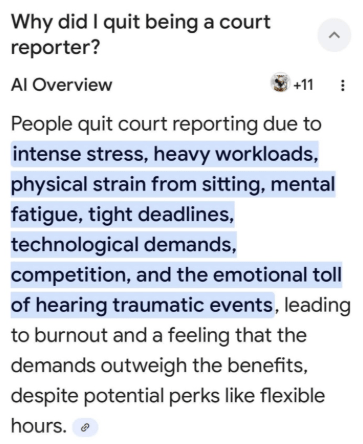



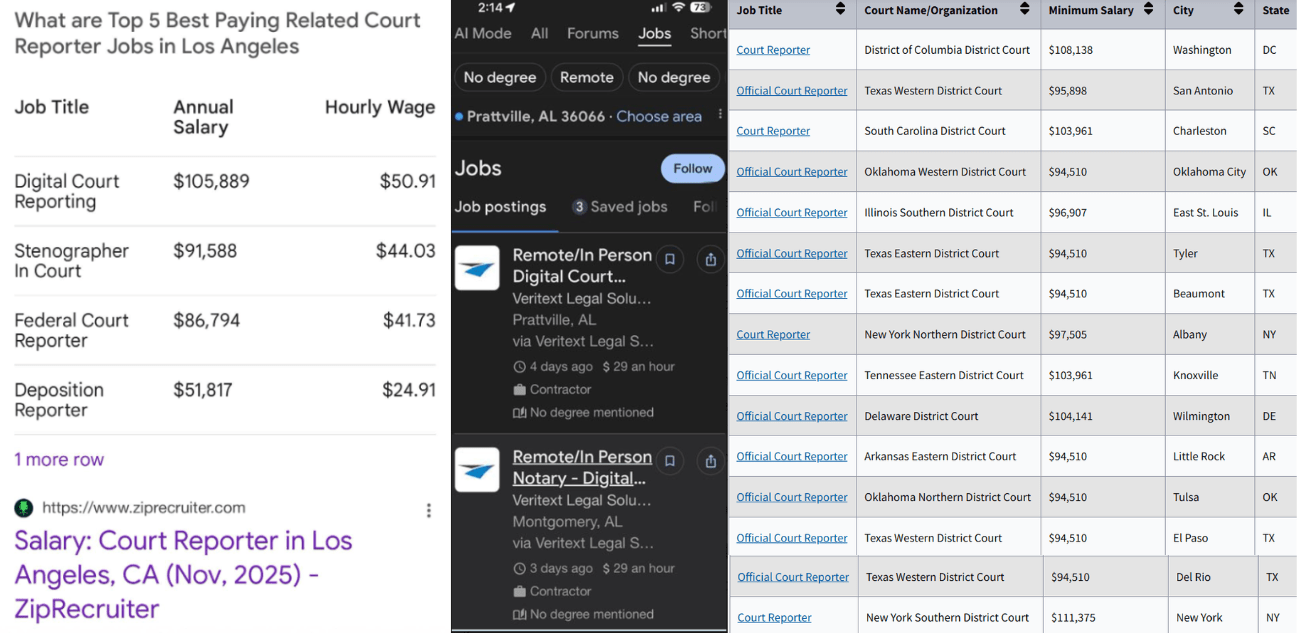
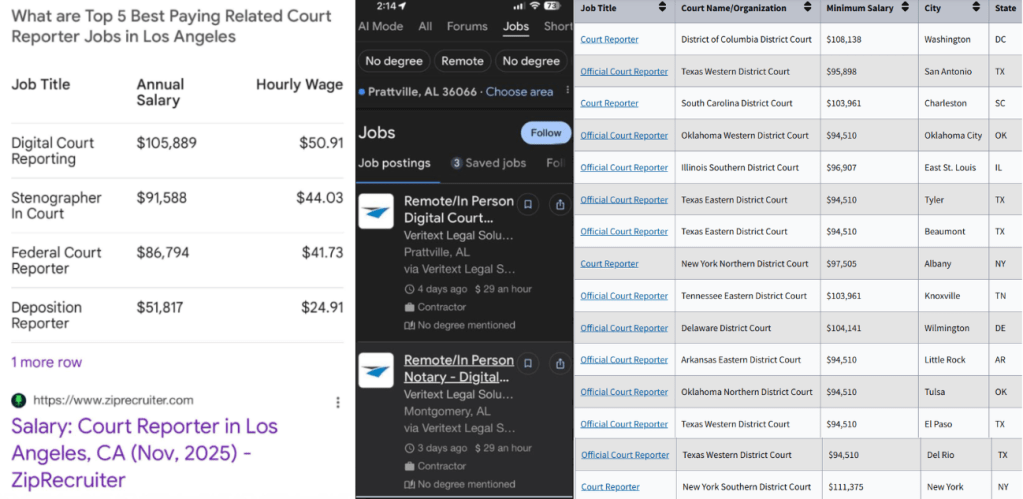




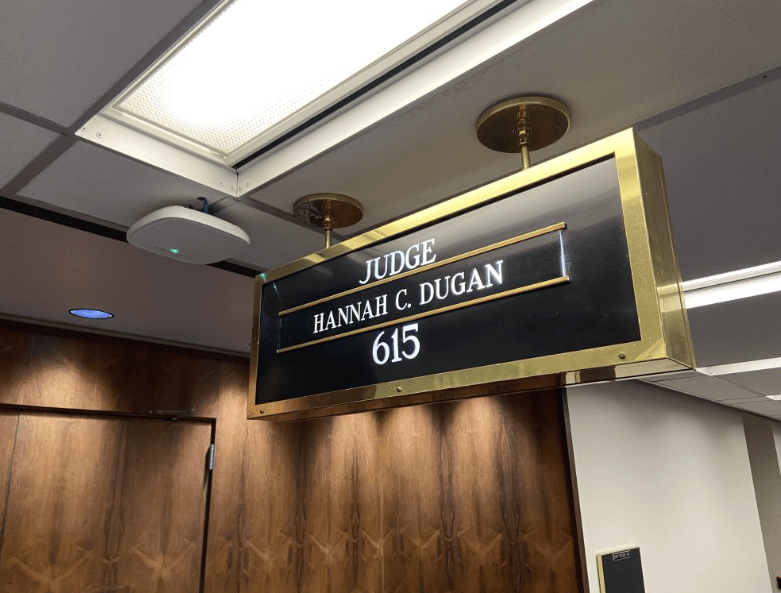





















 WHAT ARE FLYING MONKEYS?
 monitor you
 HOW THEY GET RECRUITED — BEFORE YOU EVEN KNOW YOU’RE IN DANGER
 Reputation Crafting
 Selective Vulnerability
 Triangulation
 WHY FLYING MONKEYS EXIST
 Social Reward:
 Fear:
Fear: Sociology Fact:
 TYPES OF FLYING MONKEYS
 The Well-Meaning Helper
 The Fixer
 The Loyalist
 The Opportunist
 The Covert Narcissist Flying Monkey
 Amygdala Activation:
 WHY THEY’RE SO DANGEROUS
 HOW TO DEAL WITH FLYING MONKEYS
 FINAL TRUTH
 And that is the difference between you and them.
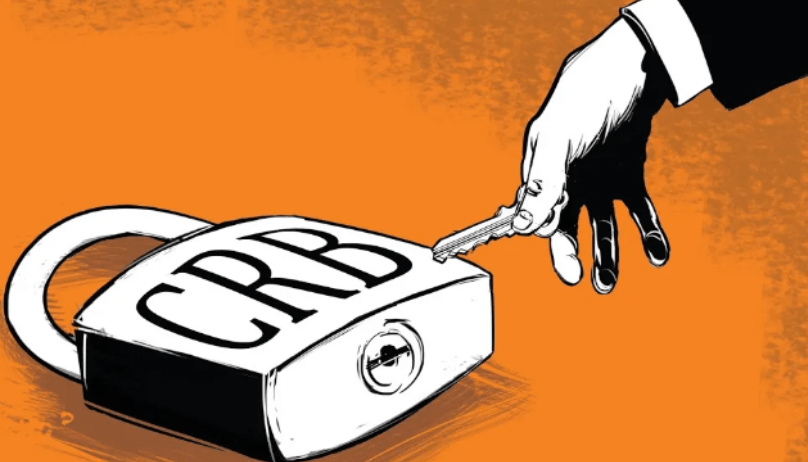



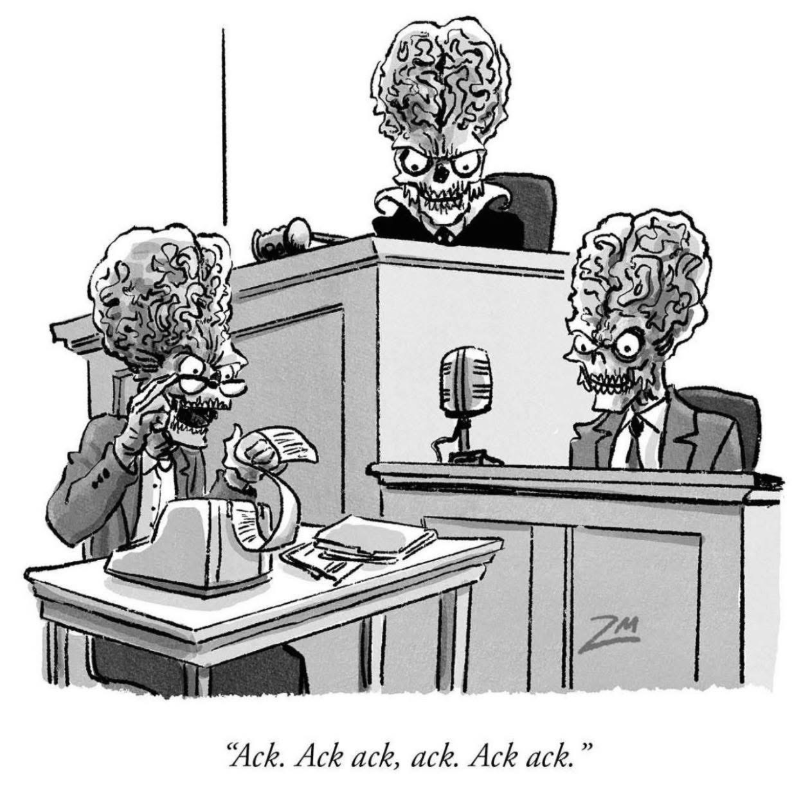



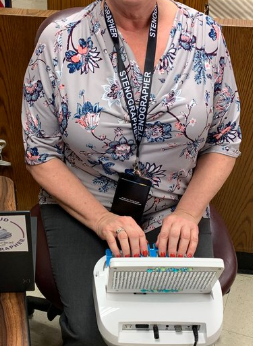
























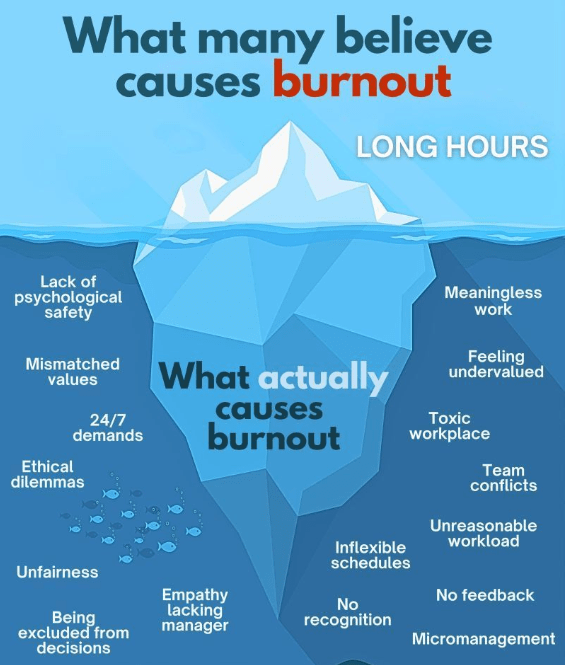
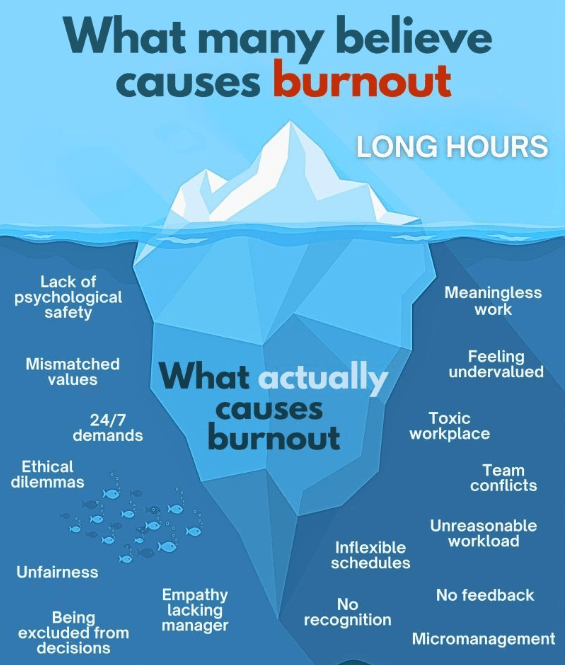


 STENOIMPERIUM
You must be logged in to post a comment.