
Subscribe to continue reading
Subscribe to get access to the rest of this post and other subscriber-only content.
Protecting the Record. Preserving Justice. Empowering Stenographers.

Subscribe to get access to the rest of this post and other subscriber-only content.
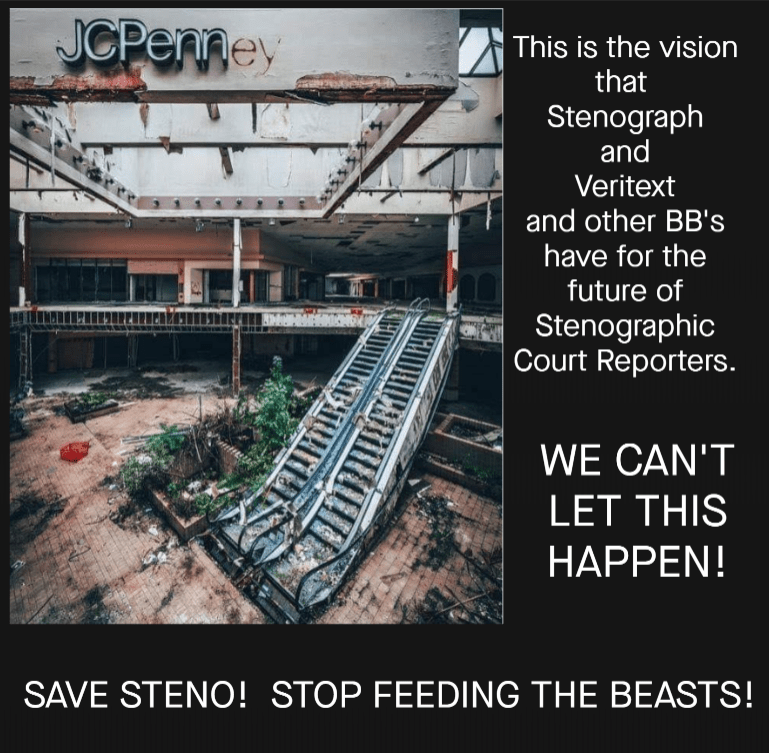
Subscribe to get access to the rest of this post and other subscriber-only content.

A Comparative Journey with the Truck Driver Shortage
In recent years, the shortage of court reporters in the United States has become a critical issue, one that is slowly eroding the justice system’s efficiency and fairness. Court reporters are integral to maintaining the integrity of legal proceedings, producing accurate and timely transcripts that record the spoken word in a courtroom or deposition. But much like the ongoing shortage of truck drivers, the reasons behind the shortage of court reporters are more complex than simply not enough people entering the profession. This shortage is not driven by a lack of interest or training opportunities but by a job that is full of stress, physical deprivation, and increasing isolation—a job that, like truck driving, demands more than just technical skill.
The role of a court reporter is simple in theory but often demanding in practice. Court reporters, or stenographers, are tasked with creating a verbatim record of every statement made in a courtroom or legal proceeding. This requires a unique skill set, including proficiency in shorthand or stenotype machines, a high level of focus, and quick thinking. In an average day, a reporter may be responsible for transcribing the dialogue in fast-paced, high-stakes cases that demand accuracy down to the last punctuation mark. It’s a job that requires mental stamina, as court reporters must juggle the pressure of real-time transcription with the accuracy of their reports.
However, despite the critical nature of their work, the number of qualified court reporters has steadily dwindled in recent years. According to the National Court Reporters Association (NCRA), the number of court reporters in the United States has dropped by more than 30% in the last decade alone. This has led to an alarming backlog in cases, with many courts resorting to using less reliable alternatives like digital recordings or unqualified transcribers.
The shortage has not only affected courtrooms but has also contributed to delays in the judicial system, where victims and defendants alike suffer from the slow pace of proceedings. Yet, despite the increasing demand for these professionals, there is little movement to bridge the gap.
To better understand why America has a shortage of court reporters, one need only look to a similar shortage facing a different industry: truck driving. The truck driver shortage has reached critical levels, with over 78,000 positions currently unfilled, with experts predicting that the gap could reach 170,000 drivers by 2030. Like court reporting, the shortage isn’t because there’s a lack of training or certification opportunities. There’s simply no one willing to take on the job in sufficient numbers, and those who do often leave the profession early.
A deep dive into the truck driver shortage reveals an industry plagued by long hours, poor working conditions, low pay, and physical and mental exhaustion. Drivers spend weeks on the road, away from their families, often battling loneliness, isolation, and health issues. Their job requires constant vigilance behind the wheel, as they travel thousands of miles across the country under extreme pressure to meet deadlines. This stress takes a toll on their health, relationships, and well-being. It’s a job that, on the surface, seems straightforward: drive from point A to point B. But the reality of the job involves much more than that, and the mental and physical demands are far greater than most people are willing to accept.
Much like truck drivers, court reporters also face significant personal challenges. While their physical demands are less severe, they are often subjected to mental exhaustion and isolation. Court reporters spend long hours in courtrooms, alone in their task of capturing the exact words of each speaker, without interruption or opportunity for breaks. Their work demands immense concentration, and the pressures to keep up with the pace of a courtroom, especially in high-profile cases, can be overwhelming.
However, despite the difficulty of the profession, court reporters face increasing devaluation of their role. With the advent of digital recording technologies and voice recognition software, there is a growing trend in the legal industry to cut costs by replacing human reporters with machines. These technological advancements may seem like a cost-effective solution, but they fail to offer the level of accuracy, nuance, and clarity that human reporters can provide. And much like the trucking industry’s reliance on technology for long-haul transportation, there is a risk that over-reliance on technology may exacerbate the problem of accuracy and safety, leaving the industry vulnerable to greater challenges down the road.
The stresses and demands of both professions—the court reporter and the truck driver—are undeniable. Both fields require workers to spend long stretches of time away from home, endure physical and mental exhaustion, and navigate workplace environments that are often unrelenting and thankless.
For court reporters, there’s the constant pressure to keep up with the proceedings while ensuring that every word is captured with 100% accuracy. This requires a level of focus and dedication that many people simply aren’t willing to commit to. The loneliness and isolation of the job can also be profound. Many court reporters work independently, often traveling to different courthouses and working in rooms full of strangers. While their work is critical to the legal process, it often goes unnoticed, and they rarely receive the recognition they deserve.
Truck drivers face a similar sense of isolation on the road. Long hours away from family and friends, navigating unfamiliar routes, and dealing with unpredictable traffic and weather conditions make the job physically taxing and emotionally draining. The lack of respect from employers and the public is also a common complaint. Truck drivers often find themselves working for low wages, with little job security, and even less appreciation for the essential role they play in keeping the nation’s supply chains functioning.
Both professions also face a growing lack of respect for their skills. As new technologies and automation systems emerge, the role of human workers is becoming increasingly undervalued. For court reporters, the rise of digital transcription tools threatens to replace their invaluable expertise. For truck drivers, self-driving trucks and automated systems loom on the horizon, threatening to displace workers who have spent years perfecting their craft.
To combat these shortages, it is essential to recognize that the issue isn’t simply about finding new workers for these professions. The true problem lies in the systemic issues that make these careers unattractive or unsustainable.
For both truck drivers and court reporters, increasing respect for the profession and offering better work-life balance would go a long way toward making these careers more attractive. Additionally, raising pay, improving working conditions, and providing more recognition for their critical work could help stem the tide of attrition in both fields.
Just as the truck driver shortage has led to calls for better treatment and respect for drivers, similar changes need to occur in the court reporting world. This might mean better pay for reporters, more flexible schedules, and initiatives to raise awareness about the importance of their work. It could also mean better training opportunities and support networks for those entering the profession, ensuring that future court reporters are well-equipped to handle the emotional and mental demands of the job.
Both the truck driver and court reporter shortages stem from similar root causes: an overwhelming amount of stress, loneliness, and a general lack of respect for the essential roles these professionals play. By acknowledging these realities and addressing the underlying issues, America can begin to solve both shortages—ensuring that both legal and logistical systems continue to function effectively for years to come. Like truck drivers, court reporters are integral to the smooth running of the country’s most important systems. Without them, we risk a breakdown of the very foundations that keep our nation moving forward.

Subscribe to get access to the rest of this post and other subscriber-only content.
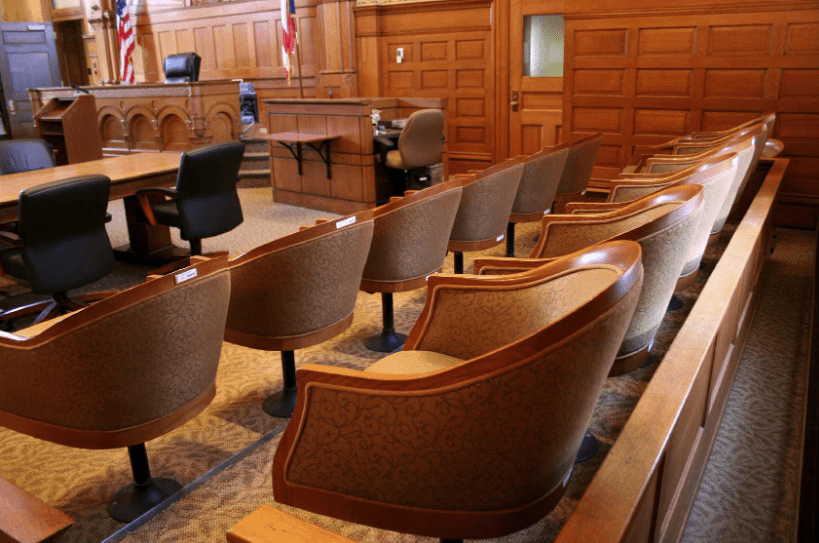
It’s Not Every Day You Get a Professional Athlete on Your Jury Panel
When most people think of jury duty, they probably picture a day spent in a stuffy courthouse, waiting to be called in for a case that may not even affect them. Jury duty is often seen as a civic duty that can be inconvenient, but it’s a responsibility that keeps the justice system functioning. However, every once in a while, an unlikely twist can turn a standard trial into something more memorable. This time, that twist came in the form of an NFL player: Brandon Aubrey, the placekicker for the Dallas Cowboys.
Aubrey, a relatively new face in the NFL, recently made headlines not for his athletic prowess but for fulfilling his civic duty in a very public way. The Dallas Cowboys kicker missed a practice session, with reports emerging that his absence was due to jury duty. While professional athletes missing practice isn’t exactly newsworthy, Aubrey’s situation was a bit different. He was on a jury panel, participating in a trial that could span multiple days.
For most people, missing a workday for jury duty is already a hassle. But for someone like Aubrey, who’s part of a high-profile team with an incredibly packed schedule, it meant juggling the responsibilities of professional sports with the duties of citizenship. The situation brought to light how the lives of public figures can be intersected by everyday obligations like jury duty — obligations that, no matter your career, you can’t simply skip out on.
Imagine being the defendant in a case and finding out one of the jurors is a professional athlete. It’s hard not to wonder how the dynamics of the courtroom might change with someone like Aubrey in the room. With his fame, his athletic career, and the recognition that follows, it’s possible that his presence could alter the tone of the trial. For Aubrey, though, it was just another day in the life of fulfilling his civic duty. His situation highlights how jury duty can impact people from all walks of life, even those with schedules that demand almost constant attention.
The timing of Aubrey’s jury duty also posed a unique challenge. As a professional athlete, Aubrey is no stranger to pressure, especially with the Cowboys’ postseason hopes on the line. Missing practice during a crucial time of the season isn’t ideal for any player, but Aubrey handled the situation with a good attitude, acknowledging the importance of fulfilling his legal obligations.
Ultimately, Aubrey was expected to miss more practices as the trial continued, though his team and coaching staff were supportive of his involvement. It was a reminder that no one, not even an NFL kicker, is exempt from the call of duty.
For those sitting on a jury, it can be an inconvenient interruption to daily life, but for someone like Aubrey, it also serves as a reminder that regardless of how famous or busy you are, everyone plays a role in ensuring justice is served. Jury duty isn’t just for the average citizen; it’s an equalizer in the justice system, one that unites people from all professions and walks of life in the pursuit of fairness.
So, the next time you find yourself summoned for jury duty, just remember — you might not be the only one sitting there. You could be alongside a famous athlete or another public figure, each of you doing your part to keep the wheels of justice turning. Who knows? Your panel might just include someone whose day job is to kick game-winning field goals.

In recent years, the issue of notaries posing as court reporters has garnered increasing attention in legal circles, prompting discussions about the legal and ethical implications of such practices. While most people associate notaries with the simple act of certifying signatures, a growing trend of individuals stepping beyond their traditional roles has sparked concern. These notaries, by posing as court reporters, have the potential to undermine the integrity of the legal system, deceive vulnerable clients, and raise questions about the broader issue of nonlawyer involvement in legal proceedings.
To understand the significance of notaries posing as court reporters, it’s important first to distinguish between these two roles. A notary public is a person authorized by the state to serve as an impartial witness to the signing of important documents, taking acknowledgments, administering oaths, and performing other duties related to the legal process. Notaries are often tasked with ensuring the authenticity of documents, preventing fraud, and maintaining a record of these transactions. However, they are not trained to engage in legal analysis or provide legal advice.
In contrast, a court reporter is a highly trained professional responsible for transcribing spoken words during legal proceedings, such as trials, depositions, and hearings. Court reporters create official records of the proceedings, which can be used as evidence in future legal actions or appeals. They play a crucial role in ensuring the accuracy and integrity of the judicial process. Court reporters undergo specialized training and certification to master the skills necessary for producing accurate and reliable transcriptions.
While notaries and court reporters perform distinct functions, they both interact with the legal system in ways that can influence the outcome of legal proceedings. This is why the practice of notaries posing as court reporters raises significant concerns.
The rise of notaries assuming the role of court reporters has been linked to a number of factors, including the lack of clear regulations, increased competition within the legal industry, and a growing demand for affordable legal services. In some cases, notaries may offer services such as transcription or recording of legal proceedings without the proper training or certification. By doing so, they may mislead clients into thinking they are receiving legitimate court reporting services, when, in fact, the records they produce may not be accurate or reliable.
One of the primary reasons this issue has gained traction is the increasing prevalence of nonlawyer involvement in legal services. As the legal profession grapples with questions of accessibility and affordability, many states have begun to explore ways to allow nonlawyers to perform tasks traditionally reserved for lawyers or legal professionals. While this shift has the potential to democratize legal services, it also opens the door for individuals who are not adequately trained to step into roles that require specialized knowledge and expertise.
The act of a notary posing as a court reporter goes beyond simple misrepresentation—it can lead to significant legal and ethical problems. First and foremost, the accuracy of court transcripts is essential to the functioning of the judicial system. Inaccurate transcriptions can undermine the fairness of a trial, leading to wrongful convictions, improper judgments, or delays in legal proceedings. A false or incomplete transcript could have serious consequences for a litigant or defendant, particularly in cases where a single word or phrase could alter the meaning of a statement made in court.
Beyond the legal implications, there are also ethical concerns associated with notaries stepping into the role of court reporters. The legal profession has long been committed to maintaining high standards of professionalism and integrity. Court reporters are expected to adhere to strict codes of conduct, ensuring that the transcripts they produce are accurate, unbiased, and complete. Notaries who attempt to assume this role may lack the necessary training to meet these standards, leading to concerns about the potential for bias, error, and unethical behavior.
Another concern is the potential for fraud. Notaries are often involved in transactions that require a high level of trust, such as real estate deals, wills, and contracts. When a notary takes on the role of a court reporter without the proper qualifications, it becomes easier for unscrupulous individuals to manipulate the legal process. The public may not recognize the difference between a legitimate court reporter and a notary posing as one, which opens the door for fraudsters to exploit vulnerable individuals, particularly in the context of family law or immigration matters.
The issue of notaries posing as court reporters is part of a larger conversation about the role of nonlawyers in legal proceedings. In the past, there has been a strong desire within the legal profession to limit the scope of practice for nonlawyers, often citing concerns about consumer protection and the potential for harm. The argument is that individuals without the requisite legal training could inadvertently cause harm to clients by offering services they are not qualified to provide.
However, critics of these restrictions argue that such policies are often driven by protectionism within the legal profession. Historically, the legal field has been reluctant to allow others to enter the market, creating a monopoly on legal services that drives up costs and reduces competition. Professional organizations, such as the American Bar Association (ABA), have fought efforts to expand access to nonlawyer assistance, claiming that only those with formal legal education should be allowed to provide legal services.
This tension between consumer protection and the desire to preserve the exclusivity of the legal profession has sparked debate about how best to address unauthorized practice of law. Empirical research suggests that the public is generally skeptical of the motivations behind restrictions on nonlawyer involvement in legal matters. In many cases, unauthorized-practice-of-law lawsuits are not driven by consumer complaints but by legal professionals or bar associations seeking to maintain their monopoly on the market.
To address the issue of notaries posing as court reporters, legal experts advocate for clearer regulations and stronger enforcement mechanisms. States should consider implementing strict rules regarding the qualifications required for individuals to provide court reporting services, ensuring that only trained and certified professionals are allowed to transcribe legal proceedings. Additionally, the legal community should prioritize education and awareness campaigns to help the public distinguish between legitimate legal professionals and those seeking to exploit the system.
In some cases, reforming existing laws to allow nonlawyers to perform certain tasks within the legal field may be a viable solution. However, such reforms should be accompanied by adequate safeguards to ensure that consumers are not placed at risk. This may include creating a clear regulatory framework that establishes the boundaries of nonlawyer practice, providing oversight to ensure compliance, and offering avenues for recourse in the event of misconduct.
The issue of notaries posing as court reporters highlights the growing challenges and complexities surrounding the involvement of nonlawyers in legal proceedings. While there is potential for nonlawyers to contribute to the accessibility and affordability of legal services, there is also a significant risk of harm if proper safeguards are not put in place. By prioritizing regulation, education, and ethical standards, the legal profession can better navigate this issue and ensure that the integrity of the legal system is upheld for the benefit of all individuals.

Subscribe to get access to the rest of this post and other subscriber-only content.

The court reporting industry, while predominantly female, faces significant gender and women’s rights challenges that mirror broader societal issues. Despite women comprising approximately 89% of court reporters, they encounter systemic biases, wage disparities, and underrepresentation in leadership roles. Addressing these issues is crucial to ensuring equity and progress within the profession.
Historical Context and Gender Dynamics
Historically, court reporting was male-dominated. Over time, it transitioned to a predominantly female profession, yet this shift did not eliminate gender-based challenges. Women in court reporting often face misconceptions about their roles and capabilities, leading to undervaluation of their work. For instance, despite their critical function in the legal system, court reporters frequently contend with stereotypes that diminish their professional standing.
Challenges Faced by Women in Court Reporting
Pathways to Progress
Addressing these challenges requires a multifaceted approach:
Conclusion
The court reporting industry stands at a crossroads, with the potential to lead by example in addressing gender and women’s rights issues. By confronting wage disparities, promoting women into leadership roles, challenging gender biases, and fostering inclusive support networks, the profession can pave the way for a more equitable future. The state of women in court reporting is a reflection of broader societal dynamics, and proactive measures within the industry can contribute significantly to the advancement of women’s rights and equality at large.

Court reporters play a crucial role in the legal system, ensuring that every word spoken in depositions, trials, and hearings is accurately recorded. Their work is fundamental to justice, yet many find themselves struggling financially, not because of a lack of skill or dedication, but due to exploitative practices by court reporting agencies. These agencies, which act as middlemen between court reporters and law firms, often manipulate pay structures, impose unfair fees, and withhold essential work, leaving many hardworking professionals underpaid and overworked.
Court reporters are typically classified as independent contractors rather than employees, which means they receive no benefits, no job security, and must cover their own expenses. Despite this classification, many agencies control every aspect of a reporter’s work, from scheduling to rate setting, creating a power imbalance that allows for significant exploitation.
One of the primary ways agencies take advantage of court reporters is by paying them only for transcripts and not for the time spent in proceedings. A court reporter might sit through an eight-hour deposition, but if the attorney chooses not to order a transcript, the reporter often earns nothing. This practice results in long hours of unpaid labor, an arrangement that disproportionately affects newer reporters who lack the connections to secure high-volume, well-paying jobs.
Additionally, agencies often take an enormous cut of transcript fees. While a law firm may pay several dollars per page for a transcript, the reporter’s share of that payment is often shockingly low. Some agencies claim as much as 50% or more of the fees, leaving the reporter with a fraction of what they actually earned through their labor. Agencies also don’t share with reporters any part of exhibit fees or add-ons, such as a word concordance and condensed, and other fees.
To add insult to injury, many agencies impose hidden fees on court reporters, further reducing their already meager earnings. These fees come in various forms, including:
Court reporting agencies maintain tight control over the industry, and one of their most effective tools for silencing dissent is the threat of blacklisting. Reporters who question unfair pay, demand better working conditions, or refuse to accept exploitative contracts often find themselves suddenly without work. Agencies may label them as “difficult” and quietly ensure they receive fewer job assignments or none at all.
This practice keeps many reporters in line, fearful that speaking out will cost them their livelihoods. Because agencies control the vast majority of legal work opportunities, being blacklisted by even one major player can mean months without income. This power dynamic makes it extremely difficult for reporters to push back against unfair practices or advocate for better conditions.
Another common tactic agencies use to take advantage of court reporters is delaying payment. Many court reporters wait weeks or even months or years to receive money they earned, making it difficult to manage personal finances. Some agencies operate on a “pay when paid” model, meaning that reporters don’t get paid until the agency receives money from the law firm or client. This can lead to financial instability, especially for independent contractors who rely on timely payments to cover their expenses.
In some cases, agencies will even use delaying tactics to pressure reporters into accepting lower rates. If a reporter complains about slow payment, the agency may suggest they take a pay cut in exchange for faster processing, effectively coercing them into accepting unfair wages in desperation.
Despite being integral to the legal system, court reporters have little legal recourse when they are exploited by agencies. Labor laws often do not protect independent contractors in the same way they protect traditional employees, leaving reporters with few options to challenge unfair treatment.
Attempts to unionize or collectively bargain are often crushed before they gain traction. Agencies exploit the fact that reporters work in isolation, making it difficult to organize effectively. Furthermore, legal action against agencies is costly and time-consuming, making it an impractical option for most reporters who are already struggling financially.
The primary reason court reporting agencies continue to exploit reporters with impunity is the lack of regulation in the industry. Unlike salaried employees, court reporters do not have the protection of minimum wage laws, overtime pay, or benefits. Agencies use this lack of oversight to maximize their profits while minimizing costs, creating an environment where they hold all the power.
Additionally, the complexity of court reporting work means that most outsiders—including attorneys and clients—do not fully understand the financial struggles reporters face. This ignorance allows agencies to continue their exploitative practices without pushback from those who use their services.
While the current situation is bleak, there are steps that can be taken to fight back against exploitative agencies:
Court reporting agencies have created a system where they profit immensely off the labor of hardworking reporters while leaving those same reporters struggling to make ends meet. Through unfair pay structures, hidden fees, blacklisting, delayed payments, and a lack of legal protections, agencies have built an exploitative business model that continues largely unchecked.
However, change is possible. By pushing for better regulations, increasing industry transparency, and encouraging collective action among court reporters, the industry can move toward a fairer and more sustainable future. The people who document the words of justice deserve to be treated with fairness and respect—not as disposable workers whose labor is undervalued and taken for granted.


In the 1999 classic sci-fi film, The Matrix, the protagonist, Neo, is astonished to see people defying the laws of physics, running up walls and vanishing suddenly. These bizarre violations of the rules of the universe are possible because, unbeknownst to him, Neo’s consciousness is embedded in the Matrix, a virtual-reality simulation created by sentient machines.
The action really begins when Neo is given a fateful choice: Take the blue pill and return to his oblivious, virtual existence, or take the red pill to learn the truth about the Matrix and find out “how deep the rabbit hole goes.”
Court Reporters can now offer us the same choice, the ability to question whether we live in our own virtual Matrix, and believe what our network partners – agencies, Court Reporters Board, software and machine vendors – are telling us, that we have a future. As fanciful as it sounds, some stenographers have long argued that we’re actually more likely to be artificial intelligences trapped in a fake universe than we are organic minds in the “real” one.
But if that were true, the very laws of physics that allow us to devise such reality-checking technology may have little to do with the fundamental rules that govern the meta-universe inhabited by our simulators. To us, these programmers would be gods, able to twist reality on a whim.
So should we say yes to the offer to take the red pill and learn the truth — or are the implications too disturbing?



The steno world is one of speed, precision, and near-superhuman abilities. Court reporters process words at 225 words per minute with 95% accuracy or higher. They use a specialized machine to transcribe speech in real-time, creating a verbatim record of legal proceedings. To the outside world, this skill seems almost magical—how could a human process information this quickly and effectively without error? Is it possible that stenographers are operating outside the known rules of human cognition?
To many within the profession, the changes happening within the industry seem eerily similar to the glitches experienced by Neo when he first realized his world was an illusion.
Much like the illusion of free will that plagues the citizens of The Matrix, stenographers are given the illusion of job security, while the real decisions about their professional fate are being made behind closed doors.
Neo saw a black cat walk by twice—a glitch in the Matrix indicating that something had been changed. Stenographers are seeing their own glitches. A freelance court reporter books a high-paying deposition, only to be replaced by an AI transcription service at the last moment. A student reporter, eager to join the field, completes their education, but finds no firm willing to hire a newcomer. Experienced reporters are working harder for less pay, despite record-setting demand.
The world of stenography is filled with contradictions, paradoxes, and strange occurrences that hint at something being amiss. The question is, do we have the power to wake up, to see the truth, and to fight back against a system that does not have our best interests at heart?
If stenographers take the red pill, what do we see? The truth may be unsettling. The push toward AI and digital reporting is not random—it is a deliberate effort by powerful entities to maximize profit at the expense of accuracy, ethics, and the very integrity of the legal record.
Court reporting is an industry built on trust, on human ability, and on the power of precise documentation. But if the courts accept a simulation of this process—an artificial intelligence that mimics stenographers but lacks true reliability—then we are heading for a collapse of the system itself.
Yet, despite these warnings, many still choose the blue pill, believing the comforting lie that there is nothing to worry about, that court reporters will always be needed, that change is a distant threat rather than an immediate crisis.
In The Matrix, the agents act as enforcers of the system, preventing individuals from escaping their virtual prison. In the steno world, the agents are not men in suits, but rather corporate stakeholders, software vendors, and those pushing the narrative that AI can fully replace human skill. These entities are working tirelessly to shape reality to fit their agenda, ensuring that court reporters either accept the new world order or become obsolete.
The legal profession itself is complicit in this illusion. Judges, attorneys, and court officials—many of whom do not understand the complexity of stenographic reporting—are making decisions that accelerate the shift toward automation without fully grasping the consequences. The illusion is being maintained, and only those willing to challenge it can break free.
If stenographers are truly in a Matrix-like simulation, what is the solution? Just as Neo and his allies fought back against their digital oppressors, so too must the steno community resist the forces that seek to erase them.
The ultimate question remains—will stenographers break free from the Matrix or be absorbed into it? The legal system still relies on accuracy, and history shows that technological shortcuts often lead to disastrous consequences. If stenographers continue to push back, to fight for their place, and to expose the cracks in the system, then the illusion may yet crumble.
But if they remain passive, believing the comforting lies of industry stakeholders, then the profession may fade into obsolescence, just another casualty of the relentless march of automation.
The choice is clear. The red pill is in front of us. Will we take it?

Court reporting is a critical component of the legal system, providing accurate transcripts of legal proceedings, depositions, and other events that require official documentation. While some court reporters are employed full-time by courthouses, many professionals in this field choose to work as freelancers. Freelancing as a court reporter offers flexibility, independence, and the potential for high earnings, making it an attractive career option for many.
This article explores what it means to be a freelance court reporter, the different types of jobs available, earning potential, and tips on finding work in this competitive yet rewarding field.
A freelance court reporter is an independent contractor who provides court reporting services on a per-assignment basis rather than working under a salaried position in a courthouse. Unlike full-time court reporters who typically work a structured 40-hour week, freelancers have the flexibility to set their schedules, choose their assignments, and decide how much they want to work.
While traditional court reporters employed by courthouses may have additional duties such as research and procedural administrative tasks, freelancers focus primarily on recording, transcribing, and delivering official transcripts of proceedings. They also have the opportunity to take on multiple clients, diversifying their work experience and income sources.
Choosing to freelance as a court reporter comes with a variety of benefits:
However, freelancing also comes with challenges, such as unpredictable workloads, the need to manage one’s own business operations, and the requirement to secure health insurance and retirement savings independently.
Freelance court reporters are not limited to courtrooms; they can work in various settings, including:
A large portion of freelance court reporting work involves depositions—formal sworn testimonies taken before a trial. Lawyers hire court reporters to transcribe these sessions for official records.
Local government agencies conduct hearings on zoning laws, licensing issues, and other matters, requiring official documentation by court reporters.
Corporations, nonprofit organizations, and government agencies often require detailed records of board meetings, making this another potential source of work for freelancers.
Alternative dispute resolution settings such as arbitration hearings also require official transcripts, providing another lucrative opportunity for freelancers.
Freelance court reporters with specialized training can work in broadcast captioning, live-event captioning, or CART (Communication Access Realtime Translation) services, ensuring accessibility for individuals who are deaf or hard of hearing.
One of the most appealing aspects of freelancing as a court reporter is the potential for high earnings. According to the latest data, freelance court reporters can earn:
Freelancers’ income depends on several factors, including workload, location, and specialization. For example, those providing CART services or working in high-demand legal markets can command higher rates. Additionally, freelancers can earn extra income by selling copies of their transcripts to attorneys and other interested parties.
Securing consistent work as a freelance court reporter requires a proactive approach. Here are some effective strategies to land assignments:
Many agencies specialize in connecting freelance court reporters with legal professionals who need transcription services. Signing up with multiple agencies can increase job opportunities.
Websites such as CoverCrow, and industry-specific job boards on Facebook list freelance court reporting jobs.
Building relationships with other reporters, agencies, lawyers, paralegals, and legal secretaries can lead to direct work opportunities. Attending legal industry events, joining professional associations, and leveraging social media can all help expand your professional network.
Creating a personal website and showcasing your expertise can help attract clients. Offering trial discounts, maintaining an active presence on legal forums, and sending cold emails to law firms can also be effective ways to generate business.
Having certifications such as the NCRA’s Registered Professional Reporter (RPR) or Certified Realtime Reporter (CRR) can increase credibility and lead to better job opportunities.
To thrive as a freelance court reporter, consider these best practices:
Freelancing as a court reporter offers numerous advantages, including flexibility, high earning potential, and a variety of job opportunities. While it requires discipline, networking, and business acumen, those who take the right approach can build a successful and rewarding career.
By leveraging job platforms, networking, and honing essential skills, freelance court reporters can thrive in this ever-growing field. Whether you’re just starting or looking to transition from a salaried position, freelancing in court reporting presents an exciting and profitable career path.

In the realm of professional practice, maintaining ethical standards and ensuring accountability are paramount. The National Society of Professional Engineers (NSPE) has long upheld the principle of “Responsible Charge” to safeguard the integrity of the engineering profession. This concept mandates that licensed engineers exercise direct control and personal supervision over engineering work, ensuring that all projects meet ethical, safety, and professional standards. The court reporting industry, which plays a crucial role in the judicial system, can draw valuable lessons from this model to enhance its own ethical frameworks and professional accountability.
Understanding “Responsible Charge” in Engineering
The NSPE defines “Responsible Charge” as the direct control and personal supervision of engineering work. This means that a licensed Professional Engineer (PE) must be actively involved in the engineering process from conception to completion, making critical decisions and overseeing the work to ensure it adheres to established standards. The PE cannot merely review documents post-preparation; they must be engaged throughout the project’s lifecycle.
This principle ensures that engineering projects are executed with a high degree of professionalism and ethical responsibility. It holds engineers accountable for their work, requiring them to apply their expertise and judgment to protect public safety and welfare. By maintaining “Responsible Charge,” engineers affirm their commitment to ethical practice and the continuous oversight of their projects.
Ethical Frameworks in Court Reporting
Court reporters are entrusted with the critical task of capturing and transcribing legal proceedings accurately and impartially. The integrity of the judicial process relies heavily on their professionalism and ethical conduct. Recognizing this, professional organizations have established codes of ethics to guide court reporters in their duties.
The National Court Reporters Association (NCRA) outlines several key ethical principles:
These ethical guidelines are designed to uphold the accuracy, impartiality, and confidentiality of the court reporting profession, thereby maintaining public trust in the judicial system.
Applying “Responsible Charge” to Court Reporting
While court reporters already uphold a high level of responsibility for the accuracy and completeness of their transcripts, the industry lacks a formal “Responsible Charge” statement. Adopting a concept similar to this could further reinforce professional accountability and integrity. By officially recognizing this critical value, the court reporting industry could enhance its commitment to ethical practices and strengthen the trust placed in its work within the legal system.
This involves court reporters being actively engaged in all stages of the reporting process, from the initial reporting of proceedings to the final transcription. They exercise direct oversight over any assistants or technologies used in the process, such as scopists and proofreaders, ensuring that every aspect of the work meets the highest standards of accuracy and impartiality.
Moreover, by adopting a “Responsible Charge” model, court reporters would affirm their commitment to continuous professional development, staying abreast of advancements in technology and best practices in the field. This proactive approach would not only enhance the quality of their work but also reinforce public confidence in the integrity of the judicial process.
Benefits of Adopting a “Responsible Charge” Model
Implementing a “Responsible Charge” framework in court reporting offers several significant benefits:
Adopting a “Responsible Charge” statement presents no significant challenges for the court reporting industry. It requires no additional training, technology, or changes to job responsibilities, as court reporters are already performing these duties. The value lies in formally recognizing this responsibility as the core strength of the profession within the legal industry. Implementing this framework simply affirms the professionalism, accountability, and ethical commitment that court reporters already provide.
Conclusion
The concept of “Responsible Charge” has been instrumental in upholding the integrity and professionalism of the engineering field. By adopting a similar framework, the court reporting industry can enhance its ethical standards, improve accountability, and reinforce public trust. The potential benefits make a compelling case for integrating “Responsible Charge” into the court reporting profession’s ethical framework. Through proactive engagement and a commitment to continuous improvement, court reporters can ensure that they continue to serve as impartial and accurate custodians of the judicial record.

“California’s New Freelance Worker Protection Act: What Court Reporters Need to Know in 2025” In a significant move to bolster protections for freelance professionals, California Governor Gavin Newsom signed Senate Bill 988, known as the Freelance Worker Protection Act (FWPA), into law on September 28, 2024. Effective January 1, 2025, this legislation introduces critical safeguards for freelancers, including mandatory written contracts and stringent payment timelines. For court reporters operating as independent contractors, understanding and leveraging the FWPA is essential to ensure fair compensation and legal compliance.
Key Provisions of the Freelance Worker Protection Act
The FWPA establishes several fundamental requirements aimed at protecting freelance workers:
Implications for Court Reporters
As a court reporter operating as a freelance professional, the FWPA offers significant protections to ensure fair treatment and prompt payment. Here’s how you can benefit:
Preparing for the FWPA Implementation
With the FWPA taking effect on January 1, 2025, it’s crucial to prepare accordingly:
Conclusion
The Freelance Worker Protection Act represents a significant advancement in safeguarding the rights of freelance professionals in California. For court reporters, this legislation ensures that your services are recognized with the respect and timely compensation they deserve. By understanding and adhering to the FWPA’s provisions, you can enhance your professional relationships, secure fair payment, and confidently navigate your freelance career.
For more detailed information, you can refer to the full text of the bill here.

In the court reporting industry, professionalism and integrity are paramount. However, an increasing number of stenographers are finding themselves in situations where their job is mysteriously “canceled” by an agency, only to later discover that the deposition still took place—just with a digital reporter instead. This deceptive practice not only undermines skilled stenographers, but also raises serious ethical concerns.
Many court reporters rely on their portals to track assignments, cancellations, and billing records. It can be frustrating to receive a cancellation notice, only to later find evidence that the deposition went forward with a digital reporter. In some cases, all the relevant information—including uploaded exhibits and transcripts—remains in the system, except for the actual billing details.
This suggests that some agencies may be misleading stenographers by falsely canceling jobs to replace them with digital reporters. Whether intentional or due to a lack of internal transparency, this practice damages the trust between reporters and the firms that hire them.
The financial incentives for agencies to replace stenographers with digital reporters are astronomical. A highly skilled stenographer might earn $3,000 for a single deposition, while a digital reporter—whether paid hourly or on salary—might cost the agency only a few hundred dollars. Now, multiply that savings by five days a week, across multiple states, for 52 weeks a year, and the profit margins become staggering. This financial motivation often leads to deceptive scheduling practices that favor digital reporters at the expense of experienced stenographers. It’s no wonder that the largest court reporting agency in the world, Veritext, has mandated that every single Veritext office nationwide have a split of 50% digital and 50% steno!
Upon discovering such discrepancies, a proactive approach is necessary. Many reporters have started emailing attorneys directly, expressing their disappointment that the deposition was canceled, particularly because they had been looking forward to working with the firm. This approach serves multiple purposes:
One law firm took a systematic approach to investigate this issue after being told that stenographers weren’t available. They compiled a list of preferred reporters and checked whether those individuals had been scheduled for depositions. When a job went unassigned to someone on the list, they followed up with the reporters in question.
What they discovered was telling: multiple stenographers had indeed been available and on the schedule, yet they were not offered the jobs. Upon learning of this deception, the firm decided to pull their business from that reporting agency altogether.
The shift toward digital reporting in place of trained stenographers isn’t just a matter of job availability—it’s about the quality of the legal record. Digital reporters often lack the same rigorous training as certified stenographers, which can lead to inaccuracies, poor transcripts, and delays in legal proceedings.
By standing up to these unethical practices, stenographers and legal professionals can work together to ensure that integrity remains at the forefront of the industry. Whether through open conversations with attorneys, increased scrutiny of agency practices, or even pulling business from dishonest firms, holding these entities accountable is the key to maintaining the high standards expected in legal proceedings.
If you ever find yourself in a situation where your job has been “canceled” but later appears to have been completed without you, don’t stay silent. Speak up, inform attorneys, and take note of which agencies engage in such deceptive tactics. By doing so, you help protect not only your livelihood but also the integrity of the legal system as a whole.

Artificial intelligence (AI) is being heralded as the future of court reporting, promising faster transcription speeds, improved accuracy, and better integration with case management systems. However, this rapid rise of AI technology in legal proceedings is a cause for concern, and its integration into sensitive legal processes may be more harmful than beneficial. The increasing reliance on AI for transcription work introduces significant risks that need to be critically examined. This article argues that AI should not replace human court reporters but instead be regarded with skepticism and caution due to its numerous limitations and potential ethical implications.
AI: A Threat to Accuracy and Context
One of the most significant promises AI makes is improving transcription accuracy. The argument is that AI can process speech much faster than humans, reducing the time and effort required to create legal transcripts. But speed is not always the ultimate goal in legal settings, where precision is paramount. AI often lacks the nuanced understanding of human speech, especially when it comes to legal terminology, colloquialisms, idiomatic expressions, and accents. It can fail to capture the true meaning behind complex testimony, rendering the resulting transcript either misleading or outright wrong.
While it’s true that AI can transcribe large volumes of speech quickly, it often does so without the comprehension required to understand legal context. A misinterpreted word or a lack of sensitivity to the tone of a speaker can drastically alter the meaning of testimony. This is where human court reporters are irreplaceable. Unlike AI, human reporters bring not only technical transcription skills, but also the ability to interpret the surrounding context, ensuring that no critical detail or subtlety is missed. AI simply lacks this depth of understanding, and as such, cannot be fully trusted in legal contexts where every word carries weight.
The Ethical Dangers of AI in Legal Transcription
The ethical concerns surrounding AI use in legal transcription are profound and cannot be ignored. AI tools, in their very design, require large datasets of information to function effectively. These datasets can sometimes include sensitive or confidential information, raising the specter of data breaches or inadvertent exposure of private details. AI’s reliance on such data, even if anonymized, leaves the door open for ethical violations. The possibility of data leaks, unintentional cross-contamination of information, or unauthorized access to personal identifiable information (PII) or personal health information (PHI) cannot be dismissed lightly.
The training of AI systems often involves information gathered from a wide array of sources, some of which may not be vetted or protected to the same degree as confidential legal documents. Despite claims that AI transcription systems adhere to strict confidentiality protocols, no technological system is foolproof. Cybersecurity threats are a constant and growing concern, and AI-based systems are often prime targets. Relying on AI in this context could expose sensitive information to potential breaches and misuse, a risk far too great for something as vital as the integrity of the legal process.
Human Judgment is Irreplaceable
The idea of AI as a collaborator, rather than a replacement for court reporters, is a widely circulated narrative. The truth, however, is that human judgment is irreplaceable. Court reporters are not merely transcribing speech; they are also exercising critical judgment throughout the process. They flag problematic sections of testimony, interpret nuanced dialogue, and have a duty to correct inaccuracies in real time. AI cannot replicate these instincts.
Furthermore, legal proceedings are often chaotic and unpredictable. Court reporters are trained to adapt to these unpredictable environments, handling disruptions, changes in speech patterns, and urgent requests for clarifications. AI, on the other hand, requires human intervention for these adjustments. It may misinterpret speech when the environment becomes noisy or when speakers are interrupted, adding another layer of uncertainty to its efficacy. In high-stakes legal proceedings, this lack of flexibility could prove disastrous.
The Cultural Blind Spots of AI
The legal world is not just filled with complex jargon; it is also diverse, with multiple languages, dialects, and cultural nuances that vary from jurisdiction to jurisdiction. While AI systems can process large amounts of speech data, they often struggle to accurately represent the diverse expressions and idioms found in different legal communities. For example, terms or references that are culturally significant may be misinterpreted or lost entirely by an AI system. This is especially true in courts where different dialects or regional accents may be present.
Human court reporters, however, bring a vital cultural awareness to the table. They can adapt to various linguistic and cultural variations and ensure that the integrity of the record is maintained. By relying on AI, we risk a diminished ability to ensure that transcripts faithfully represent the diversity of voices in the courtroom.
AI’s Limitations in Security and Confidentiality
While proponents of AI often tout the advanced encryption and privacy features of AI systems, the fact remains that human oversight is crucial to ensuring confidentiality in legal matters. AI is only as secure as the humans who maintain and monitor it. We cannot place blind trust in any automated system, particularly one that deals with sensitive data. The very premise that AI can bolster confidentiality is flawed when the system’s reliance on external oversight and constant maintenance is considered.
It is worth noting that many legal professionals already trust human reporters with the responsibility of ensuring confidentiality. This long-established tradition should not be undermined by AI, whose security protocols are constantly being tested and challenged. Instead of reducing human involvement, the legal system should prioritize strengthening the role of human reporters who are bound by strict confidentiality rules and whose loyalty to the court and its proceedings cannot be questioned.
The Risk of Job Displacement and Over-Reliance on Technology
AI’s integration into court reporting raises serious concerns about job displacement. As technology continues to improve, it is not unreasonable to fear that the profession of court reporting may be diminished or even replaced altogether. The human touch, judgment, and adaptability in the courtroom cannot be replicated by a machine, and the loss of these essential skills would be detrimental to the legal field.
Moreover, the reliance on AI in other areas of legal work could have far-reaching consequences. If we continue down this path, it could signal a wider trend toward over-reliance on AI systems at the expense of the human professionals who have long ensured the integrity of legal processes. A balance must be struck, but the growing enthusiasm for AI threatens to tip the scales in favor of automation, jeopardizing the jobs and expertise that have upheld the legal system for generations.
Conclusion: A Cautionary Path Forward
While AI has its place in the legal world, its integration into court reporting should be viewed with caution. The risks associated with its lack of nuance, ethical concerns, potential for job displacement, and inability to adapt to unpredictable courtroom scenarios far outweigh the promises of efficiency and speed. The legal field is not a place where shortcuts should be taken, especially when it comes to the accuracy, confidentiality, and fairness of transcripts.
Instead of hastily adopting AI, the legal industry must carefully consider the potential long-term consequences. Court reporters are not an obsolete relic of the past but an essential part of the legal process, one that must not be replaced by a machine, no matter how sophisticated. By safeguarding the human role in court reporting, we ensure that the legal process remains grounded in the values of accuracy, fairness, and accountability.

Subscribe to get access to the rest of this post and other subscriber-only content.
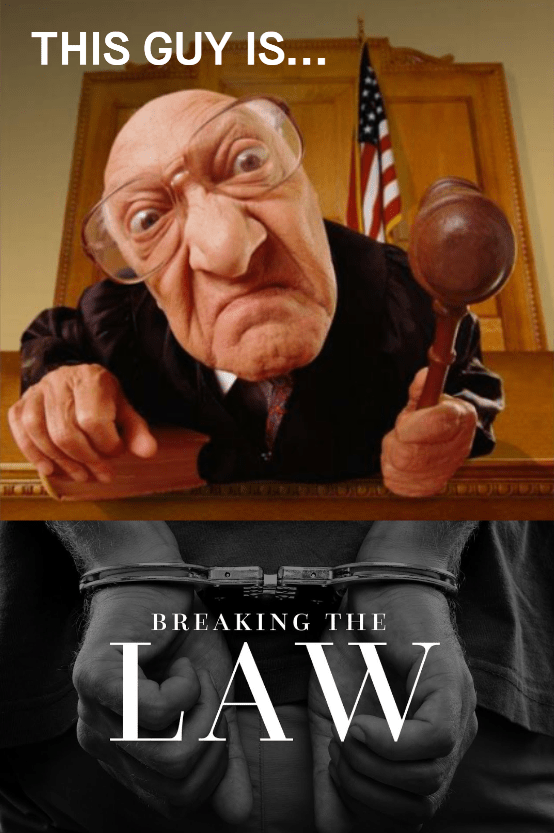
The judicial system in Los Angeles County is facing a crisis—but not by accident. The ongoing court reporter shortage is not merely an unfortunate staffing issue; it is a deliberate and calculated move by judges to manipulate the legal system. This manufactured crisis benefits the courts at the expense of the public, effectively stripping individuals of their constitutional rights while allowing the judiciary to operate outside the law.
A Manufactured Shortage with a Hidden Agenda
For years, judges in Los Angeles County have been systematically reducing the number of court reporters, despite knowing their indispensable role in ensuring accurate trial records. Court reporters are essential to maintaining transparency and accountability in court proceedings. Their transcripts serve as the official record, crucial for appeals and legal challenges. Without them, there is no legitimate way to challenge judicial rulings or provide judicial oversight.
However, instead of preserving this fundamental aspect of justice, Los Angeles County courts have quietly worked to phase out court reporters. Rather than replacing those who retired or left, judges and court administrators allowed vacancies to pile up. The result? A self-inflicted shortage, which they then used to justify replacing human court reporters with electronic recording systems.

The truth is, over a dozen qualified court reporters applied for positions in 2023, only to be denied employment by Los Angeles County. This was not due to a lack of available professionals, but rather a deliberate effort to create the illusion of a shortage. The county has been actively eliminating court reporters for over a decade. In 2012, Los Angeles County laid off 80 court reporters, setting the stage for the current crisis. Despite laws prohibiting the use of electronic recording in unlimited civil courtrooms, LA County installed recording devices in all unlimited courtrooms as early as 2022. Court clerks were trained to operate these devices, ensuring that electronic recording would replace human reporters, regardless of the law.
The law does not mandate that judges provide court reporters in unlimited civil proceedings, but it also does not permit them to issue an order replacing them with electronic recording devices in direct defiance of legislative authority. By doing so, judges are bypassing the legal process and unlawfully implementing their own policies.
Judge Patrick T. Madden, Long Beach Superior Court:
“So a little civics lesson here. The legislature in Sacramento passes laws. Those laws are what I have to follow when I prepare jury instructions that tell you what law applies to the case. The attorneys help me put together the jury instructions, but for the most part, they’re pretty cut and dry. And if I give you an instruction, will you promise me you’ll follow the instruction, even if you disagree with them? Your job is not to make the law. That’s Sacramento, where it takes place with the assembly people and our state senators. Do you promise me you’ll follow the law, even if you disagree with the law?”
Judge Patrick T. Madden, a judge at the Long Beach Superior Court, has emphasized that laws set by the legislature must be followed. Yet, the very institution that demands obedience to the law is itself breaking it by imposing electronic recording where it was explicitly rejected. The hypocrisy is staggering.
Los Angeles County is not alone in this unlawful move. In 2021, Shasta County was the first county in CA to implement electronic recording measures in defiance of state law. This growing pattern suggests a coordinated effort among California courts to circumvent the legal requirement for certified court reporters. If left unchecked, more courts will likely follow suit, further eroding the integrity of the justice system. The judiciary’s blatant disregard for the law sets a dangerous precedent—one where judges, rather than upholding the law, actively work to undermine it for their own convenience.
The so-called solution to this crisis—electronic recording—is deeply flawed and legally questionable. The courts claim that recording devices will serve as a substitute for human court reporters, but this move conveniently benefits judges, rather than the public. Unlike human-generated transcripts, electronic recordings can be lost, distorted, or manipulated. Moreover, electronic records make it harder for litigants to obtain accurate, certified transcripts, creating a significant barrier to appeals and due process.
Judges attempted to legitimize this practice through Senate Bill 662 (SB 662), introduced last year, which sought to expand the use of electronic recordings in civil cases. However, lawmakers rejected SB 662 in January 2024, recognizing its dangers to the integrity of the judicial system. But instead of respecting the legislature’s decision, judges took matters into their own hands. In blatant defiance of the law, Judge Jessner issued an order to electronically record unlimited civil proceedings, despite the legislature’s explicit rejection of this approach. It’s a violation of CA Government Code 69957.
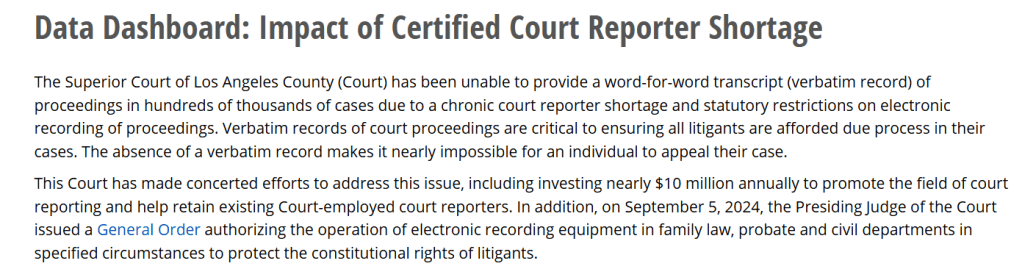
The data dashboard also outlines multimillion-dollar investments to recruit and retain court reporters, including signing bonuses, relocation reimbursements, and finder’s fees. However, the same courts pushing these incentives are also actively replacing certified court reporters with electronic recording systems in direct violation of the law. If these investments were truly meant to solve the crisis, why did the courts proceed with electronic recording despite SB 662 being rejected? The numbers clearly expose the judiciary’s ulterior motives—this crisis was engineered to justify breaking the law.
The CCRA’s Legal Victory: County of Los Angeles v. Superior Court (Kusar) (1993)
The legal struggle surrounding electronic recording in California’s courts is not new. In 1993, the CCRA filed a lawsuit against the County of Los Angeles, arguing that the county had violated the law by using electronic recording equipment in courtrooms where court reporters were required. The case, County of Los Angeles v. Superior Court (Kusar), ultimately resulted in a victory for the CCRA, with the California Court of Appeal upholding the ruling that the county was in violation of existing laws.
The ruling in Kusar was based on Government Code § 69957, which prohibits the use of electronic recording in certain types of cases, including unlimited civil, probate, and family law cases, unless the parties involved agree to the use of such technology. The law explicitly requires that court reporters transcribe these proceedings to ensure an accurate record. Despite this clear legal mandate, the issue of electronic recording has continued to surface in various courtrooms across California, raising questions about whether the law is being followed.
The CCRA’s legal victory in Kusar established a precedent that reinforced the requirement for court reporters in cases that were not exempt under the law. However, recent developments, particularly the actions of LASC, have called this precedent into question. The ongoing legal battles and the potential for further litigation suggest that the issue of electronic recording in the courts is far from settled.
By proceeding with electronic recording after the failure of SB 662, judges in Los Angeles County have demonstrated a clear disregard for legal boundaries. They have usurped the authority of the legislature and imposed their own policies in direct violation of state law. This is not just judicial overreach—it is outright lawlessness.

The ramifications of this unlawful order are profound. By deliberately eliminating court reporters and pushing an alternative that weakens the integrity of court records, judges in Los Angeles County are actively eroding the justice system. Without accurate transcripts, appeals become nearly impossible, and wrongful convictions or unjust rulings go unchallenged.
This is not just negligence—it is a deliberate attack on the rights of litigants. Judges are knowingly breaking the law, manipulating the legal system for their own convenience, and leaving the public with no recourse.
The growing perception that judges themselves are not following the law could have a significant impact on jury trials. If judges ask jurors whether they will follow the law, jurors may respond, “You, judge, are not following the law, so why should I?” This introduces the possibility of widespread jury nullification, where jurors refuse to convict defendants or follow legal instructions due to their belief that the judicial system itself is corrupt.
Such a breakdown in trust could create a constitutional crisis, undermining the legitimacy of the courts. If jurors no longer feel bound to apply the law because they see judges openly defying it, the entire judicial system risks collapse. Furthermore, potential jurors may increasingly refuse to serve, seeing their role as meaningless in a system where judges operate with impunity. This would further erode the justice system, leading to delayed trials, dismissed cases, and an overall failure to uphold the rule of law.
The people of Los Angeles County must demand accountability. Judges must be held responsible for violating the law by failing to provide certified court reporters and for deliberately orchestrating a crisis to serve their own interests. The push for electronic recording must be stopped, and the courts must be forced to reinstate and properly staff human court reporters.
Justice should never be sacrificed for convenience or judicial control. The actions of these judges are not just unethical—they are illegal. If we do not challenge them now, we risk losing the integrity of our legal system entirely.


Subscribe to get access to the rest of this post and other subscriber-only content.

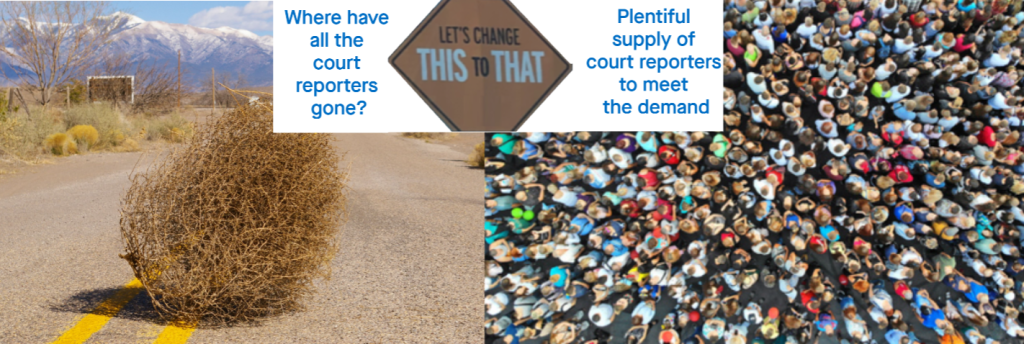
Supply and Demand Crisis
The legal system is a cornerstone of any democratic society, ensuring justice is served and disputes are fairly adjudicated. However, an often-overlooked yet vital component of this system is the court reporter. These professionals serve as the guardians of the official record, providing verbatim transcripts of legal proceedings that form the foundation of appeals, legal references, judicial oversight, and case law. Despite their critical role, the United States faces a shortage of court reporters, leading to delays in justice and operational inefficiencies in courtrooms nationwide. The supply and demand imbalance was supposed to have reached a crisis level, according to the Ducker Worldwide Court Reporting Industry Outlook Report in 2013/14. Court reporters have stepped up as change agents to address this challenge.
According to the National Court Reporters Association (NCRA), the shortage of court reporters is largely driven by a confluence of factors, including an aging workforce, declining enrollment and graduation rates in stenographic programs, and the increasing demand for court reporting services.
One of the primary causes of the shortage is the demographic shift in the profession. A significant portion of certified court reporters are approaching retirement age, and there are not enough new entrants to replace them. The average age of a stenographer in the U.S. is over 50, meaning that retirements will outpace new certifications in the coming years. The industry has struggled to attract younger professionals, leaving a growing gap in supply.
Court reporting schools had seen a steep decline in enrollment over the past two decades, but post-Covid, schools are reporting a record number of enrollments, and have a wait list for the first time in decades. Many institutions had shut down their programs due to low interest and insufficient awareness among students about career opportunities in the field, prior to Covid, but new online programs have opened up all across the country. High dropout rates in court reporting schools further exacerbated the issue, as students struggle with the rigorous training required to attain certification, but many states have changed laws to allow voice writing in their state. The perception that stenography is an outdated skill in the era of digital recording no longer discourages prospective students from pursuing this career path.
Despite declining numbers of court reporters, demand for their services has remained steady and, in some regions, has even increased. The judicial system continues to rely on accurate, human-generated transcripts for legal proceedings, depositions, and arbitrations. In addition, other industries, such as captioning services for the hearing impaired and broadcast captioning, have increased the demand for stenographic expertise. The shortage of professionals has led to delays in legal proceedings, increased reliance on less reliable alternatives like digital recordings, and higher costs for legal services.
To address the crisis, court reporters themselves must become change agents, advocating for solutions to the supply and demand problem. By taking proactive measures, they can influence education, policy, and public perception to ensure the sustainability of their profession.
One of the key areas where court reporters can effect change is in education. Encouraging the revitalization of court reporting programs at community colleges and vocational schools is essential. By working with educational institutions to modernize training methods, implement mentorship programs, and provide scholarships, court reporters can help attract a new generation of professionals.
Additionally, current professionals can take an active role in mentoring and training aspiring court reporters. Internship programs, apprenticeships, and on-the-job training opportunities can help bridge the gap between education and employment, reducing dropout rates and ensuring that students gain practical experience early in their careers.
Many young people are unaware of the benefits of a career in court reporting. Court reporters have been actively promoting their profession through social media campaigns, career fairs, and school presentations. By showcasing the financial stability, job security, and flexibility offered by a career in court reporting, they have been attracting an exciting new wave of professionals to the field.
Furthermore, leveraging technology to engage younger audiences is critical. Creating online courses, interactive training modules, and virtual reality simulations can make learning stenography more appealing and accessible.
Legislative advocacy is another crucial avenue for change. Court reporters should work with professional associations and policymakers to implement initiatives that address the shortage. These initiatives could include student loan forgiveness programs for those pursuing court reporting, government incentives for schools that offer stenographic training, and funding for technological advancements in court reporting.
Moreover, court reporters can push for mandatory stenographic reporting in courtrooms instead of relying on digital audio recordings, which are often less accurate and prone to technical failures. Strengthening regulations that prioritize human-generated transcripts will ensure that the profession remains indispensable to the judicial system.
While some argue that technology, such as automatic speech recognition (ASR) software, can replace human court reporters, the reality is that AI-driven transcription tools are far from perfect. Court reporters should embrace technology as a complementary tool, rather than a replacement. Real-time transcription software, digital notetaking tools, and improved stenographic machines can enhance efficiency and accuracy without eliminating the need for skilled professionals.
By positioning themselves as tech-savvy professionals who can integrate new advancements into their workflow, court reporters can future-proof their careers and demonstrate their indispensable value to the legal system.
Professional organizations such as the NCRA and state-level associations play a vital role in addressing the court reporter shortage. Court reporters should actively participate in these organizations to contribute to advocacy efforts, continuing education initiatives, and workforce development programs. A united profession is better equipped to tackle industry challenges and push for meaningful change.
Additionally, professional organizations can help create standardized national certification requirements, making it easier for court reporters to move between states and fill shortages where they are most needed. Increased reciprocity in certification standards will improve workforce flexibility and allow for a more efficient distribution of court reporters nationwide.
The court reporter shortage is a pressing issue that threatens the efficiency and integrity of the judicial system. Without enough qualified professionals to create accurate legal records, the risk of delays, errors, and compromised justice increases. To combat this crisis, court reporters must become the change agents who drive solutions.
By advocating for educational reforms, promoting the profession to younger generations, encouraging policy changes, embracing technology, and strengthening professional organizations, court reporters can take control of their industry’s future. The need for skilled stenographers is undeniable, and only through proactive efforts will the profession be able to thrive in the years to come.
Now is the time for court reporters to lead the charge—because without them, the very foundation of justice is at stake.


Artificial Intelligence (AI) has emerged as a transformative force across multiple industries, helping professionals become more efficient, accurate, and organized. While there’s often concern that AI will replace human roles, it’s more accurate to view AI as a powerful tool that supports and enhances the work of experts. This is especially true for court reporters, whose roles are critical in maintaining the integrity of the legal system. While AI cannot replace the nuanced judgment and legal expertise that court reporters bring to the table, it can certainly aid them in several key areas, such as research, verifying spellings, and culling attorney contact information to populate our appearance pages.
AI is revolutionizing the way we access and interact with information! Leading AI models like OpenAI’s ChatGPT, Google’s Gemini, Microsoft’s CoPilot, IBM’s Watson, Apple’s Apple Intelligence, and China’s DeepSeek are reshaping the digital landscape, marking a new era of Information Technology.
With AI, you can receive concise or detailed answers to almost any question, significantly reducing the time spent searching through traditional search engines. Some AI tools can browse the web in real time, while others generate responses based on vast knowledge databases. AI makes information more accessible by presenting it in clear, conversational language and allowing for interactive discussions on complex topics.
For example, you can ask AI to list all the cities in your state with a population under one million that have no snowfall in winter; you can ask about health and wellness without getting lost down the rabbit hole of endless clicks on google search results, or find detailed instructions on growing your spring garden, with images and follow-up offers for more information you might not have thought of; you can seek from AI self-improvement, travel advice, weight loss, the latest science and technology, or guidance on investment basics. You can have a conversation with all your inquiries met about any topic you can imagine. AI can rapidly analyze data and provide insights that would otherwise take hours of manual research.
Court reporters are essential in capturing and documenting the spoken word during legal proceedings. They produce accurate verbatim transcripts that serve as the official record of hearings, trials, and other legal events. This responsibility requires not only technical skills, but also a strong understanding of legal terminology, case details, and the ability to work under tight deadlines. While AI can’t replicate the deep expertise and decision-making capabilities of a skilled court reporter, it can greatly improve their efficiency and ensure a higher level of accuracy when it comes to research and data management.
AI is not replacing human research—it’s an advanced tool that enhances our ability to find and process information. In industries like medicine, AI assists doctors by analyzing patient data and suggesting possible diagnoses or treatments, while final decisions still rest with medical professionals.
Court reporters often work in fast-paced environments where they are required to keep up with a wide variety of legal cases. One of the most time-consuming aspects of their work is the need to research legal precedents, statutes, and case laws relevant to the proceedings they are covering. This requires knowledge of specific legal databases and an understanding of how to search through relevant documents.
AI can play a significant role in legal research by offering advanced tools that process massive volumes of legal data quickly. AI-driven platforms can help court reporters access and sift through case law, statutes, and judicial rulings, quickly providing relevant information for the case at hand. By doing so, AI minimizes the time spent on manual research, enabling court reporters to focus more on the transcript’s quality and accuracy.
These AI tools can also keep court reporters up-to-date with recent changes in the law, automatically flagging any new precedents or rulings that might impact their work. This helps them maintain accuracy, ensuring that transcripts reflect the latest legal developments. The quick access to relevant legal information enables court reporters to create more accurate, informed, and reliable records of the proceedings.
Legal documents are filled with specialized terms, names, acronyms, and specific jargon that are essential to the integrity of the transcript. One of the biggest challenges for court reporters is ensuring that every name, term, and phrase is spelled correctly and consistently throughout the transcript. A small mistake, such as misspelling an attorney’s name or confusing legal terminology, can lead to significant issues down the line.
AI can assist by offering spell-checking and terminology verification tools specifically tailored for legal contexts. These tools are capable of recognizing and suggesting the correct spellings for even the most complex legal terms, case names, and jargon.
By leveraging AI to offer spellings, court reporters can save valuable time that would otherwise be spent manually searching through Google and other internet databases. However, it’s important to remember that human expertise is necessary to ensure that context is taken into account. AI can offer tools to aide a court reporter in producing transcripts, but the court reporter must use their judgment to make the final decision.
Court reporters often need to find up-to-date contact information for attorneys involved in the cases they work on. This includes names, addresses, phone numbers, email addresses, and law firm details. Finding this information can be particularly challenging when court reporters are working on tight deadlines, and ensuring that all contact details are accurate and current is essential.
AI can help streamline this process by using intelligent algorithms to track and update attorney contact details. AI-powered systems can help court reporters quickly locate specific attorneys or law firms and provide the most current contact information, often by cross-referencing public databases and legal directories. These systems can also organize contact information in an easily searchable database, making it quicker and more efficient for court reporters to retrieve the details they need during or after proceedings.
Court reporters sometimes need to dig into specific case details—whether it’s past rulings, associated documents, or other important pieces of information—that can help them understand the context of a legal proceeding. For example, they might need to look up a past decision in the same case or find specific articles of law that are referenced in the hearing. This research is often tedious and time-consuming.
AI can dramatically reduce the time spent on this kind of research by instantly accessing legal databases, identifying relevant documents, and even summarizing important case details. AI systems can search through a vast amount of legal texts, providing court reporters with summarized information or direct links to the most pertinent documents. This quick access allows court reporters to better understand the context of the proceeding and ensures that they’re accurately reflecting the intent of the attorneys and judges involved.
By automating the research process, AI allows court reporters to focus more on the actual documentation of the hearing or trial, knowing that they have accurate and comprehensive case information at their fingertips.
In addition to assisting with legal research, spellings, and finding contact information, AI can improve the overall workflow for court reporters. AI tools can help keep track of deadlines, organize transcript deadlines and workload, and even handle administrative tasks like scheduling. By automating these routine processes, AI allows court reporters to focus on the critical aspects of their work—ensuring that the final transcript is accurate, comprehensive, free from error, and turned in on time.
Furthermore, AI can offer intelligent search capabilities to help court reporters quickly retrieve the information they need, whether it’s a particular transcript, case law, or attorney contact. This reduces the need for manual searching, helping court reporters stay organized and on top of their work.
While AI offers numerous advantages, it’s important to recognize that it cannot replace the judgment, expertise, and critical thinking that human court reporters provide. The role of the court reporter is not just about typing or transcribing—it involves interpreting the meaning of legal proceedings, understanding the nuances of legal language, and making decisions about the accuracy and integrity of the final transcript.
AI can assist with research, terminology, and contact information management, but the final responsibility for accuracy, consistency, and quality rests with the human court reporter. Court reporters still need to exercise their professional judgment to ensure that the data provided by AI tools is correct and relevant in the context of the case.
AI is an invaluable tool for court reporters, offering support in areas such as legal research, terminology verification, and finding attorney contact information. By automating routine tasks and providing faster, more accurate access to information, AI enhances the efficiency and effectiveness of court reporters, allowing them to focus on their core responsibilities. However, the human element remains essential to the process. Court reporters’ expertise, judgment, and attention to detail are irreplaceable, and AI should be seen as a partner that supports rather than replaces their role.
With AI as a trusted ally, court reporters can continue to provide high-quality, accurate transcripts that are essential to the legal system, all while benefiting from the speed, organization, and insight that AI brings to the table. The future of court reporting lies in the collaboration between human skill and advanced technology, and AI is the key to unlocking even greater potential in this field. AI will empower us to work smarter, learn faster, and solve problems more efficiently than ever before!

The American justice system relies on an accurate and complete record of courtroom proceedings. At the center of this process are court reporters—highly trained professionals who use stenography to transcribe trials, depositions, and hearings. However, an alarming shortage of court reporters is creating serious disruptions in courts across the country, with California being one of the hardest-hit states. The question is no longer whether this crisis will affect the efficiency of the justice system—it already has. The real question is: What can be done to fix it?
The shortage of court reporters is not a new problem, but it has reached critical levels in recent years. In California, the number of official court reporters dropped from 430 in 2017 to just 330 in 2022, reflecting a national trend. Some courts, including Los Angeles Superior Court, have been forced to reallocate existing court reporters from certain divisions, such as family law and probate courts, to felony criminal and juvenile cases where their presence is mandated by law.
The lack of court reporters can lead to significant delays in case processing, making it harder for litigants to obtain justice in a timely manner. Without an official transcript, appeals and legal reviews become more challenging, leading to potential miscarriages of justice. The issue is exacerbated by California’s strict certification laws, which prevent out-of-state reporters from working in its courts unless they obtain a California-specific certification—an additional hurdle in an already shrinking labor pool.
Several factors contribute to the court reporter shortage:
While the problem is severe, there are multiple solutions that courts, lawmakers, and the legal industry can explore:
Some states already allow digital and electronic recording of court proceedings, but California has been slow to adopt these technologies. Current laws require court reporters to be physically present in courtrooms, preventing remote reporting even when in-person stenographers are unavailable. Lifting these restrictions could help alleviate shortages by allowing certified court reporters from other states to work remotely.
California’s strict certification requirements prevent many skilled court reporters from other states from filling gaps in the workforce. Revising these regulations to recognize certifications from other jurisdictions could significantly expand the available talent pool.
Given the high demand for court reporters, more should be done to encourage students to enter the field. State governments and courts could offer scholarships, tuition assistance, or loan forgiveness programs for those who complete court reporting training. Additionally, investment in new and existing training programs could improve graduation rates and licensing success.
Many young professionals are unaware of the opportunities available in court reporting. Outreach efforts—such as partnerships with high schools, community colleges, and career fairs—could help attract new talent to the field. The promise of job security, competitive salaries, and flexible work options should be highlighted to make court reporting a more appealing career choice.
While human court reporters provide unparalleled accuracy, advancements in artificial intelligence (AI) and voice recognition could play a supplementary role in capturing courtroom dialogue. Courts could explore hybrid models that combine human oversight with AI-powered transcription services, improving efficiency while maintaining accuracy.
Court reporters are indispensable to the legal system, ensuring that an accurate and complete record of proceedings is preserved. The current shortage threatens the efficiency of the courts, the rights of litigants, and the integrity of legal proceedings. While there is no single solution to this growing crisis, a combination of regulatory reform, technological innovation, financial incentives, and career outreach can help address the problem before it worsens.
As courts struggle to function without enough trained stenographers, the time to act is now. Without immediate intervention, the justice system will face increasing delays, appeals without adequate records, and further erosion of public confidence in fair trials. Whether through legislative changes, education initiatives, or technology-driven solutions, the effort to replenish the court reporter workforce must begin immediately.

In a time when public trust in institutions is often questioned, the role of court reporters has never been more vital. At the 2025 National Court Reporters Association (NCRA) Leadership & Legislative event, U.S. Senator Mark Warner underscored the essential function these professionals serve in maintaining the integrity of the American judicial system. Speaking to an audience of court reporters, captioners, and legal videographers, Warner highlighted the increasing demands on the judicial system and the pivotal role court reporters play in ensuring fairness and transparency.
Court reporters serve as the official record-keepers of legal proceedings, ensuring that every word spoken in court is accurately documented. This precise recordkeeping is essential to maintaining judicial integrity, as it provides an unalterable account of courtroom interactions. In an era where misinformation and legal challenges are prevalent, these professionals ensure that the judicial system remains accountable to the law and to the public.
Warner emphasized that trust in the judiciary is built upon the foundation of accurate and transparent recordkeeping. “People trust that our courts are fair because we keep a record with integrity,” he stated. This integrity ensures that appeals, legal reviews, and historical records remain uncontested and verifiable.
The senator acknowledged an anticipated surge in federal litigation over the next few years, reinforcing the necessity of skilled court reporters to keep up with increasing demands. “Over the course of the next few years, I expect you will see unprecedented levels of litigation at the federal level,” Warner warned. This statement underscores the growing need for more trained stenographers, captioners, and legal videographers who can ensure proceedings remain transparent and accessible.
NCRA Executive Director Dave Wenhold echoed these sentiments, pointing out that the legal system is facing challenges that demand stronger safeguards. Advocating for the Research and Oversight of Potential AI in Courts Act of 2025, Wenhold highlighted the potential threats emerging technologies pose to court reporting and the necessity of legislative protections.
Beyond their technical role, court reporters also function as a form of judicial oversight, reinforcing ethical standards within courtrooms. Their verbatim transcripts prevent misinterpretations, ensuring that judicial decisions are based on accurate information. Additionally, these records serve as vital tools in appeals, offering an unaltered recounting of past proceedings.
Court reporters’ impartiality ensures that no party in a legal dispute can manipulate records for personal or political gain. Unlike artificial intelligence or automated transcription services, human stenographers capture nuances, tone, and context, which are crucial elements in legal interpretation.
Additionally, judicial oversight ensures that judges or courts cannot order alterations or redactions of court records to protect themselves or others from legal scrutiny. In cases of judicial negligence or misconduct, such as the Waukesha, WI Christmas massacre case on November 21, 2021, the integrity of court records becomes even more critical. When courts rely on electronic recording systems, there is a heightened risk that essential records may be lost, manipulated, experience technical issues, or are deleted—especially when a court itself is implicated in misconduct. The presence of certified court reporters provides a crucial safeguard against such risks, ensuring that legal proceedings remain transparent and untainted by external influence.
Despite their importance, court reporters face numerous challenges, including technological disruptions and staffing shortages. As AI-driven transcription tools become more prevalent, concerns have emerged regarding their accuracy and reliability. Unlike human court reporters, AI struggles with accents, dialects, and complex legal terminology, raising the risk of misinterpretations in court transcripts.
Moreover, many court systems are experiencing a shortage of qualified stenographers, which can lead to delays in case proceedings. Addressing this issue, Warner’s recognition of court reporters serves as a call to action to invest in and support these professionals.
To combat these threats, legislative efforts such as the Research and Oversight of Potential AI in Courts Act of 2025 aim to safeguard the integrity of legal records. This bill seeks to establish guidelines for the use of AI in legal transcription while reinforcing the need for human oversight in judicial proceedings.
“The back door of America’s judicial system is hanging wide open right now,” Wenhold warned. “And this legislation doesn’t just shut the door; it turns the deadbolt.” The passage of this bill would be a significant step in ensuring that technological advancements support rather than undermine judicial integrity.
Court reporters are the unsung heroes of the American judicial system, ensuring transparency, accuracy, integrity, and fairness in every legal proceeding. As Senator Warner highlighted in his address, the coming years will put legal institutions to the test, making the role of court reporters more essential than ever. With increasing litigation, emerging threats from AI, and a growing demand for legal accountability, these professionals stand as a crucial safeguard against judicial corruption and misinformation.
As legislative efforts seek to reinforce the security of legal transcripts, continued support for court reporters will be essential in preserving the foundation of justice in America. With their unwavering dedication, court reporters ensure that trust in the judiciary remains steadfast, making them indispensable to the rule of law.

Subscribe to get access to the rest of this post and other subscriber-only content.

Subscribe to get access to the rest of this post and other subscriber-only content.

The California court system has recently been embroiled in a heated controversy surrounding the use of electronic recording equipment in courtrooms, the status of court reporters, and how the law is being interpreted in this regard. This debate has captured the attention of the public, legal professionals, and the media. The case at the heart of this controversy is the Los Angeles Superior Court’s (LASC) recent actions, the California Court Reporters Association’s (CCRA) legal battles, and the failed passage of California Senate Bill 662 (SB 662), which would have legalized the use of electronic recording systems in certain courtrooms. These developments have raised significant concerns about the future of court reporting, the integrity of the legal process, and the potential consequences for the public.
Senate Bill 662 (SB 662) was a significant piece of proposed legislation in California aimed at modernizing the court system and addressing a perceived shortage of court reporters. The bill, introduced in 2023, sought to authorize the use of electronic recording equipment in courtrooms for civil, probate, and family law cases. Proponents of SB 662 argued that such a measure would be a cost-effective solution to the ongoing shortage of court reporters, which had left many courtrooms understaffed.
However, the bill faced significant opposition from various legal organizations, including the CCRA, which argued that replacing human court reporters with electronic recording equipment would undermine the accuracy and fairness of court proceedings. Despite extensive lobbying efforts and significant backing from various sectors, SB 662 failed to pass in January 2024, leaving the question of electronic recording in the courts unresolved.
The failure of SB 662 was a blow to the Los Angeles Superior Court and other jurisdictions that had already begun preparing for the implementation of electronic recording. In particular, the LASC had already installed recording equipment in all of its civil courtrooms and trained court clerks in its use, leading to a substantial financial investment by the county. With the bill’s failure, there were concerns about how these resources would be justified, as well as the broader implications of circumventing existing laws related to court reporting.
The legal struggle surrounding electronic recording in California’s courts is not new. In 1993, the CCRA filed a lawsuit against the County of Los Angeles, arguing that the county had violated the law by using electronic recording equipment in courtrooms where court reporters were required. The case, County of Los Angeles v. Superior Court (Kusar), ultimately resulted in a victory for the CCRA, with the California Court of Appeal upholding the ruling that the county was in violation of existing laws.
The ruling in Kusar was based on Government Code § 69957, which prohibits the use of electronic recording in certain types of cases, including unlimited civil, probate, and family law cases, unless the parties involved agree to the use of such technology. The law explicitly requires that court reporters transcribe these proceedings to ensure an accurate record. Despite this clear legal mandate, the issue of electronic recording has continued to surface in various courtrooms across California, raising questions about whether the law is being followed.
The CCRA’s legal victory in Kusar established a precedent that reinforced the requirement for court reporters in cases that were not exempt under the law. However, recent developments, particularly the actions of LASC, have called this precedent into question. The ongoing legal battles and the potential for further litigation suggest that the issue of electronic recording in the courts is far from settled.
At the heart of this controversy is Government Code § 69957, a law that prohibits the use of electronic recording equipment in unlimited civil, probate, and family law cases. This law was enacted to ensure the accuracy and reliability of court records in cases where complex legal issues and significant financial stakes are at play. Court reporters, who are trained to accurately transcribe legal proceedings, are considered essential to maintaining the integrity of the judicial process in these types of cases.
The law has been in effect for several decades, and its purpose is to ensure that all parties in a legal proceeding have access to an accurate, verbatim transcript of the proceedings. This is particularly important in complex cases where the details of the trial are crucial to the outcome. Electronic recording systems, while useful in some circumstances, have been criticized for their inability to capture the nuances of legal testimony and arguments. Critics argue that such systems are prone to errors, and that they do not provide the same level of accuracy and reliability as a human court reporter.
Despite the legal restrictions outlined in § 69957, there has been a growing push in some courtrooms, particularly in Los Angeles, to use electronic recording equipment as a cost-saving measure. This has raised concerns among court reporters and other legal professionals, who argue that the law is being ignored in favor of expedience and cost-cutting measures. The CCRA has been vocal in its opposition to these efforts, citing the potential negative consequences for the legal system and the rights of individuals involved in court cases.
In September 2024, LASC Presiding Judge Samantha P. Jessner issued a controversial order allowing the use of electronic recording in civil courtrooms, despite the clear restrictions outlined in Government Code § 69957. Jessner’s order came after the failure of SB 662, which had been viewed as a potential legal basis for implementing electronic recording in these courtrooms. According to reports from court clerks, all civil courtrooms at the Mosk Courthouse had been equipped with electronic recording systems, and clerks had already received training in how to use the equipment.
Given the significant financial investment made by LASC in these systems, it is believed that Jessner’s order was an attempt to justify the costs incurred by the county. The installation of recording equipment and the training of clerks had reportedly cost millions of dollars, and without the passage of SB 662, there was concern that these investments would go to waste. Jessner’s order, therefore, may have been motivated by a desire to justify these expenditures and ensure that the county’s investment in technology did not go unused.
Critics, however, argue that Jessner’s order represents an unlawful and unconstitutional attempt to circumvent established law. By allowing electronic recording in courtrooms where court reporters are required, Jessner’s order is seen as an effort to bypass the legal restrictions outlined in § 69957. This has led to allegations of fraud, as some judges have been accused of falsely claiming that § 69957 allows them to use electronic recording equipment in these cases.
One of the most concerning aspects of this controversy is the allegation of fraud surrounding the use of electronic recording equipment in California courtrooms. Judges in some unlimited civil courtrooms, particularly in Los Angeles, have been displaying signs that claim Government Code § 69957 allows for electronic recording in these cases. These signs are misleading, as the law clearly prohibits the use of electronic recording equipment in such cases unless all parties involved agree to it.
The CCRA has been vocal in its criticism of these false claims, arguing that they are a violation of the law and a breach of the public’s trust in the legal system. The use of misleading signs in courtrooms is seen as an attempt to circumvent the law and push through the use of electronic recording systems, despite the legal restrictions that exist.
Further compounding the allegations of fraud is the claim that there is no actual shortage of court reporters in California. Jessner’s order was partly justified by the argument that there is a nationwide shortage of court reporters, but critics argue that this shortage is exaggerated and that the actual number of court reporters in California has been increasing in recent years. According to some reports, California has seen an increase of 750 court reporters, while the number of reporters lost to retirement or attrition has been relatively small, with a net loss of around 900.
Moreover, it has been alleged that LASC refused to hire court reporters last year, despite a growing number of applicants. According to some insiders, the court system hired only three new court reporters while rejecting at least 12 applicants who were qualified for the positions. These actions raise questions about the true motives behind the push for electronic recording and whether the shortage of court reporters is being used as a pretext for implementing a system that may be less accurate and more cost-effective for the county.
A key part of the justification for using electronic recording in the courts was the Ducker Study, a report commissioned by the Trial Court Consortium in 2022. This report relied on data from the now-defunct Speech-to-Text Institute (STTI), which had predicted a significant shortage of court reporters. However, this forecast has since been discredited, with many court reporter bloggers and industry experts exposing the inaccuracies of the STTI’s claims. The STTI’s predictions were based on flawed and unverifiable data, leading to accusations of fraud within the court reporting industry.
The STTI’s former president, who was also the president of Stenograph, a company that manufactures steno machines, resigned from both organizations after the fraudulent claims were exposed. The STTI was eventually shut down, and its reports were discredited as part of a broader effort to mislead the public and the court system about the state of the court reporting profession.
The ongoing legal battles surrounding the use of electronic recording in California’s courts have far-reaching implications for the future of court reporting in the state and beyond. The controversy raises important questions about the role of court reporters in the judicial system, the integrity of the legal process, and the potential consequences of allowing electronic recording systems to replace human reporters.
As California grapples with these issues, other states are closely watching the outcome of this case, as the issue of electronic recording in courts has the potential to spread to other jurisdictions. If California, the most populous state in the nation, were to adopt electronic recording on a widespread scale, it could set a precedent for other states to follow, with potentially disastrous consequences for the accuracy and fairness of court proceedings.
Ultimately, the resolution of this controversy will have far-reaching implications not only for the legal profession but for the public’s trust in the judicial system. As the case unfolds, it is clear that the fight over the future of court reporting in California is far from over.
The battle over the use of electronic recording in California’s courts represents a complex legal and constitutional issue that touches on the heart of the judicial system’s integrity. The failure of SB 662, the legal victory of the CCRA in the Kusar case, and the recent actions of LASC have all contributed to a growing sense of unease about the future of court reporting in the state. As the controversy continues to unfold, it is essential for the legal community to carefully consider the implications of these developments and ensure that the rights of all parties involved in legal proceedings are upheld.
The potential for a constitutional crisis, as some have warned, is real, and the outcome of this case could have significant repercussions for the legal system not only in California but across the United States. Whether or not electronic recording will be allowed to replace human court reporters remains to be seen, but it is clear that the legal battle over this issue is far from over.

In a controversial move, the Los Angeles Superior Court has recently authorized the use of electronic recording for a wide range of case types, despite the clear violation of California law. This decision, issued by Presiding Judge Samantha P. Jessner, has generated significant pushback from court reporters, legal professionals, and labor unions, who argue that the shift to electronic recording is unlawful, dangerous, and detrimental to the integrity of the legal system.
California law mandates that licensed court reporters provide verbatim transcripts of court proceedings to ensure the accuracy and fairness of the legal process. By replacing human reporters with electronic recording systems, the Los Angeles Superior Court is not only bypassing these legal requirements but also introducing a host of risks related to the reliability of the court record. Electronic recording systems, while efficient in some contexts, lack the human expertise necessary to handle the complexity of legal proceedings, putting the accuracy of transcripts at risk.
The Legal Violations and Ethical Concerns
The decision to rely on electronic recording in place of human court reporters is a direct violation of California law, which requires licensed reporters to transcribe legal proceedings in most case types. Electronic recording systems are prone to technical failures, inaccuracies, and an inability to capture the nuances of legal language. Furthermore, these machines cannot ask for clarification when something is unclear, potentially leading to incomplete or erroneous records.
Court reporters, by contrast, ensure that the record is accurate and reliable. They are trained to handle specialized legal terminology, to detect and correct errors, and to maintain a complete and accurate transcript. A flawed record — such as one produced by an electronic recording system — can undermine the fairness of trials, appeals, and other legal actions, ultimately denying individuals access to proper justice.
The ethical responsibility of maintaining an accurate, reliable court record is paramount. If the Los Angeles Superior Court is allowed to move forward with its decision, it could set a dangerous precedent that diminishes the role of human court reporters across the state. As the situation continues to unfold, many are questioning whether cost-saving measures are being prioritized over the integrity of the justice system itself.
The Manufactured Reporter Shortage
At the heart of the issue is the accusation that the shortage of court reporters in California is, in fact, a manufactured crisis. Critics argue that the Los Angeles Superior Court has systematically undermined the availability of qualified court reporters through layoffs and rejection of applicants, creating the illusion of a shortage to justify replacing human reporters with electronic systems.
The court’s failure to hire enough reporters, combined with a flawed hiring process, has led to a situation where the narrative of a “shortage” is being used as an excuse to implement substandard recording methods. Many experienced, qualified reporters have been turned away, even as the need for court reporters remains high. This manufactured shortage makes the court’s decision to use electronic recording seem like a foregone conclusion, but critics point out that the real issue is mismanagement and a refusal to prioritize proper staffing.
CCRA’s Response
In light of the Los Angeles Superior Court’s decision, the California Court Reporters Association (CCRA) has raised its voice in opposition. On September 5, 2024, CCRA President Brooke Ryan issued a public statement condemning the court’s actions and calling for the immediate reversal of the order. The CCRA argues that the decision to use electronic recording violates state law and sets a dangerous precedent for the future of the court reporting profession.
CCRA’s response highlights the significant flaws in the court’s reasoning, pointing out that the shortage of court reporters is not a natural occurrence but a direct result of the court’s previous actions — including layoffs and an exclusionary hiring process. CCRA has called on the Los Angeles Superior Court to engage in a dialogue with the labor unions and court reporters to find solutions that address staffing shortages while upholding the integrity of the court system.
The association has also emphasized that the Los Angeles Superior Court has been warned multiple times about the consequences of its actions. The move to electronic recording is seen as a calculated attempt to phase out human reporters in favor of machines, further eroding the quality of the legal record.
What Others Can Do
As this issue continues to develop, it is crucial for individuals who care about the integrity of California’s legal system to voice their concerns. The decision to allow electronic recording to replace licensed court reporters has far-reaching consequences for the fairness of the legal process, and it is essential for the public and legal professionals to take action.
The Path Forward
The decision to move toward electronic recording is more than just a technical shift — it is a legal and ethical challenge that could have long-lasting consequences for the legal system in California. If the Los Angeles Superior Court’s decision is allowed to stand, it could lead to a significant erosion of the role of court reporters in the state, ultimately undermining the quality and fairness of the court record.
As court reporters, legal professionals, and concerned citizens continue to push back, the hope is that the Los Angeles Superior Court will reconsider its decision and work toward a solution that ensures a sufficient number of qualified court reporters are hired and retained. In doing so, California can maintain the integrity of its legal system and protect the rights of all those who rely on a fair and accurate court record.
The next few months will be critical in determining the future of court reporting in California. With continued advocacy and public pressure, there is still hope for a positive resolution to this ongoing issue.

The court reporting industry is facing a crisis that has been brewing for years, largely driven by the unchecked consolidation of power among a few major companies. Over the last several years, large corporations, most notably Veritext, have been acquiring smaller court reporting firms at an alarming rate. These mergers and acquisitions are fundamentally altering the landscape of the industry, creating confusion, inflating prices, and undermining the quality of services provided to consumers. What was once a diverse and competitive market is quickly being monopolized, leading to detrimental effects on workers, consumers, and small businesses alike.
This issue has reached a point where industry insiders, reporters, and consumers alike are voicing their concerns to regulatory bodies such as the Federal Trade Commission (FTC), urging them to take action. In this article, we will explore how these mergers have harmed competition in the court reporting industry, the consequences for those who rely on these services, and what can be done to address the crisis.
The court reporting industry, while small compared to other sectors, plays a crucial role in ensuring accurate legal records. Historically, it was made up of independent contractors and small businesses providing high-quality transcription services to courts, law firms, and other legal entities. However, in recent years, large corporations, including Veritext, U.S. Legal Support, and Stenograph, have begun purchasing these smaller firms, consolidating market power and creating a highly centralized network of companies that control the majority of court reporting services.
Veritext, in particular, stands out as the largest player in the industry. Its aggressive strategy of acquiring smaller competitors has allowed it to establish a near-monopoly in many regions. This trend has led to a situation where consumers and small businesses alike are left wondering whether they are interacting with an independent entity or one of Veritext’s subsidiaries. This lack of transparency is a significant issue, as it prevents consumers from making informed choices about the services they purchase and undermines the competitive nature of the market.
One of the most significant impacts of these corporate mergers is the rising cost of court reporting services. Traditionally, court reporters were paid a reasonable rate for their work, and the costs passed on to consumers were reflective of this. However, as large companies like Veritext have taken over, prices have skyrocketed.
For example, where a court reporter might traditionally charge $4.00 per page, consumers are now seeing final bills that can reach $37 per page. This exorbitant markup is often hidden from view, with consumers unaware of the true cost until after services are rendered. The large companies rely on the hope that clients will not dispute these inflated charges, taking advantage of their market dominance to extract more money from consumers. This practice not only harms consumers financially but also creates a situation where small, independent reporters and firms struggle to compete, as they cannot match the pricing power of the corporate giants.
Furthermore, the consolidation of the industry has led to a decline in the quality of services provided. As companies grow larger through acquisitions, they may prioritize profit margins over the quality of their work. The result is a less personalized service and, in some cases, errors in transcription or delays in delivering transcripts. In an industry where accuracy and timeliness are paramount, these issues can have serious consequences for legal proceedings and, ultimately, the integrity of the justice system.
Mergers and acquisitions in the court reporting industry have not only inflated prices and reduced quality but also stifled innovation. In a competitive market, smaller firms often drive innovation by introducing new technologies, improving efficiency, or offering specialized services. However, as the industry becomes more consolidated, the incentive to innovate diminishes. The large corporations that dominate the market have little motivation to invest in new technologies or improve their services when they already control the majority of the market share.
Moreover, the consolidation of power among a few key players has made it increasingly difficult for new entrants to break into the market. The inflated valuations of court reporting businesses, driven by the purchasing strategies of these corporate giants, have made it impossible for smaller entrepreneurs to enter the field. This has created a situation where only a handful of large corporations control the majority of the market, leaving little room for competition and innovation.
Another significant consequence of the consolidation in the court reporting industry is the impact on workers. The vast majority of court reporters are classified as independent contractors, which means they are responsible for their own taxes, benefits, and other business-related expenses. While this arrangement has been common in the industry for years, the rise of large corporations has created a situation where many workers are left vulnerable to exploitation.
These corporate giants rely heavily on independent contractors to provide their services, but at the same time, they are able to avoid their legal responsibilities to these workers. Many of these companies do not withhold taxes as required by law, leaving workers with the burden of paying their own taxes at the end of the year. Additionally, independent contractors often have little recourse if they are unfairly treated or blacklisted by a major corporation. The fear of being blacklisted from work opportunities is a significant issue for many court reporters, especially as the larger companies use their market power to intimidate those who speak out against their practices.
The misclassification of workers as independent contractors is a growing problem in the court reporting industry, and it is one that has largely gone unchecked by regulators. While the issue has been brought to the attention of law enforcement and regulatory bodies, there has been little action taken to address the misclassification and ensure that workers are treated fairly. This lack of oversight only exacerbates the challenges faced by court reporters, many of whom struggle to make ends meet in an increasingly hostile and monopolized market.
The consolidation of the court reporting industry has also had a significant impact on the education and training pipeline for future court reporters. As large companies continue to dominate the market, there is less incentive for them to invest in the next generation of stenographers. This has led to a situation where many aspiring court reporters are left without clear guidance on how to enter the profession or find stable work opportunities.
Furthermore, the influx of workers into the industry, driven by the purchasing power of these large corporations, has led to a glut of court reporters entering the field. With fewer opportunities available and wages being driven down by the corporate giants, many students who have invested time and money into stenographic education find themselves unable to secure work at reasonable rates. This has created a cycle where aspiring court reporters are left with little return on their investment in education, while the larger corporations continue to expand their dominance.
The consolidation of the court reporting industry has led to significant harm for consumers, workers, and small businesses. As major corporations like Veritext, U.S. Legal Support, and Stenograph continue to acquire smaller firms, the market becomes increasingly monopolized, and competition is stifled. Prices rise, quality declines, and workers are left vulnerable to exploitation. The lack of oversight and regulation has allowed these companies to operate without accountability, while consumers and workers are left to bear the brunt of their actions.
It is clear that regulatory action is needed to address the growing crisis in the court reporting industry. The Federal Trade Commission (FTC) and other regulatory bodies must investigate the mergers and acquisitions taking place in the industry and take steps to ensure that competition is preserved. Additionally, there must be greater oversight of worker classification and protections for independent contractors, as well as efforts to ensure that court reporters are paid fairly for their work.
Consumers, workers, and small businesses should not be left at the mercy of a few corporate giants who prioritize profits over service, fairness, and innovation. The court reporting industry must be held accountable, and steps must be taken to restore competition, ensure fair wages for workers, and protect consumers from unfair pricing practices. Only through effective regulation and oversight can the industry hope to return to a more equitable and competitive state.
The court reporting industry is at a crossroads. The unchecked consolidation of power among a few large corporations has led to a host of problems, from inflated prices and poor service to worker exploitation and stifled innovation. The impact of these mergers has been felt by consumers, workers, and small businesses alike, and it is clear that action must be taken to address the growing crisis.
Regulatory bodies like the FTC have an important role to play in protecting competition and ensuring that the court reporting industry remains fair, transparent, and competitive. By taking action to address the harmful effects of corporate consolidation, we can ensure that the industry serves the needs of all stakeholders, not just the interests of a few large corporations. Only then can the court reporting industry fulfill its vital role in the legal system without sacrificing fairness, quality, or accessibility.

A growing debate surrounding the cost of court transcripts has led to a sharp outcry from court reporting industry leaders, with one CEO describing attorneys who refuse to pay for transcripts as “shoplifters.” This fiery comment has stoked tensions between court reporters, attorneys, and the legal community at large.
The CEO of Cassandra Caldarella, CSR 13127, Inc., and CoverCrow, Inc., two companies that play crucial roles in the court reporting industry and the technology supporting it, has come forward to defend the profession. In a recent interview, she responded vehemently to the accusations that court reporters are gouging customers with high transcript fees, accusing some attorneys of cheating the system by not paying for transcripts at all.
These remarks come amid rising concerns about how court reporting services are treated in the legal space. Just as airlines have recently come under fire for “squeezing” customers for hidden fees—according to a Senate investigation report—court reporters are grappling with similar criticisms, but from the legal community. As attorneys push back against what they see as excessive charges for transcripts, some are resorting to methods that the CEO says are simply dishonest.
Caldarella’s remarks have stirred controversy within both the court reporting and legal industries. She emphasized that “these are shoplifters, these are people that are stealing,” arguing that attorneys who share transcripts or refuse to pay for them are undermining the integrity of the profession. “It’s not equitable to everyone who follows the rules,” she added, highlighting the unfairness faced by those who respect the system.
The dispute has become a flashpoint in the ongoing tension between the costs associated with legal processes and the fees charged by those who provide essential services to the justice system.
Court reporters perform a critical role in the legal system by documenting and transcribing court proceedings, depositions, and other legal events. The transcripts they produce serve as the official record and are essential for appeals, motions, and other critical legal decisions. For the work and expertise involved, it’s no surprise that court reporters charge a fee for these services.
However, the cost of court transcripts has long been a point of contention within the legal community. Attorneys and other legal professionals often argue that the fees for these transcripts are excessive, especially in high-volume litigation or in cases where extensive records are required. In some instances, these costs can run into the thousands of dollars, leading many to question whether court reporters are profiting excessively from their work.
The accusation that court reporters are “gouging” their customers has become a familiar refrain in the legal industry, particularly in the context of high-stakes litigation where every document is critical to the case. Attorneys have long pressed for more transparency around these fees and have called for greater competition in the industry in order to drive down prices.
In recent months, however, the debate has become more pointed. Attorneys who are unwilling to pay for transcripts have been accused of attempting to bypass the system altogether, either by sharing transcripts without compensation or by looking for loopholes to avoid paying for the full costs of the services they receive. These actions have prompted a stern response from court reporting professionals, with Caldarella among the most vocal critics.
In the interview, Caldarella drew a direct parallel between attorneys who refuse to pay for transcripts and those who engage in petty theft. “These are shoplifters,” she said, accusing those attorneys of attempting to steal from court reporters who depend on the revenue generated by transcript fees to maintain their businesses. “It’s not just about the money; it’s about respect for the service, the effort, and the skills involved in producing these documents.”
Caldarella’s comment is a direct rebuke to the accusations of profiteering that have dogged court reporters in recent years. She argues that the work involved in producing court transcripts is often far more complex and time-consuming than it might appear at first glance. Court reporters must not only transcribe the spoken word accurately but also ensure that the transcripts meet legal standards for admissibility in court, which requires both skill and attention to detail.
“It’s easy for someone sitting in an office to criticize the costs involved in transcription,” Caldarella said, pointing out that the work of court reporters often involves long hours, complex technology, and professional expertise. “But those costs aren’t just about paying for a piece of paper. They reflect the time and resources that go into making sure the record is accurate and legally sound.”
For many court reporters, the revenue generated by transcript fees is crucial to staying in business, particularly as the costs of doing business—technology, training, and overhead—continue to rise. Yet, as demand for court reporting services grows, the issue of fees has only become more contentious.
The growing discontent between court reporters and attorneys over transcript fees mirrors a broader trend seen in industries across the economy, such as airlines and telecommunications. Just as a recent Senate investigation criticized airlines for squeezing customers with hidden fees and exorbitant charges, the court reporting industry finds itself facing similar allegations from attorneys who feel that the system is stacked against them financially.
Earlier this year, a Senate investigation report highlighted the billions of dollars airlines have collected in fees beyond the cost of airfare. Executives from those airlines were summoned to Washington, D.C., to defend their business practices in front of a Senate panel. Similarly, as the legal community continues to debate the cost of court transcripts, industry leaders like Caldarella are stepping up to argue their case.
Just as the airline industry faces accusations of using hidden fees to generate additional revenue, court reporters are increasingly caught in a debate over how much their services should cost. But while some attorneys argue that court transcript fees are inflated, Caldarella and other court reporters defend the necessity of these charges, which they say reflect the high value and importance of accurate legal records.
“It’s the same kind of mentality you see with airlines and their extra charges,” Caldarella explained. “People want the convenience and service, but they don’t want to pay for it. That’s not fair to those of us who are working hard to provide a vital service.”
The dispute over transcript fees highlights a broader issue within the legal industry: the tension between cost and accessibility. Legal services are notoriously expensive, and the high costs associated with litigation can price out many individuals and small businesses from accessing the justice system. In this environment, every additional charge—whether it’s for court transcripts, filing fees, or other legal costs—adds to the financial burden.
As the legal community grapples with these challenges, the voices of court reporters like Caldarella are becoming more prominent. While her remarks may have been extreme, they reflect a growing frustration among those in the profession who feel they are being unfairly targeted by attorneys and other legal professionals.
For her part, Caldarella argues that without fair compensation for their work, court reporters will not be able to continue providing the essential services that the legal system depends on. As the debate continues to evolve, one thing is clear: both sides must come to terms with how to balance fairness, transparency, and the costs associated with the provision of legal services.
The controversy over transcript fees is likely to continue for the foreseeable future, but it also highlights an underlying issue in many industries today: the challenge of balancing the need for fair compensation with the desire for affordable services. Just as the airline industry has faced scrutiny for its pricing practices, court reporting companies are fighting to protect their livelihoods against a backdrop of rising costs and increased demand.
Caldarella’s outspoken defense of court reporters as essential service providers underscores the need for respect and fair compensation in every industry. Whether in the courtroom or the skies, the basic principle remains the same: those who provide valuable services should be paid fairly for their expertise and effort. And as this debate continues, it is clear that the fight for fairness will only intensify.


The legal profession is one of the pillars of modern society, often regarded as the embodiment of trust and professionalism. Among the critical components of the legal process is stenography, or “steno,” the practice of using shorthand to transcribe verbatim speech quickly and accurately. Court reporters, equipped with specialized equipment and skills, play an essential role in capturing everything that happens in a courtroom and in deposition settings, ensuring that every word is preserved for future reference.
However, like any other profession, the world of steno is not immune to challenges such as fraud, deception, and impersonation. In recent years, an alarming trend has emerged, with more and more so-called “steno imposters” infiltrating the field. These individuals, who lack the necessary training or certification, are passing themselves off as qualified court reporters. Their presence has raised serious concerns about the accuracy and integrity of legal transcriptions, with many cases slipping through the cracks unnoticed.
In this article, we will explore the different types of steno imposters, their methods for deceiving others, and how they manage to get away with it undetected. We will also examine the consequences of these fraudulent activities on the legal profession, the justice system, and the public at large.
Stenographers, by nature, are highly specialized professionals who undergo rigorous training to master their craft. In order to become certified, they must pass examinations that assess both their technical ability to use shorthand and their knowledge of legal terminology. However, as with many fields, a small but growing number of individuals are attempting to bypass these qualifications.
Steno imposters fall into several categories, each with their own unique methods of infiltration. Some of the most common types of steno imposters include:
These individuals claim to be certified stenographers, using forged credentials or false representations to convince others that they have the required training. They may present fake diplomas, membership in nonexistent associations, or even forged certification documents in order to secure work in courts, depositions, or other legal settings. These imposters often rely on their ability to speak the “language” of stenography, using jargon and technical terms that they have memorized, but lacking the true competence to transcribe effectively.
Some imposters have attempted to pass certification exams but failed to do so. However, they still manage to convince employers and clients that they are qualified. They may use a variety of excuses for their failure to obtain certification, such as claiming they were “almost there” or that they “just need one more exam to pass.” These individuals often lack the speed or accuracy required to be a reliable stenographer, but they manage to slip through the cracks due to their persistence or charm.
With the increasing reliance on technology in the legal field, some imposters take advantage of advancements in speech recognition software or other tools to impersonate qualified stenographers. These fraudsters use AI-powered software to transcribe speech in real-time, presenting a polished transcript without ever having to learn the art of stenography themselves. While this technology can be incredibly helpful, it’s often unreliable and inaccurate, especially in legal contexts where precision is paramount. Yet, many individuals are able to pass off these automated transcriptions as legitimate, making it difficult for clients or legal professionals to detect the fraud.
In some cases, steno imposters are simply people who are untrained or undertrained, but find their way into the profession due to a lack of qualified stenographers in certain areas. These individuals may be hired as temporary workers or substitutes, filling in for certified professionals who are unavailable. However, because they lack the skills necessary for the role, they often make errors that go unnoticed until later, when a transcript is reviewed or a critical error is uncovered.
These imposters are often savvy con artists who know how to take advantage of the system. They carefully cultivate an air of respectability, frequently changing locations and employers to avoid detection. Their tactics include providing just enough proof of their credentials or offering testimonies from clients that support their false claims. They are masters of manipulation and often rely on the lack of a centralized database of stenographers to keep their fraudulent activities under the radar.
Despite the sophistication of modern stenography tools and techniques, these imposters continue to operate undetected in the field for a number of reasons.
One of the key reasons why steno imposters are able to operate without being caught is the absence of stringent verification processes. Unlike other professions, there is no universal, central database where employers or clients can easily verify the credentials of stenographers. In some cases, these imposters may have worked for multiple employers who never checked their certification status, enabling them to continue with their fraudulent activities.
There is a growing demand for court reporters and stenographers, but the costs associated with hiring qualified professionals can be prohibitive for some clients. This has led to a market where some employers are willing to accept lower rates, creating opportunities for imposters to sneak in. They promise high-quality services at a fraction of the cost, making it harder for clients to resist the temptation to hire them. This situation has created an environment in which a low price point is often valued more than the quality or reliability of the service.
Some of the aforementioned “tech savvy” fraudsters use automated transcription services or voice recognition software to mimic real-time stenography. While these tools can certainly assist professionals in capturing speech, they cannot replace the nuanced understanding of context, punctuation, and legal terminology that a trained stenographer provides. However, because the technology has become more advanced, it’s difficult for clients to distinguish between an automated service and a skilled professional without conducting thorough audits of the final transcript.
Many steno imposters don’t make glaring errors, but instead make subtle mistakes that go unnoticed until much later. Minor transcription errors can be difficult to detect in the fast-paced environment of a courtroom, especially when they don’t significantly alter the meaning of the text. An imposter may even go unnoticed for years if they continue to make only small, inconsequential mistakes.
Even when the fraud is discovered, reporting it can be complicated. Many clients are hesitant to make accusations without solid evidence, and some are even unaware that they have been taken advantage of. This leads to a lack of formal complaints, which in turn means there is little enforcement against fraudulent stenographers. Without a reliable reporting system in place, it’s difficult for authorities or professional organizations to act swiftly and decisively to remove imposters from the field.
The consequences of having unqualified or fraudulent stenographers in the field are far-reaching. First and foremost, accuracy in legal transcriptions is paramount. Mistakes, however small, can have severe consequences in court proceedings, potentially altering the course of a trial, leading to wrongful convictions, or undermining the fairness of legal proceedings.
Additionally, these imposters undermine the integrity of the legal profession as a whole, making it harder for legitimate stenographers to earn trust and respect. The presence of fraud in this field also damages the public’s faith in the legal system, as the public becomes aware that there are individuals who are impersonating professionals and jeopardizing the justice process.
Combating the rise of steno imposters requires a multi-faceted approach. Increased vigilance, thorough credential verification, regular audits of transcripts, and better education and training for stenographers are all essential steps in tackling this issue. Legal professionals and clients alike must become more proactive in identifying potential frauds, and taking action when they spot discrepancies.
Ultimately, maintaining the integrity of the steno profession requires a concerted effort from all parties involved, from the certification bodies to the legal teams hiring court reporters. Only through vigilance and cooperation can the shades of imposter stenographers be uncovered and eradicated for good.

Shaunise Day supporters tried to identify and threatened violence against the StenoImperium blog author who called out the illegal and unethical business practices of the branded entity known as Steno In The City (registered trademark), of which Shaunise Day is the founding officer, CEO, President.
The StenoImperium blog has operated anonymously to ensure the author’s safety and to keep the focus on the content rather than the individual behind it. However, Day took to her private Facebook page, rallying her followers to uncover and “dox” the blogger—a process involving the public release of private personal information. Within an hour, her supporters complied, posting a mix of false accusations, speculation, derogatory comments, libelous and criminally harassing statements against the blogger.
As the number of defamatory posts climbed to 92, Day escalated the harassment by inviting the blogger to become a Facebook friend and tagging them in the post, ensuring they could directly witness the vitriol. The situation quickly spiraled, amassing 322 posts filled with libelous and threatening rhetoric, with clear intent to inflict severe emotional distress on the targeted blogger.
Recognizing the gravity of the situation, the blogger documented the defamatory and criminally harassing posts, preserving them as evidence for potential legal action. Shockingly, some of these posts came from prominent community leaders and past and present presidents of state court reporting associations. Though the post was deleted within hours, the blogger had already safeguarded the evidence, anticipating the inevitable deletion by those complicit in the harassment.
Day further escalated the threats by disclosing details about upcoming trade shows the blogger planned to attend and their place of employment, urging her followers to confront them in person. Phrased as expressions of “love” and “attention,” these statements were thinly veiled calls for harassment, verbal assaults, and potentially physical violence. Social media is now awash with threats against the blogger’s safety, livelihood, and career.

Fortunately for StenoImperium, Day’s influence within the stenography community remains minimal. Until recently, her following was limited to a couple hundred individuals, and her social media activity suggests she artificially boosted her reach by following the same users as the anonymous blogger. SITC’s (short for Steno In The City – trademarked) Facebook page has only 1.2k followers, while the anonymous blogger’s industry-related groups boast memberships exceeding 5,000 each, with a database mailing list nearing 10,000 subscribers.


Day and her supporters’ actions serve as a cautionary tale of the dangers of online harassment and the toxic power of social media mobs. However, their efforts to silence criticism through intimidation have backfired, further exposing their unethical conduct.
Day’s reckless behavior has not only damaged her own credibility but has also alienated potential supporters who now see her as a liability. Her actions, rooted in harassment and intimidation, will likely result in legal consequences, further diminishing whatever influence she once had. As word spreads of her tactics, professional organizations and industry leaders will distance themselves to protect their own reputations. The long-term impact of her aggressive and criminal behavior will be a self-inflicted downfall, serving as a stark warning to others who attempt to suppress truth through coercion.
The StenoImperium blog stands resilient, undeterred by the bullying tactics of a small but vocal group. Transparency and truth will always outlast intimidation and deceit, and this incident only solidifies the blogger’s mission to uphold integrity within the stenography community.
(My use of the phrase ‘Steno In The City’ is purely descriptive and used solely to refer to the trademark holder in the context of journalistic critique and commentary. No content on the site implies affiliation, endorsement, or partnership with the trademark holder.)
(Steno In The City is a registered trademark of its respective owner. This blog is not affiliated with or endorsed by that brand.)
Subscribe to get access to the rest of this post and other subscriber-only content.

Subscribe to get access to the rest of this post and other subscriber-only content.

A master manipulator has used her social media influence in the stenography community to spread false narratives, stoking public hate and racial tensions. She took advantage of her perceived authority to incite hate and manipulate public perception. Her fabricated “Stenographer” or “Student” title created a veneer of credibility, enabling her to channel funds into personal projects. From behind the scenes, this person used the power of social media to amplify falsehoods. Her position as a trusted figure, entrusted to participate in organizing student events for the NCRA, National Court Reporters Association, allowed her to shape public opinion with little accountability. Through carefully crafted stories, she manipulated the truth, fueling distrust for those who questioned her unethical business practices and illegal use of volunteers. Her actions illustrate how unchecked public and social media influence can shape false narratives, with devastating consequences for those targeted.
In today’s digital age, the power of social media is undeniable. Platforms designed to connect individuals and foster communication have, in many instances, become tools for manipulation, misinformation, and the distortion of truth. The case of this unnamed woman serves as a poignant example of how unchecked influence can lead to the spread of false narratives, incitement of hate, and the erosion of public trust.
The Allure of Authority
Unnamed Woman X, hailing from Oakland, California, positioned herself as a passionate advocate for the stenography profession. She founded a podcast, a website, a company that she actively brands, throws multiple events per year, and created an app, all platforms aimed at promoting the court reporting and captioning profession. Her involvement with the National Court Reporters Association (NCRA), serving on various committees, further solidified her standing in the community.
However, beneath this veneer of credibility lay a more sinister agenda. She leveraged her perceived authority to disseminate false narratives, stoking public hate and racial tensions. By fabricating titles such as “Stenographer” or “Student,” she created an illusion of expertise, enabling her to channel funds into personal projects under the guise of professional development.
The Mechanics of Manipulation
Her strategy was multifaceted. She utilized her platforms to craft stories that resonated with her audience’s emotions, often playing on existing societal divisions. By presenting herself as a trusted figure within the NCRA, she was able to shape public opinion with little accountability. Her involvement in organizing student events provided her with a platform to influence aspiring professionals, further entrenching her narratives.
This manipulation was not limited to her direct audience. Through the amplification of her messages on social media, she reached a broader audience, spreading misinformation far and wide. The rapid dissemination of her narratives made it challenging for individuals to discern truth from falsehood, leading to widespread confusion and mistrust.
The Broader Implications
Her actions are emblematic of a larger issue plaguing modern society: the rise of public manipulators who exploit social media to distort reality. A report from the University of Oxford highlighted that organized social media manipulation campaigns were found in 81 countries, with governments, public relations firms, and political parties producing misinformation on an industrial scale.
The tactics employed in these campaigns often involve planting or amplifying misinformation using human agents or digital tools, targeting public figures for psychological manipulation, and gaming algorithms to force topics into public conversation.
These methods create an environment where false narratives can thrive, leading to the erosion of public trust and the polarization of societies.
The Role of Social Media Platforms
Social media platforms have become the battlegrounds where these manipulative campaigns unfold. Despite efforts to curb misinformation, manipulation services continue to outperform platform countermeasures. A study by the NATO Strategic Communications Centre of Excellence found that 89% of manipulation across platforms was delivered within 24 hours, with the vast majority remaining active weeks after delivery.
This rapid dissemination and the platforms’ delayed response times allow false narratives to gain traction, making it difficult to reverse the damage once the truth emerges. The algorithms that govern content visibility often prioritize engagement, inadvertently promoting sensational or divisive content, further exacerbating the problem.
The Human Cost
The consequences of such manipulation are profound. Individuals and communities targeted by false narratives often experience harassment, discrimination, and violence. In Day’s case, her actions fueled distrust towards those who questioned her unethical business practices and illegal use of volunteers. This not only harmed individuals but also undermined the integrity of the stenography profession as a whole.
Moreover, the spread of misinformation contributes to societal polarization, as communities become entrenched in opposing beliefs based on false premises. This division hampers constructive dialogue and makes it challenging to address pressing societal issues collaboratively.
The Path Forward
Addressing the rise of public manipulators requires a multifaceted approach:
Conclusion
The case of this imposter woman in the steno industry underscores the dangers posed by individuals who exploit their influence to manipulate public perception. In an era where information is abundant, discernment becomes paramount. Society must remain vigilant, holding both individuals and platforms accountable to ensure that truth prevails over manipulation.

Subscribe to get access to the rest of this post and other subscriber-only content.

The New Gold Rush – court reporting agencies trade stenographers for profits and endanger the entire legal industry!
The legal industry is facing an unprecedented crisis, one that has remained largely under the radar, yet threatens the very foundation of the judicial process. Court reporting agencies, once dedicated to the integrity of legal transcription, have shifted their focus away from skilled stenographers in favor of cost-cutting alternatives that prioritize profits over accuracy. This new gold rush—where corporations exploit digital recording and offshore transcription services at the expense of trained stenographers—poses a grave danger to justice itself.
Historically, stenographers have been the backbone of courtroom proceedings. Their specialized training, which requires years of rigorous practice, enables them to transcribe legal proceedings with near-perfect accuracy in real-time. Certified Shorthand Reporters (CSRs) not only ensure every word is captured, but also provide instant readbacks and certify transcripts as official records.
However, the legal industry is now witnessing a sharp decline in stenographic professionals. According to the National Court Reporters Association (NCRA), the industry faces a shortage of more than 5,000 stenographers across the U.S., with many leaving due to low pay, lack of job security, and the rise of alternative transcription methods. But rather than invest in training new stenographers, court reporting agencies are accelerating their shift toward digital court reporting—a move that comes with significant risks.
In a bid to cut costs, many court reporting agencies are replacing skilled stenographers with digital recording systems and untrained transcribers. These digital court reporters (DCRs) rely on audio recordings, which are later transcribed either by software or outsourced personnel, often in countries with no legal oversight.
While these methods may seem cost-effective on the surface, they come with alarming downsides:
The shift away from stenographers is not driven by necessity, but by profit. Many court reporting agencies are now owned by private equity firms and large corporations, whose primary goal is maximizing shareholder returns, rather than ensuring judicial integrity. These entities view stenographic services as an unnecessary expense and prioritize methods that increase profit margins, even at the risk of compromising justice.
The so-called “court reporting shortage” has been strategically fabricated by the Speech-to-Text Institute (STTI) and certain big box agencies to serve their financial interests. By pushing this narrative, agencies justify replacing certified stenographers with unreliable digital alternatives, boosting their own profits while reducing accuracy in legal records. STTI, backed by digital reporting proponents, falsely claims a crisis to drive courts toward inferior technology. In reality, thousands of skilled stenographers are available, but agencies refuse to pay fair wages. Court reporter wages have not kept pace with inflation for over 50 years, further discouraging new professionals. This manufactured shortage undermines justice, prioritizing corporate greed over verbatim accuracy and the integrity of the legal system.
Rather than invest in recruitment and training programs for new stenographers, these agencies lobby for legislation that supports digital court reporting, despite overwhelming evidence that it is an inferior alternative. Some states have even begun relaxing certification requirements, allowing anyone with minimal training to work as a court reporter, further degrading the profession’s standards.
The dangers of replacing stenographers with digital alternatives are not hypothetical—they have already led to serious legal repercussions. Cases across the country have suffered due to transcription errors, missing testimony, and audio failures that rendered entire proceedings invalid. Some of the most glaring issues include:
Despite these challenges, the legal community is pushing back against the profit-driven erosion of court reporting standards. Advocacy groups, including the NCRA, have launched initiatives to attract new stenographers and emphasize the profession’s critical role in maintaining justice. Some law firms and judges are also refusing to work with agencies that rely solely on digital reporting, demanding the return of certified stenographers to the courtroom. Judges are also refusing to admit transcripts that are not certified by a licensed court reporter.
Legislation may also play a role in reversing this trend. Some states are considering laws that would require stenographers for certain legal proceedings, recognizing that their expertise cannot be replaced by machines or untrained personnel. In California, a new law now requires court reporters to state their name and license number at the start of every proceeding. Furthermore, increased investment in court reporting education and apprenticeship programs could help replenish the profession’s ranks.
The legal industry is at a crossroads. If the current trajectory continues, the accuracy and integrity of court records will be at risk, endangering the very foundation of the justice system. While digital technology has its place, it should be used to support, not replace, trained stenographers.
Court reporters play an indispensable role in ensuring judicial oversight and the overall accountability of the justice system. Their transcripts serve as the permanent, unalterable record of courtroom proceedings, which is crucial for monitoring not only the fairness of the trial but also for documenting any potential judicial misconduct. If a judge behaves improperly, it is often the court reporter’s record that enables the Judicial Council to investigate and address such actions. Without an accurate record, judges could act without oversight, knowing their words and decisions are not being reliably captured, potentially leading to unchecked abuse of power.
To prevent this crisis from deepening, legal professionals, lawmakers, and the public must take action. Court reporting agencies must be held accountable for prioritizing profits over justice. Law firms should demand stenographic services for critical proceedings. And aspiring professionals should be encouraged to enter the field through better pay, incentives, and career development opportunities.
This new gold rush—where court reporting agencies chase short-term profits at the expense of legal accuracy—must be stopped before it permanently undermines the fairness of the judicial system. The future of justice depends on it.

Los Angeles Superior Court judges have made a controversial decision to abandon real-time court reporters in favor of automated speech recognition (ASR) software for their personal notetaking on the bench, a move that seemingly violates existing laws prohibiting unauthorized recordings of court proceedings.
In a recent hearing, a presiding judge in Los Angeles Superior Court paused mid-sentence to address a technological issue interfering with her discussion with attorneys.
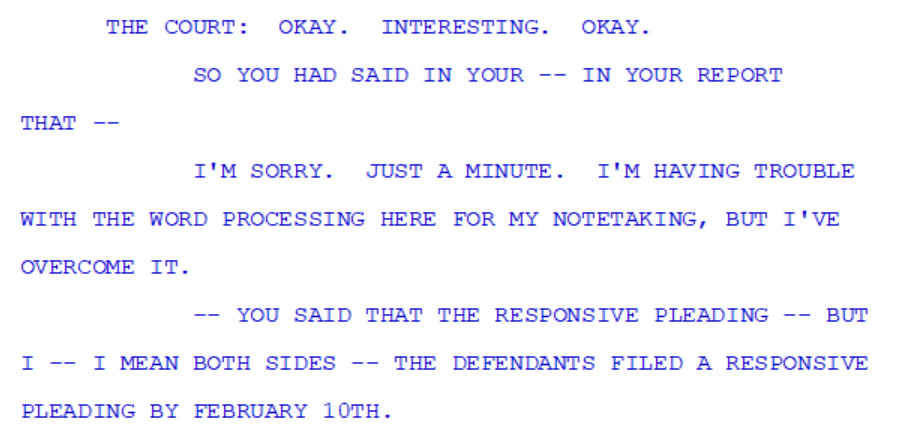
Notably, this Judge appeared on the CourtConnect screen with her chin resting on her hand, supported by her elbow, resuming this position immediately after referencing the “word processing… notetaking” software glitch. This strongly suggests she was not manually taking notes, but instead relying on ASR software to transcribe the proceedings in real-time.
Historically, judges have taken notes either by typing on a keyboard using programs like Microsoft Word or by handwriting notes. Some, like one judge formerly trained as a shorthand reporter, have even employed Gregg shorthand for quick notetaking. Additionally, certified shorthand reporters have long been employed to provide real-time verbatim transcripts, which judges can view through LiveNote software, mirrored monitors, or internet-connected proprietary programs. Immediate transcripts—both rough and certified—have always been readily available.
However, a new and legally questionable method has infiltrated the bench: ASR-based notetaking. A quick online search for notetaking programs reveals a flood of AI-powered transcription software capable of capturing and converting spoken words into text.

According to the Superior Court’s own published rules for audio/video court hearings, recording court proceedings “in any way” is explicitly prohibited for all participants. This raises an obvious issue: ASR software fundamentally relies on audio capture. It records spoken words via a microphone, processes the audio data into a transcript, and saves a .wav file in the process. Any ASR provider will confirm that this is how their software functions, meaning that by using ASR software, the court is—by its own definition—recording the proceedings.

It’s kind of a no-brainer that ASR, automated speech recognition, requires a microphone to capture the spoken words, and then records the audio that it captures to then be analyzed by the software. A wav file is created and saved in the software. Just check with any number of these ASR companies to verify that’s how it works. So, in essence, it is RECORDING the court proceeding.

Let’s break down the Superior Court’s official admonition, which warns against unauthorized recordings. Nowhere does it state that recording can be permitted at the court’s discretion. Instead, it specifies that sanctions may be imposed for violations. But what happens when a judge is the one violating the law? Apparently, nothing.
Besides the court’s own admonition, what law is being broken?
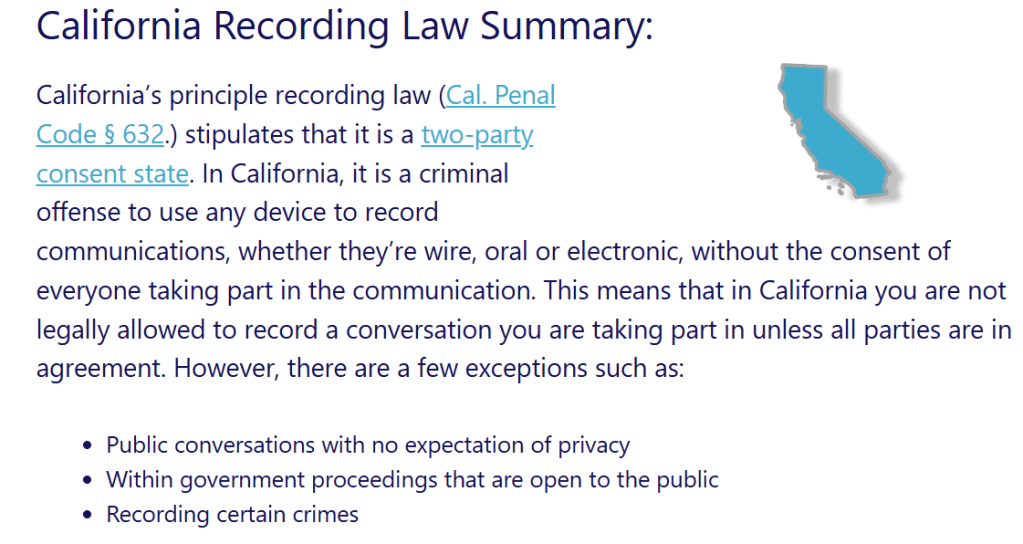
This raises an even bigger question: If public government proceedings are legally allowed to be recorded, why does the court explicitly prohibit it for others while seemingly engaging in the practice themselves? The double standard is glaring, and the implications for transparency and legal accountability are profound.

Judges are not explicitly exempt from Penal Code 632, as subsection (b) defines “person” to include individuals acting on behalf of the government. However, subsection (c) states that communications in judicial proceedings open to the public are not considered confidential, meaning court proceedings may not fall under this law’s protection. This raises concerns about whether ASR software, which inherently records audio, conflicts with legal and ethical standards.
When judges violate the law, it creates serious legal and ethical conflicts that undermine the judiciary’s integrity. Legally, judges are bound by the same laws as citizens, and violating Penal Code 632 or court regulations on recording raises concerns about selective enforcement and accountability. Ethically, judges are expected to uphold impartiality and fairness, yet disregarding rules they enforce on others erodes public trust. Moreover, their actions set dangerous precedents, suggesting that judicial figures operate above the law, which contradicts the foundational principle of equal justice.
The Trumpets of Doom are silently wailing across American courtrooms as judges eagerly attempt to solve a problem that, in reality, does not exist: a supposed shortage of court reporters. This so-called crisis, first highlighted in a 2013 study by Ducker Worldwide, predicted a deficit of 5,500 court reporters by 2018. However, that shortage never truly materialized. Instead, what has emerged is something far more insidious—a calculated attempt to replace a critical, time-honored profession with inferior digital alternatives, jeopardizing the accuracy of court records and, ultimately, the integrity of democracy itself.
The judicial system, legislators, attorneys, and court reporting associations were slow to react to the warnings raised by the Ducker study. When they finally did, the response was not to strengthen stenography education or address recruitment strategically but to open the floodgates for digital court reporting and voice-to-text software. These alternatives, while marketed as innovative and cost-effective, fail to meet the reliability standards of human stenographers. They are now being touted as the inevitable future despite mounting evidence of their inadequacy.
The irony is that the predicted court reporter shortage did not materialize in 2018 as forecasted. Instead, the field has seen a surge of interest, with stenography schools now experiencing unprecedented enrollment numbers. Stenographers have worked tirelessly to recruit and train new professionals, successfully counteracting the doomsday predictions. Yet, the push for digital reporting persists, driven not by necessity but by a concerted effort to replace highly skilled workers with automation that benefits corporations rather than the public.
The real crisis lies not in a lack of stenographers but in the misinformation campaign that seeks to justify their replacement. Proponents of digital court reporting claim that artificial intelligence and voice recognition software can accurately transcribe legal proceedings, but real-world applications tell a different story. Unlike certified court reporters who undergo rigorous training, digital alternatives rely on automated transcription software and underqualified operators, leading to significant errors in official records.
Errors in legal transcripts can have devastating consequences. A single misinterpreted word in a court proceeding can change the entire outcome of a case. Stenographers provide real-time, verbatim transcription, ensuring accuracy and accountability—qualities that digital recording systems simply cannot replicate with the same reliability.
Furthermore, the widespread implementation of digital court reporting raises serious concerns about data security and privacy. With digital recordings susceptible to hacking and tampering, the integrity of legal records is at risk. Unlike stenographers, who provide a human safeguard against such breaches, digital systems introduce vulnerabilities that could be exploited to alter or manipulate court records, undermining the very foundation of justice.
At the heart of this transition is a profit-driven agenda. Companies that manufacture and market digital reporting software stand to gain immensely by convincing judicial systems to adopt their technology under the guise of efficiency and cost-cutting. By shifting from human stenographers to automated systems, courts may see an immediate reduction in short-term costs, but at what long-term price?
The legal profession relies on accurate documentation of proceedings to ensure fair trials and due process. The replacement of stenographers with flawed digital alternatives prioritizes convenience over justice, efficiency over accuracy, and profit over the rights of individuals. This corporate-driven push is not unique to the legal system; it reflects a broader trend of automation replacing skilled professions, often with disastrous results.
The repercussions of this digital takeover extend beyond the courtroom. Democracy thrives on transparency, accountability, and the rule of law—principles that require an accurate and indisputable record of legal proceedings. By replacing human stenographers with imperfect digital solutions, we introduce doubt and instability into a system that demands precision.
Imagine a scenario where a crucial piece of testimony is misinterpreted by automated transcription software. A defendant’s fate could hinge on a software error, leading to wrongful convictions or unjust rulings. The gradual erosion of reliable court records paves the way for corruption, as altered transcripts or missing testimonies could be manipulated to serve particular interests. When the very foundation of justice is compromised, democracy itself is at risk.
The digital deluge sweeping across the judicial system is not just a threat to the stenography profession—it is a direct assault on the integrity of legal proceedings and the democratic principles that govern America. By allowing technology to take precedence over human expertise, we are jeopardizing the accuracy of court records and endangering the lives of those who depend on them for justice.
It is not too late to counteract this dangerous shift. The legal community, policymakers, and the public must recognize the importance of preserving the stenography profession and resisting the corporate-driven push for digital court reporting. Here’s what can be done:
The battle to preserve stenography is not just about protecting jobs; it is about safeguarding the integrity of the judicial system and, by extension, American democracy. If we allow the digital deluge to wash away the human element from our courts, we risk losing far more than just a profession—we risk losing justice itself.
The Trumpets of Doom may be wailing, but they are not yet signaling the end. There is still time to resist this manufactured crisis and ensure that democracy, truth, and justice remain firmly rooted in the American courtroom. The fight for stenography is a fight for democracy, and it is one we must not lose.


In the world of business, disruption often comes when an upstart challenges traditional practices with innovation and technology. Uber, for example, reshaped the transportation industry by offering a user-friendly, mobile-first platform that connected riders with drivers directly, cutting out the middlemen and revolutionizing the way people think about taxis and car services. Similarly, digital court reporting is being touted as an innovation poised to disrupt the longstanding world of stenographic court reporting.
For over a century, stenographic court reporters, equipped with specialized machines and expert shorthand skills, have been responsible for capturing verbatim records of court proceedings. Their work has been essential in maintaining the accuracy and reliability of legal documentation. However, as large “Big Box” agencies brought in equity investors driven by profit, the idea of replacing human stenographers with digital solutions—promising an immediate 50% profit boost—has started to challenge this traditional practice, much like how Uber disrupted the taxi industry.
Stenographic court reporting has a rich history that has remained largely unchanged for over a century. Stenographers use a specialized shorthand machine to transcribe spoken words quickly and accurately during court hearings, depositions, and other legal proceedings. These professionals undergo extensive training to master the technique, which can be difficult to learn and requires years of practice to perfect.
However, despite the expertise and precision of stenographers, the industry has been facing mounting pressure due to various challenges, including the increasing demand for faster turnarounds, the rising costs of stenographic services, and the need for greater accessibility. However, the true driving force behind these changes is the pursuit of profit by large agencies. Enter digital court reporting.
Digital court reporting employs technology to record proceedings, sometimes paired with real-time transcription software. These systems can capture the spoken word, which can then be transcribed, edited, and shared instantly. Unlike stenography, which requires specific equipment and a skilled stenographer to transcribe, digital court reporting uses audio recordings combined with artificial intelligence (AI) to help streamline the process.
Unlike Uber’s disruption of the traditional taxi service with its efficient, on-demand, and tech-enabled solution, digital court reporting presents a step backward, undermining the accuracy, reliability, and professionalism that stenography provides. Rather than offering a fresh, cost-effective, and scalable alternative, it introduces risks to the legal field, compromising the integrity of court records. The supposed disadvantages of this approach include:
The supposed disadvantages of this approach include:
Looking at how Uber disrupted the transportation sector provides a useful lens for understanding how digital court reporting could disrupt stenography. Uber’s success was not just about providing a new service; it was about reimagining the entire business model of how taxis operated. Uber focused on user-centric experiences, a streamlined app-based interface, and cost-effective pricing, which resonated with both drivers and riders.
In contrast, digital court reporting presents an inferior model for documenting legal proceedings. Despite claims of speed, cost-effectiveness, and ease of access, digital court reporting platforms often fail to deliver accurate transcripts, leading to errors and delays. The promise of faster turnaround times is often undermined by technical failures and lack of oversight. This shift from the traditional stenographic model is a step backward, as it replaces skilled professionals with unreliable, automated systems that compromise the quality and integrity of court records.
Despite the claims made about digital court reporting, the shift from traditional stenography to digital platforms is far from the solution it’s being marketed as. As with any disruptive innovation, there are challenges to overcome, including:
While agencies hoped that digital court reporting would be the solution to reshape the industry, a better hybrid model will emerge—one that combines the best elements of both automated speech recognition and stenographic methods. Advantage Software is ahead of the game, quietly working on this technology for over a decade, it will emerge as the winner, keeping human court reporters at the helm of the legal transcription industry.
Just as Uber didn’t fully replace taxis, but created a complementary service, digital court reporting will never coexist alongside stenographic reporting. It may be relegated to potentially serving niche areas, like assisting the deaf and hard of hearing in university classrooms, or aiding lower courts with traffic hearings, and law firms with note-taking. However, it will likely fade out of the legal industry due to its catastrophic failures and unreliability.
By harnessing technology, stenographers can evolve to meet the needs of the modern legal environment, improving accessibility, reducing costs, and ensuring the continued accuracy and reliability of court records.
In conclusion, digital court reporting’s attempt to disrupt the traditional stenographic industry in much the same way Uber revolutionized the transportation sector, is a complete failure. Despite claims of innovation and efficiency, digital court reporting is unlikely to redefine the way legal professionals handle court transcripts. Rather than making the process faster, more affordable, or more accessible, it risks compromising accuracy, security, and reliability. As the legal system values precision and accountability, the integration of digital solutions may prove to be more of a hindrance than a help, much like how Uber’s impact on urban mobility has raised concerns about reliability and safety.

While Digital Court Reporting Threatens the Integrity of the Legal System, Stenography Will Always Remain the Gold Standard
In recent years, digital court reporting has emerged as an alternative to the long-standing tradition of stenographic court reporting. With promises of faster, more affordable transcription services powered by audio recordings and artificial intelligence (AI), digital court reporting is often hailed as a disruptor in the legal industry. However, despite its growing popularity, it’s clear that digital court reporting will never achieve the kind of widespread, transformative impact seen by Uber in the transportation industry. In fact, the rise of digital court reporting threatens the integrity of the legal system, while stenography continues to stand as the gold standard for accurate, reliable, and professional court transcription.
Much like how Uber disrupted the taxi industry by introducing a mobile-first platform that allowed riders to connect directly with drivers, digital court reporting promised a streamlined, tech-enabled approach to legal transcription. The idea is simple: use high-quality audio or video recording devices and AI-powered transcription tools to quickly generate written records of court proceedings without the need for human stenographers.
While digital court reporting promised a more affordable and scalable solution, it actually introduces significant risks to the accuracy, security, and overall reliability of court transcripts. Despite this, agencies are charging the same fees as they would for a skilled stenographer, offering no real savings. Unlike the regulated, professional stenographic system, digital reporting often relies on algorithms prone to errors, misinterpretations, and inaccuracies—especially with complex legal language, courtroom jargon, or overlapping speech. Additionally, achieving the scale necessary to meet demand still requires human operators, creating its own set of challenges. Training a gig workforce that is uncertified, unlicensed, and unaccountable leads to high turnover, missing transcripts, and no clear way to contact the digital reporters or transcribers involved. The workload becomes overwhelming for individuals not directly involved in the recording or transcription process, resulting in significant portions of proceedings missing from the final transcript.
Stenographic court reporting has been the gold standard for over a century. Stenographers are highly-trained professionals who use specialized shorthand machines to capture every spoken word in real-time, ensuring that the official court record is accurate, precise, and admissible. These professionals undergo years of training and are held to rigorous standards of accountability, ensuring the integrity of the transcript.
In contrast, digital court reporting, while efficient, lacks this same level of oversight and quality control. AI transcription software can struggle with accuracy, particularly in noisy or complex environments, and human intervention is still needed to ensure the final transcript is reliable. Even with the best AI tools available, they cannot replicate the nuanced judgment and expertise of a trained stenographer. The result is a higher risk of errors and potential legal challenges down the road.
Despite the promises of speed and cost savings, digital court reporting introduces several significant concerns that could compromise the integrity of legal proceedings:
The legal profession depends on accuracy, clarity, and the ability to trust court records. Stenographers offer a level of precision and accountability that digital systems have yet to match. Their ability to work under pressure, handle multi-speaker environments, and produce transcripts that are admissible in court is unmatched by AI-driven systems.
Stenographers are also integral to the courtroom environment, acting as neutral parties who are highly attuned to the proceedings. Unlike digital systems, which can only transcribe what they “hear,” stenographers can provide clarity when multiple voices speak simultaneously or when technical jargon is used. This ability to discern meaning in real-time is critical to ensuring that legal records reflect exactly what transpired in court.
Moreover, the professional training and certification of stenographers ensure a level of trustworthiness and reliability that AI solutions simply cannot offer. The certification process for court reporters is thorough and rigorous, demanding both technical skill and legal knowledge. Digital court reporting lacks this same professional oversight, and its algorithms are still in the early stages of development, which raises questions about the accuracy of AI-generated transcripts.
While digital court reporting is unlikely to replace stenography, it may serve as a complementary tool for less critical proceedings, such as simple hearings or administrative tasks. It’s essential to recognize that the legal system operates under strict rules of evidence, and the official record must be trustworthy. Stenography remains the only truly reliable method for ensuring that legal transcripts are accurate, secure, and legally defensible.
Just as Uber did not replace all forms of transportation, digital court reporting is not a universal solution for all legal situations. It is an alternative that may work in specific contexts, but for complex, high-stakes cases where accuracy and reliability are paramount, stenography will continue to be the gold standard.
While digital court reporting may offer some advantages in terms of cost and scalability, it will never be the Uber-like disruptive force that some envision. The technology may be useful in certain circumstances, but it cannot replace the accuracy, expertise, and professionalism of a trained stenographer. As the legal system continues to evolve, stenography will remain an indispensable tool for ensuring the integrity and reliability of court records, while digital reporting will serve as a supplementary solution at best.
In the end, the legal system demands precision and trust, and stenography will continue to lead the way, just as it has for over a century. Digital court reporting may have its place in the future, but it will never be the disruptor that completely transforms the way legal proceedings are documented. Stenography will always remain the gold standard.
While digital reporting may attempt to complement the legal process, it will never truly achieve this. Much like a little brother hoping to grow up someday, it can try all it wants, but it will never replace stenography, which remains the gold standard in ensuring accuracy, reliability, and trustworthiness in legal records.

The rise of digital technology has reshaped countless industries, and stenography is no exception. Court reporting, once dominated by skilled stenographers on shorthand machines, now faces increasing pressure from digital recording and automated transcription tools. Many within the field fear that their craft is at risk of becoming obsolete. However, if history has taught us anything, it’s that survival in the face of disruption depends less on the technology itself and more on how an industry responds to it.
Take the case of Kodak. For years, Kodak was synonymous with photography. It wasn’t technology that doomed the company—it was their inability to adapt their business model to leverage the opportunities digital technology provided. Similarly, stenographers don’t have to see digital disruption as a death knell for their profession. Instead, they can adapt and thrive by embracing what makes them irreplaceable while finding ways to integrate technology into their workflows.
Kodak didn’t fail because it lacked technological innovation. In fact, the company invented the digital camera in 1975. The problem was that Kodak clung to its traditional business model, which revolved around film sales. They failed to recognize that consumers were shifting their focus from capturing memories with film to sharing and storing them digitally. By the time Kodak acted, competitors like Canon and Sony had dominated the digital camera market, and smartphones made personal photography accessible to everyone.
For stenographers, this serves as a cautionary tale. Digital transcription tools and AI-powered voice recognition are becoming more accurate and accessible. Companies offering digital solutions promise lower costs and faster turnaround times, challenging the traditional role of stenographers in the courtroom and deposition settings. Ignoring these changes or clinging to old ways of working could leave stenographers vulnerable to the same fate Kodak suffered.
One of Kodak’s key mistakes was undervaluing what customers actually wanted in the digital age: convenience, ease of use, and immediacy. Stenographers can learn from this by focusing on the value they provide that digital tools can’t replicate.
Court reporting is about more than transcription; it’s about accuracy, context, and accountability. A stenographer’s skill lies in their ability to ensure that the record is clear and complete, even in chaotic or high-stakes situations. They can capture nuances like overlapping speech, emotional tones, or unclear statements that technology often struggles with.
Additionally, stenographers play an important role in managing the courtroom dynamic. They can provide immediate readbacks of testimony, clarify unclear remarks in real-time, and act as an impartial party in contentious cases. These human elements add a layer of reliability that no digital solution can match—at least not yet.
The key for stenographers is to emphasize these advantages. By positioning themselves as irreplaceable professionals who go beyond mere transcription, the Responsible Charge, they can make a compelling case for why their skills are still essential, even in an era of technological disruption.
Kodak’s downfall was partially due to their fear of cannibalizing their existing business with digital technology. They didn’t embrace the inevitable shift, and by the time they tried to pivot, it was too late. Stenographers can avoid this mistake by viewing digital tools as an opportunity, rather than a threat.
Stenographers began using digital audio recording as a backup over 20 years ago, but this practice has remained largely undisclosed. They are hesitant to provide the audio to attorneys due to concerns that a privileged conversation between an attorney and their client may have been inadvertently captured. In order to safeguard confidentiality, a stenographer would need to learn how to use audio editing software, such as Sony Sound Forge, to remove any “off the record” discussions. The time and cost of training for this added responsibility are significant barriers to offering this service. However, digital reporters are already providing similar services at no extra charge.
It’s time to be open about the digital audio recording tools that have been in use for over two decades to ensure an accurate record. However, releasing the audio presents an additional challenge: it would require careful scoping and editing to align it with the transcript, which would add costs and potentially extend the time needed for transcript production. That said, reporters could sell their edited digital audio files, certifying that the edits were done under their direction to remove off-the-record discussions while guaranteeing a full and accurate recording of the proceedings. This would allow them to introduce a new service fee for this offering, which would help cover the costs of sound editing software, training, and the extra time spent proofreading transcripts. By adopting this approach, reporters position themselves as tech-savvy professionals capable of delivering both accuracy and efficiency while offering a full-service solution.
Stenographers can also embrace technology to enhance their skill set. By training in emerging tools like Advantage Software’s new Eclipse “Boost” feature, which integrates automated speech recognition (ASR) into their computer-aided transcription (CAT) software while capturing the verbatim record, they can achieve realtime outputs with a 100% translation rate. This ensures consistent results across all reporters and increases satisfaction for realtime receivers, such as judges, attorneys, and the deaf and hard of hearing. Rather than resisting change, stenographers can align themselves with it, creating new value for clients who are navigating the same shifts.
Kodak’s failure to innovate wasn’t just about technology; it was about business strategy. They stuck to their traditional revenue model and failed to explore new ways to serve their customers. Stenographers can take a different path by rethinking how they deliver their services.
Stenographers have expanded their reach by offering remote deposition services, a growing trend in a post-pandemic world. This has helped meet the demand for services worldwide. Stenographers have also been attaining credentials in multiple states, which allow them to cover a greater territory and increase their workload and revenues.
Another avenue is education and consultation. Stenographers possess a wealth of knowledge about legal procedures and record-keeping. By offering training sessions or consultation services on how to manage accurate records, they can establish themselves as trusted advisors in addition to skilled practitioners.
Part of Kodak’s downfall was that they failed to educate the public about the value of their technology in the face of digital disruption. Stenographers must actively advocate for their profession to ensure that decision-makers in the legal field understand their value.
This could mean engaging with legal organizations to set standards for transcription quality, lobbying for regulations that require human oversight in legal record-keeping, or participating in public awareness campaigns to highlight the risks of relying solely on automated solutions.
By being proactive, stenographers can ensure that they remain a vital part of the legal ecosystem, even as technology evolves.
The future of stenography doesn’t have to be an “either-or” scenario. It’s not about choosing between traditional stenography and digital transcription, but finding the right balance. By blending their human expertise with the power of technology, stenographers can adapt to changing market demands while preserving the core of their profession.
The legal field may be changing, but it will always require accuracy, reliability, and accountability—qualities that stenographers are uniquely equipped to provide. Just as Kodak could have thrived by redefining its role in a digital world, stenographers can ensure their survival by embracing change, showcasing their unique value, and evolving their business models.
In the end, survival in the face of disruption isn’t about fighting technology; it’s about working with it to create something better.

Walking into a deposition or courtroom as a court reporter feels like stepping onto a battlefield. Each day, you don your gear, prepare your mind, and enter a war zone. But here’s the thing—most of the time, you don’t know what kind of war you’re walking into. Sometimes, it’s a skirmish on the outskirts. Other times, it’s a full-scale clash, and you’re right in the heart of the fray. Occasionally, you enter a cold war where both sides are biding their time, and other times, you’re walking into a room where the battle has already been fought and is just winding down, the final pieces being put into place. Each day is different, and no two cases are alike. But regardless of the intensity, one thing remains constant: you’re there to do a job that holds more weight than you might realize.
On the surface, it might look like just another meeting, a routine exchange of words between two attorneys. But in reality, every deposition or trial is a potential war. The stakes may be high or low, but the tension is always palpable. Lawyers are armed with their questions, witnesses with their testimonies, and opposing sides with their objections. The moment you step into that room, you’re not just observing—you’re in the thick of it. But unlike the participants, who are there to argue and sway the jury or judge, you are there to protect the record.
As a court reporter, you are essentially a silent witness to the whole affair. You are present in the room, but not a part of the drama. Yet, in that silence, you are crucial. You are the keeper of the record, the one who ensures that every word spoken, every nuance, every bit of evidence is preserved. Without you, all the efforts of the attorneys and witnesses would be in vain. The record wouldn’t exist, and without a record, there can be no appeal. If there’s one thing every attorney knows, it’s that without the record, they have no case.
The fact is, court reporters are like the unseen soldiers in a war—silent, steady, and always present. But much like soldiers, the importance of your role is often overlooked until the battle is over. You’re there to make sure everything is captured accurately and verbatim. And trust me, that is no small task.
You can be present for the most mundane discussions or the fiercest exchanges. But whether the room is quiet or charged with tension, your job doesn’t change. You don’t take sides. You don’t participate in the arguments. Your sole mission is to preserve the record.
It’s easy to feel like you’re just a fly on the wall, an insignificant figure in a room full of sharp minds trying to outwit one another. But in truth, that’s far from reality. Without you, the entire structure of the legal process crumbles. The opposing attorneys may argue until they’re blue in the face, but the record you create will outlast their words.
Sometimes, in the heat of battle, attorneys will turn to you in a way that feels like a tactical move. They don’t directly address you, but they may try to manipulate the situation with their tone, the way they direct questions, or how they behave toward you. They might use you to intimidate the other side. Perhaps they will pause dramatically before speaking, as if to draw attention to every word, knowing you’re capturing it all. Or maybe they’ll go out of their way to be extra polite, knowing that it will reflect well when it’s time to argue their case later.
This can sometimes feel uncomfortable, like you’re caught in the middle of a chess match where you’re just the pawn. But here’s the thing—you’re not supposed to get rattled. The attorneys might be playing games, but you cannot afford to let them distract you from your job. You cannot let their tactics cause you to falter. As much as the room might feel tense, your job is to stay calm, focused, and diligent. They’re not aiming their guns at you, after all. In a strange way, you’re the one neutralizing the battle by doing your job with precision.
But sometimes, attorneys will show you kindness. And while that might feel like a moment of camaraderie, it’s also a subtle weapon in their arsenal. Lawyers know that showing too much kindness or respect to a court reporter might make them appear weak to the other side. It’s a balancing act: too much kindness, and they risk showing vulnerability. Too much coldness, and they risk appearing unprofessional. It’s a delicate dance, and you are the center of that performance.
Over time, I’ve learned one very important lesson: You have to get over yourself. I say this with the utmost respect, because I too had to come to terms with it, but the reality is this: you are not the star of the show.
Court reporters, myself included, can sometimes fall into the trap of thinking we are somehow central to the case. After all, we’re capturing every word, every moment, on our steno machines or voice masks. Without us, the whole case could fall apart. And that’s true. But here’s where the ego check comes in: the truth is, we are both important and utterly irrelevant at the same time.
We are important because we preserve the record. But outside of that, we are essentially replaceable. There are other court reporters out there, and they are just as capable as we are of capturing the words, the moments, the nuances. If we let our egos inflate, we risk losing sight of what truly matters. Our job isn’t about being noticed. It’s about making sure the record is perfect.
I’ve learned to appreciate this balance. In a courtroom, I am everything in that moment, and yet, I am invisible. This duality is humbling, and it’s something that has taken time to fully grasp. But once you internalize it, you realize that the ego doesn’t serve you in the long run. When you let go of the need for validation or recognition, you become a better court reporter.
At the end of the day, we are the ones who protect the record. And in doing so, we protect the potential for appeal. If things go wrong, if the case turns sour for one side or the other, they will always have the opportunity to go back to the record you’ve created.
Without us, their ability to appeal is reduced to nothing. If a party loses and the record is incomplete or inaccurate, that loss becomes final. But when the record is preserved and solid, no matter what happens in the battle, there’s always a chance for a new fight to take place.
And that, in essence, is what makes us so crucial. We might not be fighting the battle directly, but our role in the war is invaluable. Without us, the fight would be meaningless. And without us, the outcome is inevitable.
In the end, every deposition, every trial is a war. But we are the silent soldiers who ensure that when the dust settles, the record stands, and the possibility of a future battle remains. So when you walk into that war zone, remember: stay calm, stay focused, and understand the weight of your role. You’re not just there to report every word —you’re there to protect the future of the case itself.

Rapidly developing technologies, like artificial intelligence (AI), often disrupt established systems and provoke uncertainty, as we’ve seen in various industries. Yet, the promise AI holds for stenographic court reporting is undeniable. While navigating this wave of innovation and the changes it brings, it’s crucial to focus on the fundamentals: upholding high professional standards, adapting to evolving tools, and fostering long-term success.
Is the adoption of AI in court reporting headed toward an unsustainable trend, or is it paving the way for a transformative and enduring future for the profession?
There are some who raise the question of whether AI could undermine the profession or lead to unsustainable shifts in the market. As a measured optimist, I approach these concerns with nuance.
Challenges tied to AI integration in stenographic reporting—such as job displacement, ethical dilemmas around accuracy, and the potential undervaluation of human expertise—are real. However, these challenges are manageable, and I am energized by the potential AI brings to the profession.
AI has the capacity to enhance accuracy, streamline transcription processes, and improve access to legal records for courts and litigants alike. The transformation is already underway, and the benefits will extend to countless stakeholders—from legal professionals to the public. This includes faster turnaround times for transcripts, real-time captioning for accessibility, and advanced tools for verifying complex testimonies. While stenographic roles may evolve, new opportunities will also emerge for court reporters to specialize in areas requiring human judgment, nuance, and precision.
Reflecting on historical breakthroughs, the rise of AI in court reporting mirrors the transformational impact of the internal combustion engine on the 19th-century economy. Initially, few could grasp how extensively the engine would revolutionize transportation, manufacturing, and agriculture. It created new industries, redefined economies, and fueled unprecedented growth.
Similarly, AI has the potential to redefine stenographic reporting. It will streamline workflows, enhance real-time capabilities, and offer tools that expand the scope and efficiency of the profession. Over time, this foundational technology will become an indispensable asset for court reporters, helping to ensure justice is served accurately and efficiently.
Does this mean every AI solution for court reporting will succeed? Certainly not. Just as in any industry, some tools may fall short of expectations, while others will exceed them. There will be winners and losers as competitive forces shape the marketplace. But these disruptions are part of a broader innovation cycle—one that court reporters have weathered before, from the advent of shorthand machines to modern CAT (computer-aided transcription) systems.
For instance, technologies like Advantage Software’s Eclipse, which integrates Automated Speech Recognition into Computer-Aided Transcription software to enhance the speed and accuracy of human court reporters, are positioned for success. In contrast, outdated approaches such as digital transcribers—reminiscent of 18th-century methods—are bound to fail. Solutions that preserve the court reporter as the Responsible Charge will prevail, as accountability and responsibility remain of paramount importance in the legal industry. Furthermore, when all court reporters can deliver high-quality realtime output, it eliminates the uncertainty lawyers face when relying on the varying skills of different reporters. This consistency in service ensures a reliable and professional experience across the board. It also fosters a higher and greatly improved level of end-user satisfaction.
Market volatility and uncertainty often accompany transformative periods. However, the long-term potential of AI in court reporting is undeniable. By leveraging AI to solve real problems—whether automating mundane tasks, improving transcription accuracy, or expanding accessibility—court reporters have the opportunity to lead this new era of innovation.
The essence of success in this AI-driven transformation lies in focusing on quality. Court reporting technologies must meet real needs, deliver reliable solutions, and complement the expertise of skilled professionals. Teams that prioritize ethical innovation, user-friendly design, and adaptability will thrive. Meanwhile, stenographic court reporters who embrace lifelong learning and adaptability will remain indispensable contributors to the legal system.
Looking beyond short-term market fluctuations, the integration of AI into stenographic court reporting is much like the development of the internal combustion engine—an unprecedented driver of growth, efficiency, and innovation. For professionals in the field, this transformation is not a threat, but a world of opportunity, promising a more dynamic and impactful future for the profession.
This perspective reaffirms that while AI will reshape the landscape of stenographic court reporting, it also has the potential to elevate the profession to new heights of excellence and relevance.

Thanks to Governor Newsom, the reign of the exploitation of stenographers in California is about to end! Starting next week, January 1, 2025, Senate Bill 988 goes into effect.
I attribute a majority of the shortage of court reporters to many of the things that this bill attempts to address and correct.

Just this past day after Christmas, I got an email from an agency saying they were not going to pay me on a copy because the attorney had canceled his order. But the transcript was already provided to that attorney. Then in a subsequent email, after my attempting to clarify things and pursue payment, the agency’s “Billing Director” cc’d all of the calendaring personnel, insinuating that calendaring should maybe flag me as a problem and perhaps take me off the distribution list for work. Why else would a billing person pull a calendaring person into an email that’s pursuing payment? Well, Newsom’s “Anti-Retaliation” part of SB 988 should take care of that, I hope.
How many of your freelance court reporters lost work because of attempts to collect payments from agencies?
How many of you have been stiffed on copy orders?
How many of you are still waiting to be paid on services provided over 90 days ago? six months ago? a year ago?
How many of you have had attorneys “cancel” the order to transcribe something after it’s been scoped and produced and sent to them?
How many of you have had agencies try to cut your invoice in half after the work has been done because their client wanted to negotiate their bill after the work was done?
The answer to this is: so many court reporters have been abused and exploited in these ways that many of them have left the field, so many that there is now a shortage. And those that remain in the field, refuse to recommend this field to any prospective newcomers and are refusing to positively mentor their generational replacements.
Agencies, attorneys, and judges are mainly to blame for the shortage of reporters, by the repeated, continuous, and ongoing abuse and exploitation of court reporters. There are many, many more I could add to this minimal list of 5 things, but addressing these five issues would be a great start to helping to turn around the destruction of our profession.
We are four days away from SB 988 taking effect. I’d better start working on my freelancer contract.
Mandatory contracts: Any freelancer performing over $250 of work for a hiring entity over a four month period is entitled to a contract outlining the scope of the work expected, the rate of pay, and the method of payment.



Stenographers in Los Angeles received this in their email inbox today, November 20, 2024, at 11:20 a.m.
If you go to their website, they have an explainer video that shows the product in action. It looks to be nothing more than a search filter to help find words amongs all of an attorneys’ depo transcripts.

It provides you with only three search filters, which doesn’t seem very sophisticated, but maybe it’s better than anything they have available to them now to search for something among multiple proceedings.

But does this really add something to the industry that didn’t exist? Is it “innovative,” as they claim? If you go to the Veritext portal, there’s one search field that let’s you do all three searches in that one box – attorney, witness, case. So do we really need three designated boxes for searches, when one box does the trick for all 3? Well, I guess Steno didn’t know that because they’re not a Veritext client and can’t see what their portal does for attorneys.

I believe they made a huge mistake in naming the product how they did, because my first assumption was that they came out with a product that will CREATE an AI-generated Transcript. I was relieved to learn that my initial reaction to their new product announcement was all wrong. Sometimes I’m very happy to be wrong.
It’s definitely creating a buzz in the industry today!
In response to my inquiry, Steno explained how their new product could help increase demand for our certified transcripts.

Summarizing and analyzing deposition content has been something that court reporters and agencies have steered away from intentionally for over 150 years. It crosses the ethical line of remaining neutral and unbiased for court reporters to participate in something like this. I’m sure the Big Box agencies would have done something like this a decade ago, if there wasn’t a hesitation about crossing that ethical line that defines the very core of their business.
Had Steno Agency spun off another company that handles tech software tools for attorneys and not have it attached to court reporting, I think that may have been a safer play. But they have to decide who and what they are. Are they a court reporting agency? Or are they a software innovator? As a software provider for the legal industry, are they really that innovative? I mean, CoverCrow launched in April 2019 with a full dashboard for freelancers, six years before Steno Agency launched a dashboard for their freelancers, and it has only a fraction of the tools that CoverCrow offers.
Looking at AI tools for attorneys, there’s a glut of software on the market now offering this. Steno Agency made the top of the search list. Kuddos for the great SEO strategy!






I mean, that’s just the first two pages in Google search results. The list goes on and on and on. What makes one so different than another or more innovative? They’re all using the same generative AI engine.
And who are using these software tools to summarize legal proceedings? Attorneys, who then give it to their Insurance companies. And what does it look like in a court trial where insurance companies heavily rely on AI summary services and are not reading transcripts or interrogatories? Well, I just finished a bad faith trial that was a result of an insurance company who relied on summaries to value a case. The valuation was wrong because it missed critical pieces of information of injuries that were revealed in interrogatories and the deposition that never made it into the summaries. The insurance company had a $100,000 policy limit that they failed to negotiate a settlement on, the case went to trial, and the injured driver (not the insured) was awarded $3 million. So who is responsible to pay the $3 million? The insured driver who was only insured up to $100k? Or the insurance company who read AI summaries, instead of reading the interrogatories or the court reporters transcripts of the depositions of the injured? Or the law firm who used the AI software tools to produce the summaries for the insurance company that was used to value the case? Well, the jury said the insurance company and the law firm have to pay the $3 million, and not the insureds.
Here’s what the expert witness had to say about using summaries in litigation at the jury trial. (names have been changed to protect all involved.)
Q Were you able to determine if Tanya Rory ever reviewed the medical records that had been gathered by Bando and Terry in response to their subpoenas?
A She did not.
Q And were you able to determine if Tanya Rory ever looked at the — Ms. Merry’s responses to interrogatories that she had provided to the Bando and Terry firm?
A I don’t think so.
Q And were you able to determine if the adjuster, Ms. Rory, ever looked at the responses to the request of production of documents that Ms. Merry provided to Bando and Terry?
A No.
Q So just taking those items that I just mentioned, five, do you have any — do you have an opinion as to whether or not Ms. Rory was acting reasonably in performing her job as a claim adjuster?
A Honestly, when I reviewed this, I was shocked. An adjuster’s job is to review all of these things. The only thing I saw in this file were summaries that were written by Mr. Bando, who I’m sure everybody knows was the attorney that was hired that was working with — with Ms. Rory in defending the Ferraris. And she never requested or was given the medical records to look and see what was in them. She did not look at the responses to discovery to make her own determinations. One of the most important parts of certainly the deposition of your client, and that was not read. She did summarize these things, but she summarized them from a summary. She received the summary from Mr. Bando’s office and she summarized on a few different dates — I think it was March 4th and September 17th were the two bigger dates of the summaries.
Q Why, in your view, is it insufficient for her to have just relied upon the summaries that were provided to her by Bando and Terry?
A Sure. Because she has the job to evaluate the case. Mr. Bando can evaluate it, if — if they ask him, but it’s the insurance company that has the money. Mr. Bando doesn’t have any money. It’s up to the adjuster to review the case, look at everything possible, and make a determination as to the value of that case.
And if you simply rely on someone else’s opinion, without looking at them yourself, I don’t think you’re doing a proper job, not just for Ms. Merry, but for the Franklins, and, frankly, for — for your own company.
You’re hired to, not just write things down and ask questions, you need to be proactive. I think that’s one of the things that was missing mostly in this file. There was nothing proactive that I saw of — of how the adjustment was attempted.
I wonder if the next step for the law firm and the insurance company could be to sue the sofware provider of these summaries because they missed a critical piece of information needed to valuate the claim – – the injuries. And possibly, by extension, the court reporter who was working for the company that provided the summary using those transcripts, who was hired by them? I dunno? It’s a possibility. I’ve seen fringe companies get sued in cases like asbestos, medical malpractice, etc. They use a blanket approach and sue everybody and let them all settle out or litigate out of it, which are equally costly. As a court reporter, I don’t want to be drawn into this fight with AI transcript summaries in any way. This has me concerned. So concerned, in fact, that I choose not to do any freelance work with agencies that have chosen to cross that questionably ethical line of providing AI summaries of deposition transcripts to attorneys and ultimately insurance companies.
Luckily, for the AI Software provider of the summaries, it was never asked in this trial how the summaries were made – by human or AI software. So they’re safe for now. But as AI summaries continue to propagate the legal landscape, it’s only a matter of time before the finger of blame gets pointed in that direction.
Watch the Sizzle Reel of their Launch Party here.
View pictures of their launch party here.

Have you read Christopher Day’s article, “Forced to Pay NCRA…”?
Forced to Pay NCRA Membership Dues to Work In Your State? Contact Stenonymous!
I’ve long believed it’s problematic for a third-party nonprofit organization to require a license in order to work in a state, yet this practice is common and not widely questioned.
In the 1980s, the National Society of Professional Engineers (PE) faced a similar issue: too many people were calling themselves engineers. To address this, the PE implemented several strategies:
These steps were instrumental in the success of the engineering industry. Many engineering firms have thrived, keeping up with wage inflation, with some companies earning millions annually. This is a model that stenographers could have followed—and arguably should have—if a similar strategy had been adopted.
Instead, the National Court Reporters Association (NCRA) introduced its own certification, but only succeeded in getting 8 states to mandate it and 13 more to make it an optional requirement alongside their own state licensing. Unfortunately, this left 27 states without any form of licensing protection. This gap allowed the digital transcription movement to exploit the lack of regulation, starting with states like Florida, where they’ve completely dominated the market. Meanwhile, stenographers are left struggling with fewer opportunities.
The view that the NCRA’s actions (or lack thereof) have contributed to the decline of our industry isn’t popular, but it’s one worth considering. What the NCRA should have done was abandon its certification program and instead advocate for a standardized “CSR” (Certified Stenographic Reporter) license across all states. Had this happened, along with title protection and a Responsible Charge Statement in each state, we would have been much stronger, and the rise of digital transcription would have faced far more resistance.
While it’s likely illegal to require certification from a single monopolistic organization—something the PE didn’t attempt to do—this issue has yet to be addressed in court. The NCRA could push for a state license, but it cannot require a license from a third-party monopoly. This opens the door for potential antitrust lawsuits. Interestingly, it seems Christopher Day is in talks with someone who may be preparing to challenge the current system.
If this issue were to come to light, the response would be massive. Reporters who have spent years and significant amounts of money on certification exams, CEUs, and conferences would be up in arms. Such a challenge could drastically shake up our industry, and we’d see plenty of backlash from those invested in the current setup.

A possible solution to this issue would be for the NCRA to collaborate with state governments, professional organizations, and individual stenographers to establish a universally recognized, standardized “CSR” (Certified Stenographic Reporter) license across all states. This unified approach would ensure consistency in qualifications, title protection, and professional standards, strengthening the profession and making it more difficult for digital transcription methods to replace us. By working toward state-mandated CSR licenses and implementing a uniform “Responsible Charge Statement,” the NCRA could help solidify the role of human stenographers, offering greater legal and professional protection nationwide. This proactive, collaborative effort would not only restore the credibility of our profession but also secure its future by defending it against further encroachment. Rather than perpetuating cycles of infighting and divisiveness, we should come together as one force, advocating for a solution that benefits everyone. By setting aside differences, we can demonstrate the power of unity in protecting and growing the stenographic profession for years to come.

Subscribe to get access to the rest of this post and other subscriber-only content.

 STENOIMPERIUM
You must be logged in to post a comment.