
The myth of the “killer litigator” makes for great television but poor courtroom strategy. After 20 years reporting every type of trial, I’ve seen the best win not by shouting but by clarity, discipline, and respect. Calm, principled advocacy persuades juries and builds credibility. The loudest voice rarely prevails—credibility, preparation, and respect for the record always do.
Category Archives: Legal Services
How to Be a Court Reporter’s Dream – A Guide for Attorneys and Witnesses

A strong transcript doesn’t happen by accident. Attorneys and witnesses can make a court reporter’s day—and protect their own record—by pacing questions, spelling difficult names, avoiding overlap, and simply showing respect. The reporter is your silent partner in justice. A handshake, a thank you, or a moment of clarity today can safeguard your record tomorrow.
The Knox County Privacy Breach – A Wake-Up Call on Confidentiality and Professional Duty

A hidden microphone at the Knox County courthouse exposed private meetings and cost three officials their careers. Beyond Nebraska, the message is clear: confidentiality is the backbone of justice. Court reporters, attorneys, and judges alike must protect the record, audit technology, and guard against shifting liability. Trust, once lost, is nearly impossible to restore.
Why Transcribing from Electronic Recordings Is Hearsay — and the Stenographic Profession’s Strongest Defense

AI and electronic recordings can’t replace stenographic reporters. Why? Because transcripts created by someone not present are hearsay — and hearsay is inadmissible. Only a sworn reporter assumes Responsible Charge of the record, accountable under law. AI can’t be punished, fined, jailed, or defend its transcript in court. Without accountability, it’s just unverifiable hearsay.
When Robots Win Trophies – What It Means for the Future of Stenography

A robot holding a trophy may symbolize progress, but in the courtroom, it represents a dangerous shortcut. While AI may offer speed, only a human stenographer ensures accuracy, accountability, and justice. When automation wins the spotlight, due process can lose. Let’s not trade trust for tech.
Why Save Steno?

Stenographers aren’t relics—they’re the guardians of the record. In courtrooms where every word matters, only a trained human can ensure accuracy, context, and integrity. When we replace steno with machines, we invite errors, mistrials, and lost justice. This isn’t about resisting technology. It’s about protecting due process. Save steno—because once it’s gone, you won’t realize what you’ve lost until it’s too late.
When the Record Breaks – A Deposition Disaster That Proves Why Humans Beat Machines

During a deposition, an attorney slammed the table in frustration—causing a digital “court reporter” to lose a large portion of the testimony due to equipment failure. Unlike certified stenographers, machines can’t adapt in real time or ensure the integrity of the record. This incident is a stark reminder: when accuracy matters, only a trained, licensed court reporter can truly safeguard the legal record.
When AI Enters the Deposition Room – The Legal and Ethical Minefield of Unauthorized Recordings

Attorneys are increasingly attempting to use AI tools like Fireflies.ai to record and transcribe depositions—without proper authorization. These tools threaten confidentiality, compromise the integrity of the official record, and undermine the role of certified court reporters. Reporters must stand firm: unauthorized recording is not permitted. If challenged, document the exchange, contact your agency, and remember—you are the official record, and your judgment matters.
AI Summaries in Litigation – Efficiency or a Lawsuit Waiting to Happen?

An AI-generated deposition summary missed a crucial medical statement about future surgery, leading an insurance company to undervalue a case—and a jury later awarded millions over policy limits. Now the question is: Who’s liable? The law firm? The AI vendor? Or the court reporting agency that sold the product? As AI floods legal workflows, expect a wave of litigation over errors that never should’ve been automated.
Not Optional – Why Stenographers Are Essential to the Constitution and Your Freedom

Court reporters aren’t just transcribers—they’re constitutional safeguards. Without a certified human creating the record, due process collapses. No accurate transcript means no appeal, no accountability, no justice. Stenographers ensure the truth is preserved, rights are protected, and freedom is upheld. Replacing them with machines doesn’t save money—it erodes democracy. Court reporters are the quiet guardians of liberty. Lose them, and you lose the record that protects us all.
“Digital Gatekeeping: How Facebook Job Boards Are Quietly Controlling Access to Court Reporting Jobs—and Why It May Be Illegal”

Facebook job boards for court reporters are becoming digital gatekeeping machines—run by fellow CSRs who block access to jobs without cause. When licensed professionals are excluded from critical work opportunities by biased moderators, it’s not just unethical—it may be a violation of CRB standards and antitrust laws. It’s time to expose the harm and demand oversight.
When Depositions Had Coffee Breaks – A Court Reporter’s Call to Action

There was a time when depositions had structure, civility, and coffee breaks. Now, reporters face 300-page days with no breaks, no boundaries, and inhuman turnaround times. We didn’t lose this all at once—it slipped away because no one said “no.” It’s time to draw the line. For our health, our quality, and the future of court reporting. We either reclaim our power—or watch it disappear for good.
The Ethical Crossroads of Technology in Law – Why Attorneys Must Defend Human Court Reporters

Attorneys have an ethical obligation to verify the integrity of the record. Yet ASR transcripts, often created without disclosure or certification, are slipping into legal proceedings unchecked. With error rates nearing 30%, no human accountability, and real risks to confidentiality, lawyers must take a stand. Certified human stenographers remain the gold standard. Accept no substitutes—your client’s rights may depend on it.
AI Might Be Cheaper—But It’s Gutting the Court Reporting Pipeline

Courtrooms aren’t podcasts—and AI isn’t ready to replace human court reporters. What’s at stake isn’t just jobs, but an entire pipeline: schools, certification boards, machine makers, and trained professionals. Once that system collapses, it’s gone. If we cut too deep, there will be no one left when AI fails. Choose accuracy. Choose humans. Choose us—while you still can.
The Silent Squeeze! How Insurance Companies and Contracting Are Crippling Court Reporters—and How to Fight Back

Insurance company contracting is quietly destroying the court reporting profession. Illegal in many states but rarely enforced, this practice strips independent reporters of long-time clients, undermines transcript integrity, and centralizes control in the hands of big-box firms. We must educate attorneys, demand legal enforcement, and organize as a profession. This is more than business—it’s about preserving justice, impartiality, and the future of court reporting.
The Real Threat to Stenography Isn’t Technology — It’s a Manufactured Crisis

The stenographic profession isn’t outdated — it’s under attack. A manufactured “shortage” narrative, pushed by corporate interests, aims to replace certified reporters with unregulated digital alternatives. But court reporting is thriving, technologically advanced, and essential to justice. It’s time to expose the fraud, reclaim our narrative, and fight for the integrity of the record — because the truth deserves a skilled human witness.
The Silent Breach – How Attorneys Are Illegally Sharing Court Transcripts in Violation of California Law

Under California Government Code § 69954(d), parties who purchase court transcripts may use them internally or as exhibits but cannot share copies with others. Despite this, many attorneys unlawfully distribute transcripts to opposing firms, undermining court reporters’ earnings and violating legal ethics. Unauthorized sharing risks sanctions, financial penalties, and damages the integrity of litigation. Compliance is essential to uphold fairness and professional responsibility.
The Role of the “Deposition Officer” in Court Reporting

A Deposition Officer is a digital reporter in states like California and Texas, where the title court reporter is reserved for state-certified professionals. They record legal proceedings using digital technology and are referred to as “The Officer” in transcripts. While they perform essential court reporting duties, they operate under different regulations, ensuring compliance with state laws while capturing accurate legal records for depositions and other proceedings.
The Dangers of Relying on AI Notetakers During Depositions

AI notetakers in legal depositions and trials offer convenience, but they come with significant risks. Issues like consent, privacy breaches, data security, and potential inaccuracies can undermine confidentiality and compromise attorney-client privilege. Missteps can lead to unintended disclosures, jeopardizing sensitive information. For these reasons, hiring a certified court reporter remains the safest choice to ensure accuracy, confidentiality, and compliance in legal proceedings, safeguarding the integrity of the record.
The California Supreme Court to Hear Family Violence Appellate Project v. Superior Courts: A Pivotal Moment for Court Reporting

Last Wednesday, the California Supreme Court made a significant decision to hear the case of Family Violence Appellate Project v. Superior Courts, a case that carries substantial implications for the future of court reporting in the state. This lawsuit alleges that several county superior courts—including those in Contra Costa, Los Angeles, San Diego, and SantaContinue reading “The California Supreme Court to Hear Family Violence Appellate Project v. Superior Courts: A Pivotal Moment for Court Reporting”
The Case Against Electronic Recording: Protecting the Integrity of the Judicial Record

The reliance on electronic recording threatens the accuracy and integrity of court records, undermining the role of certified court reporters. Unlike live reporters, digital recordings can suffer from technical failures, inaudible speech, and misinterpretations, jeopardizing appellate review. The push for electronic recording prioritizes cost-cutting over justice, ignoring the critical need for precise, verbatim transcripts in high-stakes cases such as family law and probate disputes.
The Best Teacher? Your Mistakes.

Mistakes are powerful teachers in court reporting. They highlight weaknesses, build resilience, and improve muscle memory. Instead of fearing errors, students should embrace them as learning opportunities. Keeping a mistake log, seeking feedback, and prioritizing accuracy over speed can accelerate growth. Even seasoned professionals make mistakes, but handling them with professionalism, continuous learning, and technology ensures progress. Every misstep is a stepping stone to mastery.
Has Digital Reporting Crossed the Rubicon in Court Reporting?

Digital reporting is reshaping the court reporting industry, moving from early adoption into the mainstream. AI-driven transcription tools, cost efficiency, and a stenographer shortage drive its growth. However, legal challenges and potential legislative bans pose barriers. As firms adopt hybrid models, traditional stenographers must adapt. The shift is inevitable—where will the industry stand as digital reporting continues its rise?
Is the Court Reporting Shortage Real or Manufactured
Court reporters continue to debate whether the industry is facing a real shortage or a retention crisis. Experts argue that the so-called shortage is a manufactured issue, fueled by outdated studies and profit-driven motives favoring digital alternatives. Low wages, lack of mentorship, and rising production costs contribute to retention struggles. Without proactive solutions like better pay and training programs, the profession risks decline, impacting the legal system’s accuracy and efficiency.
The Hidden Truth About Unpaid Transcript Copy Orders in the Legal Industry

Unpaid transcript copy orders are a hidden issue in the court reporting industry, often resulting in lost income for reporters. Some agencies may fail to disburse payments, either through oversight or lack of transparency. By tracking orders, following up on payments, and advocating for industry accountability, court reporters can protect themselves. Awareness and vigilance are crucial to ensuring fair compensation for their hard work.
The Hidden Costs of Replacing Human Court Reporters with Digital Alternatives

Agencies charge attorneys the same fees for both digital court reporters and traditional stenographers, so there are no upfront savings when choosing digital alternatives. Despite the initial cost being the same, certified shorthand reporters ultimately save law firms money by ensuring accurate, reliable transcripts. They help avoid costly mistakes, delays, and legal challenges, offering more value and protecting a firm’s reputation compared to digital reporting methods.
Rethinking the “Digital Court Reporting Revolution”
The legal documentation landscape is rapidly transforming as Court Reporting Agencies (CRAs) integrate digital solutions and AI to meet growing demands for accuracy and accessibility. By embracing AI-powered transcription, human-AI collaboration, and automated workflows, CRAs can enhance efficiency, expand service capacity, and maintain high standards of legal accuracy. This shift towards hybrid models and advanced security standards will reshape the future of court reporting in 2025 and beyond.
Seeing Stress and Surviving Vicarious Trauma for Court Reporters

Court reporters frequently encounter distressing content, leading to stress and vicarious trauma. Repeated exposure to emotional testimonies and high-pressure environments can impact mental well-being. Recognizing signs like fatigue, anxiety, and emotional numbness is crucial. Self-care strategies, including mindfulness, exercise, and professional support, help mitigate effects. This seminar equips court reporters with tools to maintain resilience while fulfilling their essential role in the legal system.
Court Calendar Life is a Daily Juggle

Being a court reporting calendar manager is anything but predictable. It’s a whirlwind of last-minute changes, urgent reschedules, and the constant juggling of reporters, attorneys, and unexpected mishaps. From double bookings to last-minute cancellations, every day is a high-stakes puzzle. Yet, through the chaos, calendar managers keep the industry running—ensuring depositions are covered, schedules stay intact, and no detail gets overlooked.
Why AI Translation Tools Have No Place in Legal Depositions and Courtrooms

AI translation tools pose serious risks in legal settings, where precision and nuance are essential. Depositions and courtroom proceedings require human interpreters who understand legal terminology, cultural context, and ethical responsibilities. AI lacks the ability to interpret tone, intent, and specialized legal language accurately. Relying on technology over trained professionals can lead to misinterpretations, jeopardizing cases and undermining justice. Human expertise remains irreplaceable.
A Court Reporter’s Guide to Navigating Difficult Attorneys

Court reporters play a vital role in ensuring an accurate record, yet some attorneys challenge their authority and dismiss procedural norms. Setting expectations early, standing firm, and leveraging judicial support can mitigate these challenges. Addressing common disruptions like cross-talk, mumbling, and dismissiveness is crucial. Ultimately, maintaining professionalism and confidence ensures smooth proceedings while preserving the integrity of the record. Stay strong—your work is essential!
The Ethical and Privacy Concerns of Deepfakes and AI in Court Reporting

Deepfake technology and AI pose serious ethical and privacy risks in court reporting, threatening the integrity of legal proceedings. AI bias can reinforce systemic injustices, while deepfakes challenge evidence authentication. Privacy concerns arise as sensitive legal data becomes vulnerable to cyber threats. To safeguard truth and democracy, legal professionals must implement verification tools, ethical AI training, and stronger security regulations to prevent manipulation and maintain trust.
Adapting Court Reporting with Music Industry Lessons

Court reporting is at a crossroads, much like the music industry once was. By embracing technology, offering high-value services, and expanding into new markets, court reporters can secure their place in the future. Leveraging branding, subscription models, and AI as a tool rather than a competitor will ensure the profession remains relevant. Just as musicians adapted, court reporters can evolve and thrive in a changing landscape.
Securing the Future of Court Reporting with a Responsible Charge Statement

Adopting a Responsible Charge Statement (similar to what the Society of Professional Engineers have implemented) could be an impactful and strategic move for the court reporting profession. This type of statement or standard would clarify the legal and ethical responsibilities of a court reporter, helping to further professionalize and legitimize the role. Here’s why itContinue reading “Securing the Future of Court Reporting with a Responsible Charge Statement”
The Fight to Preserve Human Court Reporters

Stenographers face increasing pressure from corporate and global forces advocating for Digital Court Reporting and Automated Speech Recognition. Despite recent leadership changes, the company once at the forefront of stenography persists on a harmful path. The decline of this profession jeopardizes the integrity of truth and justice within the legal system. Now is the time for stenographers to come together, uncover wrongdoing, and stand firm in defending their rightful role.
The Era of Court Reporting Disrupters is Over

Despite major investments and promises of innovation, digital court reporting has failed to disrupt the industry. Legal and regulatory hurdles, operational inefficiencies, and resistance from legal professionals have kept traditional stenographers in control. Companies like Veritext and US Legal have faced financial struggles, proving that digital solutions have yet to replace human expertise. The industry remains dominated by established players, with disruption proving far more difficult than anticipated.
Regulating Technology in Court Reporting
The rise of artificial intelligence (AI) and automatic speech recognition (ASR) threatens the accuracy and integrity of court reporting. These technologies are unreliable in legal settings, where precision is critical. To protect due process, strict regulations must prohibit AI and ASR from replacing certified human court reporters. Upholding the principle of “Responsible Charge” ensures accountability, ethical standards, and the continued trustworthiness of legal transcripts.
The FBI’s Battle Against Transnational Crime and the Shadowy Operations of Steno Nexus

FICTION, SHORT STORY: Steno Nexus, led by the enigmatic Serena Vale, operates as a respected legal industry firm—while secretly laundering money for a transnational criminal network. Under FBI scrutiny, its façade is unraveling, revealing deep connections to illicit enterprises. As investigators close in, the fate of this hidden empire hangs in the balance.
Decoupling – A Court Reporting Imperative

Court reporters are at a pivotal moment in their industry. By decoupling from traditional agencies, they can take control of their careers, increase earnings, and build direct relationships with clients. Embracing a direct business model offers flexibility, efficiency, and autonomy, positioning court reporters for success in a rapidly changing market.
Why Court Reporters Don’t Respond to Digital Disruption

Despite the rise of AI-driven transcription, court reporters remain essential due to their unmatched accuracy and expertise. While digital transformation is reshaping the industry, tools like Eclipse by Advantage Software empower reporters, rather than replace them. With proper training, court reporters can harness technology to enhance efficiency while preserving professional standards.
If at first you don’t succeed, lie, lie again!

The court reporting industry is facing a crisis of integrity, with corporate entities prioritizing profits over accuracy. Unlicensed digital recorders and misleading practices are leading to flawed transcripts, jeopardizing justice. Attorneys, judges, and policymakers must take action to restore transparency, demand certified stenographers, and hold companies accountable for deception.
The Court Reporting Community on Facebook: Navigating the Toxic Dynamics

Court reporting Facebook groups can be invaluable resources for learning and support, but toxic behaviors can undermine their potential. In some communities, making mistakes, asking questions, speaking up, and offering new ideas can lead to ridicule or discouragement. By recognizing these toxic patterns and fostering positive, constructive environments, court reporters can protect their mental health, stay motivated, and continue to thrive in their profession.
Save Stenography! Stop the Slaughter!
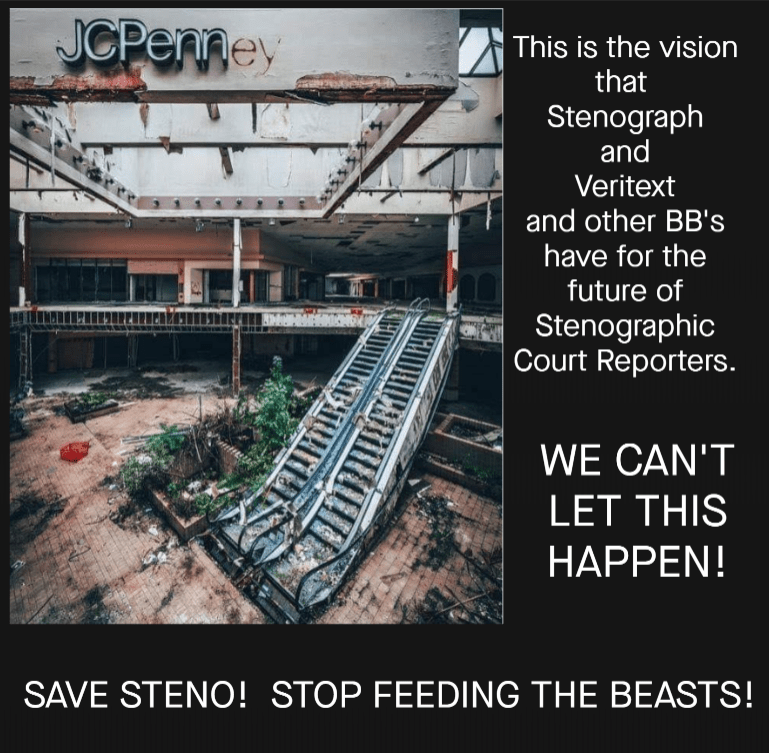
The future of stenographic court reporting is under threat from corporate giants like Stenograph and Veritext, backed by private equity firms. Their push for automation and cheaper alternatives threatens the accuracy, professionalism, and job security of skilled stenographers. If we allow this, we risk losing a vital part of the legal system. It’s time to take a stand and save stenography before it’s too late.
The Real Reason America Doesn’t Have Enough Court Reporters

The shortage of court reporters in the U.S. mirrors the truck driver shortage, with both professions facing overwhelming stress, isolation, and devaluation. Court reporters endure long hours of intense focus and mental exhaustion, while truck drivers battle physical deprivation and loneliness. As both industries face increasing reliance on technology, addressing the underlying issues—such as better pay, respect, and working conditions—is crucial to attracting and retaining workers.
How to be assertive without losing credibility

Assertiveness is key in court reporting, where precision and professionalism are paramount. Striking the right balance ensures that your needs are met without diminishing others. Whether clarifying details, setting boundaries, or addressing mistakes, assertiveness helps you maintain credibility while fostering strong, respectful relationships in the legal field. Mastering this skill will enhance your career and reputation.
Jury Duty Blues

When NFL kicker Brandon Aubrey of the Dallas Cowboys missed practice for jury duty, it highlighted how even high-profile athletes aren’t exempt from civic responsibilities. Aubrey’s situation sheds light on the unique intersection of professional sports and everyday obligations, reminding us all that justice calls for everyone, no matter their career.
Notaries Posing as Court Reporters

Notaries posing as court reporters raise significant legal and ethical concerns, risking the accuracy of court transcripts and the integrity of legal proceedings. This issue underscores the broader debate over nonlawyer involvement in legal services, highlighting the need for clearer regulations and stronger safeguards to protect consumers and maintain justice.
Court Reporter Warriors Willing to Lay it all down for their Profession!

These are just a few of the names in the fight to preserve stenographic court reporting, an industry under siege by the rise of digital recording and artificial intelligence. While automation is often heralded as the inevitable future, stalwart professionals are proving that there’s a human element to this industry that cannot be replaced.
The Court Reporting Industry Needs to Break With its Gender and Women’s Rights Problems. The State of Women hangs in the balance

The court reporting industry, despite being predominantly female, faces significant gender-based challenges, including wage disparities, underrepresentation in leadership, and persistent biases. Women’s contributions are often undervalued, limiting career advancement and economic equity. Addressing these issues requires policy reforms, mentorship programs, and greater advocacy for fair compensation. By challenging stereotypes and promoting inclusivity, the industry can pave the way for a more equitable future for women in the profession.
How court reporting agencies rip off poor court reporters — and get away with it

Court reporting agencies exploit reporters through unfair pay structures, hidden fees, and delayed payments, leaving many struggling financially. Reporters often work long hours without guaranteed pay, while agencies take excessive cuts from transcript fees. Blacklisting and lack of legal protections further suppress complaints. To combat this, transparency, regulation, and collective action are needed to ensure fair compensation for these essential professionals in the legal system.
 STENOIMPERIUM