
In courtrooms across America, a quiet neurological feat unfolds every day. Realtime court reporters transform spoken language into written record at the speed of conversation, activating networks in the brain responsible for language, memory, motor control, and prediction. Neuroscience suggests the skill resembles elite musical performance—less like typing and more like playing a complex instrument with language itself as the score.
Category Archives: Legal Services
When Lawyers Start Saying No to AI Notetakers – The growing legal caution behind a small but telling moment in a courtroom
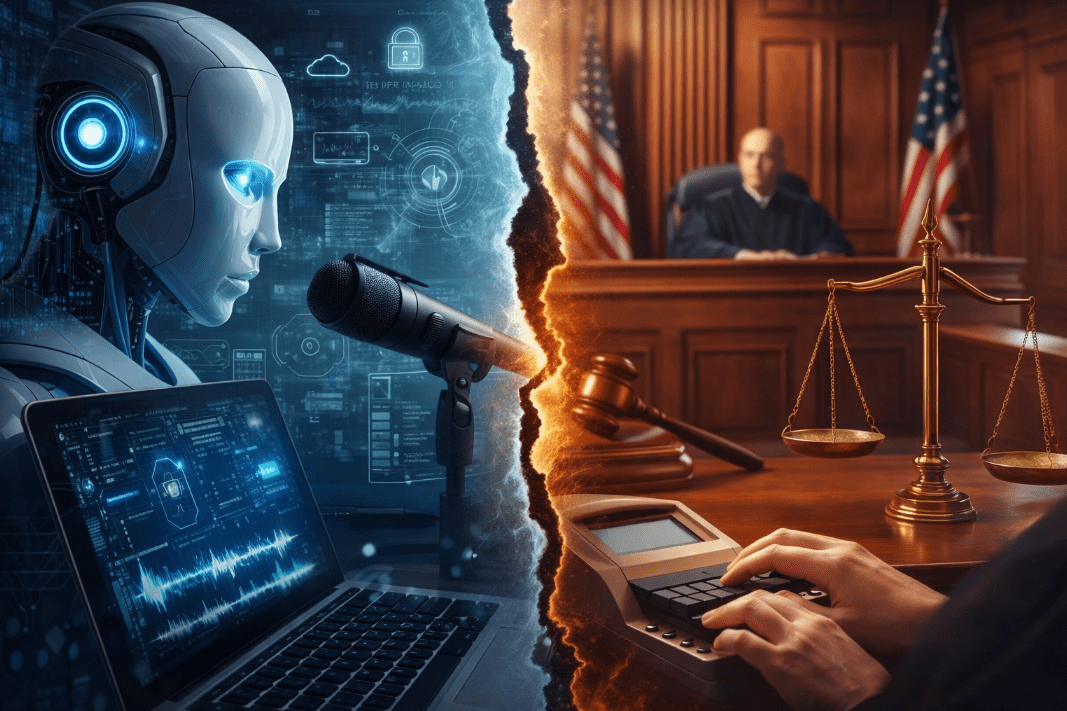
As artificial-intelligence notetakers quietly enter courtrooms and depositions, a growing number of attorneys are beginning to push back. Citing confidentiality risks, unauthorized recording concerns, and the precedent of Heppner, some lawyers are banning the technology outright. The moment reflects a larger realization spreading through the legal profession: tools designed for convenience may threaten privilege, the integrity of proceedings, and the reliability of the official record.
The Quiet Replacement
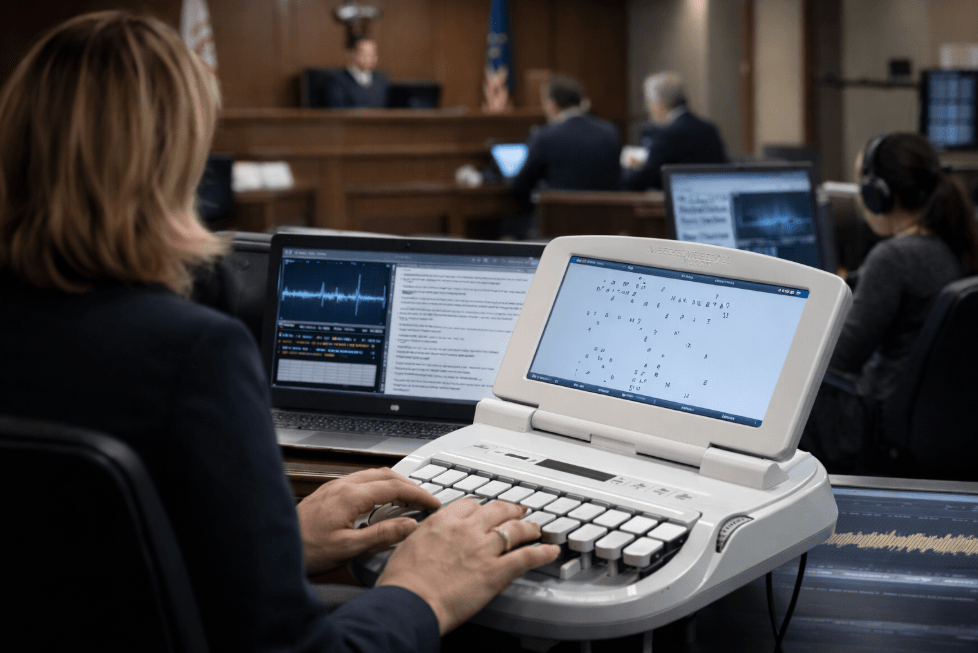
A new transcript economy is emerging inside the legal system — one where testimony is no longer captured by a single accountable professional but assembled by multiple workers guided by software. The issue isn’t technology replacing stenographers. It’s responsibility dissolving across a workflow. When no one fully authors the record, the legal system risks relying on documents that look official but lack a verifiable origin.
The Thirst Behind the Transcript – Why AI-Generated Court Records Carry an Unsustainable Water Footprint

Artificial intelligence may appear weightless, but every automated transcript depends on water-intensive data centers that must constantly cool high-heat computing systems. As courts consider replacing human stenographers with AI transcription, the hidden environmental cost becomes harder to ignore. At scale, billions of routine legal interactions could quietly divert vast freshwater resources from communities that already face growing water scarcity pressures.
The New AI Disclosure Mandate in Florida Courts – Transparency, Accountability, and the Future of Legal Practice
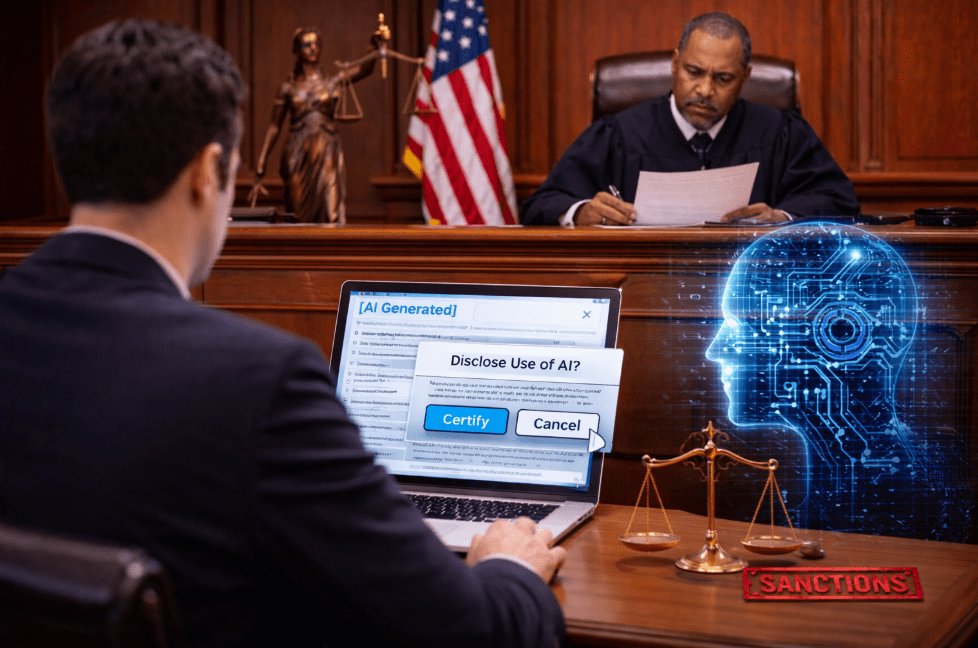
Two of Florida’s largest judicial circuits now require attorneys and self-represented litigants to disclose when generative AI is used in court filings and to certify that all citations and facts were independently verified. The orders emphasize that technology does not reduce professional responsibility and warn that failures to disclose or inaccuracies could lead to sanctions, including striking pleadings or disciplinary action.
When the Record Becomes a Battleground – A Call for Professionalism in High-Speed Proceedings
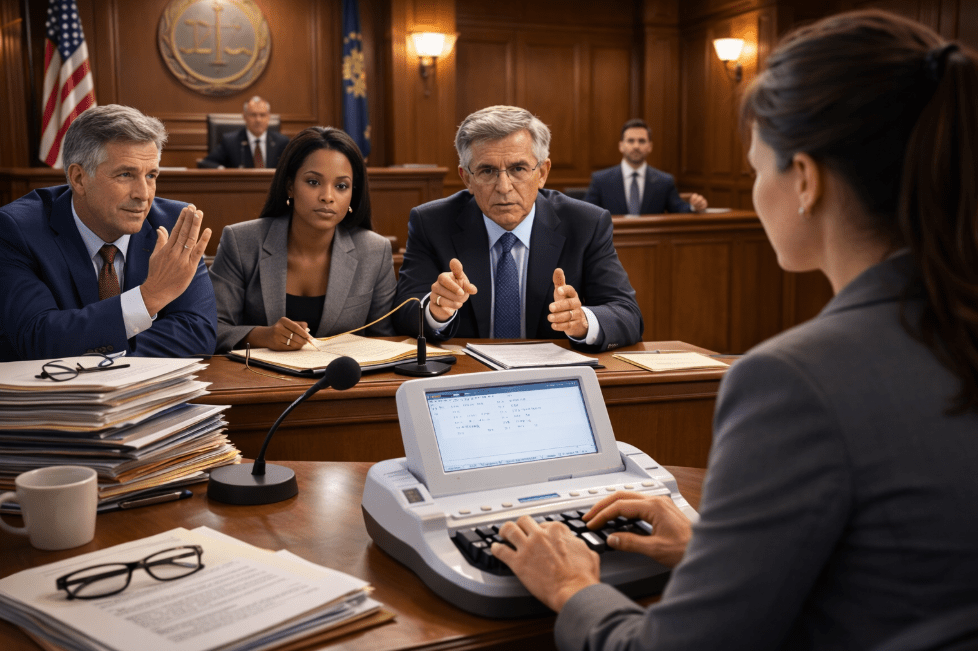
In high-pressure proceedings, speed is often mistaken for efficiency. But when testimony moves faster than the record can be accurately captured, attorneys assume hidden risk that may surface months later on appeal. Respecting pacing, allowing one speaker at a time, and responding professionally to requests for clarification are not courtesies—they are safeguards that protect clients, credibility, and the integrity of the official record.
When Titles Carry Legal Meaning – The JBCC’s Action Involving Kimberly McCright and What It Signals for the Court Reporting Profession
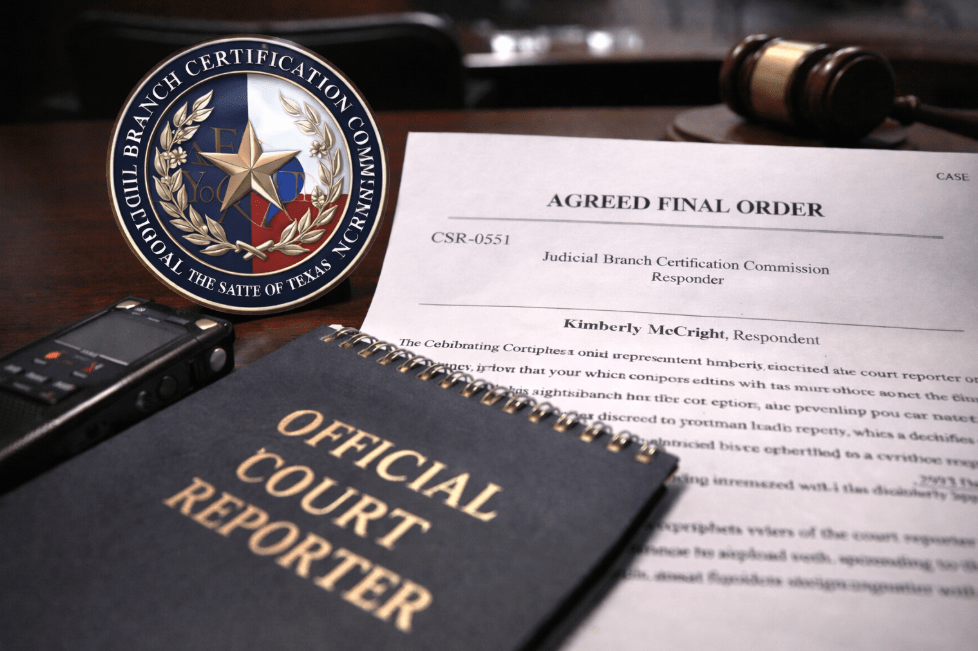
A recent enforcement action by the Texas Judicial Branch Certification Commission highlights a growing national tension over who may use the title “court reporter.” While resolved through an agreed order, the matter underscores how regulators view certain marketing language as potentially misleading when it implies professional certification that does not exist, reinforcing the continuing legal significance of protected titles.
When “No Recording” Means No Recording: Why AI Notetaking Software Has No Place in California Courtrooms
When a judge orders “no recording” in a California courtroom, that prohibition includes AI notetaking software that captures live audio. These tools cannot function without ingesting and transmitting courtroom sound. In jury trials, that means juror disclosures may be recorded and stored in the cloud. Courts must recognize that modern recording is software-based—and enforce no-recording orders accordingly.
Beyond the Bench – Why Personal Safety Has Become a Front-Line Issue in America’s Courts
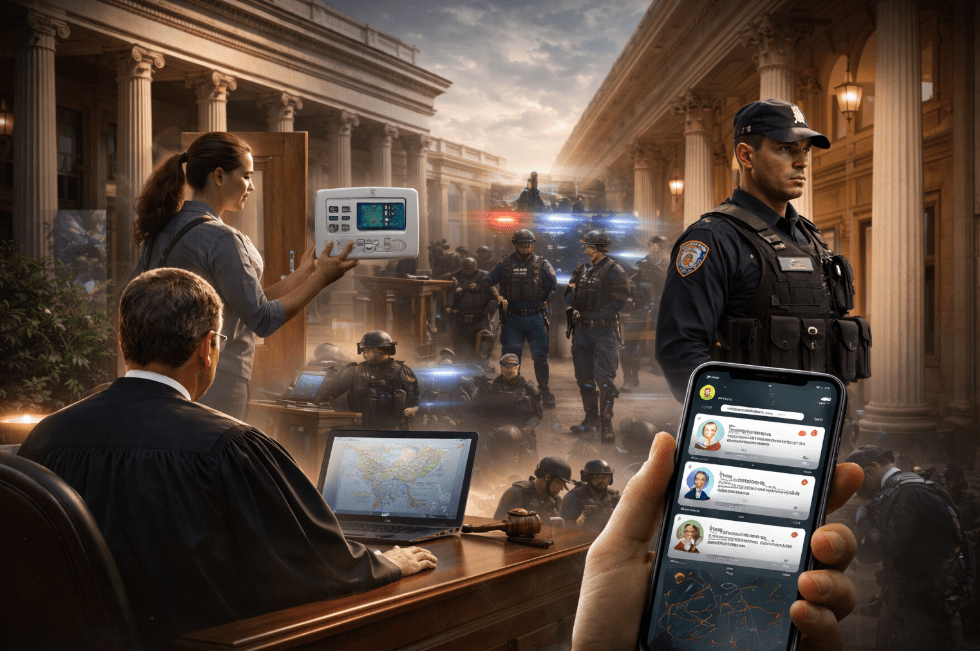
Courthouse safety is no longer confined to metal detectors and courtroom bailiffs. A new national guide highlights how judges and court staff now face risks extending into their homes, digital lives, and public spaces. As threats against justice-system professionals rise, experts warn that comprehensive, continuous safety planning is essential to protecting not only personnel, but the integrity of the judicial system itself and public trust.
What a Justice System Remembers—and What It Forgets

Institutions are shaped as much by what they remember as by what they decide. In law, memory is not metaphorical. It is procedural. A justice system survives only if it can reconstruct its own actions. When the mechanisms that preserve and demonstrate what happened quietly weaken, power still operates—but accountability loses its anchor.
The Color of a Trial

After twenty years in courtrooms, you learn that some truths never make the record. In long trials, people begin to synchronize—not just in tone or posture, but in what they wear. One day it’s brown, grounded and heavy. Another thread of blue signals control and restraint. No memo, no planning—just humans absorbing the same atmosphere.
The Hidden Cost of Silence – Bullying, Court Reporting, and the Damage No Policy Acknowledges

Court reporting demands silence, precision, and emotional control. But when bullying enters the workplace, the damage does not stay professional. It becomes biological. Chronic targeting alters sleep, memory, immunity, and emotional regulation. Too often, institutions remove the injured reporter instead of the harmful behavior. The result is a quiet health crisis inside a profession built on endurance.
Why Reporters Used to Stay — and What Agencies Must Rebuild to Keep Them Now

There was a time when court reporters stayed with agencies because agencies gave them stability, protection, professional identity, and a future. That relationship quietly eroded as the industry shifted toward volume, platforms, and cost-cutting. If agencies want loyalty again, they must rebuild what once existed: fair pay, safety, respect, growth paths, and a mission reporters actually recognize.
When the Court Becomes the Classroom – How In-House Voice-Writing Programs Are Reshaping the Record

Courts across the country are quietly launching in-house voice-writing programs, training clerks and court staff to become certified reporters. Framed as a solution to shortages, these initiatives shift education inside the institution itself. But when courts become the classroom, deeper questions emerge about independence, professional standards, and who ultimately controls the creation of the legal record.
When the Record Listens Back -How the Heppner Era of AI Liability Collides With Court Reporting
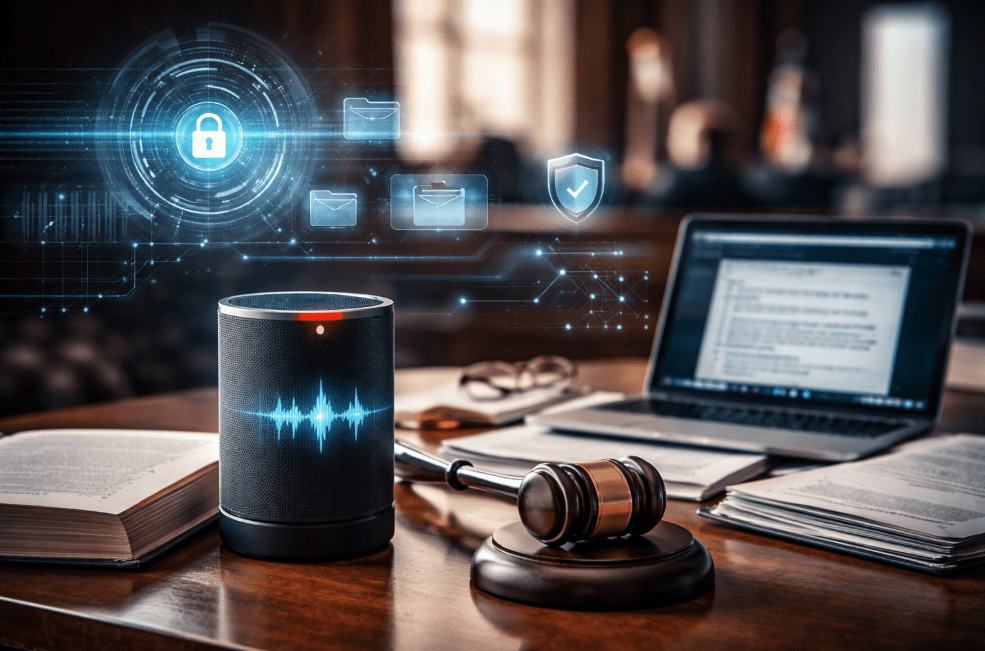
The Heppner decision reframes the court-reporting debate. The issue is no longer speed or convenience but legal accountability. Courts protect communications only when a human professional bears fiduciary responsibility. Autonomous recording systems cannot testify, explain decisions, or hold privilege. When the record lacks a sworn custodian, attorneys inherit the risk. The question is simple: if the transcript is challenged, who can take the stand?
The Vanishing 70/30 – How Hidden Billing Practices Are Reshaping Court Reporting Economics
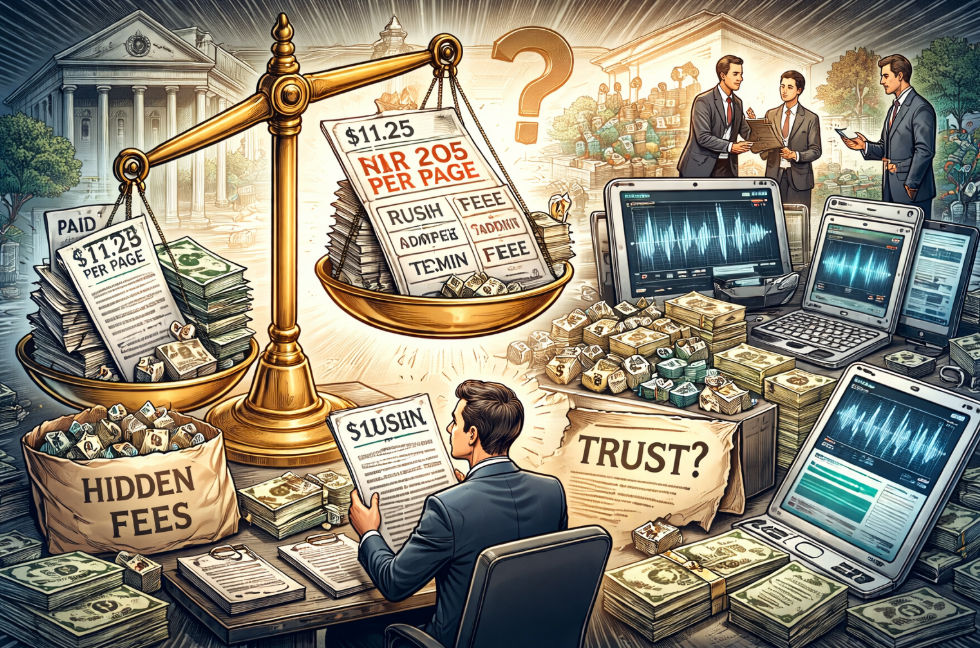
For years, reporters were told agencies shared transcript revenue fairly — once roughly 70/30, later framed as 50/50. But when a reporter earns $2.80 per page while the client pays over $11, the numbers reveal something else entirely. Hidden fees and opaque billing distort the market, push attorneys toward cheaper alternatives, and damage trust in stenography itself. Transparency isn’t regulation — it’s survival.
Why the AI Privilege Fight Could Decide the Future of Court Reporting
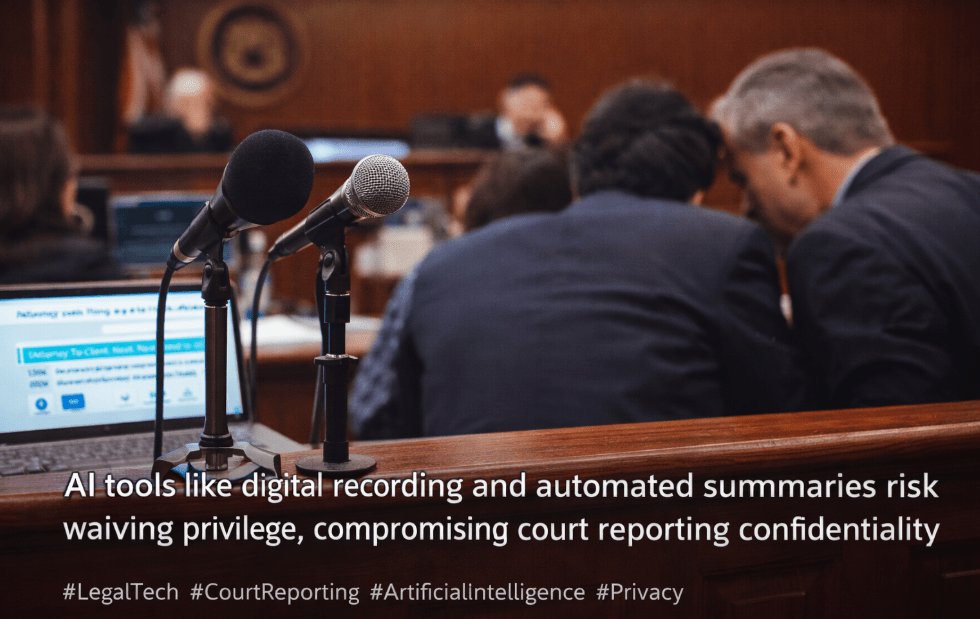
A federal court has drawn a stark line: conversations with AI systems are not privileged. That conclusion reaches far beyond chatbots. Digital recordings, automated deposition summaries, and cloud transcript analytics may transform confidential litigation strategy into discoverable material. The issue is no longer convenience versus tradition — it is custody versus disclosure. When legal data leaves human control, the record itself may become evidence.
The “Warm Body” Problem – How Court Reporters Became the Last Line of Accountability

Court reporters are increasingly being treated as logistical placeholders rather than as the professional safeguard of the legal record. Assignments arrive stripped of party information, context, and verification, yet reporters are still asked to place their names and license numbers on transcripts that carry legal weight. The frustration spreading through the profession is not about workload. It is about accountability.
The Floor and the Ceiling – Why Experience Should Raise Earnings — Not Lower the Profession’s Base Rate

Court reporting faces a critical pricing question: should new reporters charge less for the same official record? The answer determines whether the profession maintains a stable foundation or trains the market to seek the lowest bidder. Experience should raise earnings through advanced services like realtime and expedited delivery — not reduce the baseline value of the record itself.
When the Record Becomes the Scapegoat – How Court Reporters Absorb the Pressure No One Else Will
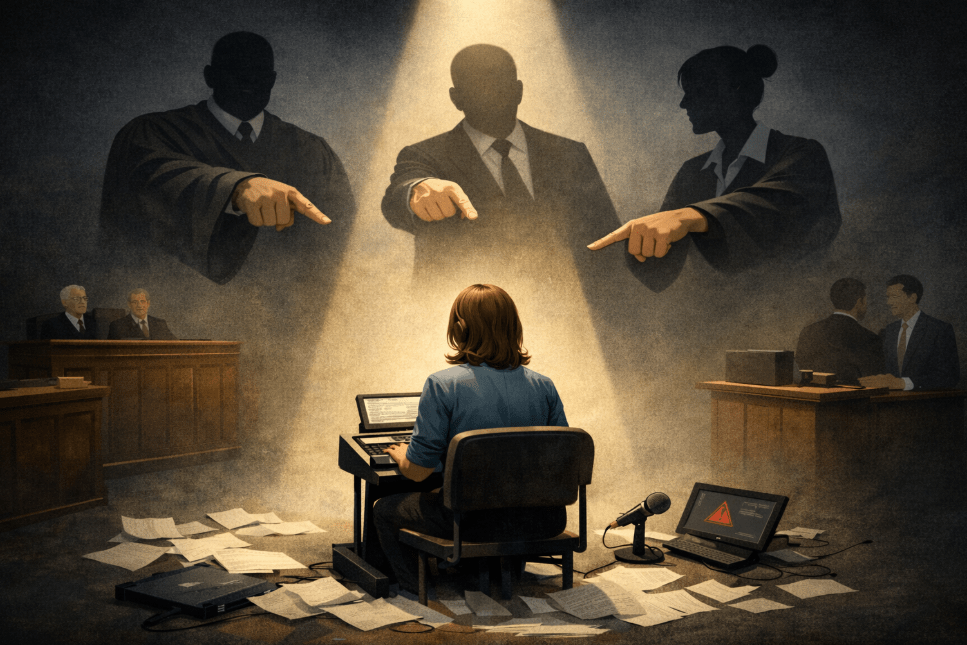
Court reporters are increasingly absorbing failures they did not create. As court systems strain under volume, technology shifts, and institutional pressure, accountability quietly flows toward those least protected. The stenographic reporter, visible, competent, and structurally isolated, becomes the system’s shock absorber. When the record reflects disorder, the blame follows the transcript. Not because reporters failed, but because the system did.
After the Week – What “The Record Under Pressure” Set Out to Do—and Why It Cannot End Here
“The Record Under Pressure” was not written to celebrate a profession, but to examine a system. Over eight days, this series traced how technology, business consolidation, and courtroom drift are reshaping the legal record. Its purpose was simple: to make the justice system’s memory visible again, and to ask whether its transformation is being governed by law—or by convenience.
If the Record Fails – The Future of Justice in a Court System That Can No Longer Prove Itself
A justice system survives only as long as it can prove what happens inside its own courtrooms. As the legal record weakens, appeals turn speculative, accountability erodes, and legitimacy fractures. Courts may continue to rule, but they will increasingly struggle to justify. A system that cannot reliably preserve its proceedings eventually forfeits authority over its own truth.
When a Celebration Becomes a Lottery – The Legal Risks Behind “Enter to Win” Promotions in the Court Reporting Industry

A well-intended recruitment promotion can cross a legal line. When participants must provide referrals or testimonials for a chance to win a prize, the offer may become a raffle — and commercial raffles are prohibited in California. For court reporters, whose work supports the judicial record, the issue extends beyond marketing compliance to professional integrity and public trust.
What Courts Must Do Now – The Legal Record at a Crossroads
The American justice system is approaching a crossroads. Technology, business consolidation, and courtroom drift are quietly redesigning how truth enters law. Courts must now decide whether the legal record will remain a governed evidentiary system or become a technical byproduct of convenience. This is not an operational question. It is a constitutional one.
When the Record Speaks — and Software Interprets – The Unsettled Ethics of AI Deposition Summaries
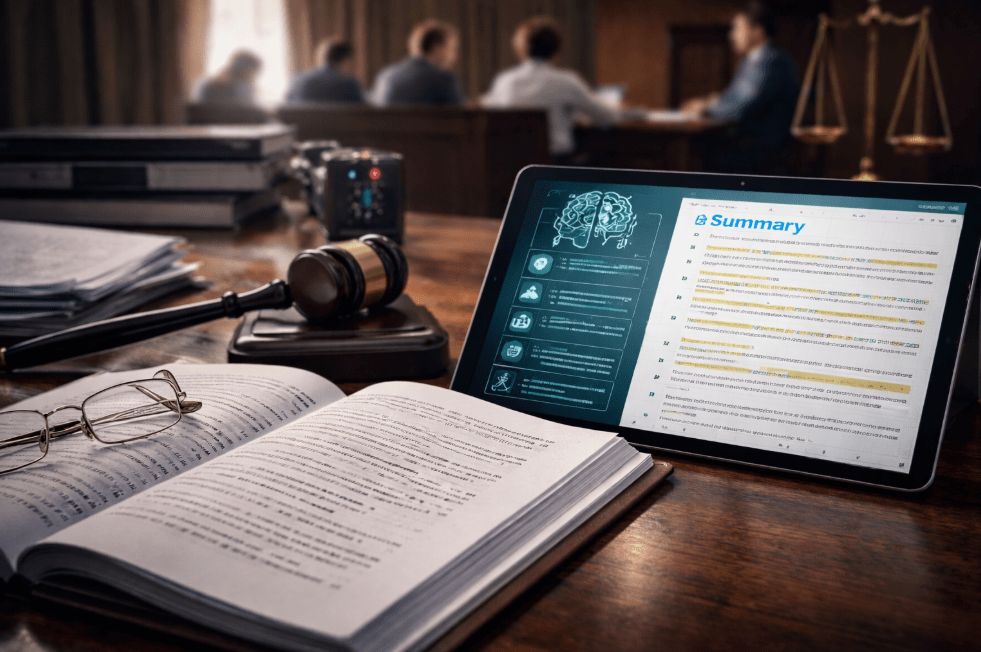
AI deposition summaries are being sold beside sworn transcripts, raising a question older than the technology itself: when interpretation travels with the record, does neutrality follow it? Advisory Opinion 32 was written to protect public confidence in the reporter’s role, not to regulate keyboards. Replacing a human summarizer with software may change the tool, but it does not automatically eliminate the appearance concerns the rule was meant to prevent.
The Last Neutral in the Room – Why the Court Reporter Is a Structural Safeguard, Not a Service
Court reporters are not service providers. They are structural safeguards. As neutral officers of the court, they preserve the conditions under which justice can later be reviewed, challenged, and corrected. When that role is reframed as clerical or commercial, the system does not merely modernize. It dismantles one of the protections that make legitimacy possible.
Between Bench and Record – What Is Already Happening Inside America’s Courtrooms
The transformation of the legal record is no longer theoretical. It is already happening in everyday courtrooms, through routine decisions that quietly reshape how proceedings are preserved. Reporters are discouraged, recordings are substituted, and speed overtakes precision. These changes rarely make headlines, yet they are redefining the evidentiary foundation of justice.
Private Equity, Public Records – How Business Is Reengineering Custody of the Legal Transcript
The legal transcript has quietly become a commercial asset. As private equity and corporate platforms centralize custody of the record, financial logic is beginning to replace evidentiary logic. Custody determines power. And when custody moves from courts into markets, the justice system inherits risks it did not design and cannot easily unwind.
When Professional Advocacy Drifts Off Message

During Court Reporting & Captioning Week, every public event should reinforce the profession’s credibility, technical expertise, and essential role in preserving the official record. Programming that does not clearly connect to stenographic skill, transcript integrity, or public education risks confusing the audience and weakening advocacy efforts at a time when the profession must present a unified, disciplined message.
When Software Becomes a Silent Witness – Ethics, Technology, and the Coming Evidentiary Reckoning
For the first time, courts are being asked not merely to use technology, but to trust it. As software moves into the evidentiary core of proceedings, responsibility is diffusing, accountability is thinning, and ethical frameworks are lagging behind technical adoption. This is not a workflow shift. It is an evidentiary one.
The Legal Record, Explained – Why a Transcript Is Not a Recording—and Why That Distinction Now Matters
A recording is raw data. A transcript is sworn evidence. A legal record is an evidentiary system. Today, those distinctions are being blurred, and the justice system is inheriting risks it does not yet see. When accountability chains thin and custody diffuses, courts lose more than accuracy. They lose defensibility.
The Record Under Pressure – Why the Legal Record Has Entered Its Most Dangerous Era
The legal record is being reshaped faster than the justice system’s safeguards can adapt. Technology, business consolidation, and courtroom practices are quietly altering how truth is captured, preserved, and controlled. This series begins with a warning: when the record changes, the justice system changes with it. And right now, the record is under pressure.
When “Sustainability” Collides With the Law: How One Complaint Forced a Course Correction at Esquire
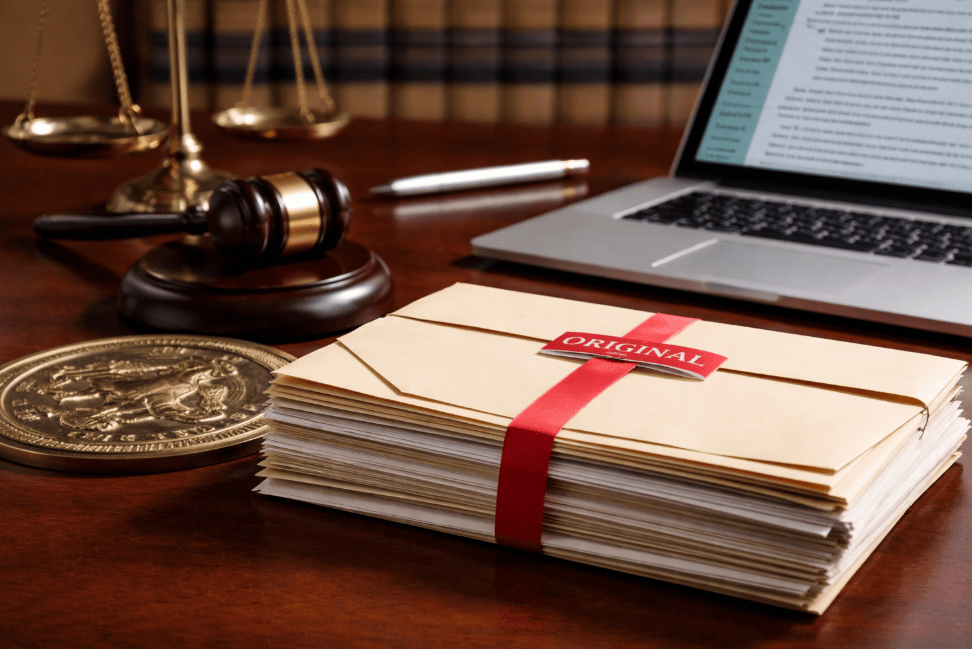
When Esquire announced that electronic transcripts would replace sealed paper originals in California, it framed the move as sustainability. Regulators later confirmed it was illegal. A CRB investigation found the policy violated long-standing California law and was reversed only after a formal complaint. The episode exposes how easily corporate workflow changes can endanger reporters’ licenses—and why knowing the code matters before real damage is done.
Court Reporting & Captioning Week | StenoImperium Launch Post
During Court Reporting & Captioning Week, celebration alone is not enough. The legal record is under pressure, reshaped by technology, business models, and quiet courtroom shifts. This series asks court reporters to step into their professional responsibility: to circulate clear analysis to attorneys and judges, and to help the legal community understand what is happening to the evidentiary spine of justice right now today nationwide.
Continuing Education or Professional Replacement?
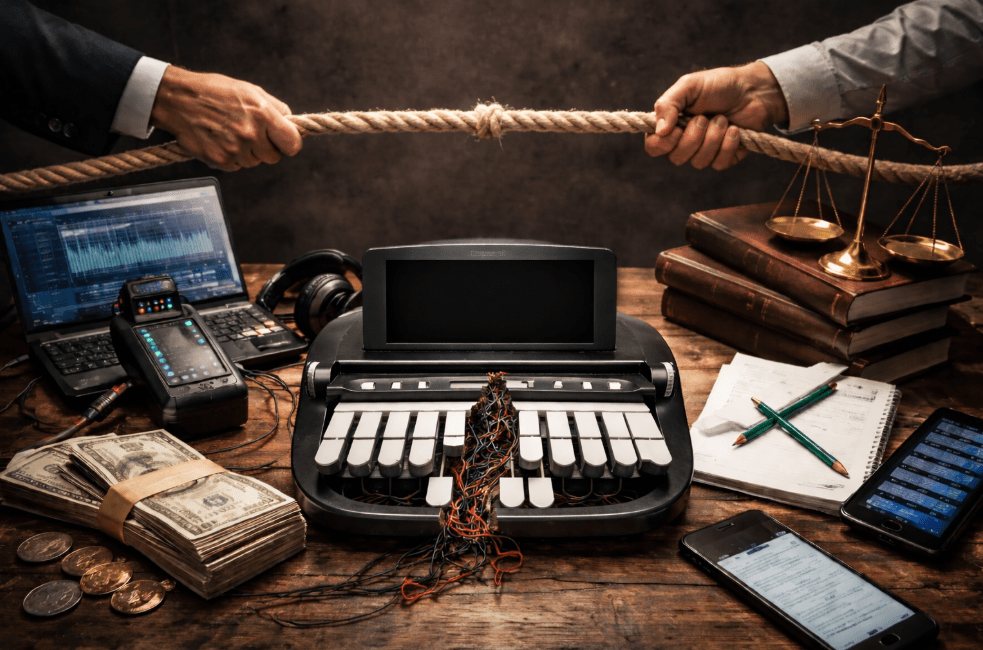
An Investigation Into NCRA’s CEU Approvals, Vendor Influence, and Financial Pressures When Continuing Education Becomes Industry Re-Engineering – Questions Surround NCRA-Approved CEUs and Method-Agnostic Training StenoImperium Investigative Series Draft A Profession Being Rewritten — With Its Own Credentials For decades, stenographic court reporters relied on the National Court Reporters Association (NCRA) as both their professionalContinue reading “Continuing Education or Professional Replacement?”
Coming Soon! The Record Under Pressure

Coming soon! In courtrooms across the country, the legal record is being reshaped by technology, business consolidation, and quiet procedural drift. These changes are rarely debated, yet they are redefining how truth enters law. During Court Reporting & Captioning Week, StenoImperium will launch an investigative series examining what is happening to the record—and what the justice system risks becoming if it is not governed deliberately.
Why AI Cannot Replace Human Stenographers — and Why the Math Finally Caught Up With the Marketing
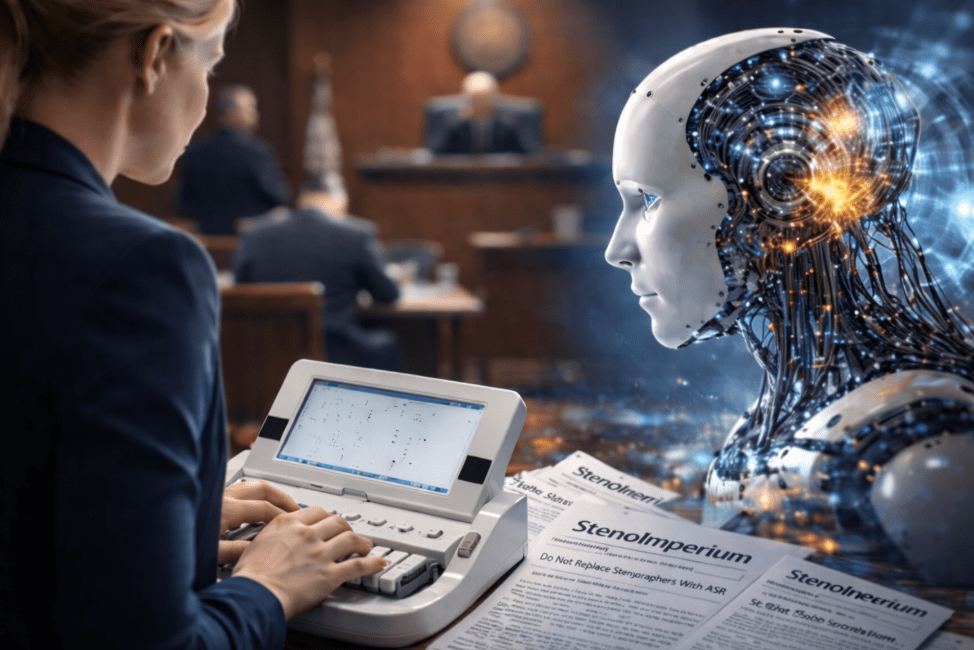
A former AI CEO and his Stanford-trained son just proved what court reporters have been warning for years: AI systems have a hard computational ceiling. When real-world tasks exceed it—as legal proceedings routinely do—AI doesn’t “struggle.” It hallucinates. That limitation isn’t temporary or ethical. It’s mathematical. And it explains why human stenographers remain irreplaceable in the creation of a legal record.
Between the Words – What Court Reporters Can Learn From the People Who Interrupt
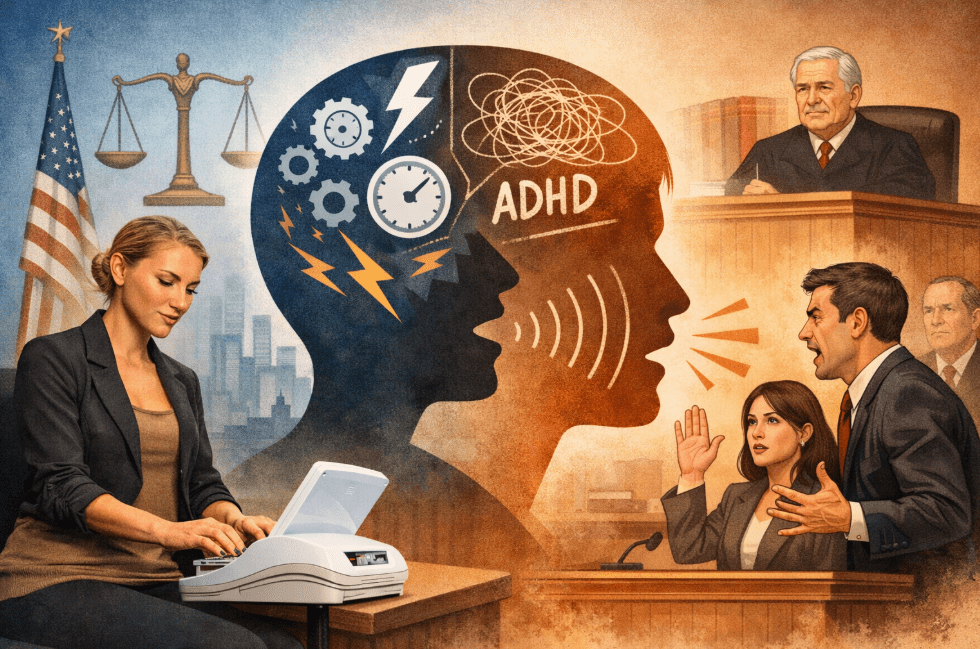
In courtrooms, interruption is often treated as a matter of manners. But emerging research suggests it is more often a matter of nervous systems. High processing speed, anxiety, and attention-regulation differences can drive people to speak before they mean to. For court reporters, understanding this distinction is not indulgence. It is a practical tool for protecting the record and restoring order with precision rather than irritation.
Courts Do Not Have an AI Problem. They Have a Record-Keeping and Accountability Problem.
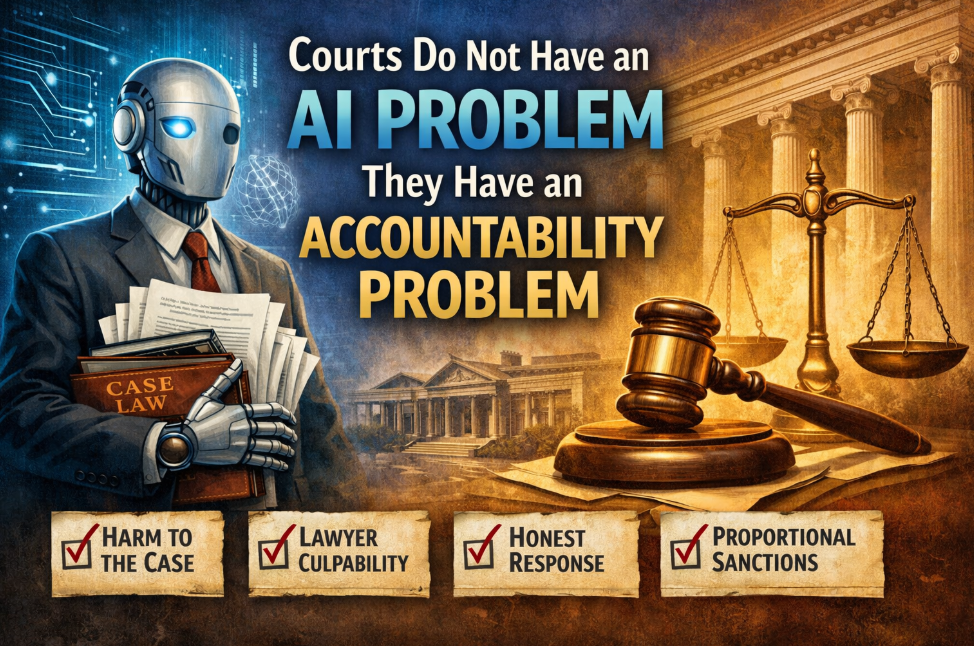
Courts do not face an artificial intelligence crisis so much as a crisis of accountability. AI-related errors expose gaps in supervision, verification, and professional responsibility, not rogue technology. Judicial legitimacy is not threatened by tools, but by inconsistent governance. The question before the courts is not whether AI will be used, but whether responsibility will remain clearly human.
Beyond the Page Count – Why Purpose, Not Just Performance, Must Guide Court Reporters

Court reporters are trained to chase goals: speed, certifications, page counts, income. But goals end. Purpose does not. Purpose is what transforms transcription into stewardship and accuracy into a public trust. When reporters lead their careers with purpose, they stop merely producing records and start protecting them. In a justice system under strain, that distinction has never mattered more.
Staying in the Chair – What Court Reporting Teaches Us About Pain, Presence, and Power
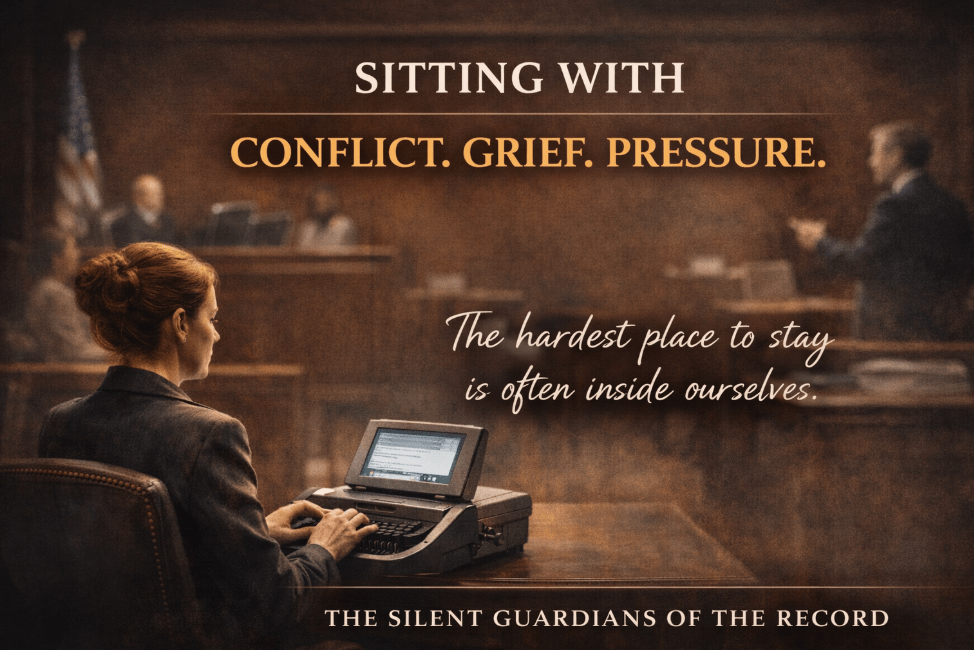
Court reporters spend their careers staying in rooms most people instinctively want to leave. They sit inside conflict, grief, tension, and pressure so the legal record can exist. But the profession rarely teaches reporters what to do with what accumulates inside them. This article explores why presence, not avoidance, is often the beginning of resilience—and real professional power.
Never Waste an Opportunity to Go to CourtWhat a Court Reporter Sees From the Other Side of the Record
Court is not the end of the work. It is where the work becomes real. From the court reporter’s chair, I watch young attorneys transform not through victories, but through presence—learning how to speak to a judge, how to build a record, how to listen under pressure, and how to develop the quiet authority that cannot be taught in an office.
Who Is NCRA Working For?
The National Court Reporters Association was created to guard a profession built on precision, licensure, and trust. But its expanding relationships with digital training companies, corporate consolidators, and branding organizations raise an urgent question: is NCRA still defending stenography, or has it begun financing its own displacement? When a trade association profits from the markets replacing its members, neutrality becomes a business model.
Whitney Kumar Returns to the Spotlight as Judy Justice Begins Another Season – 2026

Whitney Kumar is back for another season of Judy Justice, returning to the courtroom where precision meets prime time. As the show’s official court reporter, Whitney brings authenticity, professionalism, and deep legal expertise to one of streaming’s most-watched courtroom series. Her continued presence highlights not only her own success, but the vital role court reporters play in preserving the integrity of the record.
Court Transcript Rules Shift in Los Angeles County – What Litigants Need to Know
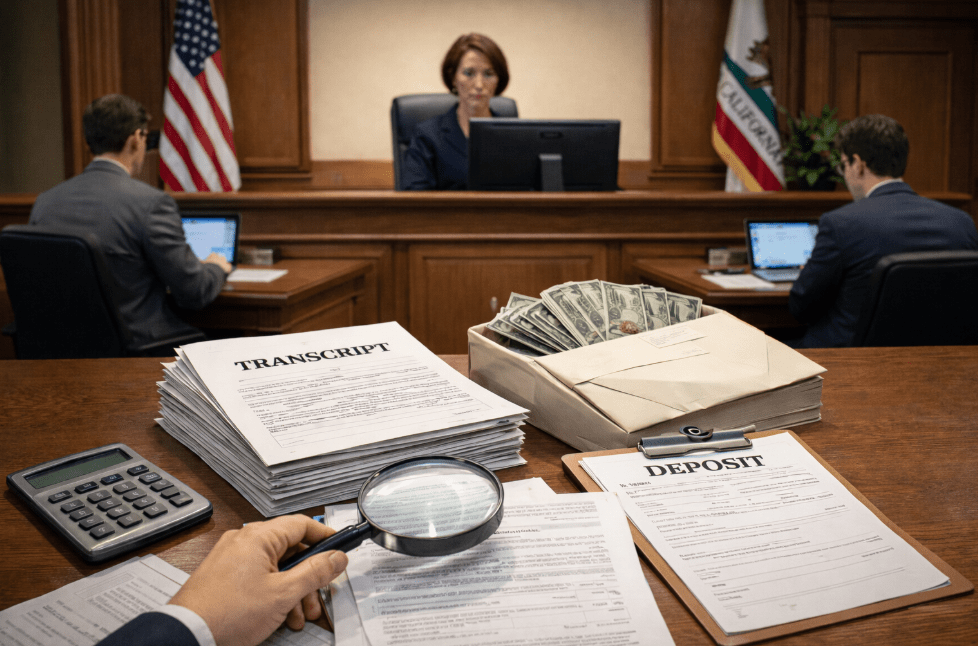
On January 21, 2026, the Los Angeles County Superior Court quietly clarified how parties may purchase reporter’s transcripts on appeal—reshaping the financial and procedural mechanics behind who pays, who receives copies, and how the official record moves forward. While technical on its face, the change touches the core of appellate practice: access to the words that ultimately decide cases.
Court Reporters’ Open Letter – The Rule of Law Begins With the Legal Record

The legal record is not a convenience or a product. It is constitutional infrastructure. As courts quietly replace licensed stenographic court reporters with unregulated recording systems, they are not modernizing procedure. They are removing accountability from the point where law becomes fact. Without a trustworthy, professionally certified record, due process weakens, appellate rights erode, and judicial legitimacy itself is placed at risk.
The Quiet Fear Inside the Record
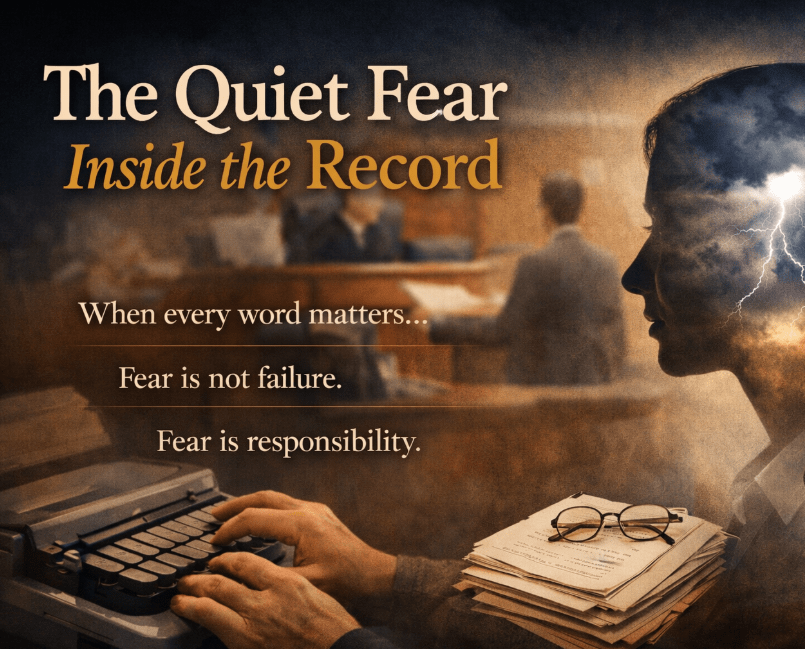
Court reporters rarely speak about fear, yet it quietly accompanies some of the most important moments of their careers. It surfaces in high-stakes trials, unfamiliar courtrooms, and proceedings where every word carries lasting consequence. This fear is not evidence of failure. It is evidence of responsibility. And learning to work with it, rather than retreat from it, may be one of the profession’s most essential skills.
The Fragile Spine of Justice – Why Courts Must Defend the Integrity of the Legal Record

The legal record is the spine of the justice system. Every appeal, ruling, and public trust in the courts rests on its integrity. When record-making is treated as a technical task rather than an evidentiary duty, courts risk weakening the very structure that allows justice to stand. Defending the record is not administrative—it is constitutional.
When “Live Notes” Enters the Notice – What the Confusion Over AI in Depositions Is Really About
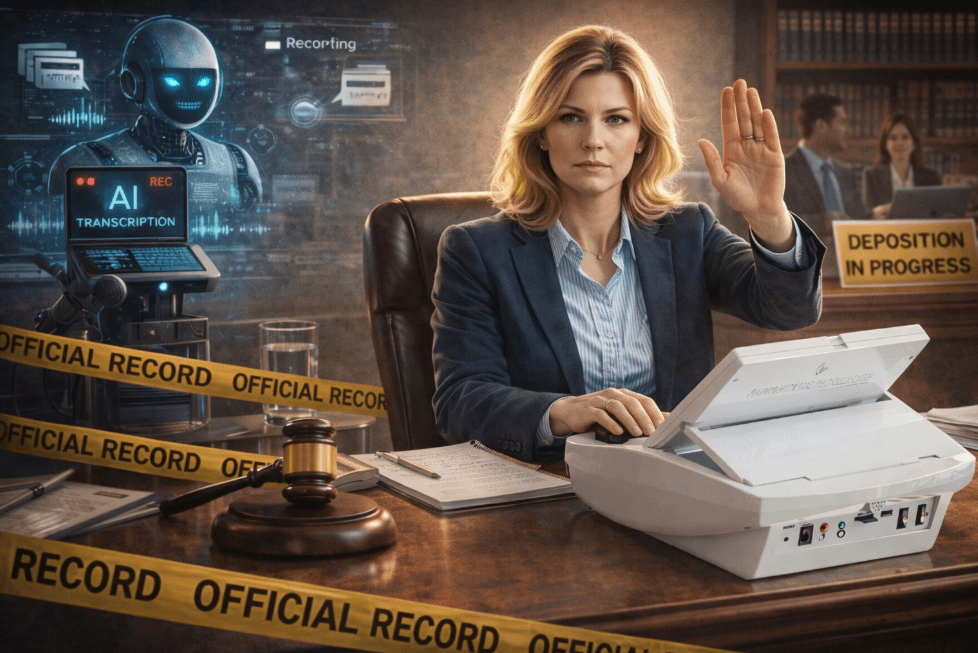
As artificial intelligence quietly enters deposition rooms under vague terms like “live notes,” court reporters are being forced into a new role: boundary-setters for the legal record itself. The issue is no longer whether proceedings can be recorded, but who controls what is captured, who is accountable for what is created, and what truly constitutes the official record in modern litigation.
Who Is Really Overcharging Attorneys? Inside the Business of Court Reporting in the Private-Equity Era

When attorneys receive shocking court reporting invoices, frustration is understandable. But those inflated charges are not enriching court reporters. They are the product of private-equity consolidation, corporate billing structures, and middlemen who control pricing while paying reporters a shrinking share. If the profession is being hollowed out, it is not by stenographers. It is by the business models built on top of them.
 STENOIMPERIUM