
The AI debate in court reporting and captioning is being framed incorrectly. This is not about whether humans are “better” than machines. It is about risk, accountability, and appropriate use. AI may assist in low-stakes contexts, but when the record carries legal or reputational consequences, decision-makers still need a licensed professional who can certify, correct, and stand behind the work.
Category Archives: AI and the Legal System
When the Record Is Public, Who Pays for It?

Court transcripts are treated as public goods, but the labor that creates them is not. While federal courts quietly preserve a temporary restriction period before transcripts become freely accessible, state court systems operate under very different economic models. Together, these frameworks reveal how control of the legal record has shifted away from court reporters, steadily separating access from fair compensation.
The Readback Problem in Voice Writing—and How to Solve It
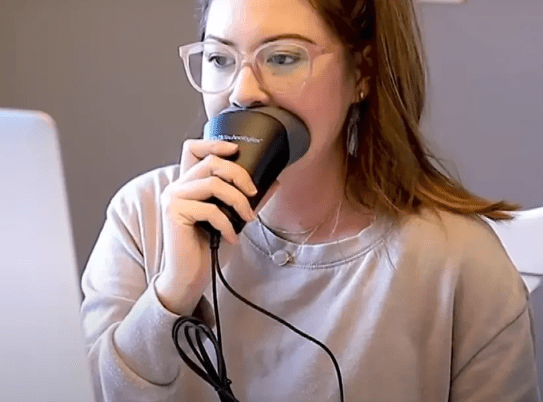
Readback is where the record proves its reliability. For voice writers, that moment too often collapses into rewind and guesswork when ASR fails. The solution is not better training, but better software: a persistent phonetic fallback, confidence-aware output, and word-level audio that function like steno notes. Voice does not need perfection—it needs an inspectable substrate.
The Voice Writing Question – Is the Fastest Entry Path Quietly Reshaping—and Risking—the Court Reporting Profession?

Voice writing is rapidly being marketed as the fastest path into court reporting, even as it remains unrecognized as stenography by the profession’s own national association. This article examines the growing disconnect between how voice writing is sold and how the legal record actually functions, why many machine reporters are learning voice for longevity—not superiority—and what happens when speed of entry outpaces experience in a profession built on precision.
When the Record Goes Missing – Digital Recording, Judicial Discretion, and the Fragility of the Official Court Record

As courts increasingly replace stenographic reporters with digital recording systems, the promise of efficiency collides with a harder truth: a recording is not the same as a reliable record. When equipment fails, speakers overlap, or entire proceedings go unrecorded, there is no safety net. The cost savings vanish quickly—leaving judges, attorneys, and litigants to reckon with what was lost.
When the Machine Gets It Wrong, Who Pays the Price?

Courts have been clear: artificial intelligence may assist lawyers, but it does not absolve them. When ASR systems miss testimony or AI summaries omit critical facts, responsibility does not vanish into the software. It lands squarely on the professionals who relied on it. As automation reshapes the legal record, a new reckoning over accountability is quietly approaching.
The Quiet Exploitation Behind the Federal Court Record

For more than twenty years, federal courts have profited from certified transcripts produced by court reporters—without compensating the professionals who created and certified the official record. PACER refunds may address user overcharges, but they do nothing to resolve the underlying exploitation of court reporters’ labor. Until reporters are paid for their work product, the federal court record rests on an unsustainable imbalance.
2026: The Year the Record Reasserts Itself

2026 is shaping up to be a pivotal year for court reporting. As courts and lawmakers confront the limits of agencies, AI, and automated recording, the profession is seeing renewed focus on responsible charge, accountability, and human judgment. Legislative clarity, reporter-centric technology, and coming court decisions may finally reassert who—and what—the legal record truly depends on.
When Software Tries to Stand In for a License – Why ASR “Cleanup” Is Not Court Reporting

As courts embrace automated speech recognition, a critical question is being overlooked: who controls the legal record, and where does it live? Replacing licensed court reporters with cloud-based transcription and post-hoc “cleanup” introduces risks that go far beyond accuracy. From silent realtime edits to juror privacy in voir dire, the integrity of the record—and public trust in the justice system—are at stake.
Vendors Are Not Officers of the Court
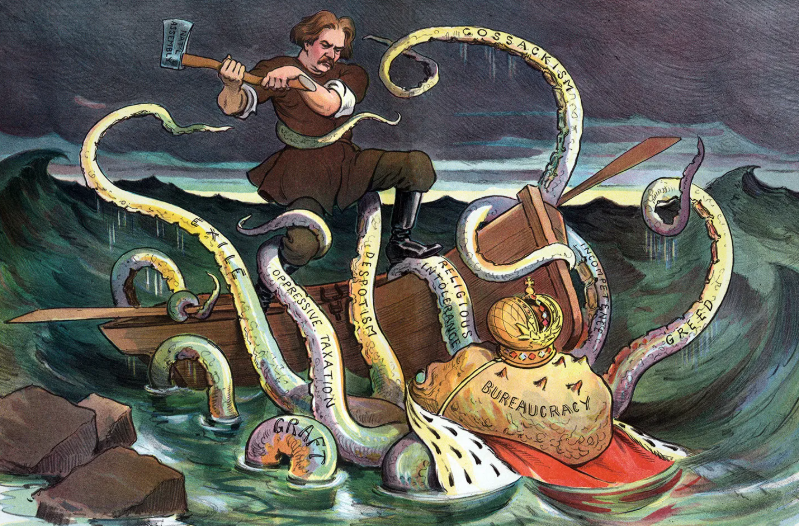
Court reporting agencies schedule proceedings and process invoices—but they do not create the legal record. Yet some national agencies are now attaching corporate “company certificates” to deposition transcripts they did not take and cannot lawfully certify. This quiet shift blurs statutory boundaries, risks inadmissibility, and threatens due process by substituting branding for licensure in the creation of sworn testimony.
Petition to the National Court Reporters Association – Request to Deny CEU Approval for Programming that Undermines Stenographic Capture
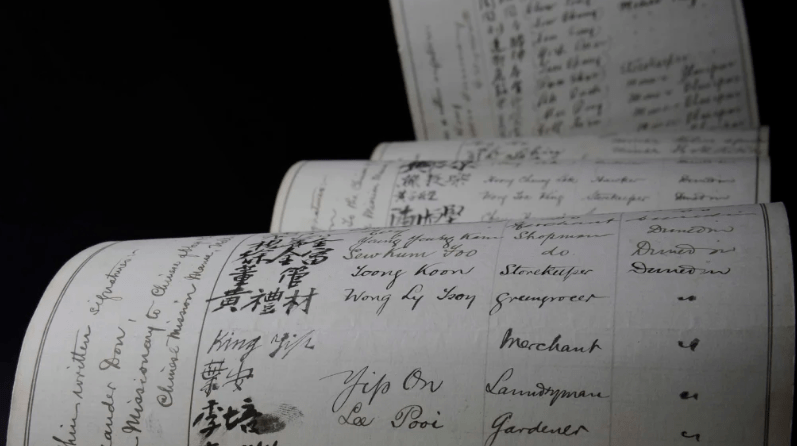
A slate of vendor-produced CEU programs is currently pending approval that promotes a method-agnostic view of record creation. This petition urges NCRA to act before approval is finalized, drawing a clear distinction between stenographic capture—machine or voice—by licensed professionals as opposed to digital recording systems that rely on post-hoc reconstruction. The moment to protect evidentiary standards is now, not after silence becomes consent.
If You Want Lower Transcript Costs, Help Create More Court Reporters

Transcript prices are not rising because court reporters are greedy; they are rising because there are fewer of them. Like any market, court reporting follows basic economic rules: when supply shrinks and demand grows, prices increase. If attorneys want lower transcript costs, the solution is not cheaper capture methods—it is helping rebuild, retain, and respect the human court reporting workforce.
Court Reporters, Technology, and Reality – Resetting Expectations in a Small Industry

Court reporting technology vendors are not Big Tech. They are small, specialized companies serving a shrinking professional market. Expecting instant, round-the-clock concierge support misunderstands the realities of the industry. Professional competence requires patience, self-sufficiency, and deep knowledge of one’s tools. When a reporter’s livelihood depends entirely on immediate vendor intervention, the risk is not poor service—it is misplaced dependency.
The Lessons of Badran – A Roadmap for How NCRA Must Defend the Legal Record

The Badran ruling exposed a growing risk: courts are redefining admissibility without guidance from the profession that creates the record. As audio-based reporting and vendor workflows spread, efficiency arguments are replacing evidentiary law. This article offers a clear roadmap for how NCRA can act—now, in active cases, and long-term—to defend due process, professional oversight, and the integrity of the record.
When the Record Becomes Elastic – Why Badran v. Badran Misunderstood Admissibility
Badran v. Badran exposes the danger of redefining testimony after the fact. In a remote deposition, a vendor-produced transcript was altered based on audio review, adding remarks not perceived in real time as testimony. Efficiency and stipulation cannot convert recordings into evidence. Without a licensed reporter in responsible charge, the record becomes elastic—and due process collapses.
When Efficiency Overrides the Law – Why Badran v. Badran Got Admissibility Wrong

The Badran v. Badran ruling did not affirm professionalism in modern depositions; it excused its absence. Admissibility does not turn on convenience, volume, or after-the-fact agreement. It turns on lawful process and qualified human oversight. Agencies are not officers of the record, and parties cannot stipulate away licensure, evidentiary foundation, or due process in the name of efficiency.
Petition to the National Court Reporters Association – In Re Stronger Regulatory Reforms for AI Innovation in Federal Court Proceedings

The integrity of the official court record is not a technology preference—it is a constitutional safeguard. This petition calls on the National Court Reporters Association to take a clearer, firmer position opposing AI-generated transcripts as the official record and to advocate for mandatory use of licensed stenographic court reporters to protect due process, accountability, and public trust in the justice system.
When Caution Becomes Capitulation – NCRA’s AI Filing and the Quiet Risk to the Court Record
As courts rush to embrace artificial intelligence, a quiet but consequential shift is underway. A recent federal submission by the National Court Reporters Association acknowledges AI’s flaws—yet stops short of drawing the line where it matters most. When caution replaces clarity, the integrity of the official court record, and the constitutional rights it protects, are placed at risk.
Celebration or Contradiction – When Corporate CEU’s Collide With the Reality of the Record

Corporate newsletters now celebrate “community” and “professional pride” while quietly advancing business models that make those same professionals optional. When private-equity-backed firms praise stenographers as essential yet invest in scalable digital replacements, the contradiction isn’t accidental — it’s strategic. Celebration becomes optics management, not advocacy, and reporters are left to reconcile flattering words with an economic reality moving in the opposite direction.
Using AI to Strengthen Your Voice – How Court Reporters Can Advocate Powerfully for Our Profession

AI isn’t here to replace court reporters—it’s here to amplify us. When used intentionally, AI becomes a strategic partner that helps reporters write stronger letters, clearer public comments, and more persuasive advocacy for our profession. It levels the playing field, giving every reporter the ability to speak with clarity, confidence, and impact. Your voice matters. AI simply helps the world hear it.
When the Machine Gets It Wrong, the Court Still Blames the Human
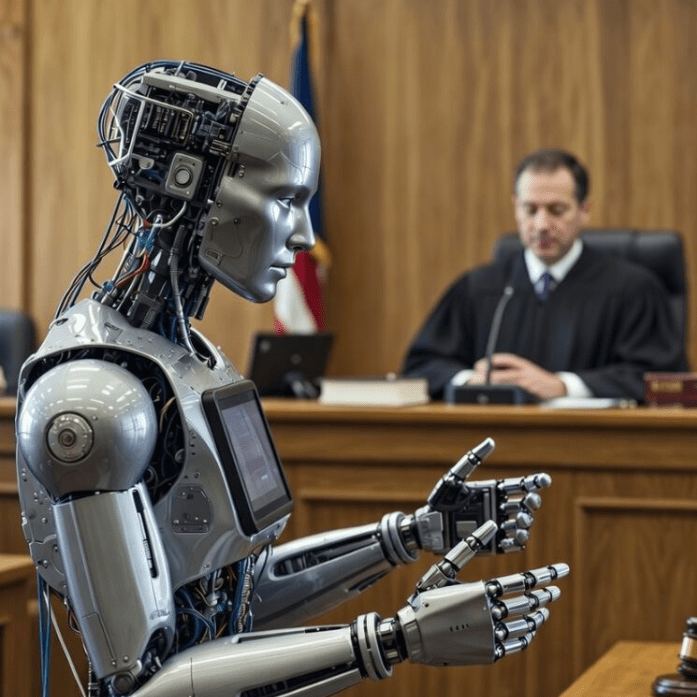
Courts across the country are delivering a blunt verdict on artificial intelligence: speed does not excuse accuracy. As lawyers face sanctions for AI-generated errors, judges are reaffirming an old rule in a new era—accountability remains human. In an age of automation, the certified court record and the professionals who create it have never mattered more.
When Practice Drifts From the Code – How Informal Norms Are Reshaping the Courtroom Record

In courtrooms nationwide, a quiet shift is underway. The rules governing the official record remain unchanged, yet everyday practice has drifted from the code. Realtime feeds and rough drafts, once tools for preparation, are increasingly treated as authoritative sources in high-stakes moments. This slow normalization of informality carries real legal risk—for attorneys, judges, and especially the reporters entrusted with preserving the record.
Why “We’re Embracing AI” Is the Wrong Message for Court Reporting

In an era of relentless reassurance, court reporters are being told that embracing AI is the path forward. But optimism without precision is dangerous. Technology that assists a licensed human record is not the same as technology that replaces it. When method, authority, and chain of custody are blurred, the integrity of the legal record—not just a profession—is placed at risk.
When Capital Moves Faster Than the Courts – AI, Evidence, and the Next Legal Reckoning

As venture capital floods legal technology, artificial intelligence is being woven into the heart of litigation—often faster than courts, ethics rules, or evidentiary standards can respond. Tools that summarize testimony or generate chronologies promise efficiency, but raise unresolved questions about reliability, consent, and admissibility. History shows that when automation outpaces scrutiny, courts eventually intervene—sometimes after irreversible damage has already been done.
When Speed Replaces the Record – What “FTR Now” Reveals About the Future of Court Transcription

A new legal tech product promises “searchable transcripts” from courtroom audio in minutes, built in just two days and priced at seven dollars an hour. But speed and convenience come at a cost. When automated transcription is mistaken for the official record, accuracy, accountability, and due process are quietly put at risk—often before attorneys realize the distinction matters.
A Court Reporter Christmas
The Polite Language of Professional Displacement

Veritext’s latest CEU webinar series is being framed as professional development, but its core message deserves scrutiny. By asserting that capture method does not matter, the programming advances a narrative that conflicts with evidentiary law, professional ethics, and NCRA’s stated mission. With CEU approval still pending, members have a narrow window to speak up—before silence is mistaken for consent.
Who Trained the Machine?

AutoScript AI is marketed as a “legal-grade” AI transcription solution trained on “millions of hours of verified proceedings,” yet the company provides no public definition of what verification means in a legal context or where that data originated. Founded and led by technology executive Rene Arvin, the platform reflects a broader trend of general ASR tools being rebranded for legal use without the transparency traditionally required in court reporting.
The Masks Court Reporters Wear—and the Cost of Wearing Them Too Long

Court reporters are trained to capture the truth verbatim, yet many have learned to suppress their own. In a profession built on accuracy and independence, silence has become a survival strategy. Over time, professionalism has been mistaken for passivity, and conformity for neutrality. The result is a culture where dissent feels dangerous—and where thinking independently is quietly discouraged.
Bridging the Career Services Gap in the Court Reporting Profession

Court reporting associations are facing a reckoning. Reporters are not disengaging because they dislike the profession; they are disengaging because their associations no longer align with their most urgent priorities: jobs, advancement, training, and real career security. In an era of technological disruption and shrinking pipelines, associations that fail to become career catalysts risk losing not just members, but the future of the profession itself.
When Two Depositions Are Scheduled but Only One Goes Forward – The Growing Fight Over Same-Day Cancellation Fees

Court reporters routinely reserve separate time blocks for each scheduled deposition. When one witness appears and another cancels, the afternoon no-show is a distinct economic loss—no different from how interpreters, electricians, therapists, or attorneys handle missed appointments. Two job numbers mean two billable events. Same-day cancellations must be compensated as a matter of fairness and professional standard.
Opinion | Digital Reporting Is Not “Clearly Lawful.” It Is Clearly Inferior — and Legally Dangerous

Digital reporting is not merely a different tool — it is a different evidentiary product. A transcript created after the fact from audio is reconstruction, not a contemporaneous verbatim record. Without licensed stenographic capture, individual accountability, and real-time certification, courts are left with hearsay dressed up as efficiency. The integrity of the record is not optional.
When Speaking Up Becomes a Liability – How Court Reporting Learned to Punish Action

A recent Facebook post suggests no one acted to stop the court reporting crisis. That is not true. Many tried—and learned quickly that speaking up put a target on their backs. In a profession dominated by women, reformers are often torn down by their own peers rather than supported. Silence became safer than leadership, and the cost of that culture is now impossible to ignore.
Why Attorneys Should Think Twice Before Accepting Digital Reporting – Stenographers Will Not Fix Your Bad Audio After the Fact
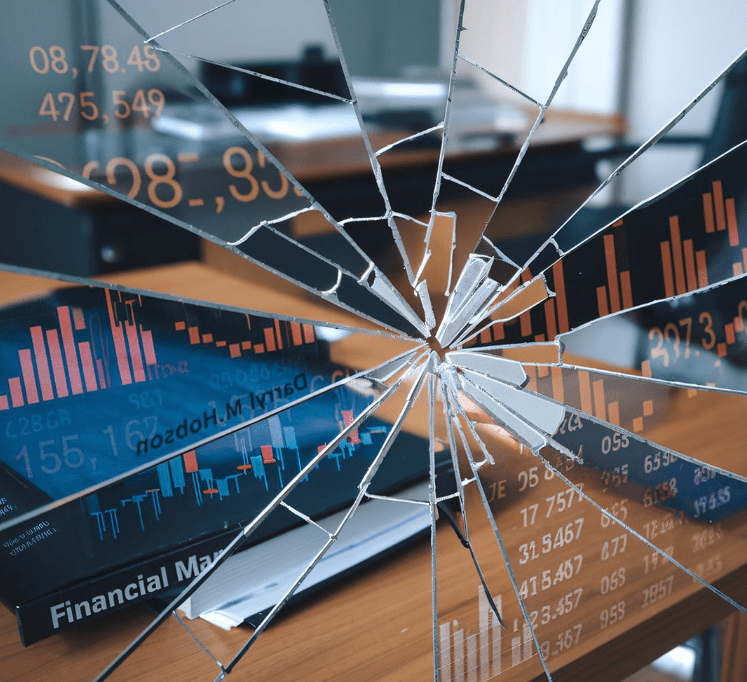
Digital reporting may look modern and inexpensive, but it carries a dangerous illusion. When trials are recorded digitally, stenographers will not—and cannot—repair the record afterward. Audio fails. Speakers are misidentified. Critical testimony disappears. When the verdict is in and the appeal begins, attorneys often discover too late that no reliable transcript exists. Accuracy cannot be retrofitted.
Sliding Into the High-Speed You – What a Russian Physicist’s Theory Teaches Court Reporters About Passing the CSR, RPR, and Every Other “Impossible” Test

High-speed stenography isn’t about gripping harder — it’s about shifting into the version of yourself who already writes with ease. When you stop treating certification like a monster and adopt a “no-big-deal” mindset, your hands relax, your rhythm returns, and speed finally emerges. You don’t force 225. You become it.
Opinion: Texas Isn’t Confused About Digital Reporting — Only the Vendors Are

Texas is not confused about digital reporting — only the vendors are. Esquire, U.S. Legal, and Veritext recast a business model as a legal right, insisting courts ignore reliability gaps, nonexistent licensure, and the safeguards built directly into Rule 203.6. The trial court didn’t err; it exercised discretion. Corporate convenience is not access to justice, and marketing cannot replace a certified, accountable record.
The Great Wage Mirage – When Digital Court Reporting Claims Outpace Reality
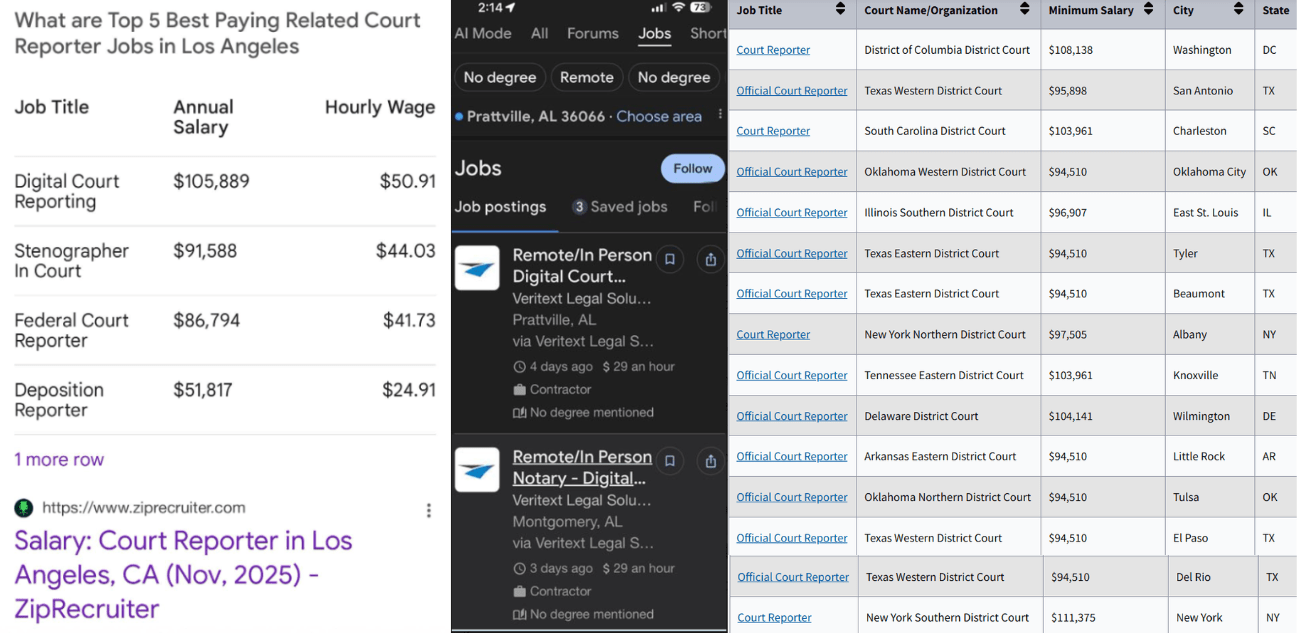
A viral wage graphic now claims digital court reporters in Los Angeles earn more than licensed stenographers and federal officials. The figures collapse under scrutiny, revealing a dangerous distortion of how court reporting is valued and understood. When passive recording is framed as more lucrative than producing the certified legal record, the profession’s integrity is compromised and the public misled about justice, skill, and accountability.
The Familiar Face Fallacy & Why Court Reporters Must Question the Platform Narrative

Familiarity is not alignment. When a recognizable face stands before the profession offering reassurance, it is easy to mistake comfort for safety. But critical thinking demands a harder question: who benefits if our work becomes optional? Reporters must look beyond polished narratives and ask what external platforms gain from reshaping our role. Strategy deserves scrutiny, not applause, and vigilance is the price of sovereignty always.
Save Us, Elon – The Justice System Is Sleepwalking Into Collapse

America’s justice system is quietly collapsing as courts replace human stenographers with error-prone ASR. When the record fails, due process dies — and with it, the safeguards that protect us from wrongful convictions, corruption, and authoritarian drift. This is a plea to Elon Musk: recognize the danger before it becomes irreversible. Without a reliable human record, there is no justice — and no freedom.
When the Record Fails – Texas Courts Face a Growing Crisis Over Non-Certified Deposition Transcripts

Texas courts are increasingly confronting a crisis: non-certified deposition transcripts produced by notaries and typists are being admitted despite violating state rules. Attorneys fail to object, judges avoid delays, and agencies bypass certified reporters entirely. If courts do not enforce the law—excluding defective records and holding firms accountable—the integrity of Texas litigation, and the profession itself, is at risk.
AI Should Fold the Laundry — Not Replace the Court Reporter

AI may be able to automate tasks, but it cannot replace the trained human mind responsible for capturing the legal record. Court reporters do far more than transcribe—they perceive, clarify, and protect accuracy in ways no algorithm can. The future isn’t humans versus machines. It’s using technology to remove friction, not expertise, and preserving the integrity justice depends on.
Recording Roulette – When Courtroom Captures Become Costly Compromises
In courtrooms across the country, attorneys are increasingly encountering a problem they did not anticipate: they do not know whether their proceeding will be staffed by a certified stenographic reporter or by a digital recording operator until the matter is already underway. That uncertainty—once unthinkable in a profession built on procedural predictability—has become common inContinue reading “Recording Roulette – When Courtroom Captures Become Costly Compromises”
A Harbinger of Collapse – What One Facebook Post Reveals About the Future of Court Reporting in the United States

A single Facebook post from a Canadian reporter—reduced to just 3–6 jobs a month—should terrify every U.S. attorney and stenographer. It is a glimpse of what happens when ASR replaces certified professionals: the market collapses, accuracy disappears, and justice erodes. Canada didn’t fail because reporters weren’t skilled. It failed because decision-makers chased “cost savings.” The U.S. is next—unless we stop it now.
When the Bill Comes Due – How California’s SB 988 Exposes a Nationwide Gap in Reporter Payment Protections

California’s SB 988 requires court reporting firms to pay reporters within 30 days — but attorneys have no matching deadline to pay the firms. This imbalance creates cash-flow strain, especially for small agencies, and highlights a national gap in reporter protections. With one-third of U.S. reporters in California, what happens here shapes the entire industry. Other states could — and should — follow with smarter, reciprocal legislation.
The Hidden Cost of Convenience – Are Cloud-Stored Transcripts Training AI Without Your Consent?

Cloud convenience comes with a hidden cost: many platforms quietly reserve the right to use or sell your synchronized transcripts and audio to train their AI. Whether or not AI is “inevitable” isn’t the point—consent is. Legal transcripts contain privileged, high-value data, and no reporter should unknowingly contribute to systems designed to replace them. Protecting the record means protecting our work.
Hiring to Train AI – When Data Collection Crosses the Line

TransPerfect’s $30 “Remote Data Contributor” job isn’t just harmless side work — it’s part of a massive AI training pipeline. By paying people to record their voices, companies quietly harvest human speech to teach machines how to sound like us. It’s data extraction disguised as inclusion — and it’s accelerating the automation of human jobs, one voice at a time.
The Recipe of Community – Inside the Unseen Strength of the Court Reporting Profession

Court reporting has always been more than a technical skill; it is a community built on mentorship, discipline, and shared purpose. This Thanksgiving, the profession reflects on the people who make it possible — the teachers who guide students, the colleagues who step in during long days, and the families who support the demanding work behind the record. Gratitude is, and always has been, part of the craft.
Could California Court Reporters Bring a Holmgren-Style Case Against CRB?
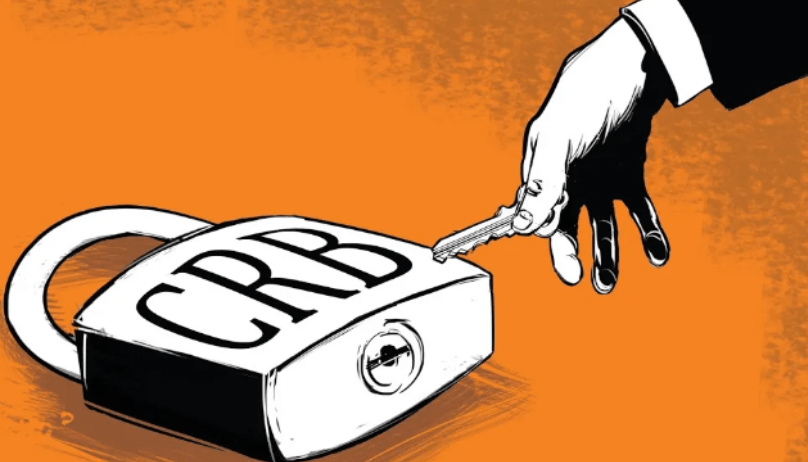
A quiet but consequential legal question is emerging in California: Can court reporters compel their own regulator to enforce laws already on the books against the expansion of digital-only reporting? Inspired by Texas’s Holmgren case, this analysis explores the hypothetical viability of a mandamus action against the Court Reporters Board for non-enforcement, examining standing, risk, and the strategic steps that would be required before such a case could responsibly proceed.
The Trojan Horse Problem – Why Software Companies Should Not Masquerade as Court Reporting Agencies

Software companies moving into the court reporting agency space do not represent innovation; they represent structural risk. When the same platform controls the technology, the data, and the labor pipeline, independence erodes and normalization begins. The danger is not sudden replacement but gradual acceptance, until reporters become optional upgrades instead of guardians of the record. The profession must recognize this encroachment and defend its sovereignty.
The Next Evolution in Court Reporting: How Technology Is Closing the Payment Gap
Payment collection has always kept reporters tied to agencies. But fintech automation—escrow, instant pay, and attorney verification—now solves that last dependency. With SaaS-integrated invoicing, reporters can deliver, verify, and get paid automatically. No chasing checks. No middlemen. The last agency advantage is gone—and independence is finally in reach.
 STENOIMPERIUM