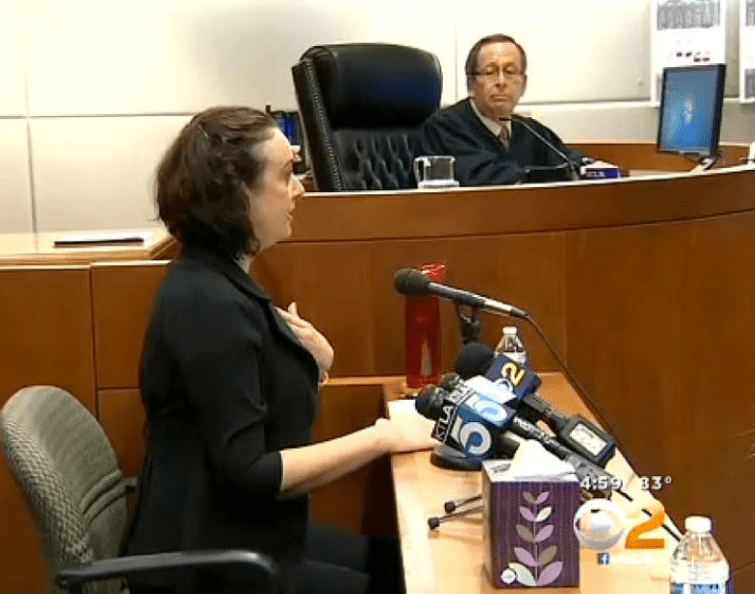
For most of modern judicial history, the debate over cameras in the courtroom revolved around distraction, decorum, and the psychological effect of public exposure. Would jurors feel pressured? Would witnesses perform instead of testify? Would attorneys grandstand? Courts weighed transparency against the integrity of proceedings, and over time, carefully circumscribed media access became normalized in many jurisdictions.
But something fundamental has changed. Courtroom recording in 2026 is no longer simply about whether a camera is present. It is about what happens after the recording leaves the courtroom.
Today, courtroom audio and video are rarely just broadcast. They are ingested. They are processed. They are transcribed by automated systems. They are stored on remote servers. They are indexed, searchable, and increasingly reused. In this environment, authorizing recording is not merely authorizing observation. It is authorizing the creation of a permanent, machine-readable dataset of judicial proceedings—outside the Court’s supervision, beyond its technical control, and untethered from the statutory framework that governs the official record.
This transformation raises judicial, evidentiary, and privacy questions that existing media-access rules were never designed to confront.
The Collapse of the Boundary Between Coverage and Data Capture
Historically, courtroom coverage was ephemeral. Cameras recorded footage. Networks selected excerpts. What aired was limited by time, editorial choice, and technical constraints. Raw tapes existed, but they were expensive to store, difficult to search, and rarely repurposed beyond archival or documentary use.
That world no longer exists.
Modern media workflows are built around automation. Audio and video are routinely run through automated speech-recognition systems. These systems generate unofficial transcripts in minutes. They time-stamp, tag speakers, and produce text files that can be instantly indexed, shared, scraped, and republished. The original recordings, along with derivative transcripts, are typically stored on third-party cloud infrastructure. Retention periods are long, sometimes indefinite. Downstream uses are rarely transparent and almost never subject to judicial oversight.
Once a proceeding enters this pipeline, it ceases to be a discrete news event. It becomes a persistent data object.
This is not a minor technological upgrade. It is a structural shift. The courtroom is no longer just observed. It is converted into machine-processable information, capable of being searched, aggregated, analyzed, monetized, and repurposed far beyond the context in which it was created.
Courts are being asked to approve not simply the presence of cameras, but the irreversible export of courtroom proceedings into a global data ecosystem.
The Judicial Record and the Rise of Unofficial Transcripts
At the center of this issue is the judicial record itself.
For centuries, courts have recognized that the official record is not merely a convenience. It is a legal instrument. Certified transcripts are governed by statute, regulation, professional licensing, ethical obligations, correction procedures, and retention rules. They are created under oath-bound supervision. They are subject to challenge, amendment, sealing, and judicial control.
Automated transcripts exist entirely outside that framework.
They are not certified. They are not reviewed. They are not produced under court supervision. Yet they are often presented, quoted, and circulated as if they were functionally equivalent to official records. Errors—misheard words, incorrect speaker attributions, missing context—are not merely technical flaws. In judicial proceedings, they are distortions of fact.
Once such transcripts circulate, the Court loses any meaningful ability to correct them. Even if an official transcript exists, the unofficial version may already be embedded across websites, social media, databases, and AI training sets. The public rarely distinguishes between certified and non-certified records. The authority of the Court’s official record becomes diluted by competing textual artifacts that appear just as authoritative, and often more accessible.
This is not simply a reputational issue. It strikes at the Court’s exclusive role as the arbiter of what was said, by whom, and in what context.
When multiple uncontrolled “records” of a proceeding proliferate, the concept of an official record begins to erode.
The Loss of Judicial Control Over Courtroom Data
Courts are accustomed to regulating what occurs inside the courtroom. They set the terms of access. They define the scope of recording. They impose conditions. They retain enforcement authority.
What courts cannot meaningfully regulate is what happens once recordings are exported into private technological systems.
When media organizations or their vendors process courtroom recordings through automated platforms, those platforms operate under private contracts, proprietary architectures, and data policies that are not designed around judicial governance. Storage locations may be geographically distributed. Copies may be redundantly backed up. Data may be integrated into internal databases or third-party services. Retention policies may permit long-term or indefinite storage. Deletion, once feasible, becomes practically complex or functionally impossible.
Even if a court later determines that a recording should be restricted, sealed, or limited, the technological reality may frustrate that order. There may be no single repository to address. There may be no ability to confirm deletion. There may be no transparency into how many derivative copies exist or where they reside.
Judicial authority ends at the courtroom door. Cloud architecture does not.
This asymmetry matters. Courts are being asked to authorize processes whose consequences they cannot realistically supervise or remediate.
Privacy in the Age of Permanent Capture
The privacy implications of this shift are profound.
Court proceedings inevitably involve sensitive human material. Witnesses testify about medical conditions, financial distress, family conflict, trauma, and fear. Jurors are visible participants in an adversarial process. Litigants are compelled to speak under oath. Court staff perform essential functions in public view.
Even when recording is formally limited, microphones and cameras capture more than intended. Tone. Emotion. Hesitation. Side remarks. Reactions. The incidental texture of human presence.
Once that material enters automated systems, it becomes searchable. It becomes indexable. It becomes detachable from the solemn context of judicial process and reintegrated into technological ecosystems that have entirely different incentives.
Data that once dissipated with the news cycle now persists. It can resurface years later. It can be clipped, remixed, algorithmically analyzed, and recontextualized. It can be used in ways no participant anticipated when they were compelled to speak.
There is also a qualitative difference between a broadcast clip and a stored dataset. Broadcast footage fades. Datasets accumulate. They invite reuse.
For witnesses and jurors, this permanence changes the nature of participation. The courtroom ceases to be a place where testimony is given. It becomes a place where personal experience is permanently recorded into machine systems beyond institutional control.
Courts have long recognized their obligation to protect participants from unnecessary exposure. That obligation now extends beyond cameras to architectures.
Procedural Effects and the Chilling of Testimony
The effects of this environment are not abstract. They reach into courtroom dynamics themselves.
When participants understand that their testimony may not merely be observed, but permanently stored, algorithmically processed, and potentially repurposed, behavior changes. Witnesses may become more guarded. Jurors may feel scrutinized. Attorneys may posture differently. The courtroom may subtly shift from a forum of adjudication to a venue of performative documentation.
Courts are charged not only with openness, but with ensuring that proceedings are fair, focused, and conducive to truthful testimony. Technologies that introduce a sense of perpetual external observation—beyond the immediate public gallery—risk altering the psychological conditions under which justice is administered.
These effects are difficult to measure. But courts have never required certainty of harm before exercising control over their own processes. The judiciary has historically acted to prevent influences that threaten decorum, candor, and procedural integrity even when those threats are intangible.
The datafication of proceedings introduces precisely such an influence.
Why Traditional Media Rules Are No Longer Sufficient
Most courtroom media rules were drafted for an era of cameras, not clouds.
They address physical placement. Pooling arrangements. Lighting. Noise. Disruption. They contemplate journalists, not data pipelines. They assume that what leaves the courtroom is footage, not a permanent, machine-readable corpus.
They rarely address automated transcription. They rarely contemplate third-party processing. They rarely impose conditions on downstream storage, reuse, or derivative record creation. They rarely distinguish between human reporting and algorithmic ingestion.
This gap matters because courts may believe they are authorizing one thing—limited observational access—while functionally authorizing something else entirely: unrestricted technological capture.
The law has not yet caught up to this distinction. That does not relieve courts of the responsibility to confront it.
The Case for Narrow, Surgical Authorization
None of this requires abandoning transparency. It requires precision.
There is a meaningful difference between permitting recording of discrete, traditionally public-facing portions of proceedings—such as opening statements and closing arguments—and permitting continuous recording of evidentiary hearings, witness testimony, or procedural exchanges.
Openings and closings are already rhetorical. They are already directed outward. They are less likely to involve spontaneous disclosure, vulnerable witnesses, or sensitive evidentiary material. They are also less likely to be mistaken for the official record.
By contrast, preliminary hearings, evidentiary proceedings, and testimony are precisely where record integrity and participant protection are most critical. They are where unofficial transcripts are most dangerous. They are where privacy risks are most acute. They are where uncontrolled data capture most directly interferes with the Court’s supervisory role.
Narrow authorization is not censorship. It is calibration.
Courts have always calibrated access in light of evolving conditions. The technological conditions have now changed.
A Judicial Question, Not a Media One
At bottom, this is not a dispute about press rights. It is a question of judicial governance.
Who controls the creation of the judicial record?
Who safeguards the privacy of compelled participants?
Who determines how courtroom proceedings may be converted into permanent technological assets?
If courts do not answer these questions, technology vendors will.
The courtroom is not merely a stage. It is an institution. Its authority rests not only on openness, but on the integrity of its processes and the protection of those drawn into them.
When recording meant cameras, courts could regulate cameras. When recording means data extraction, courts must regulate data consequences.
The future of courtroom access will not be decided by whether a lens is distracting. It will be decided by whether the judiciary is willing to confront what recording now actually is.
Not observation.
But transformation.
Disclaimer
This article is for informational and analytical purposes only and does not constitute legal advice. It does not reference or describe any specific court, judge, media organization, or technology provider. It addresses systemic issues related to courtroom recording practices, automated transcription technologies, and data retention risks as matters of public policy, judicial administration, and professional concern.
 STENOIMPERIUM
Cameras in courtrooms have entered the legislative platform from many people in support of Texans for Judicial Accountability. The State Commission on Judicial Conduct ISN’T DOING ITS JOB, and there are some (not all) really bad characters as judges who ignore even the most basics such as jurisdiction in their rulings. On the bench these bad characters commit assault, battery, infringements on the Constitution, ESPECIALLY IN FAMILY LAW. In juvenile criminal court ACROSS THE COUNTRY, there have been bad characters acting as judges who literally kidnap children for years in the name of judicial where the children have never been arraigned or tried for any offense. I’m not sure how prevalent it is in Texas. See the J. Ciavarela case in Luzerne County PA. All the attorneys were terrified to work in Luzerne County because all the judges were related to each other and they were off the chart psychotic. It took many years and hundreds of judges across the state to petition some of these judges get removed from the bench. Oh, by the way, they were exempt from having to be elected each term. It’s just human nature that some people, when given a lot of power and little accountability go berserk.
LikeLike
Thank you for this thoughtful comment. I agree with you on the core point: sunlight and accountability matter. History has repeatedly shown that when any institution is insulated from scrutiny, abuses can occur. The Ciavarella scandal is a stark reminder of how catastrophic the consequences can be when judicial power is exercised without meaningful oversight, and why public visibility, lawful review mechanisms, and enforceable accountability structures are essential.
Nothing in my article is meant to argue for secrecy or to shield courts from public observation. On the contrary, open courts are a cornerstone of legitimacy. The question I am raising is not whether proceedings should be observable, but how courtroom recording now functions in a technological environment that did not exist when most media-access rules were written.
There is a real difference between public observation and the creation of permanent, machine-readable datasets that are stored, replicated, and repurposed outside the court’s control. My concern is that courts today are often authorizing the latter without fully grappling with its implications for the integrity of the official record, the privacy and safety of participants, and the judiciary’s own supervisory authority.
Strong oversight and technological caution are not opposites. In fact, they should coexist. Courts can and should be transparent, while also being deliberate about the scope and downstream consequences of recording—especially when evidentiary proceedings, witnesses, and compelled participants are involved.
Unchecked judicial power is dangerous. Unchecked data capture is also dangerous. Both deserve serious attention.
LikeLike