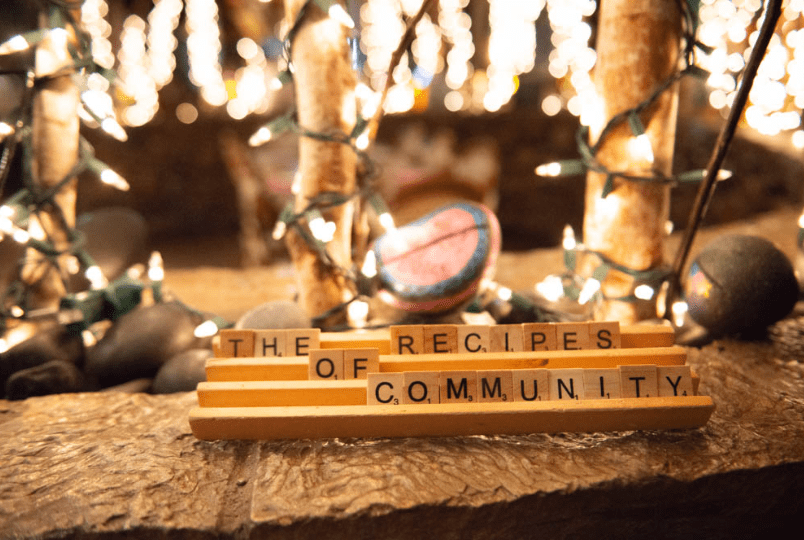
In a warmly lit scene, small wooden trays hold Scrabble tiles spelling out “THE RECIPES OF COMMUNITY.” It’s a simple arrangement — a holiday-style backdrop, polished stones, twinkling lights wrapped around branches — yet the phrase carries a resonance that extends far beyond the frame. In many ways, it captures the ethos of a profession that is often overlooked, frequently misunderstood, and absolutely essential to the American justice system: court reporting.
As the holiday season approaches, the image evokes something especially fitting for this time of year: gratitude. In a profession that relies so heavily on precision, the court reporting community relies just as deeply on the human connections that sustain it. Thanksgiving offers a moment to acknowledge not only the work reporters perform, but the people we are thankful for along the way.
A Profession Rooted in Human Connection
Ask any court reporter how they survived school or how they stayed in the field during its most difficult moments, and nearly all will credit another reporter, teacher, classmate, or mentor. Despite its reputation for solitary work — long depositions, quiet courtrooms, hours spent editing transcripts — the profession is surprisingly communal.
Every November, many reporters reflect on the individuals who helped them through the most difficult stages of their career — the instructors who pushed them, the classmates who shared briefs, the mentors who steadied them, and the colleagues who stepped in when workloads became overwhelming. Gratitude is more than emotion in this profession; it is a tradition.
Reporters trade tips, encourage students through plateaus, answer late-night questions from panicked colleagues, and share strategies that their own instructors passed down to them decades earlier. The contemporary courtroom may include digital screens and real-time feeds, but the human infrastructure holding the profession together is largely unchanged.
The Craft That Binds a Community
While outsiders often see court reporting as a mechanical skill, insiders know it is both a craft and a discipline. Reporters must capture overlapping speakers, legal arguments, emotional testimony, and unpredictable proceedings — all with speed, neutrality, and near-perfect accuracy. They do not master this alone. They master it through feedback, coaching, repetition, and the shared knowledge of a community that fiercely protects the integrity of the record.
Veteran reporters help newer ones navigate high-stakes trials, realtime pressure, unfamiliar subject matter, or the demands of producing a same-day rough draft. Students rely heavily on peers to survive the progression of speed tests. Agencies depend on a network of proofers, scopists, and videographers who are themselves part of the broader ecosystem.
Technology cannot replicate the collaborative culture that supports the craft. Human precision is sustained by human community.
Service as a Daily Practice
Unlike many professions, court reporting is built around service — often invisible service. Reporters sit quietly in the background of proceedings that range from tragic to mundane, capturing every word for the record. They endure long days, technical complications, and intense deadlines. When trials extend into the night, reporters stay. When emergency transcripts are requested, they deliver.
Thanksgiving is, at its core, an appreciation of service — and court reporters exemplify this every day. The profession’s culture of stepping in, helping out, and supporting one another mirrors the very spirit of the holiday. Reporters routinely fill in for colleagues, share workloads, check in on one another after emotionally difficult hearings, and provide guidance without expectation of recognition. Service is not simply part of the job; it is part of the community’s DNA.
A Tradition That Endures
The warmth and natural textures in the photo — stones, soft lighting, and wood — evoke something enduring. That sense of longevity mirrors the profession itself. Stenographic reporting, often dismissed as outdated, has persisted through nearly every technological shift in the courtroom. Predictions of its disappearance have been repeated for decades, yet the craft remains essential.
What has allowed the profession to endure is not nostalgia but commitment. Court reporters know that nuance, context, and human judgment cannot be casually automated. They also know that the legal system depends on the precision of the written record, even if the public rarely thinks about who creates it.
This awareness creates continuity between generations. Students today are not only mastering a skill; they are inheriting a legacy of professionalism and gratitude — gratitude for those who came before them, and gratitude for those who continue to fight for the profession’s integrity.
Resilience as a Foundation
Court reporting demands resilience — from the stamina required to write for hours at a time to the emotional strength needed to sit through difficult testimony. Reporters navigate legislation, shifting courtroom practices, and public misconceptions about what their work entails. Still, they remain committed.
When one reporter falters, others step in. When a student wants to quit, the community rallies. When policymakers misunderstand the craft, reporters collectively advocate for accuracy and standards. That resilience reflects the same spirit many families express at Thanksgiving: gratitude for the ability to overcome, endure, and continue.
The Purpose That Holds Everything Together
The final ingredient in this “recipe” is purpose. Court reporters are unified by a responsibility that transcends workflow or personal preference. Their job is to preserve the record accurately and completely — a task that forms the backbone of the justice system.
At a time when many pause to give thanks, the court reporting community has much to appreciate: the colleagues who lift each other up, the instructors who shape the next generation, the families who support demanding schedules, and the profession itself — a craft that continues to stand, stronger than expected, because people care enough to protect it.
A Community Worth Preserving
The Scrabble tiles in the photograph symbolize the way court reporters build their world — one piece at a time, through relationships, discipline, mutual support, and a shared commitment to truth. Behind every transcript are dozens of unseen ingredients: the mentors who taught theory, the colleagues who provided guidance, the professionals who refined the craft, and the community that keeps it strong.
Court reporting is often described as a dying profession. Spend time inside it, however, and another picture emerges — one of strength, shared purpose, and gratitude. The recipe of community is not just inspirational; it is the reason the profession continues to survive, and the reason it will endure.
StenoImperium
Court Reporting. Unfiltered. Unafraid.
Disclaimer
“This article includes analysis and commentary based on observed events, public records, and legal statutes.”
The content of this post is intended for informational and discussion purposes only. All opinions expressed herein are those of the author and are based on publicly available information, industry standards, and good-faith concerns about nonprofit governance and professional ethics. No part of this article is intended to defame, accuse, or misrepresent any individual or organization. Readers are encouraged to verify facts independently and to engage constructively in dialogue about leadership, transparency, and accountability in the court reporting profession.
- The content on this blog represents the personal opinions, observations, and commentary of the author. It is intended for editorial and journalistic purposes and is protected under the First Amendment of the United States Constitution.
- Nothing here constitutes legal advice. Readers are encouraged to review the facts and form independent conclusions.
***To unsubscribe, just smash that UNSUBSCRIBE button below — yes, the one that’s universally glued to the bottom of every newsletter ever created. It’s basically the “Exit” sign of the email world. You can’t miss it. It looks like this (brace yourself for the excitement):

 STENOIMPERIUM