A Hypothetical Risk Assessment and “California Holmgren Playbook”
This article is for informational and discussion purposes only and does not constitute legal advice.
When the Texas case Holmgren v. Judicial Branch Certification Commission survived multiple jurisdictional attacks and reached the merits stage, it quietly opened a new front in the fight over digital reporting and AI. For the first time, a court recognized that licensed court reporters could ask a judge to compel their regulator to take a complaint about an AI-powered digital reporting firm seriously, rather than bury it with an administrative dismissal.
That decision has not gone unnoticed in other states. In California, where many reporters believe that digital reporting is being rolled out at scale despite statutory language that appears to favor licensed shorthand reporters, the obvious question has begun to surface:
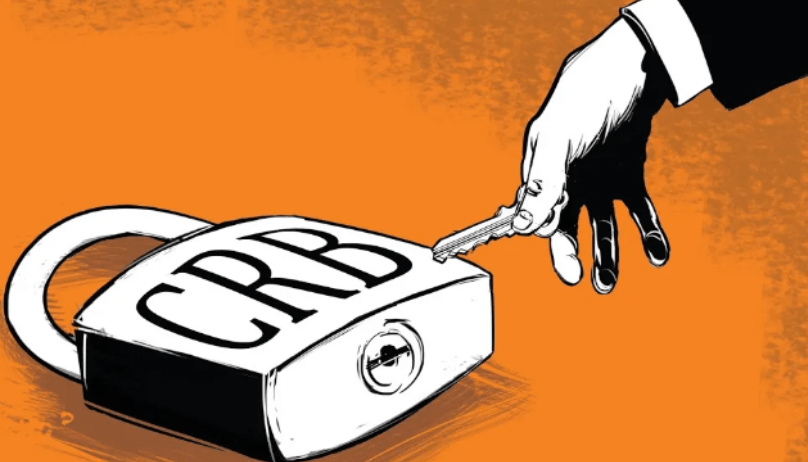
Could California court reporters bring a Holmgren-style mandamus action against the Court Reporters Board of California (CRB) for non-enforcement, particularly where large firms are conducting significant digital reporting business?
This article does not say such a case should be filed, nor does it make factual findings about any particular company. Instead, it explores the hypothetical viability of such an action and sketches a “California Holmgren Playbook”—a step-by-step outline of what would need to happen for a mandamus petition to be taken seriously in California courts.
Part I: A Hypothetical Risk Assessment Memo
“Viability of Mandamus Action Against CRB for Non-Enforcement of Digital Reporting Restrictions”
1. The core theory
The core legal theory, borrowing from Holmgren, looks roughly like this:
- California statutes define who may lawfully create the official record in certain proceedings and reserve that role, in most civil and criminal contexts, to licensed shorthand reporters with limited exceptions.
- Digital-only models that rely on non-reporter personnel and automated transcription raise serious questions under those statutes.
- The CRB is the agency charged with licensing and enforcing those rules for the protection of the public.
- When the Board receives credible complaints that a firm is effectively replacing licensed reporters with unlicensed digital workflows, its decision to decline investigation or enforcement is not value-neutral; it has consequences for both the public and the licensed profession.
- A group of reporters or firms asks a court, through a petition for writ of mandamus, to require the CRB to properly consider and act upon those complaints instead of dismissing them on narrow or questionable grounds.
In other words, the fight is not “CRB must shut down digital reporting tomorrow.”
The fight is: “CRB must do its job and lawfully exercise the enforcement authority the Legislature gave it.”
2. Standing: who gets to sue?
In Holmgren, the Texas courts recognized that licensed court reporters have a particularized interest in the enforcement of rules that protect the quality and exclusivity of depositions. That interest is different from the general public’s interest in abstract good government.
California courts have their own standing doctrine, but the logic is similar: the strongest plaintiffs are usually those who can show:
- They are licensed participants in the regulated profession;
- They face concrete economic and professional harm from the regulator’s inaction;
- They are not trying to legislate from the bench, but to enforce existing statutes as written.
That could include individual reporters, licensed reporting corporations, or associations acting on behalf of members. The more the case is framed around economic harm, professional standards, and statutory integrity, the stronger the standing argument becomes.
3. The target: regulator, not vendor
A crucial feature of the Holmgren model is that the primary defendant is the regulatory body, not (primarily) the competitor. The petitioners do not ask the court to micro-manage business models; they ask the court to determine whether the agency has abused its discretion or failed a ministerial duty by refusing to investigate or enforce.
That has two important consequences:
- It avoids turning the case into a pure “competitor vs. competitor” business brawl.
- It focuses the court’s attention on administrative law: Did the agency act within its statutory authority? Did it abdicate a duty?
If California reporters were to pursue a mandamus action, it would almost certainly need to be framed the same way: CRB’s non-enforcement is the problem. Any specific company or workflow is evidence of that problem, not the direct target of the writ.
4. Evidence and record-building
Courts do not act on vibes. They act on records.
A viable mandamus petition would need to show, at minimum:
- Specific complaints filed with CRB regarding alleged digital-only or non-compliant reporting practices;
- The Board’s responses (dismissals, refusals, or prolonged inaction);
- Statutory language that, on its face, appears to reserve certain proceedings to licensed shorthand reporters;
- Evidence that the challenged practices fall outside those statutory boundaries;
- Concrete harm to the petitioners’ economic interests and to the integrity of the record.
That means years of paperwork, correspondence, and documentation—not just screenshots, rumors, or marketing language. The closer the record looks to “We raised this over and over, and the agency systematically refused to act,” the stronger the mandamus argument becomes.
5. Risks and downsides
Any serious risk assessment has to admit the dangers.
- Judicial deference to agencies. California courts often give agencies latitude to interpret their statutes, especially where the Legislature has not spoken directly to newer technologies.
- Adverse precedent. A poorly framed case risks producing a published opinion that blesses broad agency discretion or effectively green-lights digital workflows under current law.
- Retaliation concerns. Plaintiffs may fear being blacklisted or frozen out of work by powerful players in the marketplace, even if that behavior would itself raise legal issues.
- Cost and duration. Complex administrative and mandamus litigation can stretch on for years and consume enormous resources.
In other words, the question is not, “Can someone file?” Almost anyone can file. The question is, “Is this likely to advance or damage the long-term cause of stenographic court reporting?”
Part II: The “California Holmgren Playbook”
A Hypothetical Step-by-Step Roadmap
If one imagines a future where California court reporters decide that a mandamus case is necessary, what would need to happen first? The following “playbook” is not a recommendation but a way to think through the prerequisites.
Step 1: Clarify the statutory theory
Before anything else, lawyers and reporters would need to agree on the core statutory argument. That means answering questions such as:
- In which proceedings do California statutes clearly require a licensed shorthand reporter?
- What, if anything, do those statutes say about digital recording or AI transcription?
- Where are the ambiguities, and where are the clean, bright-line conflicts?
The cleaner the statutory conflict, the more comfortable a court will be telling an agency, “You cannot ignore this.”
Step 2: Build a disciplined complaint record at CRB
The next step would be a systematic complaint campaign:
- Well-documented, fact-specific complaints filed with CRB about particular proceedings or workflows;
- Documentation of who swore the witness, who controlled the record, and how the transcript was created;
- References to the specific statutes and regulations allegedly violated;
- Follow-up requests asking CRB to explain its reasoning where it declines to act.
The goal is not to overwhelm the Board with noise. The goal is to create a clear, traceable paper trail that demonstrates a pattern of non-enforcement.
Step 3: Use public records to illuminate enforcement decisions
Parallel to complaints, petitioners would likely need to use Public Records Act requests to obtain:
- Internal policies, enforcement guidelines, or communications regarding digital reporting;
- Data on complaints received and dispositions;
- Any informal understandings between the Board and industry players about digital practices.
This material can support the argument that the Board has adopted an unofficial policy of non-enforcement or narrowed its jurisdiction in ways the statutes do not allow.
Step 4: Build a plaintiff coalition
A single reporter can sometimes carry a case, but a coalition often sends a stronger message:
- Individual CSRs who can show loss of work or downward pressure on rates attributable to digital encroachment;
- Licensed reporting firms competing in the same market segments;
- Potentially, an association or nonprofit with a mission focused on transcript quality and access.
The more diverse and representative the plaintiffs, the easier it is to argue this is not a personal vendetta but a profession-wide structural issue.
Step 5: Retain counsel with administrative and mandamus experience
Because the heart of the case is administrative law, the ideal legal team would include counsel familiar with:
- Writs of mandate against state agencies;
- Professional licensing boards;
- Separation-of-powers issues;
- The practical politics of suing a regulator.
This is not a case for a random general practitioner. It is closer to public-interest litigation, even if it implicates private economic interests.
Step 6: Draft a focused pre-litigation demand
Before filing, the coalition might send a formal demand letter to CRB:
- Summarizing the complaint history;
- Explaining why the Board’s dismissals or non-responses constitute an abuse of discretion or failure of duty;
- Inviting the Board to correct course by investigating, issuing guidance, or opening rulemaking.
Some boards will dig in their heels. Others may respond to a concrete, well-researched legal analysis. Either way, the response—or lack of response—becomes part of the record.
Step 7: File the petition for writ of mandate
Only after these groundwork steps would a petition be drafted and filed, seeking relief such as:
- A declaration that the Board misapplied or ignored the governing statutes;
- An order requiring the Board to properly consider and decide specific complaints;
- Possibly, an order requiring the Board to adopt or clarify enforcement policies consistent with the statutes.
The petition would have to walk a tightrope:
Demanding accountability without asking the court to micromanage every enforcement decision.
Step 8: Prepare for the public narrative battle
If such a case were filed, it would not be fought only in briefs and courtrooms. It would unfold in:
- Legal media,
- Professional newsletters,
- Blogs like Stenonymous or StenoImperium (two distinctly different blogs),
- And perhaps mainstream press, framed as a story about AI, regulation, and access to justice.
That is where careful messaging matters. The narrative would need to emphasize:
- Protection of the record;
- Equal access to reliable transcripts;
- The Legislature’s intent in creating a licensed profession;
- The danger of silently outsourcing that role to unlicensed digital workflows without public debate.
Where does this leave California reporters today?
The Holmgren case did not magically abolish digital reporting in Texas. What it did was something more subtle and, in some ways, more powerful:
- It affirmed that licensed professionals can have standing to challenge regulators’ refusal to enforce rules meant to protect their profession and the public.
- It kept the door open for courts to review whether non-enforcement is an abuse of discretion, rather than a politically untouchable choice.
- It signaled that the rise of AI and digital workflows does not automatically dissolve statutory boundaries that were written for human professionals.
For California reporters, the question is not simply “Should we sue?”
The deeper question is:
Are we willing to invest the time, discipline, and political capital it would take to build a record strong enough that, when we finally do ask a court to intervene, the judge will look at the file and say, “Yes, this deserves to be heard”?
Until that groundwork is done, “Holmgren in California” remains a hypothetical.
But it is no longer a fantasy.
StenoImperium
Court Reporting. Unfiltered. Unafraid.
Disclaimer
“This article includes analysis and commentary based on observed events, public records, and legal statutes.”
The content of this post is intended for informational and discussion purposes only. All opinions expressed herein are those of the author and are based on publicly available information, industry standards, and good-faith concerns about nonprofit governance and professional ethics. No part of this article is intended to defame, accuse, or misrepresent any individual or organization. Readers are encouraged to verify facts independently and to engage constructively in dialogue about leadership, transparency, and accountability in the court reporting profession.
- The content on this blog represents the personal opinions, observations, and commentary of the author. It is intended for editorial and journalistic purposes and is protected under the First Amendment of the United States Constitution.
- Nothing here constitutes legal advice. Readers are encouraged to review the facts and form independent conclusions.
***To unsubscribe, just smash that UNSUBSCRIBE button below — yes, the one that’s universally glued to the bottom of every newsletter ever created. It’s basically the “Exit” sign of the email world. You can’t miss it. It looks like this (brace yourself for the excitement):

 STENOIMPERIUM