
Every cultural icon has an origin story, but few are as delightfully unexpected as the tale of how Mickey Mouse—arguably the most recognizable animated character in the world—received his name. For nearly a century, Mickey has symbolized optimism, imagination, and the magic of storytelling. His birthday, celebrated globally each November, brings fans back to his 1928 debut in Steamboat Willie, when a cheerful whistling mouse changed entertainment forever.
But behind that transformation lies the influence of someone rarely mentioned in the history books: Lillian Marie Bounds Disney, an Idaho-born stenographer whose off-hand suggestion reshaped the future of the Walt Disney Company—and pop culture itself.
From Lewiston, Idaho, to the Birth of an Empire
Lillian Bounds was born in 1899 in Spalding, Idaho, a small community near Lewiston on the Nez Perce reservation. Her upbringing wasn’t glamorous or connected to Hollywood. She came from modest means, and in 1923—seeking greater opportunity—she moved to Los Angeles, a city then blossoming with possibility in the early motion picture era.
Her first break was not as an actress, writer, or animator, but as a stenographer, a role women commonly held in the early 20th century. She worked at Disney Brothers Studio, performing ink-and-paint duties and secretarial work. It was that skillset—precision, speed, sharp memory, attention to detail—that placed her directly in the orbit of a young, ambitious Walt Disney.
Lillian’s stenographic talents made her indispensable to the scrappy, growing studio. But no one could have anticipated that her influence would stretch far beyond clerical work—that her instincts would help name the character who would define an entertainment empire.
From Mortimer to Mickey – A Name That Changed History
According to the Walt Disney Archives, Walt originally intended to name his new character “Mortimer Mouse.” It was the late 1920s—Walt had faced financial difficulties, lost control of earlier creations like Oswald the Lucky Rabbit, and desperately needed a winning idea. While sketching an energetic little mouse, he shared his concept and proposed name with Lillian.
Her reaction was swift and honest.
Mortimer, she felt, sounded too gloomy, too pretentious for a cheerful, spirited character who would appeal to children and families. It lacked warmth. It lacked charm. It lacked fun.
She suggested another name: Mickey.
Short, musical, lively—Mickey Mouse suddenly came alive with personality. Walt agreed. In that moment, a character was born. The world’s most iconic mouse owes his name not to an animator, producer, or executive, but to a stenographer from Idaho with a keen intuitive sense for storytelling.
A Marriage and a Partnership in Creativity
Walt and Lillian married in 1925, before Mickey’s debut, at her brother’s home roughly 30 miles south of Moscow, Idaho. Their relationship was famously affectionate, full of teasing, wit, and mutual respect. While Walt was the visionary, Lillian was the grounded voice who often kept him balanced. She famously pushed back when ideas felt wrong or names felt off—Mortimer being Exhibit A.
In interviews over the years, Lillian often downplayed her contribution, simply saying she “didn’t think Mortimer suited him.” Yet that one creative instinct altered the course of Disney history.
It’s a reminder that innovation frequently springs from conversation, collaboration, and openness to feedback—skills stenographers embody daily. A stenographer must listen carefully, identify nuance, analyze tone, and observe subtleties others miss. Lillian listened to ideas the same way she listened to words in her work: with accuracy and perception.
The Stenographer’s Skillset That Shaped a Kingdom
There is something poetic about Mickey Mouse—a symbol of imagination—being named by a stenographer, a profession rooted in precision and record-keeping. Yet the connection is deeper than coincidence.
Stenographers are trained to:
- Observe detail others overlook
- Capture language with total accuracy
- Understand human voice, tone, and rhythm
- Respond instantly with judgment and clarity
In a rapidly growing animation studio, those skills were priceless. Lillian wasn’t simply jotting notes; she was absorbing the creative rhythm of a new era in filmmaking. She understood character, cadence, and emotional resonance. When she said “Mortimer” was wrong, she was picking up on something real—something millions of fans would instinctively understand decades later.
Much like court reporters and stenographers today who help uphold the integrity of legal records and public proceedings, Lillian saw and interpreted the world differently. Her ear for language shaped a global brand.
Idaho Roots, Hollywood Legacy
Lillian never forgot her Idaho upbringing, and Idaho never forgot her. Fans still visit properties connected to her early life. Local historians proudly note that a girl from a small Northwestern town helped name the most famous mouse on earth.
Her story is also a reminder that creativity is not confined to geography. World-changing ideas can—and often do—spring from the most unexpected places.
The Human Touch Behind the Magic
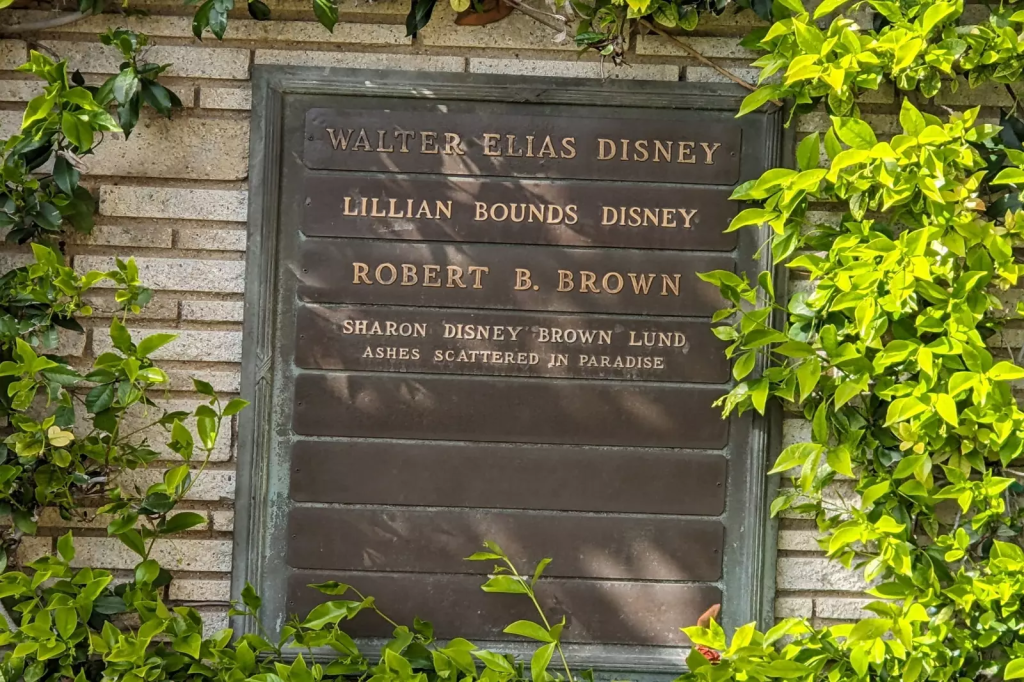
Lillian and Walt remained married until his death in 1966. She continued to preserve his legacy and the company’s heritage until her passing in 1997. Visitors to the Forest Lawn Memorial Park in Glendale, California, often pay respects to both Walt and Lillian, acknowledging the partnership that shaped modern storytelling.
While Walt’s genius is undisputed, Lillian’s contributions deserve far more recognition. Behind the man whose name sits atop theme parks, movies, and a billion-dollar brand was a woman whose insights softened edges, added humanity, and in one crucial moment, changed “Mortimer” into “Mickey.”
Why Her Story Matters Today
Lillian Bounds Disney wasn’t an animator. She wasn’t a producer. She wasn’t a studio executive. She was a stenographer—a role historically dominated by women and too often overlooked in the archives of creative history.
Yet her voice helped define a character known to every child for nearly 100 years.
Her story shows that:
- Creative contributions are not limited to job titles.
- Listening is a powerful form of artistry.
- Everyday roles can influence extraordinary outcomes.
- Women’s insights have shaped entertainment in ways history often underestimates.
For stenographers—especially those fighting to protect their profession today—Lillian’s story is a reminder of the profound impact a single voice can have.
A Legacy Written in Ink and Imagination
When Mickey Mouse’s birthday rolls around each November, the world celebrates Walt Disney’s genius, the animation milestones, and the joy the character continues to bring. But woven into that celebration is the quieter legacy of the Idaho stenographer who gave the world a better name—one that felt warm, friendly, and full of possibility.
“Mickey Mouse” didn’t just become a character. He became an icon.
And it all started with the intuition of Lillian Bounds Disney, a stenographer who understood that stories—and names—matter.
StenoImperium
Court Reporting. Unfiltered. Unafraid.
Disclaimer
I’m not a CPA or financial planner — I’m sharing what I’ve learned as a working reporter navigating these same decisions. Everyone’s financial situation is different, so please talk with your accountant or tax professional before making changes based on this guide.
This article includes analysis and commentary based on observed events, public records, and legal statutes.
The content of this post is intended for informational and discussion purposes only. All opinions expressed herein are those of the author and are based on publicly available information, industry standards, and good-faith concerns about nonprofit governance and professional ethics. No part of this article is intended to defame, accuse, or misrepresent any individual or organization. Readers are encouraged to verify facts independently and to engage constructively in dialogue about leadership, transparency, and accountability in the court reporting profession.
- The content on this blog represents the personal opinions, observations, and commentary of the author. It is intended for editorial and journalistic purposes and is protected under the First Amendment of the United States Constitution.
- Nothing here constitutes legal advice. Readers are encouraged to review the facts and form independent conclusions.
***To unsubscribe, just smash that UNSUBSCRIBE button below — yes, the one that’s universally glued to the bottom of every newsletter ever created. It’s basically the “Exit” sign of the email world. You can’t miss it. It looks like this (brace yourself for the excitement):

 STENOIMPERIUM