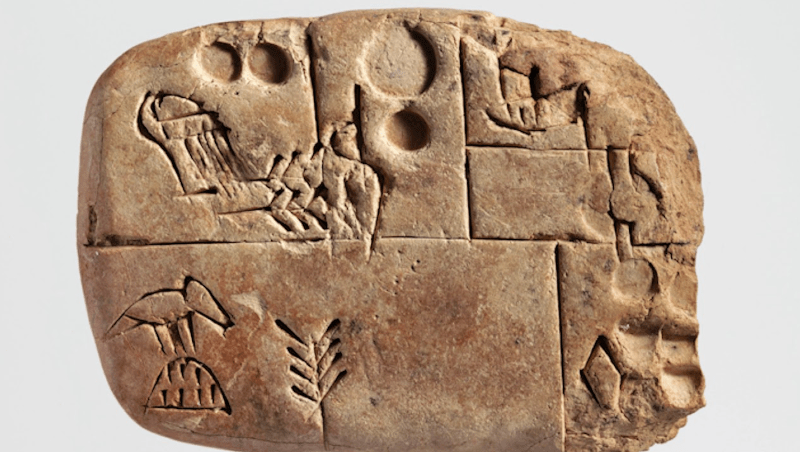
Court reporting didn’t start with a machine. Long before modern steno keyboards clicked in courtrooms, reporters relied on pen-and-paper shorthand systems—ingenious methods designed to capture spoken language as quickly and accurately as possible. Over the centuries, these systems evolved into the highly structured machine shorthand theories we know today. Understanding this evolution isn’t just an academic exercise—it’s a reminder that our profession is built on centuries of innovation, discipline, and linguistic brilliance.
Stenography’s roots stretch back more than two millennia, beginning with Ancient Greek shorthand and evolving through Roman and European pen systems. But the machine shorthand era — and the development of formal “steno theories” as we know them today — spans roughly 110 years, from the invention of the Stenotype machine in 1911 to the realtime and hybrid systems of the present day.
Ancient Greek Beginnings (4th century B.C.)
The earliest known system of shorthand was developed by the Greeks around the 4th century B.C. They used a system of symbols and abbreviations to record speeches in real time — particularly useful in their philosophical schools, courts, and political assemblies, where oral discourse was central.
- Ancient Greek scribes used a semi-alphabetic set of symbols, often derived from ordinary Greek letters but adapted for speed.
- This system allowed trained scribes to capture the essence of speeches and debates — including those of figures like Demosthenes, the famed Athenian orator.
- Surviving examples of Greek shorthand were discovered on wax tablets in the Agora of Athens, showing that this wasn’t just theory — it was actually used in daily legal, academic, and political life.
Roman Tironian Notes (1st century B.C.)
The Romans later expanded on the Greek foundation, developing the much more complex Tironian Notes system under Marcus Tullius Tiro, Cicero’s secretary.
Tironian shorthand was:
- Systematic and symbolic, with thousands of signs.
- Capable of recording speeches verbatim, including court proceedings, Senate debates, and orations.
- So influential that variations of Tironian notes persisted through the medieval era and into the Renaissance.
Early Manual Shorthand Systems (1600s – 1800s)
Before the concept of “steno theory” as we understand it existed, early court reporters and scribes used manual shorthand systems. These were not “steno machine” theories, but systems of symbols and abbreviations designed to compress language quickly with a pen:
- Tironian Notes (Roman era)
Dating back nearly 2,000 years, this system was invented by Marcus Tullius Tiro, Cicero’s secretary. Tironian Notes used thousands of symbols to represent common words and phrases, becoming one of the earliest examples of systematic shorthand. - Samuel Taylor’s System (1786)
Taylor, a British stenographer, introduced a simplified shorthand focused on phonetics. His work influenced both British and American note-takers and was a key bridge between medieval shorthand and modern phonetic systems. - Pitman Shorthand (1837)
Sir Isaac Pitman’s method revolutionized shorthand by using phonetic principles—symbols represented sounds rather than letters. Pitman became the dominant system in the U.K. and was widely adopted in U.S. courts and legislatures. It required enormous precision and practice, but in the hands of a skilled reporter, it allowed near-verbatim capture. - Gregg Shorthand (1888)
John Robert Gregg’s system replaced Pitman’s angular symbols with smooth, cursive lines. Gregg Shorthand became the most widely taught system in American schools and offices for decades. Though it was popular in secretarial work, some court reporters also used Gregg before stenotype machines became standard.
Each of these systems had its own “theory”—a codified set of rules for representing sounds, word parts, and phrases. Reporters trained rigorously, often for years, to master them. They required mental agility, impeccable spelling, and linguistic awareness to keep up with fast speakers without modern aids.
Birth of the Stenotype Machine (1870s – 1910)
The late 19th century ushered in a technological revolution. Inventors sought ways to mechanize the process of shorthand writing, aiming for greater speed and accuracy than even the best manual shorthand writers could achieve.
- Miles Bartholomew patented one of the earliest practical stenographic machines in 1879, earning him the title “Father of the Stenograph.” His early machines printed symbols onto paper tape, marking the first real step toward machine shorthand.
- Throughout the 1880s and 1890s, various inventors iterated on Bartholomew’s concept, experimenting with keyboard designs and printing mechanisms. These machines were ingenious but often bulky, unreliable, or limited in speed compared to a human hand.
The true breakthrough came in 1911, when Ward Stone Ireland introduced his Stenotype machine. Ireland’s design became the blueprint for every modern steno keyboard:
- Initial consonants on the left,
- Vowels in the middle,
- Final consonants on the right.
By pressing multiple keys simultaneously, a stenographer could write entire syllables or words in a single chord. The Ireland machine made it possible to write faster than anyone could by hand, laying the foundation for stenography as a profession distinct from manual shorthand.
First Stenotype “Theory” (1910s – 1920s)
With the new machine came the need for a new kind of theory. Manual shorthand systems like Pitman or Gregg didn’t map cleanly onto chord-based keyboards. So stenographers and educators developed the first formal stenotype theory, a phonetic, syllabic system designed to match the Ireland machine’s unique layout.
This original theory was:
- Phonetic — focused on sounds rather than letters,
- Structured — each stroke represented a syllable or word part in a predictable way,
- Long — most words were written in full, with minimal use of briefs or phrases, prioritizing accuracy over brevity.
In the 1910s–1920s, early professional stenographers used this system in courtrooms, legislatures, and business reporting. By the 1930s and 1940s, formal stenographic schools began codifying variations of this original system into standardized curricula. The emphasis was on discipline and precision, not speed contests. This first generation of machine shorthand writers laid the professional groundwork for the modern court reporting field.
Mid-Century Proliferation (1940s – 1980s)
As stenography matured, multiple competing theories emerged, each offering slightly different ways to represent language. Among the notable systems:
- Stenotype Grand
- Stenograph Theory (developed by the Stenograph Company)
- Stenotype 1–2–3
- Early precursors to StenEd, Phoenix, and others
Each theory tweaked how reporters handled briefs, phrasing, vowel representations, and conflict resolution. Some systems emphasized ease of learning; others aimed for more efficient writing once mastered. Yet all remained grounded in the original phonetic, structured principles established in the early 1900s.
This was the golden age of stenographic education. Thousands of students enrolled in accredited schools, often sponsored or regulated by court systems. Professional associations like NCRA grew in influence, setting standards for speed tests and certification. Theory choice became a matter of pedagogy and personal preference, not ideology.
By the mid-20th century, theory development had exploded. What began as a handful of foundational systems evolved into a vast ecosystem of theories — each reflecting different pedagogical philosophies, regional accents, and realtime ambitions.
While there isn’t a single universally agreed-upon “official” count (because many theories have been created, modified, and re-branded over time), historical records, stenographic textbooks, NCRA archives, and state school catalogs collectively document well over 100 distinct steno theories developed since the early 20th century — with some estimates in the 110–120+ range.
Here’s a breakdown to give you a more precise picture:
1. Foundational “Original” Theories (≈ 5–10)
These are the earliest systems developed between the 1910s and 1930s, following Ward Stone Ireland’s machine invention.
Examples include:
- The Original Ireland Theory (c. 1911)
- Stenotype Grand
- Stenotype 1/2/3 Series
- Stenograph Company Theory (early editions)
- Charles Lee Swem theory and similar early phonetic structures
These early theories were long, highly phonetic, and structured — designed to match the new stenotype keyboard exactly.
2. Mid-Century Professional & Proprietary School Theories (≈ 40–50)
From the 1940s through the 1980s, steno schools proliferated across the U.S., and many developed their own branded or proprietary theories — sometimes only taught locally.
This explosion of variation happened because:
- Schools wanted to differentiate themselves and protect intellectual property.
- Different instructors had slightly different interpretations of phonetic representation.
- Regional accents and local legal terminology influenced adjustments.
Examples:
- Stenotype Grand variants
- Stenograph College Theory (different from early Stenograph Co.)
- Roberts Walsh Gonzalez (RWG)
- Stenotype Centennial Theory
- “New Century” theories introduced mid-century
- Dozens of school-specific systems in New York, Chicago, and California
👉 Some state archives list 30–40 unique accredited program theories in California alone during the peak era of the 1950s–1970s.
3. Realtime & CAT-Era Theories (≈ 20–30)
In the 1980s–1990s, with the rise of realtime reporting and computer-aided transcription, theories were revised to optimize for realtime translation accuracy, minimize conflicts, and streamline output for software.
Examples:
- StenEd Theory (and its later realtime editions)
- Phoenix Theory & Phoenix Realtime
- Stenotype Realtime Theory (various adaptations)
- DigitalCAT Theory
- Eclipse Theory (and Eclipse Realtime variants)
- RPR Theory adaptations for testing
- Customized hybrid systems blending StenEd, Phoenix, or other bases
Many of these were revisions of older long theories, with tweaks to briefs, phrasing, or conflict resolution.
4. “Short Writing” & Experimental Theories (≈ 10–15)
Starting in the late 1990s and early 2000s, a new generation of theories appeared that emphasized aggressive briefing and phrasing to minimize stroke count.
The most famous example is:
- Magnum Steno (Mark Kislingbury) — early 2000s
But there were others:
- “One Stroke” experimental systems
- Personalized ultra-briefing hybrids shared through seminars and independent schools
- Short-writing captioning theories developed for CART writers (some undocumented formally)
These systems were far fewer in number but generated a lot of debate — which is the controversy we’re unpacking in your article.
5. Modern Hybrids, Self-Taught, and Boutique Theories (≈ 20+)
Today, there’s a wave of personalized “hybrid” theories, often created by veteran reporters who blended elements of StenEd, Phoenix, Magnum Steno, and legacy systems to suit their style.
Because these are often informal or self-published, the exact number is hard to pin down — but industry surveys, NCRA teacher reports, and CAT software vendor data suggest dozens of such hybrids are in use in classrooms, online teaching groups, and mentorship programs.
Total Estimated Theories: 110–120+
When you combine:
- Foundational (≈ 5–10)
- Mid-century school theories (≈ 40–50)
- Realtime/CAT-era theories (≈ 20–30)
- Short-writing & experimental (≈ 10–15)
- Modern hybrids (≈ 20+)
👉 You land in the 112–125 range, depending on how you classify minor variations and boutique systems.
This aligns with what veteran instructors and NCRA historians often cite when they say “there have been more than 100 stenographic theories taught in the U.S. since the early 1900s.”
Why This Matters
This historical abundance of theories proves something important:
👉 The existence of “new theories” doesn’t automatically make them better.
👉 The only theories that have produced large numbers of certified reporters consistently over time are the structured, phonetic, long or hybrid systems taught in accredited programs.
Short-writing theories are one small subset of this broader history — and their track record, after 20+ years, is dwarfed by the century-long success of traditional theories.
Realtime & Short-Writing Era (1990s – 2000s)
The 1990s brought another technological leap: Computer-Aided Transcription (CAT) and realtime translation. Suddenly, reporters weren’t just producing transcripts after the fact—they were expected to deliver instantaneous translation on screen, often in front of judges, attorneys, and juries.
This demanded cleaner writing, fewer conflicts, and theories optimized for realtime output. Many traditional theories were retrofitted:
- StenEd Realtime,
- Phoenix Realtime,
- Various hybrids combining structured theory with realtime-friendly modifications.
Then came a radical shift. In the early 2000s, Mark Kislingbury introduced Magnum Steno, a theory built around aggressive briefing and phrasing to drastically reduce stroke counts. His system broke from decades of conservative, long-theory tradition and sparked the first major short-writing revolution. Thousands of reporters adopted elements of Magnum to boost speed and efficiency, and many modern realtime theories incorporate some of its concepts today.
The Legacy of Theory
Why does all this matter? Because every modern stenographic theory traces its lineage back to the original 1910s Stenotype Theory, which itself grew out of centuries of manual shorthand innovation.
- Pitman (1837) was the earliest phonetic shorthand “theory.”
- Ward Stone Ireland’s machine (1911) provided the mechanical foundation.
- The first formal steno theory emerged soon after—a long, phonetic, structured system built for accuracy.
- Mid-century proliferation refined these ideas, while the realtime era demanded adaptations for digital translation.
- Modern short-writing theories represent the latest iteration in a long evolutionary chain.
For students, understanding this history can provide a deeper respect for the craft. For working reporters, it’s a reminder that our tools may evolve, but the core linguistic discipline remains unchanged. The shorthand “theories” we use today are not random; they are the product of centuries of experimentation, refinement, and professional practice.
Summary Timeline
| Era | Key Development | Significance |
|---|---|---|
| 1600s–1800s | Manual shorthand (Taylor, Pitman, Gregg) | Pen-based systems codify phonetic representation |
| 1870s–1910 | Invention of stenotype machine (Bartholomew → Ireland) | Mechanical shorthand emerges |
| 1910s–1920s | First Stenotype Theory | Phonetic, structured, long theory born |
| 1940s–1980s | Proliferation of machine theories | Standardization and professionalization |
| 1990s–2000s | Realtime + short-writing revolution | CAT, realtime, Magnum Steno reshape theory |
Honoring the Past, Shaping the Future
Court reporting is often framed as a profession “under threat” from automation, but history tells a different story: it’s a profession that has continually adapted to new technologies while preserving the core skill of human language mastery.
From Roman scribes scratching Tironian symbols to modern reporters writing 280+ words per minute on steno machines, the heartbeat of the profession is theory—the structured linguistic system that makes verbatim capture possible.
As we look toward the future—whether that involves AI integration, blockchain transcript storage, or new forms of hybrid reporting—it’s worth remembering: today’s innovations stand on 400 years of shorthand evolution. And that history belongs to court reporters.
StenoImperium
Court Reporting. Unfiltered. Unafraid.
Disclaimer
“This article includes analysis and commentary based on observed events, public records, and legal statutes.”
The content of this post is intended for informational and discussion purposes only. All opinions expressed herein are those of the author and are based on publicly available information, industry standards, and good-faith concerns about nonprofit governance and professional ethics. No part of this article is intended to defame, accuse, or misrepresent any individual or organization. Readers are encouraged to verify facts independently and to engage constructively in dialogue about leadership, transparency, and accountability in the court reporting profession.
- The content on this blog represents the personal opinions, observations, and commentary of the author. It is intended for editorial and journalistic purposes and is protected under the First Amendment of the United States Constitution.
- Nothing here constitutes legal advice. Readers are encouraged to review the facts and form independent conclusions.
***To unsubscribe, just smash that UNSUBSCRIBE button below — yes, the one that’s universally glued to the bottom of every newsletter ever created. It’s basically the “Exit” sign of the email world. You can’t miss it. It looks like this (brace yourself for the excitement):

 STENOIMPERIUM
One thought on “From Wax Tablets to Quill to Realtime – A 2,000-Year Journey of Shorthand”