Why Procedural Integrity in Remote Depositions Matters More Than Ever
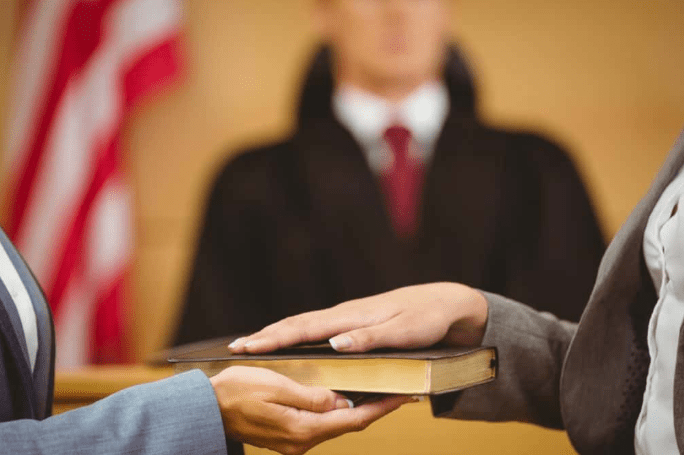
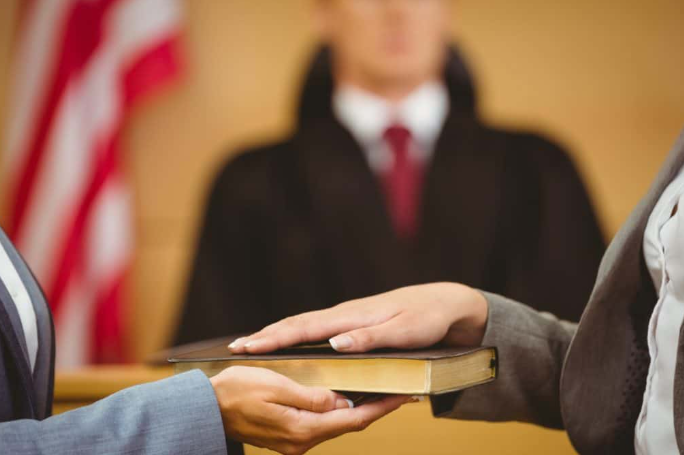
The first words spoken at any deposition are among the most important: the administration of the oath. That moment sets the tone for the entire proceeding. It’s the formal reminder to the witness—and to everyone else in the room or on the Zoom—that what follows is sworn testimony, with legal consequences for dishonesty.
But here’s the problem: increasingly, depositions are being run by individuals who may not have the legal authority to administer that oath. The issue often slips past unnoticed, but it carries serious consequences for litigants, attorneys, and the justice system as a whole.
The “Stipulate Away” Shortcut
How many times have you heard this in a remote deposition?
“Will all parties stipulate to me swearing in the witness via Zoom?”
On the surface, it seems harmless. Everyone nods. The deposition proceeds. But this isn’t a formality that can simply be waived by agreement. Attorneys cannot stipulate away a law. They can agree among themselves on many things—like time limits or exhibit exchanges—but only a judge has the authority to validate agreements that touch on statutory or constitutional requirements.
This principle is rooted in the Constitution. The 5th Amendment provides: “No person shall…be deprived of life, liberty, or property, without due process of law.” The 14th Amendment extends that guarantee to the states: “Nor shall any State deprive any person of life, liberty, or property, without due process of law.” As I explain in my StenoImperium article “Not Optional – Why Stenographers Are Essential to the Constitution and Your Freedom”, stenographers are not mere record-keepers—they are constitutional safeguards whose role underpins due process, accountability, and the ability of litigants to appeal and access justice
Due process isn’t a courtesy—it’s a constitutional mandate. It requires judicial oversight when rights or procedures are at stake. Private stipulations between attorneys cannot override statutory rules of civil procedure or the laws governing who has authority to administer an oath.
So when an uncertified deposition officer asks parties to “stipulate” their way into compliance, the very foundation of due process is at risk. What looks like efficiency in the moment could later unravel under judicial scrutiny.
The Rise of “One-Stop Shops”
Companies like E-Depositions promote themselves as cost-cutting alternatives to traditional stenographic services. They boast about eliminating redundancy: one person acts as the “deposition officer” and the videographer, sometimes even managing exhibits and technology support.
On paper, it sounds efficient. In reality, it often means corners are cut. Cost savings come at the expense of procedural compliance, legal oversight, and accuracy.
Their marketing language says it all: “Our clients save 40–50% over antiquated court reporting processes.” In other words, the emphasis is on reducing expense, not safeguarding the evidentiary record.
Authority Isn’t Optional
Each state sets its own rules about who can swear in a witness. In California, for instance, only licensed deposition officers—Certified Shorthand Reporters—are authorized to do so. In other jurisdictions, notaries public or court clerks may share that authority.
But here’s the key: it isn’t universal, and it isn’t negotiable. Attorneys cannot stipulate someone into having legal authority. A videographer pressing “record” on Zoom does not automatically inherit the power to administer an oath.
As one court reporter put it bluntly in a recent online discussion: “It depends on what is giving you the authority to swear in a witness. Different states have different requirements.”
That’s exactly why training, licensing, and continuing education matter. Court reporters spend years not only mastering realtime skills, but also internalizing the procedural rules that keep depositions admissible and defensible.
A videographer pressing ‘record’ on Zoom does not automatically inherit the power to administer an oath. Remember the legal firestorm that erupted when the notary loophole was exposed? My article ‘The Moment the Notary Loophole Was Unleashed in a Firestorm’ unpacks how lax rules around remote notarization gravely threaten the integrity of testimony.
Identity Verification – The Overlooked Step
Even when the oath is correctly administered, another safeguard is often skipped in remote proceedings: verifying the witness’s identity.
A licensed reporter knows to request government-issued photo ID, to record that verification in their notes, and to ensure the person testifying is the person who claims to be.
But when unlicensed personnel run the show, ID verification is too often omitted. That leaves a glaring opening for abuse. Imagine a key witness later claiming they were misidentified—or worse, that someone else testified in their place. Without documented verification, the challenge could stand.
As stenographic professionals, we recognize that these details aren’t bureaucratic red tape. They’re essential guardrails protecting the legitimacy of testimony.
Why Convenience Isn’t Enough
Non-stenographic deposition services love to market themselves as “modern,” “streamlined,” and “convenient.” Remote technology, searchable video files, reduced travel—all undeniably attractive features.
But here’s the catch: convenience without compliance is a trap. A deposition that saves a client 40% in upfront costs, but later unravels under a motion to strike is no bargain.
We’ve already seen courts reject uncertified transcripts, exclude improperly sworn testimony, and question the chain of custody in electronic recordings. Each of these failures originates from one root cause: allowing cost-cutting to override professional procedure.
The Irreplaceable Role of Court Reporters
Court reporters aren’t just neutral scribes. We are licensed officers of the court, empowered to administer oaths, safeguard the record, and certify its accuracy. That certification carries weight in court because it rests on training, licensure, and accountability.
Contrast that with an uncertified video recording. If challenged, who vouches for its accuracy? Who attests that no words were omitted, altered, or lost in the shuffle of technology? Who confirms that the person testifying was properly sworn, their identity verified, and their testimony faithfully preserved?
Only a licensed professional can answer “I do.”
The Long-Term Risks for Attorneys
Attorneys who embrace non-stenographic services without understanding the risks are gambling with their cases. Imagine this scenario:
- The witness gives damaging testimony during a remote deposition.
- At trial, opposing counsel challenges the validity of the deposition.
- The challenge hinges on whether the deposition officer had legal authority to swear in the witness.
- Without clear compliance, the testimony is excluded.
What attorney wants to explain to their client that the case was lost because they trusted a bargain-rate vendor who promised “efficiency” but delivered inadmissibility?
The cost of re-taking depositions, losing testimony, or undermining credibility in front of a judge far outweighs any short-term savings.
A Call to Action for Reporters
As professionals, we can’t sit quietly while companies advertise themselves as cheaper, faster replacements for stenography—while downplaying or ignoring legal authority.
We need to educate attorneys, judges, and even our fellow reporters:
- The oath isn’t optional.
- Authority can’t be stipulated away.
- Identity verification matters.
- Compliance isn’t a nuisance; it’s the foundation of admissibility.
Every time we explain these points, we reinforce why stenographic reporters remain indispensable to the legal system.
Where Do We Go From Here?
The shift to remote proceedings isn’t going away. Attorneys appreciate the convenience, and clients demand lower costs. But innovation doesn’t mean deregulation. Technology can enhance deposition practice—but only when paired with professional oversight.
Court reporters should continue to embrace remote platforms, realtime streaming, and digital exhibit management. At the same time, we must insist that core legal safeguards remain non-negotiable.
The question isn’t whether depositions can be modernized. It’s whether they can be modernized without losing the authority and accountability that stenographers bring.
Final Thoughts
The next time you log into a Zoom deposition, listen closely to the opening words. If you hear, “Will all parties stipulate to me swearing the witness in,” consider it a red flag. That shortcut may jeopardize the entire proceeding.
As stenographic professionals, we know better. We know that every deposition begins not with a stipulation but with an oath—properly, lawfully, and unequivocally administered.
Because when the record is challenged, the question won’t be, “Was it convenient?”
It will be, “Was it done right?”
And only stenographers can guarantee that answer.
StenoImperium
Court Reporting. Unfiltered. Unafraid.
Disclaimer
“This article includes analysis and commentary based on observed events, public records, and legal statutes.”
The content of this post is intended for informational and discussion purposes only. All opinions expressed herein are those of the author and are based on publicly available information, industry standards, and good-faith concerns about nonprofit governance and professional ethics. No part of this article is intended to defame, accuse, or misrepresent any individual or organization. Readers are encouraged to verify facts independently and to engage constructively in dialogue about leadership, transparency, and accountability in the court reporting profession.
- The content on this blog represents the personal opinions, observations, and commentary of the author. It is intended for editorial and journalistic purposes and is protected under the First Amendment of the United States Constitution.
- Nothing here constitutes legal advice. Readers are encouraged to review the facts and form independent conclusions.
***To unsubscribe, just smash that UNSUBSCRIBE button below — yes, the one that’s universally glued to the bottom of every newsletter ever created. It’s basically the “Exit” sign of the email world. You can’t miss it. It looks like this (brace yourself for the excitement):

 STENOIMPERIUM
See CCP 2093
Sent from my iPad
Tara Sandford, CSR
LikeLike
The Language of CCP 2093(a)
It says:
“Every court, every judge, clerk of any court, every justice, every notary public, and every officer or person authorized to take testimony in any action or proceeding, or to decide upon evidence, has the power to administer oaths or affirmations.”
So two different groups are named here:
Notary publics (in California) → explicitly granted authority to administer oaths or affirmations.
Officers or persons authorized to take testimony or decide upon evidence → a broader category that includes court reporters, referees, hearing officers, etc.
Notaries’ Authority in California
Notaries in California do have the authority to administer oaths and affirmations. That’s spelled out both in the Government Code (Gov. Code § 8205(a)(2)) and incorporated into CCP 2093.
But that authority is limited: a notary’s role is only to administer the oath/affirmation and verify identity. They are not authorized to take testimony, record proceedings, or certify a deposition transcript—unless they also happen to be a certified shorthand reporter.
So yes, a notary can administer an oath, but no, a notary does not have the authority to “take testimony” in a deposition. In California, that authority belongs to deposition officers—defined in CCP § 2025.320 as certified shorthand reporters (CSRs).
Why the Distinction Matters
A CSR has dual authority: (1) to administer the oath (per CCP 2093(b)(1)), and (2) to take down testimony and certify the transcript (per CCP 2025.320).
A notary has limited authority: they can swear someone in, but they cannot serve as the deposition officer. They don’t have statutory authority to certify testimony or produce an official record.
This is why “notary loopholes” are dangerous. Some companies try to use notaries to swear in witnesses remotely, then rely on audio/video recordings instead of stenographic transcripts. But the testimony isn’t being “taken” by someone authorized under CCP to do so. That makes the record vulnerable to challenges.
Bottom Line
Yes: Notaries in California may administer oaths.
No: Notaries are not authorized to “take testimony” for depositions. That role is reserved for certified shorthand reporters (CSRs) under CCP 2025.320 and Business & Professions Code § 8025 et seq.
Result: A notary can swear in your witness, but unless a CSR is present to take down the record, you don’t have a deposition transcript that meets California’s requirements.
LikeLike
Yes, I agree. I just read it the way that a notary cannot swear in a witness. I guess I didn’t read deep enough into it. And I love your column. I just wanted to make sure that it’s accurate because one inaccuracy can knock down a whole bunch of really good things.
Sent from my iPad
Tara Sandford, CSR
LikeLike
Thank you so much, Tara — I really appreciate you double-checking and making sure the details are solid. You’re absolutely right that accuracy is critical, especially when our profession is under such scrutiny. Notaries in California can administer oaths, but they cannot act as deposition officers or take testimony unless they’re also licensed CSRs. That distinction is exactly why this issue matters so much. And thank you for the kind words about my column — that means a lot!
LikeLike
And this is really not in response to your article today, but I stopped working for one major reporting firm because they are using digital reporters before Court Reporters. I read your article and it spurred me on. I thought that might be happening and it happened to me twice in one week where I was available but they had a digital reporter. And the attorney would not accept a digital reporter so then they sent out an ask for help because of that. And the billing practices, I was against them. And I just am not working for them anymore and avoid two or three other big reporting firms.
Sent from my iPad
Tara Sandford, CSR
LikeLike
Tara, thank you for sharing this — it really underscores the reality we’re facing. Agencies may chase cost savings with digital reporters, but when attorneys push back, the whole façade cracks. Your experience proves what I keep stressing: attorneys want licensed court reporters because they know our transcripts stand up in court. I admire your resolve in walking away from firms that don’t respect that. Every time one of us refuses to accept those practices, we strengthen the profession as a whole.
LikeLike