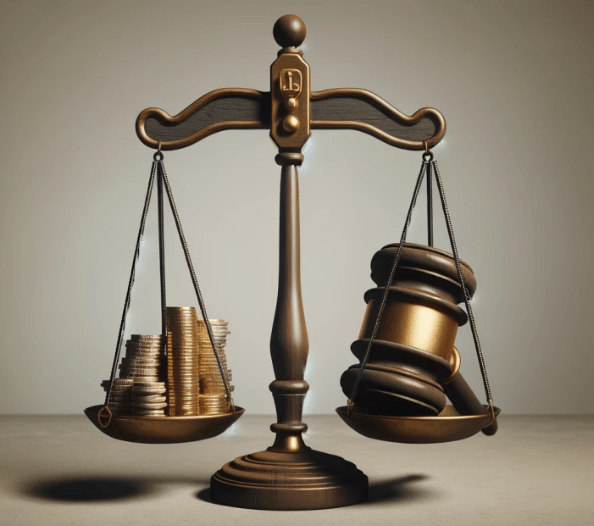
The celebratory posts are already making the rounds: “BREAKING: AB 711 HAS PASSED 🚨” they shout, with confetti emojis and claims that this bill will “streamline court scheduling” and “ensure CSRs are used efficiently.” At first glance, it may sound like progress. But scratch beneath the surface, and AB 711 reveals itself as a bureaucratic sleight of hand that threatens to undermine California’s court reporting profession, destabilize the integrity of civil litigation records, and shift the burden of justice away from the state and onto private litigants.
Let’s be clear: the passage of AB 711 is not a win for court reporters. It’s a strategic abdication of responsibility by the judicial branch, a convenient workaround that dodges California’s long-standing obligation to provide certified shorthand reporters (CSRs) in civil hearings. And while the bill’s supporters paint it as a commonsense reform, the reality is far more troubling—especially for those of us on the front lines of stenographic court reporting.
What AB 711 Actually Does
Under AB 711, attorneys filing motions in civil cases must now declare whether they intend to supply their own certified shorthand reporter for the hearing. Supporters say this will eliminate scheduling confusion and prevent duplicate coverage. But that’s not what this bill is really about. This bill is about shifting the cost and responsibility of maintaining the court record away from the courts—and onto litigants.
Let’s not forget: court reporting is not a luxury. It’s a constitutional necessity. A verbatim record is the bedrock of due process in our adversarial system. And for decades, the state of California—like most states—has funded and provided certified reporters in courtrooms to ensure this fundamental right is upheld.
AB 711 does not “protect the record.” It protects the state’s budget.
A Budget Band-Aid, Not a Solution
This bill is the latest maneuver in a series of legislative and administrative steps designed to phase out publicly provided reporters in civil courtrooms under the guise of efficiency. But what it really reflects is a failure by the judicial system to invest in its own infrastructure.
We have seen this pattern before. Years of hiring freezes, unfilled vacancies, and intentional underfunding of court reporter positions have led to an artificial “shortage”—a shortage created not by a lack of qualified CSRs, but by a lack of court willingness to hire them. AB 711 doesn’t address that root problem. Instead, it circumvents it entirely.
Now, rather than guaranteeing a record, the state asks: “Will you be bringing your own?”
Imagine if the state stopped providing interpreters and told litigants to bring their own if they wanted to understand the proceedings. Or if the clerk’s office stopped filing documents unless parties hired private clerks. That’s the level of absurdity we’re dealing with here.
The Burden on Litigants
Let’s talk about who this bill really affects. AB 711 puts solo practitioners, public interest firms, and self-represented litigants in an impossible position. Wealthy corporate clients can absorb the cost of hiring a private reporter. But small law firms, individual plaintiffs, and low-income defendants cannot.
And what happens when a party can’t afford a private CSR? There’s no guaranteed backup plan. The court is not required to provide one. The hearing may proceed without a record—or worse, with a flawed or incomplete digital recording.
The result? An unequal system where those who can pay get a clear, certified record, and those who can’t are left with ambiguity, potential transcription errors, or no record at all. That is not justice. That is a tiered system where access to the record—and thus access to appeals and accountability—is sold to the highest bidder.
Undermining a Profession
For California’s working court reporters, AB 711 sends a clear and painful message: You are expendable.
This bill codifies the idea that the courts no longer need to ensure a stenographic record in civil matters. It validates years of slow erosion—digitally recorded trials, offloaded deposition coverage, and freelance dependency—that have marginalized the role of the professional CSR.
And let’s dispel another myth: This doesn’t result in “more jobs” for freelance reporters. In fact, it creates chaos. Reporters are being asked to wait on standby in case parties decide they need one. Jobs are being canceled last minute. Schedulers are left juggling calendar conflicts, and CSRs are increasingly being treated like optional equipment instead of essential officers of the court.
In reality, AB 711 erodes the very infrastructure of the profession. It drives a wedge between court-employed reporters and freelancers, while allowing the state to wash its hands of any responsibility to recruit, train, or retain skilled stenographers. It’s deregulation masquerading as modernization.
Digital Recording Is Not a Substitute
Supporters of AB 711 will inevitably point to technology. “We have digital recording now,” they say. “Why do we still need human reporters?”
Because digital recording doesn’t create a certified, admissible transcript. It doesn’t correct misidentifications. It doesn’t stop the proceedings to clarify a mumbled speaker. It doesn’t navigate multiple speakers talking over each other, understand thick accents, or accurately capture emotional nuance.
Digital recording also fails in one critical area: real-time objection handling. Only a live stenographer can mark where in the transcript a legal objection occurred, enabling clean preservation for appeal.
Simply put, technology can supplement—but it cannot replace—professional judgment and instantaneous accuracy. The record is too important to leave to chance or a faulty microphone.
Where Do We Go From Here?
California’s court system didn’t arrive at this crossroads by accident. Years of poor planning and shortsighted cost-cutting led to the slow dismantling of a public infrastructure that once guaranteed fairness in every courtroom. AB 711 is just the latest mile marker on that downward path.
But there’s still time to change course.
We need legislators, judges, and bar associations to take a hard look at what this bill actually enables: inequality in access to justice, the collapse of a skilled profession, and the dilution of the legal record. We need policy rooted not in austerity, but in the belief that every litigant—rich or poor—deserves a full, fair, and accurate record of their day in court.
Court reporters are not optional. They are essential. And until California recommits to that principle, we will continue to see laws like AB 711 passed in the name of “progress,” when in truth they represent systemic retreat.
Final Thoughts
If you’re an attorney, think twice before celebrating this bill. You may find yourself in court one day with no record, no appealable transcript, and no recourse. If you’re a court reporter, let this be a wake-up call: your profession is under legislative attack. And if you’re a citizen, ask yourself what kind of legal system you want—a system that guarantees fairness, or one that only records justice when someone can afford to pay for it.
AB 711 may have passed. But we don’t have to accept it without a fight.
StenoImperium
Court Reporting. Unfiltered. Unafraid.
Disclaimer
“This article includes analysis and commentary based on observed events, public records, and legal statutes.”
The content of this post is intended for informational and discussion purposes only. All opinions expressed herein are those of the author and are based on publicly available information, industry standards, and good-faith concerns about nonprofit governance and professional ethics. No part of this article is intended to defame, accuse, or misrepresent any individual or organization. Readers are encouraged to verify facts independently and to engage constructively in dialogue about leadership, transparency, and accountability in the court reporting profession.
- The content on this blog represents the personal opinions, observations, and commentary of the author. It is intended for editorial and journalistic purposes and is protected under the First Amendment of the United States Constitution.
- Nothing here constitutes legal advice. Readers are encouraged to review the facts and form independent conclusions.
***To unsubscribe, just smash that UNSUBSCRIBE button below — yes, the one that’s universally glued to the bottom of every newsletter ever created. It’s basically the “Exit” sign of the email world. You can’t miss it. It looks like this (brace yourself for the excitement):

 STENOIMPERIUM
That’s a disgrace what happened in California. It’s okay to make taxpayers pay the judges around $200,000 annually, go pay for judges’ friends to get paid a salary that show up to work for a couple hours and do nothing in the the court administrative office.
I saw it happen in 2016 in Santa Fe, New Mexico. There were seven judges and three full-time reporters and one part-time reporter. Reporters left because working 8:30 a.m. to 11:00 p.m. almost every day was hell. And then the court administration would always try to cheat us getting paid those extra hours (let alone overtime).
LikeLike