
We are not witnessing the slow evolution of an industry—we are living through its attempted hijacking. The court reporting profession, long a bedrock of due process and legal integrity, is now in the crosshairs of opportunistic corporations, tech-driven shortcuts, and an alarming push to replace highly trained professionals with underqualified, unregulated substitutes.
Let’s call this what it is: a hostile takeover dressed up as innovation.
The Illusion of Progress – Big Box Agencies, Digital Recording & Offshore Transcripts
Big-box firms, agency giants, are not simply exploring digital technology; they are actively mandating it. Reports now confirm that Veritext’s shareholders have issued top-down directives requiring that 50% of all transcripts originate from digital recording sources—often produced offshore, then “certified” domestically by in-house notaries.
Not certified court reporters.
Not licensed professionals.
Not subject to oversight.
A notary’s stamp does not magically transform an outsourced product into a legitimate legal document. In California, for example, attempting to admit an uncertified transcript into evidence is a misdemeanor. And in 25 states, transcript production is legally restricted to licensed Certified Shorthand Reporters (CSRs).
Yet, these firms believe they can stipulate their way around due process. That’s not a workaround—it’s an outright subversion of constitutional protections.
Due Process Isn’t Optional
Let’s not forget what’s at stake here. The Fifth and Fourteenth Amendments of the U.S. Constitution guarantee that no one shall be deprived of life, liberty, or property without due process of law. The Supreme Court has repeatedly affirmed that due process includes procedural integrity—especially in judicial proceedings. If the record itself is suspect, the entire legal process is undermined.
That’s why the erosion of reporting standards is not a technical glitch—it’s a constitutional crisis in the making.
The SoCal Stip: A Trojan Horse
The Southern California stipulation movement (SoCal Stip), which allows attorneys to waive the statutory requirement for a certified reporter by mutual agreement, is the backdoor being exploited. And we’re not just being replaced—we’re being bypassed entirely.
But here’s the twist: when attorneys learn the truth, many are outraged.
One attorney, upon hearing that digital recorders and notaries were replacing CSRs, said, “Oh, that’s why the court reporters were all making a stink about the SoCal Stip.” Once he understood the broader implications, he didn’t just agree with us—he joined the fight.
This is where our opportunity lies: education. Attorneys aren’t the enemy. Many don’t know what’s happening. But once they see how digital recording undermines both the quality of the record and the integrity of the process, they become our allies.
Follow the Money: A Gold Rush of Exploitation
If you think this is a fringe issue, consider this:
- Veritext alone could stand to gain $2 million per year from digital products at just 10% of their business.
- Multiply that across similarly sized agencies like US Legal and others.
- Add in the digital initiatives being taught by STTI across the country.
- Factor in that the entire legal transcript market is estimated at $1.2 billion.
Suddenly, you’re looking at a potential $120 million market in digital alone—and that’s just a starting point.
Now consider this: if these firms could take over the entire market with digital—bypassing stenographers, cutting costs by 90%, employing offshore teams, and slapping a notary stamp on the end product—they’re chasing down the whole $1.2 billion. That’s not just business. That’s a modern-day Gold Rush.
And if we don’t draw a line, they will succeed.
A Future WITH Digital—But On Our Terms
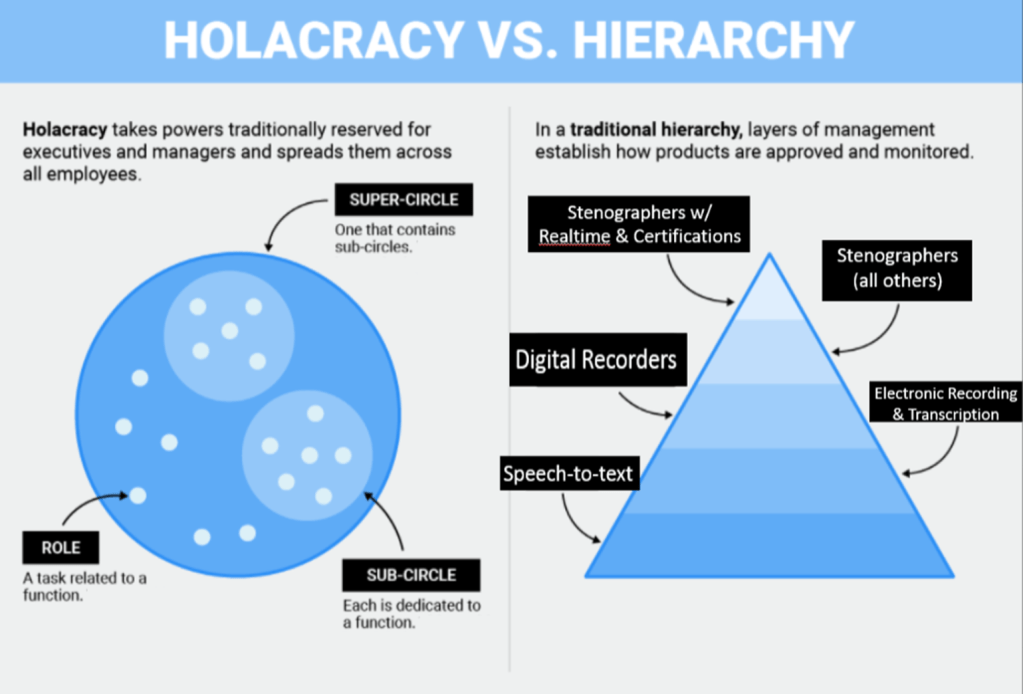
Let’s get real. Digital isn’t going away. But it also doesn’t have to replace us. It can exist beneath us in a hierarchical model that places highly trained, licensed stenographic and voice writers at the top of the industry.
Just like we’ve seen in medicine or engineering, professions are protected by credentialing and professional oversight. A “Responsible Charge” designation, similar to what professional engineers use to preserve standards, is our path forward. We must advocate that the title “Court Reporter” be reserved only for those who have met the rigorous training, testing, and certification standards—stenographers and voice writers alike.
We must reject the “holacracy” model that seeks to place digital and ER on equal footing with highly skilled reporters. There is no equivalency. We are not interchangeable.
The Digital Recorder Pipeline – Flip It!
Here’s a strategic move: rather than reject digital recorders entirely, we need to convert them. Recruit them. Train them. Offer them a path to legitimacy. Christopher Day has the right idea—show them the value of becoming a true court reporter. Make stenography aspirational again.
We can grow our ranks by turning the pipeline around, using it to fill our own professional shortages and secure the future of our craft.
Visualize Our Profession at the Top
We are not tails to be wagged. We are the dog.
And we must start acting like it.
Agencies backed by private equity, insurance-driven interests, and attorneys who prioritize cost over constitutionality should not be driving this profession. We should. Certified court reporters—those who understand the gravity of the role we play in preserving the legal record—must be the ones charting the course.
Visualize this: a tiered industry model where court reporters command top-tier rates, reserved for high-value, high-stakes proceedings. Digital can serve the low-dollar end of the market, but it should never sit at our table as an equal.
Annihilation or Ascension – The Choice Is Ours
Here’s the raw truth: extinction is not a metaphor.
If we allow our numbers to dwindle, we won’t just lose contracts—we will lose our ecosystem. Without enough working reporters, CAT software vendors and hardware manufacturers won’t have a viable customer base. The moment we dip below sustainability, support disappears. No repairs. No updates. No replacements.
That’s how extinction happens. Quietly. Systematically. Irreversibly.
And don’t comfort yourself by thinking “It’ll be fine.” Hostage negotiators don’t do that. They assume the worst possible outcome and work backwards to prevent it.
That’s what we need to do now.
The Window Is Narrow, But It’s Still Open
There is still time to change the trajectory.
We have leverage:
- Laws on the books in 25 states.
- A pool of over 27,000 trained stenographers.
- Judicial allies who understand due process.
- Attorneys who care about integrity.
- Legislators willing to listen—if we educate them.
What we need now is action.
Talk to your attorneys. Speak to your judges. Contact your legislators. Control the narrative. Call out misleading practices. Say no to stipulations that bypass certified reporters. Say yes to higher standards, smarter recruiting, and a stronger future.
We Are Not Commodities
We are not cogs in a machine. We are not interchangeable. We are the gold standard in an industry that cannot function without accuracy, ethics, and accountability.
We can still win this. But only if we act like professionals who understand our power.
Let’s reclaim our profession.
Let’s write our own future.
Before someone else erases it.
Disclaimer
The content of this post is intended for informational and discussion purposes only. All opinions expressed herein are those of the author and are based on publicly available information, industry standards, and good-faith concerns about nonprofit governance and professional ethics. No part of this article is intended to defame, accuse, or misrepresent any individual or organization. Readers are encouraged to verify facts independently and to engage constructively in dialogue about leadership, transparency, and accountability in the court reporting profession.
- The content on this blog represents the personal opinions, observations, and commentary of the author. It is intended for editorial and journalistic purposes and is protected under the First Amendment of the United States Constitution.
- Nothing here constitutes legal advice. Readers are encouraged to review the facts and form independent conclusions.
***To unsubscribe, just smash that UNSUBSCRIBE button below — yes, the one that’s universally glued to the bottom of every newsletter ever created. It’s basically the “Exit” sign of the email world. You can’t miss it. It looks like this (brace yourself for the excitement):

 STENOIMPERIUM