If you’ve ever spent three hours a day crawling through Los Angeles traffic, then hi, welcome to my life. I’m a court reporter who works mostly downtown—Stanley Mosk Courthouse, Spring Street, sometimes even further out. Every day, I leave before sunrise hoping to shave a few minutes off my commute, only to be met with the same sea of brake lights stretching from the 405 to the 110. It’s exhausting. Mentally. Physically. Spiritually.
And now? We’ve got the Olympics coming.
Don’t get me wrong—hosting the Summer Games is exciting. I remember watching L.A. pull it off in ’84 like it was a big backyard party. But 2028 is going to be a whole different beast. The city is expecting around 15 million people, and a huge chunk of that activity is going to center around downtown, which just so happens to be where our busiest courthouses live.
So, naturally, my first thought was: How in the world am I going to get to work?
Flying Taxis Might Actually Be a Thing (Yes, Really)
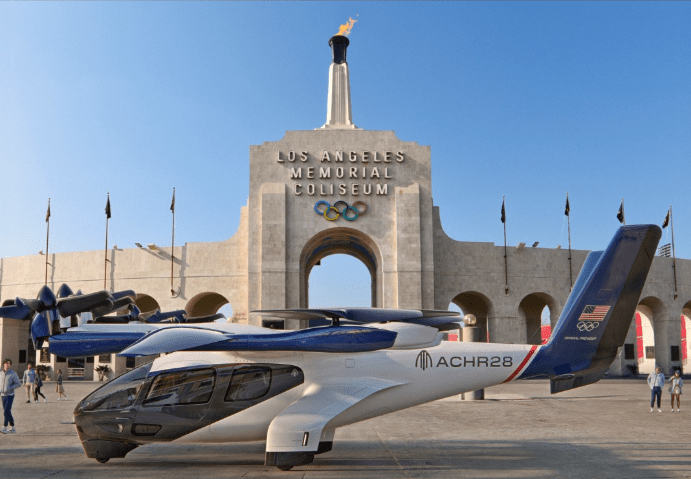
Here’s where things get wild: LA28, the Olympic planning committee, has partnered with a company called Archer Aviation to bring electric flying taxis to the city. I’m talking about real-deal air taxis—quiet, all-electric aircraft that can take off and land vertically (like helicopters, but sleeker and more sustainable). They’re planning to shuttle VIPs, spectators, and probably some athletes between major Olympic hubs like SoFi Stadium, Dodger Stadium, LAX, Santa Monica, and Orange County. The flights? Ten to twenty minutes. Total.
Ten. Minutes.
Imagine that for a second. You’re at home in the Valley or Long Beach, and instead of spending an hour and a half stuck behind a Metro bus on the 10, you hop into a vertiport, take a short flight, and bam—you’re at the courthouse with time to grab a coffee.
Now, I know these air taxis are being marketed toward “VIPs,” not people like me schlepping court bags and stenography equipment, but let a girl dream, okay? After all, if they want this to be the most “car-free” Olympics in L.A. history, why not throw a few seats to the unsung heroes of the legal world?
A court reporter can hope.
Olympic Traffic Will Be Brutal—Even Worse Than Now
In reality, though, most of us court staff, reporters, attorneys, and jurors will still be on the ground. And that’s where things get dicey. Between event road closures, re-routed buses, added security perimeters, and just the sheer volume of tourists flooding the city, getting to the Stanley Mosk or Spring Street courthouses might become a daily Olympic event of its own.
Can you picture it? Trying to beat rush hour only to find 1st Street closed off for an Olympic parade or some pop-up fan experience next to Grand Park. Or circling the block for 45 minutes because the Civic Center parking structure is full of TV crews. There’s already not enough parking on a regular Wednesday morning—what’s it going to be like with a million extra people downtown?
I wouldn’t be surprised if the court starts encouraging more remote appearances, especially for civil and family law matters. We’ve already gotten used to virtual depositions and remote hearings post-COVID. Maybe the Olympics will push us even further into the future. Not ideal for everything, but I’ll take a Zoom call over sitting in Olympic gridlock any day.
Will the Courthouses Even Stay Open?
That’s the other big unknown. Are we even going to be open during the peak of the Olympics?
There hasn’t been an official word yet from the Superior Court, but I wouldn’t be shocked if some courthouses cut back operations or shut down temporarily, especially if they’re close to a major venue or affected by security zones. That could mean reshuffling calendars, delaying trials, or squeezing everything into fewer available days. Either way, it’s going to be a logistical headache.
And for freelancers like me, those kinds of disruptions have a real financial impact. If my job gets canceled because we can’t get jurors in the building, or if a case gets pushed because the witness is stuck in a traffic jam outside Dodger Stadium, that’s lost income.
Silver Linings and (Maybe) Sky High Commutes
All that said, I do see a few glimmers of hope. If the city invests in better transit and tech to deal with Olympic chaos, maybe those improvements will stick around after the Games. More reliable Metro access, better traffic coordination, upgraded digital court systems—those would make a difference long-term.
And maybe—just maybe—someone in a planning meeting will say, “Hey, what if we gave a few air taxi seats to court staff who need to be downtown at 8:30 sharp?”
I’d volunteer as tribute.
Because as much as I love my job, and as much pride as I take in being the eyes and ears of the record, I’d give just about anything not to spend half my life in traffic. Flying to work? That would be a dream. And hey, if the Olympics can make flying taxis a reality, who’s to say court reporters can’t hitch a ride?
Final Thoughts From the Road (or the Sky)
The 2028 Olympics will no doubt be an incredible moment for Los Angeles, but for those of us working in the real day-to-day machinery of the city—especially in the courts—it’s going to be a major adjustment.
From air taxis to virtual hearings to dodging downtown chaos, we’re all going to have to get creative about how we work, move, and adapt. Whether I’m driving three hours or flying ten minutes, I’ll be there, steno machine in tow—hopefully with a little less gridlock and a lot more elevation.
And if anyone at Archer Aviation is reading this: consider adding a courthouse route. I know at least a hundred court workers who’d be first in line.
 STENOIMPERIUM