
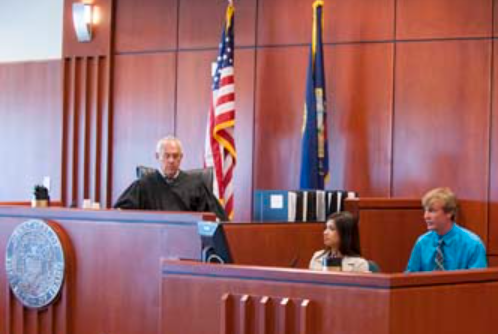
Court reporters are the backbone of legal proceedings, ensuring an accurate, verbatim record of everything said during depositions, trials, and hearings. The demand for real-time transcription services has grown significantly, particularly in cases involving multiple languages where interpreters are necessary. However, a recent situation highlights a growing concern: what are the reasonable expectations of interpreters when working with court reporters, and where do we draw the line?
The Expectation for LiveNote and a Provided Laptop
In a recent case, a German interpreter insisted that the court reporter provide her with a laptop and LiveNote, claiming she could not work without them. This is a troubling expectation for several reasons:
- Interpreters Are Expected to Work from What They Hear
- The fundamental role of an interpreter is to listen to spoken words and convert them into another language in real-time. Requiring a written transcript as a crutch suggests a possible deficiency in their ability to perform the job.
- LiveNote or any other real-time feed is an assistive tool, not an official transcript. It is subject to errors and omissions that a trained interpreter should not rely upon for translation accuracy.
- Technology and Equipment Responsibilities
- Court reporters are responsible for their own equipment, software, and ensuring that their transcription is as accurate as possible. However, providing hardware or software for an interpreter is beyond the scope of a court reporter’s duties.
- If an interpreter requires assistive technology, it should be the responsibility of their agency or the party contracting their services to provide it—not the court reporter.
- The Question of Accessibility
- The Americans with Disabilities Act (ADA) ensures that individuals with disabilities receive reasonable accommodations, but it does not place the burden of providing those accommodations on an unrelated service provider.
- If an interpreter has a hearing impairment that necessitates the use of real-time transcription, a separate live captioning professional should be brought in. A court reporter should not be expected to serve as both a stenographer and an accessibility provider simultaneously.
The Bigger Picture: Misuse of Realtime Feeds
Many court reporters have experienced situations where real-time feeds were used inappropriately. Some common issues include:
- Calling Out Unedited Transcripts: Attorneys, witnesses, and interpreters have, on occasion, criticized the accuracy of real-time transcripts, failing to acknowledge that these are raw, unedited drafts. Unlike finalized transcripts, real-time feeds are generated on the fly and do not reflect the polished product that court reporters ultimately produce.
- Dependency on LiveNote Instead of Listening: When an interpreter relies on reading text rather than listening, they are engaging in translation rather than interpretation. These are distinct skills, and the reliance on a written record raises concerns about the interpreter’s competency.
- Unrealistic Expectations for Court Reporters: Some professionals assume that because a tool exists, it must be freely provided. However, LiveNote and other real-time software require setup, licensing, and technical maintenance—all responsibilities that fall outside a court reporter’s purview when it comes to third-party usage.
Setting Boundaries as a Court Reporter
So how do court reporters protect themselves from being taken advantage of in these situations? Here are some strategies:
- Clarify Expectations Beforehand
- If you’re scheduled for a deposition or trial that requires an interpreter, make sure it’s clear from the outset that you are not responsible for providing them with equipment or software.
- Send an email outlining what you will and will not provide. If an interpreter insists on needing real-time access, direct them to the party that hired them.
- Educate Attorneys and Legal Professionals
- Many attorneys don’t understand the distinction between a court reporter and a CART (Communication Access Realtime Translation) provider. Make it known that CART services are separate from court reporting.
- If an interpreter needs live captioning, suggest they hire a separate CART provider rather than expecting you to serve a dual role.
- Insert Yourself in the Record When Necessary
- If an interpreter calls out the quality of your real-time feed, don’t hesitate to state on the record that the transcript is unedited and should not be used as an official document.
- If an interpreter misuses your transcript, document it. If they are unable to perform their duties based on auditory interpretation alone, that needs to be addressed by the party who hired them.
- Protect Your Professional Boundaries
- Court reporters should not feel pressured into providing additional services beyond their role. If an interpreter is unable to work without real-time transcription, this should be treated as a red flag.
- If the issue persists, raise concerns with the hiring firm or legal team. It’s not your responsibility to accommodate an interpreter who cannot do their job independently.
Lessons from Past Experiences
This issue isn’t new. Many court reporters have faced similar situations where interpreters, attorneys, or other professionals misunderstood the role of a stenographer and misused real-time feeds. One court reporter recounted a deposition where a patent attorney in Asia openly criticized their imperfect real-time feed on the record, not understanding that raw real-time text is inherently different from an edited transcript. This highlights the necessity of educating legal professionals on the proper use of court reporting tools.
Similarly, another court reporter recalled a situation where a German interpreter’s inability to perform their job led to enormous financial consequences, including additional flights and hotel stays. These situations are preventable if clear expectations are set upfront.
Final Thoughts
Court reporters are highly trained professionals tasked with creating a verbatim record of legal proceedings. They are not responsible for providing accessibility services, technology accommodations, or acting as personal assistants to interpreters. While collaboration is essential in legal settings, boundaries must be respected to maintain the integrity of both professions.
If an interpreter cannot perform their duties without real-time assistance, that issue should be addressed by the hiring agency or law firm—not the court reporter. By setting clear expectations, educating legal professionals, and asserting professional boundaries, court reporters can protect themselves from undue burdens while ensuring that legal proceedings remain fair and accurate for all involved.
 STENOIMPERIUM