
Court reporting is a demanding profession that requires intense focus, fast typing speeds, and the ability to accurately transcribe complex legal proceedings. However, the long hours of continuous work can lead to mental fatigue, burnout, and decreased accuracy. Enter the Pomodoro Technique—a time management method that helps court reporters stay sharp, maintain productivity, and reduce fatigue while transcribing crucial legal proceedings.
What is the Pomodoro Technique?
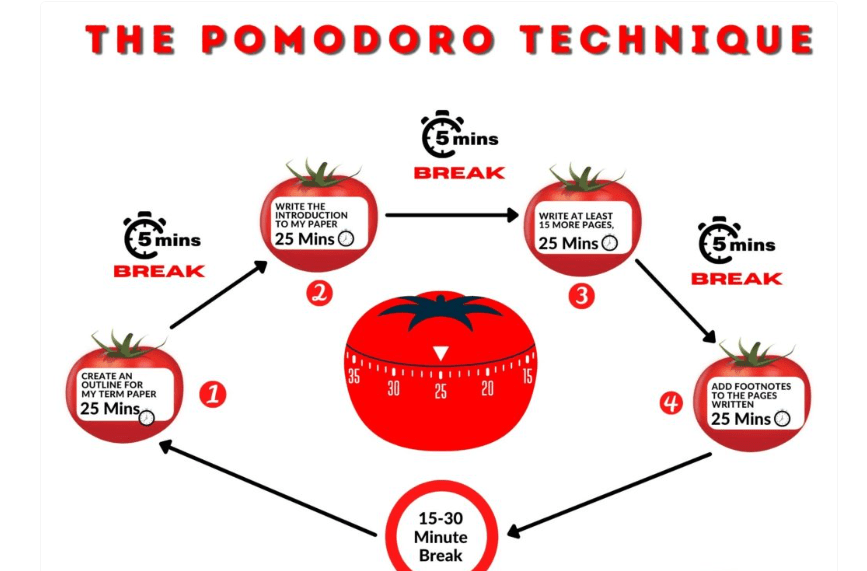
Developed in the late 1980s by Francesco Cirillo, the Pomodoro Technique is a simple yet effective time management system designed to improve focus and efficiency. It works by breaking work into 25-minute intervals called “Pomodoros,” followed by short breaks of 5 minutes. After completing four Pomodoros, a longer break of 15 to 30 minutes is taken to recharge before resuming work.
The method is named after the Italian word for “tomato,” inspired by Cirillo’s use of a tomato-shaped kitchen timer to track his study sessions. The technique is now widely used across various industries, including legal transcription, journalism, and administrative work, due to its effectiveness in maintaining concentration and productivity.
Why the Pomodoro Technique Works for Court Reporters
Court reporting is both mentally and physically demanding. The need for continuous attention to dialogue, legal jargon, and fast-paced conversations makes it easy to become overwhelmed. The Pomodoro Technique offers a structured approach that allows court reporters to maintain efficiency while preventing burnout. Here’s why it works:
- Improves Focus – By working in dedicated 25-minute sessions, court reporters can stay engaged without distraction. Knowing that a break is coming up helps maintain concentration.
- Reduces Mental Fatigue – Long hours of uninterrupted transcription can be exhausting. Short, scheduled breaks allow the brain to reset, reducing errors caused by mental exhaustion.
- Enhances Accuracy – Taking regular breaks helps improve attention to detail, minimizing mistakes in transcriptions and ensuring high-quality reports.
- Prevents Repetitive Strain Injuries (RSIs) – Frequent breaks give court reporters the chance to stretch, adjust posture, and reduce strain on the hands, wrists, and eyes.
- Boosts Motivation – Completing Pomodoro cycles provides a sense of accomplishment, making long transcription sessions feel more manageable and rewarding.
How to Implement the Pomodoro Technique in Court Reporting
Integrating the Pomodoro Technique into a court reporter’s workflow is simple and requires minimal setup. Here’s a step-by-step guide to getting started:
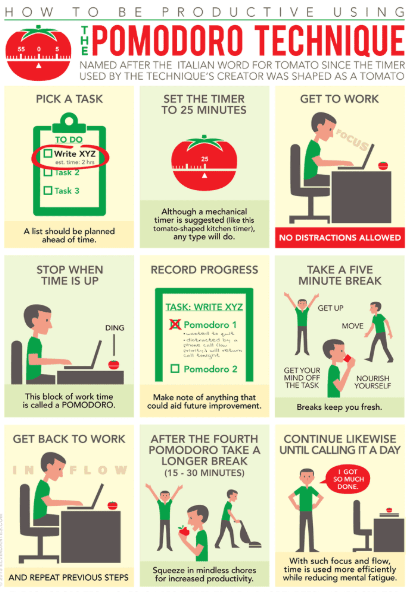
- Choose Your Task – Select a specific transcription task, such as transcribing a deposition, proofreading a transcript, or editing legal documents.
- Set a Timer for 25 Minutes – Use a physical timer, a smartphone app, or an online Pomodoro timer to track your session.
- Work Until the Timer Rings – Stay focused and avoid distractions during the 25-minute session. If an unrelated thought arises, jot it down and return to work.
- Take a 5-Minute Break – Step away from your workstation, stretch, hydrate, or relax before the next Pomodoro begins.
- Repeat the Cycle – After completing four Pomodoros, take a longer break of 15–30 minutes to recharge before continuing.
Customizing the Pomodoro Technique for Court Reporters
While the traditional Pomodoro Technique follows a strict 25-minute work session, court reporters can adapt the system to better fit their needs:
- Adjust Work Session Lengths – Some court reporters may find that 30 or 40-minute sessions work better, especially for reviewing lengthy transcripts.
- Modify Break Durations – If a 5-minute break feels too short, consider extending it to 7–10 minutes, particularly if you need time to rest your hands or eyes.
- Use a Digital Timer or App – Many court reporters prefer using apps like Focus Booster, Pomodone, or TomatoTimer to track their Pomodoros.
- Combine with Ergonomic Breaks – Use break times to stretch, adjust your chair, or practice hand and wrist exercises to prevent strain.
- Batch Similar Tasks – Grouping similar tasks into Pomodoro sessions, such as editing multiple transcripts in one block, can enhance workflow efficiency.
Overcoming Common Challenges with the Pomodoro Technique
While the Pomodoro Technique is highly effective, court reporters may face certain challenges when implementing it. Here’s how to overcome them:
- Interruption from Proceedings – Court reporters working in real-time environments may find it difficult to take scheduled breaks. In such cases, applying Pomodoros during transcript review or editing sessions can still be beneficial.
- Resistance to Taking Breaks – Some professionals feel pressured to push through fatigue without stopping. However, breaks are essential for sustaining high-quality work over long hours.
- Disruptions from Emails or Calls – To maintain focus, turn off notifications or set specific times outside of Pomodoro sessions to check emails and return calls.
- Adapting to Different Workflows – Legal professionals may work on unpredictable schedules. Flexibility is key—adjusting the number of Pomodoros per session can help accommodate varying workloads.

Tools and Resources to Enhance the Pomodoro Experience
Court reporters can leverage various tools to implement the Pomodoro Technique effectively. Here are some helpful options:
- Pomodoro Timers – Apps like Focus Keeper, Be Focused, and Marinara Timer can help track work intervals.
- Task Management Tools – Using platforms like Todoist, Trello, or Asana can help court reporters organize tasks and integrate them into Pomodoro sessions.
- Ergonomic Accessories – Investing in wrist rests, standing desks, and blue-light-blocking glasses can enhance comfort during work sessions.
- Transcription Software – Court reporters using digital transcription tools like Case CATalyst, Eclipse, or DigitalCAT can pair them with Pomodoro tracking for increased efficiency.
The Long-Term Benefits of Using the Pomodoro Technique
Consistently using the Pomodoro Technique can lead to numerous long-term benefits for court reporters, including:
- Sustained Productivity – Breaking work into manageable segments prevents burnout, allowing court reporters to maintain peak performance.
- Improved Work-Life Balance – By incorporating structured breaks, professionals can avoid overworking and maintain a healthier balance between work and personal life.
- Enhanced Mental Clarity – Frequent breaks and structured sessions improve cognitive function, ensuring high levels of accuracy in legal transcriptions.
- Increased Job Satisfaction – Feeling in control of workloads and reducing stress through better time management leads to greater job satisfaction and longevity in the profession.
Final Thoughts
The Pomodoro Technique is a game-changer for court reporters looking to boost productivity, improve accuracy, and reduce work-related fatigue. By structuring work into focused intervals with regular breaks, court reporters can sustain high-quality transcription, prevent burnout, and maintain long-term career satisfaction. Whether transcribing depositions, editing legal documents, or reviewing transcripts, incorporating Pomodoro sessions into daily workflows can make a significant difference in efficiency and well-being. Try it today and experience the benefits of a more structured and sustainable approach to court reporting!
 STENOIMPERIUM
One thought on “The Pomodoro Technique for Court Reporters that Boosts Productivity and Reduces Fatigue”