
In the fast-paced world of litigation, accuracy is paramount. Court transcripts serve as the definitive record of what transpired in a courtroom or deposition, and it is crucial that they are clear, precise, and professional. While the responsibility of creating these transcripts primarily falls to court reporters, the role of attorneys in ensuring that the record is accurate cannot be overstated. Attorneys have a unique influence on the process, and with a few thoughtful practices, they can help guarantee that the final transcript is the best possible representation of the proceedings.
Court reporters are highly skilled professionals whose job is to transcribe everything that is said in a court or deposition setting. However, even the most experienced court reporter needs the assistance of attorneys to ensure the record is flawless. By following some simple tips and best practices, attorneys can help maintain a clear and accurate record that serves the needs of everyone involved, especially for future appeals or legal references.
Here’s what court reporters wish attorneys knew—and how these steps can contribute to a smoother, more accurate, and professional court reporting process.
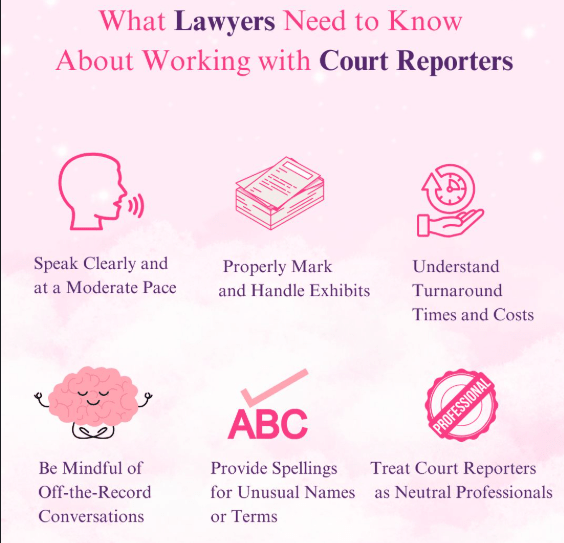
1. Speak Clearly and at a Moderate Pace
One of the most fundamental aspects of an accurate transcript is clear speech. Court reporters rely on what they hear to transcribe every word, and when an attorney or witness speaks too quickly or mumbles, it can result in unclear or even incorrect transcriptions.
Why this matters: In a courtroom, every word is important. Rapid or slurred speech, long pauses, or overlapping conversations can confuse the court reporter, leading to an inaccurate record. This could affect the outcome of the case, especially if the transcript is relied upon for an appeal or further legal proceedings.
What you can do: Attorneys should speak clearly and at a moderate pace. This doesn’t mean slowing down to a crawl, but rather speaking deliberately so the court reporter can capture each word accurately. When asking questions, ensure that they are concise and direct, minimizing unnecessary pauses or stumbles that can interfere with the transcript. Pausing briefly between questions and responses can give the court reporter the time they need to catch up.
2. Properly Mark and Handle Exhibits
Exhibits play an essential role in legal proceedings, often serving as crucial evidence that will later be referred to in court or in legal documents. However, if exhibits are not handled and marked properly, it can lead to confusion during the transcription process.
Why this matters: If exhibits are introduced without clear marking or identification, there can be discrepancies in the transcript about what was referenced, when it was introduced, and the context behind it. For example, without proper clarification, the transcript may incorrectly reference a document or fail to identify which exhibit is being discussed during testimony.
What you can do: Attorneys should make sure to properly mark and identify each exhibit as it is introduced in the proceeding. When introducing exhibits, be sure to clearly state the exhibit number or letter and ensure that it is described thoroughly. This will allow the court reporter to accurately note which document or item is being discussed. Additionally, avoid passing exhibits around without announcing their introduction to the record. It’s crucial that the court reporter is aware of each exhibit’s relevance to the case.
3. Understand Turnaround Times and Costs
Another key aspect of the court reporting process is the turnaround time required for preparing the final transcript. Court reporters work diligently to transcribe everything from daily proceedings to longer depositions. Depending on the nature of the case, some transcripts need to be prepared quickly, while others may have more flexible deadlines.
Why this matters: Understanding the turnaround times and the associated costs can help attorneys plan better and ensure they don’t rush the process. Asking for transcripts too quickly without understanding the costs involved can strain the court reporter’s ability to provide an accurate and well-prepared record.
What you can do: Before requesting a transcript, attorneys should inquire about standard turnaround times for a particular type of hearing or deposition. For example, many court reporters have a standard 5-to-7-day turnaround for transcripts, but expedited services are often available at a higher cost. It’s crucial for attorneys to factor in these timeframes and associated costs when planning for the next steps in their case. By understanding the reporter’s timeline, attorneys can avoid unnecessary pressure on the court reporter and ensure a polished and complete record.
4. Be Mindful of Off-the-Record Conversations
In any courtroom or deposition setting, there are times when conversations happen off the record, such as side discussions between attorneys, private exchanges with clients, or conversations about logistics. While these conversations might seem harmless or insignificant at the time, they can create confusion when the record is transcribed, especially if the off-the-record moments aren’t acknowledged properly.
Why this matters: Court reporters are trained to capture everything that occurs in a proceeding, and off-the-record conversations can make it difficult to differentiate between what should be part of the official record and what should not. If not handled appropriately, off-the-record conversations can inadvertently be included in the transcript, leading to unnecessary confusion or errors.
What you can do: If a conversation is to be off the record, attorneys should clearly state this to the court reporter. For instance, stating, “This conversation is off the record” will help the reporter know that they are not required to transcribe the exchange. On the flip side, if a conversation is inadvertently taken off the record, it’s important to clarify immediately. Clear communication between attorneys and the court reporter about what is and isn’t on the record will ensure that the final transcript remains clean and accurate.
5. Provide Spellings for Unusual Names or Terms
In legal proceedings, it’s common for witnesses, expert testimony, or other parties to use uncommon names, legal terms, or technical jargon that may not be immediately recognizable to the court reporter. Spelling errors, mishearings, or unfamiliar terms can lead to confusion in the final transcript, which can ultimately affect the legal record.
Why this matters: If a name or term is misheard or incorrectly transcribed, it could impact the accuracy of the court record. The court reporter may struggle to spell uncommon or technical terms correctly without assistance, leading to errors in the transcript that could affect the case’s outcome.
What you can do: When introducing witnesses or using technical language, attorneys should provide the court reporter with the correct spelling of names and any unusual terms or phrases. This simple step will save time and avoid transcription errors. If there are difficult-to-spell names or technical terms that will be discussed throughout the hearing or deposition, it’s wise to provide a written list at the start of the session. This ensures the reporter has everything they need to accurately capture the record.
6. Treat Court Reporters as Neutral Professionals
Court reporters are professionals who are tasked with creating an impartial and accurate record of the proceedings. They are not involved in the substance of the case and should not be treated as though they have any stake in the outcome.
Why this matters: Court reporters must remain neutral and unbiased throughout the proceedings, and any undue pressure or expectations from the attorneys can undermine their ability to do their job. A professional and respectful working relationship with the court reporter is essential for a smooth and productive process.
What you can do: Attorneys should treat court reporters with the respect and professionalism they deserve. This means maintaining a professional tone, avoiding excessive distractions, and ensuring that all communication remains focused on the task at hand. Being courteous and collaborative will help the court reporter do their best work, and will ultimately contribute to a clear and reliable transcript.

Conclusion
The accuracy and professionalism of court transcripts are essential in ensuring that the record of legal proceedings is both clear and reliable. While court reporters are highly trained professionals who play a central role in this process, attorneys have a crucial responsibility to contribute to the success of the transcript. By following these simple tips—speaking clearly, marking exhibits properly, understanding turnaround times and costs, being mindful of off-the-record conversations, providing spellings for unusual names, and treating court reporters as neutral professionals—attorneys can help ensure that the record is accurate, complete, and ready for the test of time. Together, we can ensure that the legal process remains transparent, fair, and just.
 STENOIMPERIUM