Court reporting firms play a crucial role in the justice system by providing accurate, impartial records of legal proceedings. Their role is one of neutrality, ensuring that all parties in litigation have equal access to precise transcripts. However, a troubling trend has emerged in the industry—some court reporting firms are offering “no payment until settlement” options to their clients while simultaneously requiring immediate payment from the opposing side. This practice raises significant ethical, legal, and regulatory concerns, particularly in California, where the Court Reporters Board of California (CRB) has voiced apprehensions about compliance with state laws and ethical standards.
Understanding the Controversy
The “no payment until settlement” model allows a law firm’s client to delay paying for court reporting services until the case concludes. This arrangement benefits one side of the litigation while requiring the opposing party to pay upfront for the same services. The disparity in financial obligation raises serious concerns regarding fairness and impartiality in legal proceedings. Court reporting firms are expected to maintain strict neutrality, ensuring that their services do not advantage one party over another.
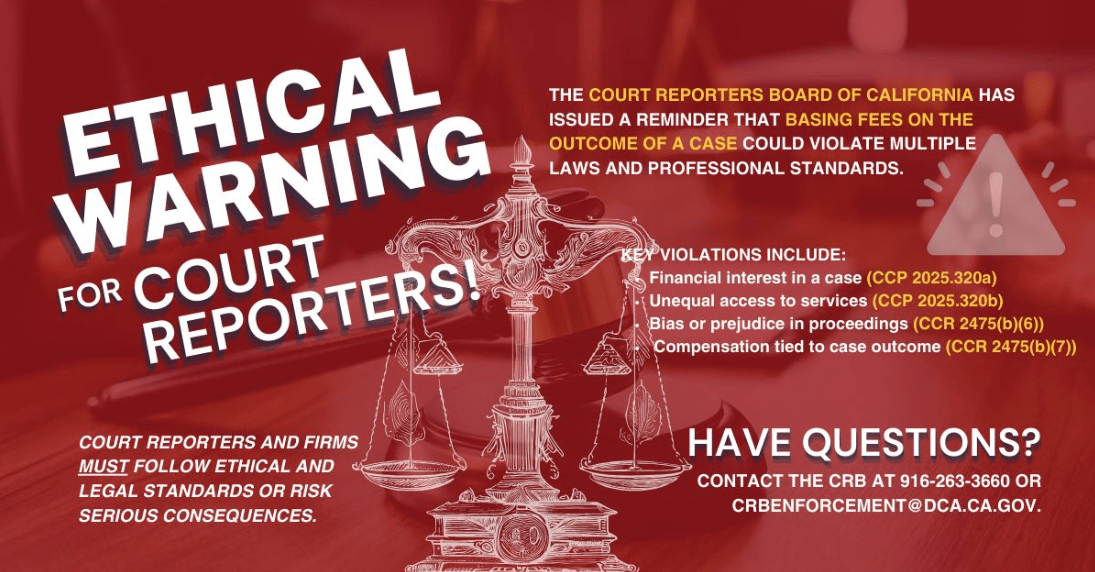
The CRB has taken a firm stance against such practices, indicating that outcome-based payment structures may violate legal and ethical provisions designed to uphold integrity in court reporting. By allowing one side to defer payments based on case outcomes, court reporting firms risk being perceived as biased in favor of their paying client, which could compromise the fairness of the judicial process.
Legal and Ethical Implications
Violations of Neutrality
Court reporters are officers of the court, and their primary duty is to provide an accurate and unbiased transcript of proceedings. By offering lenient payment terms to one party while imposing strict terms on another, court reporting firms create an uneven playing field. Such a financial arrangement could lead to allegations of favoritism, even if unintentional.
Potential Conflicts of Interest
When a court reporting firm offers deferred payment until settlement, its financial interests become tied to the outcome of the case. If a court reporter or firm stands to gain more or less depending on the case’s resolution, it undermines the principle of neutrality. Even the perception of a conflict of interest can damage the credibility of the legal system.
Regulatory Compliance Concerns
The CRB has made it clear that payment structures contingent on case outcomes may violate California laws governing court reporting ethics. Under California law, court reporters must adhere to strict professional standards, including:
- Ensuring impartiality and fairness in all legal proceedings
- Avoiding financial arrangements that create an appearance of bias
- Complying with payment practices that do not unduly benefit one party over another
Firms engaging in outcome-based payment models risk regulatory scrutiny, potential fines, and disciplinary action, which could result in the suspension or revocation of their ability to operate in California.
Why This Matters
Erosion of Trust in Court Reporting
The legal profession relies on the integrity and impartiality of court reporters to ensure a fair and just legal process. If attorneys and litigants begin to question the neutrality of court reporters due to these questionable payment structures, trust in the profession could erode. Once trust is lost, it becomes difficult to restore, and the credibility of the entire court reporting industry may suffer.
Legal Repercussions for Court Reporting Firms
Court reporting firms engaging in this practice could face serious legal consequences. Attorneys or opposing parties who feel disadvantaged by such payment structures may file complaints with the CRB or pursue legal action against the firms involved. Additionally, courts may scrutinize transcripts produced by firms with a vested financial interest in case outcomes, potentially leading to challenges regarding the accuracy and reliability of those records.
Impact on Litigants and Legal Proceedings
Unethical payment structures can create an imbalance in legal proceedings. If one party benefits from delayed payment while the other must pay immediately, it places an unnecessary financial burden on one side. In cases involving smaller firms or individual litigants with limited financial resources, such disparities could affect access to quality court reporting services, further skewing the fairness of the legal process.
Industry Response and the Role of the CRB
The Court Reporters Board of California is actively monitoring these payment practices and has warned firms that outcome-based payment models may not comply with state regulations. The CRB has encouraged anyone with concerns about this issue to report potential violations to their enforcement division at 916-263-3660 or via email at CRBEnforcement@dca.ca.gov.
Professional organizations and bar associations have also taken note of this issue. Legal ethics committees may soon weigh in on whether attorneys who engage with court reporting firms using this payment structure are violating their own professional responsibilities. Court reporters and attorneys alike should be vigilant in ensuring that their business practices align with ethical guidelines and legal requirements.
What Court Reporting Firms Should Do
To maintain their professional integrity and avoid regulatory penalties, court reporting firms should take proactive steps to ensure their payment structures adhere to legal and ethical standards:
- Implement Uniform Payment Policies – Court reporting firms should adopt payment policies that apply equally to all parties involved in litigation, ensuring neutrality and fairness.
- Educate Clients on Ethical Practices – Firms should inform attorneys and clients about the importance of neutrality in court reporting and the potential risks associated with deferred payment models.
- Engage with the CRB for Guidance – Firms uncertain about the legality of their payment practices should seek clarification from the CRB to ensure compliance.
- Avoid Financial Entanglements with Case Outcomes – Court reporting firms must maintain a clear financial separation from the success or failure of any given case to preserve impartiality.
Conclusion
The practice of offering “no payment until settlement” to some clients while demanding immediate payment from others is a serious ethical and legal issue within the court reporting industry. The Court Reporters Board of California has expressed clear concerns about these practices, warning that they may violate state laws designed to uphold neutrality and fairness. Court reporting firms must prioritize professionalism, neutrality, and ethical compliance to maintain the integrity of legal proceedings.
Attorneys, litigants, and court reporting professionals should remain vigilant and report any questionable practices to the CRB to ensure that the court reporting industry continues to function as a pillar of justice rather than a potential source of bias in the legal system.
 STENOIMPERIUM