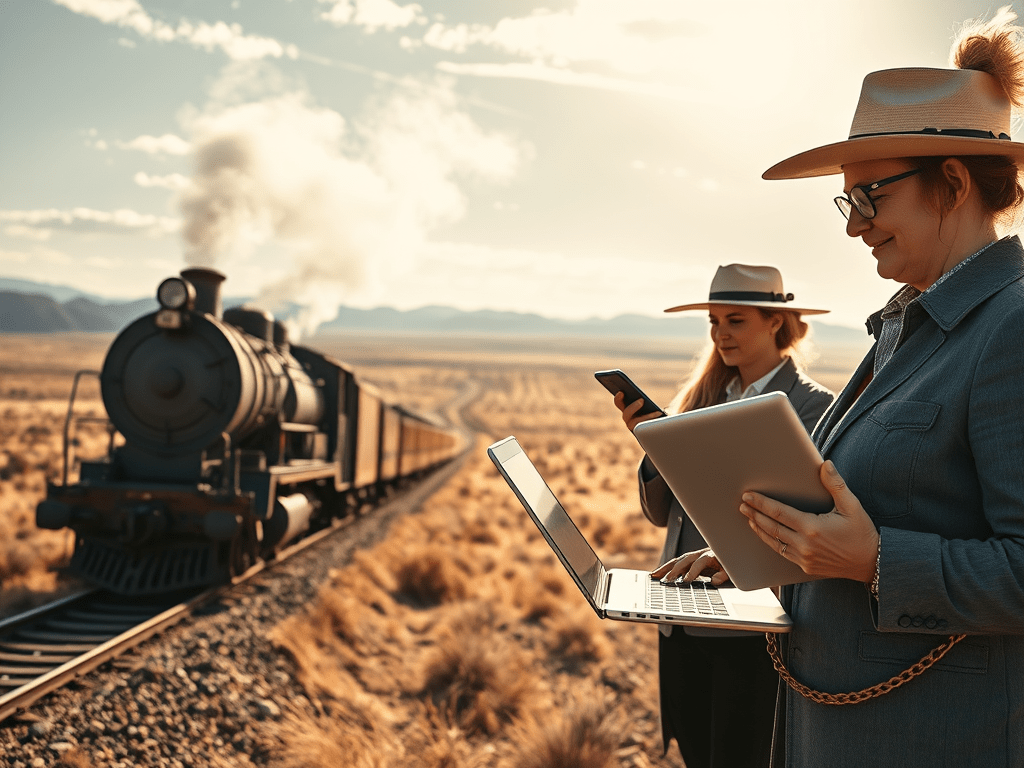
The expansion of the American frontier in the 19th century is a remarkable story of exploration, innovation, and the creation of new paths to meet the demands of the time. As settlers pushed westward in search of opportunity, they encountered vast, unexplored terrain, which required them to build new roads, railways, and infrastructure. The need for efficient transportation systems was clear: settlers had to be able to move goods, people, and resources to thrive in their new homes. From rugged trails to the advent of the Transcontinental Railroad, the American West was built by forging new routes that connected distant places.
In many ways, this historical journey parallels the road that court reporters must take today. As the legal field grows and the demand for services increases, court reporters are navigating new terrain to meet the evolving needs of the industry. Much like the pioneers who built roads to move forward, today’s court reporters are building new paths to ensure they can keep up with the increasing workload and demand for their services.
The Need for New Roads in the Old West
When settlers first ventured west, they were faced with untamed landscapes that were not conducive to easy travel. In the beginning, pioneers relied on trails like the Oregon, California, and Santa Fe Trails. These dirt paths wound through mountains, deserts, and plains, facilitating the migration of settlers, traders, and explorers. However, these roads were often difficult, unreliable, and time-consuming. As the West became more populated and commerce boomed, the need for more efficient travel became essential.
The solution came with the development of the railroad. The Transcontinental Railroad, completed in 1869, revolutionized the movement of people and goods across the United States, linking the eastern and western parts of the country with a single, continuous line of track. It made long-distance travel and freight transport faster, more efficient, and more reliable. The railroad transformed the American landscape and opened up new opportunities for growth, trade, and settlement.
Just as settlers had to build these roads and railways to facilitate their westward journey, court reporters today must also build new routes to keep up with the demands of the modern legal world.
Court Reporters on the New Frontier
Today’s court reporters are tasked with a challenging and rapidly evolving job: transcribing courtroom proceedings accurately and efficiently. As legal cases become more frequent, complex, and time-sensitive, the need for fast and reliable reporting grows. Court reporters must find new ways to meet the demand of increased workloads while maintaining the accuracy and integrity of the record, just as settlers had to create new ways of traversing rough and unpredictable landscapes.
The challenge for court reporters, however, is not about abandoning traditional methods but about building better, more efficient “roads” to procure their work. The traditional methods of court reporting—stenography and transcription—remain essential, but they must now be supported by new infrastructure that facilitates faster, more efficient collaboration and job coverage.
The Road to Success in Leveraging Technology to Build Better Paths
The modern “road” that court reporters need to navigate is one that connects professionals and agencies across the country. The demand for services is high, and court reporters need to find ways to work together more effectively to meet that demand. In the same way that the railroad connected the East and West, court reporters must be able to connect with one another to share resources and efficiently cover the growing number of legal proceedings.
One platform that is helping court reporters build these new roads is CoverCrow, a collaborative platform that brings together court reporters and agencies and their jobs in one place. Just as the settlers needed a network of roads to reach their destinations, court reporters need a seamless system to ensure they can cover jobs across the country. CoverCrow allows all available job opportunities to be displayed on a centralized job board. Through the platform, court reporters can communicate, share updates, and distribute work in real-time, making the process more efficient and transparent.
CoverCrow creates an environment where court reporters can come together, share job opportunities, and manage their workloads with ease. This digital “roadway” makes it simpler for court reporters to stay connected and quickly find opportunities to cover jobs, even in remote or high-demand locations. Just as the railroad enabled settlers to traverse vast distances, platforms like CoverCrow enable court reporters to navigate the modern legal landscape quickly and efficiently, ensuring that no job goes uncovered.
By building this digital infrastructure, CoverCrow provides court reporters with the tools they need to maintain their traditional methods of reporting, while also enhancing their ability to collaborate and manage their workload. Much like the roads and railways that connected the farthest reaches of the American frontier, CoverCrow helps court reporters stay connected to a broader network, ensuring that they can meet the rising demand for services without compromising the quality and accuracy of the work.
Building Reliable Networks through Collaboration and Communication
One of the most vital aspects of this new infrastructure is the ability to collaborate and communicate effectively. Just as the Transcontinental Railroad connected distant parts of the country, court reporters must be able to communicate and share information across large geographical areas. Collaboration tools that connect reporters with agencies and other professionals are key to building this new “road system” within the industry.
CoverCrow facilitates this by offering a centralized platform where court reporters can view job postings, communicate with agencies, and manage their schedules. This system ensures that job coverage is distributed efficiently, allowing court reporters to access opportunities in different regions without the need for cumbersome communication channels. The platform creates a streamlined process for handling job assignments and enables reporters to stay up-to-date on new opportunities.
Building a reliable network of court reporters across the country is essential for meeting the demands of today’s legal environment. As more legal proceedings take place online or remotely, court reporters must adapt to new working conditions. With platforms like CoverCrow, they are empowered to do just that by maintaining constant communication, collaborating with colleagues, and keeping a steady flow of work without missing a beat.
Charting the Course
The story of westward expansion is one of perseverance, innovation, and the creation of new paths to overcome obstacles. Just as settlers built roads and railways to connect the East and West, court reporters today must build modern “roads” to keep up with the demands of the legal profession. The challenges are different, but the underlying principle remains the same: by creating reliable, efficient pathways, court reporters can continue to meet the growing demands of their work.
Platforms like CoverCrow offer the tools necessary to create these new pathways, allowing court reporters to collaborate more effectively, stay connected, and efficiently distribute work across the country. These digital roads ensure that court reporters can meet the demands of the legal system while maintaining the integrity of their traditional methods. The journey may be long, but with the right infrastructure in place, court reporters can continue to thrive in the modern legal landscape, much like the pioneers who built the roads that helped the United States grow into the nation it is today.
 STENOIMPERIUM