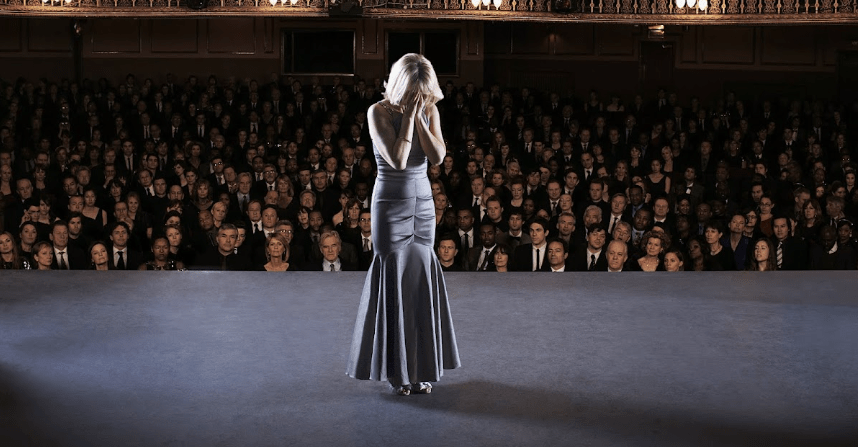
Anxiety is an unwelcome but all-too-common companion for court reporters, whether in high-pressure certification tests or the intense atmosphere of a courtroom with jurors closely watching every keystroke. Many of us have experienced the physical manifestations of anxiety—shaking hands, a racing heart, and a mind clouded by nerves. But what if there was a simple way to shut off this response, almost like flipping a switch? I discovered a method that instantly calms my nerves, and it has transformed the way I approach high-stakes situations.
Discovering the “Off Switch” for Anxiety
The realization came to me during a trial where jury voir dire was taking place. The jurors were seated just two feet away, their curious eyes locked onto me as I typed. I wasn’t even consciously aware that they were watching at first, but my body knew. My hands began shaking uncontrollably, hitting the wrong keys, and my steno screen filled with red, untranslated text—a court reporter’s nightmare.
That’s when I discovered the key to stopping the anxiety in its tracks. I mentally commanded my body to stop being nervous. I accessed a specific place in my brain, the same one that controls physical movement, and simply switched off the nervous response. Instantly, my body relaxed. The shaking stopped. The anxiety was gone.
How This Technique Works
To understand how to activate this switch, let’s do a simple exercise. As you’re sitting in your chair, tell your leg to lift off the ground—but don’t actually do it. Just mentally instruct your leg to rise. Now, instead of consciously commanding it, just pick your leg up about five inches. Notice the difference? The first action is a thought; the second taps into the actual motor function that makes movement happen.
That second action—the one that effortlessly lifts your leg—is the same neurological pathway that can shut off anxiety. Instead of telling yourself, “I hope I stop being nervous” or “I wish this anxiety would go away,” you bypass the thought process and go straight to the action. You tell your body, with absolute certainty, “Stop.” And just like lifting your leg, your body obeys.
Applying the Technique in High-Stress Situations
This method has worked consistently for me, whether in test settings or in the courtroom. Here’s how you can apply it when you feel anxiety creeping in:
- Recognize the Physical Signs
- Shaking hands, a tight chest, a queasy stomach—your body gives you clear signals that anxiety is taking over. The first step is awareness.
- Mentally Command the Anxiety to Stop
- Instead of wishing it away or trying to reason with it, activate the same control center that moves your body. Instruct yourself: “Stop.”
- Access the “Action” Center of Your Brain
- Think of it like lifting your leg. You don’t hesitate or negotiate with yourself—you just do it. Use that same mechanism to stop anxiety.
- Feel the Immediate Shift
- Your body will respond immediately. The tension will release, your heart rate will slow, and your mind will clear. It’s as if you’ve hit the “off” button on nervousness.
Why This Works: The Neurological Basis
Anxiety is essentially a fight-or-flight response controlled by the amygdala, a part of the brain responsible for processing fear. When we consciously recognize fear but don’t actively stop it, the amygdala takes over, flooding our system with stress hormones.
By engaging the motor control area of the brain—the part that directly controls movement—we override the amygdala’s dominance. Instead of feeding into anxiety, we shift focus to a part of the brain that responds to direct commands. This is why the technique works instantly. It bypasses the fear-processing mechanism and engages the part of the brain that takes action, effectively turning anxiety off like a switch.
Real-Life Results: No More Test Anxiety or Stage Fright
Since discovering this technique, I no longer suffer from test anxiety. Before, sitting for a certification exam meant battling nerves that could sabotage my performance. Now, the moment I feel anxiety trying to creep in, I tell my body to stop, and it does. The same applies in the courtroom. I no longer fear jurors watching me type, because I know I have the power to shut off my nervous response in an instant.
Many of my fellow court reporters struggle with similar issues, from stage fright to performance anxiety. I encourage everyone to try this technique and experience the transformation for themselves.
Practical Tips for Mastering the Technique
- Practice in Low-Stress Situations: Before using this method in high-pressure settings, practice it in everyday life. When you feel even mild anxiety—such as waiting in line at the DMV or speaking up in a meeting—use the switch to turn it off.
- Reinforce the Mind-Body Connection: Strengthen your ability to control anxiety by pairing this method with deep breathing or mindfulness exercises.
- Trust the Process: The key is absolute confidence in your ability to command your body. If you doubt it, your mind may resist. Commit fully to the instruction: “Stop.”
- Use Visualization: If you struggle to access the switch at first, visualize yourself flipping an actual switch in your brain that turns anxiety off.
A New Era for Court Reporters
Court reporting is an incredibly demanding profession that requires accuracy, composure, and focus under pressure. The ability to control anxiety on command is a game-changer. Imagine walking into any test, deposition, or trial knowing that you have complete control over your nerves. The confidence this brings is immeasurable.
For those struggling with performance anxiety, whether in test-taking or under the watchful eyes of a jury, I urge you to try this technique. The power to shut off anxiety is already within you—it’s simply a matter of activating the right switch. Once you master this, you’ll never have to let nerves dictate your performance again.
Final Thoughts
Finding this technique has been life-changing for me, and I truly believe it can be for others as well. We often think of anxiety as something that happens to us, but in reality, we have much more control over it than we realize. If you’re a court reporter—or anyone who struggles with stage fright or test anxiety—know that you can stop it. The secret lies in using the same brain function that lifts your leg: an action-driven, undeniable command to just stop the nerves.
Try it, refine it, and experience the difference. Anxiety doesn’t have to control you. You control it.
 STENOIMPERIUM